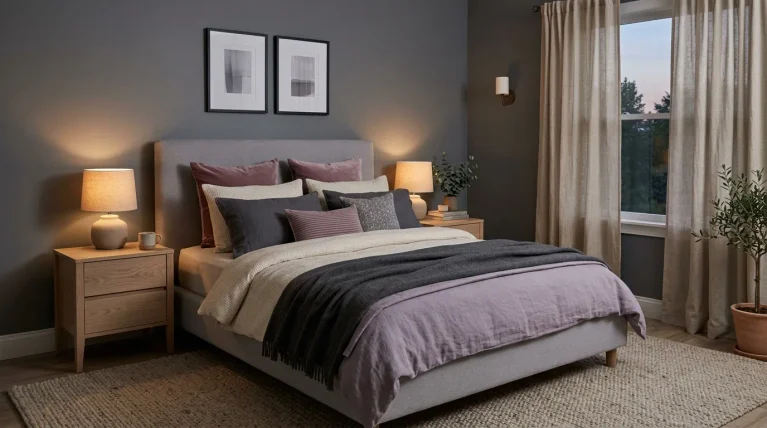
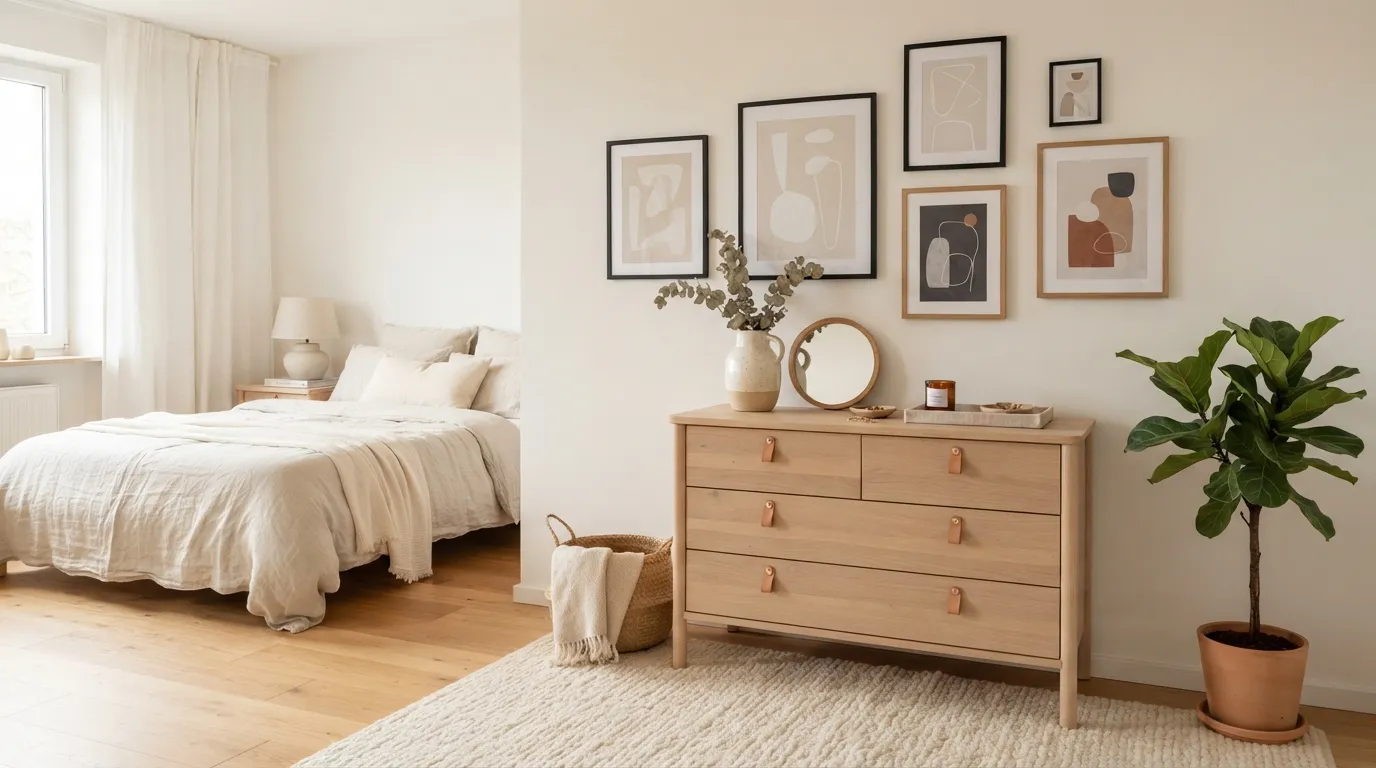
Your bedroom should feel like the easiest place in the home to exhale. ✨Imagine soft linen, pale wood, warm neutrals, and just enough texture to make every corner feel inviting. These scandinavian bedroom ideas show how to create that peaceful look without making your space feel cold or overly bare.
Whether you are refreshing a small bedroom, decorating a new home, or simply craving a calmer atmosphere, these ideas offer practical ways to make a big visual difference. You’ll find inspiration for bedding, lighting, storage, furniture, wall finishes, and natural textures that work beautifully together. In my experience, the most successful minimalist bedrooms are not completely empty—they are thoughtfully edited, comfortable, and easy to live in. As you explore these ideas, look for one or two changes that fit your room, budget, and everyday routine.
1. Low Oak Bed
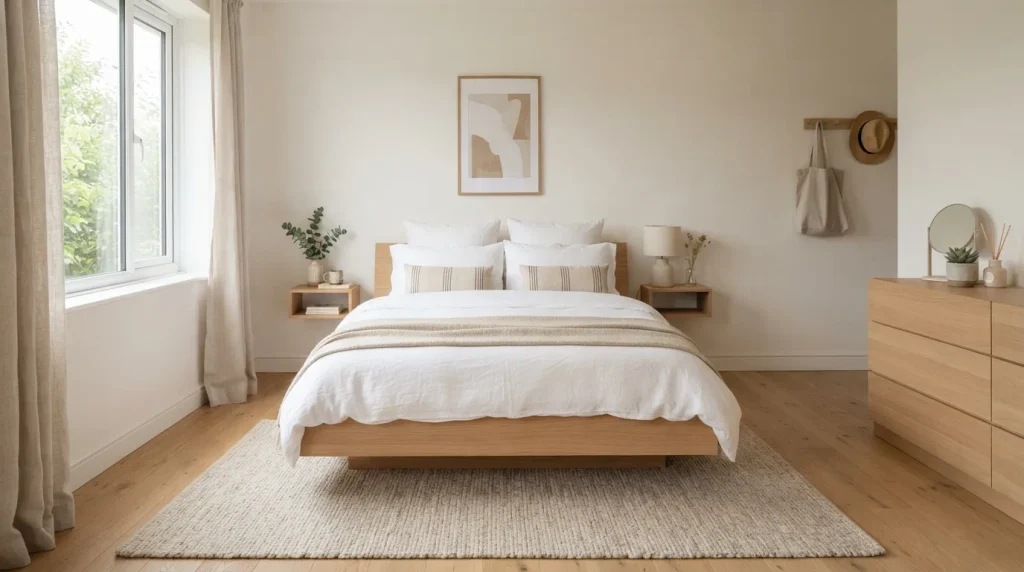
- A low-profile bed keeps the room feeling open and visually calm.
- Pale oak adds warmth without overpowering a minimalist palette.
- The open floor area makes smaller bedrooms feel more spacious.
- Crisp bedding and one textured layer create an easy, polished finish.
A calm bed frame can make the whole bedroom feel lighter. Choose a low-profile frame in pale oak, ash, or softly finished pine, then pair it with crisp white bedding and a muted beige throw. The reduced height keeps the room visually open while natural wood adds enough warmth to prevent the space from feeling stark. In my experience, this combination works especially well in smaller bedrooms because it creates breathing room around the furniture. Keep the floor mostly clear, add one woven rug beneath the bed, and let the simple materials become the main decorative feature.
A low wooden bed creates the relaxed foundation that defines many Scandinavian bedroom ideas without making the room feel overly styled. Position it centrally against a soft white or warm greige wall, leaving comfortable walking space on both sides. Layer cotton sheets, a textured duvet, and one understated lumbar cushion for an inviting finish. The natural grain of the frame introduces subtle contrast against pale walls and bedding, while the open space underneath helps the floor plan feel less crowded. This setup also makes everyday cleaning easier, especially when the bedroom needs to stay practical as well as beautiful.
Also Read : 25 Mermaid Tile Bathroom Ideas for a Whimsical Coastal Look
2. Linen Bedding Layers
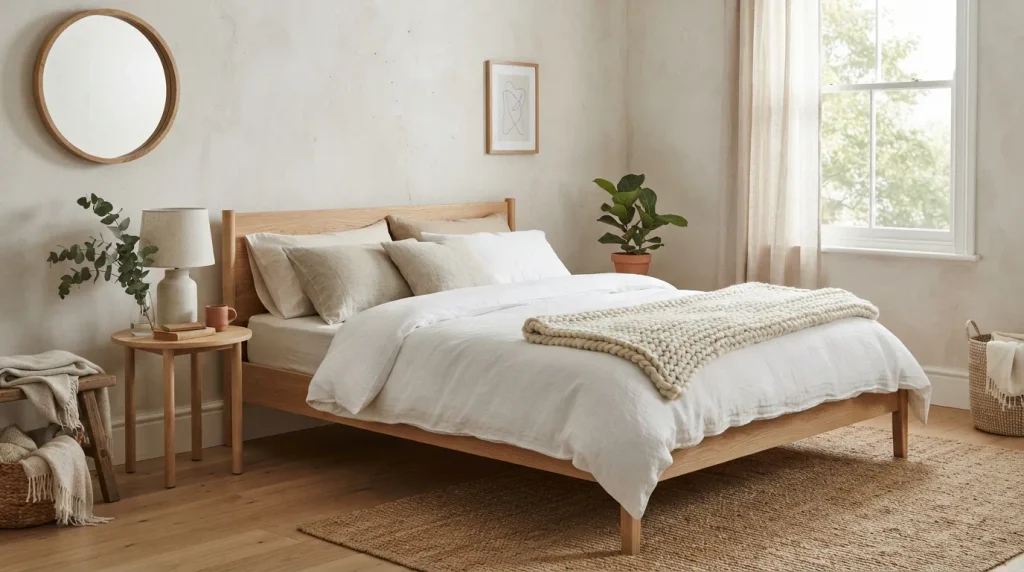
- Washed linen gives the bed a relaxed, naturally rumpled appearance.
- Layering soft neutrals adds depth without introducing visual clutter.
- A lightweight blanket makes the room feel more inviting and functional.
- Mixing subtle textures keeps an all-neutral palette from looking flat.
The easiest way to make a minimalist bedroom feel inviting is to build softness through bedding. Start with breathable white or ivory linen sheets, add a slightly heavier duvet in warm cream, then fold a taupe or oatmeal blanket across the lower third of the bed. This layered approach creates dimension while keeping the palette restrained. I’ve noticed that slightly rumpled linen often looks more natural than perfectly pressed fabric, which suits the relaxed Scandinavian aesthetic beautifully. Finish with two or three pillows in complementary neutral shades rather than filling the bed with decorative cushions that compete for attention.
Texture matters when the color palette is intentionally quiet. Linen, cotton, wool, and woven fibers each catch light differently, giving the bed subtle visual movement without requiring bold patterns or strong colors. Keep the largest pieces light and neutral, then introduce one darker beige or soft gray accent for gentle contrast. This balance helps the bedroom look thoughtfully designed while remaining comfortable enough for everyday use. For smaller rooms, lighter bedding can also reflect daylight and make the space appear brighter. The result is a restful sleeping area that feels polished, practical, and effortlessly lived-in.
Also Read : 22 Year Round Mantle Decor Ideas for Every Season
3. Soft Greige Walls
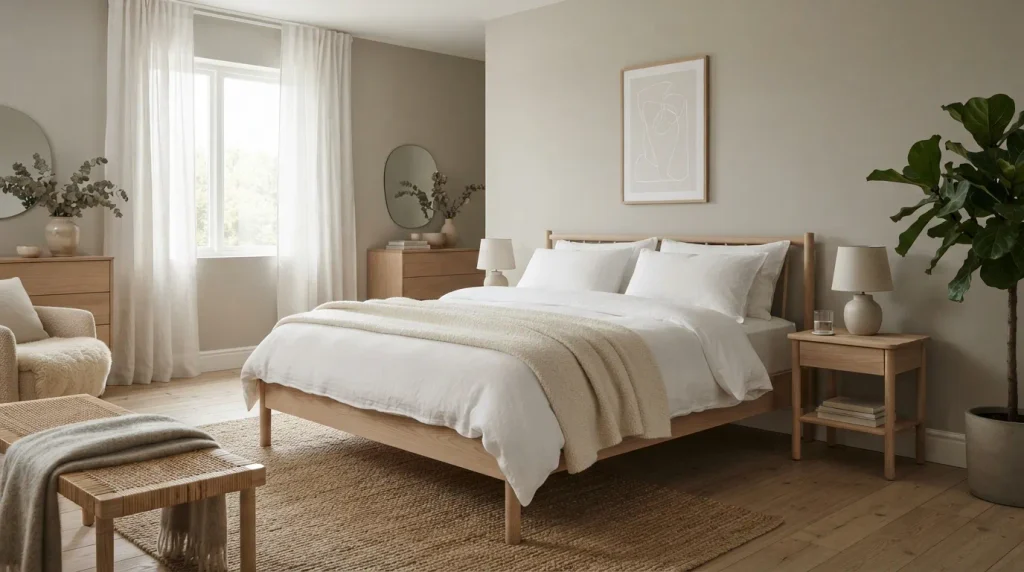
- Greige walls add warmth while preserving the bright Scandinavian look.
- The muted backdrop makes pale wood and white textiles stand out beautifully.
- A matte finish creates a softer, more natural visual effect.
- This color works especially well when strong daylight changes throughout the day.
The right wall color can instantly change how the entire bedroom feels. Soft greige is a useful choice when pure white seems too cool but deeper beige feels too heavy. Its subtle mix of warm gray and beige creates a gentle backdrop for pale wood, ivory bedding, and woven accessories. In my experience, matte or low-sheen finishes work especially well here because they soften reflected light rather than making the walls feel glossy. Keep the surrounding furnishings simple, and let the wall color quietly connect the different neutral tones throughout the room without becoming the main focal point.
Greige also gives you flexibility when decorating around changing natural light. In a sunny bedroom, it can look warm and creamy, while cooler daylight brings out its soft gray undertones. That versatility makes it easier to combine white textiles, oak furniture, black accents, or muted sage accessories without creating harsh contrasts. If you are testing paint samples, view them beside your flooring and bedding at different times of day before committing. A carefully chosen neutral backdrop can make the room feel larger, calmer, and more cohesive while giving future decor changes plenty of freedom.
Also Read : 22 Dorm Room Ideas for Guys to Create a Cool Space
4. Sheer Linen Curtains
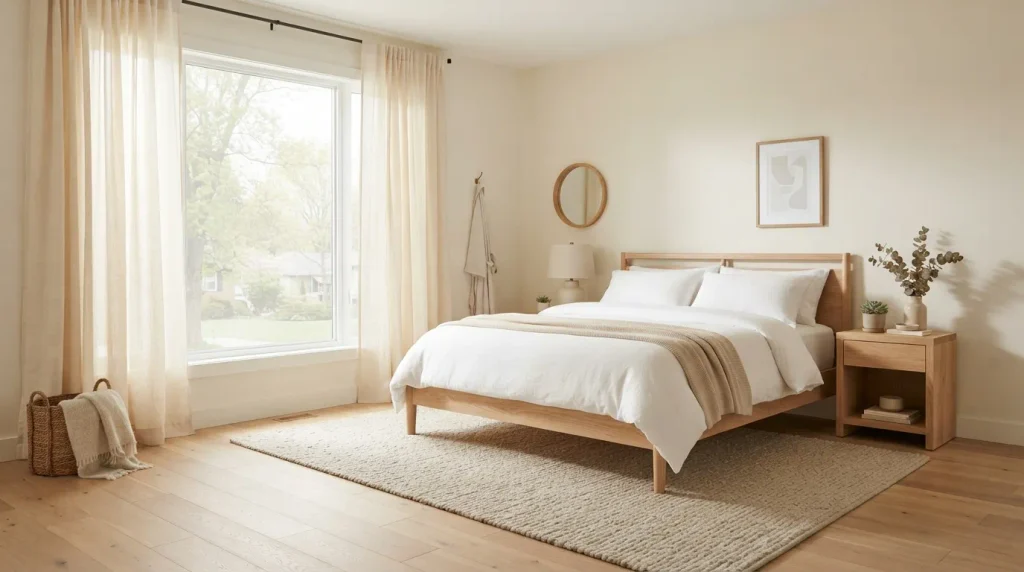
- Sheer curtains soften bright daylight without making the room feel dark.
- Linen fabric adds natural texture around the windows.
- Full-length panels can make the ceiling appear taller.
- Neutral curtains blend easily with pale walls and wooden furniture.
Few changes make a bedroom feel softer as quickly as the right curtains. Choose lightweight linen or linen-look panels in ivory, cream, or warm white, and hang them close to the ceiling so they fall naturally toward the floor. This creates a longer visual line around the window and allows daylight to spread gently across the room. Avoid heavy patterns or dark fabrics, especially if the bedroom is small. The goal is to filter harsh sunlight rather than block it completely. When paired with pale furniture and neutral bedding, sheer curtains create an airy finish that feels relaxed instead of overly decorated.
Window treatments also influence how comfortable the room feels throughout the day. During bright mornings, translucent fabric diffuses direct sunlight and reduces the sharp contrast between the window and surrounding walls. In the evening, closing the panels adds softness and privacy without introducing visual weight. I’ve noticed that slightly textured linen looks particularly beautiful because its natural irregularities keep a neutral room from feeling flat. Choose panels that reach the floor and allow a little fullness rather than hanging them tightly. This simple adjustment can make the entire bedroom appear taller, brighter, and more thoughtfully finished.
Also Read : 24 Modern Fireplace Ideas for a Stylish Cozy Home
5. Floating Nightstands
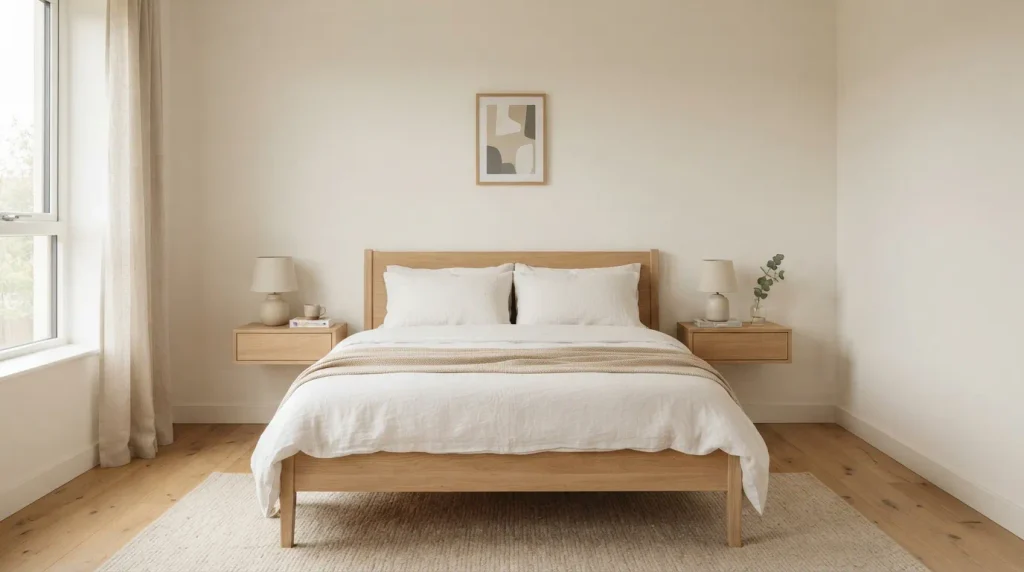
- Wall-mounted nightstands free up floor space around the bed.
- Pale wood keeps the setup warm and visually lightweight.
- A drawer hides everyday clutter such as chargers and reading glasses.
- One small lamp and one useful object are usually enough.
A floating nightstand creates instant visual breathing room beside the bed. Instead of a bulky cabinet resting on the floor, choose a compact wooden shelf or drawer mounted at a comfortable height. The open space underneath exposes more flooring, helping a small bedroom appear less crowded. Keep the surface intentionally simple with a small ceramic lamp, a book, or a tiny vase. This approach works particularly well with Scandinavian bedroom ideas because it combines clean lines with everyday practicality. The natural wood finish adds warmth, while the wall-mounted design keeps the overall arrangement visually light and easy to maintain.
Function should guide the size and shape of your bedside furniture. If you regularly keep glasses, medication, cables, or a book nearby, a shallow drawer can hide those essentials while preserving the minimalist appearance. Match the nightstand to the bed or flooring for a cohesive look, or use slightly darker wood for subtle contrast. Avoid filling both sides with identical accessories simply for symmetry. A balanced arrangement can still include useful differences. The result is a bedroom that feels organized without looking sterile, with clear surfaces and enough storage for the small things you actually use.
Also Read : 24 Cozy Boho Living Room Ideas for a Warm Relaxed Space
6. Woven Wool Rug
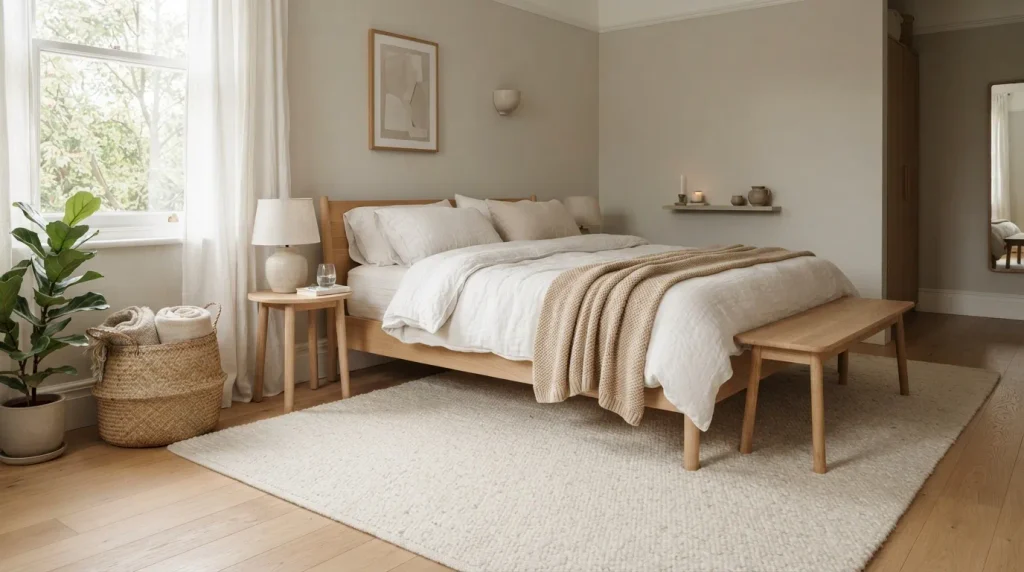
- A wool rug adds warmth underfoot without introducing strong color.
- Natural fibers soften the harder surfaces of wood flooring and furniture.
- A large rug visually connects the bed and surrounding pieces.
- Subtle texture creates depth in an otherwise neutral bedroom.
Cold floors can make even a beautiful minimalist bedroom feel unfinished, especially during early mornings. A large wool or wool-look rug solves that problem while adding texture and warmth beneath the bed. Choose cream, oatmeal, ivory, or soft beige instead of a busy pattern, then position the rug so it extends beyond both sides and the foot of the bed. This creates a visual anchor for the sleeping area and makes the furniture arrangement feel intentional. Natural fibers are especially effective because their subtle variations add character without competing with the clean lines of the room.
When choosing the rug size, think beyond the visible center section. A rug that barely reaches the bed can make the room look fragmented, while a larger piece helps connect the bed, nightstands, and surrounding floor area. If a full-size wool rug is outside your budget, a flatwoven natural-fiber option can provide a similar textural effect. I’ve seen this work well in rental bedrooms because a rug adds softness without requiring permanent changes. Keep the surrounding accessories restrained, and let the rug become the quiet layer that makes the entire space feel warmer, more comfortable, and complete.
Also Read : 21 Navy Blue Wallpaper iPhone Ideas for a Stylish Screen
7. Pale Oak Furniture
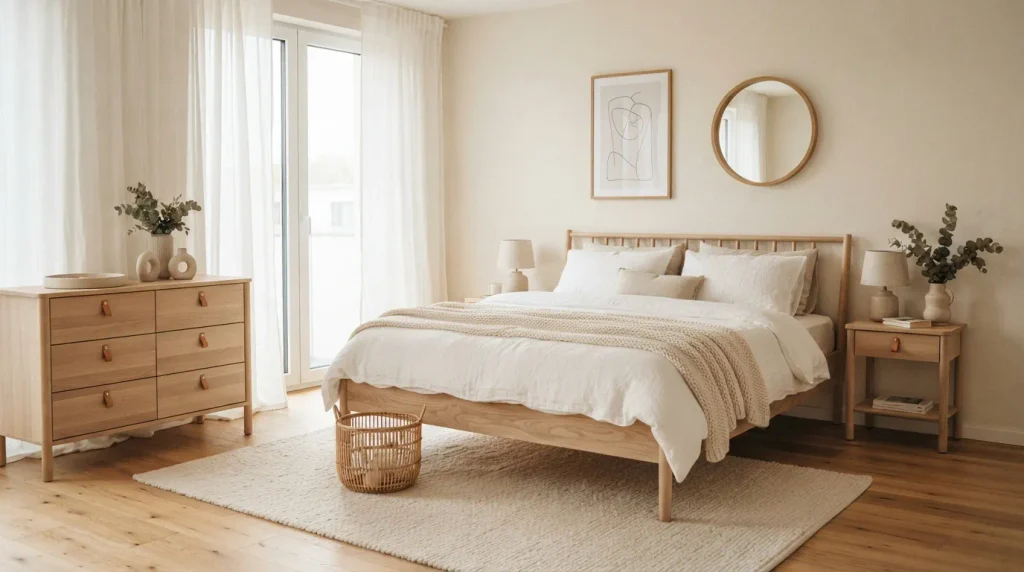
- Pale oak furniture brings warmth without making the room feel heavy.
- Matching wood tones create a calm, connected visual flow.
- Simple shapes keep the furniture practical and uncluttered.
- Natural grain adds character without relying on bold decoration.
Pale oak can transform a simple bedroom by adding warmth without sacrificing its airy character. Choose furniture with clean profiles, rounded edges, and a natural or lightly finished grain rather than glossy surfaces. A bed, nightstand, and small dresser in similar wood tones create continuity across the room, making separate pieces feel like part of one intentional arrangement. Keep the surrounding colors soft, such as ivory, beige, and muted gray. This combination is one of the easiest ways to create Scandinavian bedroom ideas that feel welcoming in real homes while remaining practical, uncluttered, and easy to update.
The key is not matching every wooden item perfectly, but keeping the undertones compatible. Pale oak pairs naturally with white textiles, cream rugs, woven baskets, and small black accents. If your existing furniture is darker, introduce lighter wood through one or two smaller pieces rather than replacing everything at once. I’ve noticed that visible wood grain also helps neutral bedrooms feel less flat because it introduces subtle pattern without adding visual noise. Leave some breathing space around each piece, and avoid filling every empty corner. The finished room should feel useful, balanced, and naturally connected.
8. Minimal Pendant Lighting
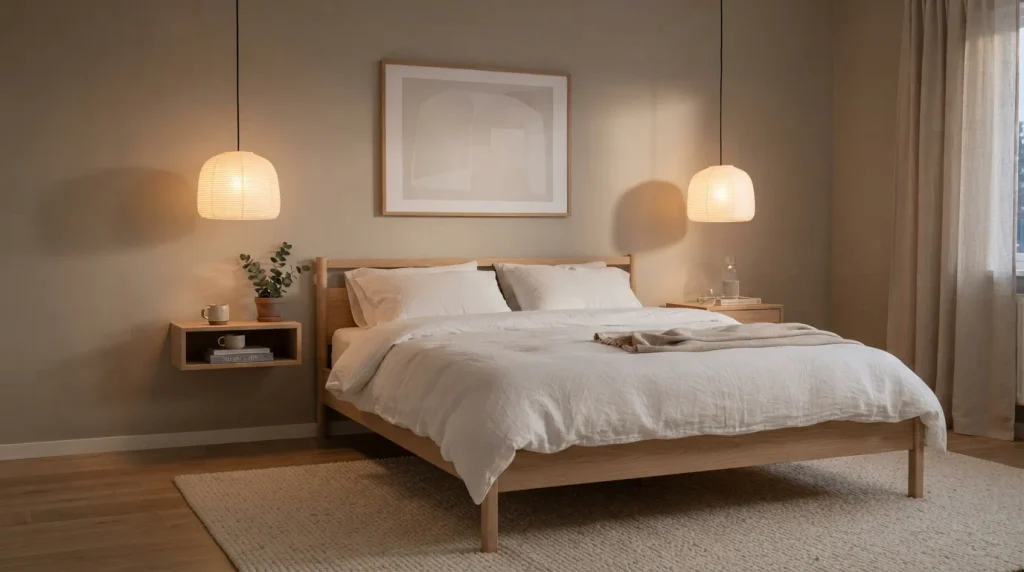
- A simple pendant frees the nightstand from a bulky table lamp.
- Soft downward lighting creates a cozy evening atmosphere.
- Natural materials such as paper or linen keep the fixture understated.
- Hanging the light beside the bed adds height and visual interest.
Lighting can become a beautiful design feature when it is kept intentionally simple. Replace bulky bedside lamps with compact pendant lights hung on either side of the bed, using paper, linen, frosted glass, or another softly diffusing material. The suspended fixtures draw the eye upward and leave the nightstands clearer for everyday essentials. Choose warm bulbs rather than cool white light to create a gentle evening glow. This setup works particularly well when the bedroom already has restrained furniture because the pendants add shape and vertical interest without introducing another large object to the floor or bedside surfaces.
Consider the pendant’s size and hanging height carefully before installation. A fixture that is too large can overwhelm a small room, while one that is too high may lose its practical reading light function. Keep the design simple and let the material provide the character. In my experience, warm paper shades are especially effective in neutral bedrooms because they diffuse light across nearby walls and create softer shadows. If permanent wiring is not possible, plug-in pendant options can achieve a similar appearance. The result is cleaner nightstand styling, better visual balance, and a warmer atmosphere after sunset.
9. Neutral Textured Headboard
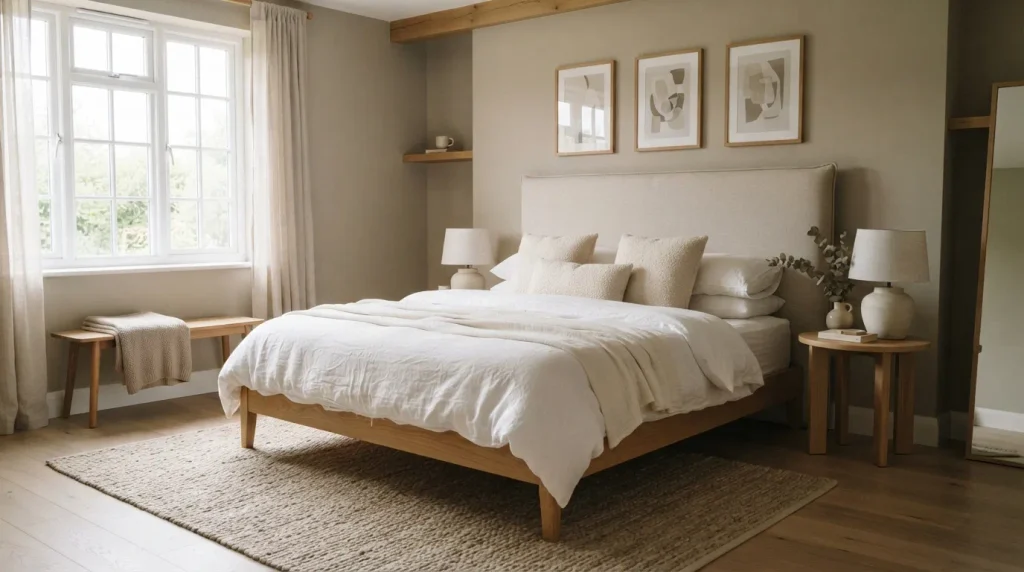
- A fabric headboard introduces softness behind the bed.
- Bouclé, linen, and woven upholstery create subtle visual depth.
- Warm beige or oatmeal tones complement pale wooden furniture.
- A simple silhouette keeps the room feeling modern and uncluttered.
A textured headboard gives the bed a softer focal point without requiring dramatic color or decoration. Look for simple upholstered designs in oatmeal, cream, warm beige, or light gray, with linen, boucle, or woven fabric adding tactile interest. The headboard should have a clean rectangular or gently rounded shape rather than ornate detailing. This creates a comfortable visual backdrop for white bedding while preventing the wall behind the bed from looking empty. For a minimalist bedroom, the texture does most of the decorating work, allowing you to keep artwork and accessories deliberately limited.
Fabric choice can also influence how practical the room feels. Linen creates a relaxed, slightly casual appearance, while boucle offers a softer and more tactile finish. If the bedroom receives heavy daily use, check whether the upholstery can be cleaned easily before choosing a particular material. I’ve seen this approach work especially well in bedrooms where plain walls feel too bare but a gallery wall would create unnecessary clutter. Pair the headboard with simple bedding, one warm throw, and a small amount of natural wood. The finished space feels comfortable, polished, and visually grounded without becoming busy.
10. Soft Sage Accents
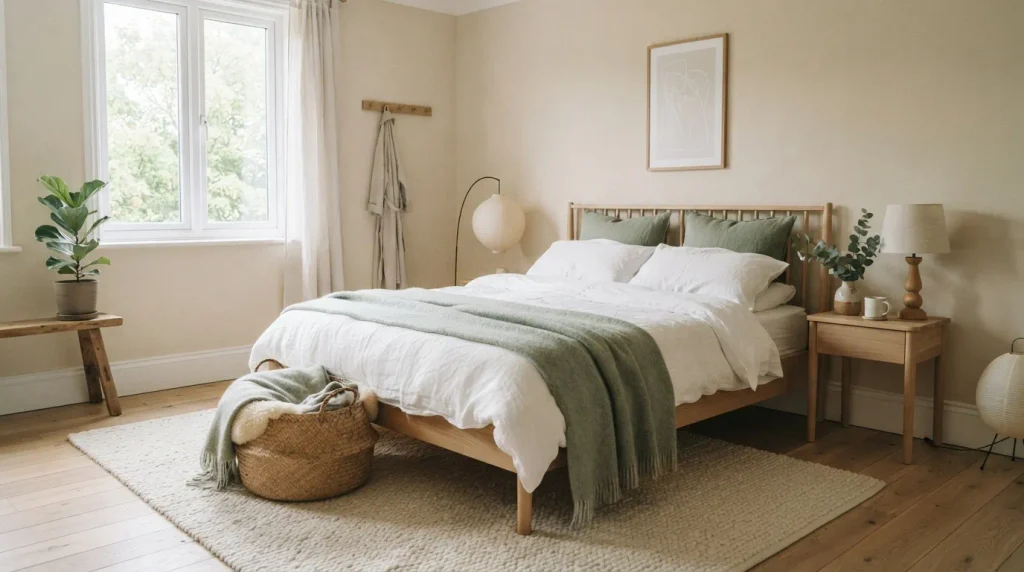
- Muted sage adds gentle color without disturbing the neutral palette.
- Small accents are easier to change than large painted surfaces.
- Sage works beautifully with pale oak and warm white textiles.
- A few coordinated pieces can make the room feel more layered.
A touch of muted sage can bring life to a neutral bedroom without overwhelming its calm character. Use the color sparingly through a quilt, cushion, ceramic vase, artwork, or small plant rather than introducing it across every surface. Sage works especially well with warm whites, oatmeal textiles, and pale oak because its soft green undertone connects naturally with organic materials. The result feels fresh but still restrained. If you are hesitant about adding color, start with one removable textile and see how it looks throughout the day. This makes experimenting simple while keeping the overall room flexible.
The beauty of sage is its ability to add contrast without creating the visual intensity of brighter greens. Choose dusty, gray-leaning shades rather than saturated tones for a more sophisticated result. One sage throw at the foot of the bed can become enough of a focal point when everything else stays neutral. I’ve noticed that repeating the color in two or three very small places makes the room feel more cohesive without looking coordinated. Pair it with natural wood, woven textures, and soft lighting, and the bedroom gains personality while maintaining the uncluttered Scandinavian feel.
11. Built-In Storage
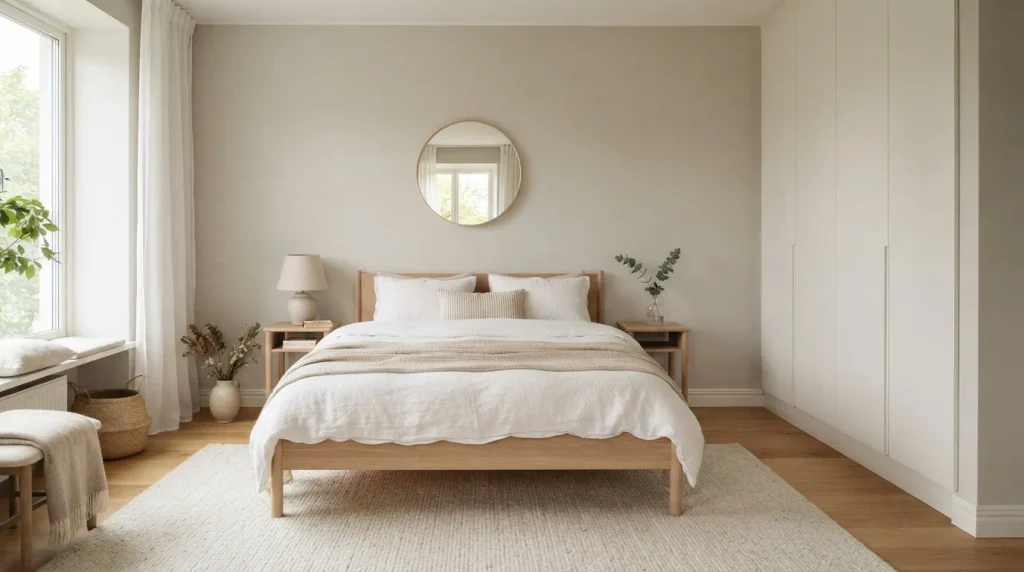
- Built-in storage keeps clothing and belongings hidden from view.
- Floor-to-ceiling cabinetry makes better use of vertical space.
- Handle-free doors create a cleaner, quieter appearance.
- Matching cabinetry to the walls helps bulky storage recede visually.
Smart storage can make a minimalist bedroom feel dramatically calmer. Floor-to-ceiling built-ins use vertical space efficiently while keeping clothing, bedding, and everyday belongings behind closed doors. Choose cabinetry in warm white, soft greige, or a shade close to the wall color so the storage blends into the architecture rather than becoming the room’s dominant feature. Handleless doors or simple recessed pulls reinforce the clean appearance. This approach is especially useful in smaller bedrooms where freestanding wardrobes can consume valuable floor space. Keeping storage concealed also makes daily tidying faster because visual clutter disappears behind a single consistent surface.
Before installing built-ins, think carefully about what you actually need to store. Include a combination of hanging space, shelves, drawers, and dedicated areas for less frequently used items. If custom cabinetry is not practical, modular wardrobes can create a similar effect when their finishes closely match the walls. That’s why many designers recommend planning storage around real routines rather than simply maximizing cabinet volume. A well-organized interior prevents shelves from becoming overcrowded, while the simple exterior keeps the bedroom visually peaceful. The result is a space that looks cleaner because it genuinely functions better.
12. Sculptural Ceramic Decor
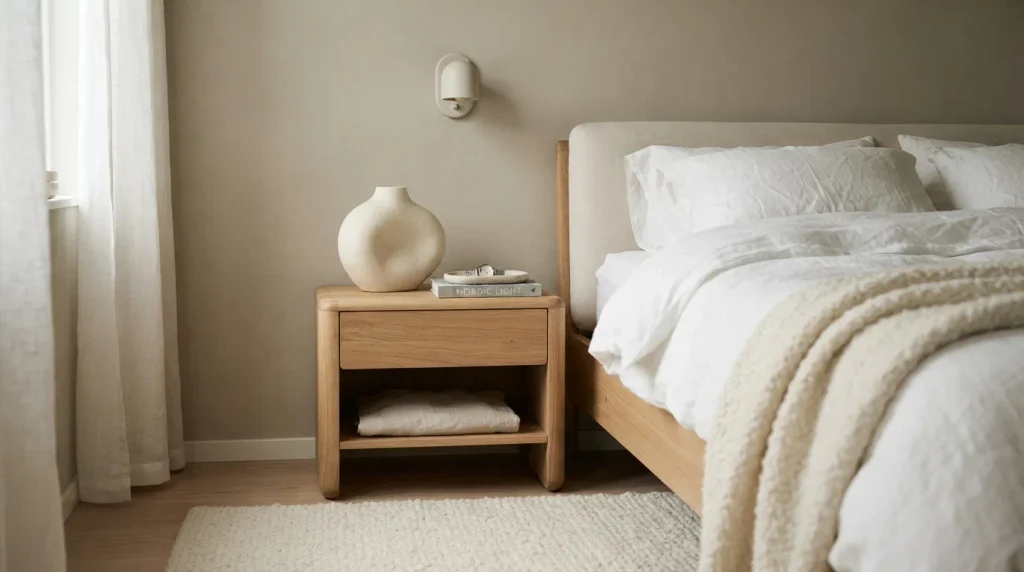
- Handmade ceramics add character without creating visual clutter.
- Rounded forms soften the straight lines of minimalist furniture.
- Neutral finishes keep decorative pieces connected to the room.
- One meaningful object often works better than several small accessories.
A single sculptural ceramic piece can give a minimalist bedroom a surprisingly strong finishing touch. Look for a handmade vase, rounded vessel, small bowl, or abstract ceramic object in cream, sand, chalk white, or muted beige. Its irregular shape introduces personality while keeping the palette quiet. Place it on a nightstand, dresser, or narrow shelf where it has enough surrounding space to stand out. Rather than filling the surface with several decorative objects, let one carefully chosen piece create the focal point. This restrained approach keeps the bedroom feeling personal without slipping into visual clutter.
Shape is just as important as color when choosing minimalist decor. Rounded ceramics can soften the straight edges of a wooden bed, while a slightly irregular handmade finish adds subtle character. In my experience, decorative objects look more intentional when they have room around them instead of being grouped tightly with unrelated accessories. Consider combining one ceramic piece with a small book or branch if the surface feels too empty. Keep everything else simple, and the object becomes a quiet detail that supports the room’s natural materials, soft colors, and relaxed Scandinavian character.
13. Layered Neutral Lighting
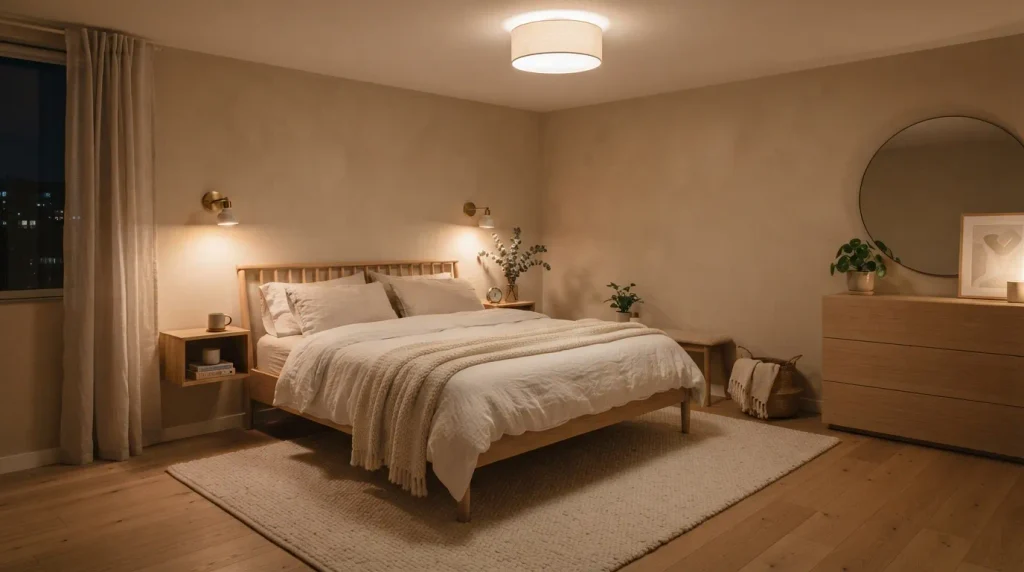
- Combining ceiling, bedside, and accent lighting makes the room more flexible.
- Warm bulbs create a softer atmosphere after sunset.
- Different light levels help separate relaxing and practical functions.
- Simple fixtures keep the lighting scheme visually cohesive.
Beautiful bedroom lighting is rarely about one fixture alone. Layer several gentle sources so the room can shift naturally from bright and practical during the day to soft and relaxing at night. A simple ceiling light can provide general illumination, while bedside sconces or pendants handle reading and a small table lamp adds a warm accent. Choose warm-toned bulbs and fixtures with understated shapes. This layered approach keeps the room functional without sacrificing its minimalist appearance. It also gives you control over the atmosphere, making the same space feel fresh in the morning and restful before bed.
Think about where light is actually needed rather than placing fixtures purely for symmetry. Bedside lighting should illuminate reading without shining directly into your eyes, while ambient light can highlight a textured wall, curtain, or natural wood surface. I’ve noticed that warm lighting becomes especially effective when paired with pale materials because it creates gentle shadows instead of harsh contrast. Use dimmable fixtures whenever possible, particularly in bedrooms that serve several purposes. The result is a more adaptable space where every light has a clear job and the overall design still feels calm and uncluttered.
14. Black Window Frames
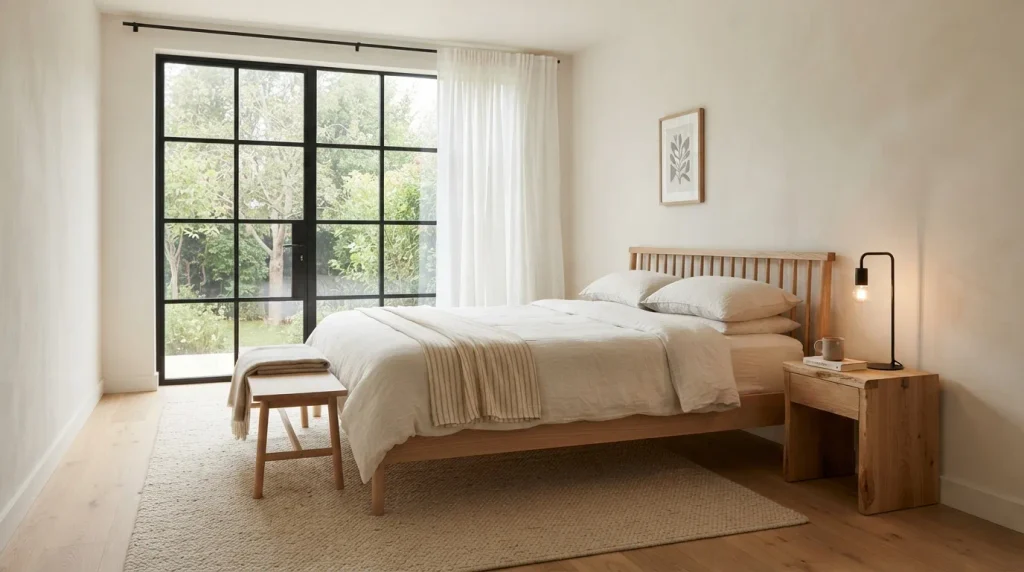
- Black frames create crisp contrast against pale walls and textiles.
- Dark lines can define the window without adding decorative clutter.
- Repeating small black accents helps the room feel balanced.
- The contrast works especially well with light oak and warm neutrals.
Black window frames can give a soft neutral bedroom a sharper architectural edge. Their dark lines create contrast against warm white walls, sheer curtains, pale wood, and light bedding without requiring additional artwork or bold accessories. If your bedroom already has dark-framed windows, let them become part of the design rather than trying to hide them. Repeat the darker tone sparingly through a lamp, picture frame, or hardware for visual balance. The contrast can make the room feel more defined while the surrounding neutral materials keep it from becoming too stark or industrial.
The trick is to control how much dark color enters the room. One strong architectural element can look elegant, but several large black pieces may overpower a small bedroom. Keep furniture predominantly light and use dark accents in thin, simple forms. In my experience, black-framed windows look particularly effective when natural daylight moves across pale walls and textured bedding because the dark lines become a clean graphic detail. Add sheer curtains to soften the contrast when needed. This creates a balanced room where crisp architectural features and warm natural textures complement each other.
15. Natural Wood Paneling
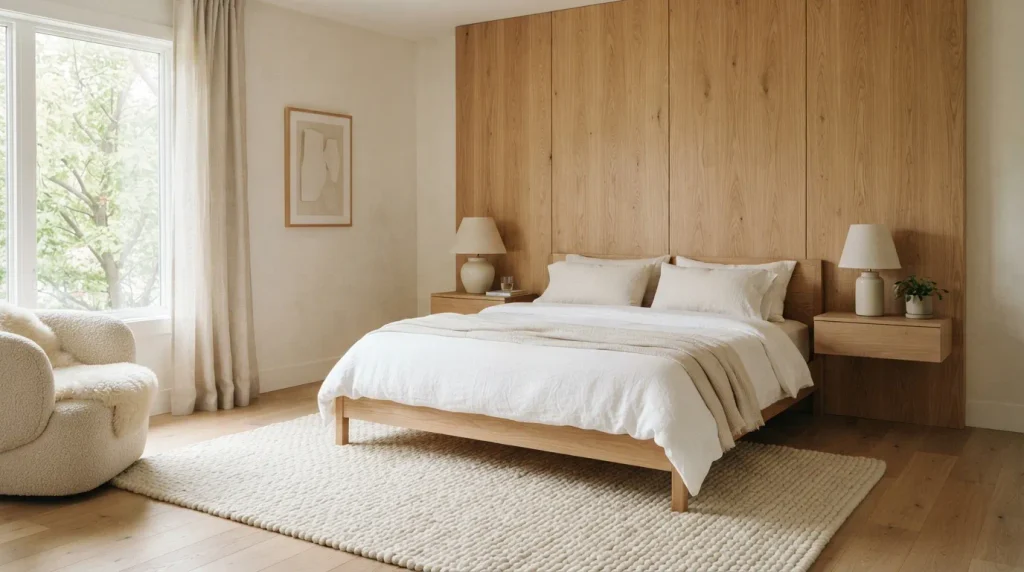
- Vertical wood panels introduce warmth and architectural texture.
- Light finishes preserve the bright character of a small bedroom.
- A feature wall can replace the need for additional decoration.
- Natural grain creates subtle pattern without overwhelming the space.
Natural wood paneling can turn an ordinary wall into the room’s main visual feature while keeping the overall design restrained. Use pale oak, ash, or light pine panels behind the bed, preferably with a simple vertical or narrow-board arrangement. The natural grain adds pattern and warmth without the busyness of wallpaper or a gallery wall. Keep the bedding, furniture, and accessories understated so the wood has room to breathe. This is particularly effective when the rest of the bedroom uses warm whites and soft beige because the materials create a cohesive palette without relying on strong decorative colors.
Before adding paneling, consider the room’s proportions and available natural light. Vertical boards can emphasize ceiling height, while horizontal layouts may make a narrow wall appear wider. In a compact bedroom, a lighter wood finish is usually the safer choice because it preserves brightness. I’ve seen this work especially well behind the bed because it creates a clear focal zone without requiring multiple decorative pieces. If permanent paneling is not practical, removable slatted panels or wood-look alternatives can provide a similar visual effect while allowing more flexibility.
16. Cozy Reading Corner
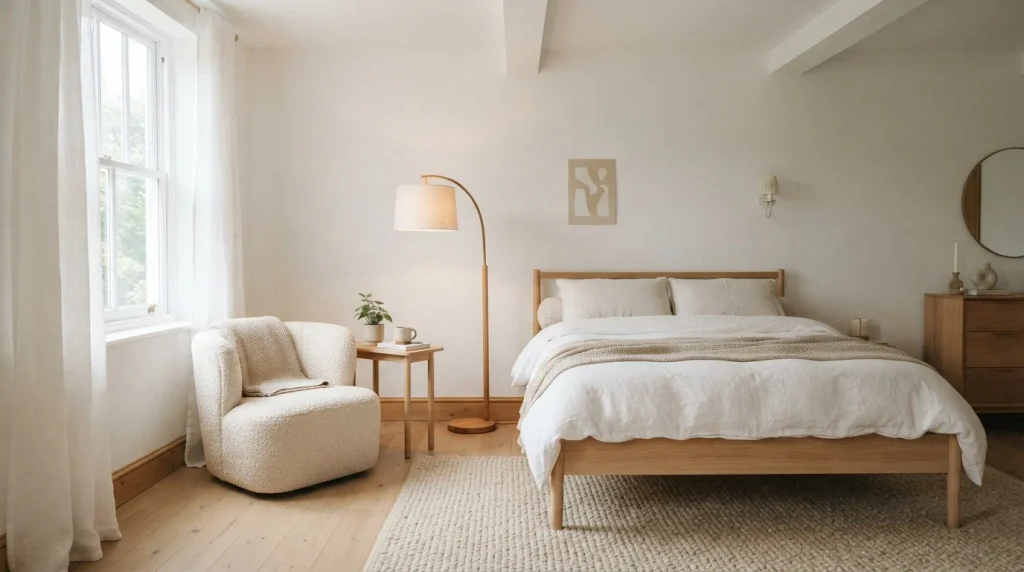
- A compact chair creates a useful retreat without overcrowding the bedroom.
- A small floor lamp adds focused light for evening reading.
- Soft textiles make an unused corner feel intentional.
- Keeping the furniture lightweight preserves the room’s open layout.
An empty bedroom corner can become one of the most useful parts of the room with just a few thoughtful pieces. Place a compact upholstered chair beside a window or in a quiet corner, then add a small oak side table and a slim floor lamp. Choose soft cream, beige, or light gray upholstery so the seating blends naturally with the rest of the room. Keep the footprint modest, especially in smaller bedrooms. The goal is to create a comfortable spot for reading, morning coffee, or folding laundry without turning the bedroom into another fully furnished living area.
Comfort matters more than decoration in a reading corner. Choose a chair with supportive proportions, add one textured cushion, and keep a small surface nearby for a book or cup. A warm floor lamp can provide focused illumination without flooding the entire room with bright light. I’ve noticed that corners feel more intentional when the materials repeat something already used elsewhere, such as oak, linen, or wool. Avoid adding too many accessories around the chair. One useful seat, one light source, and one small table can transform an overlooked area while preserving the calm, uncluttered character of the bedroom.
17. Minimal Gallery Wall
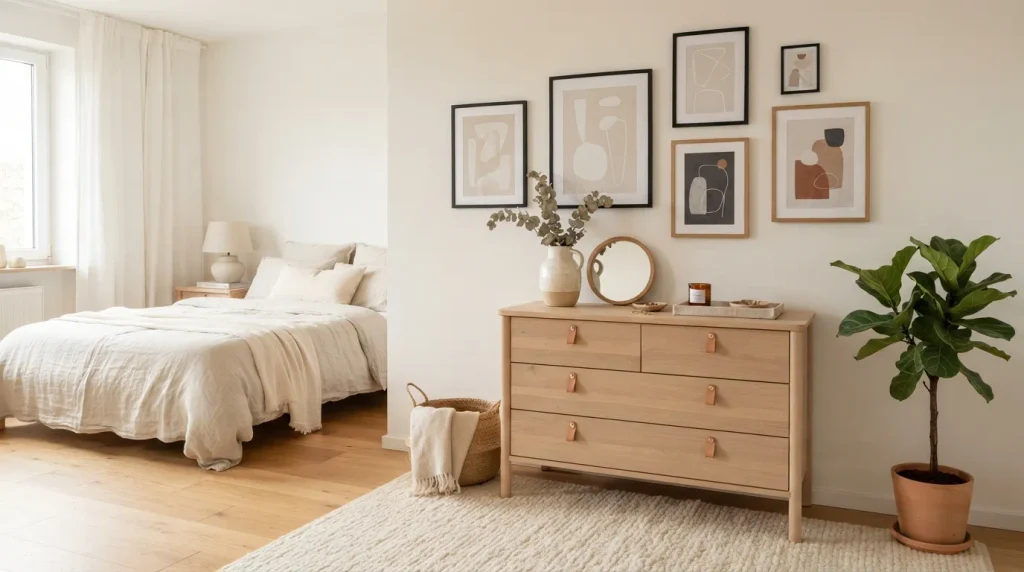
- A small artwork collection adds personality without overwhelming the room.
- Neutral prints keep the bedroom visually calm.
- Consistent frames create structure and make different artwork feel connected.
- Leaving generous wall space prevents the display from looking crowded.
Artwork can make a minimalist bedroom feel personal without filling every wall. Create a small gallery arrangement using two to five prints in muted tones such as cream, charcoal, taupe, soft gray, or dusty beige. Choose simple black, oak, or natural frames and keep the spacing consistent. Abstract shapes, botanical sketches, and understated photography work particularly well with Scandinavian interiors. Instead of covering a large wall, concentrate the artwork above a dresser or beside the bed. This creates a defined visual moment while leaving plenty of empty space for the room to retain its airy character.
A successful gallery wall is more about restraint than quantity. Select pieces that share at least one visual quality, such as a similar palette, frame material, or subject style. Arrange them on the floor first so you can test the composition before hanging anything. If the bedroom is narrow, a vertical arrangement can emphasize height, while a wider grouping can visually anchor a low dresser. In my experience, leaving more space between pieces often looks more sophisticated than squeezing everything together. The finished display should feel collected and personal, not like every available inch of wall needed decoration.
18. Cozy Floor Cushions
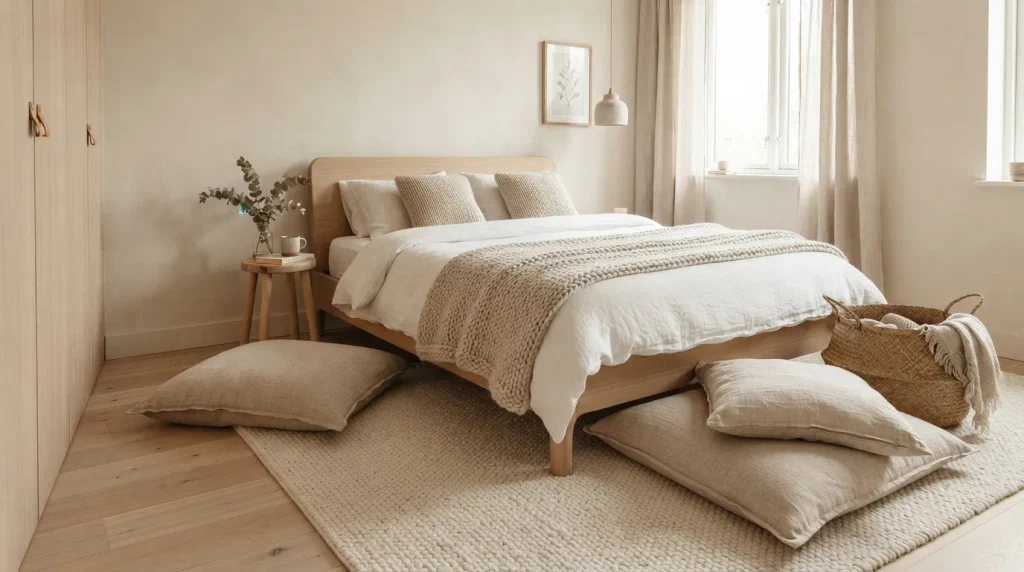
- Floor cushions add flexible seating without bulky furniture.
- Chunky woven fabrics bring warmth and tactile interest.
- Neutral colors keep the relaxed setup visually connected.
- They can be moved easily when the room needs more floor space.
Floor cushions offer an easy way to add comfort without committing to another large piece of furniture. Choose oversized cushions in oatmeal, cream, warm gray, or muted beige, preferably with linen, cotton, or chunky woven covers. Place one or two on a soft rug near a window, beside the bed, or in an unused corner. Their low profile preserves sightlines across the room and keeps the floor plan feeling open. They are also practical because they can be moved aside whenever you need more space. This makes them especially useful in bedrooms that serve several everyday purposes.
Texture is what makes floor cushions feel intentional rather than temporary. Look for covers with subtle weaving, chunky knits, or natural fabric variations, then pair them with a wool or flatwoven rug underneath. Keep the surrounding furniture simple so the cushions become a soft accent rather than another competing element. I’ve noticed that two cushions in slightly different neutral tones often look more relaxed than a perfectly matched pair. Add a small wooden tray only if you genuinely need a surface nearby. Otherwise, let the open floor and tactile materials create the relaxed Scandinavian atmosphere.
19. Whitewashed Wood
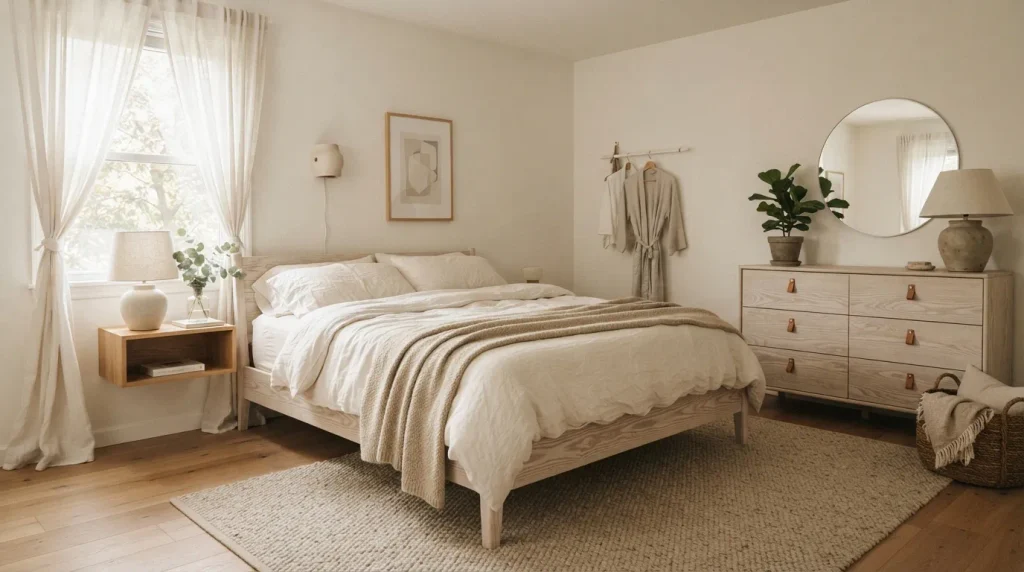
- Whitewashed wood keeps natural grain visible while creating a lighter appearance.
- It works beautifully with warm whites and soft beige textiles.
- Pale surfaces help smaller bedrooms feel brighter and more spacious.
- Mixing whitewashed and natural oak prevents the room from feeling flat.
Whitewashed wood gives a bedroom the brightness of painted furniture while preserving the organic character of real timber. Choose a lightly washed finish that allows the grain to remain visible rather than an opaque white coating. This creates a soft transition between white walls, pale flooring, and natural textiles. Pair the furniture with ivory linen bedding, a beige wool rug, and one or two warmer oak accents to prevent the palette from becoming too pale. The result feels fresh and spacious, making this approach particularly useful when you want Scandinavian simplicity without a completely colorless room.
Balance is important when working with several light surfaces. If the bed, walls, flooring, and furniture are all equally white, the room can lose depth and feel visually flat. Introduce natural oak through a nightstand, stool, frame, or woven accessory to create gentle contrast. I’ve noticed that visible wood grain becomes especially effective in rooms with plenty of daylight because small tonal variations appear throughout the space. Keep fabrics tactile rather than glossy, and choose warm rather than icy whites. This combination creates a brighter bedroom that still feels grounded, comfortable, and naturally inviting.
20. Monochrome Bedding
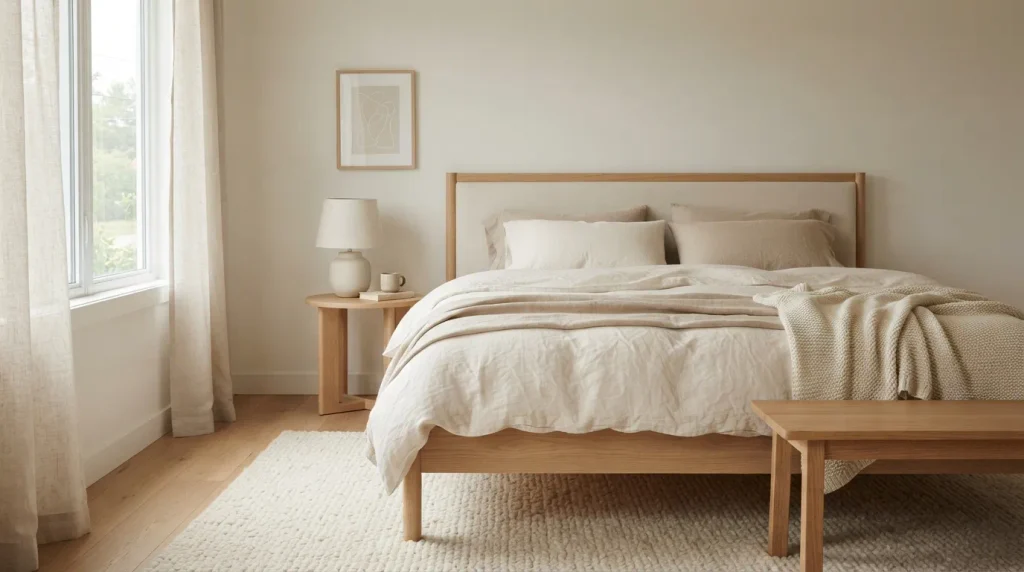
- One-color bedding creates an instantly cleaner visual foundation.
- Soft gray or cream can add depth without introducing busy patterns.
- Different fabrics keep the monochrome palette from feeling flat.
- Simple bedding makes everyday bed-making quicker and easier.
Monochrome bedding makes a bedroom look polished with surprisingly little effort. Choose one quiet color family, such as cream, ivory, warm beige, or soft gray, then build the bed using slightly different shades within that range. Instead of relying on patterns, create interest through linen, cotton, quilted fabric, and a textured throw. This keeps the bed visually simple while giving it enough dimension to feel inviting. For everyday bedrooms, the approach is also practical because fewer competing colors make it easier to mix and match bedding pieces without disrupting the overall design.
The secret to successful monochrome styling is variation in texture and tone. A cream linen duvet can sit comfortably beside ivory sheets and an oatmeal blanket because each fabric reflects light differently. Avoid choosing every item in exactly the same shade, which can make the bed look one-dimensional. In my experience, one slightly darker layer near the foot of the bed gives the arrangement enough contrast without breaking the peaceful palette. Finish with a restrained number of pillows, and the result becomes a calm focal point that supports the rest of the room rather than competing with it.
21. Compact Storage Bench
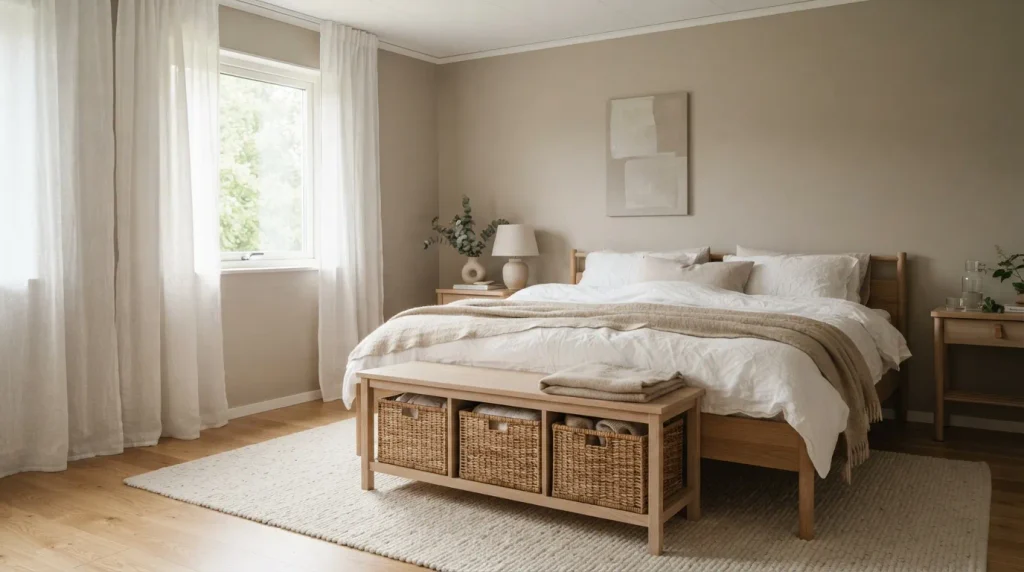
- A slim bench adds useful seating at the foot of the bed.
- Built-in storage can hide extra blankets and seasonal textiles.
- Wood or woven finishes reinforce the room’s natural material palette.
- A compact profile prevents the furniture from blocking movement.
A storage bench at the foot of the bed can solve two everyday problems at once: limited seating and limited storage. Choose a slim design in pale oak, woven material, or upholstered neutral fabric, depending on the room’s existing textures. Keep the bench narrower than the bed so it does not visually dominate the layout or interfere with walking space. Inside, store spare blankets, seasonal bedding, or extra pillows that would otherwise occupy a wardrobe shelf. This small addition can make a bedroom more functional while still supporting the clean, understated look associated with Scandinavian interiors.
Measure the available clearance before choosing a bench, especially if the bedroom is compact. You should be able to walk comfortably between the bench and nearby furniture without constantly moving something out of the way. Open woven storage works well when you want quick access, while a closed compartment creates a tidier appearance. I’ve seen narrow benches work particularly well in guest bedrooms because they provide a convenient place to sit while also keeping extra linens close at hand. Choose one strong material and keep the surface mostly clear for the calmest visual effect.
22. Organic Bedding Palette
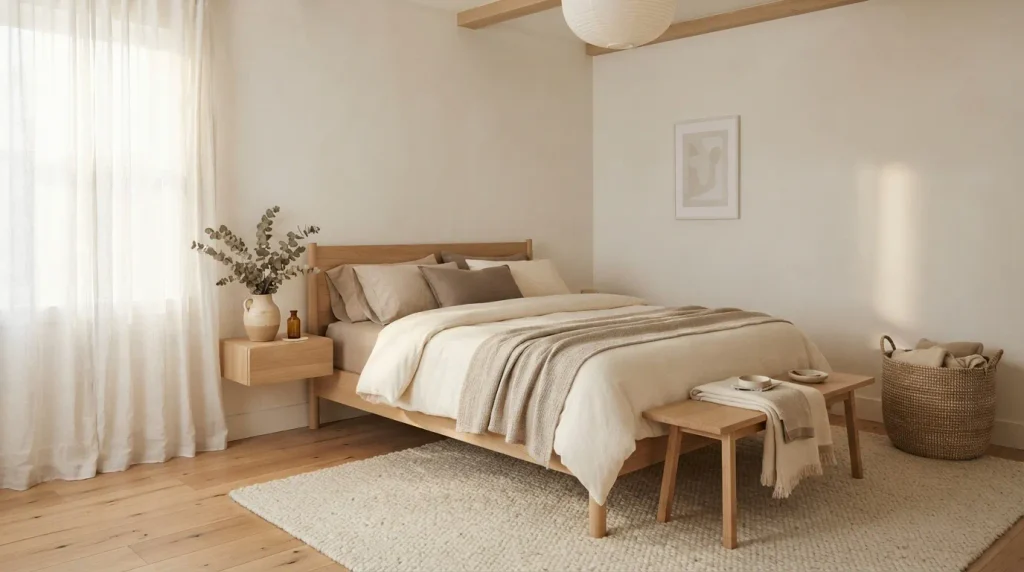
- Warm neutrals create a naturally restful foundation.
- Muted taupe and sand add depth without strong contrast.
- Natural fabrics make the bed feel comfortable and lived-in.
- Small color shifts keep the palette visually interesting.
An organic bedding palette brings warmth to a minimalist bedroom without relying on bold colors. Combine ivory, sand, oatmeal, taupe, and soft beige across linen sheets, a duvet, pillows, and a lightweight throw. The colors should sit close together but not match perfectly, allowing subtle differences to create depth. Natural fabrics such as washed linen and cotton reinforce the relaxed look while remaining comfortable for everyday use. This approach works especially well when the walls and furniture are pale because the layered neutrals give the bed enough visual weight to become a welcoming focal point without making the room feel crowded.
Keep the strongest contrast close to the center of the bed and let the surrounding pieces remain lighter. For example, pair ivory sheets with a warm beige duvet and place an oatmeal throw across the foot. A taupe cushion can add another small shift without introducing a completely new color. I’ve noticed that these gentle tonal changes make neutral bedrooms photograph beautifully because daylight reveals the texture in each layer. Avoid overly glossy fabrics or busy prints. With natural wood, woven accessories, and soft lighting nearby, the finished bedroom feels cohesive, relaxed, and easy to live with.
23. Clutter-Free Styling
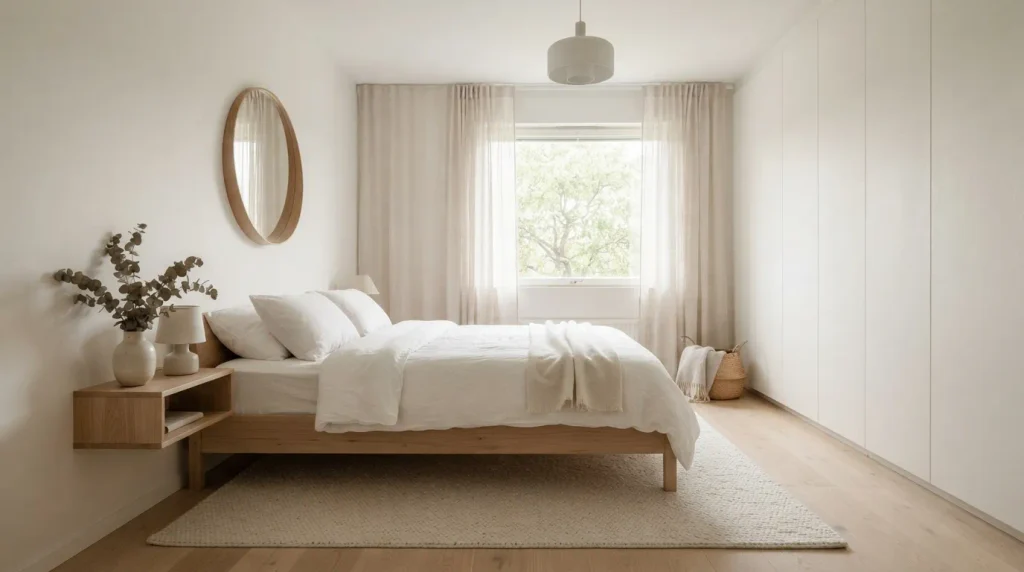
- Keeping surfaces clear makes the room feel instantly more spacious.
- Closed storage protects the calm visual appearance.
- A few meaningful objects add personality without creating clutter.
- Open floor space improves both movement and everyday cleaning.
The most effective minimalist bedroom may be the one with less on display. Keep nightstands, dressers, and shelves limited to items you genuinely use or enjoy seeing every day. Store chargers, clothing, paperwork, and spare bedding behind closed doors or inside organized drawers. Leave comfortable areas of open floor around the bed so the room feels easy to move through. This is where practical Scandinavian bedroom ideas become especially useful: the beauty comes from how the space functions, not simply from how it looks in a photograph. A tidy visual field can make even a modest bedroom feel noticeably larger.
Clutter-free styling does not mean removing every personal detail. Instead, choose a few objects that have purpose or meaning, such as a favorite book, handmade ceramic, framed print, or small plant. Give each item enough surrounding space so it can be appreciated individually. In my experience, the easiest way to maintain this look is to create a designated home for everyday items before they start collecting on surfaces. Make the bed, clear the nightstands, and return loose belongings to storage regularly. These small habits help preserve the peaceful, polished appearance that makes minimalist bedrooms so appealing.
Conclusion
A cozy minimalist bedroom does not require a complete makeover. Small changes—softer bedding, warmer lighting, natural wood, better storage, or a carefully chosen rug—can completely shift how the room feels. These scandinavian bedroom ideas are designed to help you create a space that looks beautiful while remaining comfortable and practical for everyday life. I’ve seen how a few thoughtful details can transform a room without adding clutter. Save this post on Pinterest so you can return to your favorite ideas, try one in your own space, and share the inspiration with someone who is planning a bedroom refresh. Your calm retreat can start with one simple change