21 Wall Decor Ideas: Gallery Walls, Mirrors and Art
Every home has one wall that stares back at you, blank and unfinished, while the rest of the room is done. It is usually the wall above the sofa, or the long hallway you walk past ten times a day. I lived with a blank wall for months because I was sure I needed the perfect piece of art, until I finally hung three mismatched frames I already owned. That wall looked better the same evening, not because the frames were expensive, but because something personal was finally on it.
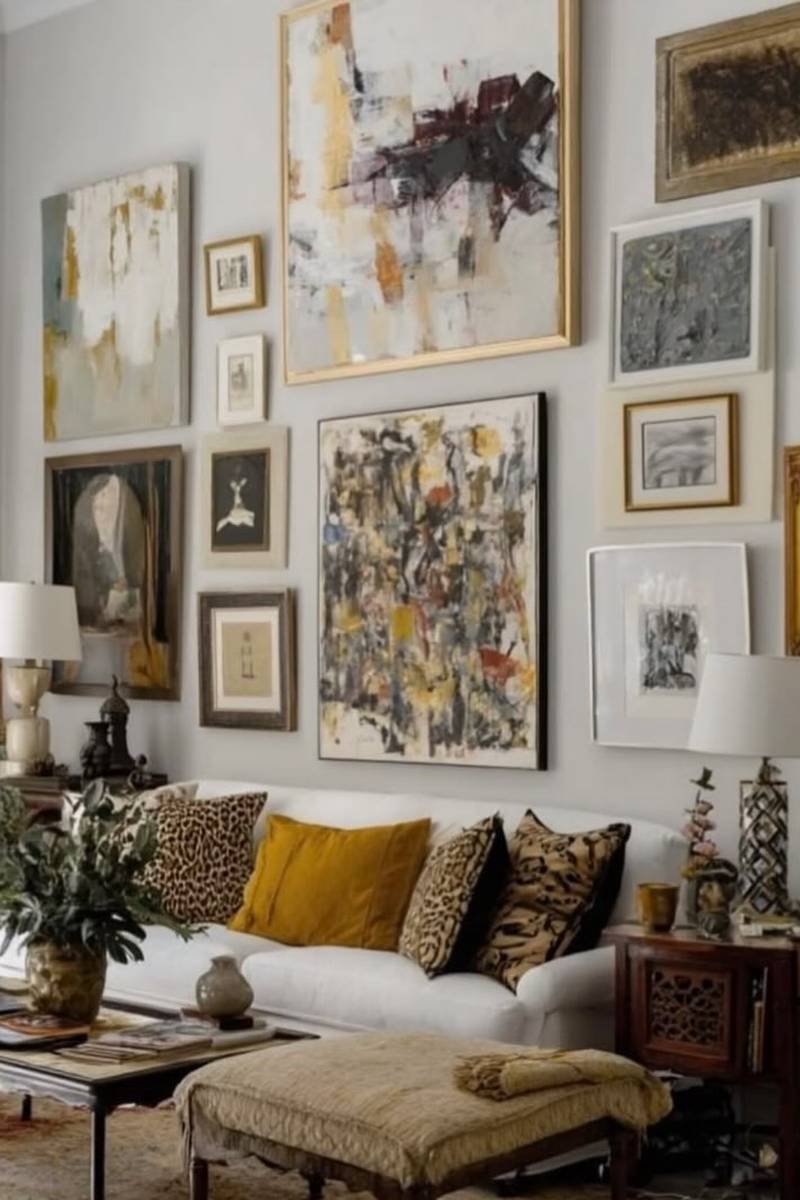
Photo: Ann Dennis (@annmdennis) on Instagram
These wall decor ideas are built for real homes on a budget: rented or owned, with the furniture you already have. You do not need a designer, a big budget, or a single expensive painting. You need a plan for the wall, the right hanging height, one mirror that bounces the light around, and art that means something to you. Pick one wall this weekend and start with what you own.

Photo: Lovely Harbor (@lovely.harbor) on Instagram
Which Wall Decor Ideas Work Best as a Gallery Wall?
A gallery wall is the most forgiving of all wall decor ideas, because a group of frames always looks more considered than one lonely picture. The trick is to decide on one idea for the wall before you start: a tidy grid, a loose salon mix, your own photographs, or a ledge. These cozy Scandinavian living room ideas show how a calm room lets a gallery wall do the talking, and the six ideas below all work in a rented flat or a first home. Start with the frames you already own, and buy only what the wall is still missing.
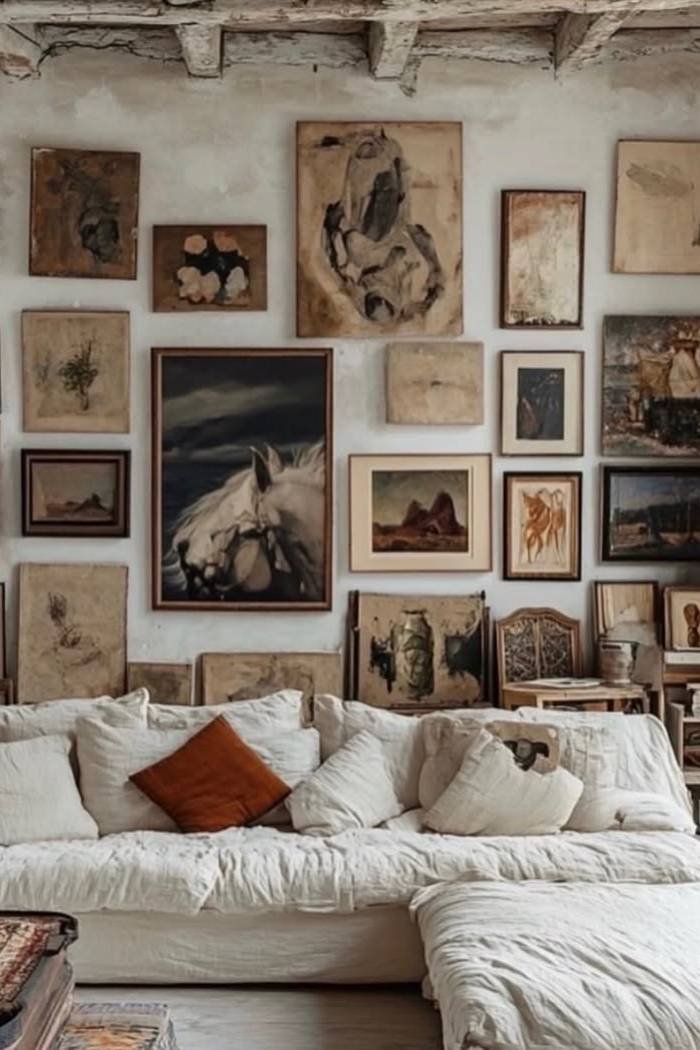
Photo: Kate Harkin (@kateharkinart) on Instagram
1. Start With a Simple Grid
A simple grid is the easiest gallery wall to get right, and the calmest to live with. Choose frames that are all the same size, hang them in straight rows with the same gap between each one, and let the pictures inside do the varying. Botanical prints or black-and-white photographs all work, because the grid gives them order. Measure the grid first, mark the centre of the wall, and build out from there.
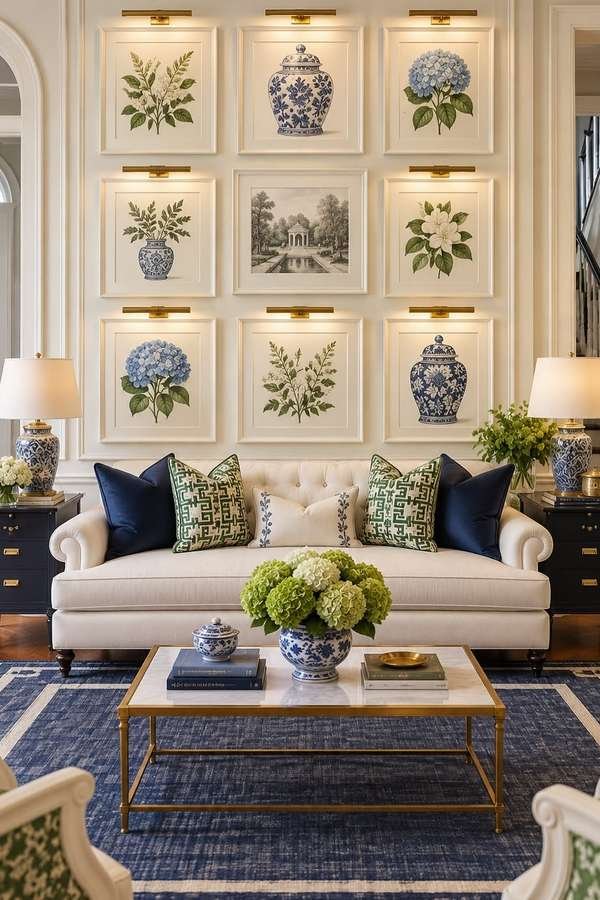
Photo: Deevayahome (@deevayahome) on Instagram
2. Mix Sizes in a Salon-Style Wall
A salon-style wall mixes frames of every size, and it suits a home that has collected art slowly over time. Start with the largest piece in the middle, then build around it with smaller frames, keeping the gaps between frames roughly the same, about two to three inches. Mix landscapes, abstracts and small photographs, but keep the frames in two or three finishes so the wall feels collected rather than random. Step back after every third frame to see where the next one belongs.
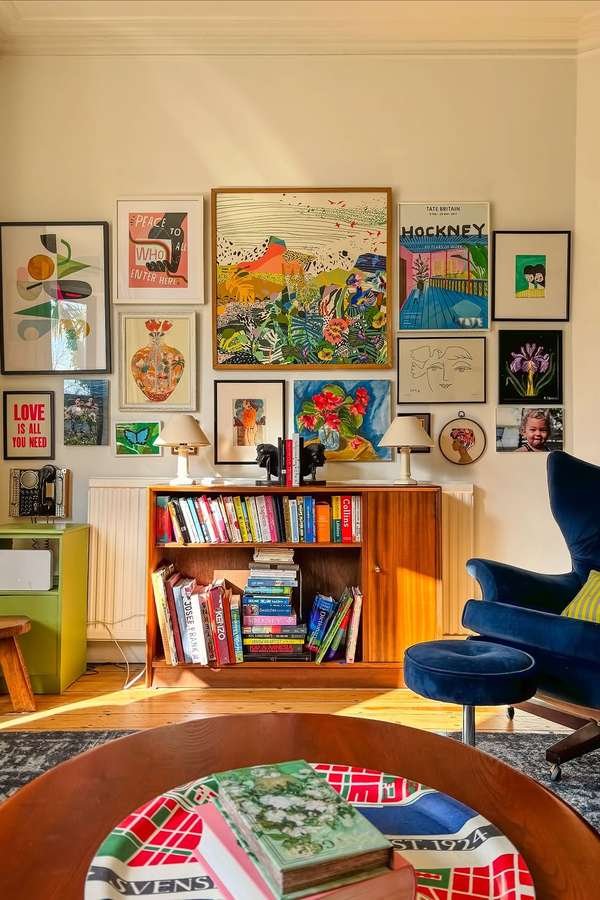
Photo: Catherine Nice (@kittymccall) on Instagram
3. Make a Photo Gallery Wall of Your Own Pictures
A photo gallery wall of your own pictures is the most personal wall in the house, and it costs almost nothing. Print your favourite photographs in black and white so different pictures from different years still sit happily together, and use matching frames to give them order. Mix close family portraits with one or two wider shots from trips. Hang it where you actually stop and look, above the sofa or along the hallway.
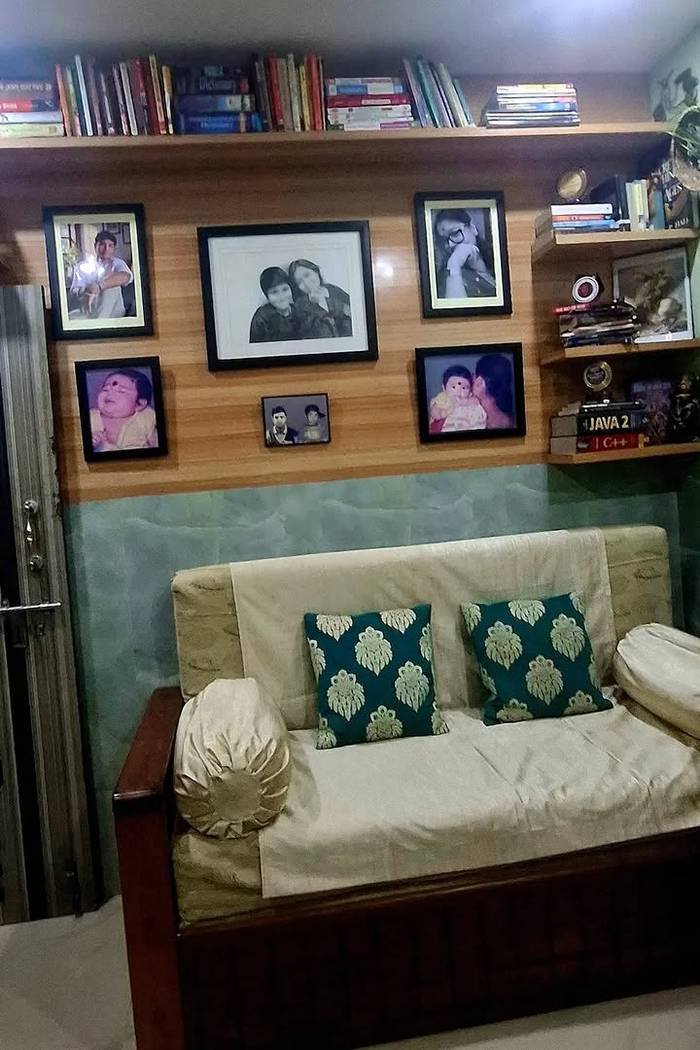
Photo: Saheli Ghosh (@saheli052026) on Instagram
4. Rest Frames on a Picture Ledge
A picture ledge is a gallery wall for people who like to change their minds. The ledge holds the frames, so you can lean art against the wall, overlap two frames, and swap a print in seconds without new holes. Hang one long ledge above a sofa or a bed, or run two short ledges up a hallway, and layer a large frame at the back with a small one in front. Add a tiny vase at one end so the ledge reads as a shelf, and keep the frames to one colour family.
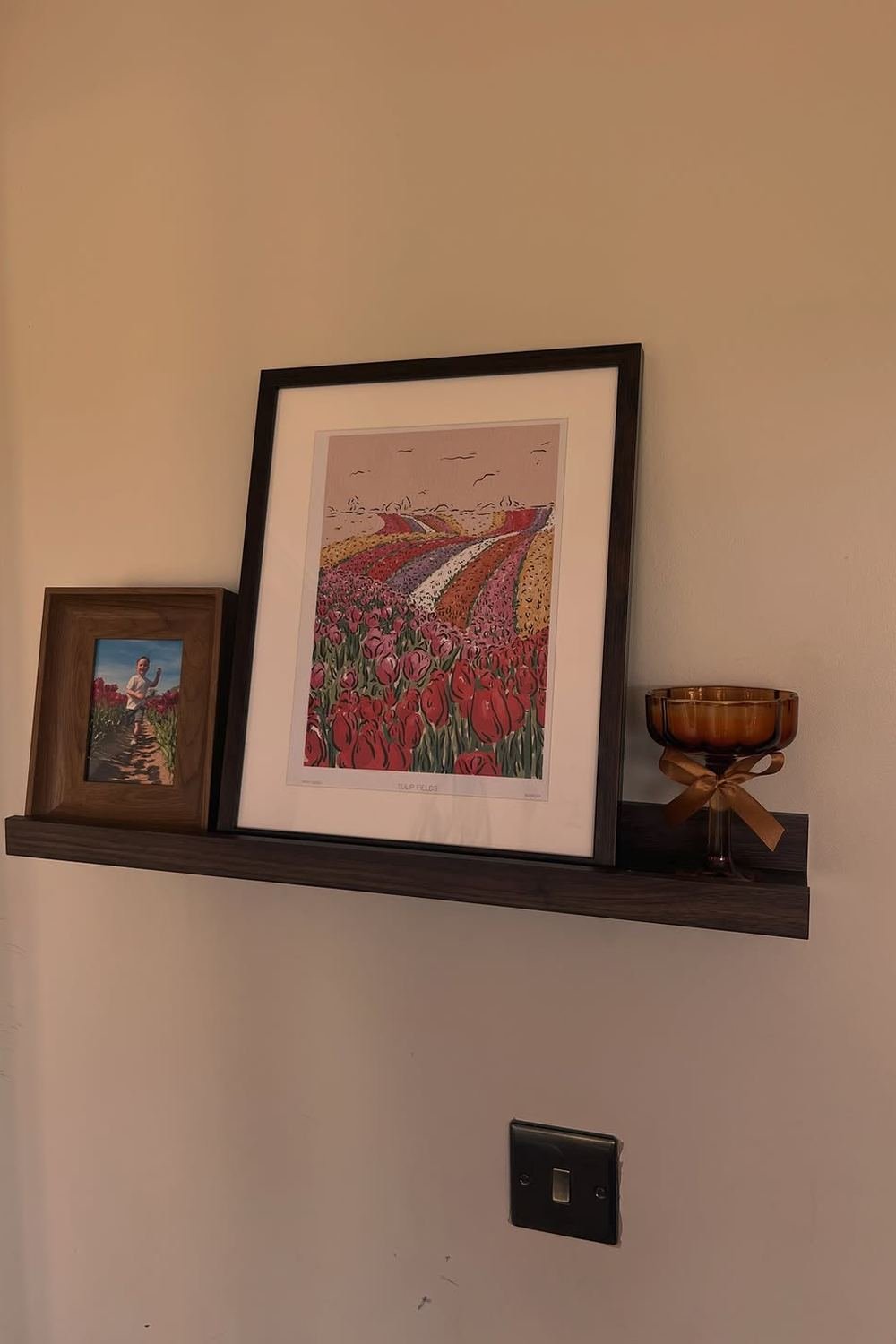
Photo: Harriet Reed (@willow.cottage21) on Instagram
5. Run a Gallery Down a Hallway
A hallway is the most wasted wall in most homes, and a gallery wall turns it into the most looked-at one. Hang frames in a single straight line at eye level down the length of the hall, or run two rows if the ceiling is high. Keep the frames small and the pictures personal, because a hallway is seen up close, and a row of family photographs or small prints rewards a slow walk. Leave the same gap between every frame, and start where the hallway begins.
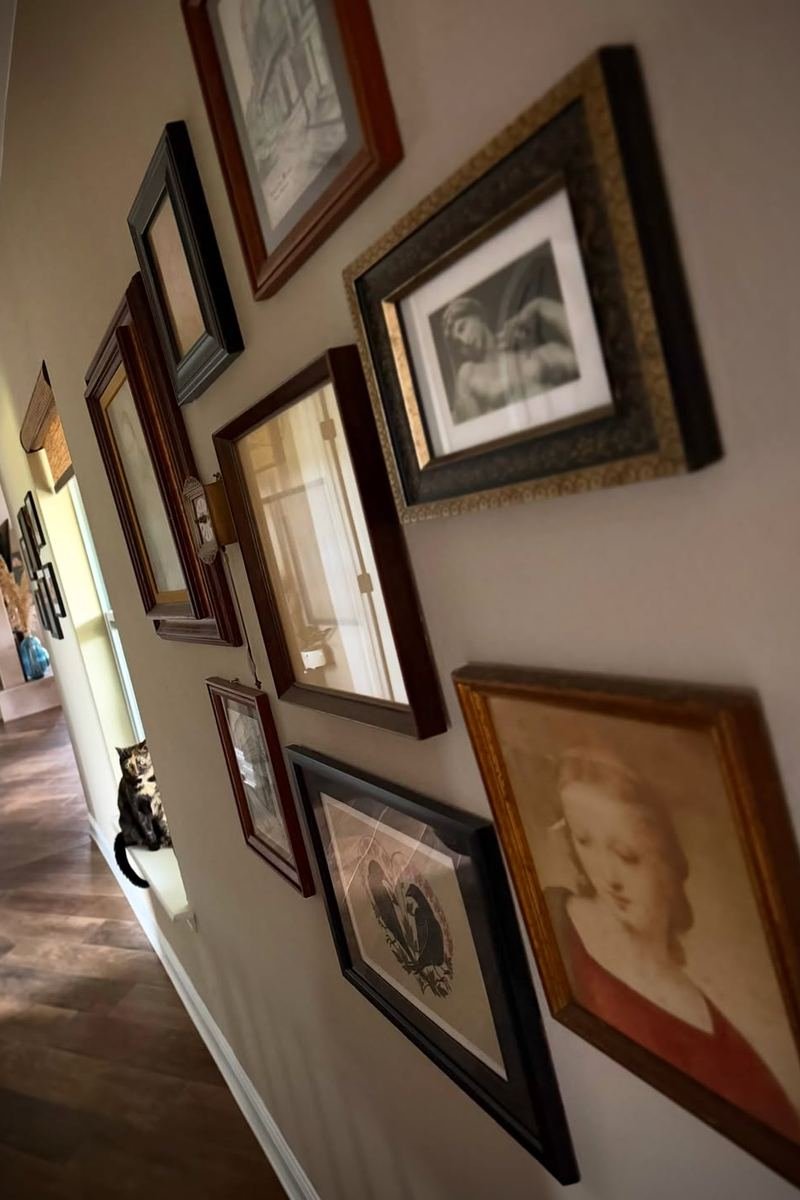
Photo: Todd Bowe (@todd0167) on Instagram
6. Follow the Stairs With a Gallery Wall
A staircase wall is made for a gallery, because the stairs give you a natural line to follow. Hang frames so their centres rise with the steps, keeping the same distance from the stair line all the way up, and let the arrangement climb at the same angle as the handrail. Gold frames suit a traditional stairwell, while black frames suit a modern one. Start at the bottom with the largest frame and get smaller as you climb.
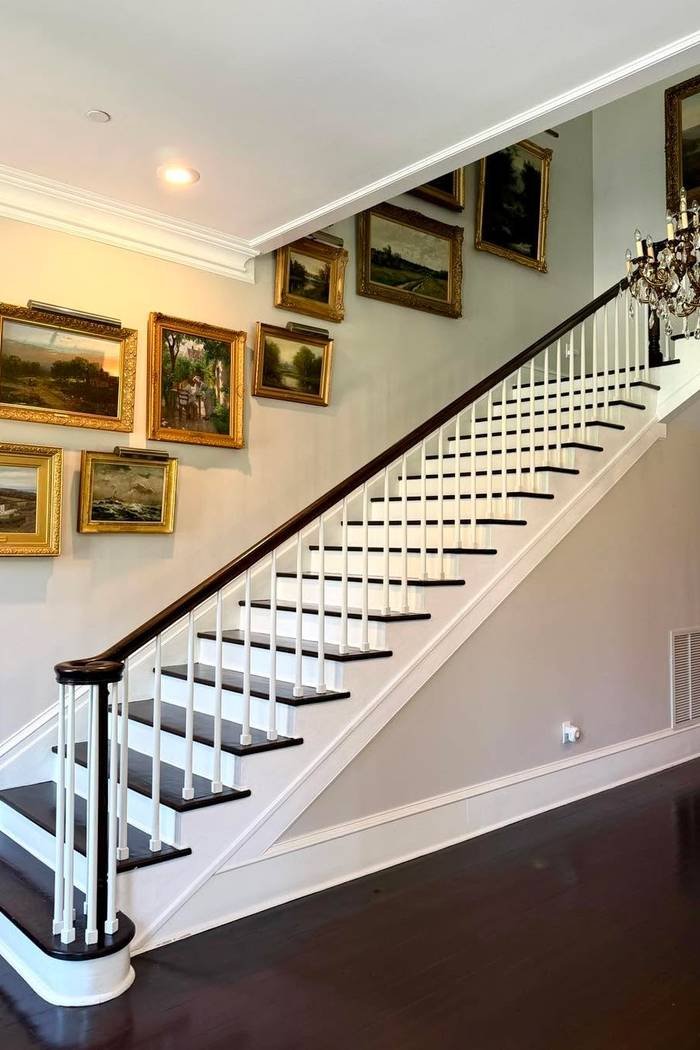
Photo: Collins + Dixon (@collinsanddixon) on Instagram
How High Should You Hang Pictures — and How Do You Get It Right?
Most gallery walls fail on height, not on taste. Art hung too high floats away from the furniture, and art hung too low feels like it is about to slide off the wall. The rule is simple: the centre of a picture should sit at eye level, about 57 inches from the floor, and art above furniture should sit close to the piece below it, not halfway to the ceiling. The five ideas below cover the spots that confuse people most.
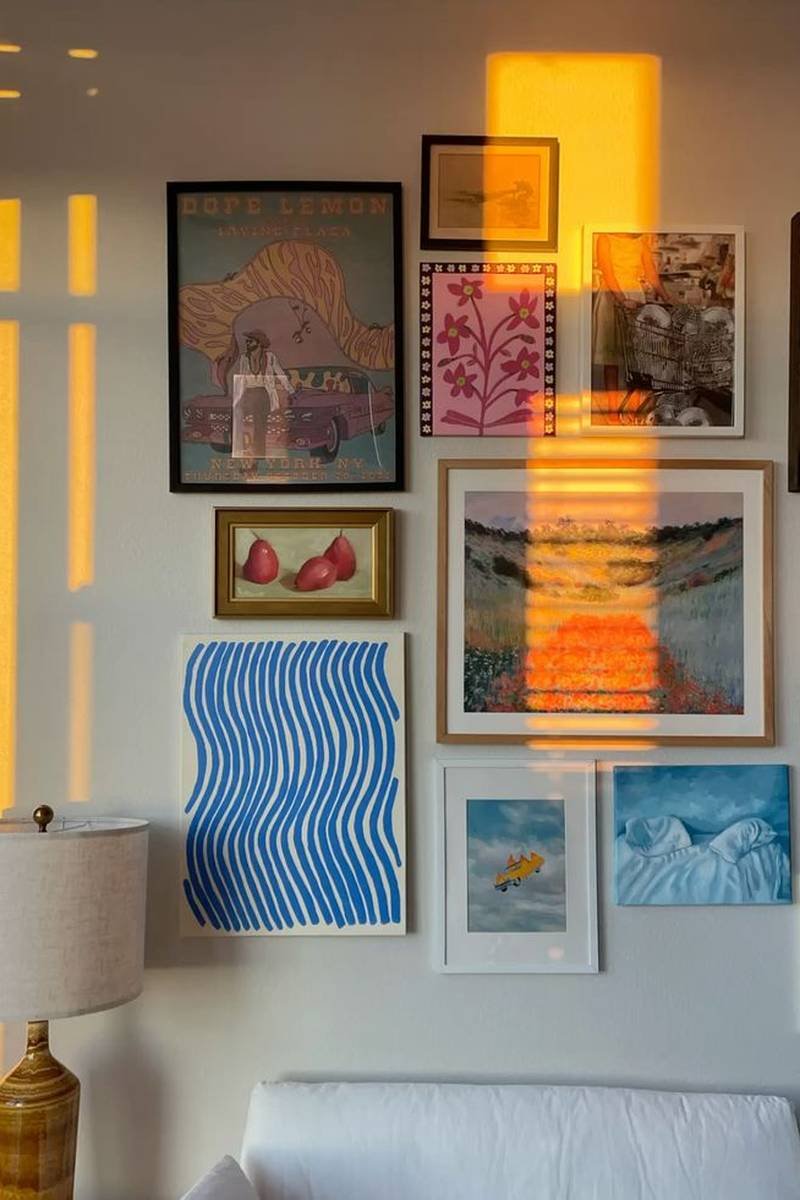
Photo: Soft Spaces (@softspacessecret) on Instagram
7. Hang Art at Eye Level — the 57-Inch Rule
The 57-inch rule is the one measurement worth memorising. Museums hang art so the centre of each piece sits 57 inches from the floor, which is average eye level, and the same number works in a living room. Measure the height of your frame, halve it, and mark the wall at 57 inches minus that half for the top of the frame, or simply hold the picture up and mark where its centre lands at your eye level. A large landscape above a sofa looks calm at this height, because you meet the picture instead of looking up at it.
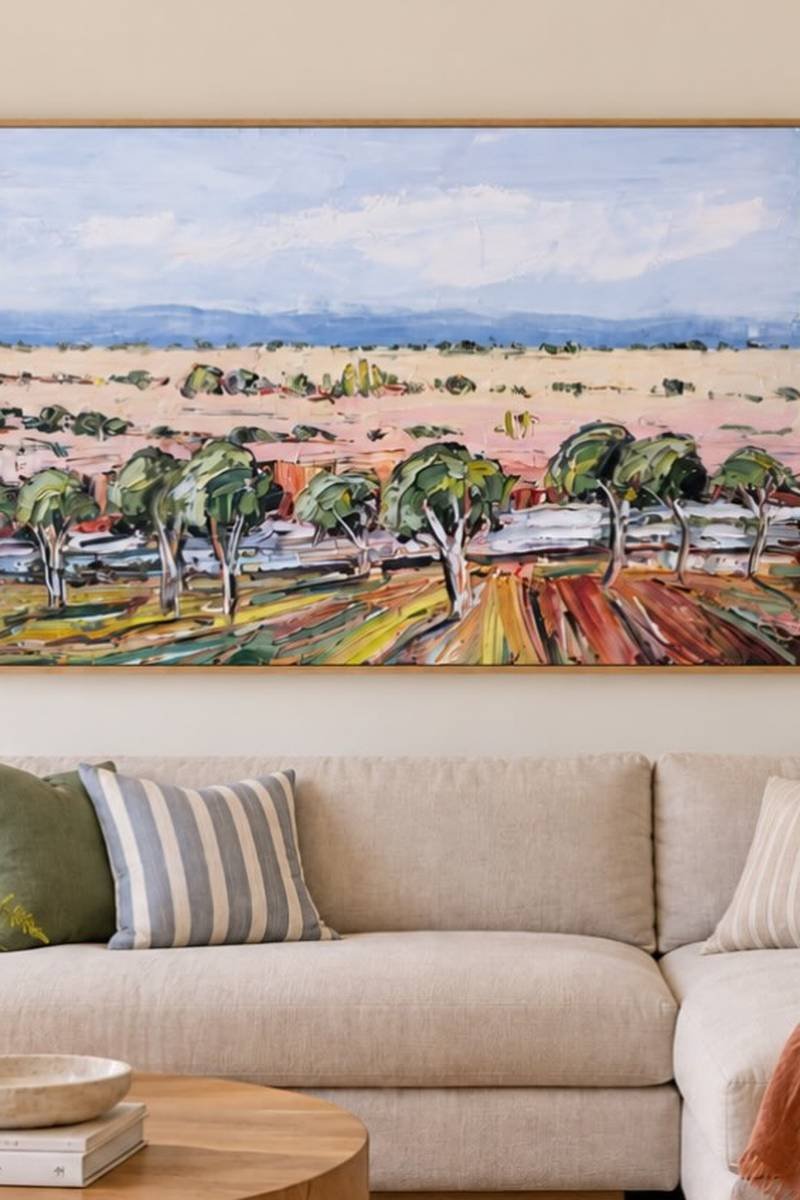
Photo: Angela Hawkey (@ahawkey) on Instagram
8. Hang Art Above the Sofa, Two-Thirds as Wide
Art above a sofa should be about two-thirds as wide as the sofa, and it should hang six to eight inches above the back cushions. A triptych, three panels of one landscape, is an easy way to fill the width without one enormous frame, and it suits a long sofa in a small room. These minimalist living room ideas show how a single calm arrangement above the sofa keeps the whole room feeling uncluttered. If your art is narrower than two-thirds of the sofa, add a second small frame beside it.
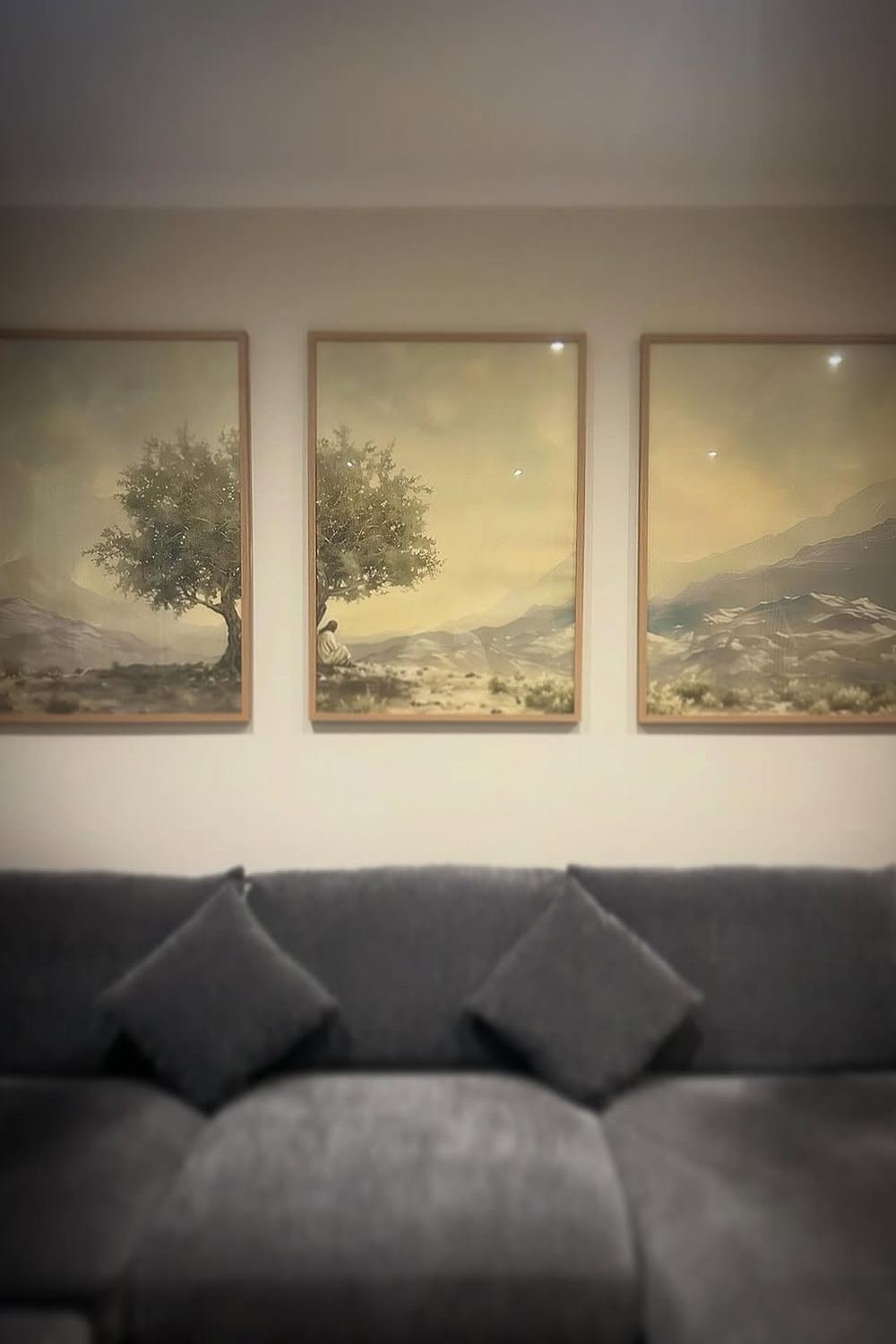
Photo: Amie Harris (@amiebharris) on Instagram
9. Hang Art Above the Bed, Low and Wide
Art above a bed should sit low and wide, about six inches above the headboard and roughly the same width as the bed itself. A single horizontal piece works best, because a bed is a horizontal shape, and a tall vertical frame above it fights the shape of the room. These bedroom headboard ideas show how the art and the headboard can share one calm line. Keep the colours soft and the subject restful: it is the last thing you see at night.
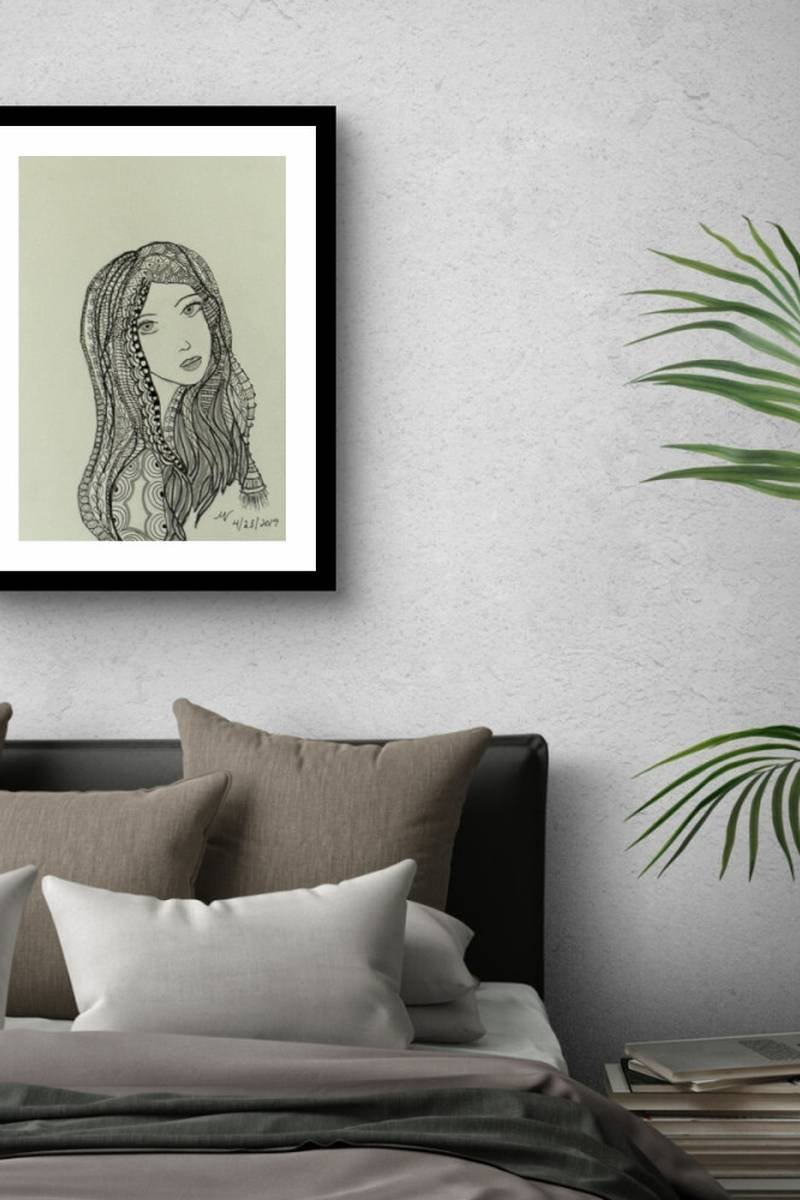
Photo: Mariam Nouvel (@manouv01) on Instagram
10. Hang Plates on the Wall Like Art
Decorative plates are the cheapest art you can hang, and a plate wall brings colour and pattern to a kitchen or dining room for the price of a few plate hangers. Start with plates you already own, and arrange them on the floor first so the shape feels balanced. Hang the largest plate near the centre and let smaller ones circle around it, keeping the gaps even. Use proper plate hangers, and never hang a plate you would be heartbroken to lose where it can be knocked.
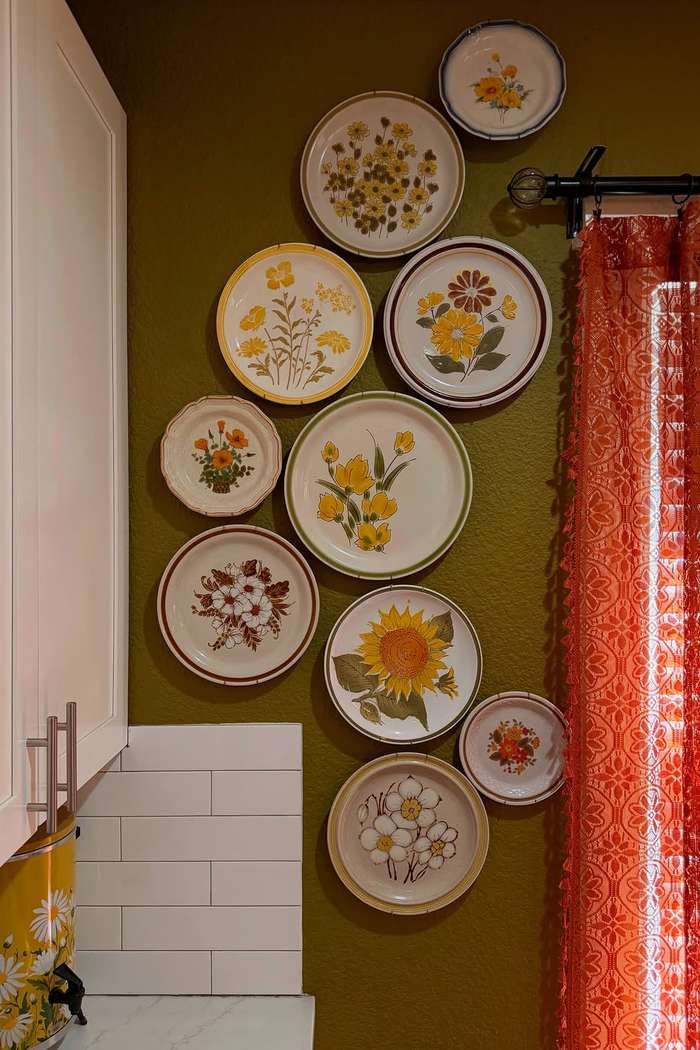
Photo: Veronica (@wanderwagonvintage) on Instagram
11. Hang Without Holes — Renter-Friendly Tricks
Renters can have a gallery wall too, and the trick is to hang without holes. Adhesive picture strips hold light frames on smooth walls, a picture ledge needs only two screws that are easy to fill, and leaning large frames on a shelf or a sideboard needs no fixings at all. Keep frames light, use two strips per frame, and test one strip on a hidden patch of wall first. A floating shelf with four small abstract prints gives you a whole gallery with two holes in the wall, and you can take it all down in ten minutes when you move.
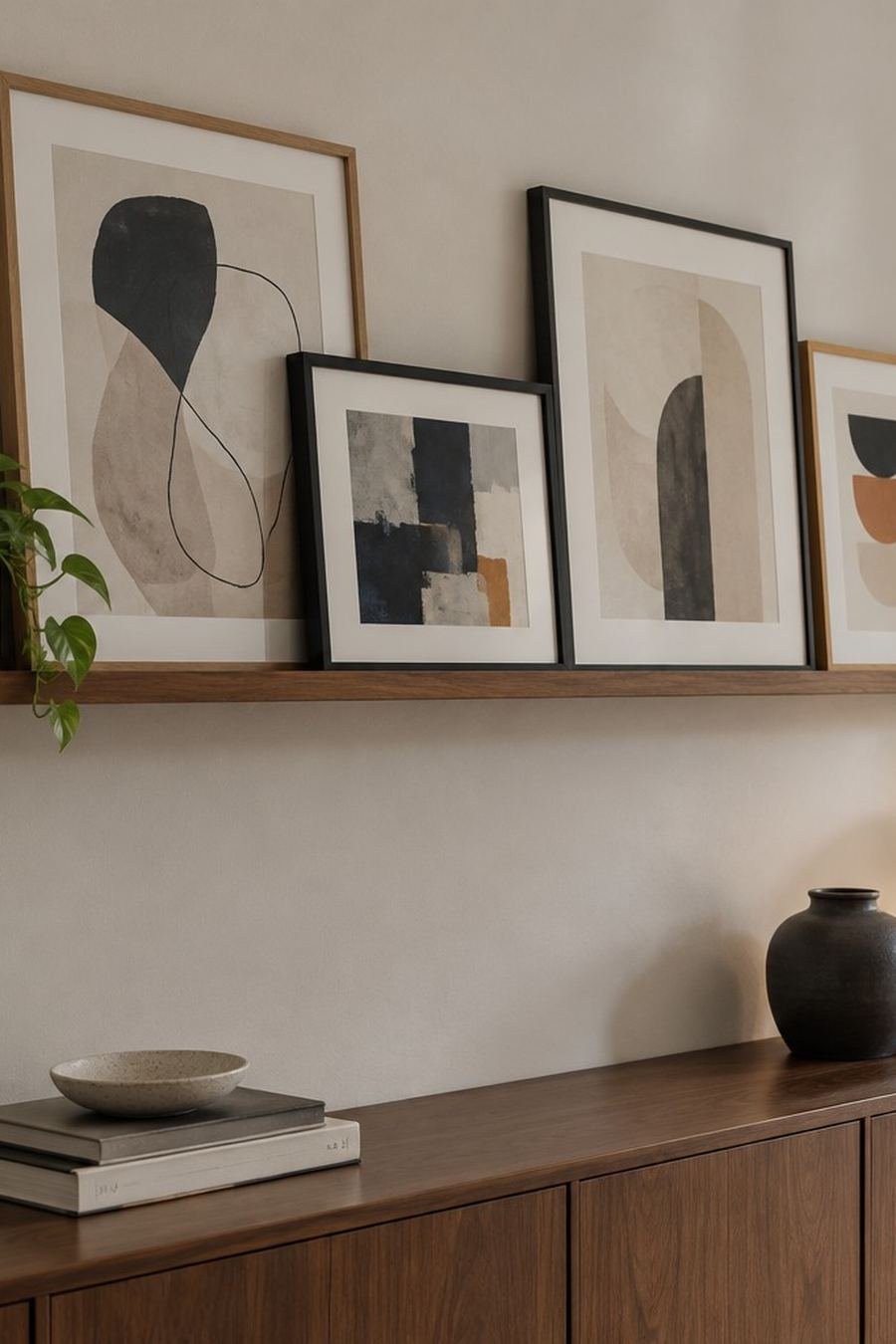
Photo: ThurmanatorX Art (@thurmanatorx2) on Instagram
Which Mirrors Are the Best Wall Decor Ideas for Small Rooms?
A mirror is the hardest-working piece of wall decor you can buy, because it does two jobs at once: it fills a blank wall and it makes the room feel bigger and brighter. A mirror opposite a window doubles the daylight, a floor mirror doubles the space, and a round mirror softens straight lines. These sage green living room ideas show how a mirror sits naturally in a calm, lived-in room, and the five ideas below cover the mirrors worth spending on first.
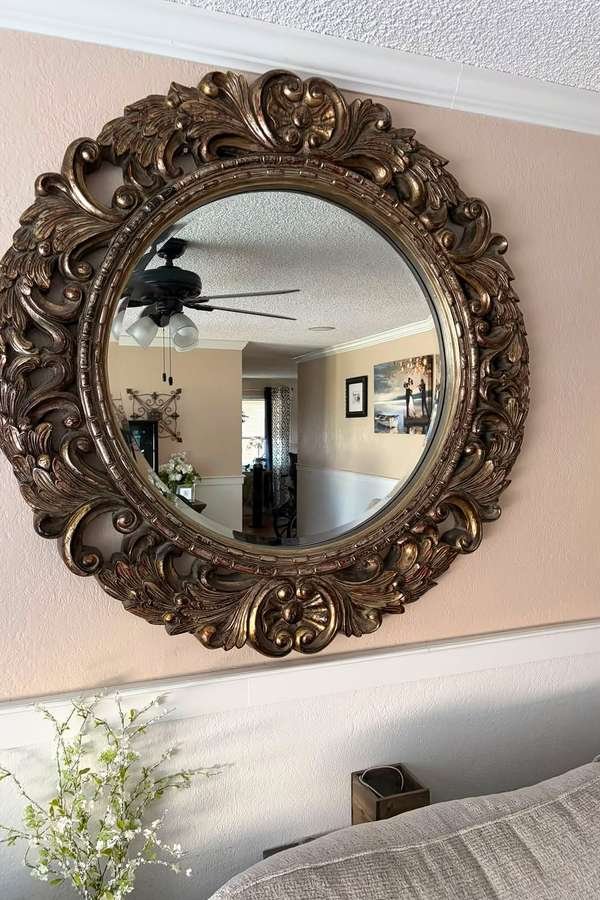
Photo: Anita Byrd (@anitapretty05) on Instagram
12. Hang One Large Round Mirror
A large round mirror is the safest first mirror, because its shape suits almost every room. Hang it above a sofa, a console table or a bed, and keep it about two-thirds as wide as the furniture below it, just like a picture. A thick dark frame suits a modern room, while a thin gold frame suits a softer one. The round shape breaks up all the rectangles in a room, the sofa, the rug, the windows, and it reflects the light without ever looking like a bathroom mirror that wandered into the living room.
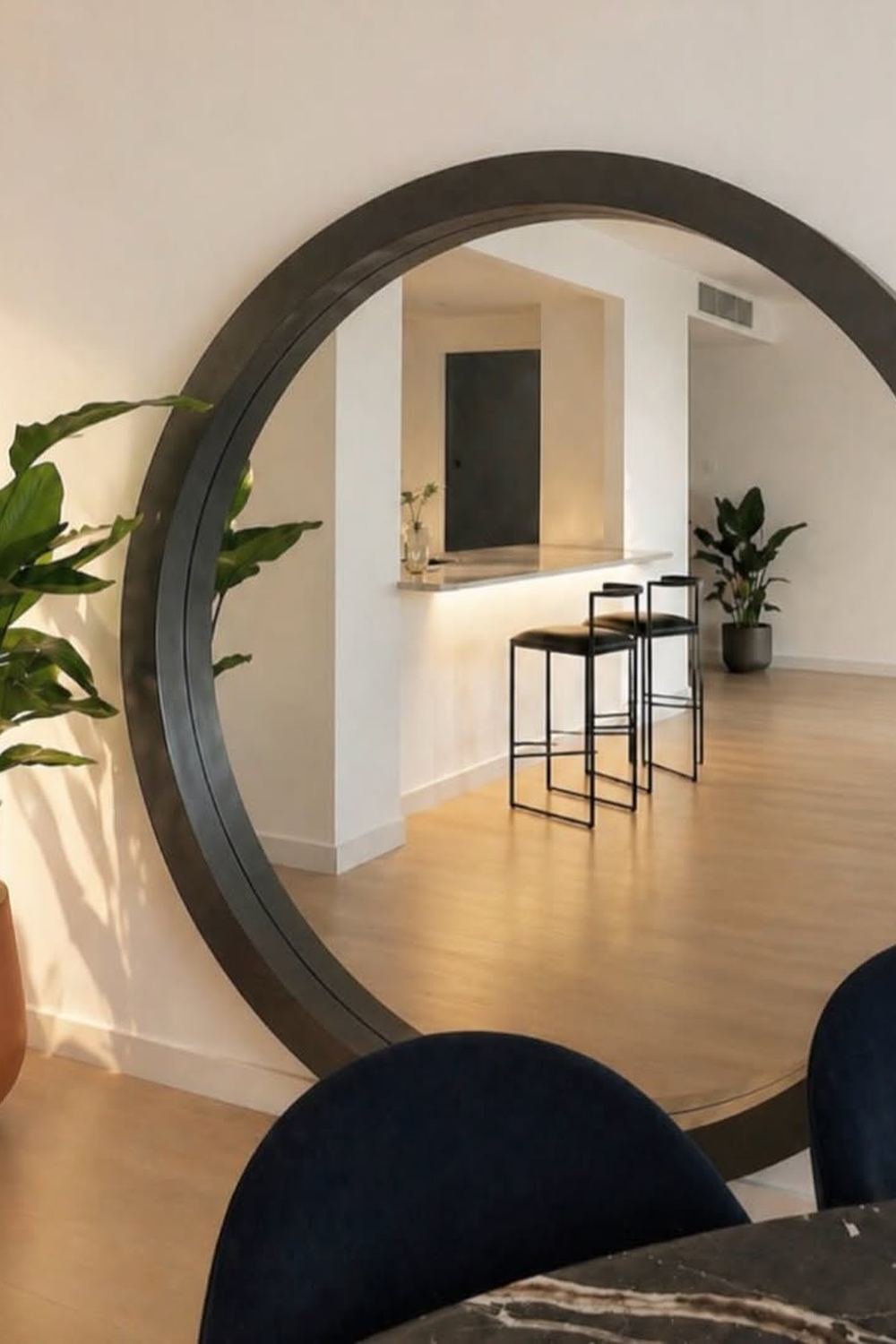
Photo: Home Figures (@homefigures) on Instagram
13. Lean an Oversized Floor Mirror
An oversized floor mirror is the quickest way to make a small bedroom feel twice as big, and it needs no hanging at all. Lean it against the wall at a slight angle, in a corner where it catches the window light, and anchor the bottom so it cannot slip. A tall arched floor mirror with a thin black frame suits a neutral bedroom, and it doubles as the mirror you check your outfit in before you leave. Keep the floor in front of it clear, because a mirror crowded with shoes just reflects the mess.
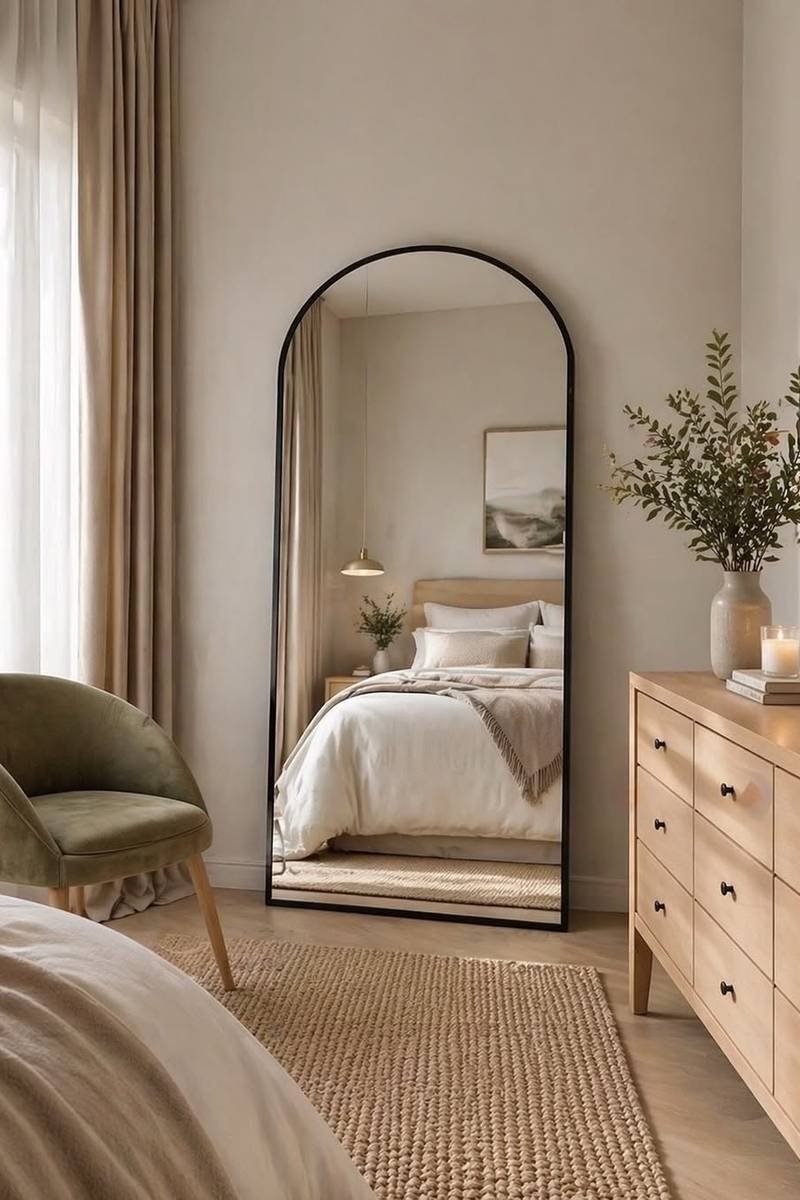
Photo: Ligia (@_love_house2home_) on Instagram
14. Put a Mirror Opposite a Window
A mirror opposite a window is the oldest trick in decorating, and it still works better than any other. The mirror catches the daylight and throws it back across the room, so a dark living room feels brighter without a new lamp or a lighter paint colour. A tall ornate mirror in a gold frame suits a bright room with French windows, because the mirror doubles the view of the windows themselves. Hang it exactly opposite the window, and keep the wall between them free of clutter.
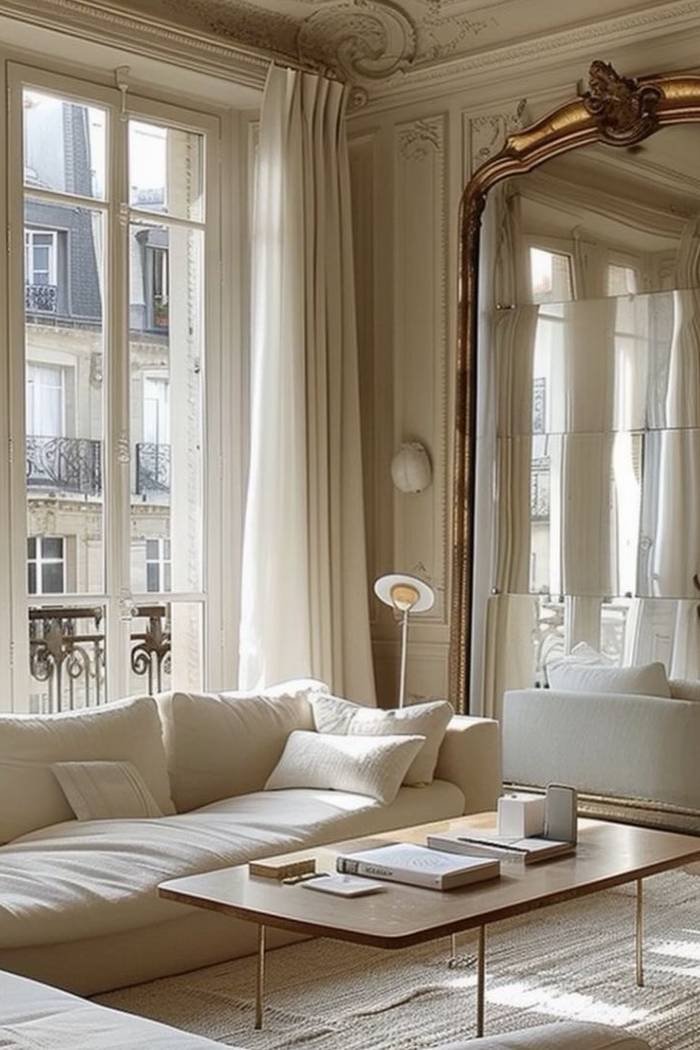
Photo: Ann Dennis (@annmdennis) on Instagram
15. Choose an Arched Mirror to Soften a Room
An arched mirror softens a room full of hard edges, and it suits a bedroom better than any other shape. The curved top echoes a window or a doorway, so the mirror feels like part of the architecture rather than something hung on it. A black-framed arched floor mirror leaning beside the bed works in a pink bedroom, a white bedroom or a grey one, because the shape does the decorating and the frame stays quiet. These romantic bedroom ideas use the same softening trick.
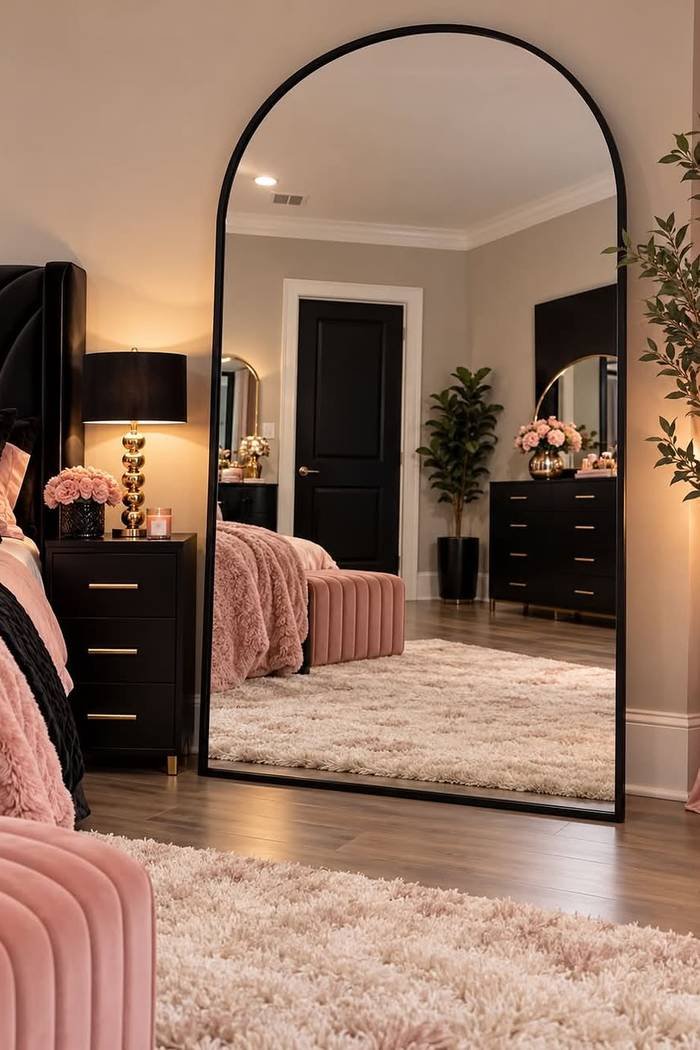
Photo: Chantell Suggs (@1101difrantkids) on Instagram
16. Hang a Mirror Above a Console Table
A mirror above a console table is the classic entryway or hallway arrangement, and it works because the two pieces are made for each other. Hang the mirror so its bottom edge sits six to eight inches above the table, and keep it narrower than the table itself. Dress the table simply, a vase of flowers on one side and a small bowl on the other, so the mirror can reflect them and double the display. An ornate carved mirror suits a traditional console, a plain round one suits a modern console, and either way you get a last look before you leave.
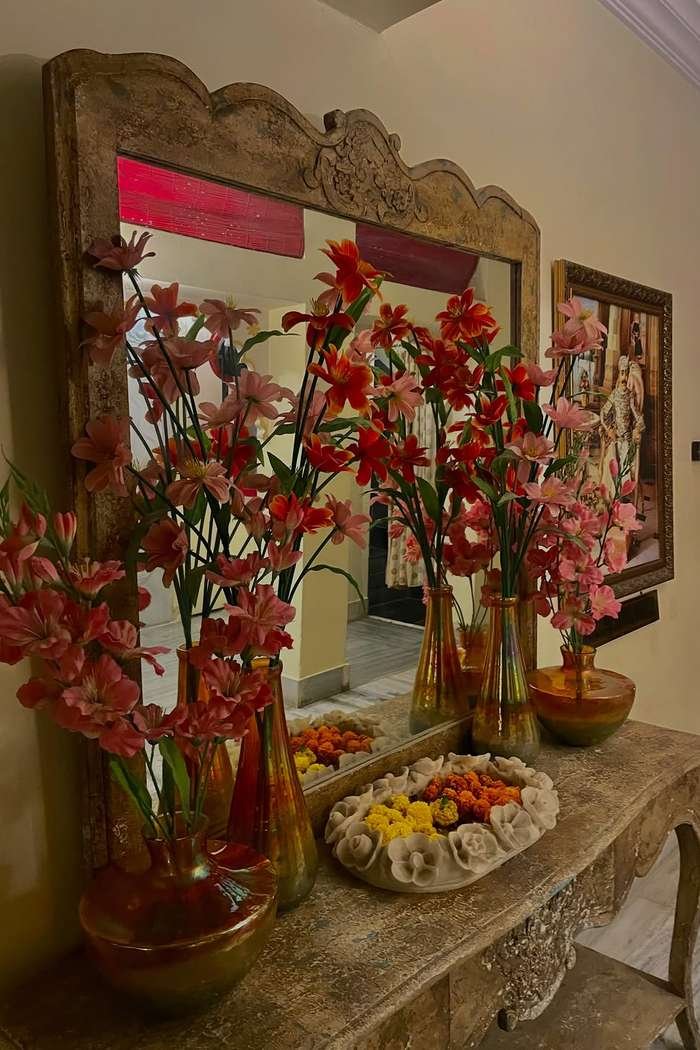
Photo: Swati Asthana Saini (@swati_0317) on Instagram
How Do You Fill Frames With Art on a Budget?
Expensive art is not what makes a wall look good. What makes a wall look good is art you chose on purpose, in frames that suit it, hung at the right height. A thrifted frame with a bold print, a vintage landscape found for a few pounds, or one large painting instead of ten small ones: these fill a wall without emptying your budget. The five ideas below all start cheap, and they all end with a wall that looks like you meant it.
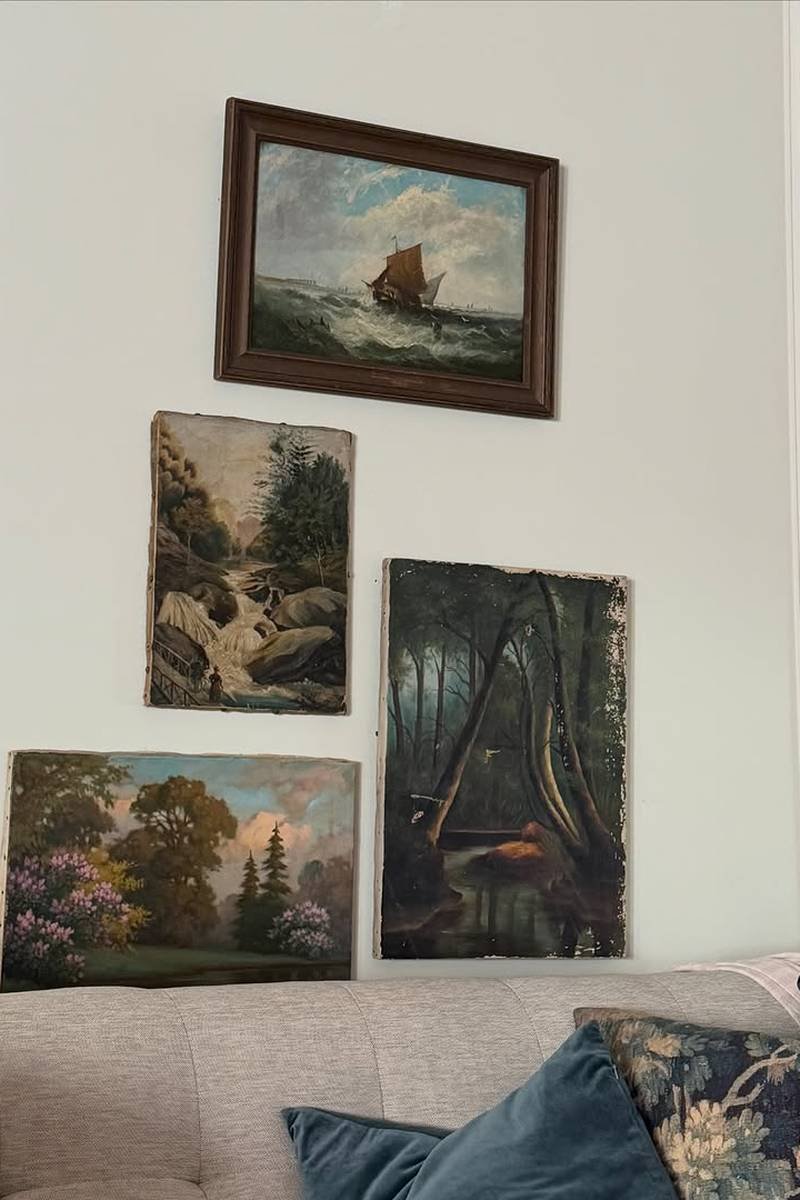
Photo: Chloe Warner (@homedecorallure) on Instagram
17. Hunt for Frames at the Thrift Store
Thrift stores are the best place to find frames with character, because a solid wood frame with a bit of age beats a new plastic one every time. Look for heavy frames with real glass, carved details and warm wood grain, and ignore whatever faded print is inside, because you are buying the frame, not the picture. A dark wood frame with a bold watercolour inside, hung on its own, makes a stronger statement than a whole row of matching shop-bought frames. Clean the glass and tighten the corners, and it looks like it cost ten times what you paid.
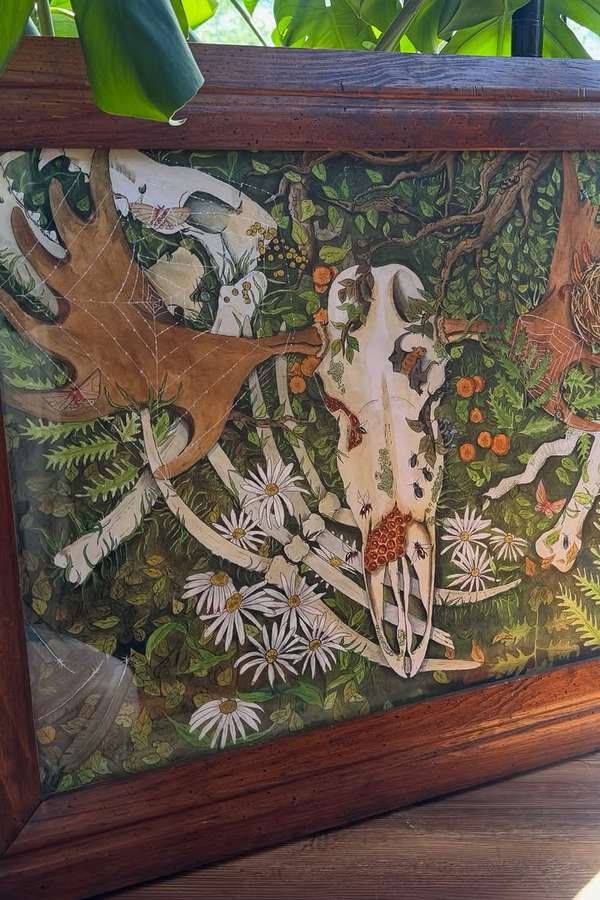
Photo: Megan Moore (@meganmoore_art) on Instagram
18. Buy Vintage Landscape Art on a Budget
Vintage landscape paintings are the bargain of the art world, because oil paintings of trees, hills and skies sell for a fraction of what a new print costs. Look in thrift stores, flea markets and online second-hand listings for landscapes in ornate carved frames, and choose paintings with soft, muted colours that sit calmly on a wall. These modern rustic living room ideas show how one vintage landscape anchors a whole room. A muted painting of a single tree is the easiest kind to live with, because it never argues with the room.

Photo: Carrie Frantz (@raisedexpectations) on Instagram
19. Choose Affordable Prints That Look Expensive
Affordable prints look expensive when you frame them like expensive art. Choose a large print, at least 50 by 70 centimetres, give it a wide white mount, and hang it in a simple dark frame with real glass. A large landscape print in a dark frame on a pale wall reads as a proper painting from across the room, and nobody needs to know what it cost. Buy the frame first and the print second, and hang the pair at eye level with nothing else beside it.
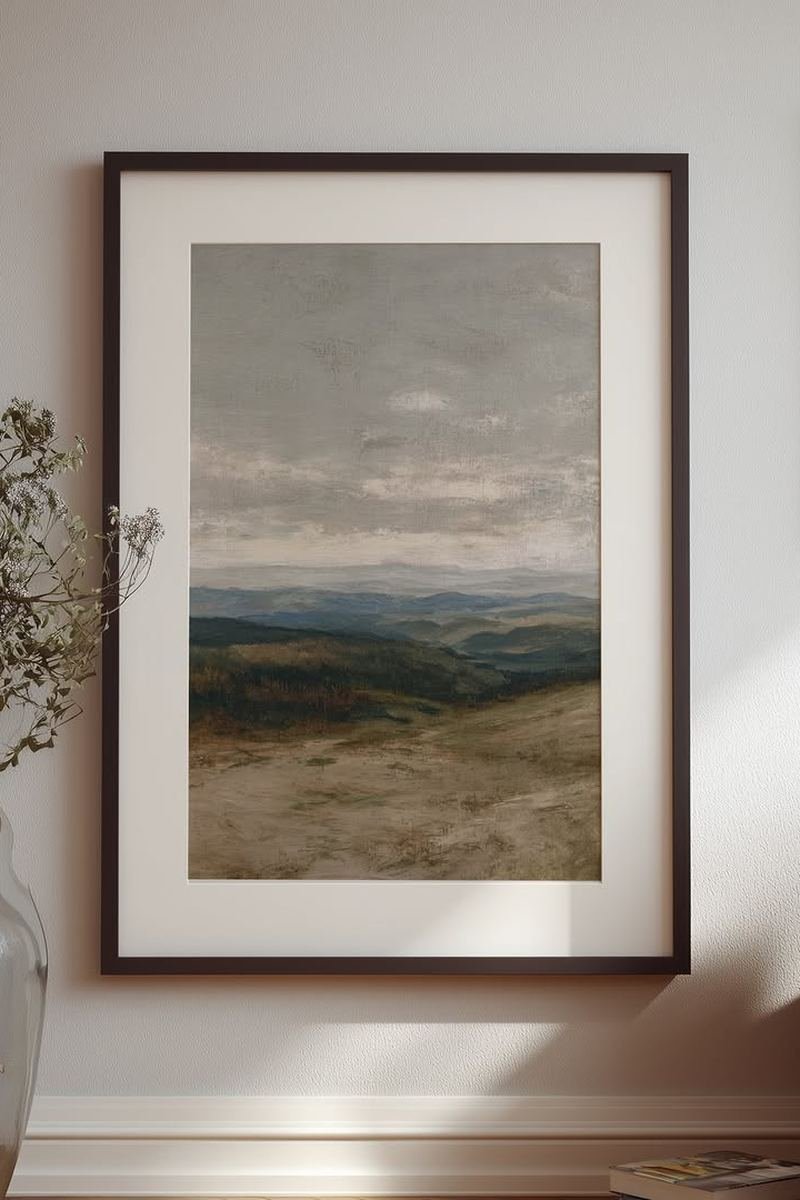
Photo: Brush & Palettes (@brushnpalettes) on Instagram
20. Let One Big Piece Do the Work
One big piece of art does the work of ten small ones, and it is often cheaper than a whole gallery wall. A single large landscape painting on a grey wall fills the room, gives your eyes one place to rest, and needs only two fixings. Choose a painting with colours already in your room, hang it at eye level, and leave the wall around it empty. The empty space is part of the idea: one confident piece with breathing room always looks more expensive than a crowded wall.
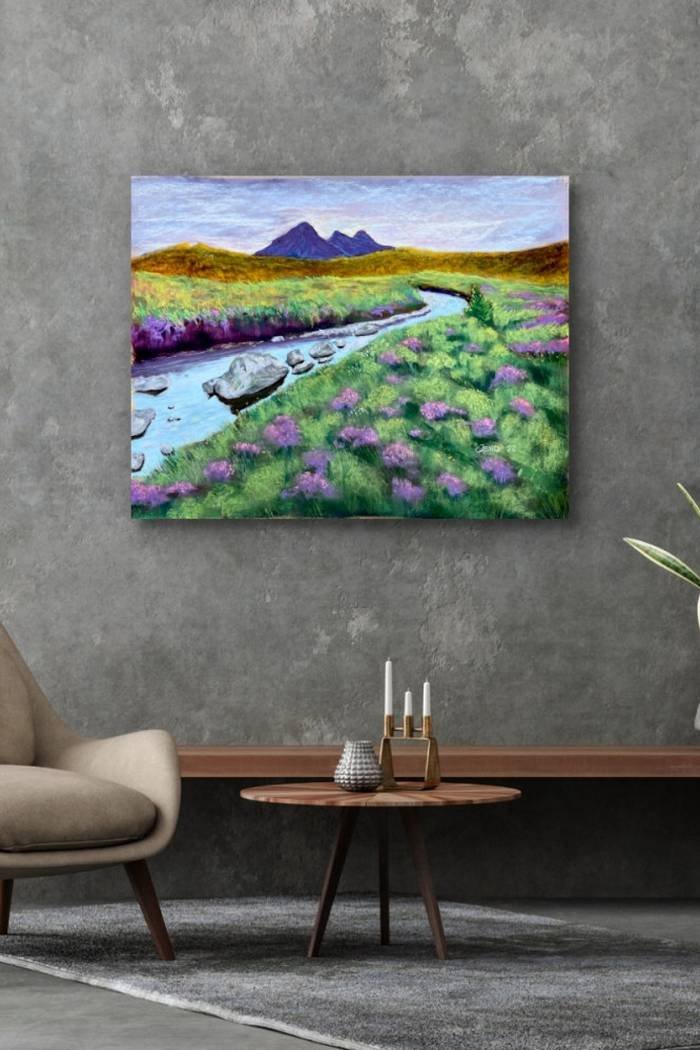
Photo: Charles Eugene Hayden (@gene.hayden.9) on Instagram
21. Shop Your Own Home First
Before you buy anything for a wall, shop your own home first. Walk through every room with fresh eyes and gather the frames, prints and small artworks that are hiding in spare rooms, on top of wardrobes or behind other furniture. A colourful gallery wall above a fireplace can come entirely from pieces you already own, rearranged with a plan instead of scattered by accident. Move a print from the bedroom to the living room, and the whole house feels new without a single purchase.
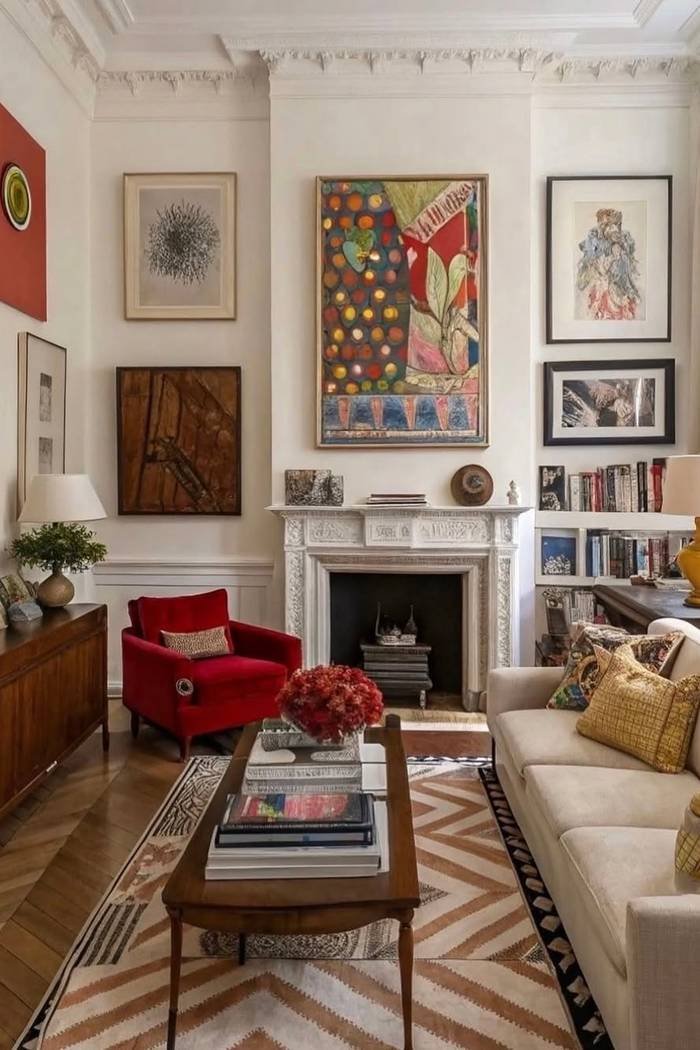
Photo: Analisse Taft (@altforliving) on Instagram
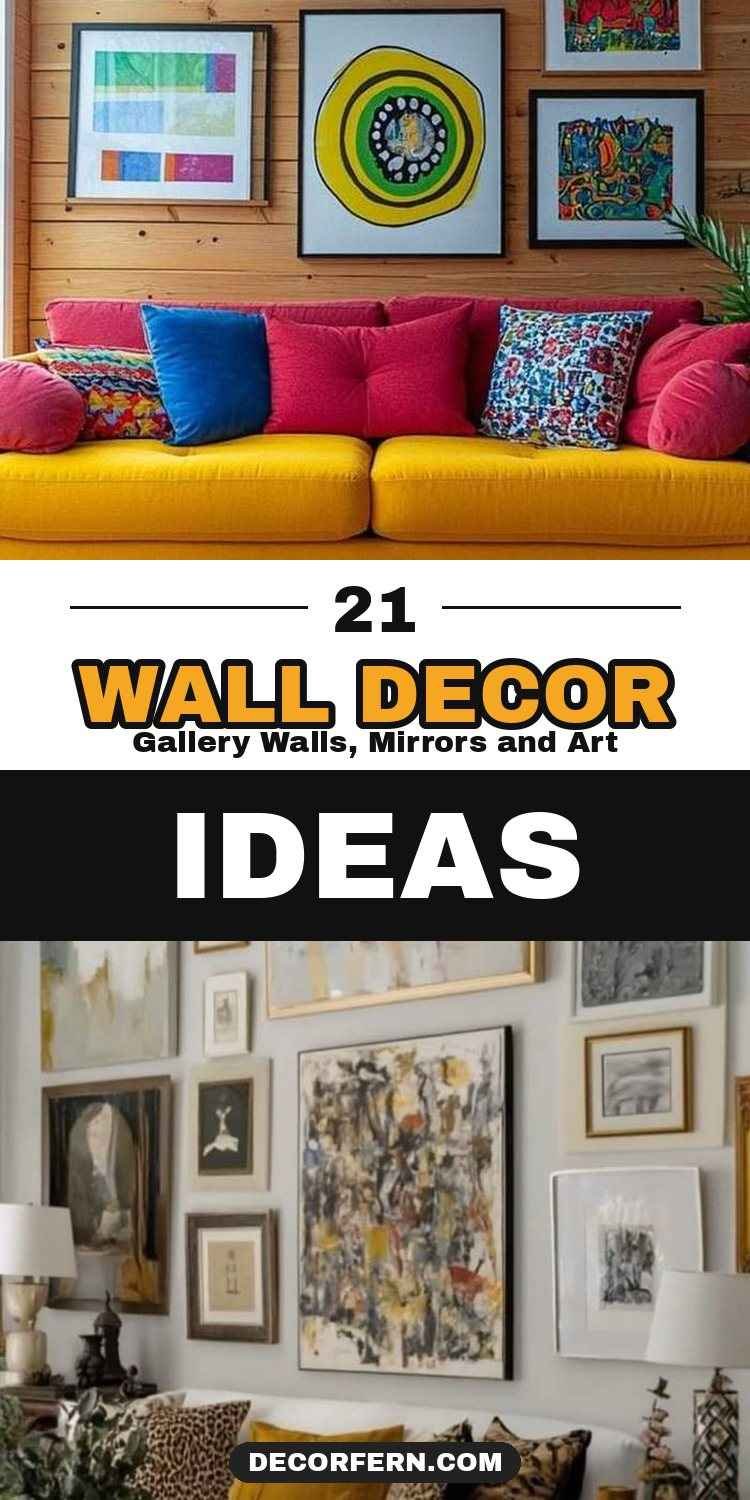
A finished wall is a decision, not a renovation, and the best wall decor ideas start with the room you have, not the room in a showroom. Pick one wall and hang one thing at the right height this weekend. If you want to freshen the rest of the house at the same time, these spring home decor ideas show where to start. Your home does not need to be new. It needs one wall that feels like yours, a mirror that catches the light, and art that means something to you.
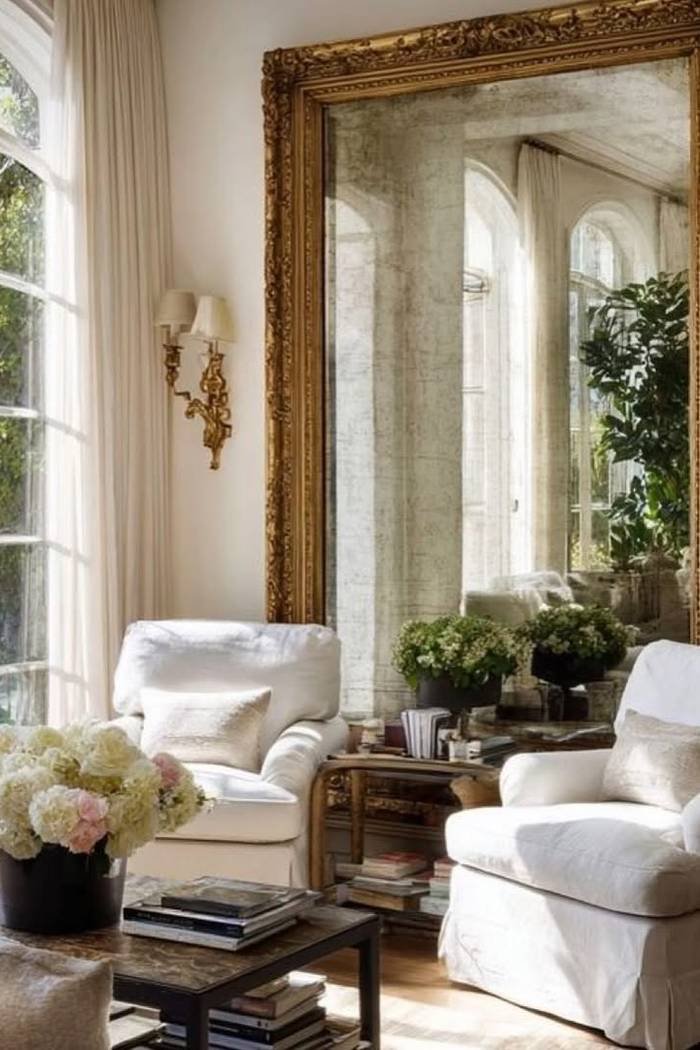
Photo: Ann Dennis (@annmdennis) on Instagram
💬 Join Our Decor Community
Decor Fern | Home Decor Ideas & Inspiration — share your rooms, get ideas, and chat with fellow decor lovers.
Join the Facebook GroupFollow on Facebook