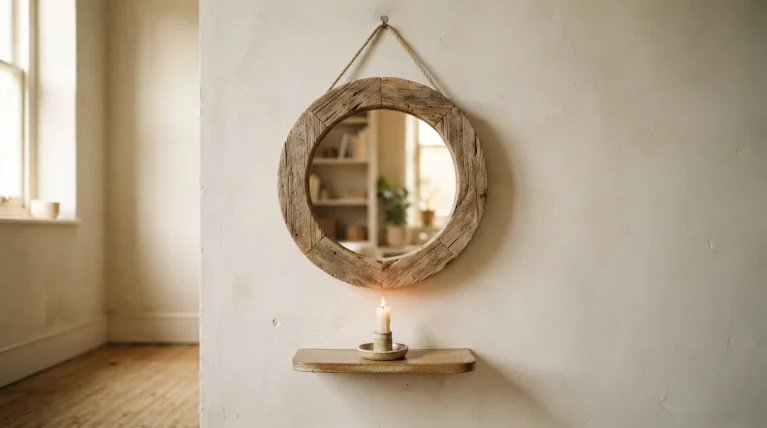
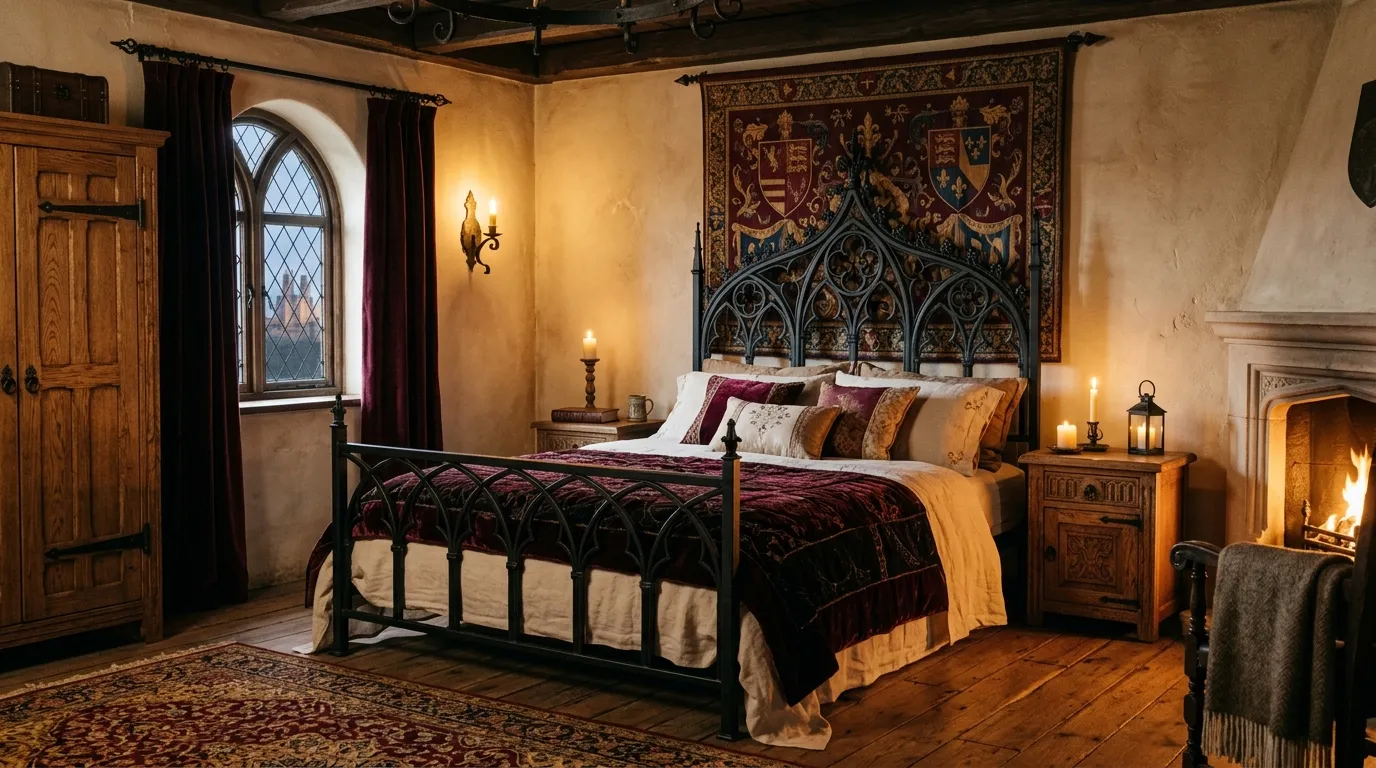
Imagine opening your bedroom door and stepping into a cozy castle chamber filled with warm wood, soft linen, glowing lanterns, and rich medieval details. ✨ You don’t need a huge budget—or an actual castle—to create that feeling.
These fantasy medieval bedroom ideas are designed to help you transform an ordinary bedroom into a magical, royal-inspired retreat that still feels comfortable and practical. Whether you love Gothic arches, carved wood, velvet curtains, stone textures, or cozy layered bedding, there are simple ways to bring those details into a modern home. In my experience, the most convincing rooms combine just a few strong historical-inspired features with everyday comforts. As you explore these ideas, you’ll find inspiration for small upgrades, dramatic focal points, and timeless details worth saving for your next decorating project.
1. Carved Four-Poster Bed
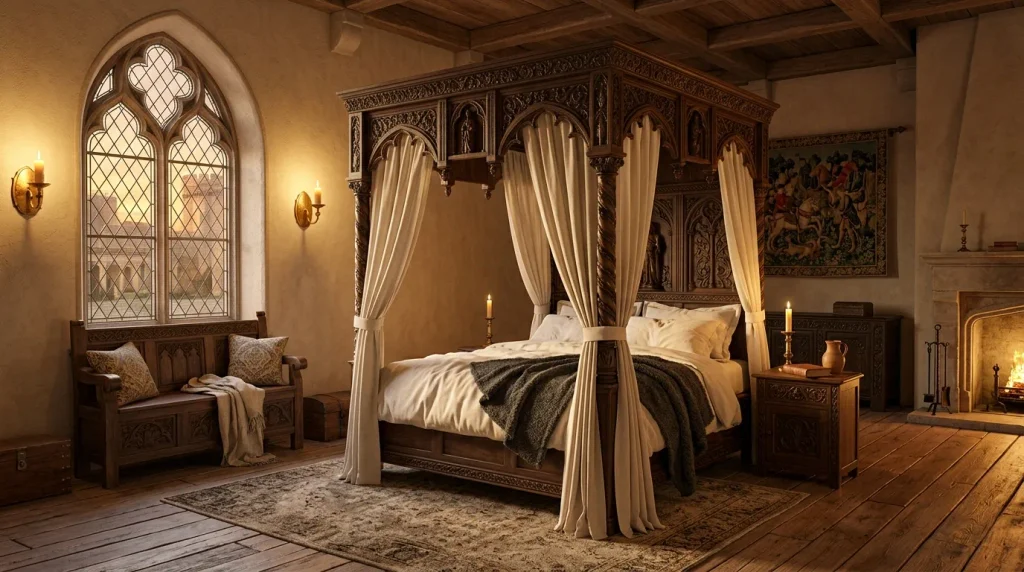
- A carved wooden bed creates an instant medieval focal point.
- Cream linen keeps dark timber from feeling too heavy.
- Soft curtains add privacy and a romantic canopy effect.
- A wool throw and carved bench bring useful texture.
- Warm bedside lighting makes the wood details stand out.
A carved canopy instantly makes a bedroom feel like it belongs inside a castle. Choose a solid wood four-poster bed with simple Gothic arches, then soften it with cream linen curtains that can be tied neatly to each post. Dark walnut or weathered oak gives the frame believable medieval character without making the room feel heavy. In my experience, keeping the bedding light is the easiest way to balance substantial furniture. Add one textured wool throw, a small carved bench, and warm bedside lighting. The result feels regal, cozy, and practical enough for everyday sleeping.
The magic comes from giving the bed a strong focal position without overcrowding the room. Place the headboard against the longest wall, leaving enough walking space on both sides for easy movement. A muted palette of ivory, brown, charcoal, and aged brass keeps the look sophisticated rather than theatrical. Add a simple woven rug beneath the lower half of the bed to introduce softness underfoot. If your room is small, skip bulky curtains and use slim posts instead. This approach creates one memorable medieval feature while preserving an open layout that still feels comfortable and livable.
Also Read : 22 Rustic Spring Decor Ideas for a Cozy Country Home
2. Weathered Stone Accent Wall
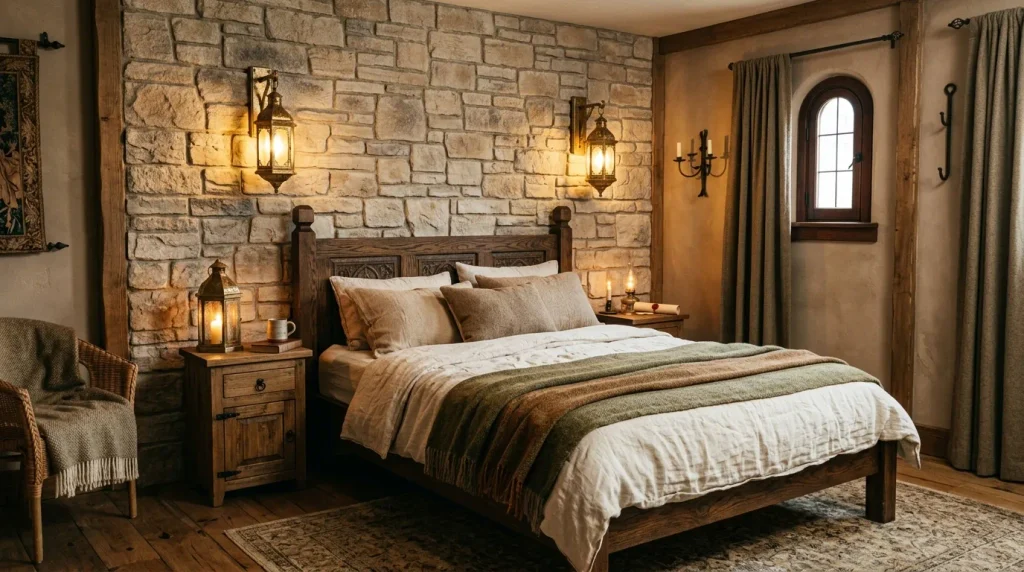
- Faux-stone panels can recreate castle texture without major construction.
- Warm gray and beige stones feel softer than stark gray masonry.
- A wooden bed looks especially striking against rough textures.
- Keep surrounding walls simple so the accent remains the focus.
- Lantern-style lighting creates beautiful shadows across the stone.
Few details create old-world atmosphere faster than rough stone textures paired with warm wood. If real masonry is impractical, use a convincing faux-stone accent wall behind the bed or on one narrow section of the room. Keep the stones irregular and softly weathered, then pair them with oak furniture, linen bedding, and aged-metal accents. I’ve noticed that stone looks most believable when it is not used everywhere. Let the remaining walls stay warm white, beige, or muted taupe. This contrast gives the bedroom depth, highlights the bed area, and prevents the medieval styling from becoming visually overwhelming.
A stone accent wall can make a modern bedroom feel surprisingly grounded when the rest of the finishes stay simple. Choose warm gray, sand, or soft beige stone rather than highly polished surfaces, and use matte textures to avoid a showroom effect. Position a wooden bed directly against the feature wall, then add two compact nightstands with minimal decoration. Soft sconces or lantern-style lamps create gentle pools of light across the texture after sunset. For renters, removable textured panels can offer a similar visual effect. The finished space feels historic, layered, and inviting without requiring major structural changes.
Also Read : 23 Masculine Home Office Ideas for a Stylish Workspace
3. Jewel-Toned Bed Canopy
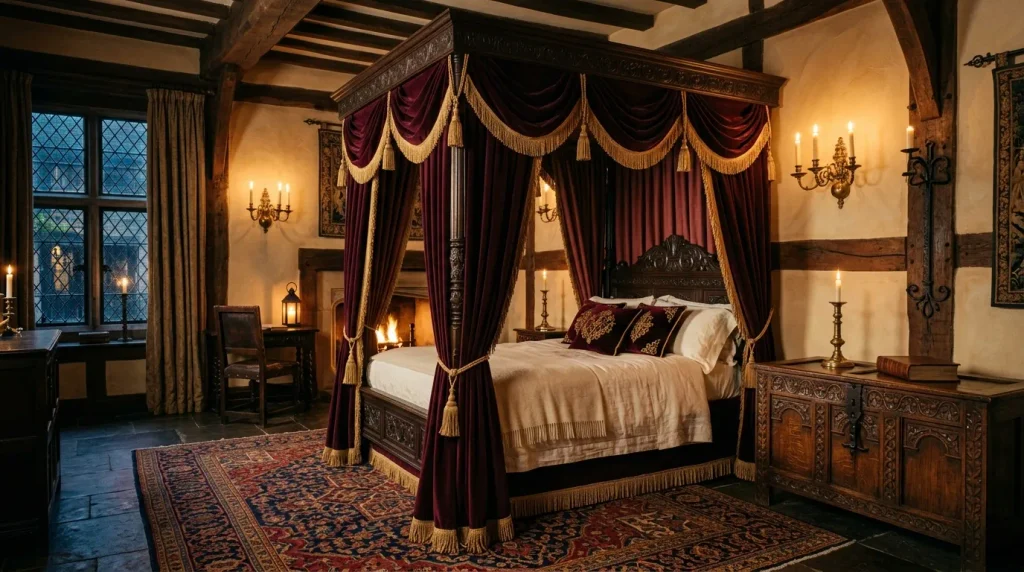
- Deep colors instantly make the sleeping area feel richer.
- Velvet creates a dramatic royal effect with very little furniture.
- Ivory bedding keeps jewel tones from overpowering the room.
- A simple ceiling frame can replace an expensive canopy bed.
- Repeating one accent color keeps the finished design cohesive.
A deep jewel-toned canopy can turn an ordinary bed into the centerpiece of a royal retreat. Choose burgundy, forest green, midnight blue, or muted plum for the fabric, and pair it with warm ivory bedding to keep the contrast balanced. Velvet works beautifully for a richer look, while linen or cotton creates a lighter interpretation. In my experience, hanging fabric from a simple ceiling frame is often easier than buying an ornate canopy bed. Add brass candle-style sconces, a carved wooden chest, and a small patterned rug to complete the fantasy without filling every surface with decoration.
The key to making rich fabric feel elegant is restraint around it. Let the canopy provide most of the color, then repeat one subtle shade in the rug, cushions, or wall art. Keep the floor visible around the bed so the room does not feel crowded. Warm layered lighting works especially well here: use bedside lamps for everyday use and a dimmable overhead fixture for softer evenings. Choose natural-looking wood and aged brass instead of shiny finishes. This combination gives the room a luxurious medieval character while keeping the furniture practical, balanced, and easy to live with.
Also Read : 25 Japandi Bathroom Design Ideas for a Calm Modern Space
4. Gothic Arched Headboard
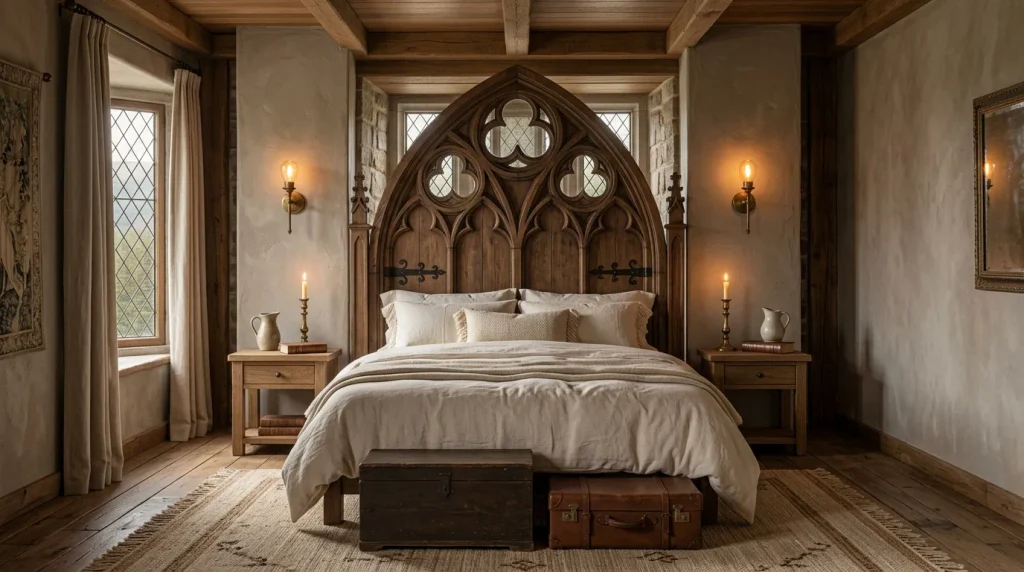
- A tall arched headboard creates instant architectural drama.
- Dark wood adds medieval character without requiring many accessories.
- Keep bedding neutral to make the silhouette stand out.
- Wall sconces emphasize the curved shape beautifully at night.
- A small rug softens the darker furniture and flooring.
A dramatic arched headboard can make the bed feel like a piece of castle architecture rather than ordinary bedroom furniture. Look for a tall design with pointed Gothic curves, carved edges, or subtle geometric details. Dark walnut creates a classic medieval impression, while medium oak offers a softer rustic finish. Keep the bedding in cream, oatmeal, or warm white so the headboard remains visually dominant. I’ve seen this approach work especially well in rooms where adding architectural features is difficult. One strong silhouette can provide the atmosphere you want without filling the space with unnecessary decorations.
Balance is important when working with a tall headboard because its vertical shape naturally draws the eye upward. Place matching sconces on both sides to reinforce symmetry and provide useful reading light. A simple wooden nightstand beneath each fixture keeps the arrangement functional without competing with the bed. If the flooring is dark, add a woven beige or cream rug to brighten the lower part of the room. Keep wall art minimal and choose aged finishes rather than glossy metals. These small choices help the headboard feel intentional, creating a polished medieval bedroom with a strong visual centerpiece.
Also Read : 22 Black Fireplace Ideas for a Bold Modern Living Room
5. Exposed Timber Beams
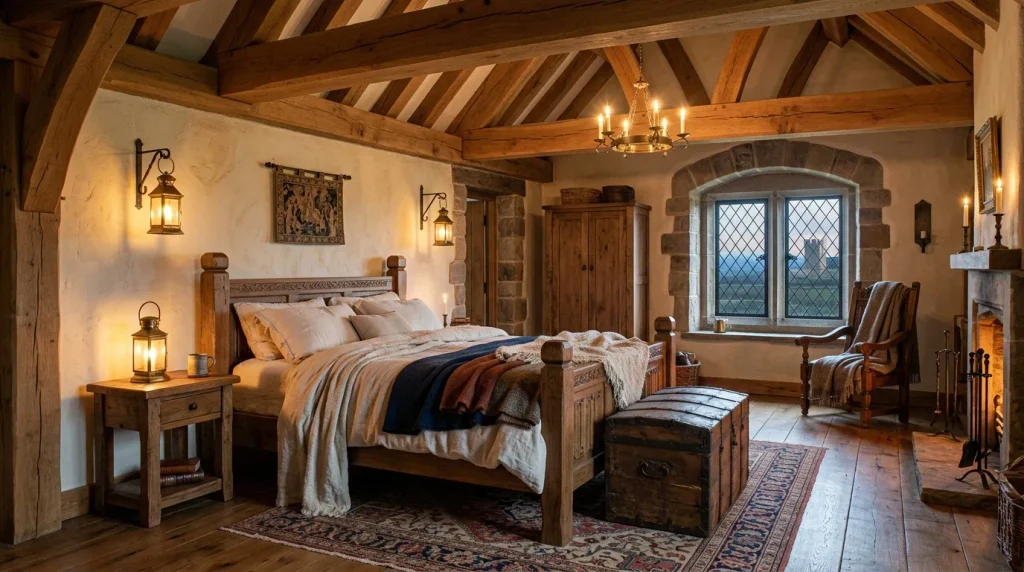
- Timber beams instantly add rustic architectural character.
- Natural wood tones make plain ceilings feel more detailed.
- Pair beams with lighter walls for better visual balance.
- Warm lighting highlights the grain and creates cozy shadows.
- Avoid excessive dark furniture when the ceiling is already bold.
Exposed timber beams can transform a plain bedroom ceiling into one of the most memorable features in the space. Whether the beams are structural or decorative, natural wood adds warmth, texture, and an unmistakable old-world quality. Choose medium or honey-toned timber when the room is small, because lighter wood helps preserve an airy feeling. Dark beams can work beautifully in larger spaces with high ceilings. Pair them with creamy plaster walls and simple linen bedding so the ceiling remains the star. The combination creates the feeling of an old European chamber while still looking comfortable and current.
When working with visible beams, remember that the ceiling already provides plenty of visual detail. That means your furniture can stay relatively simple. Choose a solid oak bed, a woven rug, and a few aged-brass fixtures instead of several heavily carved pieces. Warm pendant lights or wall lanterns can emphasize the beam structure after dark. I’ve noticed that repeating the ceiling’s wood tone once or twice elsewhere helps the room feel cohesive. Avoid matching every piece exactly, though. Slight variations in wood grain make the bedroom feel collected, authentic, and more naturally inspired by historic interiors.
Also Read : 25 Covered Patio Design Ideas for Stylish Outdoor Living
6. Castle Window Seat
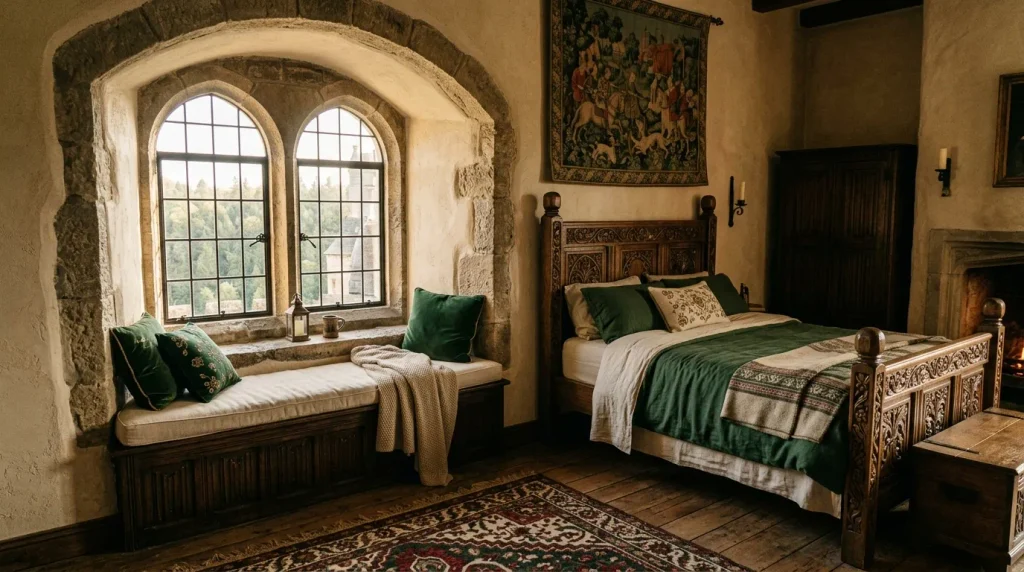
- A built-in window seat adds character and useful seating.
- Thick cushions make a stone or wood window feel inviting.
- Natural light becomes a major decorative feature.
- Storage drawers underneath help smaller bedrooms stay organized.
- Layered textiles soften hard architectural materials.
A castle-style window seat can turn an unused corner into one of the most charming parts of the bedroom. Start with a deep wooden bench beneath an arched or recessed window, then add a thick cream cushion and one or two muted jewel-toned pillows. If possible, build drawers underneath for extra blankets, books, or seasonal clothing. Natural daylight will make the area feel bright and peaceful during the day, while a small wall lantern can keep it useful after sunset. This is one of the easiest ways to combine medieval character with a practical feature you will actually use.
The surrounding materials should emphasize the contrast between hard architecture and soft textiles. Stone, plaster, and dark wood provide the historic foundation, while linen, wool, and woven cushions make the seating area comfortable. Keep the window treatment simple so sunlight remains visible rather than hiding it behind heavy curtains. In my experience, a window seat works best when it has a clear purpose, such as reading, journaling, or displaying a few favorite objects. Even without a large room, this setup creates a distinctive focal point and makes an overlooked architectural area feel thoughtfully designed.
Also Read : 23 Indoor Pond Ideas for a Peaceful Home Oasis
7. Ornate Iron Bed
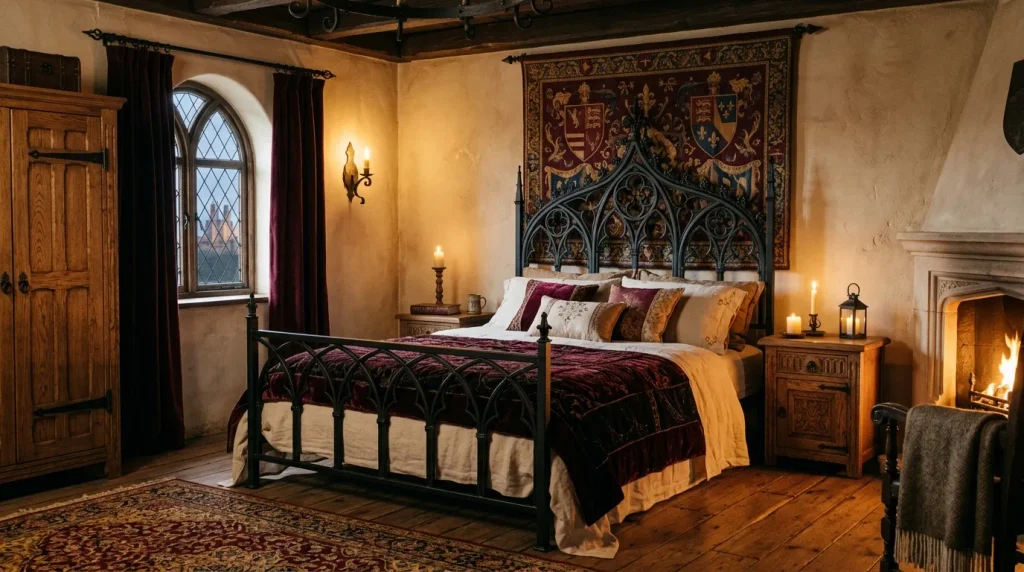
- An iron bed brings medieval character without taking up visual space.
- Matte black frames create a strong Gothic silhouette.
- Soft bedding prevents the metal from feeling too cold.
- Layered quilts add warmth and useful texture.
- Keep nearby furniture simple to highlight the bed.
An ornate iron bed is an easy way to introduce Gothic character without making the bedroom feel overloaded with heavy furniture. Choose a matte black frame with curved rails, subtle scrollwork, or pointed details rather than an overly elaborate design. Pair it with ivory linen sheets and a textured quilt in burgundy, forest green, or muted navy. The contrast makes the dark frame look intentional while keeping the sleeping area soft and welcoming. For smaller rooms, this style works particularly well because the open metal structure allows more of the wall and floor to remain visible.
The rest of the room should support the bed rather than compete with it. Use warm wood nightstands, simple aged-brass sconces, and one woven rug to introduce natural texture. Avoid matching every accessory to the iron finish, since too much black can make the room feel stark. A few darker accents are enough to repeat the frame visually. I’ve noticed that layered bedding makes the biggest difference with metal beds because it adds softness and depth. The finished arrangement feels romantic and historic while remaining practical, comfortable, and easy to refresh when you want a seasonal change.
8. Royal Tapestry Wall
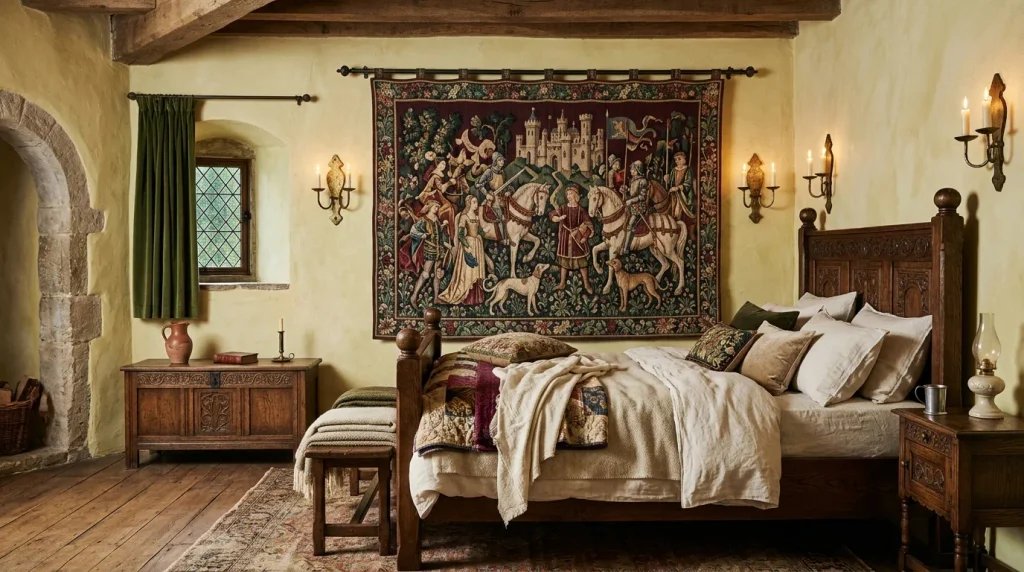
- A tapestry adds instant color and historical texture.
- Large-scale patterns make a blank wall feel finished.
- Medieval motifs work beautifully with wood and stone.
- Hang it behind the bed for maximum visual impact.
- Choose muted colors for a more sophisticated result.
A large woven tapestry can make a plain bedroom wall feel like part of an old castle interior. Choose a design featuring botanical motifs, medieval-inspired patterns, heraldic shapes, or subtle landscape imagery in muted burgundy, forest green, cream, and antique gold. Hang it behind the bed so it becomes an intentional focal point rather than random wall decoration. The textile also introduces softness against plaster, stone, or wood surfaces. For a Pinterest-worthy finish, keep the surrounding furniture restrained. One substantial textile often creates more impact than several small pieces competing for attention across the same wall.
Tapestries are especially useful when you want visual richness without permanently changing the room. A lightweight hanging can be mounted with a simple rod, making it easier to replace when your style changes. Keep the bed frame and nightstands in natural wood so the textile remains the dominant feature. Warm brass lighting will bring out subtle colors after sunset, while daylight reveals the woven texture. In my experience, slightly faded or vintage-looking patterns feel more convincing than extremely bright prints. The goal is a layered, lived-in atmosphere that suggests history without turning the bedroom into a themed set.
9. Rustic Castle Fireplace
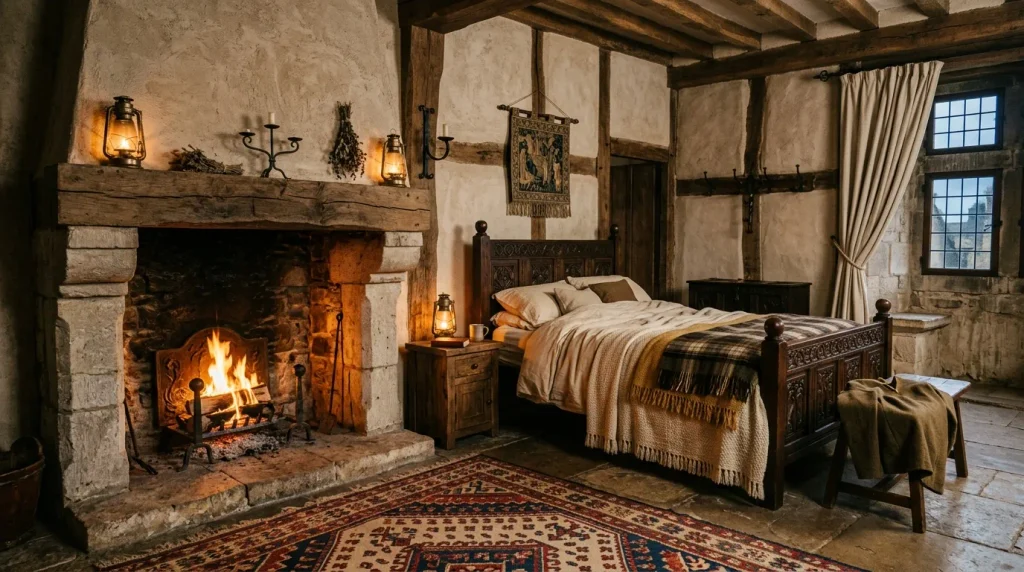
- A fireplace creates a powerful architectural focal point.
- Stone surrounds reinforce the medieval character.
- A wooden mantel provides space for restrained decoration.
- Warm lighting makes the room feel especially inviting.
- Electric inserts can recreate the look without major construction.
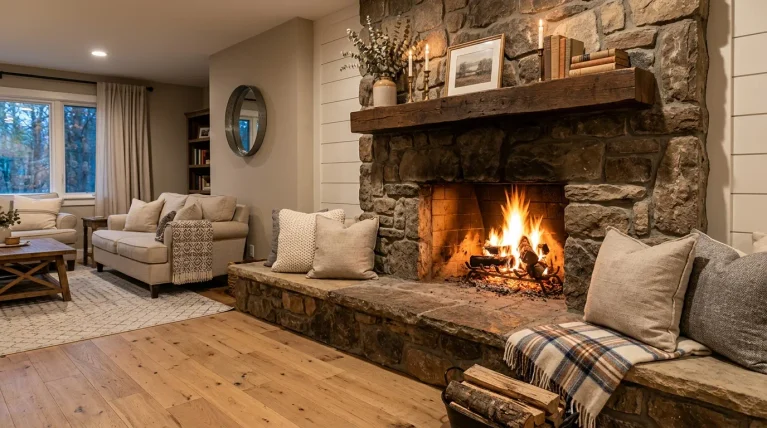
A rustic fireplace can instantly give a bedroom the architectural presence of a private castle chamber. A chunky stone surround in limestone, sandstone, or weathered gray creates the strongest effect, while a reclaimed wooden mantel adds warmth above it. If a working fireplace is impractical, an electric insert can provide a similar focal point without requiring major structural changes. Keep the mantel decoration simple with a brass candlestick, small framed artwork, or one ceramic vessel. The fireplace should feel substantial enough to anchor the room, while the surrounding furnishings remain calm and uncluttered.
Position the bed where it has a comfortable visual relationship with the fireplace without blocking circulation. A woven wool rug can soften the floor between both features and add another layer of warmth. Choose amber-toned lighting to complement the stone and wood, especially in the evening. Safety should always come first with any real fire, including appropriate clearances and materials. When designed thoughtfully, the fireplace becomes more than decoration. It gives the bedroom a strong architectural center and creates the cozy, timeless quality people often seek from medieval-inspired interiors.
10. Dark Wood Paneling
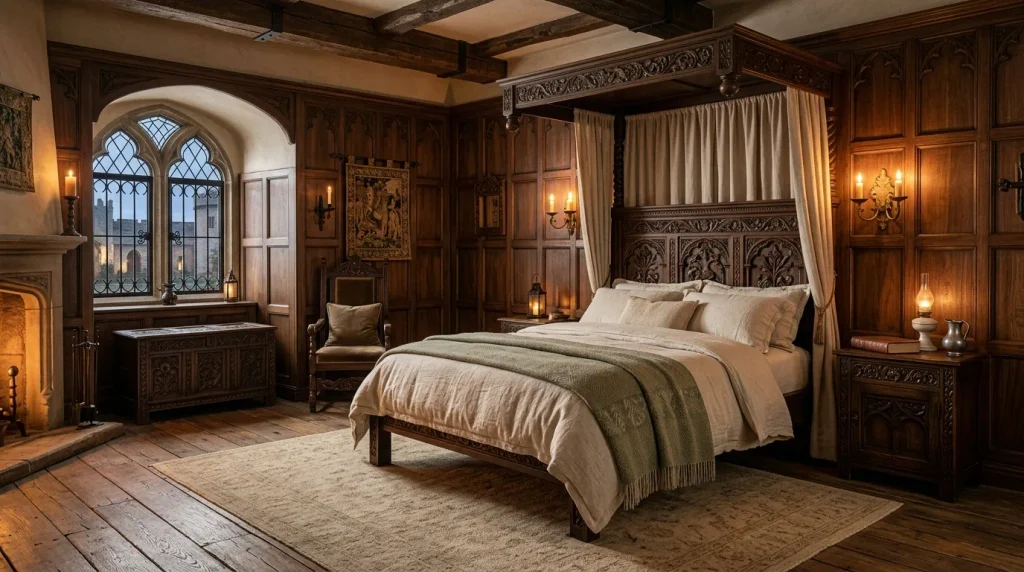
- Deep wood paneling gives plain walls an architectural upgrade.
- Vertical boards can make low ceilings appear taller.
- Warm brown tones feel richer than flat black walls.
- Keep textiles light to maintain visual balance.
- Aged brass hardware adds subtle historical detail.
Dark wood paneling can make a bedroom feel instantly established, as though the architecture has been there for generations. Use walnut, oak, or stained pine in deep brown tones, especially behind the bed or across one feature wall. Vertical boards can visually stretch a lower ceiling, while traditional rectangular panels create a more formal castle-inspired effect. Keep the bedding light in cream or warm white to prevent the room from becoming too dark. This is one of the strongest fantasy medieval bedroom ideas when you want atmosphere through architecture rather than relying heavily on decorative accessories.
The best results come from balancing the richness of the walls with softer materials throughout the room. Add linen bedding, a woven rug, and a wool throw to introduce contrasting textures. Aged brass sconces or simple lantern fixtures can provide warmth against the dark timber without making the room feel overly ornate. If full paneling feels too permanent, try installing it on one wall and painting the remaining surfaces a warm plaster shade. I’ve noticed that this approach gives the room depth while preserving enough lighter space to keep the overall design comfortable and visually breathable.
11. Antique Brass Lanterns
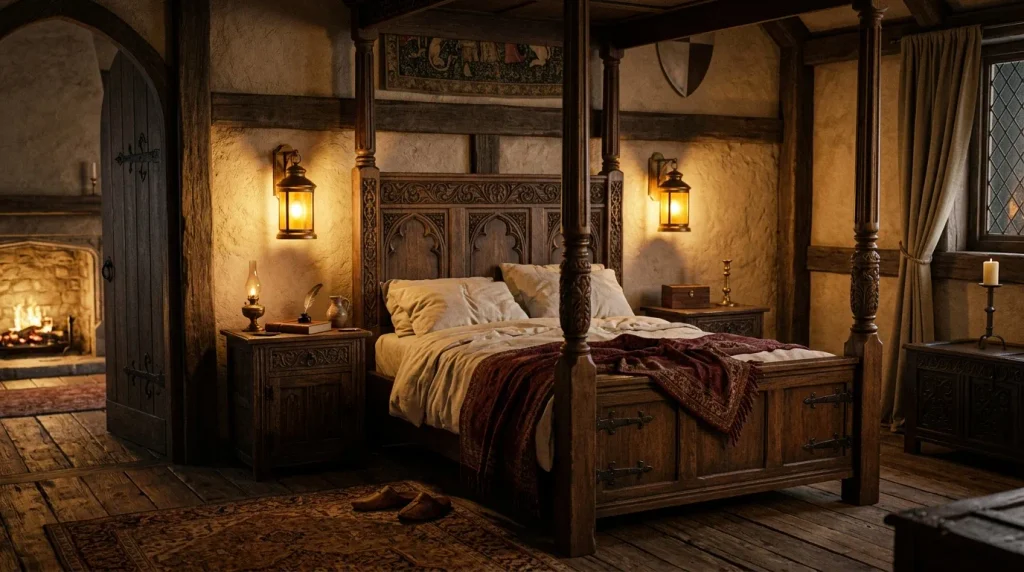
- Lantern lighting creates a warm medieval atmosphere after sunset.
- Aged brass feels more authentic than polished metal.
- Wall-mounted fixtures save valuable bedside surface space.
- Choose frosted bulbs for softer, comfortable illumination.
- Matching pairs create an elegant sense of symmetry.
Lighting can completely change how medieval-inspired furniture looks once the sun goes down. A pair of aged brass lanterns beside the bed creates warm pools of light while reinforcing the historic character of the room. Choose fixtures with simple Gothic arches, cage details, or glass panels rather than highly modern shapes. Warm white or amber-toned bulbs work especially well with wood, stone, and rich textiles. Wall-mounted lanterns also free up nightstand space, which makes them a practical choice for smaller bedrooms. The effect is atmospheric without requiring a large collection of decorative objects.
For everyday comfort, layer the lanterns with another light source rather than depending on one fixture alone. A dimmable ceiling light can provide general illumination, while the bedside sconces handle reading or relaxing. Keep the metal finish slightly aged so it complements dark timber instead of looking too shiny or contemporary. In my experience, lighting is often the simplest upgrade with the biggest visual payoff. Even a fairly ordinary bedroom can feel more sophisticated when warm light highlights the textures, shadows, and architectural details already present in the space.
12. Heraldic Bedding
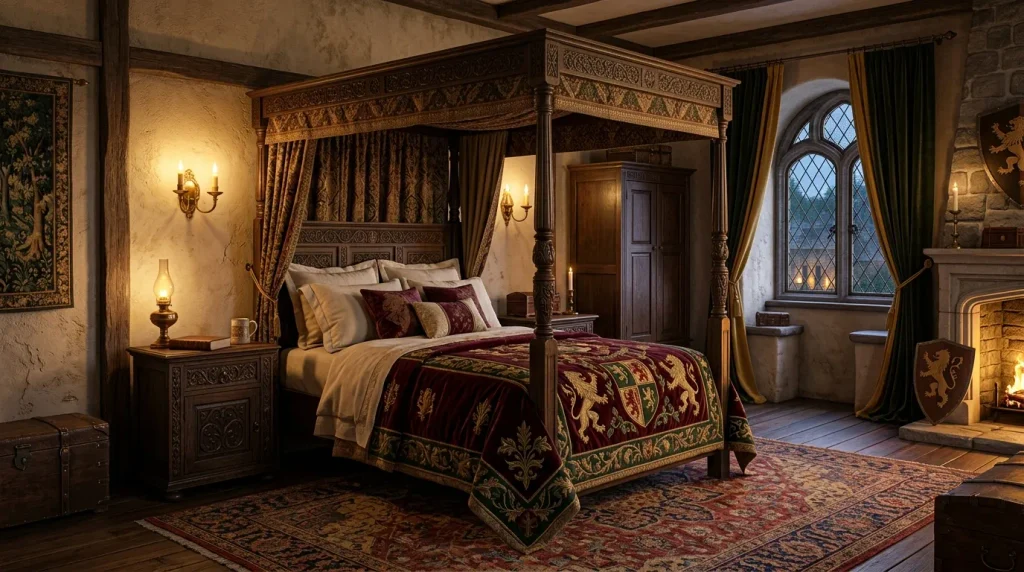
- Heraldic patterns introduce medieval character through soft furnishings.
- Deep burgundy and forest green create a regal palette.
- Neutral sheets keep patterned bedding from becoming overwhelming.
- A textured quilt adds warmth and visual depth.
- Repeat small motifs elsewhere for a cohesive finish.
Heraldic bedding offers a simple way to bring medieval-inspired details into a bedroom without changing the architecture. Look for quilts, duvet covers, or cushions featuring understated shields, botanical emblems, lions, crowns, or geometric motifs. Deep burgundy, forest green, muted navy, and antique gold create a convincing royal palette. Keep the sheets and pillowcases neutral so the patterned layer has room to stand out. This approach is especially useful if you rent or prefer changing your decor seasonally. One distinctive quilt can completely shift the personality of an otherwise simple wooden bedroom.
The trick is to treat heraldic patterns as an accent rather than covering every surface with medieval symbols. Pair the bedding with plain linen curtains, natural wood furniture, and one woven rug for contrast. If the quilt has several colors, repeat only one of them in a small cushion or throw. This keeps the room visually connected without making it feel coordinated to the point of looking staged. I’ve seen this work particularly well in bedrooms where the architecture is modern, because textiles can introduce the desired historical character while preserving the room’s existing structure and everyday functionality.
13. Medieval Map Decor
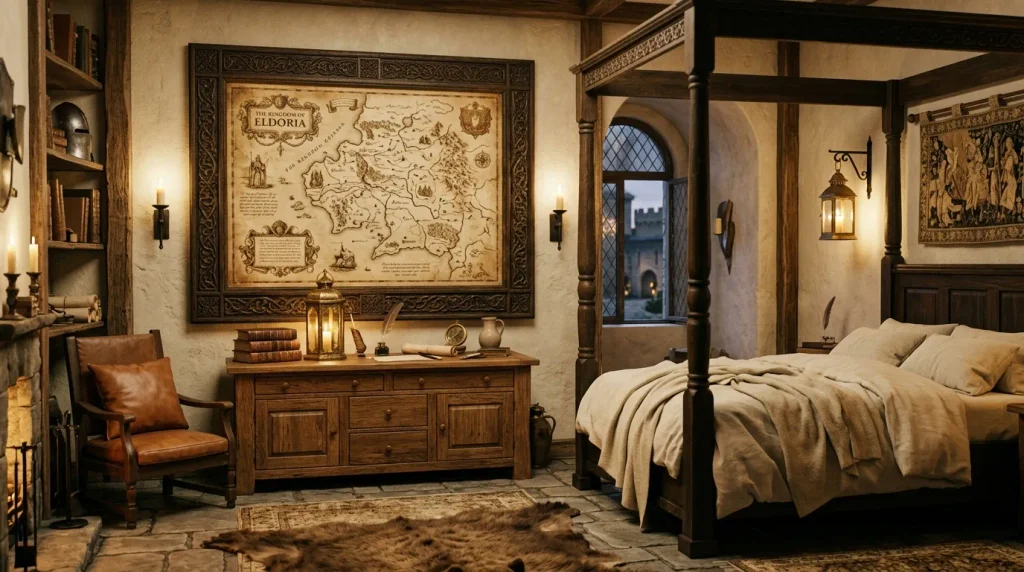
- Antique-style maps add character without overwhelming the walls.
- Sepia tones work naturally with wood and leather.
- A large map creates an easy focal point above furniture.
- Framed artwork feels more polished than loose paper.
- Choose aged finishes for a believable historical look.
An antique-style map can give a bedroom an adventurous medieval character while keeping the decoration sophisticated. Choose parchment-inspired artwork with muted sepia, cream, brown, and faded green tones, then place it in a substantial dark wood frame. A large map works especially well above a dresser, writing desk, or low bench where it can become a clear visual anchor. Look for designs featuring fictional kingdoms, old coastlines, mountains, or historic-looking cartography. The goal is texture and atmosphere rather than perfect historical accuracy, especially when creating a fantasy-inspired room.
Balance the map with simple surrounding pieces so the wall does not become visually crowded. A carved wooden frame pairs naturally with oak furniture, leather accents, and aged brass lighting. If the room already contains several dark elements, choose a lighter parchment background to keep the composition bright. You can also layer the map with one small framed botanical print or crest nearby, but leave plenty of empty wall space. This creates a curated appearance that feels collected over time rather than decorated all at once, making the bedroom more personal and visually interesting.
14. Stone Arch Nook
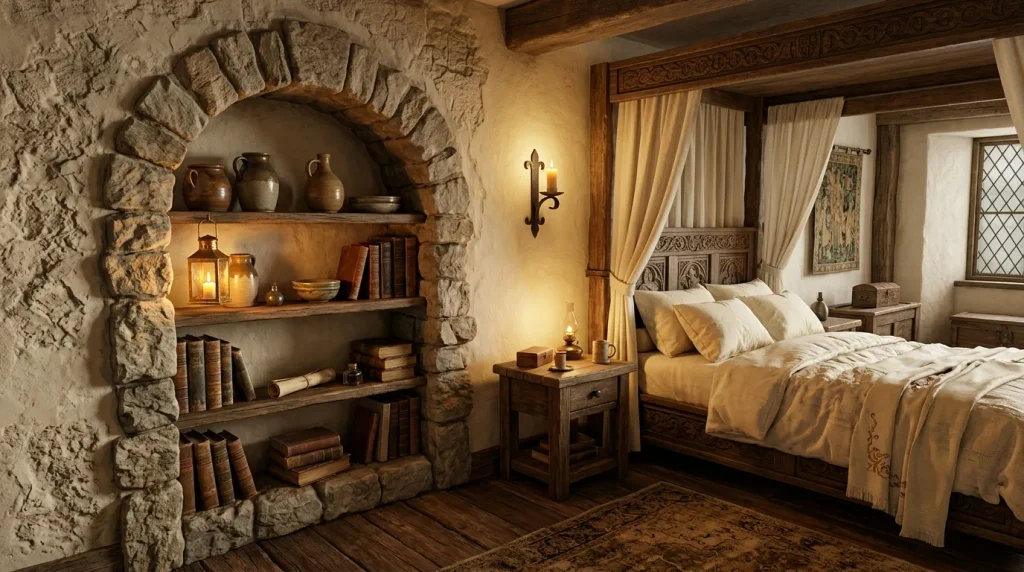
- An arched recess adds architectural depth to a plain wall.
- Stone texture reinforces the castle-inspired aesthetic.
- Built-in shelving turns the nook into useful storage.
- Warm lighting makes the recess visually inviting.
- Keep displayed objects limited for a cleaner appearance.
A stone arch nook can create the feeling of old castle architecture even when the bedroom itself is relatively simple. Use a recessed wall section with a rounded or pointed arch, then finish the interior with limestone, plaster, or convincing textured panels. Dark oak shelves can turn the recess into practical storage for books, candles, ceramics, or small decorative objects. If you cannot build an actual niche, a freestanding arched shelving unit can create a similar visual impression. The strongest result comes from making the arch feel like part of the architecture rather than simply placing an object against the wall.
Lighting helps reveal the depth and texture of the nook, especially after sunset. Install a small warm LED strip inside the shelves or use a compact brass lantern nearby for a softer effect. Keep the displayed objects intentionally sparse, mixing books with handmade-looking ceramics and one or two natural elements. I’ve noticed that uneven groupings often look more authentic than perfectly symmetrical arrangements. The result is a useful feature that adds architectural interest, storage, and medieval character while giving an otherwise plain wall a distinctive focal point.
15. Wrought Iron Chandelier
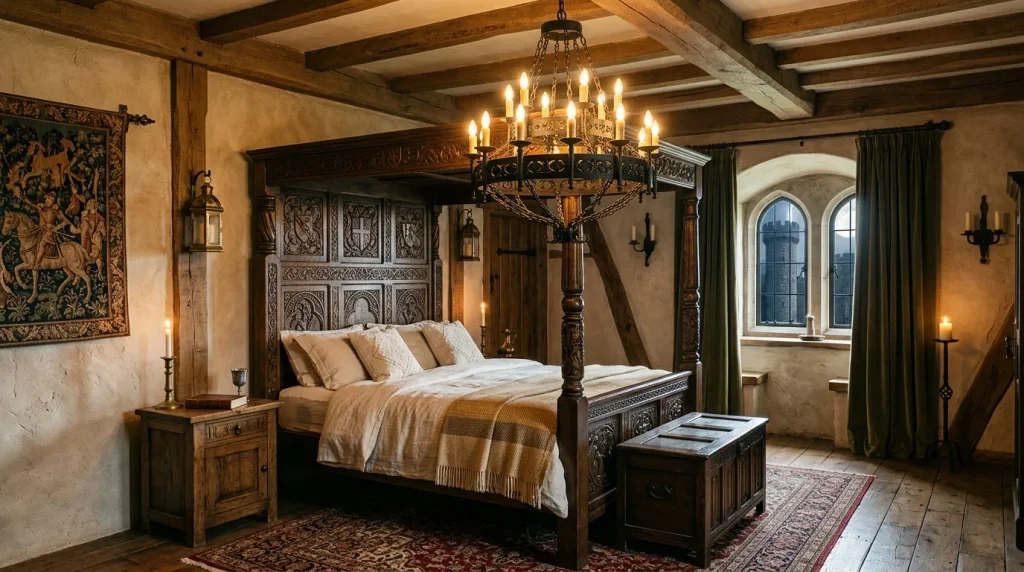
- A wrought iron chandelier creates a dramatic ceiling focal point.
- Candle-style bulbs reinforce the medieval-inspired aesthetic.
- Matte finishes feel more authentic than glossy metal.
- Keep the fixture proportional to the room size.
- Dim lighting creates a softer evening atmosphere.
A wrought iron chandelier can give a bedroom an immediate sense of medieval drama without adding another large piece of furniture. Choose a matte black or aged iron fixture with curved arms and candle-style bulbs. A simple circular design works well in smaller rooms, while a larger branched chandelier suits high ceilings. Hang it centrally over the bed or slightly toward the middle of the room so it feels connected to the furniture arrangement. Warm bulbs are essential because they soften the dark metal and create the golden glow associated with traditional candlelit interiors.
Keep the rest of the ceiling and walls relatively uncluttered so the chandelier has room to command attention. If the room has exposed beams, make sure the fixture hangs low enough to be visible but high enough to maintain comfortable head clearance. Pair the dark iron with cream bedding, natural timber, and warm neutral walls for balance. A dimmer is particularly useful, allowing bright light during everyday tasks and softer illumination at night. This combination creates one of the most recognizable medieval-inspired details while remaining practical for modern bedroom routines.
16. Canopy Draped Bed
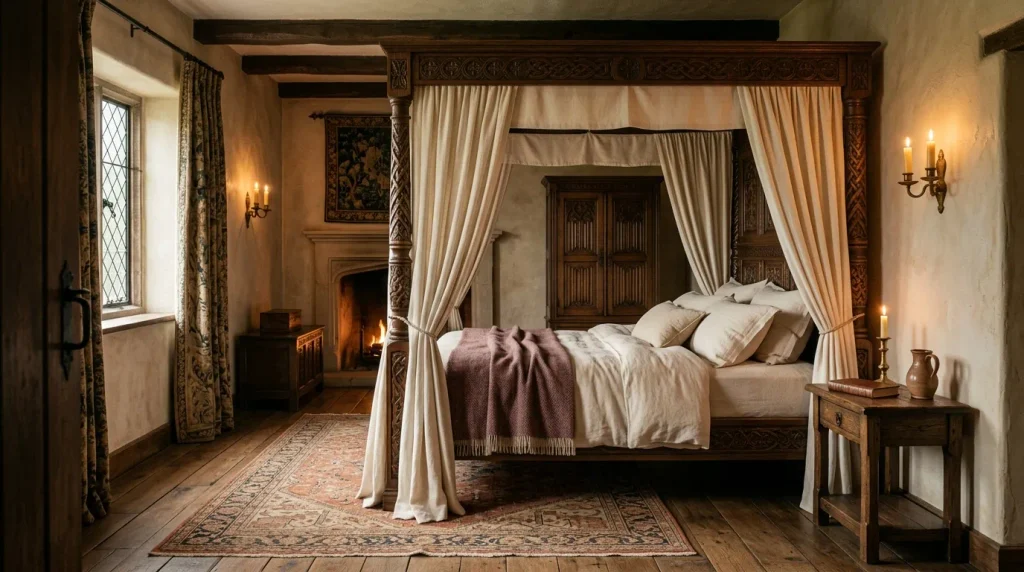
- Draped fabric instantly softens a sturdy wooden bed.
- Neutral curtains create an elegant, timeless appearance.
- Deep colors can add stronger Gothic character.
- Floor-length fabric emphasizes the height of the room.
- Tiebacks make the canopy easier to open and use.
A draped canopy bed can make the sleeping area feel private, elegant, and unmistakably medieval without requiring elaborate furniture throughout the room. Start with a sturdy wooden frame and add long fabric panels that fall naturally from the upper posts. Ivory linen creates a light, romantic appearance, while burgundy, forest green, or navy gives the room a richer Gothic direction. Let the curtains remain slightly open during the day so the bed does not feel enclosed. This simple arrangement creates height, softness, and a strong focal point while still keeping the bedroom comfortable for everyday use.
Fabric choice makes a noticeable difference in how the canopy feels. Linen and cotton create a relaxed, lived-in look, while heavier velvet gives a more formal royal appearance. Use matching tiebacks so the curtains can be pulled away easily when making the bed or opening windows. Keep the surrounding furniture low and uncomplicated to balance the vertical height of the canopy. In my experience, warm neutral walls work particularly well because they let the fabric provide most of the visual drama. The finished bedroom feels layered and luxurious without needing excessive ornamentation.
17. Carved Wooden Chest
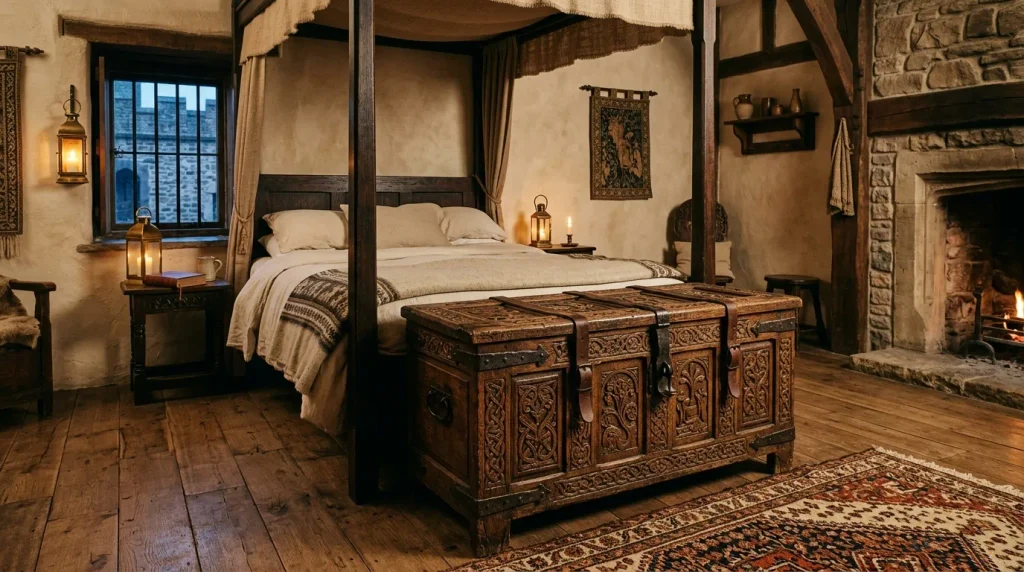
- A carved chest adds medieval character and practical storage.
- Place it at the foot of the bed for easy access.
- Dark wood works beautifully with neutral bedding.
- Metal hardware can introduce subtle historical detail.
- Use the top for only a few decorative pieces.
A carved wooden chest is one of those pieces that looks decorative while quietly solving a practical storage problem. Place a sturdy oak or walnut chest at the foot of the bed to hold extra blankets, pillows, linens, or seasonal items. Look for simple carved borders, iron hinges, leather straps, or distressed surfaces that suggest traditional craftsmanship. Keep the shape substantial but not oversized, especially if the room has limited walking space. Natural wood grain makes the chest feel authentic, while its closed storage keeps everyday clutter hidden and helps the bedroom maintain a calmer appearance.
Use the top of the chest sparingly so it remains useful rather than becoming another crowded display surface. A small ceramic vessel, candle-style lamp, or stack of books is usually enough. If the chest is very dark, balance it with cream bedding and a lighter woven rug underneath the bed. Aged iron or brass hardware can connect the chest with other medieval-inspired fixtures throughout the room. I’ve noticed that functional pieces like this often make themed interiors feel more believable because they combine visual character with something genuinely useful in daily life.
18. Gothic Mirror Frame
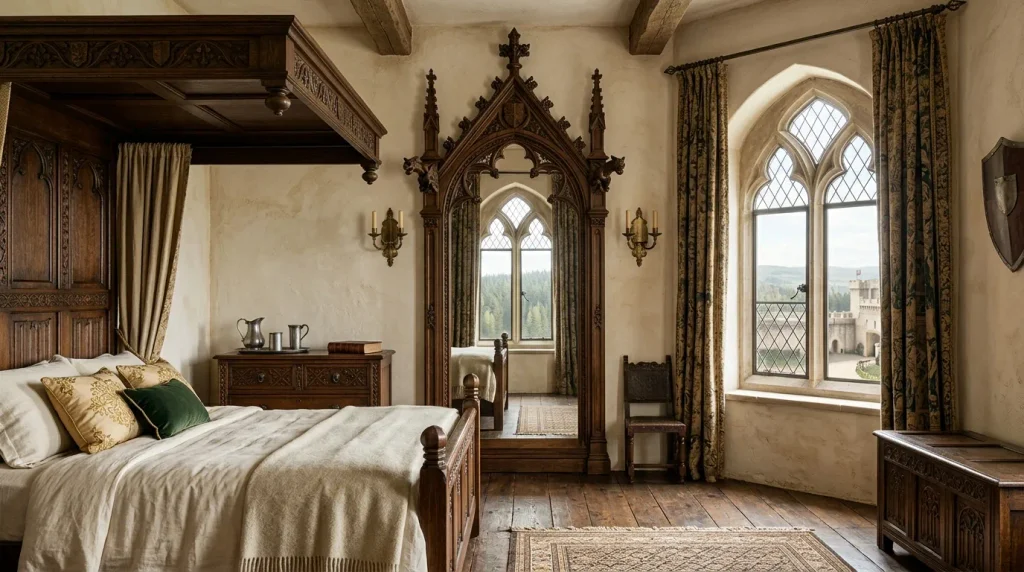
- A pointed mirror creates strong Gothic architectural detail.
- Dark wood frames make the reflective surface feel richer.
- Mirrors help smaller rooms appear brighter and more spacious.
- Place one opposite a window to maximize daylight.
- Keep nearby decoration minimal around an ornate frame.
A tall Gothic mirror can bring architectural drama into a bedroom while also making the space feel brighter and more open. Choose a pointed arch silhouette with a carved walnut, oak, or aged black frame. Positioning the mirror opposite or near a window allows it to reflect daylight deeper into the room, which is particularly useful in smaller bedrooms. Keep the surrounding wall relatively quiet so the unusual shape remains the focal point. This is a practical decorating trick as much as a stylistic one, giving you medieval character without sacrificing the sense of space.
The frame should coordinate with the room’s existing wood tones rather than matching every piece perfectly. If your bed is dark walnut, a slightly lighter oak mirror can introduce natural variation while maintaining the same visual family. Avoid placing too many decorative objects directly around the mirror, especially if the frame already contains carved details. Warm wall lighting can create an attractive glow around it after sunset. I’ve noticed that large mirrors work best when they reflect something visually appealing, such as a window, timber beams, or a well-dressed bed, rather than a cluttered corner.
19. Royal Velvet Drapes
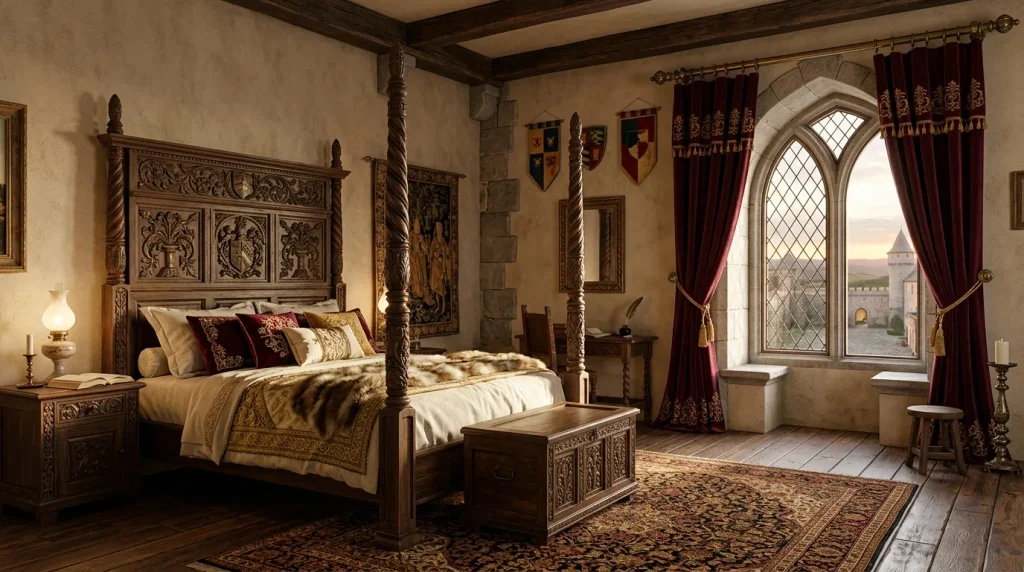
- Heavy velvet curtains instantly add richness and privacy.
- Burgundy, emerald, and navy create a regal palette.
- Floor-length panels make windows appear taller.
- Brass curtain hardware adds a subtle historic detail.
- Keep bedding lighter to balance the heavier fabric.
Royal velvet drapes can make an ordinary bedroom window feel like part of a grand medieval chamber. Choose deep burgundy, forest green, midnight blue, or muted plum, depending on the palette already present in the room. Hang the panels from ceiling height and let them reach the floor to emphasize the room’s vertical proportions. Aged brass rods or simple dark wooden hardware provide a subtle historical touch. Keep the bedding and larger furniture pieces lighter when possible. This creates contrast, allowing the rich curtains to feel luxurious without making the entire room visually heavy.
The fabric should add drama while still serving a practical purpose. Use blackout lining if you need better sleep conditions, or choose a lighter lining when natural morning light is important. If velvet feels too formal, a linen-velvet combination can provide similar depth with a softer appearance. Place a simple woven rug near the window or bed to balance the richness above. In my experience, repeating just one curtain color in a small cushion or throw is enough to connect the palette. This makes the room feel thoughtfully coordinated rather than overly decorated.
20. Medieval Writing Desk
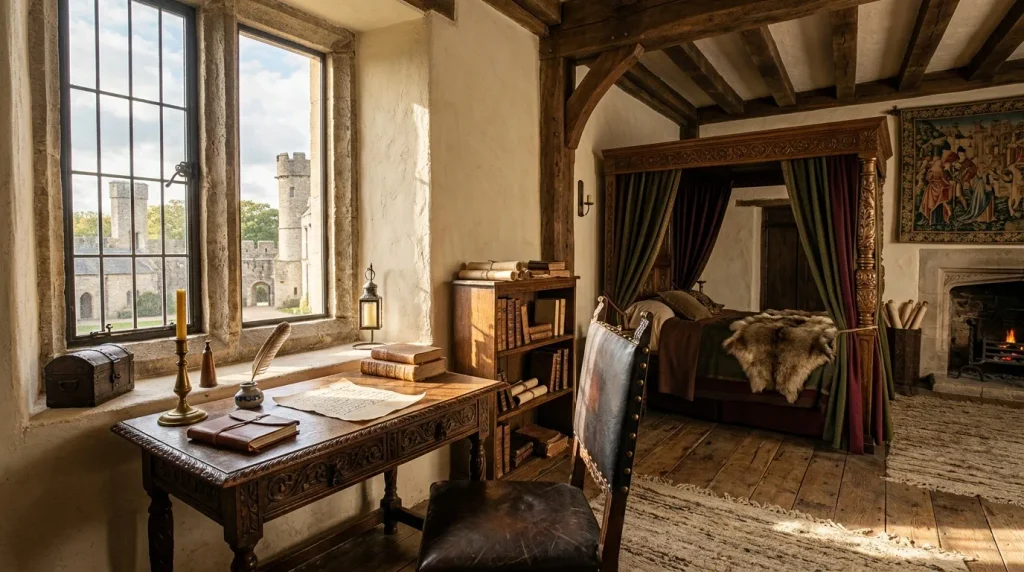
- A wooden writing desk adds function and old-world character.
- Position it near a window for useful natural light.
- Leather accessories complement dark timber beautifully.
- Keep the surface mostly clear for a polished look.
- A simple chair prevents the corner from feeling bulky.
A compact wooden writing desk can turn an unused bedroom corner into a practical feature with unmistakable old-world character. Choose a sturdy oak or walnut design with simple carved legs, drawers, or iron hardware rather than an oversized executive desk. Position it beside a window whenever possible so natural light makes the area comfortable during the day. A dark leather chair, parchment-style notebook, ceramic cup, and small brass lamp can reinforce the medieval atmosphere without turning the workspace into a costume-like display. This is one of the most useful ways to make fantasy medieval bedroom ideas feel grounded in everyday life.
Keep the desk visually connected to the rest of the bedroom by repeating its wood tone somewhere nearby. A small bookshelf, wooden chest, or matching nightstand can create that connection naturally. Avoid covering the desktop with decorative objects because the space should remain functional for writing, reading, studying, or working. Warm task lighting becomes important after sunset, particularly if the desk sits away from the main bedroom lights. I’ve noticed that functional corners make themed rooms feel much more believable because they show how the space could actually be used rather than simply photographed.
21. Layered Castle Textiles
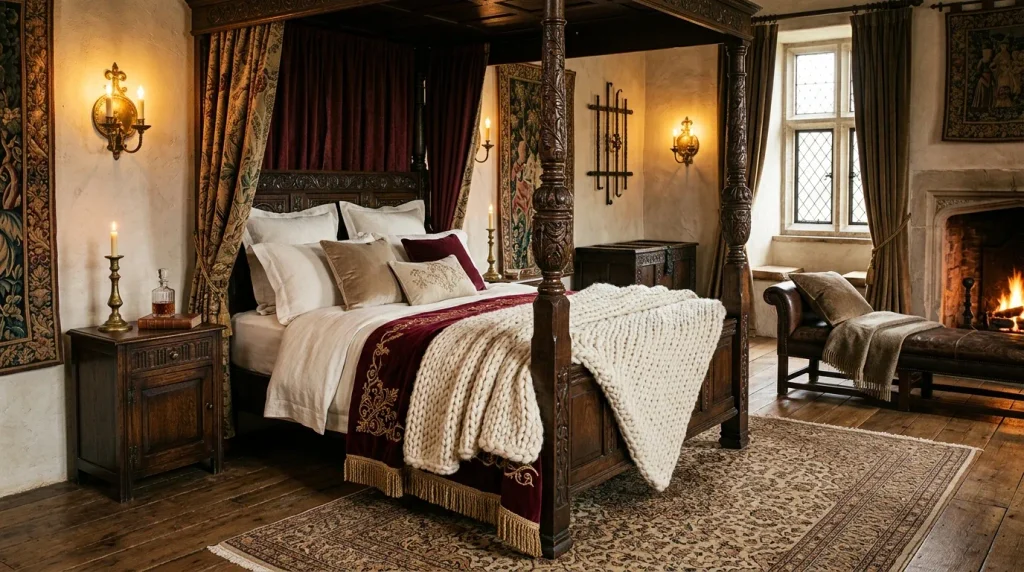
- Multiple textures make the room feel warmer and more established.
- Wool, linen, velvet, and woven fibers create useful contrast.
- Layer rugs to soften rustic wood or stone floors.
- Neutral foundations let richer accents stand out.
- Repeat textures rather than identical patterns for a natural finish.
Layered textiles can bring together all the strongest elements of a medieval-inspired bedroom while making the space noticeably more comfortable. Start with a neutral linen base, then add a wool blanket, velvet throw, woven cushions, and a textured rug. The materials do not need to match exactly. In fact, small differences in weave, weight, and finish make the room feel more natural. Warm ivory, brown, burgundy, forest green, and muted gold create an easy palette for this style. The result feels rich and inviting without depending on expensive architectural changes or excessive decoration.
Think about texture from the floor upward so every part of the room feels connected. A woven rug can soften wood or stone flooring, while a wool blanket adds warmth across the bed. A leather bench or small fabric-covered chair can introduce another tactile layer without adding much visual clutter. Keep the walls relatively simple when the textiles are substantial. This final combination is especially effective for fantasy medieval bedroom ideas because it captures the cozy, historic feeling people want while remaining practical. The room becomes visually memorable, comfortable, and easy to save for future decorating inspiration.
Conclusion
A magical medieval bedroom doesn’t have to feel complicated, expensive, or overly themed. The right combination of wood, texture, warm lighting, rich fabrics, and architectural details can completely change the atmosphere of your space. These fantasy medieval bedroom ideas give you plenty of ways to start, whether you choose one small accent or redesign the entire room. I’ve seen how simple changes, such as a dramatic headboard or layered textiles, can make a bedroom feel completely different. Save this post on Pinterest, try your favorite ideas, and share it with someone who dreams of creating their own cozy castle retreat.