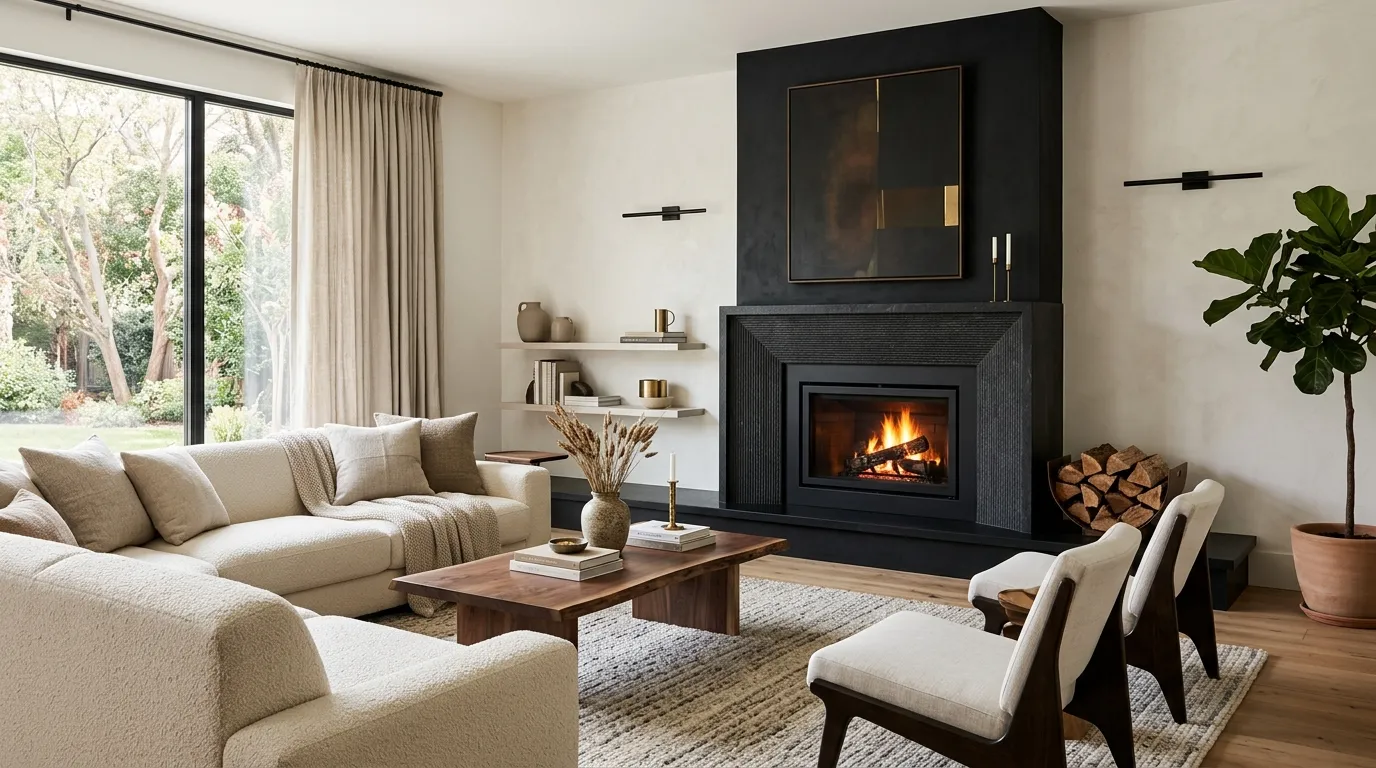
Ready to make your living room feel instantly bolder without sacrificing warmth and comfort? A black fireplace can turn an ordinary wall into a striking focal point that feels modern, sophisticated, and inviting.
From matte finishes and natural stone to warm wood, brass accents, built-ins, arched details, and textured surrounds, these 22 ideas show how to make a dark fireplace work beautifully in real homes. Whether you are updating an existing fireplace or planning a completely new feature, you’ll find practical inspiration for different styles, room sizes, and decorating preferences. In my experience, the best results come from balancing the dark fireplace with softer materials, natural textures, and thoughtful lighting. Save your favorite ideas and discover an easy starting point for your own living room makeover.
1. Matte Black Fireplace
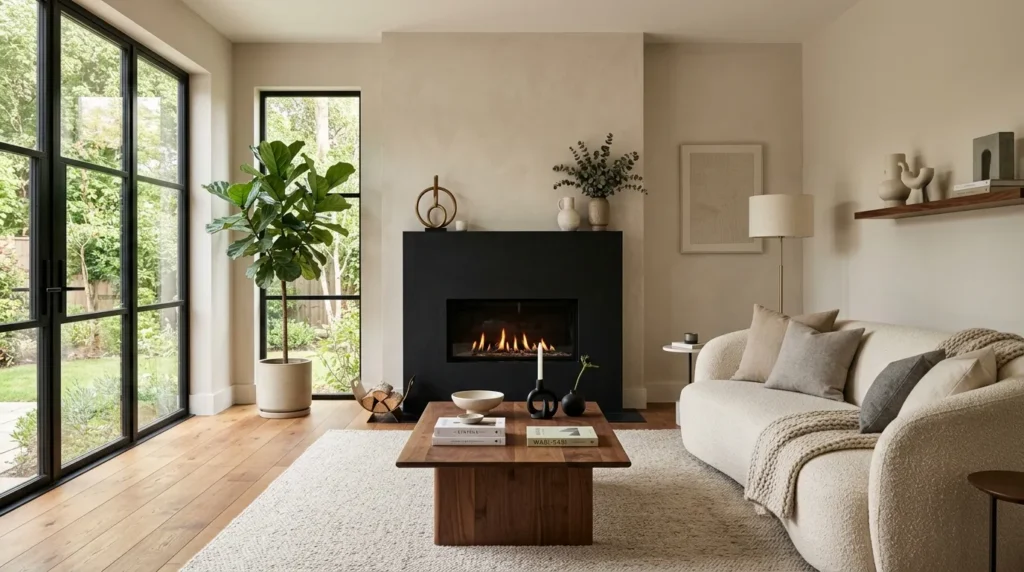
- Matte finishes create a clean, sophisticated focal point.
- Soft surfaces reduce harsh reflections from nearby lighting.
- Warm wood furniture balances the darker surround.
- Neutral textiles keep the room feeling comfortable and inviting.
A matte black fireplace can instantly anchor a modern living room and give the entire space a stronger visual center. Unlike glossy finishes, matte surfaces absorb light and create a softer, more architectural appearance. Pair the fireplace with warm oak flooring, natural wood furniture, and creamy upholstery to prevent the darker element from feeling too severe. In my experience, this combination works especially well when the surrounding decor stays simple. A few textured cushions, a soft rug, and one or two sculptural accessories can provide enough contrast without taking attention away from the fireplace itself.
The beauty of a matte finish is how easily it works across different interior styles. In a minimalist room, it creates a bold architectural statement with very little decoration. In a warmer space, it can balance woven textures, natural wood, and soft fabrics. Consider carrying the black tone into smaller details such as picture frames, lighting, or cabinet hardware for a cohesive look. If the room receives plenty of daylight, the dark surface will create striking contrast throughout the day. After sunset, warm lamps and layered lighting can make the fireplace feel especially inviting.
2. Black Stone Surround
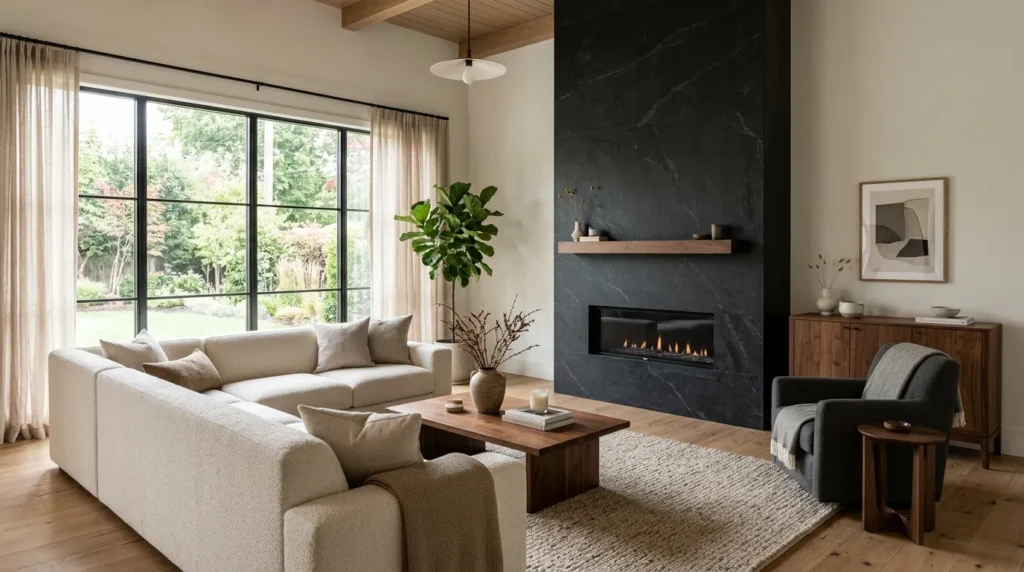
- Natural stone adds texture to a dramatic fireplace.
- Honed surfaces create a softer, more sophisticated finish.
- Neutral furniture keeps the stone visually dominant.
- Wood accents introduce warmth against the darker material.
A black stone surround gives a living room an impressive architectural presence while adding natural texture to an otherwise smooth interior. Slate, honed granite, dark marble, or other richly textured stone can create subtle variations across the fireplace surface. Instead of looking completely uniform, the natural markings catch changing light and add depth throughout the day. Keep the surrounding furniture relatively calm so the stone remains the focal point. Warm walnut, oak, cream upholstery, and woven materials are particularly effective because they soften the darker surface and make the room feel polished without becoming overly formal.
When selecting stone, pay attention to how its texture and undertones work with the rest of your room. A stone with warm brown or charcoal undertones usually pairs beautifully with natural wood, while cooler black stone can suit a cleaner contemporary palette. A full-height surround can make a fireplace appear taller and more substantial, especially in rooms with high ceilings. For smaller spaces, a simpler stone frame may provide enough impact without overwhelming the room. I’ve noticed that natural stone becomes even more striking when paired with restrained styling, because its subtle variations become part of the decoration.
3. Floor-To-Ceiling Fireplace
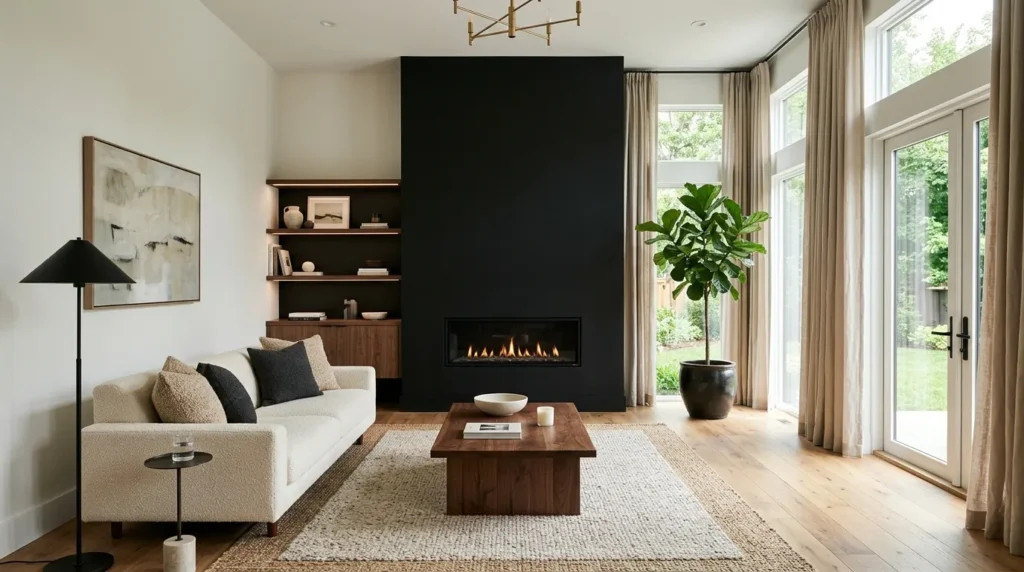
- Vertical proportions make the fireplace feel architectural.
- A tall surround draws attention upward.
- Built-in shelving can add useful storage nearby.
- Simple furniture prevents the feature wall from feeling crowded.
A floor-to-ceiling fireplace can transform an ordinary wall into a dramatic architectural feature. Extending the dark surround vertically draws the eye upward and can make the room feel taller and more substantial. This approach works particularly well in contemporary homes where clean lines and strong proportions are important. Keep the furniture low and streamlined so the fireplace remains visually dominant without making the room feel crowded. A cream sofa, natural wood coffee table, and soft neutral rug can provide enough contrast to balance the height and intensity of the dark feature.
The surrounding wall can also become an opportunity for practical design. Slim built-in shelving, concealed storage, or a simple recessed niche can be incorporated without interrupting the fireplace’s strong vertical shape. Avoid filling these areas with too many accessories, especially if the fireplace already has a bold finish. In my experience, leaving generous empty space around a tall feature makes it feel more intentional and expensive. Add warm lighting from floor lamps or recessed fixtures to soften the black surface in the evening. The finished room feels modern, balanced, and visually striking without relying on excessive decoration.
4. Black Brick Fireplace
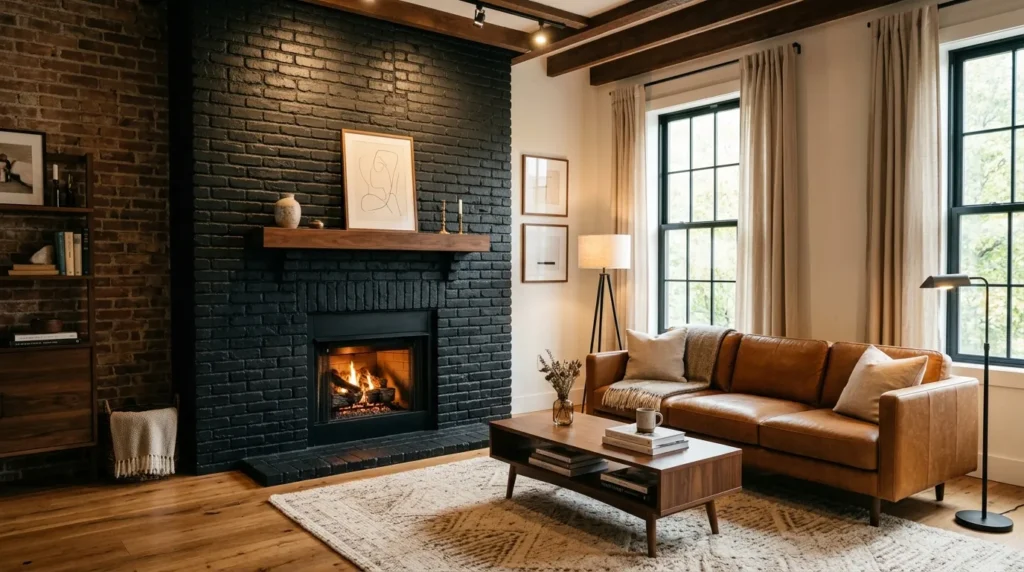
- Painted brick adds texture while keeping the color consistent.
- Existing brickwork can become a strong design feature.
- Warm wood tones soften the darker masonry.
- Simple artwork keeps the fireplace visually balanced.
A black-painted brick fireplace brings texture and character into a modern living room while preserving the architectural charm of brickwork. The individual bricks create subtle shadows across the dark surface, giving the fireplace more dimension than a completely smooth finish. This look works especially well in older homes where existing masonry can become a natural focal point. Pair the fireplace with warm wood, leather, linen, or woven textures to soften the industrial edge. The result feels modern without losing the original personality that makes brick fireplaces so appealing.
If you are working with existing brick, painting it can be a relatively straightforward way to dramatically change the room’s appearance. Before choosing the finish, consider whether you prefer a completely uniform coat or a slightly textured look that allows some natural variation to remain visible. Matte paint usually emphasizes the masonry without creating distracting reflections. Keep nearby furniture comfortable and understated so the brick remains the main feature. I’ve noticed that adding warm-toned accessories, such as a wooden stool or leather chair, helps prevent black brick from feeling too cold while maintaining its bold character.
5. Black Marble Mantel
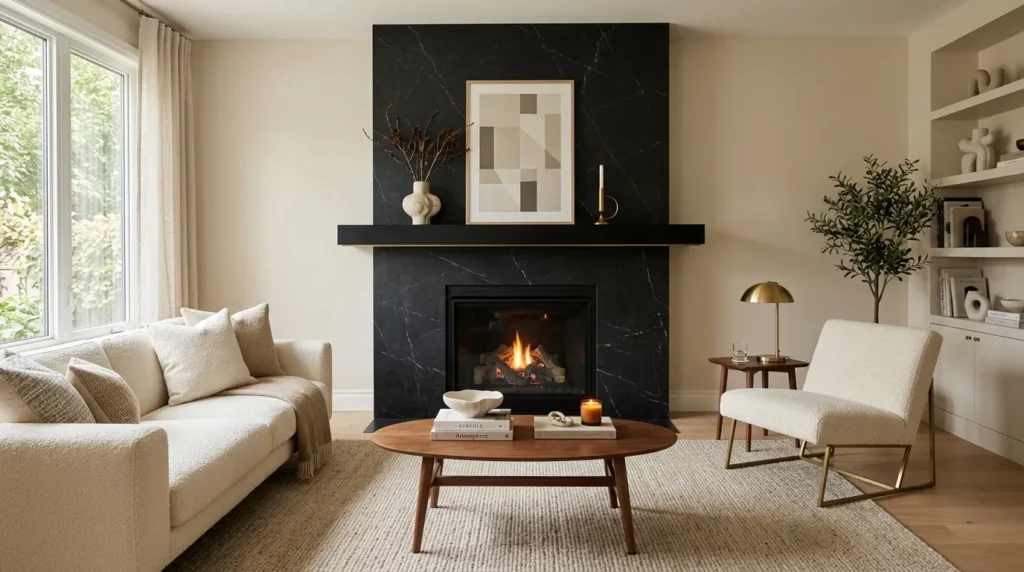
- Marble introduces natural movement and elegant veining.
- A simple mantel design keeps the material looking modern.
- Brass accents create warmth against the dark stone.
- Neutral furnishings let the fireplace remain the focal point.
A black marble fireplace can bring instant sophistication to a modern living room while adding natural pattern through subtle veining. The stone becomes especially striking when used across a clean-lined mantel or surround, where its movement can be appreciated without competing with busy furniture. Keep the surrounding palette restrained with cream, beige, walnut, or warm gray pieces. A few brass accents can introduce a gentle glow and prevent the darker stone from feeling overly cool. The combination works beautifully when you want the fireplace to feel luxurious but still connected to a comfortable everyday living environment.
The key is allowing the marble to provide most of the visual interest. Avoid placing too many decorative objects across the mantel, particularly if the stone has strong veining. One sculptural vase, framed artwork, or carefully chosen object is often enough. For a smaller room, a thinner marble surround can provide the same sophisticated effect without visually consuming the entire wall. In my experience, dark marble looks best when lighting is layered because warm illumination reveals subtle details that may disappear under flat overhead light. This creates a fireplace that feels refined throughout the day and atmospheric after sunset.
Also Read: 24 Stone Fireplace Ideas for a Warm Rustic Living Room
6. Black Shiplap Surround
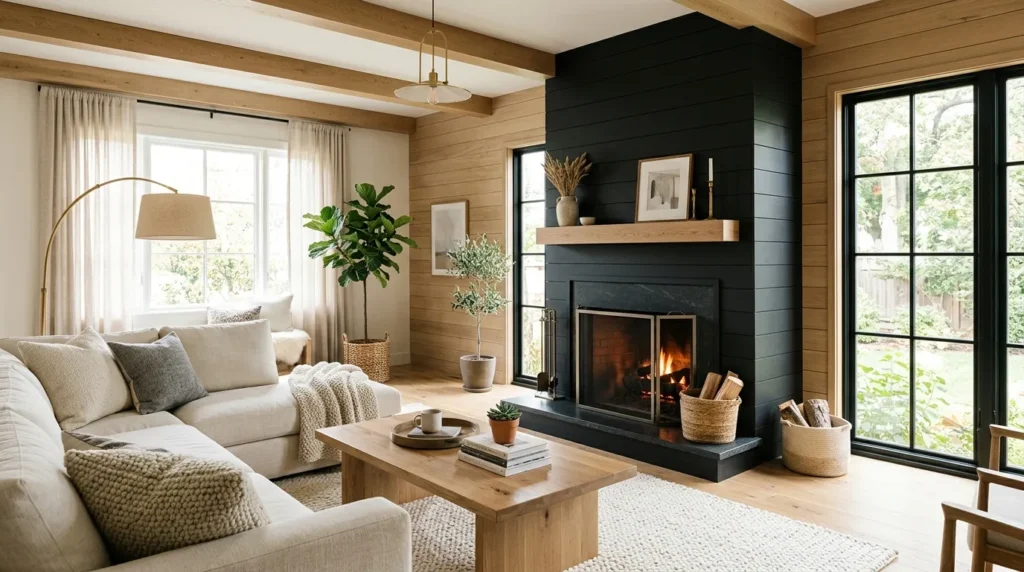
- Vertical or horizontal boards add subtle architectural texture.
- Painted shiplap creates a cleaner alternative to traditional masonry.
- Light furniture creates strong visual contrast.
- Repeating black details helps connect the room.
A black shiplap fireplace surround adds architectural texture while keeping the overall look clean and modern. The repeated wood boards create subtle lines across the wall, giving the fireplace more depth without introducing a complicated pattern. This finish can work beautifully in modern farmhouse, transitional, coastal, and contemporary interiors depending on the furniture and accessories surrounding it. Light oak, cream upholstery, woven baskets, and soft textiles can balance the darker surface. Because the shiplap itself provides texture, you can keep the rest of the room relatively simple and still achieve a layered appearance.
Consider the direction of the boards when planning the surround. Horizontal shiplap can visually widen a narrow wall, while vertical boards can emphasize ceiling height. Use a consistent matte or low-sheen finish so the wood texture remains visible without becoming reflective. Repeating black through small details such as lighting frames, artwork, or furniture legs can make the fireplace feel integrated into the larger room. This is especially useful when the rest of the space is light and neutral. The finished design feels bold but approachable, combining strong contrast with the warmth and texture of natural-looking wood.
7. Black Built-In Fireplace
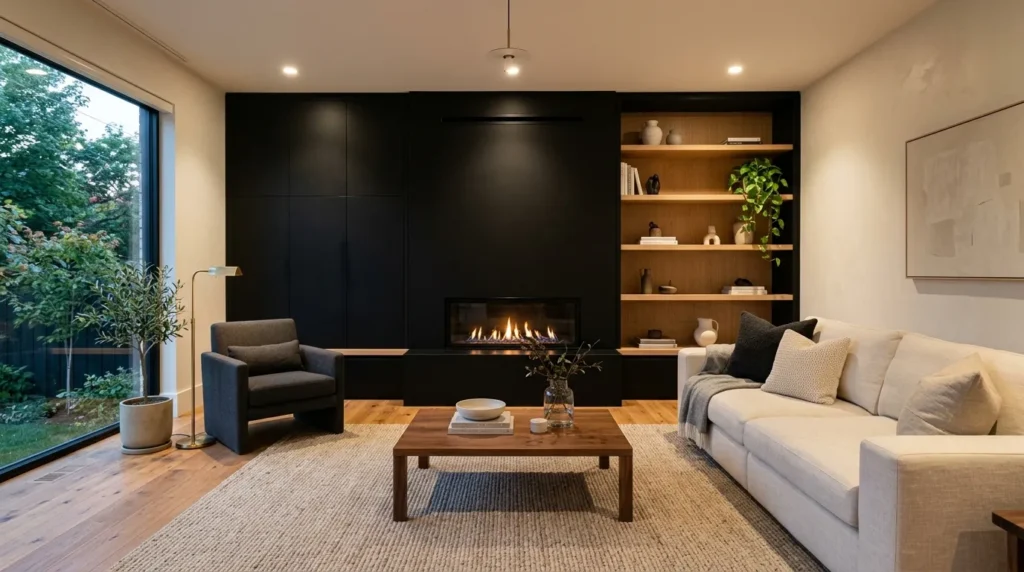
- Built-ins combine the fireplace with useful storage.
- Closed cabinets keep everyday clutter hidden.
- Open shelves provide space for curated decor.
- Consistent dark finishes create a seamless wall.
A black built-in fireplace can turn an ordinary living room wall into a complete architectural feature while solving everyday storage problems. Instead of treating the fireplace as a separate element, integrate it with surrounding cabinets and shelving for a seamless appearance. Closed storage can hide electronics, games, blankets, and household clutter, while open shelves provide room for books, ceramics, and a few meaningful decorative pieces. Warm oak shelving or cabinetry can soften the dark structure and create contrast without weakening its strong modern character.
Good built-in design depends on proportion and restraint. Leave enough breathing room around the firebox and avoid filling every shelf simply because storage is available. A few larger objects usually create a cleaner appearance than many small accessories. If your room is narrow, consider keeping the cabinetry shallow so the fireplace wall does not reduce valuable floor space. I’ve seen this approach work particularly well in family living rooms because it combines visual impact with practical organization. The result is a polished focal wall that looks intentional while quietly handling the clutter of everyday life.
8. Black Fireplace With TV
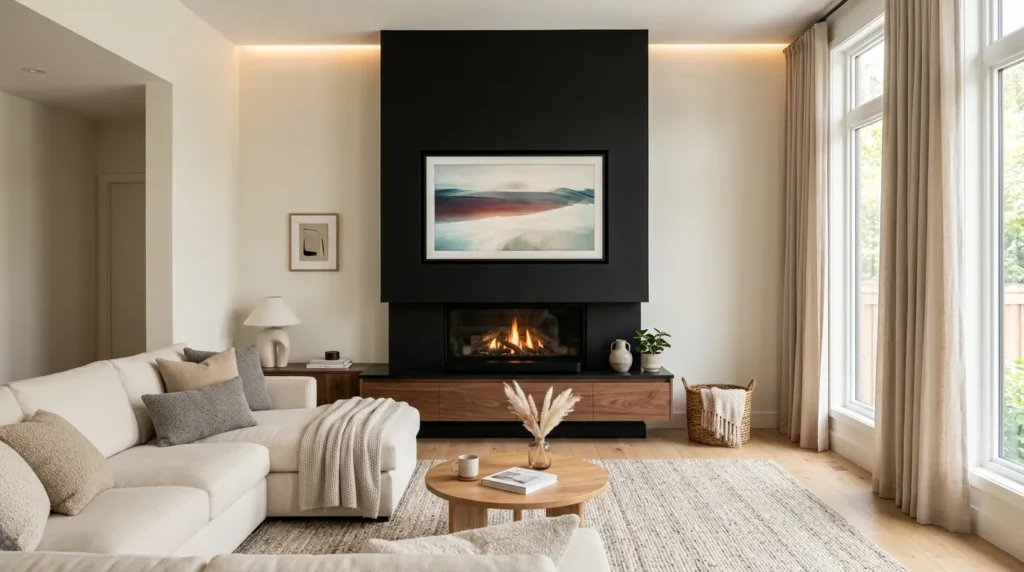
- A dark surround visually integrates the television.
- Matching finishes reduce contrast between screen and wall.
- Floating cabinetry keeps the floor area open.
- Minimal styling maintains a clean focal point.
Combining a black fireplace with a television can create a clean focal wall when both elements are carefully integrated. A dark surround naturally reduces the visual contrast of the television screen, allowing the entire wall to read as one architectural composition. Keep the area around the screen simple and avoid adding competing artwork directly beside it. A floating walnut cabinet below can introduce warmth while keeping the floor visually open. This arrangement is especially useful in modern living rooms where you want entertainment features to feel intentional rather than scattered across multiple walls.
Proportion is important when combining these two major elements. The television should be positioned at a comfortable viewing height, while the fireplace should follow the manufacturer’s safety and installation requirements. Avoid choosing furniture solely for appearance; comfortable seating and appropriate viewing distance matter just as much. If possible, conceal cables and media equipment within the built-in structure for a cleaner finish. In my experience, a limited palette of black, warm wood, and soft neutrals works particularly well here because it lets the technology blend into the architecture rather than becoming the room’s only focal point.
9. Black Fireplace Niche
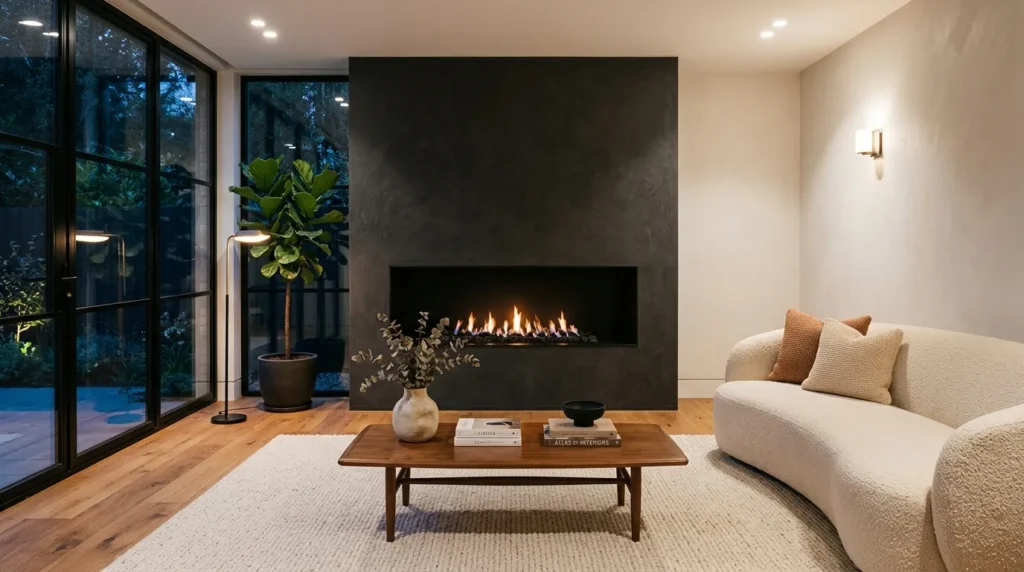
- A recessed fireplace creates a streamlined appearance.
- Built-in niches can display small decorative pieces.
- Dark interiors make the fire glow more noticeable.
- Minimal surrounding furniture keeps the architecture prominent.
A recessed black fireplace niche creates a sleek architectural feature by setting the firebox slightly into the wall. The surrounding dark surface gives the flame more visual impact, especially when the rest of the room uses softer neutral tones. This approach is ideal for contemporary interiors where clean lines and minimal detailing are priorities. Pair the niche with warm wood flooring, cream upholstery, and tactile fabrics so the strong architecture still feels comfortable. A narrow ledge or adjacent recessed shelf can provide space for a few carefully selected objects without disrupting the clean composition.
When designing a recessed fireplace, practical installation requirements should come before appearance. Follow the specifications for the fireplace model, ventilation, heat clearances, and surrounding materials. Once those details are resolved, focus on creating a balanced visual frame. A slightly wider niche can make the fireplace feel more substantial, while a narrow surround creates a sharper minimalist effect. Keep decorative pieces sparse so the dark architecture remains easy to appreciate. I’ve noticed that recessed designs often look best when the surrounding wall is visually quiet, because the fire itself becomes the natural movement and warmth within an otherwise calm setting.
10. Black Fireplace With Wood
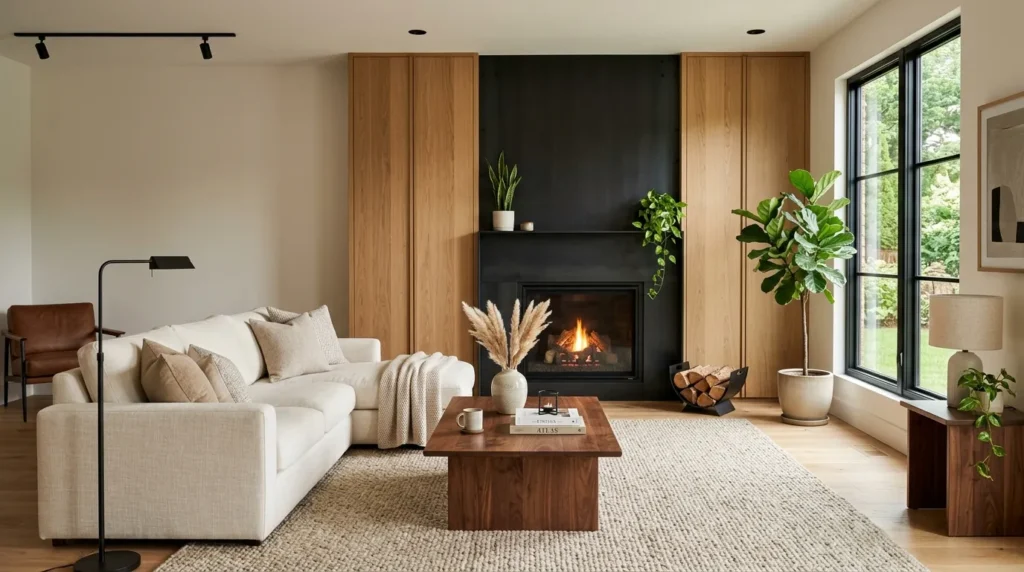
- Natural wood adds warmth to a dark fireplace surround.
- Vertical wood panels can emphasize ceiling height.
- Walnut and oak create rich tonal contrast.
- Simple styling keeps the material combination balanced.
Pairing a black fireplace with warm wood creates one of the easiest ways to balance drama and comfort in a modern living room. The dark surface provides structure, while oak, walnut, or reclaimed wood introduces natural grain and warmth. Vertical wood panels can make the ceiling appear taller, while a wood mantel can soften a sharper architectural surround. Keep the rest of the furniture in warm neutral tones so the two materials remain the main visual focus. This combination works especially well when you want a bold focal point without making the room feel cold or overly minimalist.
The wood does not need to match every other wooden element in the room. Slight differences in tone can actually make the space feel more natural and collected. If the fireplace is very dark, a medium or warm wood usually creates stronger contrast than another deep brown finish. Add soft upholstery, woven accessories, and a textured rug to continue the comfortable feeling. In my experience, this material pairing is particularly forgiving because natural wood adds visual warmth even when the surrounding palette is quite dark. The result feels modern, grounded, and welcoming throughout the day.
11. Black Fireplace With Mantel
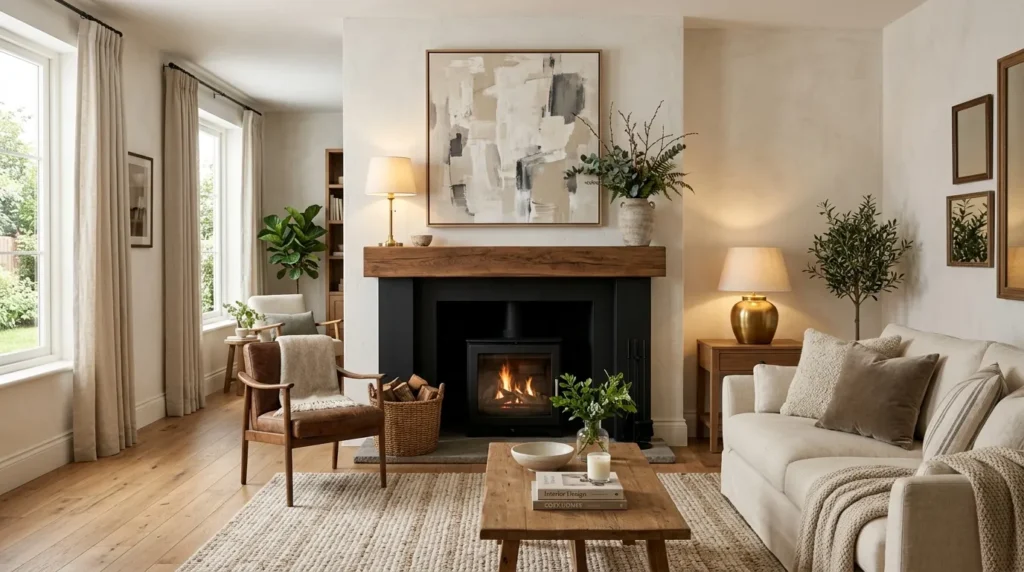
- A mantel creates a natural display surface.
- Warm artwork softens the darker fireplace.
- Layered objects add personality without clutter.
- Wood or stone mantels introduce material contrast.
A black fireplace with a defined mantel gives you an easy place to introduce artwork, ceramics, candles, or other meaningful pieces. The dark surround provides a strong backdrop, allowing lighter objects to stand out clearly. A natural wood mantel can soften the composition, while stone creates a more substantial architectural appearance. Keep the display intentionally edited rather than filling the entire surface. One large artwork piece paired with a small vase or sculptural object can often create more impact than a crowded arrangement.
Think of the mantel as a visual extension of the fireplace rather than a separate decorating zone. Repeat colors and materials from the room so the display feels connected to the sofa, rug, flooring, or lighting. Avoid placing delicate items too close to heat-producing surfaces, and follow the fireplace manufacturer’s guidance for safe clearance. A mantel also works beautifully for seasonal styling because the main architectural feature remains consistent while small accessories can change. This makes the room easy to refresh without replacing major furniture or altering the fireplace itself.
12. Black Corner Fireplace
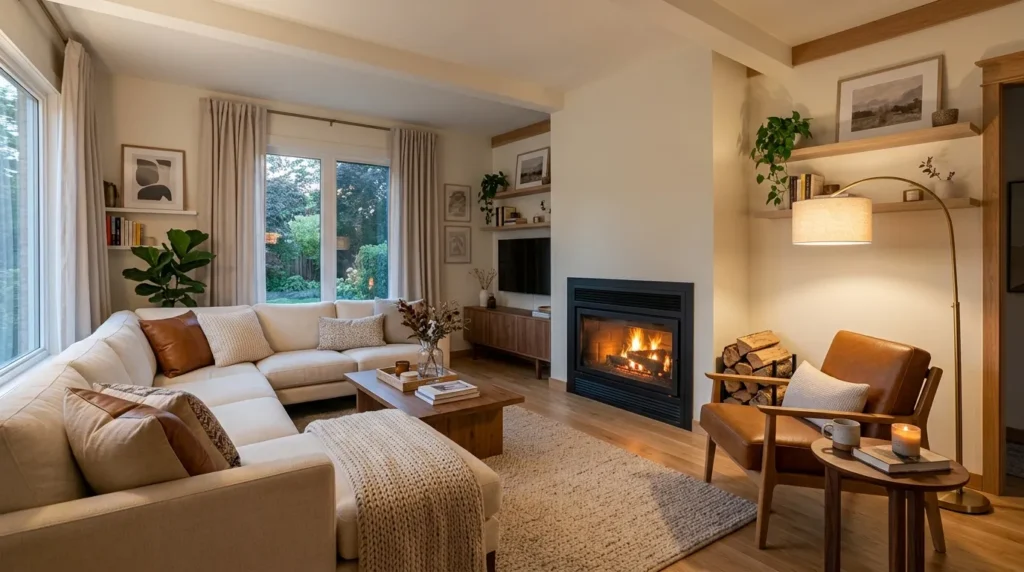
- Corner placement makes use of otherwise awkward space.
- Angled positioning can improve the room’s visual flow.
- Light furniture balances the darker architectural feature.
- A nearby reading chair can create a cozy secondary zone.
A black corner fireplace can turn an overlooked part of the living room into a purposeful focal point. Corner placement is especially useful when the main walls are already occupied by windows, doors, or large furniture. The angled position naturally directs attention toward the fire while helping define the seating arrangement. Use a lighter sofa, warm wood table, and textured rug to balance the darker feature. A nearby reading chair or floor lamp can make the corner feel like a complete secondary zone rather than simply a fireplace squeezed into unused space.
Furniture placement becomes especially important with a corner fireplace because the room needs to feel connected rather than divided. Arrange seating so people can enjoy the fire while still facing one another comfortably. Avoid pushing every piece against the walls simply to maximize floor space; a little breathing room can make the arrangement feel more intentional. In my experience, corner fireplaces work best when their surrounding area has a clear purpose, such as reading, relaxing, or conversation. This transforms an awkward architectural limitation into a cozy feature that contributes to the room’s overall layout and function.
13. Black Plaster Fireplace
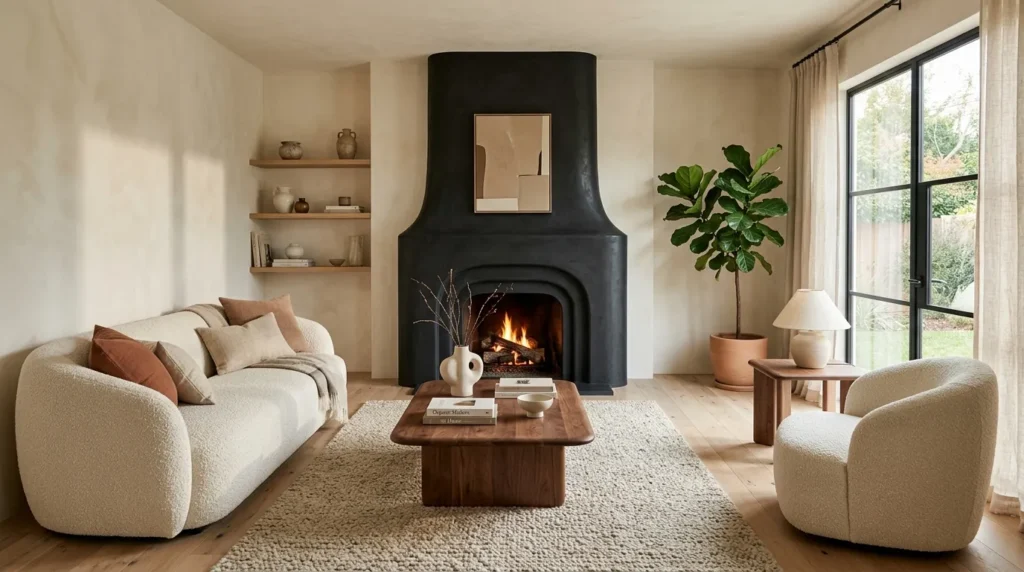
- Smooth plaster creates a seamless architectural finish.
- Hand-applied texture adds subtle depth.
- Rounded edges can soften a modern silhouette.
- Neutral furniture keeps the fireplace visually dominant.
A black plaster fireplace can create a softer alternative to stone, brick, or glossy tile. Its seamless surface gives the living room a sculptural quality, especially when the surround has curved edges or gently rounded corners. Hand-applied plaster can also reveal subtle variations that keep the dark surface from looking completely flat. Pair it with boucle upholstery, natural wood, linen, and other tactile materials to balance the smooth architecture. The result feels modern and artistic while still maintaining the warmth needed for a comfortable everyday living room.
The finish you choose can significantly affect the final appearance. A completely smooth plaster surface creates a refined minimalist look, while a lightly textured application gives the wall more organic character. Keep nearby accessories restrained because the material itself provides visual interest. Warm lighting can reveal subtle shadows across the plaster after sunset, making the fireplace feel more dimensional. If you are considering a plaster finish, make sure the material and installation method are appropriate for the fireplace and surrounding heat requirements. Thoughtful planning helps the finished feature look beautiful while remaining practical and durable.
14. Black Tile Surround
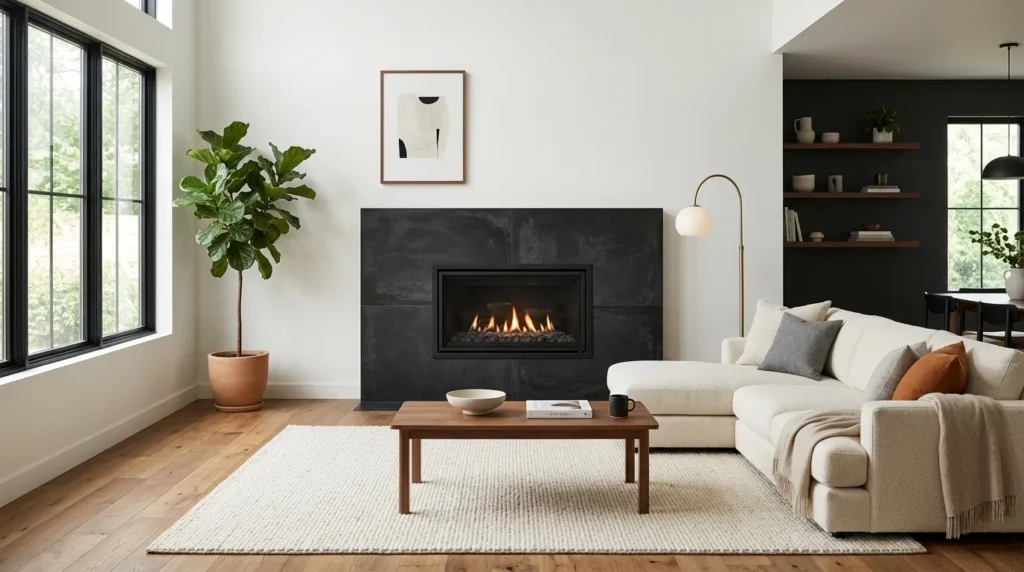
- Tile offers countless shapes, textures, and finishes.
- Large-format tiles create a cleaner contemporary appearance.
- Small tiles add rhythm and visual texture.
- Matte surfaces create a softer modern effect.
A black tile fireplace surround offers plenty of flexibility because tile comes in many shapes, textures, sizes, and finishes. Large-format matte tiles create a streamlined modern appearance with fewer visible grout lines, while smaller tiles can introduce more rhythm and texture. Choose a finish that complements the rest of the room rather than competing with it. A dark fireplace paired with cream upholstery, warm wood, and soft textiles can create strong contrast while still feeling comfortable. This makes tile an especially versatile choice for updating a fireplace without changing the entire living room.
Before choosing a tile, consider how the pattern will look across the full fireplace surround rather than judging a single sample. Dark grout can create a nearly seamless appearance, while contrasting grout emphasizes individual tile shapes. If the room is small, larger tiles can visually simplify the feature and prevent it from feeling busy. Always choose materials and installation methods suitable for the specific fireplace application and required heat exposure. I’ve noticed that matte tile is particularly forgiving because it hides fingerprints and reflections better than highly polished surfaces while still giving the fireplace a crisp, finished appearance.
15. Black Fireplace With Built-In Shelves
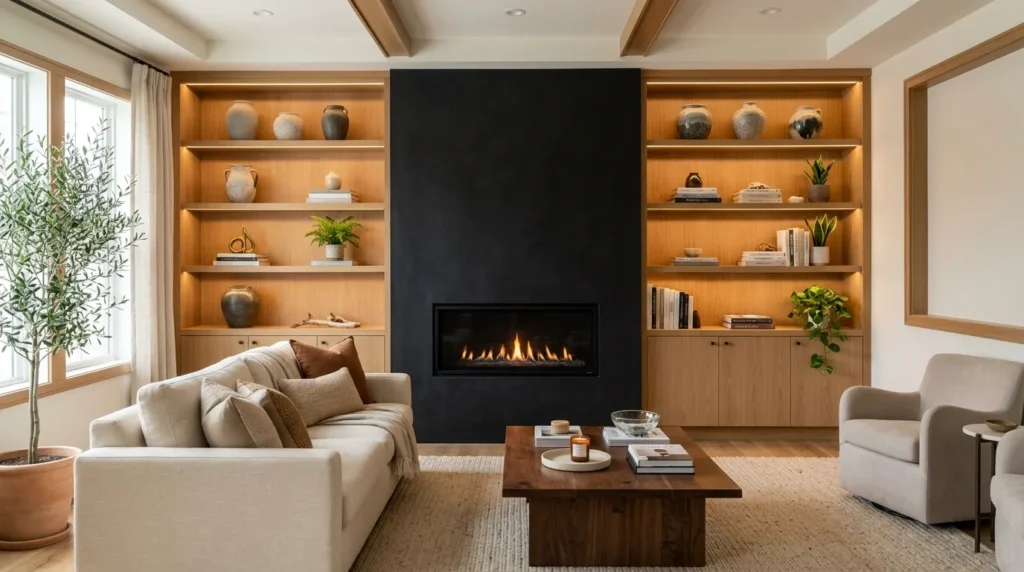
- Open shelving adds display space beside the fireplace.
- Warm wood shelves soften a dark architectural wall.
- Balanced styling creates visual symmetry.
- Books and ceramics add personality without overwhelming the feature.
Built-in shelves can frame a black fireplace and turn the entire wall into a balanced architectural composition. Open shelving provides space for books, ceramics, framed photographs, and small plants while the fireplace remains the central anchor. Warm oak or walnut shelves create useful contrast against the dark surround and keep the overall design from feeling too stark. Symmetry can make the arrangement especially calming, but the shelves do not need to be perfectly identical if you prefer a more relaxed, collected appearance.
The best shelf styling usually comes from leaving some spaces intentionally empty. Start with larger objects, then add smaller pieces only where they help balance the composition. Avoid placing too many decorative items directly beside the fireplace because the dark surround already creates a strong focal point. Integrated lighting can highlight favorite objects and provide a gentle evening glow. In my experience, built-in shelves are most successful when they combine decoration with real storage, allowing the room to look polished while still holding books, everyday items, and meaningful pieces that make the living space feel personal.
16. Black Fireplace With Concrete
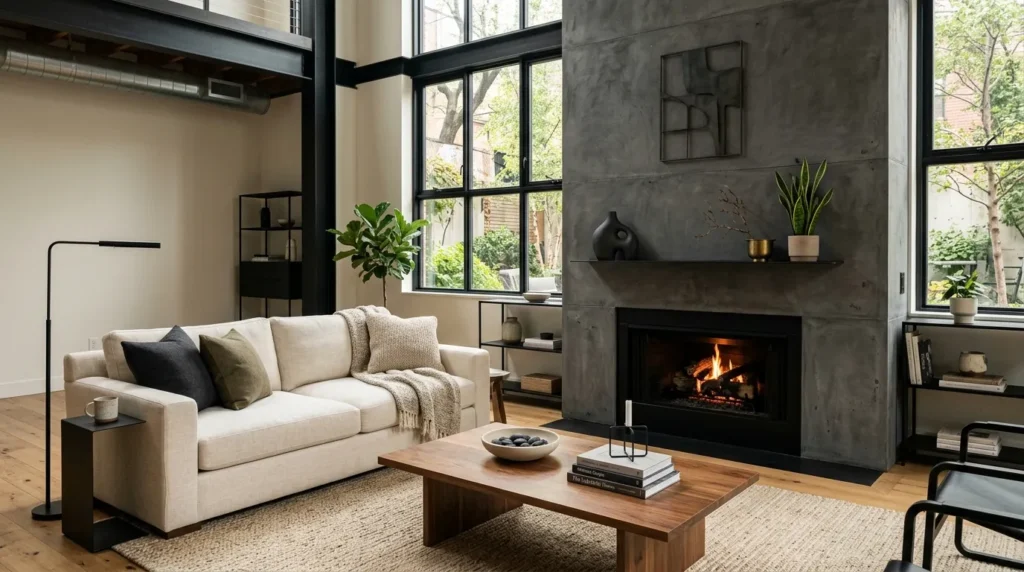
- Concrete adds raw architectural texture.
- Smooth surfaces create a clean industrial contrast.
- Warm wood prevents the palette from feeling too cold.
- Soft textiles make the harder materials more comfortable.
A black fireplace paired with concrete creates a strong architectural statement that feels distinctly modern. The combination works because both materials have an understated quality, yet their different textures create enough contrast to keep the wall interesting. Smooth concrete can provide a clean backdrop, while subtly rough surfaces add depth and character. Warm walnut, oak, leather, or woven furniture helps soften the industrial quality. Keep the color palette restrained with cream, beige, charcoal, and warm brown so the fireplace remains bold without making the entire room feel overly severe.
Balance is especially important when combining dark finishes with concrete. Too many cool gray surfaces can make a living room feel flat or uninviting, particularly when natural light is limited. Introduce warm bulbs, soft upholstery, textured rugs, and natural wood to bring visual warmth back into the space. A large neutral sofa can also create a comfortable counterpoint to the harder fireplace materials. I’ve noticed that this approach works best when the industrial elements are limited to one or two major surfaces. That allows the room to feel contemporary while remaining practical and welcoming for everyday living.
17. Black Fireplace With Brass
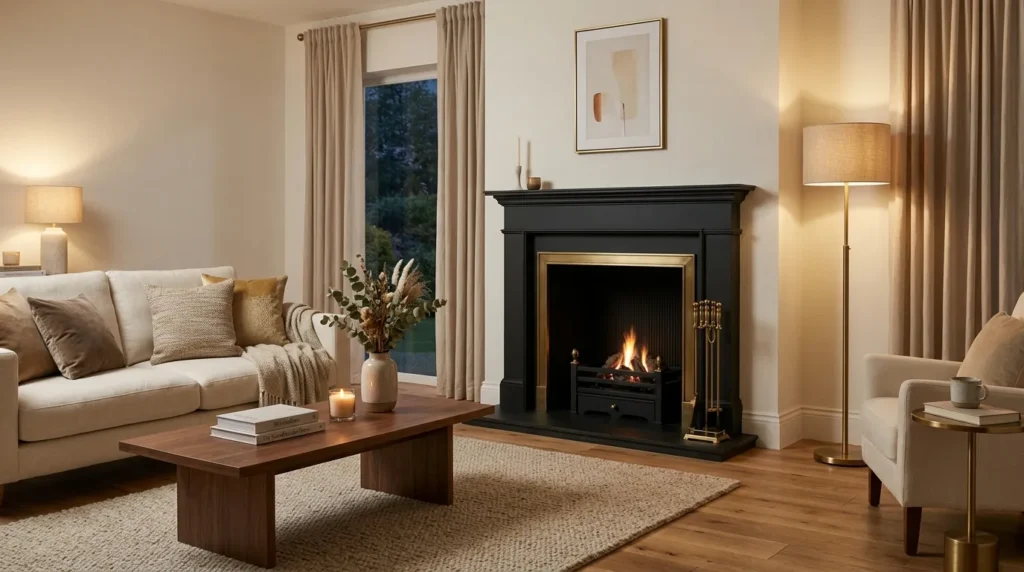
- Brass introduces warmth and reflected light.
- Aged finishes feel softer than highly polished metal.
- Small brass details can connect the room visually.
- Warm lighting enhances the metallic accents after dark.
Black and brass create a timeless contrast that can make a fireplace feel both dramatic and sophisticated. The dark surface provides a strong foundation, while brass introduces warm reflective details that catch natural and artificial light. Aged or brushed brass usually feels more relaxed than a highly polished finish, especially in a comfortable living room. You can use brass around the fireplace itself or repeat it through lighting, picture frames, cabinet hardware, and small decorative objects. Keep the number of metallic accents controlled so they enhance the fireplace rather than compete with it.
The easiest way to make brass feel intentional is to repeat it in at least two or three places around the room. For example, pair brass fireplace detailing with a floor lamp and small decorative object on a nearby table. Warm white bulbs will make the metal appear richer during evening hours. If the room already contains several wood tones, brass can act as the visual bridge between the darker fireplace and warmer furniture. In my experience, aged brass is particularly useful when you want a bold fireplace to feel inviting rather than overly formal, because its softened finish adds character without excessive shine.
18. Black Fireplace Accent Wall
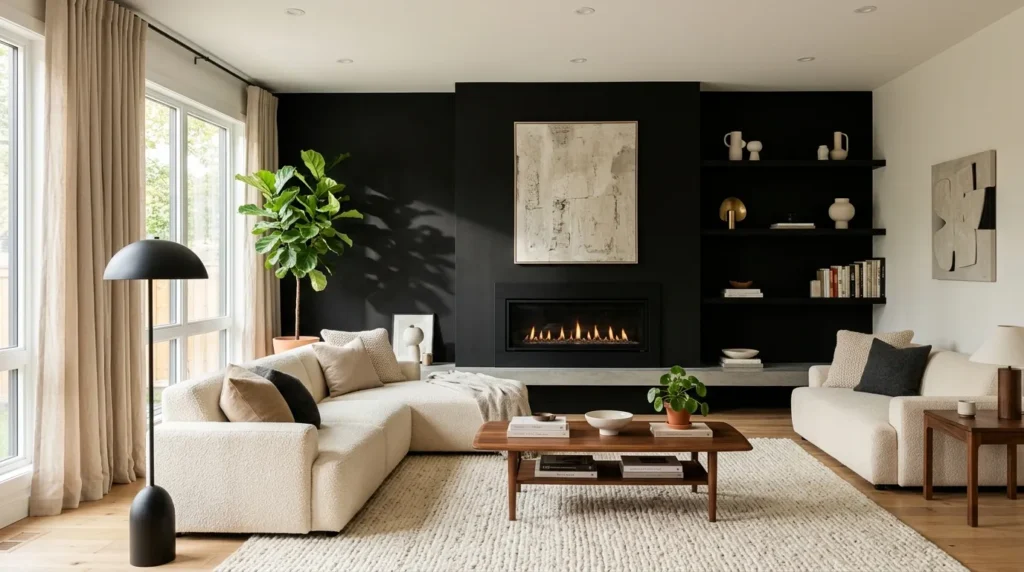
- An accent wall creates immediate visual focus.
- Painting the surrounding wall dark can unify the fireplace.
- Lighter furniture provides strong contrast.
- Minimal artwork keeps the wall visually clean.
A black fireplace becomes even more striking when the entire wall behind it is treated as one dark architectural feature. Extending the color around the fireplace creates a unified backdrop that makes the firebox, mantel, or surrounding materials feel more substantial. This approach works particularly well in open-plan homes because a strong accent wall can visually define the living area without adding physical partitions. Keep the sofa and larger furnishings lighter to create contrast. Cream, beige, warm gray, and natural wood tones can prevent the dark wall from overwhelming the rest of the room.
You can also use the accent wall to simplify the overall decorating scheme. Instead of filling the wall with numerous pieces of artwork, let the fireplace provide the main focal point and add only one or two carefully selected elements. If the room has limited daylight, balance the dark surface with warm lamps and reflective materials nearby. A large rug can visually anchor the seating arrangement while lighter curtains can maintain an airy feeling around windows. I’ve noticed that this technique often makes a room look more intentional because one strong wall can replace several smaller decorative decisions.
19. Black Fireplace With Oak
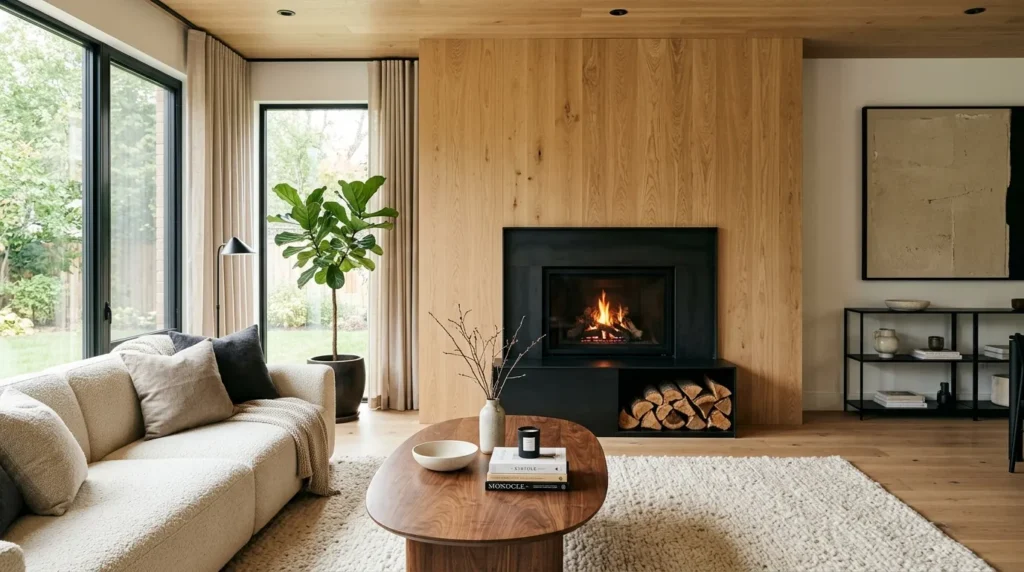
- Oak introduces natural warmth beside the darker surround.
- Light wood creates strong but balanced contrast.
- Visible grain adds organic texture.
- Neutral upholstery keeps the palette calm.
A black fireplace paired with light oak creates a crisp contrast that feels modern without becoming harsh. The dark surround provides visual weight, while pale oak introduces warmth, texture, and a lighter natural element. This combination works especially well with cream sofas, beige rugs, woven accessories, and simple black accents. The difference between the two materials makes both surfaces more noticeable. Instead of adding lots of color, you can let the contrast between dark and light materials provide the visual interest, creating a room that feels sophisticated while remaining relaxed and comfortable.
Light oak is particularly useful when the living room already has several darker features. It can brighten the overall composition without requiring white walls or colorful accessories. Repeat the wood through a coffee table, shelving, side table, or decorative tray to make the fireplace surround feel connected to the rest of the room. Avoid using too many unrelated wood tones if the space is small. In my experience, a limited combination of black, natural oak, cream, and soft gray creates a flexible foundation that can easily adapt as furniture and seasonal accessories change.
20. Black Fireplace With Concrete Mantel
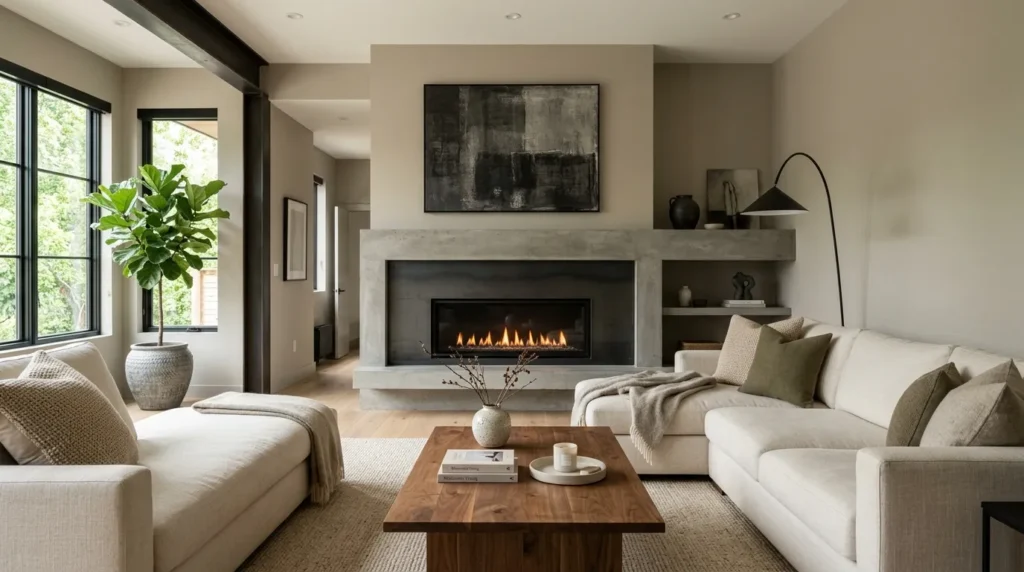
- Concrete adds a substantial architectural quality.
- The contrasting textures create visual depth.
- Warm furniture softens the industrial materials.
- Minimal accessories keep the mantel looking intentional.
A concrete mantel can give a black fireplace a strong architectural presence while creating contrast through texture and material. The smooth, slightly raw quality of concrete works beautifully against a deep black surround because neither material relies on bright color to make an impression. Warm walnut, oak, leather, and cream upholstery can soften the composition and make the room feel more comfortable. Keep the mantel design simple so the materials remain the focus. A single ceramic vessel, sculptural object, or understated artwork can add personality without competing with the bold fireplace structure.
When combining concrete and black finishes, warmth becomes especially important. Choose wood furniture with visible grain and textiles with tactile surfaces, such as linen, wool, boucle, or cotton. These softer materials balance the visual weight of the fireplace and create a more welcoming seating area. Warm lighting can also reveal subtle variations in the concrete after sunset. If you prefer a cleaner appearance, keep the surrounding walls light and neutral. If you want stronger drama, extend darker tones into nearby cabinetry or trim. The result can feel architectural and sophisticated without losing everyday comfort.
21. Black Fireplace With Floating Mantel
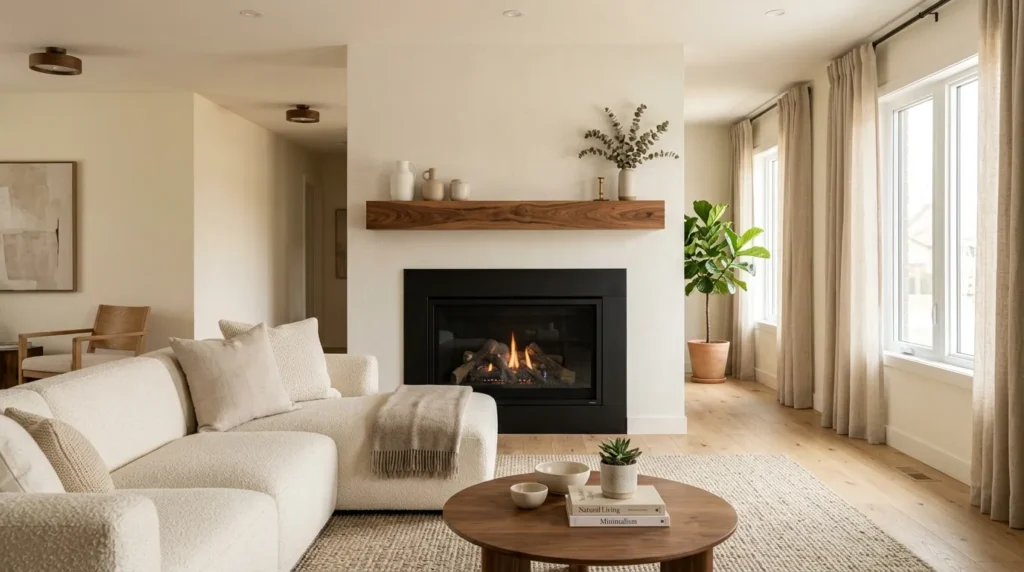
- A floating mantel creates a lighter visual profile.
- Natural wood adds warmth above the darker surround.
- Minimal styling keeps the horizontal line prominent.
- Open space beneath the mantel maintains a modern feel.
A floating mantel can make a black fireplace feel lighter and more contemporary by introducing a clean horizontal line without adding bulky structure. A natural walnut or oak shelf provides warmth against the darker surround while creating a simple surface for artwork, ceramics, or a few personal objects. The open space beneath the mantel keeps the fireplace visually streamlined. This approach works particularly well in modern homes where strong architectural details are preferred over traditional decorative elements. Pair it with soft upholstery and natural textures to keep the room comfortable and approachable.
The mantel should be proportionate to the fireplace and securely installed according to the fireplace manufacturer’s requirements. Avoid overcrowding it with small decorations, because the clean floating form is part of its appeal. One large artwork piece or a small group of carefully selected objects can create enough interest. Repeating the mantel’s wood tone through a coffee table or shelving can make the room feel cohesive. I’ve noticed that floating shelves are especially effective when the surrounding wall is simple because their shadow line creates subtle depth. The result feels polished, modern, and intentionally uncluttered.
22. Black Fireplace With Arched Detail
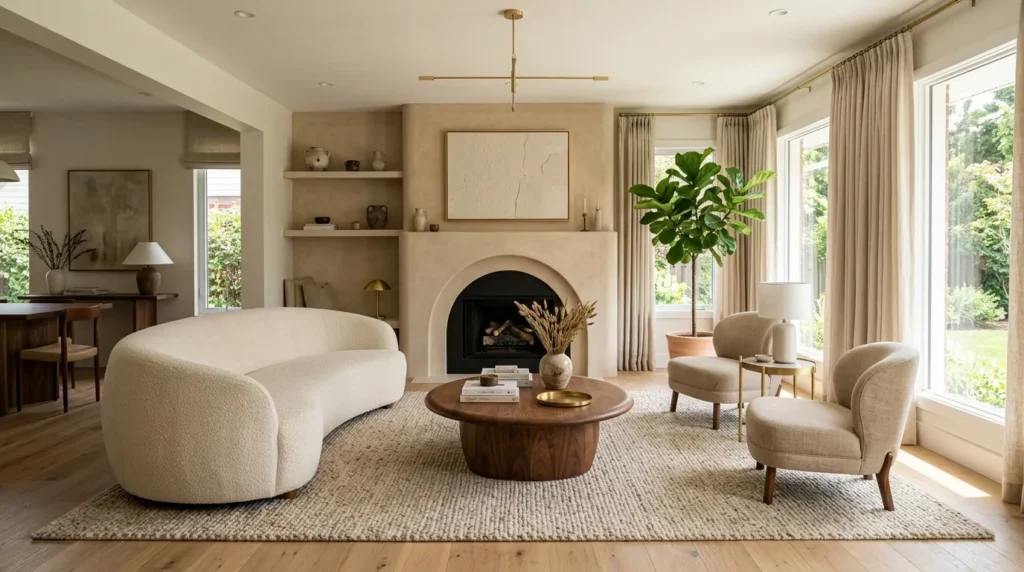
- An arched opening softens the strong geometry of black finishes.
- Curved lines create a more distinctive focal point.
- Warm plaster or stone can balance the darker surround.
- Rounded furniture echoes the architectural shape.
An arched fireplace adds a softer architectural detail to a bold living room, creating contrast without relying on extra decoration. The curved opening naturally draws attention toward the fire and breaks up the straight lines often found in modern furniture. Pair the dark surround with warm plaster, natural stone, or light wood to keep the feature balanced. A curved sofa, rounded coffee table, or soft boucle chair can repeat the shape elsewhere in the room. This creates a subtle visual connection that makes the entire space feel more thoughtfully designed and cohesive.
The beauty of an arched design is that it can feel both contemporary and timeless. Keep the surrounding decor simple so the unusual shape remains the main attraction. Warm lighting can emphasize the curve after sunset, while natural daylight highlights the texture of the surrounding materials. If the room already contains strong rectangular elements, this rounded detail can make the space feel softer and more inviting. I’ve noticed that mixing curved and straight forms often makes modern interiors feel less rigid, giving the fireplace a distinctive character without sacrificing the clean, sophisticated look of the room.
Conclusion
A bold fireplace can completely change the character of a living room, but the surrounding details make the difference. Warm wood, soft upholstery, natural stone, layered lighting, brass accents, and thoughtful styling can balance the darker focal point beautifully. These ideas show that a black fireplace can feel dramatic without making a room cold or overwhelming. I’ve seen how even small changes around a fireplace can create a noticeable transformation. Save this article to Pinterest for your next decorating project, try the idea that fits your space, and share it with someone looking for modern living room inspiration.