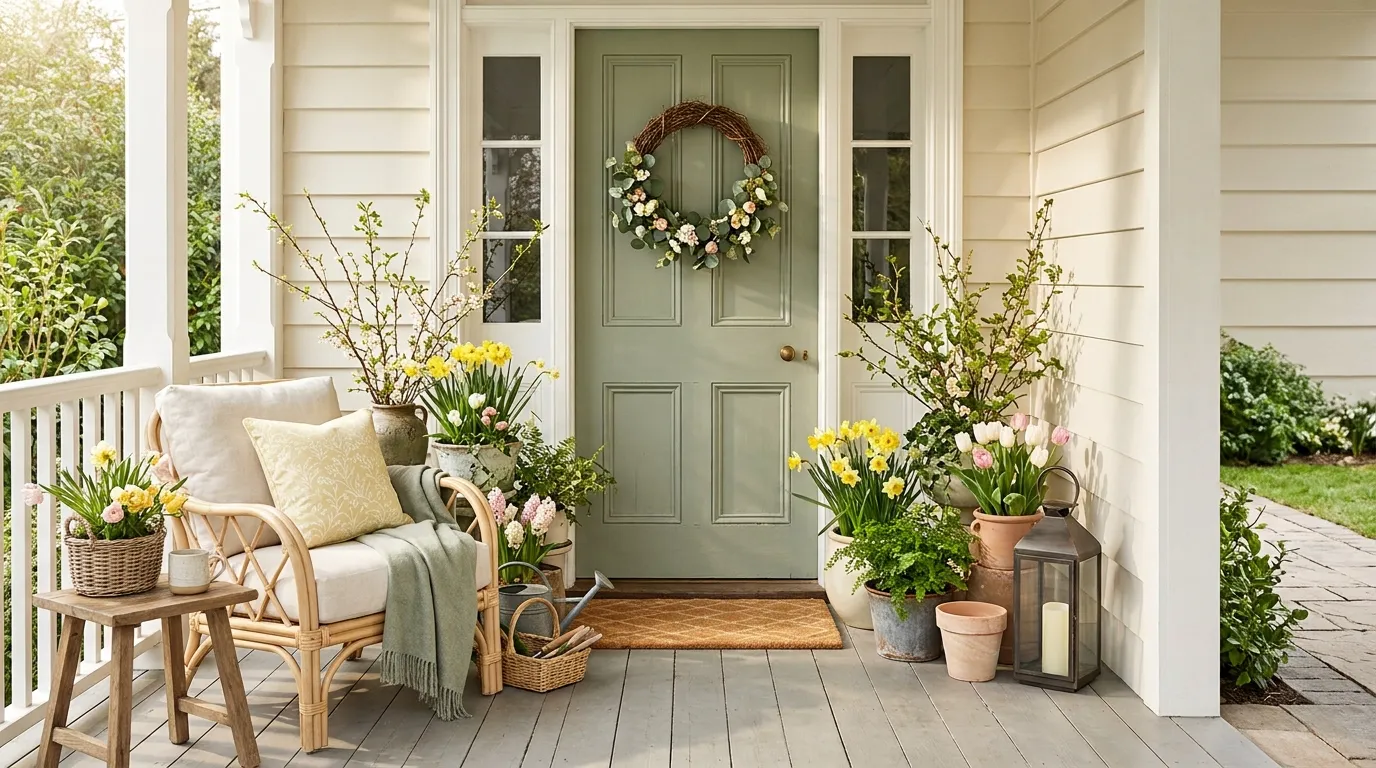
Spring is the perfect time to give your entryway a fresh little makeover. Your front porch does not need a complete renovation to feel brighter, warmer, and more welcoming. A few colorful flowers, layered textures, a fresh wreath, or even one beautiful planter can completely change the first impression of your home.
These spring front porch decor ideas are designed for real homes, small spaces, and different decorating styles. Whether you love cozy farmhouse details, clean modern touches, or colorful cottage-inspired displays, you’ll find simple ideas you can easily recreate. The best part? Many of these updates are affordable, practical, and easy to switch as the season changes.
Save your favorite ideas as you browse, then choose two or three that fit your space. A beautiful porch is less about having more decorations and more about choosing the right details, colors, textures, and plants to create an entrance that feels naturally inviting.
1. Pastel Flower Pots
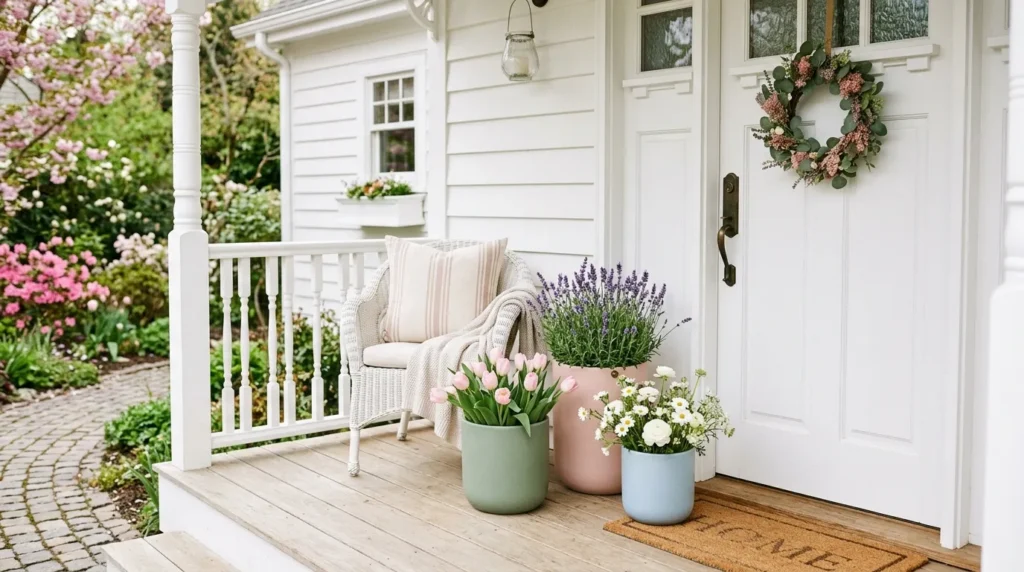
- Soft pastel planters instantly brighten a tired-looking entryway.
- Mix different pot heights to create a fuller, layered display.
- Choose flowers that suit your porch’s sunlight and watering routine.
- In my experience, matching two or three colors keeps the arrangement polished instead of cluttered.
Pastel flower pots are one of the easiest ways to give spring front porch decor a fresh, cheerful update. Picture three ceramic planters grouped beside the doorway, filled with soft pink tulips, lavender blooms, and fresh green foliage. The gentle colors create a welcoming first impression without making the porch feel overly decorated. Choose pots in white, blush, pale blue, or sage green for a light seasonal palette. Varying their heights adds dimension, while keeping them close together makes the display feel intentional rather than scattered across the entrance.
For a practical setup, place the tallest planter toward the back and smaller pots slightly forward or beside it. This simple arrangement keeps every flower visible while creating an attractive layered effect from the sidewalk. I’ve noticed that containers with a little visual weight work especially well near doors because they stay grounded and are less likely to look lost in the space. If your porch is narrow, use two medium pots instead of several small ones. Add a simple welcome mat underneath, and the entire entrance feels brighter, cleaner, and ready for spring.
2. Woven Door Basket
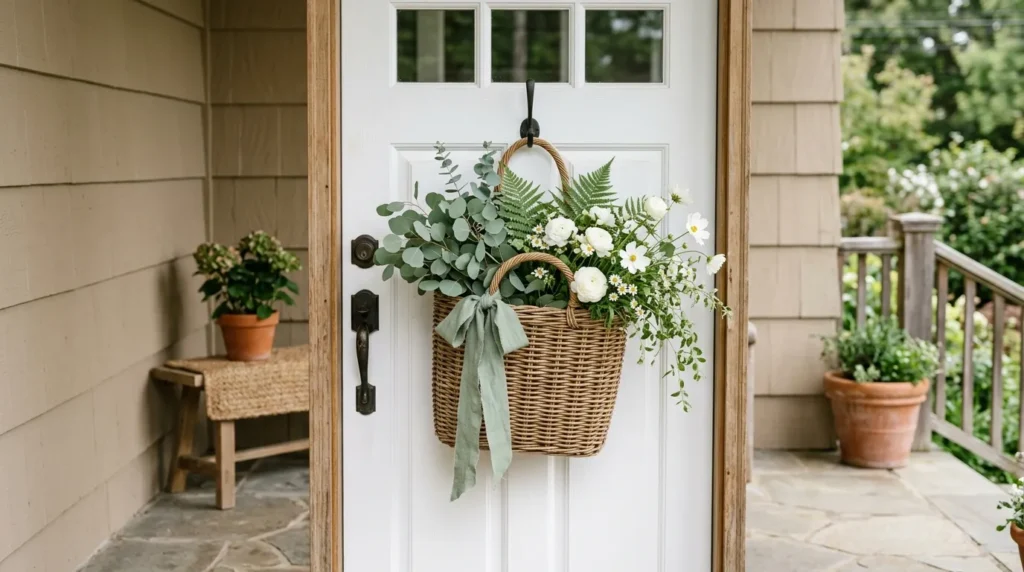
- A woven basket adds warmth without taking up valuable floor space.
- Fill it with faux or fresh greenery for an easy seasonal refresh.
- A wide ribbon can introduce spring color without overwhelming the arrangement.
- Choose a sturdy basket with a secure hanging loop for everyday durability.
A woven door basket brings texture and natural warmth to an entrance that feels a little plain. Instead of covering the entire door with decoration, use one generously sized basket filled with eucalyptus, fern leaves, small white flowers, or seasonal branches. The combination of woven fibers and fresh greenery creates an inviting contrast against painted wood or neutral siding. For spring front porch decor, this approach works especially well when floor space is limited. The basket adds height and personality while keeping the walking area open, making it both decorative and practical.
Keep the arrangement slightly loose rather than packing the basket tightly with flowers. A few stems extending naturally beyond the edges create movement and make the display feel more relaxed. You can also tuck in a narrow ribbon in soft yellow, sage, or dusty blue for an extra seasonal detail. I’ve seen this work well in smaller homes because the decoration stays visually centered on the door. When choosing the basket, look for one with strong handles or reinforced hanging hardware so the display remains secure through breezy spring weather.
Also Read : 25 Spring Bedroom Ideas for a Fresh Cozy Retreat
3. Layered Welcome Mat
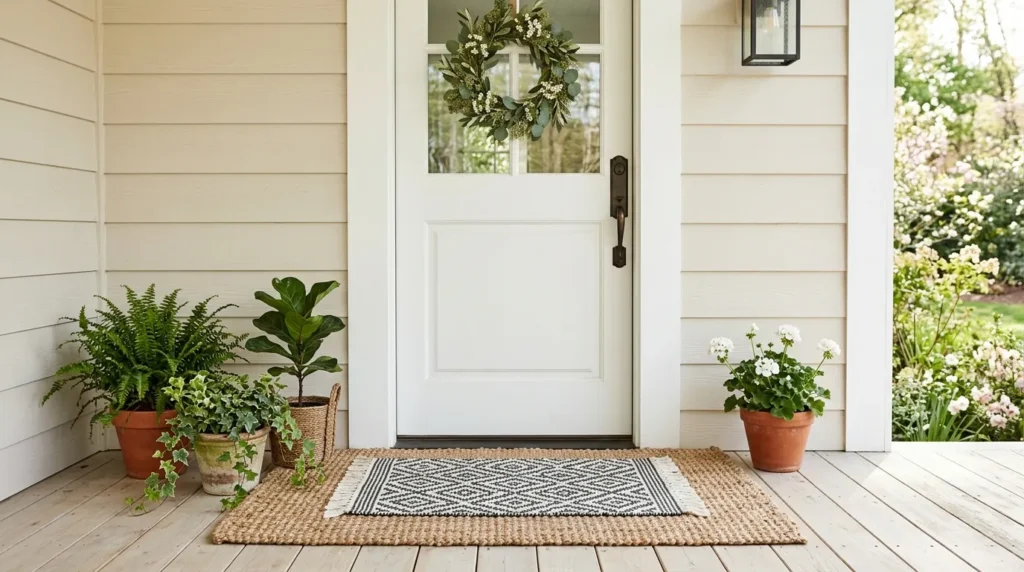
- Layering mats adds depth while giving the doorway a more finished appearance.
- Start with a larger textured base mat and place a smaller patterned mat above it.
- Neutral colors make the arrangement easy to update throughout the seasons.
- A generous border around the top mat helps both patterns remain visible.
A layered welcome mat can completely change the look of a simple entryway in just a few minutes. Start with a large natural-fiber mat in a neutral shade, then place a smaller patterned mat directly on top. The combination creates a framed effect that makes the doorway feel more thoughtfully styled. A striped, checked, or floral pattern can introduce subtle spring character without competing with nearby plants. This is an especially easy update when you want fresh seasonal style without replacing furniture or making permanent changes to the porch.
The key is choosing mats that complement rather than fight each other. If the top mat has a noticeable pattern, keep the larger base mat simple with a woven texture or understated stripe. Leave enough of the bottom mat exposed to create a clear border around all four sides. In my experience, this small proportion detail makes the biggest difference because it keeps the entrance looking balanced. Finish the setup with a potted plant or simple lantern nearby, and the doorway gains texture, definition, and a welcoming layered look.
4. Fresh Greenery Wreath
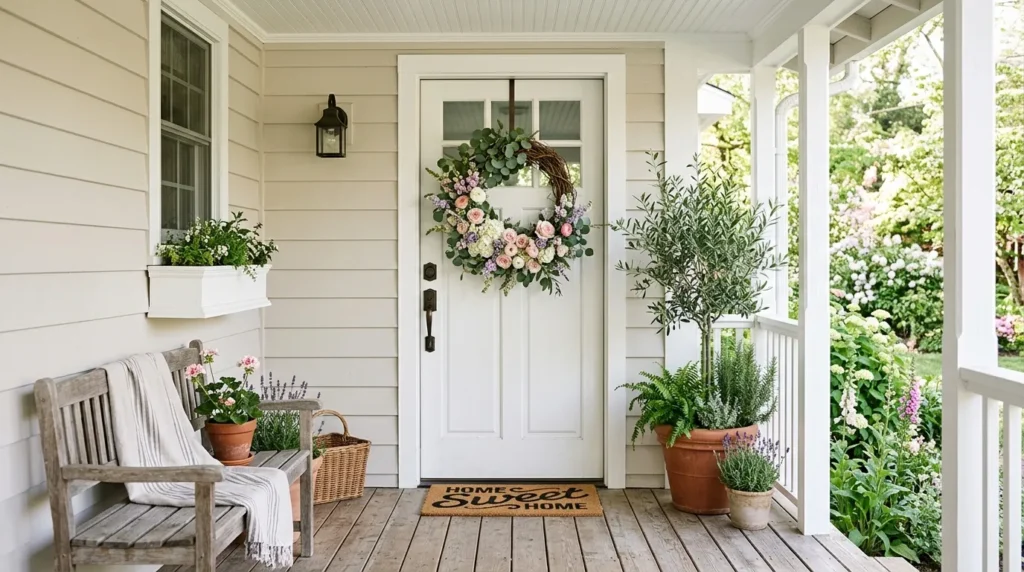
- A greenery wreath creates an instant seasonal focal point.
- Soft flowers add color without making the doorway feel busy.
- Limit the palette to two or three shades for a polished look.
- A relaxed arrangement often feels more natural than a perfectly symmetrical one.
A bright door wreath can make the entire entrance feel ready for spring before guests even step onto the porch. Choose a lightweight grapevine or eucalyptus base and add seasonal flowers in white, blush, yellow, or soft lavender. The wreath does not need to be perfectly symmetrical; a slightly relaxed arrangement often feels more natural and inviting. For a clean look, keep the flower colors limited to two or three shades. This creates a focal point on the door while allowing nearby planters, mats, and other accents to support the design instead of competing with it.
When hanging the wreath, center it carefully at eye level and check that it does not interfere with the door handle or opening. A wide ribbon can soften the arrangement, while a simple metal or over-the-door hanger keeps installation easy for renters. I’ve noticed that wreaths with plenty of greenery tend to stay attractive longer because they still look full as individual flowers begin to fade. If your porch already has several decorative elements, choose a simpler wreath. The goal is to create one strong focal point that makes the doorway feel finished without making the entrance look crowded.
Also Read : 22 Spring Mantel Decor Ideas for a Fresh Seasonal Look
5. Tall Statement Planter
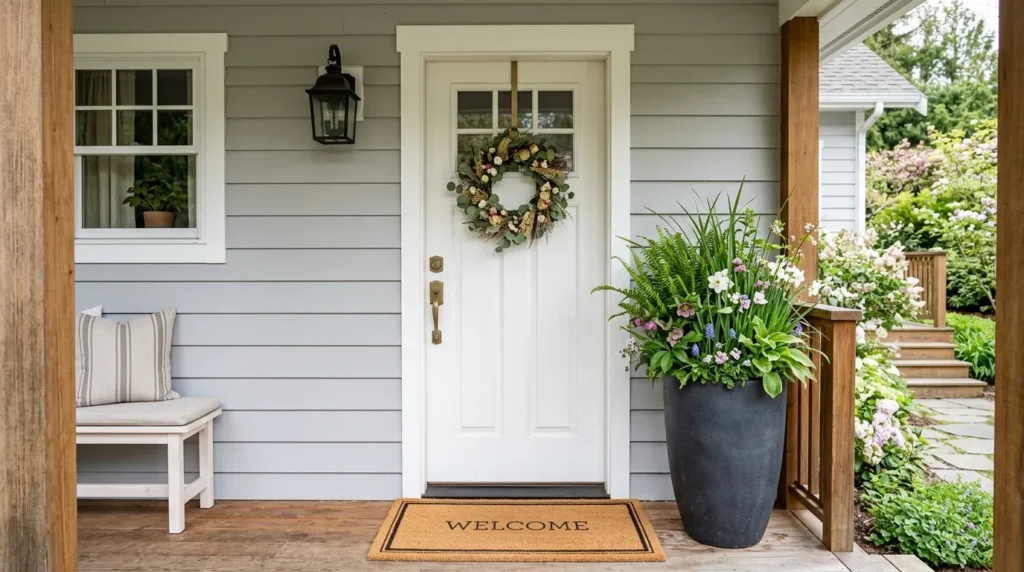
- One tall planter can add height without filling the porch with accessories.
- Upright greenery helps frame the doorway and create visual balance.
- Choose plants based on your porch’s actual sunlight conditions.
- Leave enough space around the container to keep the walkway comfortable.
Sometimes a porch needs only one tall planter to create the visual height it is missing. A narrow container filled with leafy greenery, flowering branches, or upright seasonal blooms can frame the doorway beautifully while using very little floor space. Choose a planter that rises above nearby low pots but does not block the doorbell, house numbers, or walking path. For a balanced look, place it beside the door where it visually anchors the entrance. This simple change works particularly well on small porches because it adds height and greenery without spreading decorations across the entire floor.
For the best result, match the planter finish to the existing porch materials. A matte ceramic pot feels soft and modern, while a weathered terracotta container suits farmhouse or cottage spaces. If the area receives strong afternoon sun, choose plants that can tolerate those conditions instead of selecting flowers based only on color. In my experience, healthy foliage makes a bigger visual difference than a crowded selection of blooms. Keep the arrangement slightly simple, remove damaged leaves regularly, and give the planter enough room around it so the doorway still feels open, comfortable, and easy to use.
6. Classic Porch Lanterns
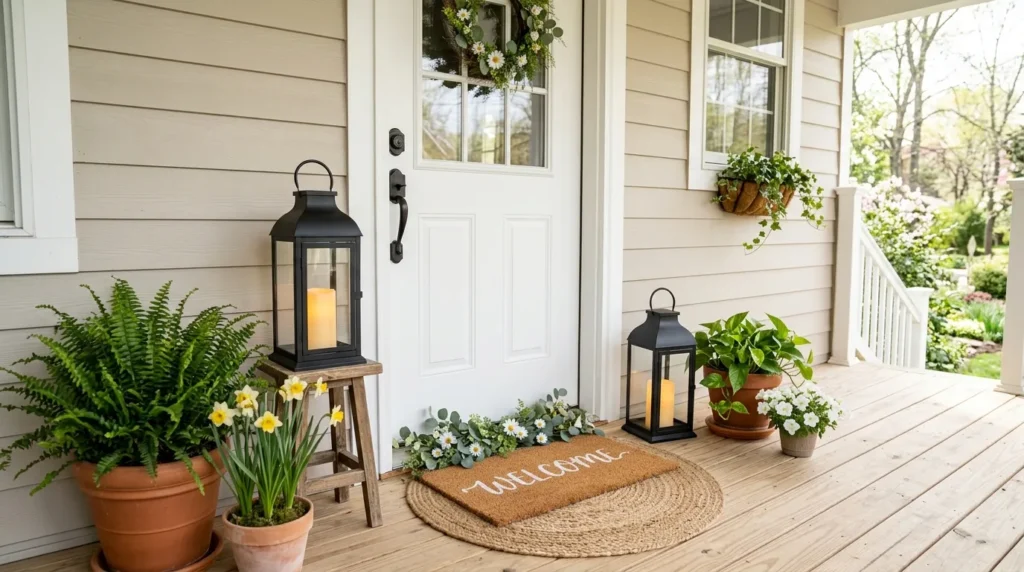
- Lanterns add structure and a polished finish around the doorway.
- Matching finishes help separate decorative details from visual clutter.
- Flameless candles make the setup practical for everyday use.
- Outdoor-rated materials are ideal for exposed porches and changing spring weather.
A pair of matching lanterns can make a plain porch feel instantly more polished, especially when they flank the doorway or sit beside a layered mat. Choose lanterns in black metal, aged brass, natural wood, or another finish already used around the entrance. Place one slightly larger lantern on one side and a smaller companion on the other if you want a relaxed, collected look. For daytime styling, add flameless candles, small faux greenery, or decorative stones inside. The result is a simple combination of height, texture, and symmetry that looks attractive without requiring many separate accessories.
Lanterns are especially useful because they can stay on the porch after spring ends. Look for outdoor-rated materials if the area is exposed to rain, humidity, or strong sunlight, and choose battery-powered candles when an electrical outlet is inconvenient. That’s why many designers recommend repeating a finish already present on the porch rather than introducing another metal or color. If your doorway feels too symmetrical already, offset the lanterns with a plant or basket instead of matching everything perfectly. This keeps the arrangement approachable while still giving the entrance a deliberate, professionally styled appearance.
7. Colorful Door Accent
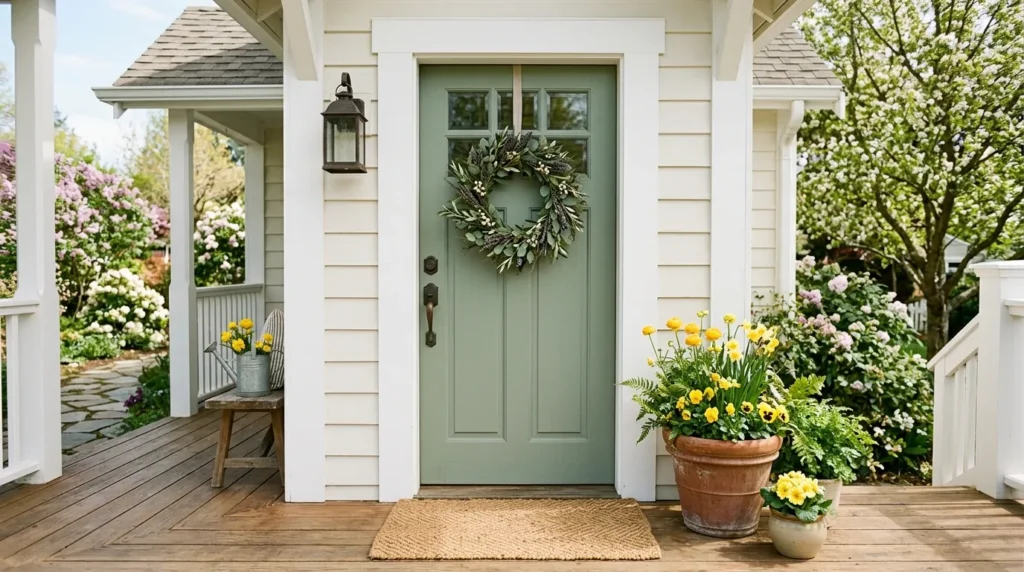
- A fresh door color can transform the entire entrance without adding many accessories.
- Soft green, powder blue, or muted yellow works beautifully for spring.
- Test paint samples in daylight before committing to a color.
- Repeat the chosen shade in one small porch accessory for a cohesive finish.
A colorful front door can become the biggest visual upgrade on the porch with surprisingly little effort. Soft sage green, powder blue, muted yellow, or dusty coral can make a neutral exterior feel noticeably fresher for the season. The key is choosing a shade that complements the home’s siding, trim, and existing landscaping. If a full repaint feels like too much commitment, use a removable seasonal accent or simply repeat your favorite spring color through a wreath ribbon, planter, or cushion. One strong color can give the entire entrance a more intentional appearance.
Before painting, look at your chosen color outdoors at different times of day because sunlight can dramatically change how it appears. Clean and lightly prepare the door surface so the finish looks smooth and professional. I’ve noticed that muted colors tend to be easier to live with because they add personality without overpowering the architecture. If the door is already colorful, keep the surrounding decorations quieter. A neutral mat, simple greenery, and restrained planters allow the door to remain the star while creating a welcoming entrance that feels fresh rather than overly themed.
8. Floral Stairway Pots
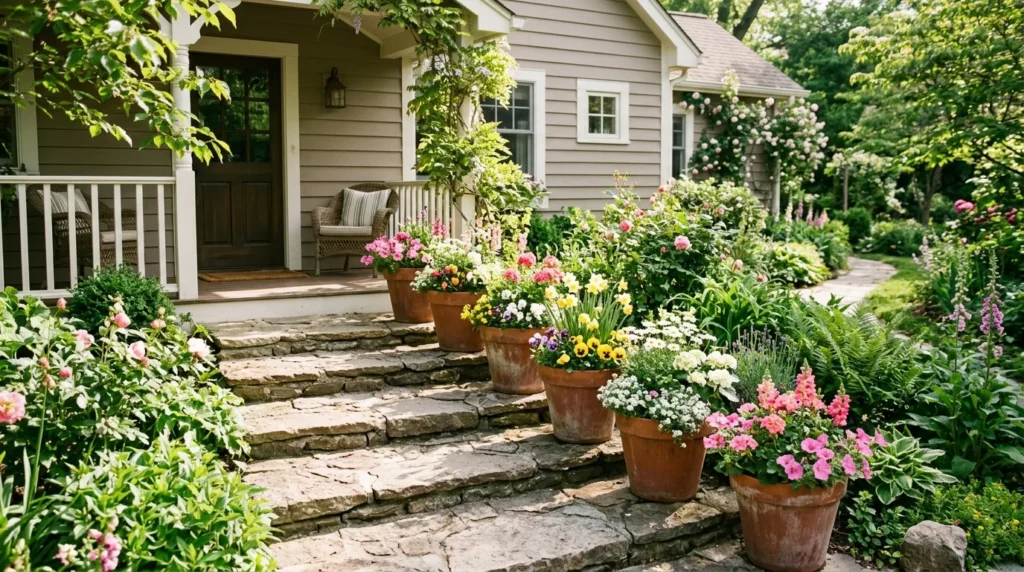
- Repeating pots along porch steps creates rhythm and visual movement.
- Use the same container style for a more organized appearance.
- Alternate flowering plants with greenery to keep the display balanced.
- Keep every step and handrail completely clear for safe movement.
Turn an ordinary set of porch steps into a cheerful spring display by adding coordinated flower pots along the edges. Repetition makes this idea especially effective because the eye naturally follows the blooms from the walkway toward the front door. Use identical or closely related containers and vary the flowers slightly for a natural look. White, pink, yellow, and lavender blooms work beautifully against neutral siding or brick. Keep the arrangement concentrated along one side if the steps are narrow. This creates color and movement without sacrificing the practical space people need when entering the home.
Choose sturdy containers that will not shift easily when someone brushes past them, especially on frequently used steps. Plants should also suit the amount of sunlight each step receives, since upper and lower levels can have different exposure. In my experience, repeating one pot style makes even inexpensive flowers look more coordinated. Leave generous space around each container and avoid placing anything where feet naturally land. With the right spacing, the flowers become a natural guide toward the doorway, making the whole entrance feel brighter, more organized, and distinctly seasonal.
9. Cozy Outdoor Seating
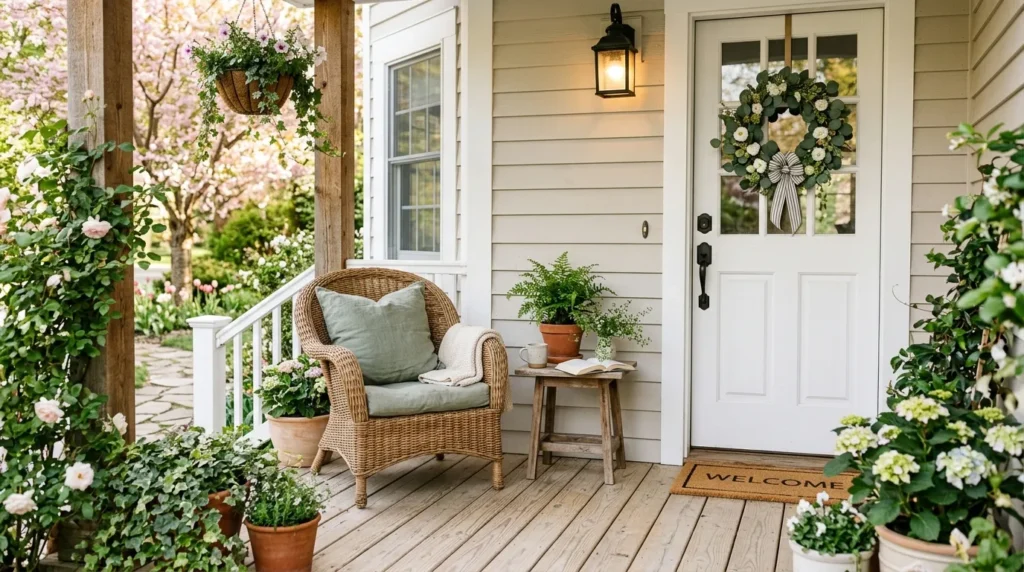
- A small chair instantly makes the porch feel more useful and inviting.
- Add one washable cushion for comfort and seasonal color.
- A compact side table provides space for drinks, books, or a planter.
- Keep furniture scaled to the porch so the walkway remains open.
A small outdoor chair can turn a decorative porch into a space you actually want to use. Place a compact wooden, wicker, or metal chair near the doorway and add a washable cushion in a soft spring shade. If space allows, pair it with a narrow side table for a small planter, morning coffee, or a lantern. This arrangement gives the entrance a lived-in quality while adding another layer of texture. It also works beautifully for homes where the porch is large enough to become a quiet sitting area but too small for a full outdoor furniture set.
Choose furniture according to the porch dimensions rather than filling every available corner. A slim bistro chair or petite bench can provide the same welcoming effect without making the entrance difficult to navigate. I’ve seen this work particularly well when the seating faces outward toward the yard, creating a natural spot for enjoying fresh spring weather. Use weather-resistant cushions and finishes if the furniture will remain outdoors. Keep the surrounding decorations simple, allowing the chair, greenery, and soft textiles to create a comfortable focal point without making the porch feel crowded.
10. Rustic Flower Crate
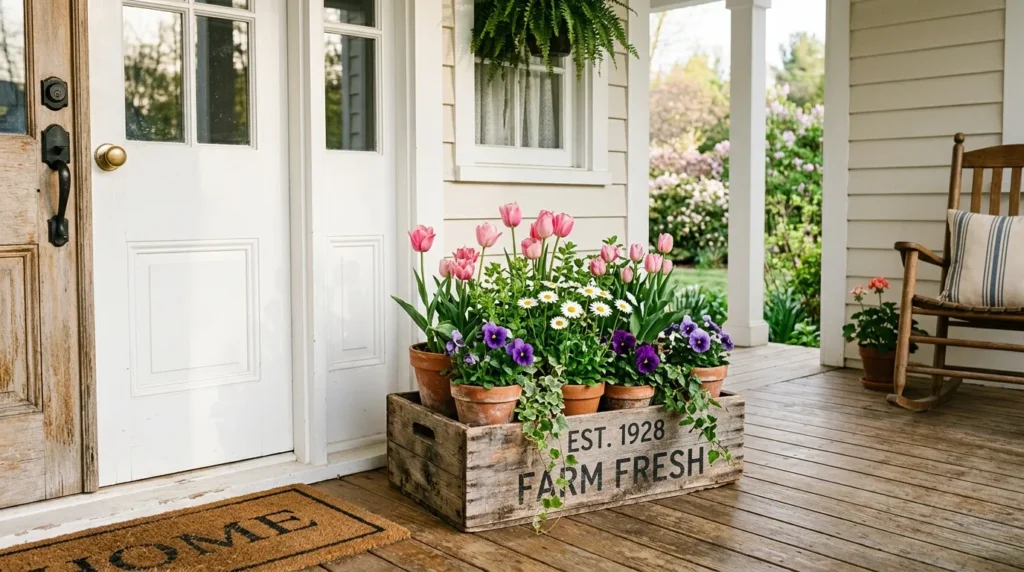
- A wooden crate adds instant farmhouse texture to the entryway.
- Use it to display several small flowering plants at different heights.
- Choose weathered wood for a relaxed, collected appearance.
- Make sure the crate sits securely and does not obstruct the walkway.
A rustic flower crate gives a front porch that charming farmhouse touch without requiring a large collection of decorations. Use a weathered wooden crate as a low planter and fill it with small pots of tulips, pansies, daisies, or leafy greenery. The rough wood texture creates a beautiful contrast against delicate spring flowers, making the colors appear even brighter. Place the crate beside the doorway, underneath a window, or near the bottom of the steps. This simple arrangement adds character while giving several small plants a unified home instead of scattering them individually.
For a more dimensional display, place a few pots inside the crate at different heights so every plant remains visible. You can also line the interior with a waterproof container to protect the wood from excess moisture. I’ve noticed that older wooden pieces often look better when paired with fresh flowers because the contrast feels authentic rather than overly styled. Keep the rest of the porch relatively simple so the crate remains a recognizable focal point. A neutral mat and understated greenery nearby can complete the look without taking attention away from the colorful blooms.
11. Lemon-Themed Accents
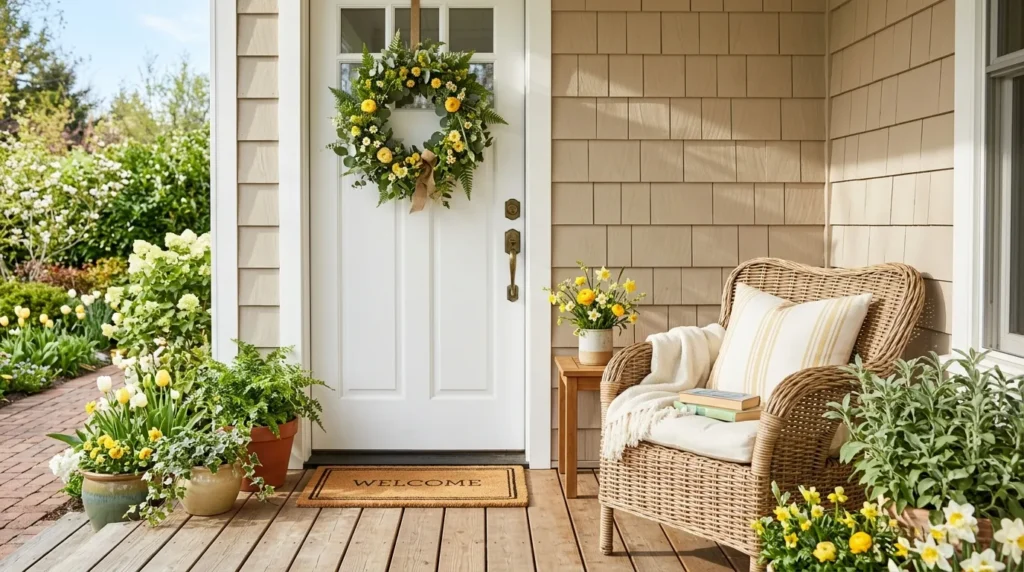
- Small yellow accents can instantly brighten a neutral porch.
- Pair lemon-inspired details with real greenery for a fresher look.
- Use just a few yellow pieces to avoid an overly themed appearance.
- A yellow cushion, wreath detail, or planter can repeat the color naturally.
Bright yellow accents can give a neutral porch the cheerful energy associated with sunny spring mornings. Instead of covering the entrance with lemon patterns, introduce the color through a few carefully chosen details. A yellow flower wreath, striped cushion, small painted planter, or lemon-inspired door sign can create the effect without becoming overwhelming. Pair those accents with leafy green plants, natural wood, and white or beige finishes. The contrast makes the yellow feel vibrant while keeping the overall arrangement relaxed and suitable for everyday use.
The easiest approach is to choose one main yellow accent and repeat the shade once or twice nearby. For example, a yellow-flowered wreath can coordinate with a small cushion on a porch chair and a few flowers in a planter. In my experience, repeating one color creates more visual cohesion than buying several unrelated seasonal decorations. If your exterior already has strong colors, use pale yellow instead of a saturated shade. This keeps the entrance bright but balanced, allowing the greenery and architectural details to remain visible rather than disappearing beneath too many decorative elements.
12. Symmetrical Planter Pair
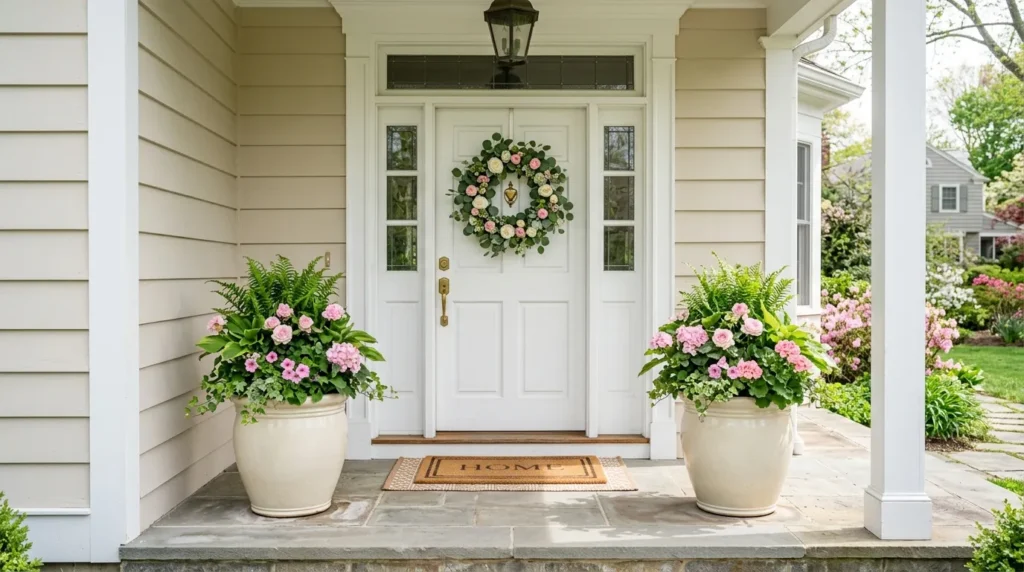
- Matching planters create an instantly balanced entrance.
- Use identical containers for a clean and structured appearance.
- Choose flowering plants that repeat the same color on both sides.
- Leave enough clearance around the door for comfortable everyday use.
A symmetrical planter pair is a simple way to make a front entrance look polished and thoughtfully arranged. Place two matching containers on opposite sides of the door and fill them with the same type of greenery or spring flowers. White blooms, soft pink flowers, or fresh green foliage work beautifully when paired with neutral pots. The repetition creates a strong visual frame around the doorway, making even a modest entrance feel more substantial. This arrangement is especially useful when you prefer an organized look rather than a relaxed collection of mismatched seasonal accessories.
For the best proportions, choose containers that are large enough to be noticed but not so wide that they crowd the doorway. The plants should also remain roughly similar in height so the two sides feel balanced. That’s why many designers recommend repeating both the container finish and plant palette when creating a symmetrical arrangement. If the porch is exposed to wind, select heavier pots or secure lightweight containers appropriately. Once installed, this setup is easy to maintain and can transition into summer simply by replacing the flowers while keeping the same planters.
13. Cottage Flower Baskets
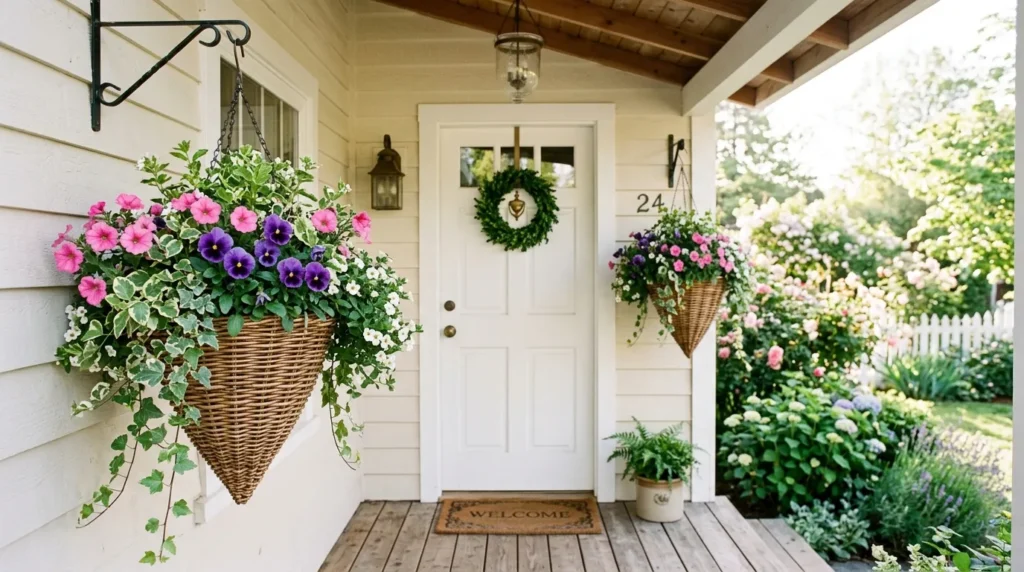
- Hanging baskets bring flowers upward and make use of vertical space.
- Mix trailing greenery with compact blooms for a fuller appearance.
- Use matching baskets to create a coordinated porch arrangement.
- Check moisture regularly because hanging containers can dry out quickly.
Cottage flower baskets add softness and height to a porch without taking up valuable floor space. Hang two baskets near the doorway, beneath a covered roofline, or from sturdy porch hooks, then fill them with trailing greenery and small seasonal blooms. Petunias, pansies, lobelia, and ivy can create the loose, overflowing look often associated with cottage gardens. The combination of flowers spilling over woven basket edges makes the entrance feel abundant while keeping the lower porch area open. This is especially useful when the walkway is narrow or already filled with planters.
Choose baskets with secure hardware and position them where people will not bump their heads while entering. Since hanging containers can dry faster than plants in the ground, check their moisture more often during warm spring days. I’ve noticed that combining one trailing plant with one upright flower creates a fuller display without needing too many plants. Keep the colors related to your existing wreath or door accents for a cohesive result. With simple care, these baskets can provide weeks of color and make an otherwise plain doorway feel layered and garden-inspired.
14. Vintage Porch Bench
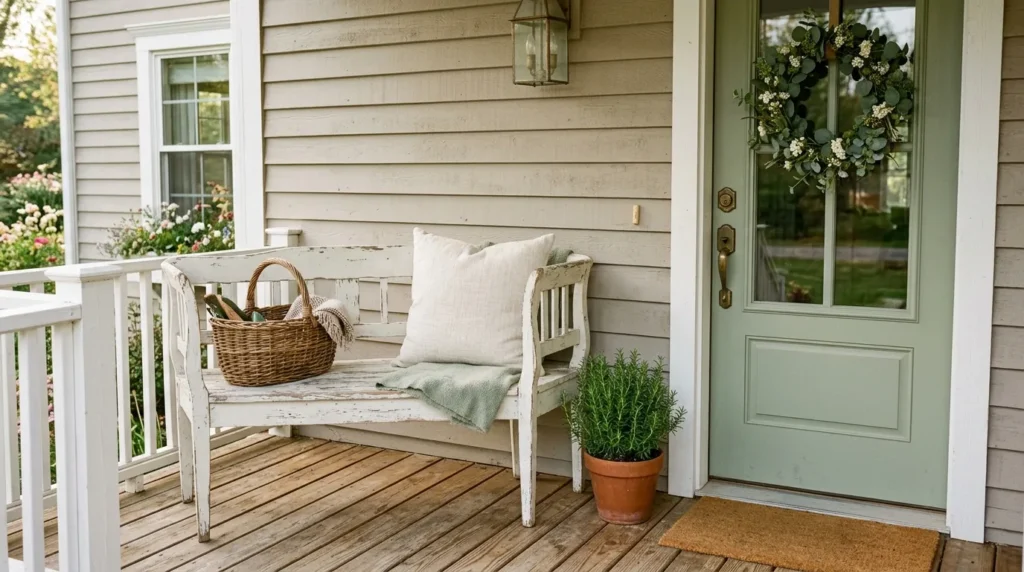
- A vintage bench adds character while providing practical seating.
- Weathered wood creates warmth against freshly painted doors and siding.
- Add one simple cushion or folded throw for seasonal comfort.
- Keep decorative accessories minimal so the furniture remains the focal point.
A vintage porch bench can give an entryway the feeling of a home that has been thoughtfully collected over time. Look for a wooden or painted bench with gently weathered details, then position it against a wall where it will not interfere with the doorway. A simple cushion in cream, sage, or muted floral fabric can make the seat more comfortable while introducing a subtle spring pattern. Add one small basket or potted plant nearby, but avoid filling the bench with decorations. The open seating keeps the arrangement functional while the aged texture provides plenty of visual personality.
Before placing the bench, measure the available floor area and leave enough room for people to walk comfortably around it. If the porch receives direct rain, choose weather-resistant wood or use an outdoor protective finish. In my experience, one substantial vintage piece often creates more character than several small decorations. Let the bench provide the texture and personality, then use greenery and a neutral mat to complete the entrance. The result feels welcoming and lived-in rather than overly coordinated, making the porch comfortable enough for everyday use.
15. Soft Floral Cushions
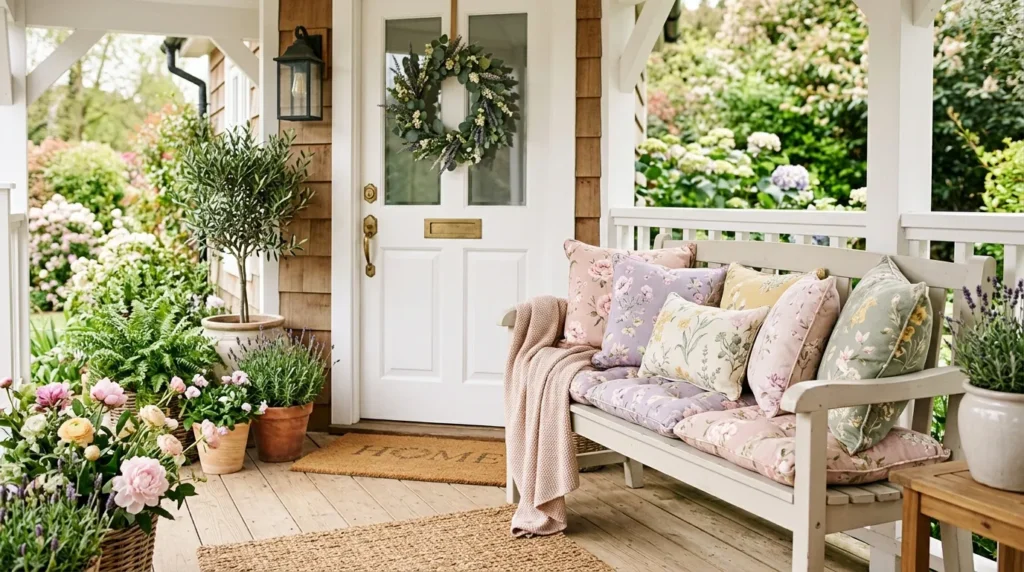
- Floral cushions add seasonal color without requiring permanent changes.
- Choose outdoor fabrics that can handle regular sunlight and moisture.
- Repeat one flower color elsewhere for a connected design.
- Keep larger furniture neutral so the cushions remain easy to update.
Soft floral cushions can bring the look of a spring garden onto the porch while keeping the furniture comfortable. Choose one or two cushions with delicate botanical patterns and place them on a neutral bench, chair, or outdoor loveseat. Look for designs featuring blush, pale yellow, lavender, sage, or soft blue rather than several competing colors. The pattern creates visual interest immediately, while the neutral furniture keeps the overall space calm. Because cushions are easy to replace, they are also a practical way to refresh an entrance without repainting or purchasing new furniture.
When shopping for outdoor cushions, check that the fabric is designed for exterior use and can tolerate sunlight. A washable cover makes seasonal maintenance much easier, especially when pollen and dust collect during spring. I’ve noticed that one floral pattern paired with one solid cushion usually looks more sophisticated than covering every seat with different prints. Add a matching potted flower or wreath detail if you want to repeat one color. This creates a subtle connection between the seating area and doorway while keeping the porch fresh, comfortable, and easy to maintain.
16. Oversized Spring Wreath
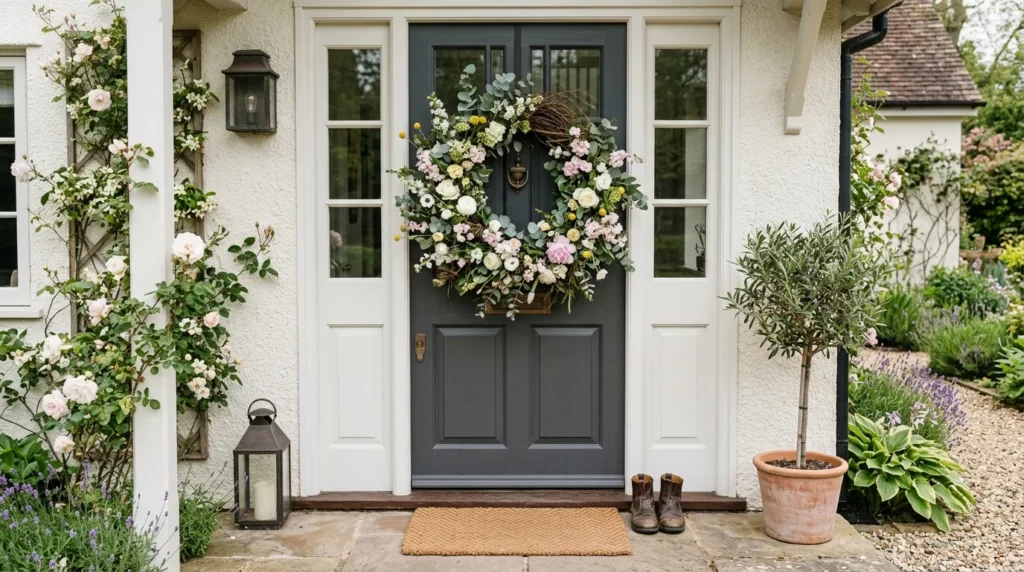
- A larger wreath creates a strong focal point on a plain doorway.
- Mix greenery with a few larger blooms for balanced visual weight.
- Keep the surrounding decorations simple so the wreath can stand out.
- Secure heavier wreaths carefully, especially on doors exposed to wind.
An oversized spring wreath can make a plain front door look instantly more inviting and finished. Choose a generous grapevine, eucalyptus, or leafy base and add clusters of white flowers, soft pink blooms, or delicate yellow accents. The larger scale helps the wreath remain visible from the sidewalk, creating a clear focal point without requiring many additional decorations. This works especially well on tall doors, double doors, or entrances surrounded by simple neutral siding. The goal is to create one noticeable seasonal feature rather than filling the entire doorway with competing details.
Keep the wreath slightly lighter in color if your door is dark, or use deeper greenery when the door is white or pale. Before hanging it, check the weight and use a secure hook that will not damage the door surface. I’ve noticed that oversized wreaths look best when the rest of the entrance is restrained. Pair yours with a simple mat and one or two planters rather than another large decoration. This creates visual hierarchy, helping the wreath command attention while the smaller details quietly support the overall spring arrangement.
17. Natural Wood Sign
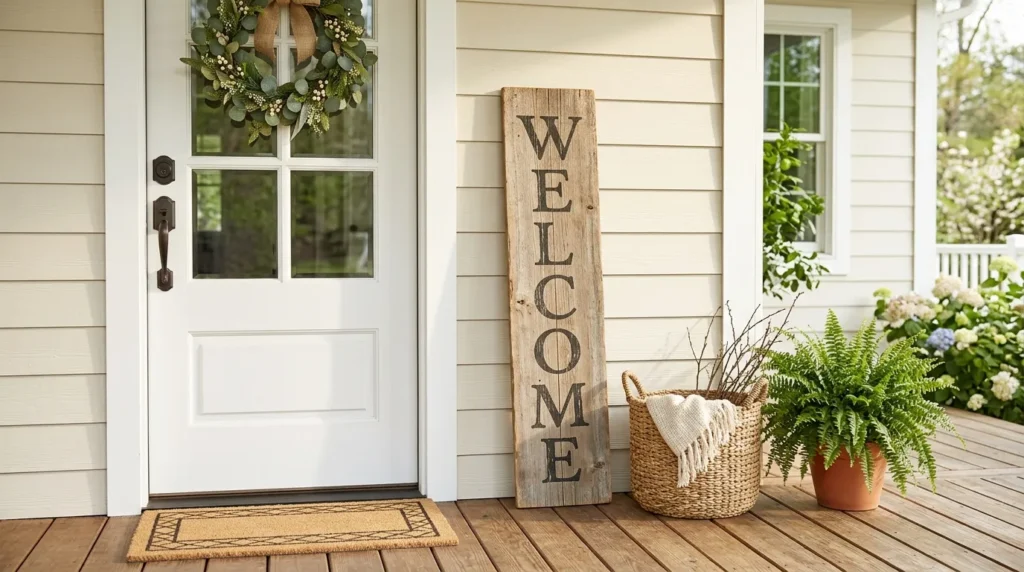
- A wood sign adds warmth and personality without overwhelming the doorway.
- Choose simple lettering that remains easy to read from a distance.
- Weathered finishes work beautifully with flowers and greenery.
- Position the sign where it complements rather than competes with the wreath.
A natural wood sign can add warmth and a handcrafted touch to a spring entryway. Choose a simple rectangular or round sign with understated lettering, then position it beside the door, beneath a wreath, or against a porch wall. Words such as “Welcome,” “Hello,” or a simple seasonal phrase can work well when the lettering remains clean and easy to read. Look for unfinished, lightly stained, or weathered wood so the sign blends naturally with greenery, woven textures, and neutral outdoor finishes. The result feels personal without turning the porch into a collection of themed decorations.
Scale matters when choosing the sign. A piece that is too small can disappear beside the door, while an oversized sign may compete with the architecture or block other useful features. If the porch already has several decorative elements, select a plain sign with minimal lettering. In my experience, natural wood works particularly well because its texture adds interest even when the design itself is simple. Pair it with one leafy plant and a neutral mat, then let the wood grain, greenery, and surrounding spring colors create a warm, relaxed entrance.
18. White Flower Display
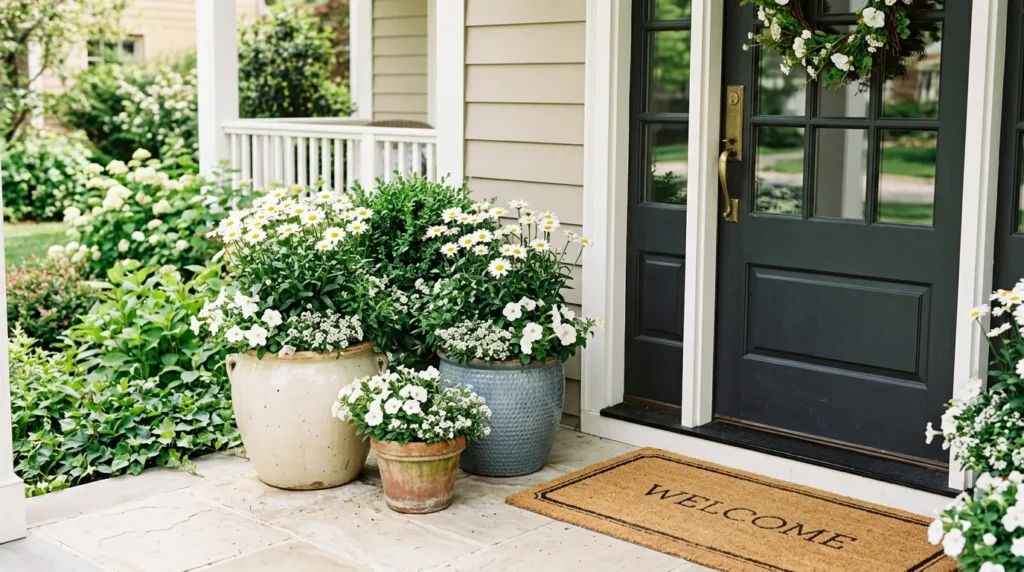
- White blooms create a crisp look against colorful doors or dark accents.
- Mixing flower shapes adds depth while keeping the palette consistent.
- Green foliage prevents an all-white arrangement from looking flat.
- Group several containers together for a fuller display without visual clutter.
A white flower display brings a clean, airy feeling to a spring porch and works with almost any exterior color. Fill a few containers with white daisies, alyssum, pansies, petunias, or other suitable seasonal blooms, then surround them with fresh green foliage. The limited color palette makes the arrangement feel calm and sophisticated while allowing the flowers to stand out against darker doors, brick, or natural wood. Grouping several containers near the entrance creates more impact than scattering small pots across the porch. It is an easy way to create a cohesive seasonal focal area.
Use containers with different shapes or heights while keeping their colors related so the display feels collected rather than mismatched. If your porch receives strong sun, choose white-flowering varieties that suit those conditions instead of selecting plants based only on appearance. I’ve seen white flowers work especially well in smaller entrances because they reflect light and visually brighten the space. Add one woven mat or wooden accent for warmth, then let the greenery and white blooms provide most of the decoration. The finished look feels fresh, timeless, and easy to carry into summer.
19. Layered Greenery Pots
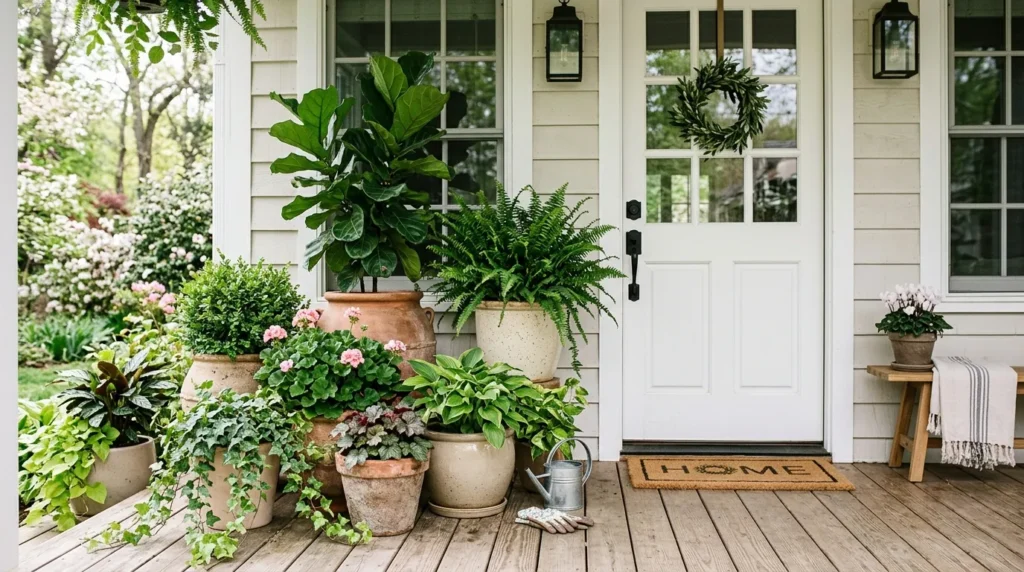
- Combining different foliage shapes creates depth without relying on many flowers.
- Place taller plants behind rounded or trailing varieties for a layered effect.
- Neutral containers keep the greenery looking natural and versatile.
- Rotate pots occasionally so plants grow evenly toward available sunlight.
Layered greenery pots create a lush entrance even when you prefer a quieter color palette. Start with one tall leafy plant, then place rounded foliage and trailing greenery in smaller containers around it. The different heights and leaf shapes create depth, making the arrangement look fuller without needing dozens of flowers. This approach is especially useful for shaded porches where colorful blooms may be harder to maintain. Choose pots in white, terracotta, stone, or natural finishes so the greenery remains the main visual feature. The result feels fresh, calm, and naturally connected to the surrounding landscape.
Arrange the containers in a loose cluster rather than placing them in a perfectly straight line. A taller pot toward the back can frame the doorway, while smaller plants soften the front edge and fill empty corners. I’ve noticed that foliage-based arrangements often require less seasonal updating because many plants can remain attractive after spring passes. Check each plant’s light and watering requirements before grouping them together, since similar care needs make maintenance much easier. Add a simple mat and one small decorative accent, and the porch gains texture without feeling crowded or overly decorated.
20. Spring Ribbon Details
- A simple ribbon can refresh existing porch pieces without replacing them.
- Use one consistent color across the wreath, baskets, or planters.
- Wide linen or cotton ribbon adds softness and texture.
- Secure outdoor ribbon carefully so wind does not unravel the arrangement.
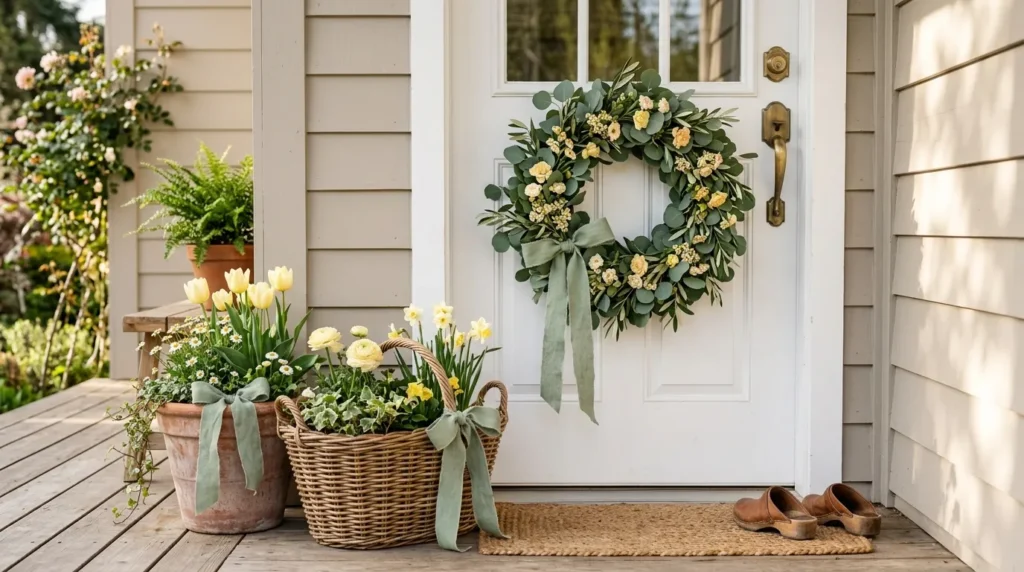
Ribbon is one of the simplest ways to introduce a fresh seasonal detail without buying an entirely new collection of porch decorations. Tie a wide linen or cotton ribbon around a wreath, planter, basket handle, or porch lantern. Soft sage, pale yellow, dusty blue, blush, and cream are easy spring choices that complement greenery and flowers. The ribbon adds movement and texture while creating a subtle connection between separate pieces. This makes an especially useful update when your existing porch already has good furniture and accessories but simply needs a small seasonal refresh.
Choose one ribbon color and repeat it in only a few locations so the result feels coordinated rather than overly decorative. Natural fabrics usually look more relaxed than shiny materials, particularly alongside wood, wicker, and potted plants. In my experience, a generously sized bow often looks better than several tiny bows because it creates one clear visual detail. Secure the ribbon with outdoor-safe ties and check it after windy days. With that small adjustment, familiar porch pieces can take on a noticeably fresher appearance while remaining useful throughout the season.
21. Potted Citrus Tree
- A small citrus tree adds height, greenery, and a sunny seasonal feeling.
- Use a sturdy container that complements the porch’s existing materials.
- Choose a variety suited to your local climate and available sunlight.
- Keep the tree positioned where watering and maintenance are convenient.
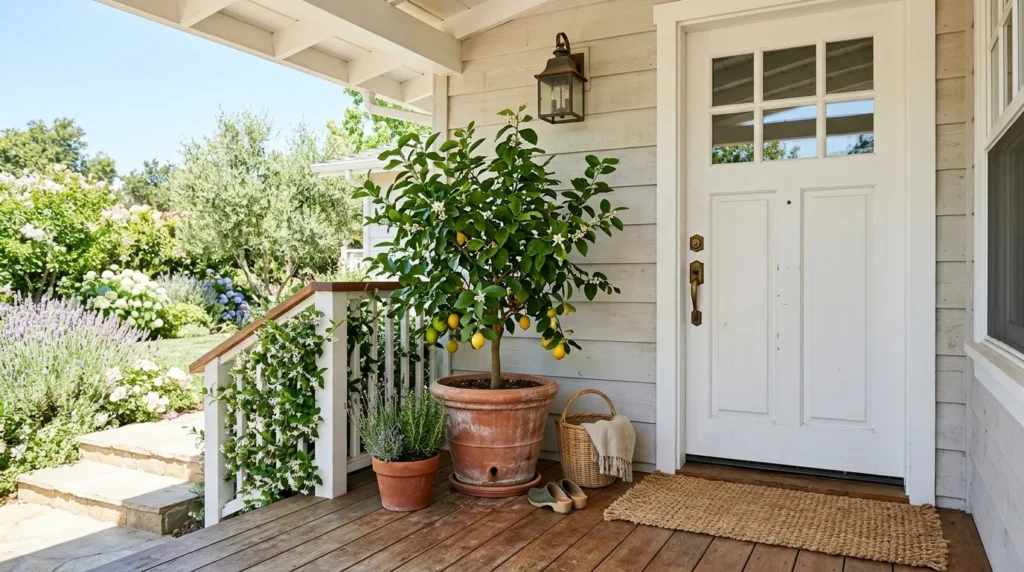
A potted citrus tree can bring a bright, garden-inspired presence to a spring porch while adding more height than ordinary flowering plants. A compact lemon, lime, or calamondin tree looks especially attractive in a simple terracotta or ceramic container. Glossy green leaves provide structure, while blossoms or small developing fruit add delicate seasonal interest. Position the tree beside the doorway or near a porch corner where it can receive the appropriate amount of sunlight. Its natural shape creates a strong focal point without needing additional decorative pieces around it.
Before choosing a citrus tree, check whether the variety can handle your local outdoor conditions and how much direct sunlight it requires. Container-grown trees also need consistent watering and good drainage, so avoid placing them where excess rainwater collects. I’ve noticed that a single tree often looks more intentional than several small plants when the porch has plenty of open space. Keep the pot visible rather than hiding it behind other accessories, and use one simple mat or wreath nearby. The result feels sunny, fresh, and connected to a garden rather than heavily decorated.
22. Layered Doorstep Textures
- Combining wood, wicker, and natural fibers adds visual depth to the entrance.
- Keep the color palette simple so the different textures remain easy to notice.
- Use one larger textured piece as the foundation for smaller accents.
- Natural materials make a porch feel warmer without adding bright seasonal colors.
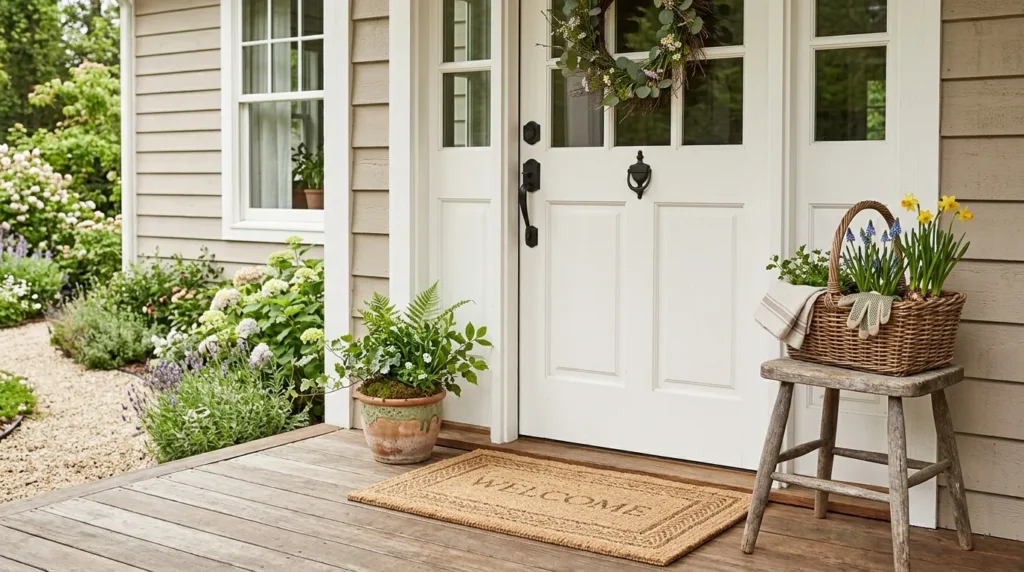
Layered textures can make a simple doorway feel thoughtfully styled without relying on lots of color. Start with a natural woven mat, then add a wooden stool, wicker basket, or small rattan planter nearby. The different materials create subtle contrast while keeping the overall palette calm. This approach works beautifully with neutral doors and siding because the textures provide the visual interest that color would normally create. For spring front porch decor, add fresh greenery or a few pale flowers to bring softness and connect the natural materials with the season.
The trick is to combine textures while keeping the number of objects under control. A woven mat beside a wooden planter and one ceramic pot can feel layered; adding several baskets, signs, lanterns, and cushions may quickly become cluttered. I’ve noticed that natural materials also make inexpensive seasonal pieces look more intentional because their surfaces provide depth and character. Place the largest item closest to the wall or door, then work outward with smaller pieces. Leave open floor space around the arrangement so the entrance still feels clean, functional, and easy to navigate.
23. Fresh Herb Planters
- Herb planters combine useful greenery with attractive seasonal styling.
- Group several herbs in matching containers for a cohesive display.
- Place fragrant varieties near the entrance where their scent can be enjoyed.
- Choose herbs according to sunlight, drainage, and local growing conditions.
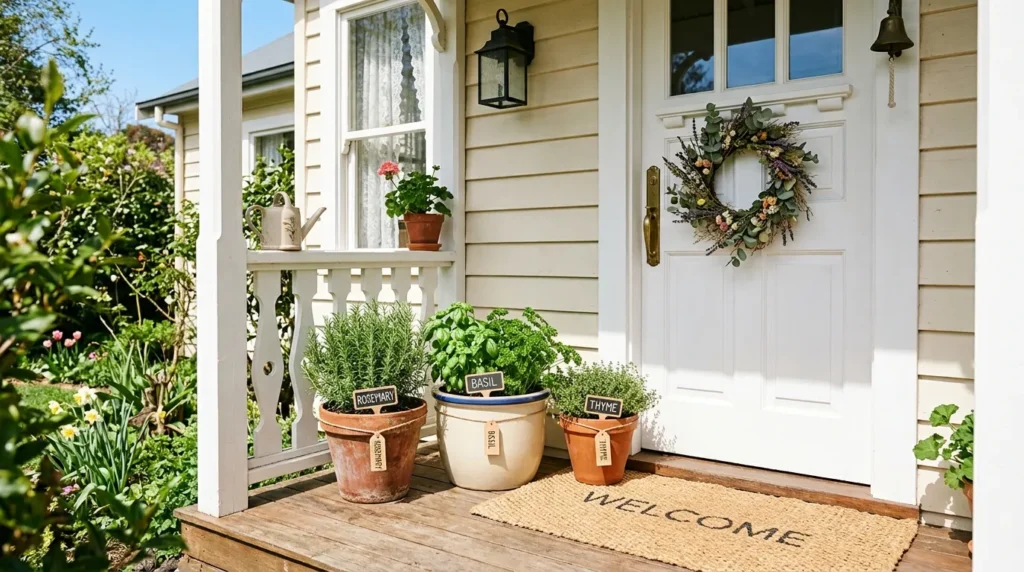
Fresh herb planters are a practical way to finish a spring porch while bringing greenery, texture, and useful plants into the entrance. Arrange rosemary, thyme, basil, mint, or parsley in attractive containers near the door or along a sunny porch wall. Their different leaf shapes create subtle visual variety, while fragrant varieties can make the area feel even more inviting. Choose simple terracotta, ceramic, or galvanized containers that complement your existing style. A small collection of herbs can look decorative enough for an entryway while still giving you something useful to harvest.
Keep herbs with similar sunlight and watering needs together so caring for the display stays manageable. Mint is best kept in its own container because it can spread aggressively, while rosemary prefers excellent drainage and plenty of sunlight. In my experience, labeling the pots with small wooden markers makes the arrangement feel charming and also makes harvesting easier. Place the tallest herbs toward the back and smaller pots toward the front for a layered effect. This creates a useful, fragrant display that keeps the porch feeling fresh well beyond the first weeks of spring.
Conclusion
A fresh porch does not have to be complicated to make a beautiful impression. Sometimes, a new wreath, a pair of planters, a colorful cushion, or a simple woven mat is all it takes to make the entrance feel completely different. The ideas in this collection can also be mixed and matched, so you can create a look that fits your home instead of copying one exact style.
When choosing your favorites, start with what your porch actually needs. Add height if it feels flat, greenery if it feels bare, texture if it feels plain, or color if it needs more energy. In my experience, the most inviting entrances usually combine a few thoughtful details rather than trying to decorate every available space.
Let your spring front porch decor feel personal, practical, and easy to maintain. Choose the pieces that make you smile when you come home, and give yourself permission to keep the arrangement simple. Once the flowers bloom and the greenery fills out, even a small doorstep can become one of the prettiest corners of your home.