The right color can completely change how a room feels, and 2026 brings a beautifully understated option into focus. Pantone’s Color of the Year 2026, Cloud Dancer, is a soft, airy white designed to create spaces that feel calm, open, and effortlessly refined. It works across living rooms, bedrooms, kitchens, bathrooms, and even outdoor areas.
What makes this shade especially versatile is how easily it pairs with natural wood, warm neutrals, textured fabrics, stone, ceramics, and greenery. Whether you want a complete room makeover or a few simple updates, these home ideas show practical ways to bring this fresh color trend into your space without making it feel cold or overly minimalist.
1. Cloud Dancer Living Room
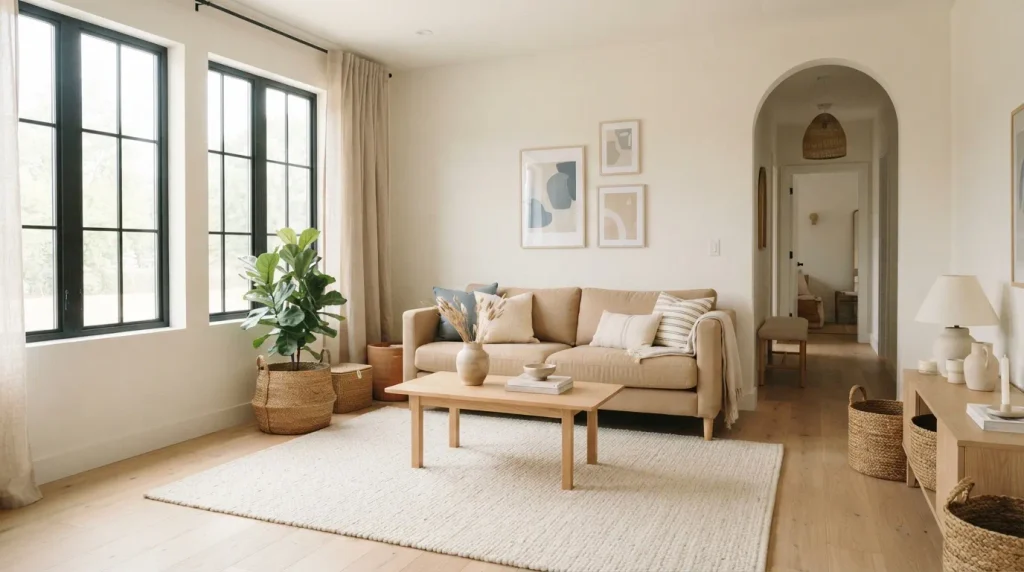
- Use soft white walls to create a brighter, more open foundation.
- Layer beige, linen, boucle, and pale wood for warmth.
- Add subtle blue or taupe accents for gentle contrast.
- Keep larger furniture neutral so accessories can change easily.
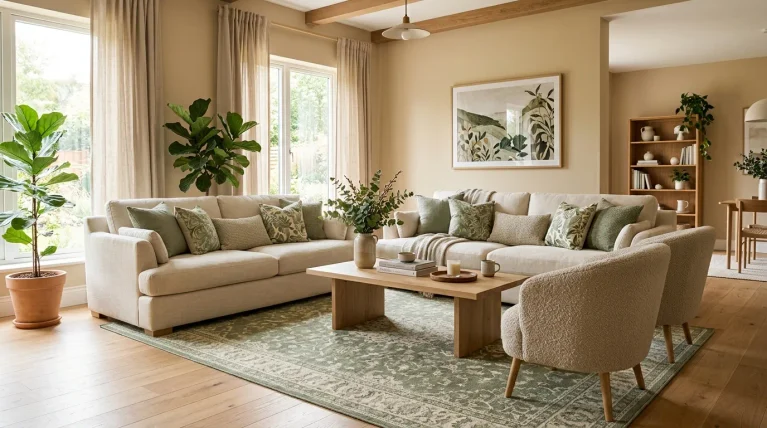
The easiest way to bring a fresh 2026 color trend home is to let Cloud Dancer become the quiet foundation of your living room. This soft, airy white works beautifully on walls because it reflects light without feeling stark or clinical. Pair it with a warm beige sofa, pale oak coffee table, woven baskets, and linen curtains for gentle contrast. I’ve noticed that layered whites feel far more inviting when natural textures break up the palette. The result is a room that looks brighter, calmer, and more spacious without requiring a complete furniture makeover.
A white living room can look flat when every surface has the same finish, so texture becomes the secret to making this palette feel collected. Try a boucle chair beside a smooth plaster wall, a nubby rug beneath the seating area, and ceramic accessories on the coffee table. Add one muted accent, such as dusty blue or soft taupe, to create visual depth while keeping the overall scheme light. This approach also makes decorating easier because the neutral backdrop can adapt when you change cushions, artwork, or seasonal accessories later.
Also Read : 25 Covered Patio Design Ideas for Stylish Outdoor Living
2. Airy Bedroom Layers
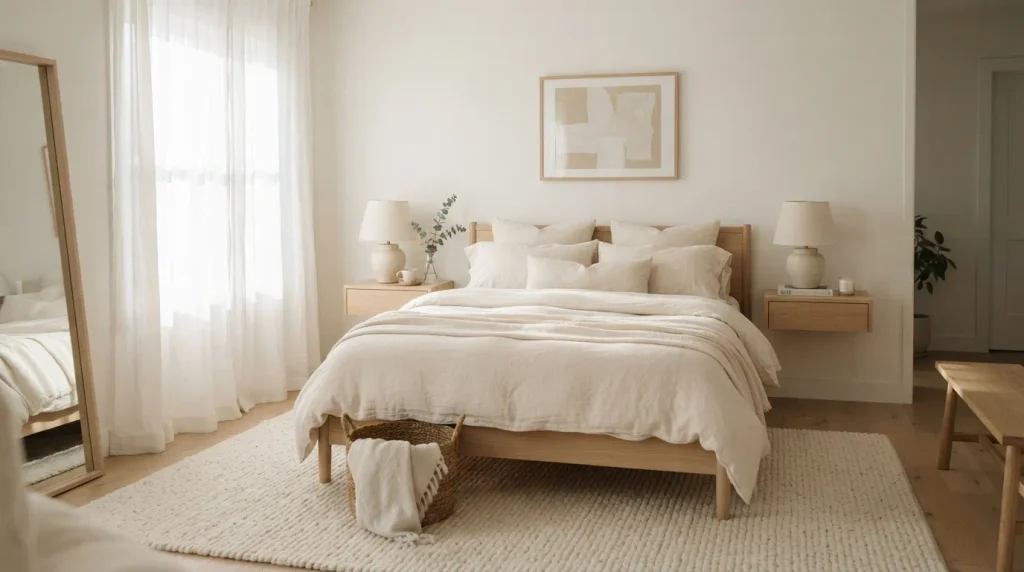
- Let soft white walls create a peaceful bedroom backdrop.
- Mix cream bedding with light wood for warmth.
- Use sheer curtains to soften strong daylight.
- Keep bedside accessories minimal and purposeful.
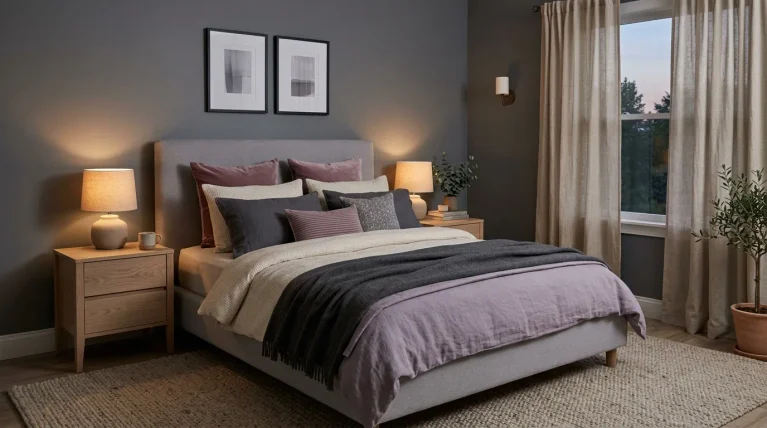
A simple bedroom instantly feels more restful when the ceiling, walls, and larger textiles share a soft, airy palette. Use Cloud Dancer on the walls, then introduce cream bedding, light wood nightstands, and sheer curtains that filter morning sunlight. The subtle differences between warm and cool whites keep the room from looking overly matched. In my experience, this works especially well in smaller bedrooms because pale surfaces visually open the space. Keep bedside styling minimal with a ceramic lamp, a small framed print, and one natural element such as a dried branch or leafy stem.
For a bedroom that feels peaceful rather than plain, focus on layers instead of adding lots of color. A quilted coverlet, linen pillowcases, a textured throw, and a softly woven rug can create dimension while preserving the clean palette. Warm brass or aged wood details add just enough contrast around the bed without competing with the restful atmosphere. If the room receives strong daylight, choose curtains with a soft drape instead of heavy panels. That small change can make the space feel lighter during the day and cocoon-like at night, while keeping the design flexible.
Also Read : 25 Winter Mantel Decorating Ideas for a Cozy Holiday Home
3. Soft White Kitchen
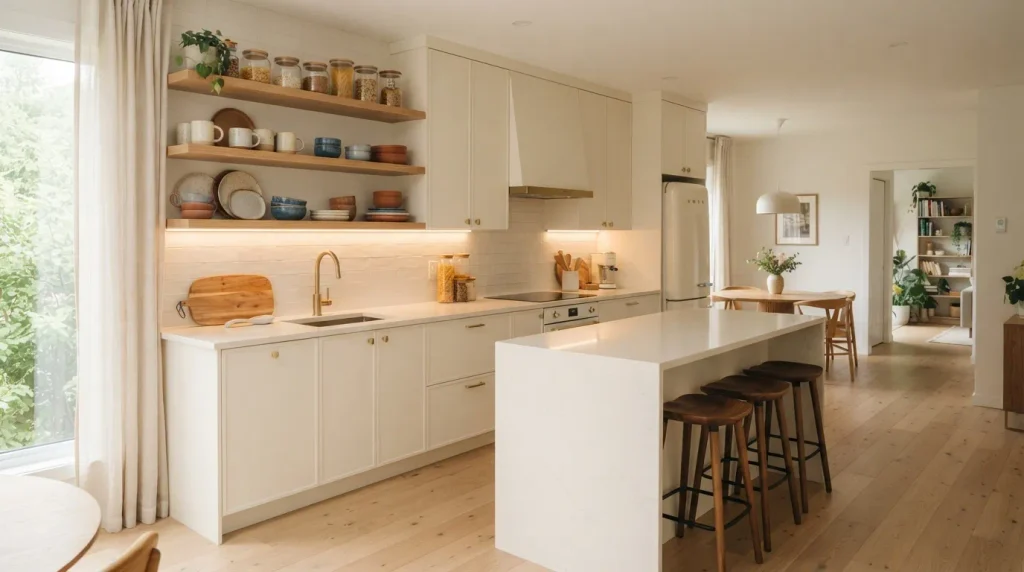
- Use pale cabinetry to visually connect the kitchen surfaces.
- Add natural oak for warmth and texture.
- Choose subtle stone counters instead of harsh contrast.
- Display everyday ceramics as practical decoration.
A compact kitchen can feel surprisingly open when pale cabinetry and walls work together as one continuous visual backdrop. Choose Cloud Dancer for cabinets or a backsplash, then warm the room with natural oak shelves, brushed metal hardware, and stone counters in a soft beige or ivory tone. The combination keeps the kitchen bright while preventing it from feeling sterile. I’ve seen this kind of restrained palette work particularly well in busy kitchens because crumbs, appliances, and everyday objects become less visually overwhelming against a calm background. Pantone also describes Cloud Dancer as a versatile structural shade for home environments.
The key to making a pale kitchen practical is adding contrast where your eyes naturally look. Use darker wood stools, aged brass pulls, or a softly veined countertop to define the work zones without breaking the airy effect. Open shelving can display cutting boards, handmade ceramics, and glass jars, adding useful texture while keeping frequently used items accessible. For lighting, combine daylight with warm under-cabinet fixtures so the white surfaces stay welcoming after sunset. The finished space feels clean and organized, but still warm enough for everyday cooking, coffee, and casual gatherings.
Also Read : 22 Winter Wreaths Ideas for a Cozy Seasonal Welcome
4. Minimalist Entryway
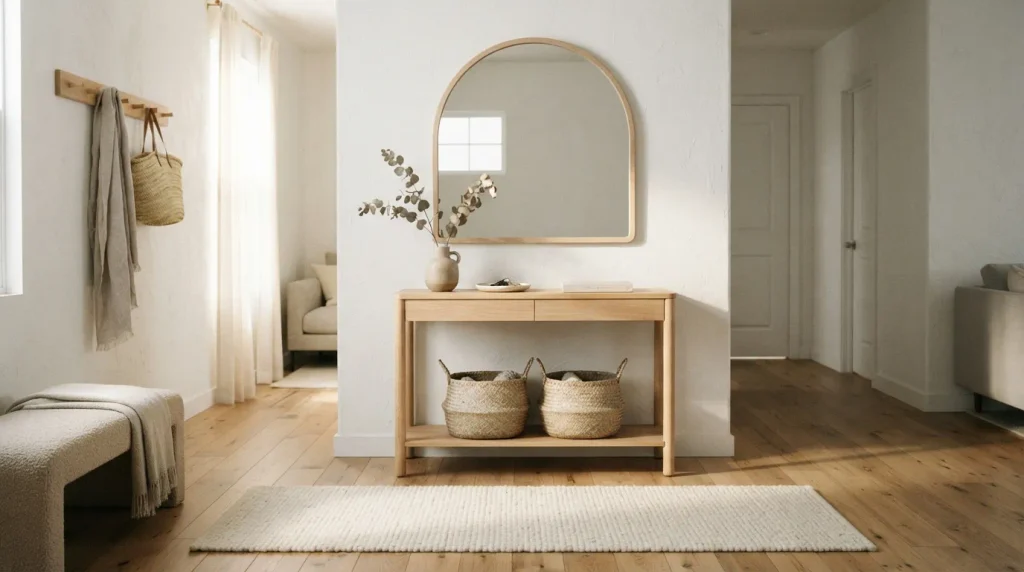
- Create an inviting first impression with a soft white backdrop.
- Add a slim wooden console for warmth.
- Use woven baskets to hide everyday clutter.
- Finish with one oversized artwork or mirror.
A calm entryway can make the entire home feel more organized from the moment you walk through the door. Use a soft white shade on the walls, then introduce a slim oak console, woven baskets, and a rounded mirror to add warmth and function. The light backdrop helps narrow hallways appear wider and gives natural daylight more room to bounce around. Keep the styling simple with a ceramic vase, small tray, or single branch. In my experience, entryways look more polished when practical storage is attractive enough to remain visible instead of being tucked away completely.
To keep this light color scheme from feeling empty, focus on materials that create subtle differences under changing daylight. Pair smooth painted walls with a woven runner, textured basket, unfinished wood, and a softly aged mirror frame. A small bench can also provide a useful place to sit while putting on shoes. Avoid filling every surface with accessories because the beauty of this setup comes from breathing room. The finished entry feels welcoming, functional, and visually clean, while the neutral foundation makes it easy to update seasonal decorations without repainting the space.
Also Read : 24 Kitchen Trends to Inspire Your Next Home Update
5. Cozy Reading Nook
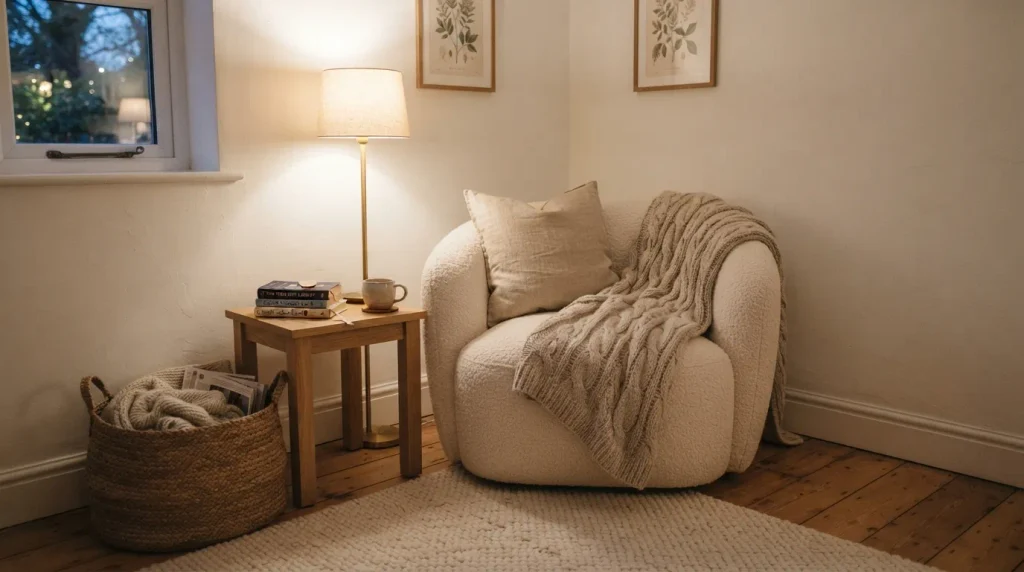
- Turn an unused corner into a comfortable retreat.
- Pair soft white walls with warm natural materials.
- Add a plush chair and compact side table.
- Use layered lighting for reading and evening ambiance.
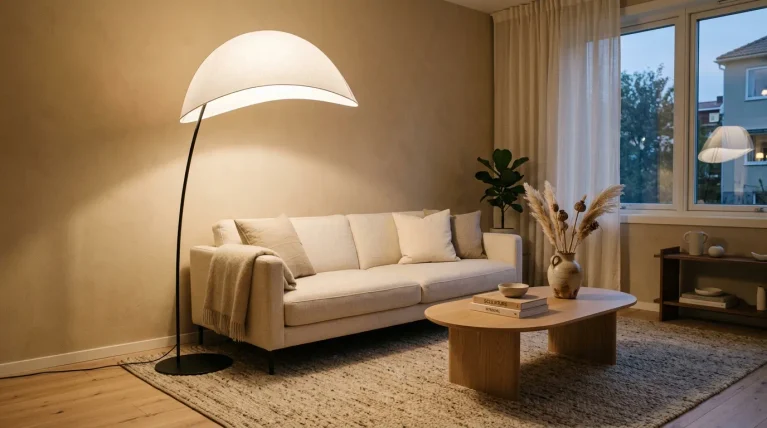
An overlooked corner can become one of the most inviting areas in your home with just a few carefully chosen pieces. Start with a soft white wall, then position a comfortable cream armchair near a window or warm floor lamp. Add a small oak table, textured rug, woven basket, and linen cushion to make the area feel intentionally designed. The restrained palette keeps the nook visually peaceful, while natural materials prevent it from looking too formal. I’ve noticed that small reading corners work best when the furniture feels comfortable first and decorative second, especially in compact homes.
Lighting makes this setup especially useful because it changes the mood as the day progresses. Position a floor lamp beside the chair for focused reading light, while a nearby table lamp or small wall light can provide softer illumination later. Keep a basket within reach for blankets or magazines, turning storage into part of the decor. One framed print or a small plant is enough to personalize the corner. The result is a practical little retreat that feels warm, uncluttered, and easy to recreate without purchasing an entire room of new furniture.
Also Read : 34 Easter Wreath Ideas Front Door for a Spring Welcome
6. Layered Dining Space
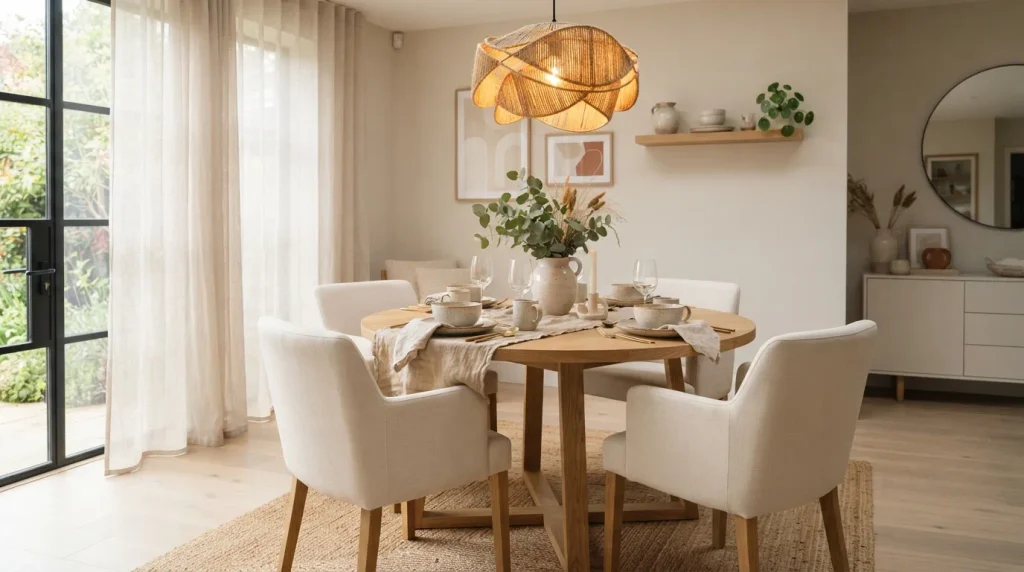
- Use pale walls to keep the dining area visually open.
- Combine wood furniture with creamy upholstery.
- Add textured table linens for subtle depth.
- Hang a sculptural light fixture above the table.
A dining area feels instantly more refined when a light neutral backdrop is paired with warm wood and tactile fabrics. Try soft white walls behind a round oak table, then surround it with cream upholstered chairs for a gentle, coordinated look. A linen runner and handmade ceramics add texture without introducing busy patterns. Keep the centerpiece low so conversation remains comfortable across the table. This arrangement works particularly well in open-plan homes because the restrained colors visually connect the dining zone with nearby living areas. The space feels brighter, relaxed, and polished without looking overly decorated.
The lighting above the table can become the main decorative feature, especially when the surrounding palette stays understated. Choose a sculptural pendant in natural fiber, aged metal, or softly finished glass, depending on your style. During daylight, sheer curtains can diffuse harsh sunlight and make pale surfaces glow gently. At night, warm bulbs create a more intimate atmosphere around the table. I’ve seen this combination work beautifully for both everyday meals and entertaining because the room remains practical while still feeling special. Small details, such as folded linen napkins and ceramic serving pieces, complete the look naturally.
Also Read : 21 Dark Boho Living Room Ideas for a Moody Cozy Space
7. Serene Home Office
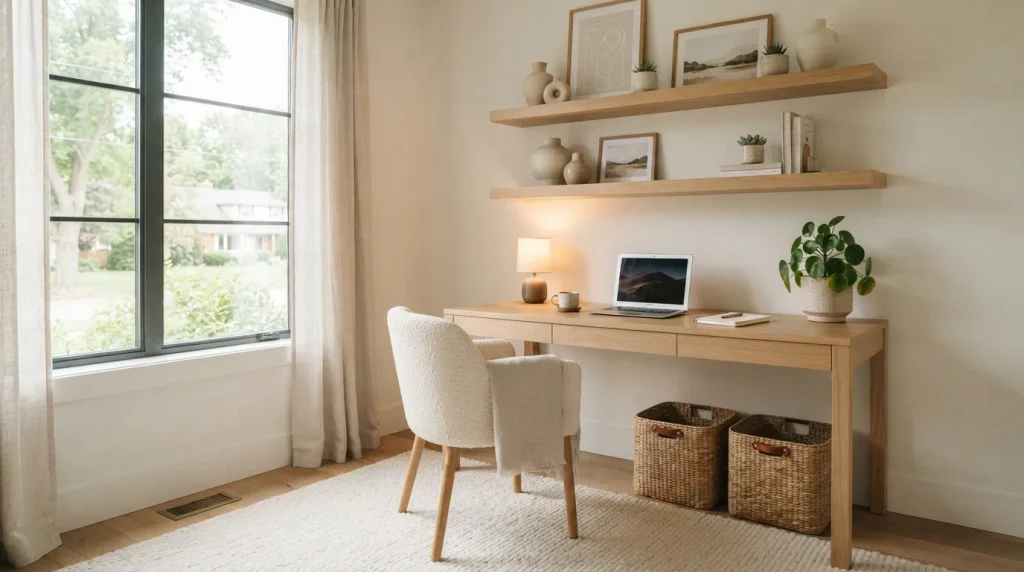
- Create a bright workspace with a soft neutral backdrop.
- Pair pale surfaces with warm wood furniture.
- Use baskets and drawers to control visual clutter.
- Add one simple piece of calming artwork.
A peaceful workspace can make everyday tasks feel lighter, especially when the room is surrounded by soft, uncomplicated colors. Use Cloud Dancer on the walls, then introduce a pale oak desk, cream chair, woven storage, and a simple textured rug. The light foundation reflects daylight around the room and helps reduce the visual heaviness that darker furniture can create. Keep the desk surface intentionally simple, with only the items you use regularly. In my experience, a calmer workspace is easier to maintain because there are fewer distracting colors competing for attention during focused work.
The most effective home offices balance beauty with practical organization. Instead of covering shelves with decorative objects, combine useful storage with a few intentional pieces such as a ceramic planter, framed artwork, or stack of books. A warm desk lamp adds contrast after sunset while maintaining the soft character of the room. If your workspace shares a bedroom or living room, this palette can also help the desk blend naturally into the surrounding decor. The finished setup feels professional enough for work while remaining comfortable and visually connected to the rest of the home.
8. Textured Bathroom
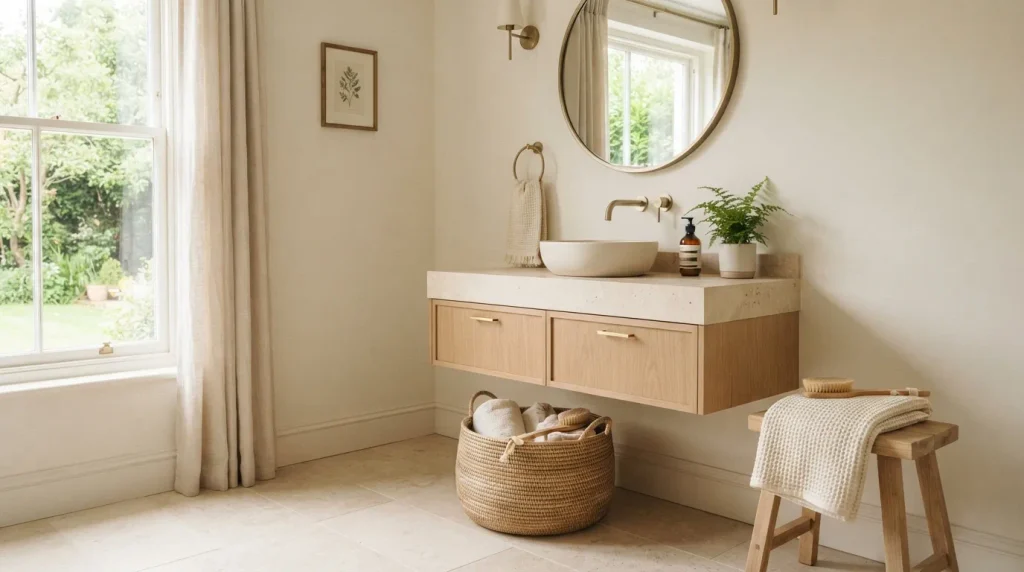
- Use pale surfaces to make a compact bathroom feel larger.
- Introduce stone, wood, and woven textures for warmth.
- Choose matte finishes instead of overly glossy materials.
- Keep accessories minimal for a spa-like appearance.
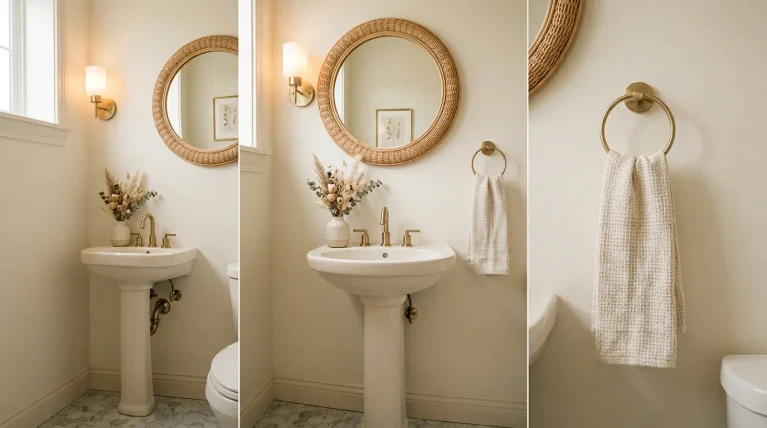
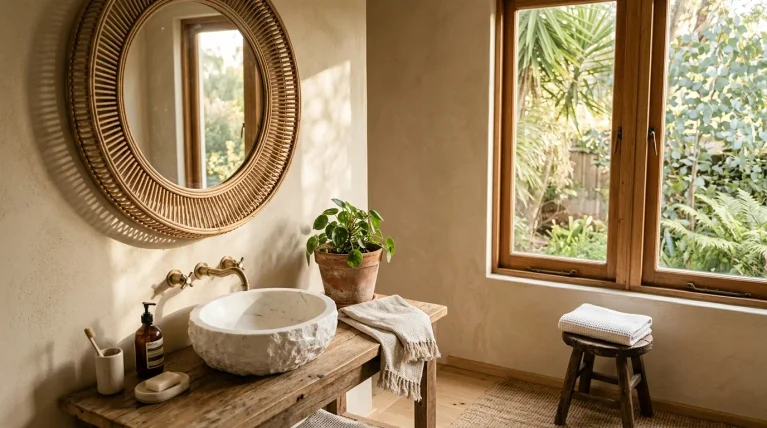
A small bathroom can feel considerably more spacious when light surfaces are combined with natural textures rather than layers of decoration. Use soft white walls or cabinetry as the foundation, then add creamy stone, pale wood, woven storage, and textured towels. Matte ceramic tiles can soften reflections and create a more sophisticated finish than highly glossy surfaces. A round mirror helps break up straight lines while reflecting available light. This approach works particularly well when there is limited floor space because the pale palette visually connects separate surfaces and makes the room feel more continuous and open.
Warmth is especially important in a mostly white bathroom, where too many cool finishes can make the space feel clinical. Add brushed brass hardware, a small wooden stool, or a natural-fiber basket to introduce subtle contrast. Keep countertop products organized inside matching containers so the vanity remains visually calm. For evening use, combine overhead lighting with a warmer wall fixture around the mirror. That layered lighting makes the room more comfortable after dark. The finished bathroom feels fresh and functional while still having the relaxed atmosphere of a small home spa.
9. Calm Nursery Corner
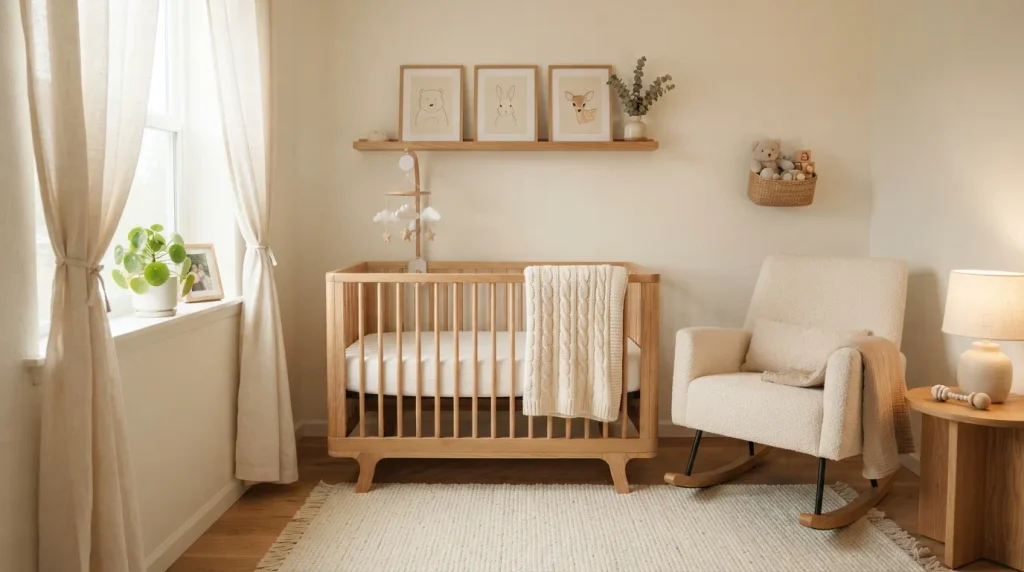
- Build a soothing nursery with a light neutral foundation.
- Choose natural wood furniture for gentle contrast.
- Layer soft textiles for comfort and visual warmth.
- Keep wall decor simple and adaptable.
A nursery does not need strong colors to feel playful, welcoming, and thoughtfully designed. A soft white foundation creates a gentle backdrop for a natural oak crib, cream rocking chair, woven rug, and lightweight linen curtains. Add a knitted blanket, simple wooden shelves, and a few understated prints to introduce personality without overwhelming the room. The light palette can also make the nursery feel brighter during daytime naps and nighttime routines. I’ve noticed that neutral nursery designs tend to remain useful for longer because they can easily adapt as the child grows and their preferences change.
Texture gives a pale nursery enough visual interest while keeping the atmosphere peaceful. Choose boucle upholstery, knitted fabrics, woven baskets, and soft cotton bedding to create layers that feel comfortable rather than overly styled. Keep toys within easy reach using open baskets, but avoid filling every shelf. A small picture ledge can display books or artwork that changes over time. Soft curtains and warm lamps help control the mood in the evening. The result is a flexible space that feels calm, practical, and easy to personalize with small additions as the room evolves.
10. Organic Kitchen Shelves
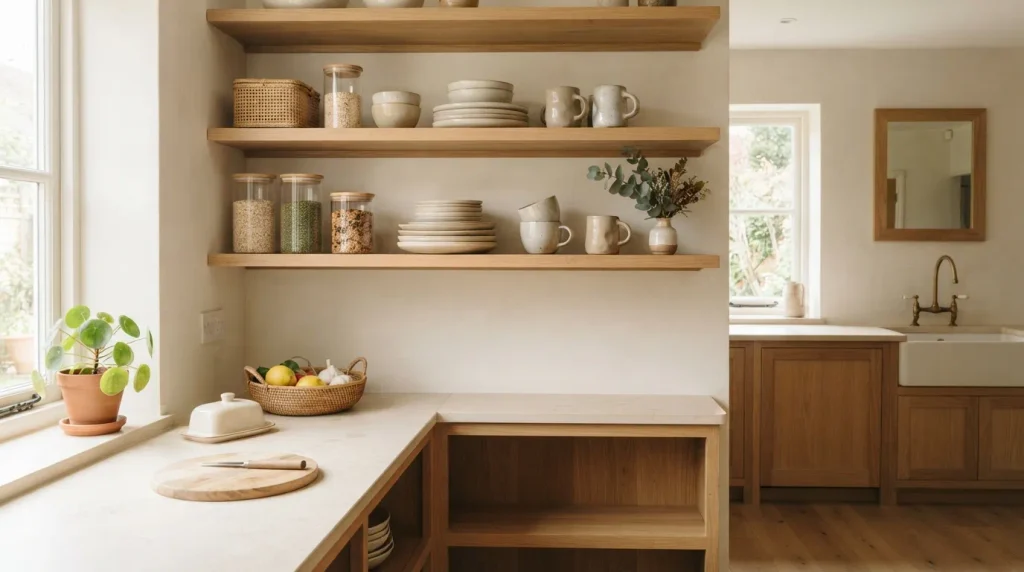
- Use open shelving to add warmth and personality.
- Combine pale ceramics with natural wood.
- Keep frequently used pieces within easy reach.
- Mix smooth and handmade textures for depth.
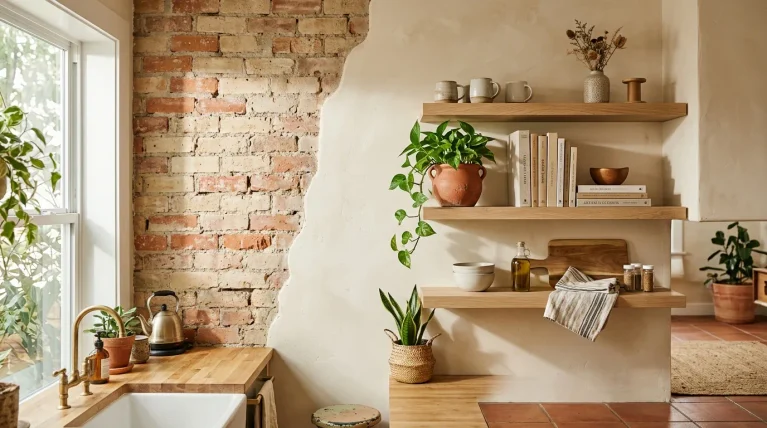
Open shelving can make a light kitchen feel warmer when the displayed pieces become part of the overall design. Choose natural oak shelves against soft white walls, then arrange cream ceramics, handmade mugs, glass jars, and a few woven pieces. The wood introduces warmth while the pale accessories maintain an airy appearance. Keep the most frequently used items on the lower shelves so the arrangement stays practical rather than purely decorative. In my experience, shelves look more intentional when you leave small areas of empty space instead of filling every available inch.
The secret to attractive open shelving is repeating materials without making everything identical. Group a few ceramic plates together, place wooden boards vertically nearby, and add one small plant or branch for organic contrast. Glass containers can hold pantry staples while keeping the color palette visually controlled. Avoid displaying too many appliances or brightly packaged foods because they can interrupt the calm effect. A simple combination of useful objects and decorative pieces makes the shelves feel lived-in while still polished. This setup also gives you an easy way to refresh the kitchen seasonally.
11. Warm Neutral Hallway
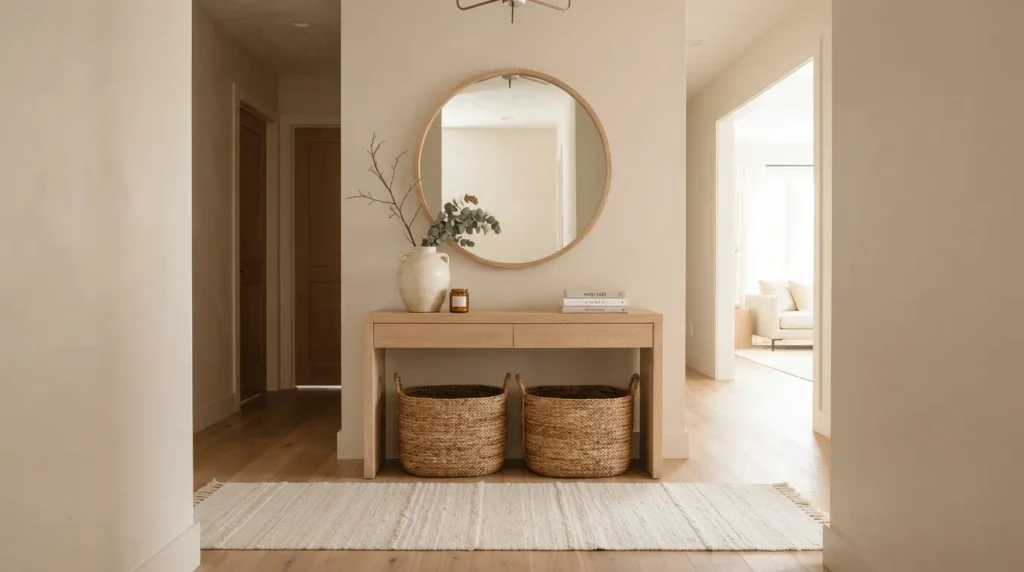
- Extend the pale palette through connecting spaces.
- Add a runner to create softness underfoot.
- Use wood accents to prevent a flat appearance.
- Introduce one large mirror for reflected light.
A hallway often gets overlooked, yet a simple light palette can make this transitional space feel connected to the rooms around it. Paint the walls a soft white, then add a narrow oak console, ivory runner, and rounded wood-framed mirror. The pale surfaces help carry daylight deeper into the home, while the wood introduces enough warmth to prevent the corridor from feeling cold. Keep the console styling simple with a ceramic vase, small bowl, or framed artwork. This combination creates a polished entrance without sacrificing the practical function a hallway needs.
Mirrors are particularly useful in narrow hallways because they can visually extend the space while reflecting light from nearby rooms. Choose one generous mirror rather than several small pieces if you want a cleaner effect. A runner adds softness and visually defines the walking path, while woven baskets provide discreet storage for shoes, accessories, or everyday items. I’ve noticed that hallways feel more finished when their materials repeat something from adjoining rooms. Using the same wood tone or textile family creates a natural visual flow throughout the home.
12. Soft Dining Nook
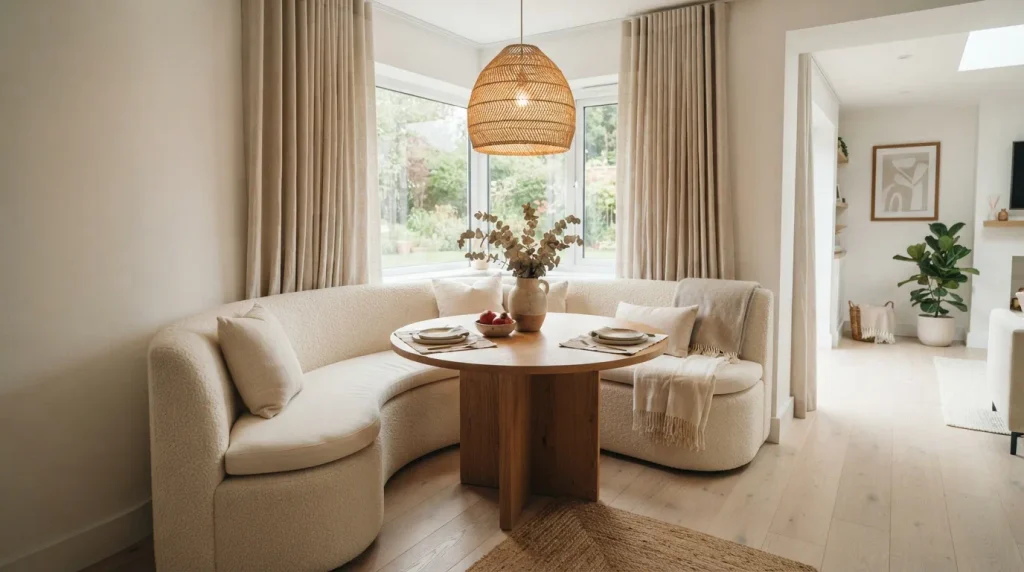
- Turn a small corner into a functional dining area.
- Use a compact round table to improve movement.
- Layer upholstered seating with natural textures.
- Keep the surrounding decor light and uncluttered.
A small dining corner can feel much larger when furniture is chosen for flow rather than size alone. A compact round oak table works beautifully against soft white walls because its curved shape allows easier movement around the seating area. Add a cream banquette or upholstered chairs, then introduce a woven pendant light and linen curtains for softness. Keep the centerpiece low and simple so the table remains useful for meals, homework, or coffee. The pale surroundings visually open the nook, while warm wood and fabric make it feel comfortable enough for everyday living.
When space is limited, every decorative choice should support the room rather than compete with it. A built-in bench can provide hidden storage underneath, while a small round table leaves fewer awkward corners to navigate. Use one or two handmade ceramics as the centerpiece instead of a large arrangement that takes up valuable table space. Warm pendant lighting creates a welcoming glow after sunset and helps define the dining area within an open-plan room. This setup proves that a small footprint can still feel intentional, stylish, and surprisingly comfortable with thoughtful proportions.
13. Layered Lounge Corner
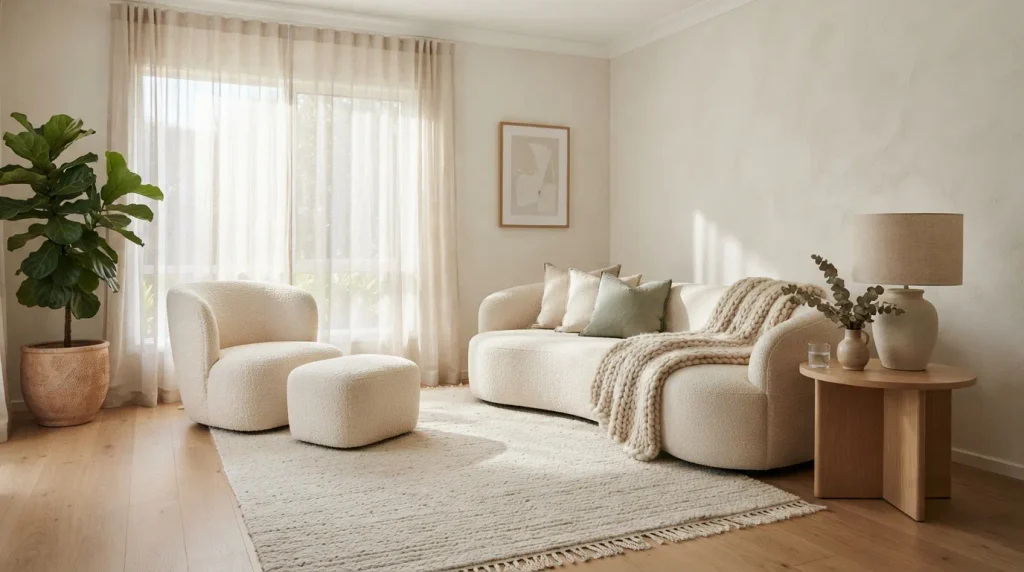
- Build a relaxed seating area with soft neutral tones.
- Mix rounded furniture with natural wood accents.
- Add tactile pillows and throws for depth.
- Keep the floor area open and uncluttered.
A quiet lounge corner can make a larger living room feel more intimate without adding walls or bulky furniture. Start with a curved cream sofa or accent chair against a soft white backdrop, then layer a pale oak side table, textured rug, linen pillows, and knitted throw. Rounded shapes soften the room visually, while natural wood keeps the palette grounded. Leave enough open floor around the furniture so the arrangement feels spacious rather than crowded. In my experience, a small secondary seating area works best when it feels distinct but still shares materials with the main living space.
Texture is what keeps a restrained neutral palette from becoming visually flat. Combine smooth linen with boucle upholstery, a nubby wool rug, and lightly grained wood for subtle variation. A ceramic lamp can add another handmade element without introducing strong color. If the room receives afternoon sunlight, sheer curtains will soften the brightness and create gentle shadows across the textures. Keep decorative objects limited to a few meaningful pieces so the corner remains useful. The finished arrangement feels relaxed and sophisticated, creating a comfortable spot for reading, conversation, or simply taking a quiet break.
14. Bright Laundry Room
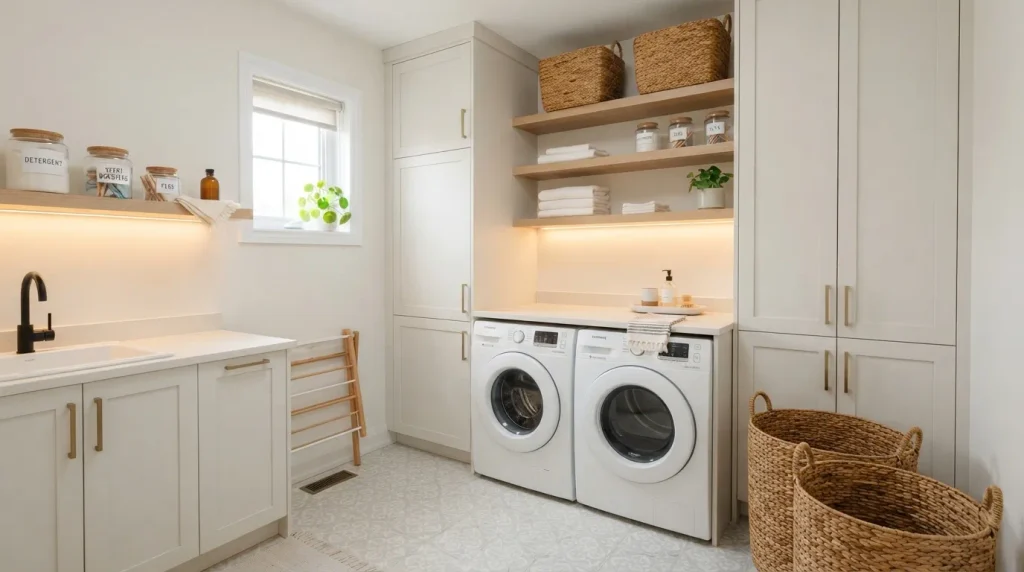
- Use pale finishes to make utility areas feel cleaner.
- Add wood shelving for warmth and practical storage.
- Keep baskets coordinated for a tidy appearance.
- Use labeled containers to reduce visual clutter.
A laundry room can feel much more pleasant when practical surfaces are surrounded by a bright, coordinated palette. Use soft white cabinetry and walls, then add pale oak shelving, woven baskets, and an ivory countertop to introduce warmth. Keeping containers and baskets within a similar neutral family makes the room appear more organized even when it is actively being used. The light surfaces also help reflect available daylight, which can make a compact utility area feel larger. A simple plant or ceramic container can provide personality without taking attention away from the room’s main function.
Good laundry-room design is mostly about making everyday tasks easier while keeping clutter under control. Open shelves should hold frequently used items, while less attractive supplies can stay behind cabinet doors. Matching labels on storage containers create a cleaner appearance and make it easier to find essentials quickly. Warm under-shelf lighting is useful during evening laundry sessions and adds a subtle glow to the pale surfaces. I’ve seen small utility rooms become far more enjoyable simply by combining clear storage zones with a consistent color palette and a few durable natural textures.
15. Calm Guest Bedroom
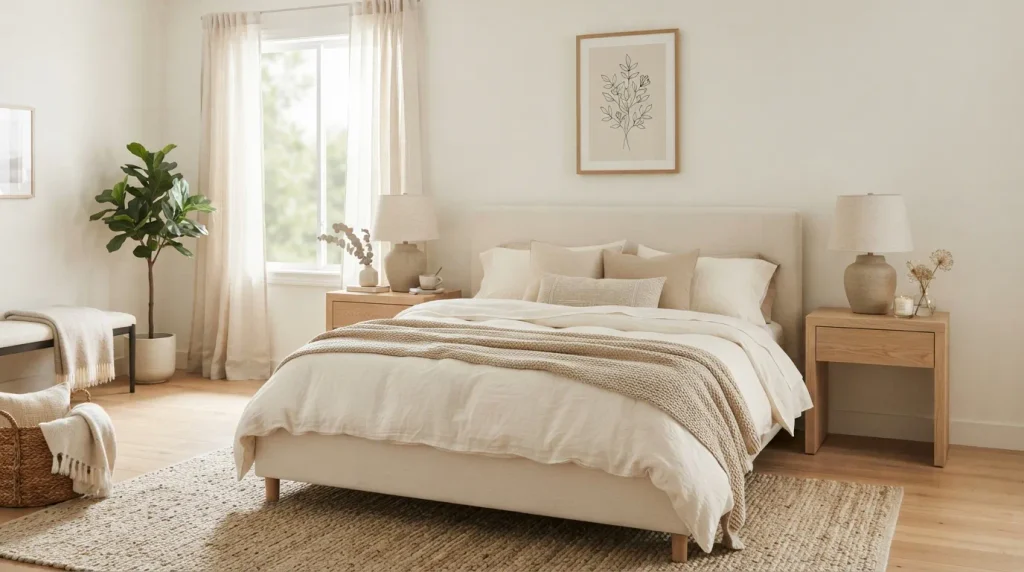
- Create a welcoming guest room with soft layered neutrals.
- Choose flexible furniture that works for different guests.
- Add comfortable textiles rather than excessive decoration.
- Use warm bedside lighting for an inviting atmosphere.
A guest bedroom feels more welcoming when the design is calm enough to suit different personalities and preferences. Use soft white walls as the foundation, then layer an upholstered cream bed with ivory bedding, a beige throw, and linen curtains. Pale oak nightstands add warmth without making the room feel heavy. Keep artwork simple and choose bedside lamps with warm bulbs for comfortable evening light. The result is polished without feeling overly formal. This type of flexible palette is especially useful when the room needs to serve multiple purposes between visits, such as reading, working, or storing seasonal items.
Comfort should guide the decorative choices in a guest room. Add extra pillows in varied textures, a soft rug beside the bed, and a woven basket where visitors can place blankets or personal belongings. Leave some empty surface space on the nightstand for a phone, book, or glass of water. A small bench at the foot of the bed can provide both seating and luggage space. In my experience, guests notice these practical details more than elaborate decorations. A thoughtfully arranged room feels generous because everything they need is easy to find and comfortably within reach.
16. Natural Fireplace Wall
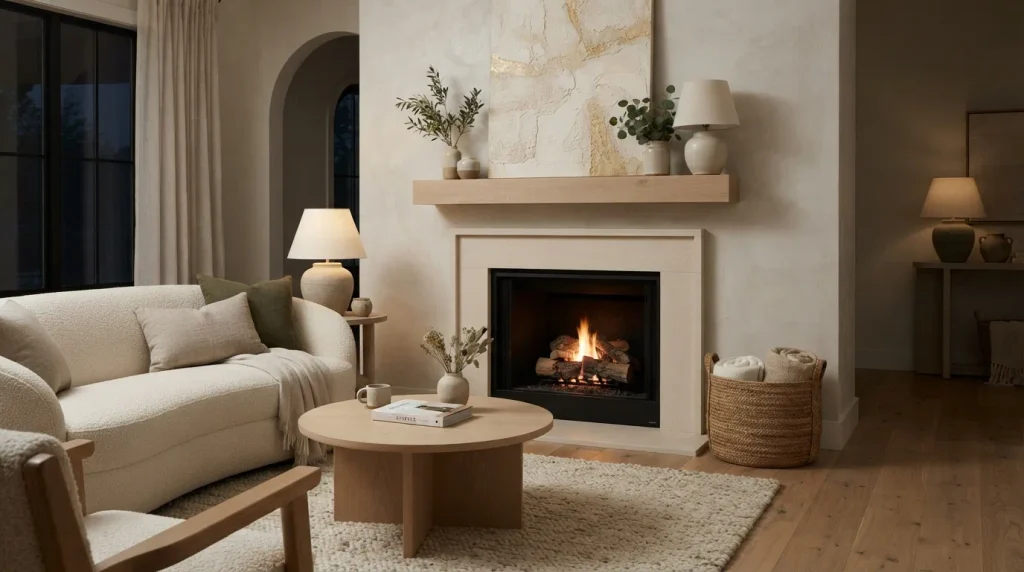
- Use a soft white backdrop to highlight architectural features.
- Surround the fireplace with warm natural materials.
- Add simple wood and ceramic accessories.
- Keep surrounding furniture understated for visual balance.
A fireplace becomes an architectural focal point when the surrounding finishes stay soft and understated. Use a Cloud Dancer-inspired wall treatment with a pale limestone surround and simple oak mantel to create gentle contrast. Cream seating, natural wood flooring, and woven accessories can reinforce the warm neutral palette without competing with the fireplace. Keep the mantel styling restrained with one or two ceramic pieces rather than a crowded arrangement. The result is a relaxed focal point that feels modern but timeless, especially when the natural materials introduce subtle changes in texture across the wall.
The area around a fireplace should feel visually balanced rather than overloaded with decoration. Place a low-profile sofa or pair of comfortable chairs nearby, leaving enough distance for movement and safety. A woven basket beside the hearth can hold blankets while adding useful texture. During the day, natural light will emphasize the pale finishes; after sunset, warm lighting and firelight create a completely different atmosphere. I’ve noticed that neutral fireplace designs are particularly versatile because seasonal decorations can be added without clashing with the permanent finishes or forcing you to redesign the entire room.
17. Soft Mudroom Storage
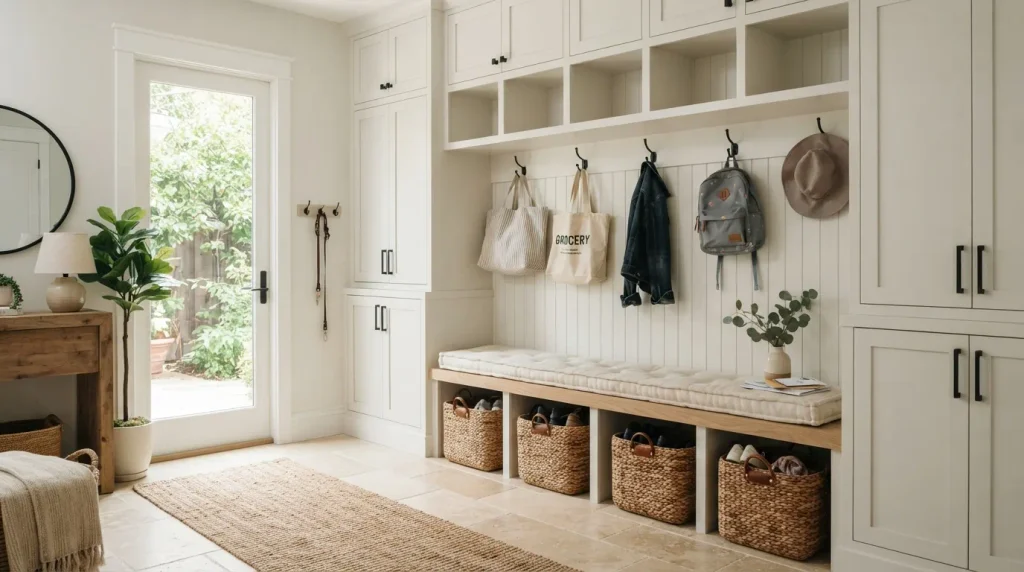
- Keep entry storage bright and visually organized.
- Combine closed cabinets with accessible hooks.
- Add woven baskets for smaller everyday items.
- Use durable flooring beneath high-traffic areas.
A hardworking mudroom can still look beautiful when storage is designed as part of the room rather than added afterward. Use soft white cabinetry and walls to create a bright foundation, then add a pale oak bench, woven baskets, and simple wall hooks. A cushioned seat makes the area more comfortable for putting on shoes, while closed cabinets keep larger items hidden. Durable stone or porcelain flooring can handle daily traffic without disrupting the light palette. This arrangement works especially well for busy households because every frequently used item has a clear place.
Small details can make a mudroom feel significantly more organized. Assign individual hooks or baskets to household members, and use closed storage for anything that creates visual noise. Keep a narrow tray near the entrance for keys and small essentials so they do not collect on the bench. If the room has limited natural light, combine pale finishes with warm ceiling or under-cabinet lighting. In my experience, the best entry storage systems are the ones that require almost no effort to maintain. Clear zones make tidying faster while keeping the room visually calm throughout the day.
18. Airy Sunroom Retreat
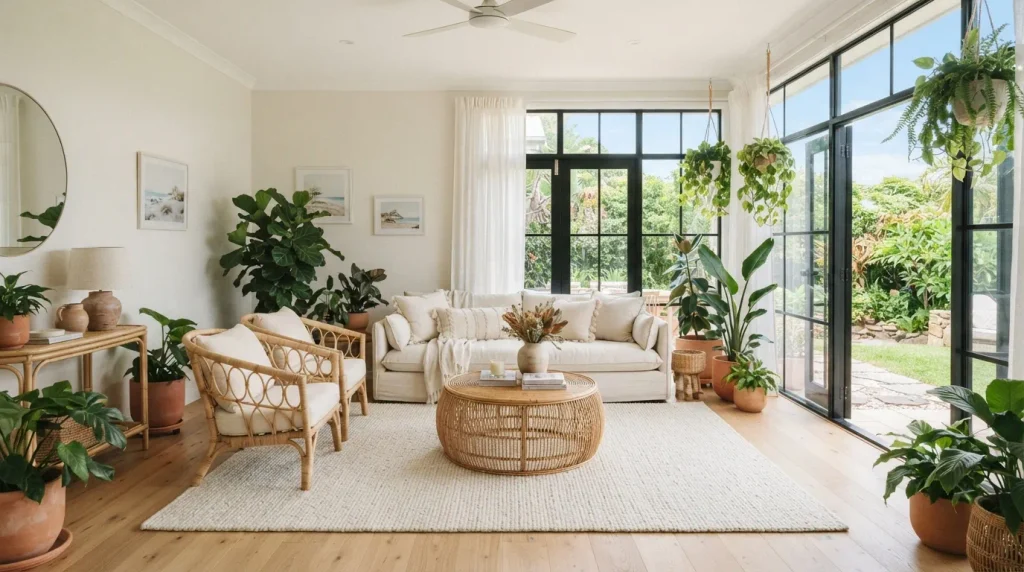
- Use pale furnishings to maximize natural brightness.
- Layer linen and woven materials for comfort.
- Add plants to bring organic contrast indoors.
- Keep the furniture arrangement open and relaxed.
A sunroom already benefits from abundant daylight, and a soft white palette can make that natural brightness feel even more expansive. Choose cream linen seating, pale rattan chairs, a woven coffee table, and an ivory rug to create a relaxed foundation. Sheer curtains soften direct sunlight while keeping the room bright throughout the day. Add leafy plants in terracotta or woven planters for organic contrast. The pale finishes allow greenery to become a natural focal point without making the room feel colorful or busy. This setup is ideal for reading, relaxing, or enjoying morning coffee.
The best sunrooms feel connected to the outdoors, so natural materials are especially effective here. Rattan, linen, jute, unfinished wood, and handmade ceramics introduce tactile variation while maintaining a cohesive appearance. Position seating toward the brightest windows, but leave clear pathways around the room so it remains easy to move through. A lightweight throw can make the space comfortable during cooler mornings. I’ve noticed that keeping the furniture slightly away from the walls often makes a sunroom feel more spacious and allows sunlight to reach more of the flooring.
19. Elegant Bathroom Vanity
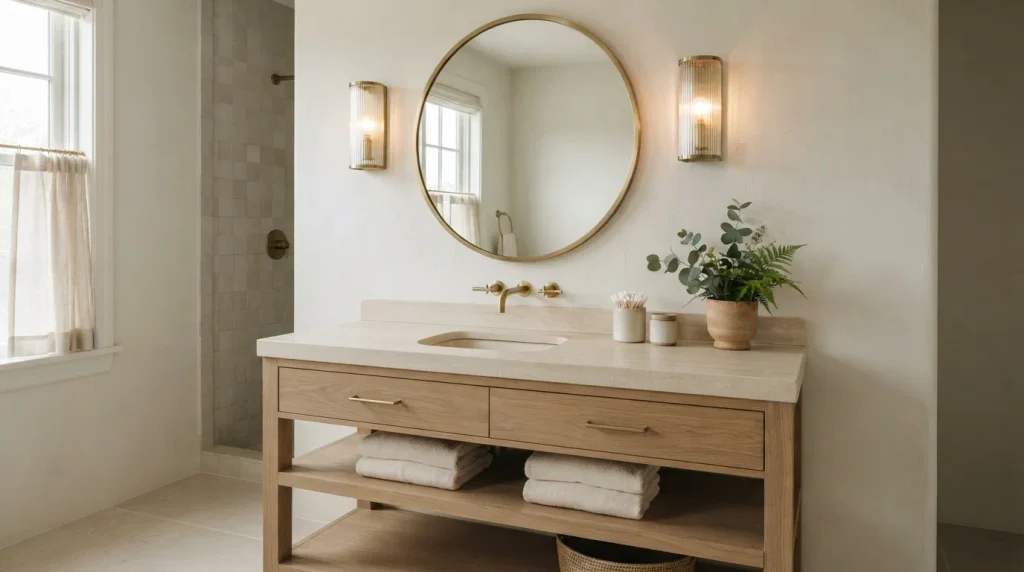
- Create a polished focal point with a pale vanity.
- Pair soft white finishes with warm metal details.
- Use natural stone for subtle visual texture.
- Keep countertop accessories simple and coordinated.
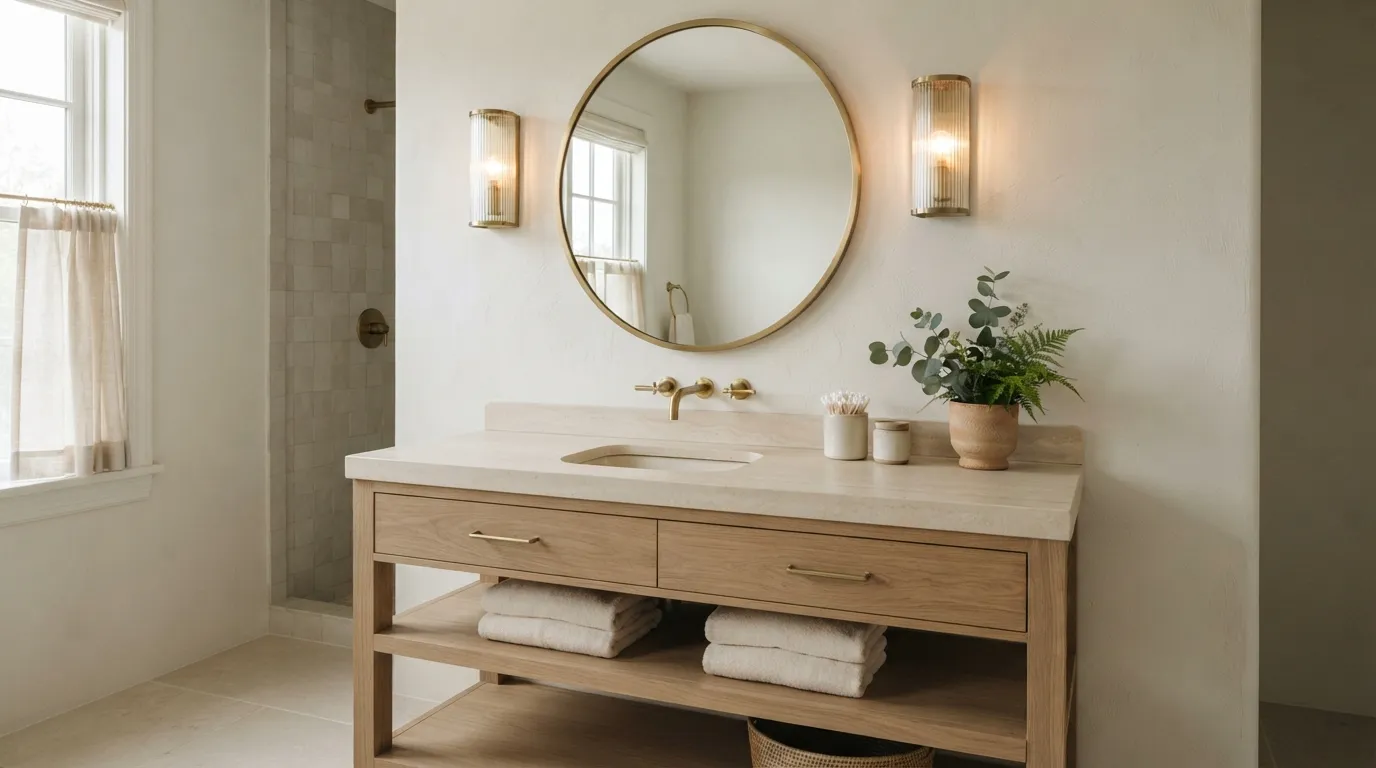
A bathroom vanity can become a refined focal point when pale finishes are paired with warm materials and thoughtful details. Choose a soft white wall color, then combine a pale oak vanity with creamy limestone or quartz and a rounded mirror. Brushed brass hardware adds gentle contrast without overpowering the light palette. Keep everyday products inside coordinated containers so the countertop remains visually calm. The result feels elevated without becoming overly formal. This approach also works in smaller bathrooms because the continuous pale surfaces help reflect light and create a cleaner sense of space.
Texture matters when the color palette is intentionally restrained. A softly veined stone countertop can introduce natural movement, while matte ceramic accessories and woven towels provide tactile contrast. Warm sconces on both sides of the mirror create flattering evening illumination and prevent the vanity from relying only on overhead lighting. Avoid adding too many decorative objects because the beauty comes from the balance between empty space and carefully selected materials. I’ve noticed that a well-styled vanity often needs fewer accessories than expected; quality finishes and good lighting can do most of the visual work.
20. Cozy Window Seat
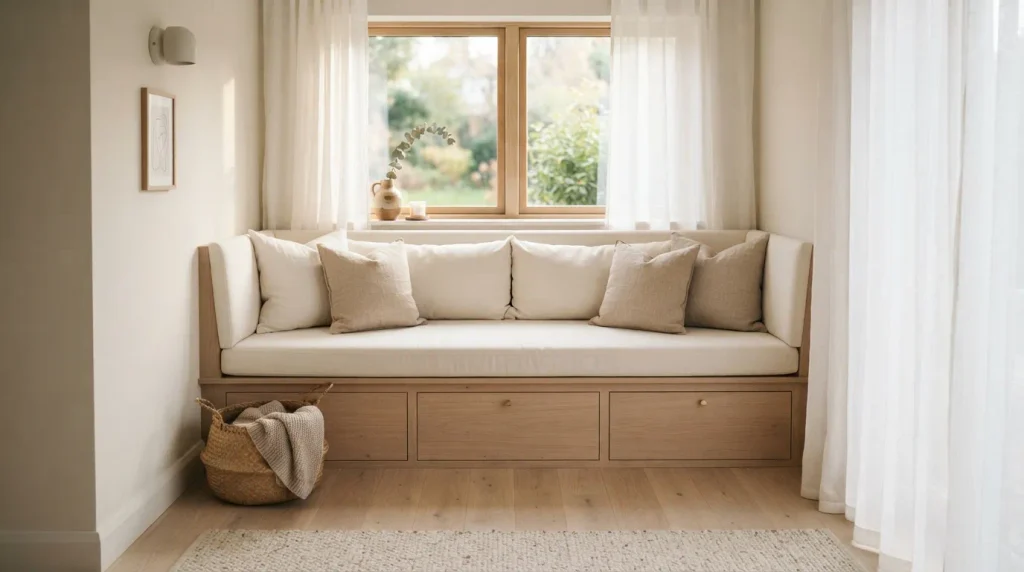
- Transform an unused window area into useful seating.
- Layer cushions and textiles for everyday comfort.
- Use built-in storage beneath the seat when possible.
- Keep surrounding decor soft and uncluttered.
An empty window area can become one of the most useful corners in the home with a simple built-in seat and a few comfortable layers. Use a soft white backdrop, then add a cream cushion, beige linen pillows, and pale oak storage beneath the bench. Sheer curtains can soften incoming daylight without blocking the view. The light palette keeps the corner visually open, while layered textiles make it feel comfortable enough for reading or relaxing. A window seat is especially valuable in smaller homes because it creates a dedicated retreat without taking up much additional floor space.
If storage is available beneath the seat, use it for blankets, books, seasonal accessories, or other items that tend to create clutter. Choose fabrics that are durable and easy to clean, especially if the seat will receive regular use. A small side table can hold a mug or book, but avoid filling the area with unnecessary furniture. During the day, natural light will highlight the different fabric textures; in the evening, a nearby floor or wall lamp can keep the corner functional. The finished space feels cozy, practical, and naturally connected to the window.
21. Modern Bedroom Corner
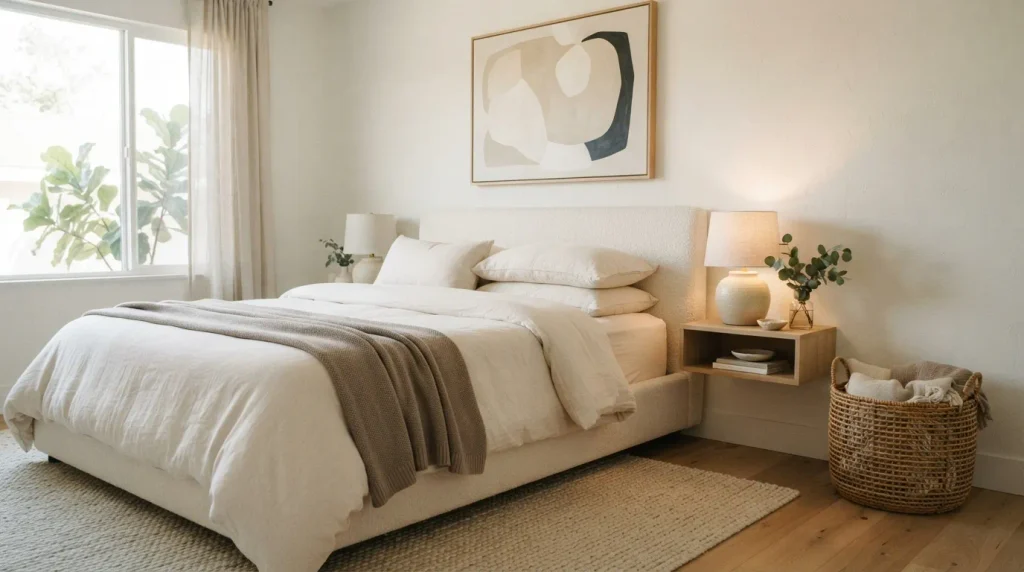
- Create visual interest with one softly contrasting accent.
- Combine pale textiles with warm wood furniture.
- Use artwork to personalize an otherwise neutral room.
- Keep the floor area open for a spacious feel.
A bedroom corner can feel finished without becoming visually crowded when a pale foundation is paired with one or two carefully chosen accents. Start with soft white walls and ivory bedding, then add pale oak furniture and a muted taupe or beige throw for gentle contrast. A single oversized artwork above the nightstand can create personality without filling the walls with small frames. The combination feels clean but not empty because the materials introduce subtle differences in texture. This is an easy way to refresh a bedroom while keeping the larger furniture and layout unchanged.
Small styling decisions have a noticeable impact when the overall palette is restrained. Choose a ceramic bedside lamp with a warm bulb, place a woven basket on the floor, and add a textured rug beneath the bed to soften the harder surfaces. Keep the nightstand useful by leaving enough room for a book, water, or phone. If you want more color, introduce it through artwork or a removable textile rather than permanent finishes. In my experience, this makes the room easier to update when trends change while preserving a timeless and comfortable foundation.
22. Soft White Patio
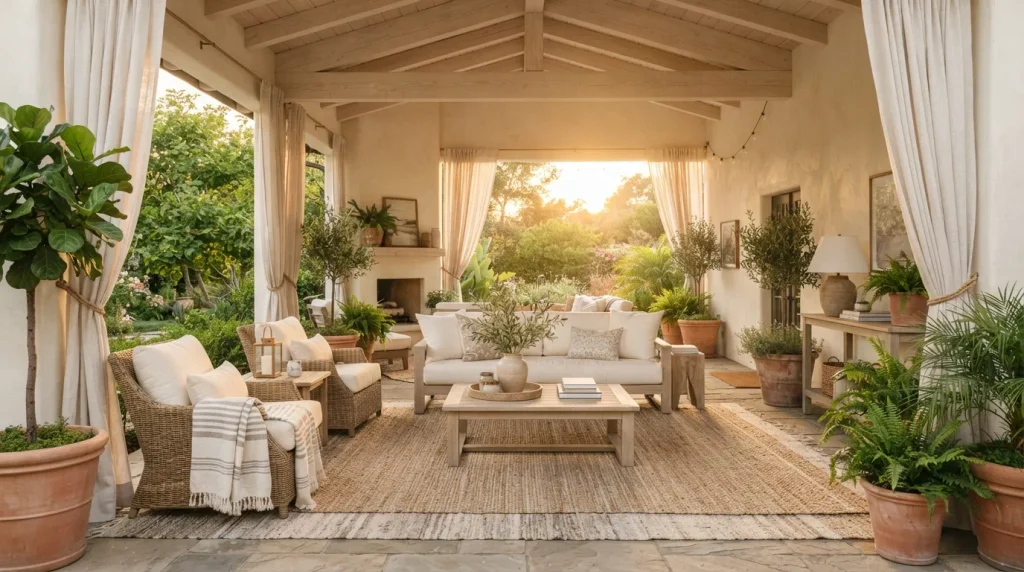
- Extend the airy interior palette into an outdoor living area.
- Combine cream upholstery with natural wood furniture.
- Use woven textures for warmth and durability.
- Add greenery for fresh contrast against pale surfaces.
An outdoor seating area can feel like a natural extension of a bright interior when the palette stays soft and uncomplicated. Use cream outdoor cushions, pale teak furniture, woven chairs, and a textured rug to create a comfortable foundation. A light wall or privacy screen can visually connect the patio with indoor spaces while reflecting available daylight. Add greenery in terracotta or stone planters for natural contrast. The Pantone Color of the Year 2026, Cloud Dancer, is especially suited to this approach because its airy quality works beautifully with organic materials and relaxed outdoor styling.
Comfort matters just as much as appearance when designing an outdoor retreat. Choose weather-resistant cushions and washable textiles so the space remains practical through everyday use. Linen-look curtains can provide shade and movement while maintaining the light aesthetic, and a woven basket can hold outdoor throws. Keep the furniture arrangement open enough for easy movement between the seating and doorway. During the evening, add warm lanterns or soft outdoor lighting rather than harsh overhead fixtures. The finished patio feels relaxed, bright, and connected to nature, creating an inviting place for morning coffee or casual gatherings.
23. Timeless White Bedroom
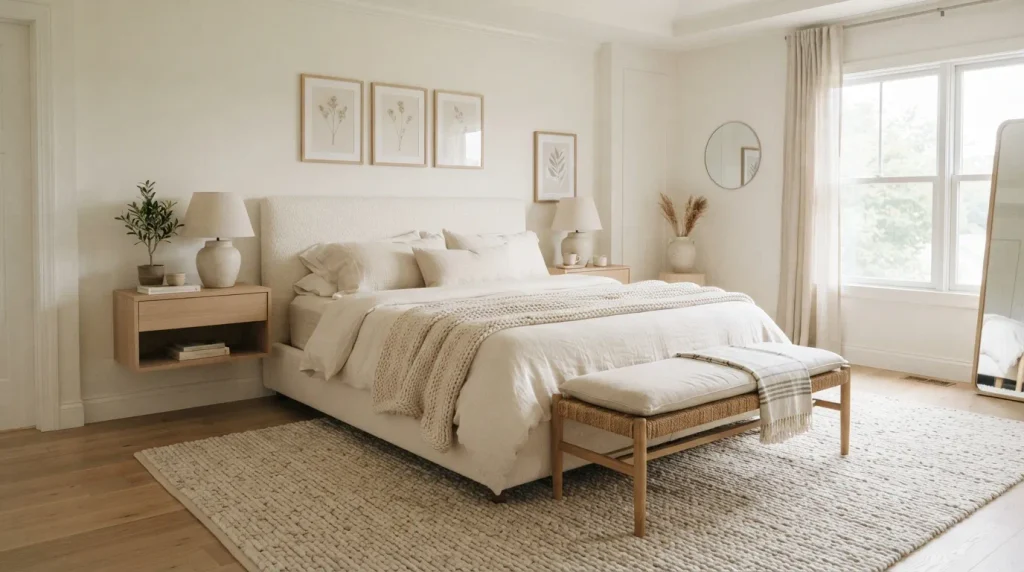
- Create a flexible bedroom that can evolve with changing styles.
- Combine different white and cream textures for dimension.
- Use warm wood to ground the pale palette.
- Add small seasonal accents instead of permanent changes.
A timeless bedroom becomes easier to decorate when the largest surfaces remain soft, light, and versatile. Use Cloud Dancer on the walls, then layer ivory bedding, cream linen curtains, pale oak furniture, and a textured wool rug. Instead of trying to match every white perfectly, choose related shades with slightly different undertones and finishes. This creates depth while preserving the peaceful appearance. A woven bench or natural wood stool can ground the room and prevent the pale palette from feeling weightless. The result is a bedroom that feels current without depending on a short-lived decorating trend.
The biggest advantage of a neutral bedroom is how easily small details can change the mood. Swap a rust-colored throw for muted blue in one season, then introduce sage, taupe, or natural terracotta later without changing the walls or furniture. Keep artwork and accessories relatively simple so the room has breathing space. Warm bedside lighting also helps soften pale surfaces after sunset, making the bedroom feel more intimate. I’ve noticed that this approach saves money over time because seasonal updates can come from textiles and accessories rather than expensive furniture or major renovations.
Conclusion
Cloud Dancer offers an easy way to create a home that feels brighter, calmer, and more timeless in 2026. Its soft white character works beautifully with warm wood, natural textures, creamy neutrals, stone, greenery, and subtle accent colors.
You do not need to redesign your entire home to use the trend. Start with one wall, a few textiles, new lighting, or simple accessories. The key is layering different textures and warm materials so the space feels inviting rather than flat. From a peaceful bedroom to a bright kitchen or cozy reading nook, these ideas make it easy to adapt the 2026 color trend to your own style and everyday life.