Imagine stepping into a bathroom that feels like a quiet exhale. No harsh lighting, no clutter, just warmth, texture, and calm. That’s the heart of wabi sabi bathroom ideas, a design philosophy built around imperfection, natural materials, and honest simplicity. If you’ve ever felt like your bathroom was trying too hard, too glossy, too sterile, too perfect, this list is for you.
In my experience, the most peaceful bathrooms are rarely the most polished ones. They’re the spaces where a rough stone vessel, a weathered wood stool, or a hand-thrown ceramic bowl gets to be exactly what it is, imperfect and beautiful. This article walks through 25 practical, visually rich ideas you can pull from, whether you’re planning a full renovation or simply want to soften one small corner. Each one is designed to be easy to picture, easy to try, and easy to fall in love with.
1. Natural Stone Textures
- Adds instant texture without overwhelming the eye
- Works beautifully with soft, warm lighting
- Hides water spots and small imperfections naturally
- Great for both small and large bathrooms
- Pairs well with wood, linen, and greenery accents
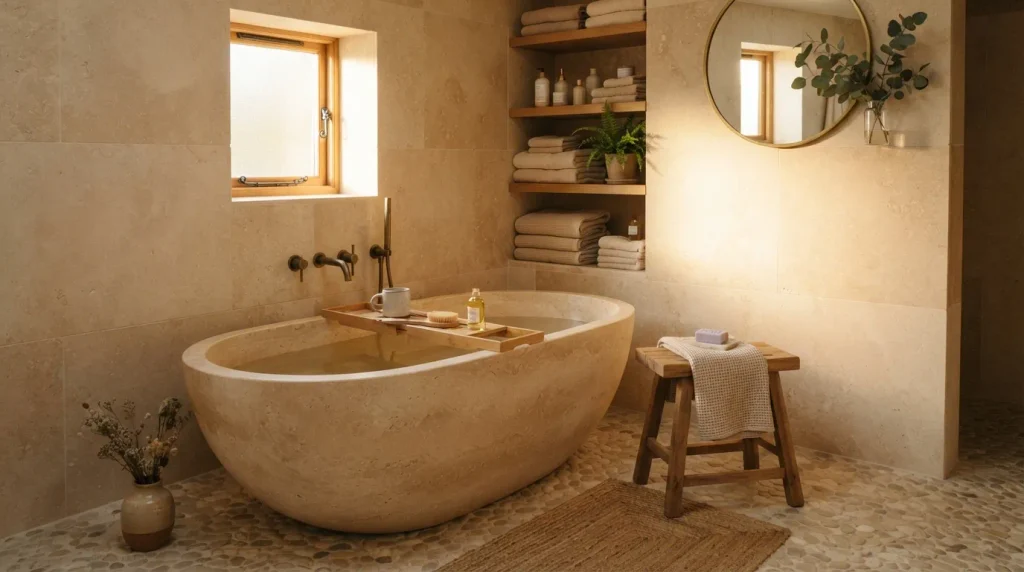
Stone has a quiet power that instantly calms a bathroom the moment you walk in. Rough limestone, honed travertine, or matte pebble tile bring texture without shouting for attention, which is the heart of wabi sabi design. In my experience, homeowners often worry raw stone will feel cold, but paired with warm lighting it feels grounded instead. The imperfections—tiny pits, subtle color shifts, natural veining—are exactly what make each surface feel alive rather than manufactured. This approach works because it removes the pressure of perfection, letting the material’s natural character carry the entire room’s atmosphere effortlessly.
Once stone textures enter the space, the whole bathroom starts to feel more like a retreat than a functional room. Light bounces differently off matte, uneven surfaces, creating soft shadows that shift throughout the day and add quiet visual interest. Homeowners often notice the room feels warmer and more inviting almost immediately, even without changing the color scheme. Small imperfections in the stone catch the eye in a pleasant way, giving the space a sense of history and calm rather than a showroom-perfect finish. This shift in texture alone can transform a plain bathroom into a peaceful, grounded sanctuary.
Also Read : 22 Year Round Mantle Decor Ideas for Every Season
2. Weathered Wood Accents
- Softens hard tile lines and bright white surfaces
- Adds warmth without needing a full renovation
- Ages gracefully instead of looking worn out
- Easy to introduce through small furniture pieces
- Creates contrast against stone or concrete finishes
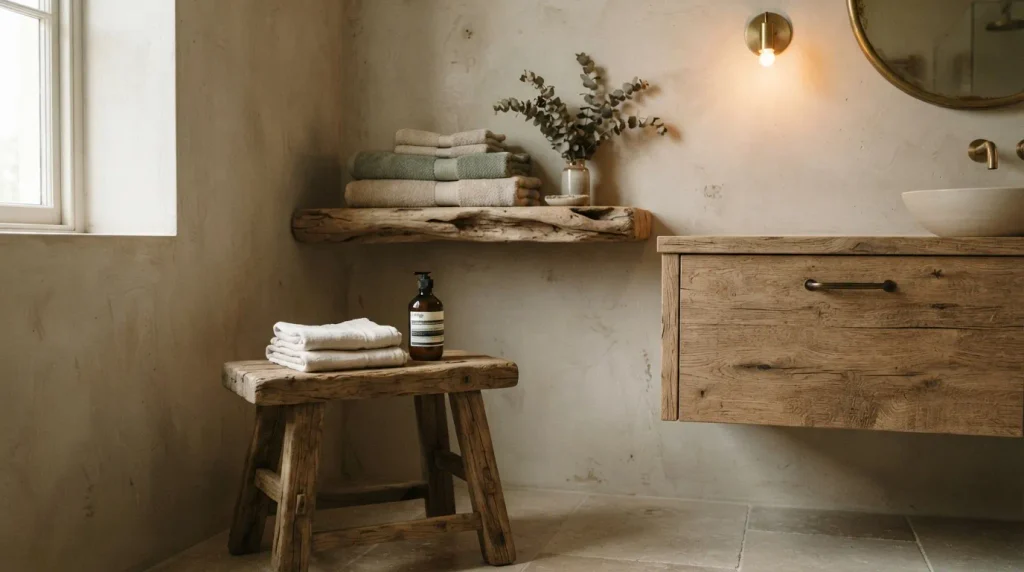
Weathered wood brings warmth into a bathroom in a way tile alone never can. A reclaimed teak stool, a driftwood shelf, or a rough-sawn vanity front adds softness against cool stone or concrete surfaces. I’ve noticed that even one small wooden piece can shift the entire mood of the room, making it feel lived-in rather than sterile. Wood’s natural grain and slight color variation echo the wabi sabi idea that nothing needs to be flawless to feel beautiful. This single material choice often does more emotional work than an entire wall of tile, quietly anchoring the space in nature.
Adding weathered wood also solves a common problem: bathrooms that feel too clinical or cold. A wooden stool beside the tub, open shelving with a rough finish, or a simple wood-framed mirror instantly softens hard lines and bright white tile. The contrast between smooth ceramic and rugged wood grain creates visual balance without needing extra decoration. Over time, wood ages beautifully, developing deeper tones and character marks that only add to its charm. This natural aging process fits perfectly with the wabi sabi philosophy, proving that a bathroom can grow more beautiful, not less, as the years pass.
Also Read : 23 Masculine Home Office Ideas for a Stylish Workspace
3. Muted Earthy Palette
- Instantly warms up a space without a full remodel
- Photographs beautifully for Pinterest-style inspiration boards
- Never feels dated compared to trend-driven colors
- Works well with both modern and rustic fixtures
- Easy to apply through paint, tile, or textiles
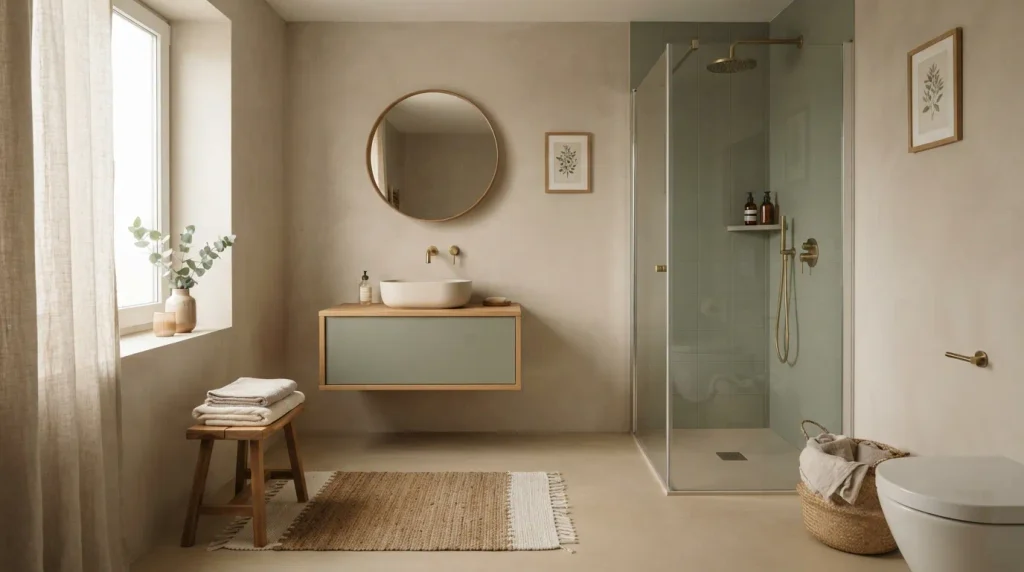
A muted, earthy color palette is often the fastest way to bring a calm, grounded feeling into any bathroom. Soft clay, sand, warm greige, and muted sage tones replace stark white or glossy finishes with something that feels closer to nature. This is one of the simplest wabi sabi bathroom ideas to apply, since it only requires a few paint or tile swaps rather than a full renovation. I’ve seen this work well in small bathrooms especially, where a warm neutral tone makes the space feel cozier instead of clinical. It’s a small shift with a big visual payoff.
Once the palette shifts toward warm, muted tones, the entire bathroom starts to feel calmer and more intentional. Natural light interacts beautifully with clay and sand shades, creating a soft glow rather than a harsh, sterile brightness. Towels, bath mats, and small accessories in similar earthy tones tie the look together without needing bold patterns or extra decor. Many designers recommend this approach because it photographs beautifully and ages gracefully, never feeling dated the way trend-driven colors often do. The result is a space that feels timeless, peaceful, and effortlessly connected to nature, morning after morning.
Also Read : 24 Modern Fireplace Ideas for a Stylish Cozy Home
4. Handmade Ceramic Sinks
- Adds a one-of-a-kind handmade feel to the space
- Small glaze imperfections become part of the beauty
- Pairs beautifully with wood or stone countertops
- Easy upgrade without changing the entire vanity
- Brings warmth compared to standard porcelain basins
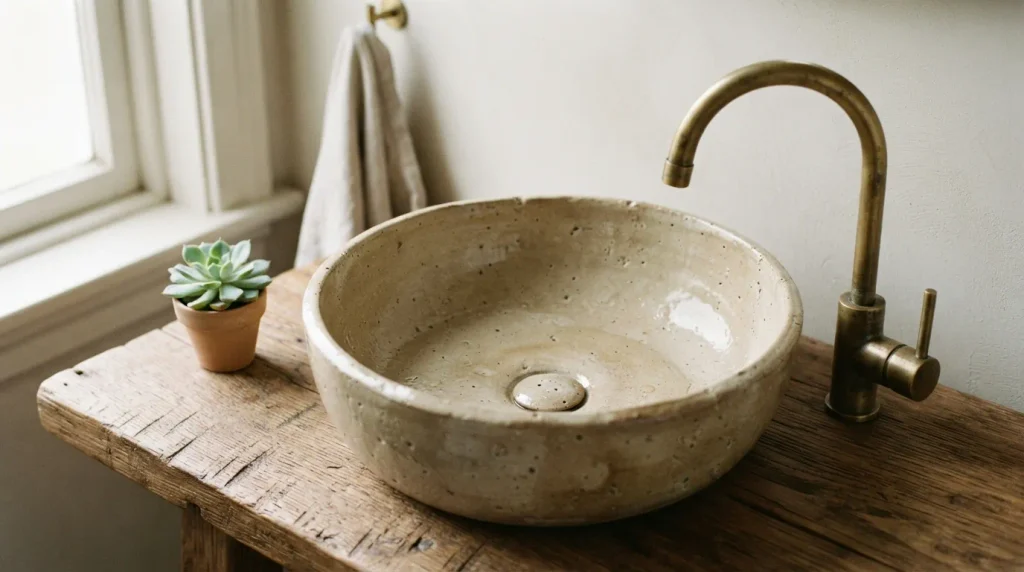
A handmade ceramic sink turns a simple bathroom fixture into a quiet focal point. Unlike mass-produced porcelain basins, each vessel sink carries small variations in glaze, shape, and texture, which is exactly what makes it feel special. In my experience, clients are often surprised by how much personality one handmade piece can bring to an otherwise plain vanity. These imperfections aren’t flaws to hide; they’re the entire point of wabi sabi bathroom ideas like this one. Paired with a wood or stone counter, the sink becomes the natural centerpiece of the whole room without trying too hard.
Swapping a standard sink for a handmade ceramic version is one of the easiest ways to add character without a full renovation. The uneven glaze catches light differently throughout the day, creating subtle shifts in tone that keep the space feeling alive rather than static. A simple brass or matte black faucet complements the organic shape beautifully, adding just enough contrast. Many homeowners find this small change makes the biggest visual difference in the entire bathroom. It’s a detail guests always notice first, and it instantly signals a thoughtful, handcrafted approach to the whole design.
Also Read : 23 Dark Blue Bedrooms Ideas for a Moody Stylish Retreat
5. Soft Linen Textiles
- Softens the room instantly without any construction
- Natural wrinkles add texture instead of looking messy
- Budget-friendly way to bring in wabi sabi warmth
- Easy to rotate seasonally for a fresh feel
- Complements stone, wood, and ceramic finishes effortlessly
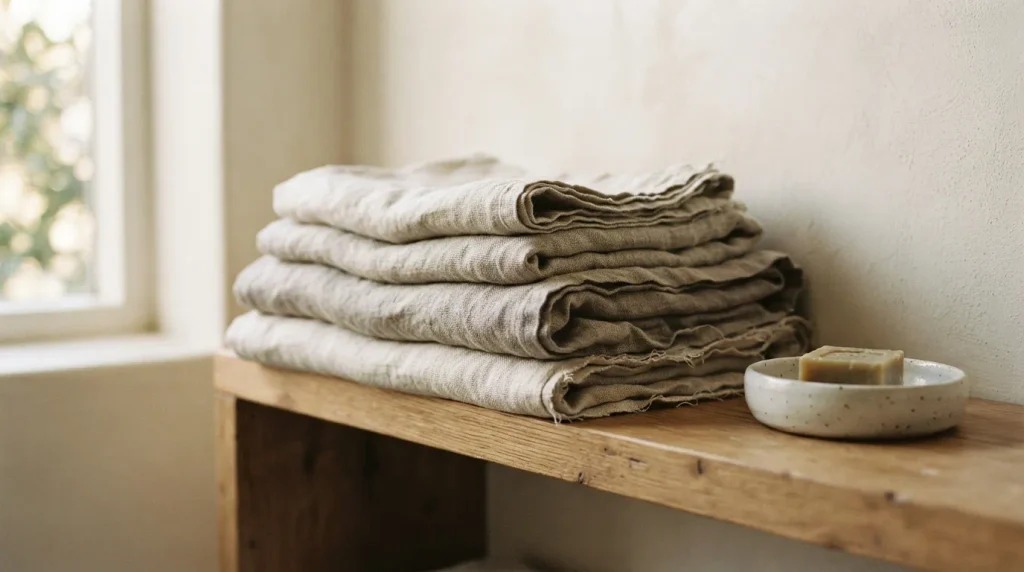
Soft linen textiles are one of the quickest ways to bring calm texture into a bathroom without spending much at all. Undyed linen towels, a woven bath mat, or a simple cotton shower curtain add softness that tile and stone alone can’t provide. I’ve noticed that the natural wrinkles in linen, which many people try to iron out, are actually part of its charm in this style. That relaxed, slightly imperfect texture is central to the wabi sabi mindset. It’s a low-cost, low-effort update that instantly makes a bathroom feel more like a peaceful retreat than a sterile, showroom-style space.
Beyond the visual softness, linen textiles bring a tactile warmth that plays beautifully against harder materials like stone or ceramic. A neutral palette of oatmeal, taupe, or soft sand keeps everything cohesive while letting texture do the visual work. These pieces are also easy to rotate seasonally, giving the bathroom a refreshed feel without any major changes. Many designers recommend starting here because it’s the simplest, most affordable entry point into this aesthetic. The result is a space that feels intentionally calm, gently lived-in, and quietly luxurious every single day.
Also Read : 25 Modern Easter Decor Ideas for a Fresh Spring Look
6. Organic Plant Corners
- Brings life and softness into a still, quiet space
- Requires minimal upkeep with the right plant choices
- Adds natural color without needing paint or tile
- Perfect for corners, shelves, or windowsills
- Boosts humidity tolerance with low-maintenance greenery
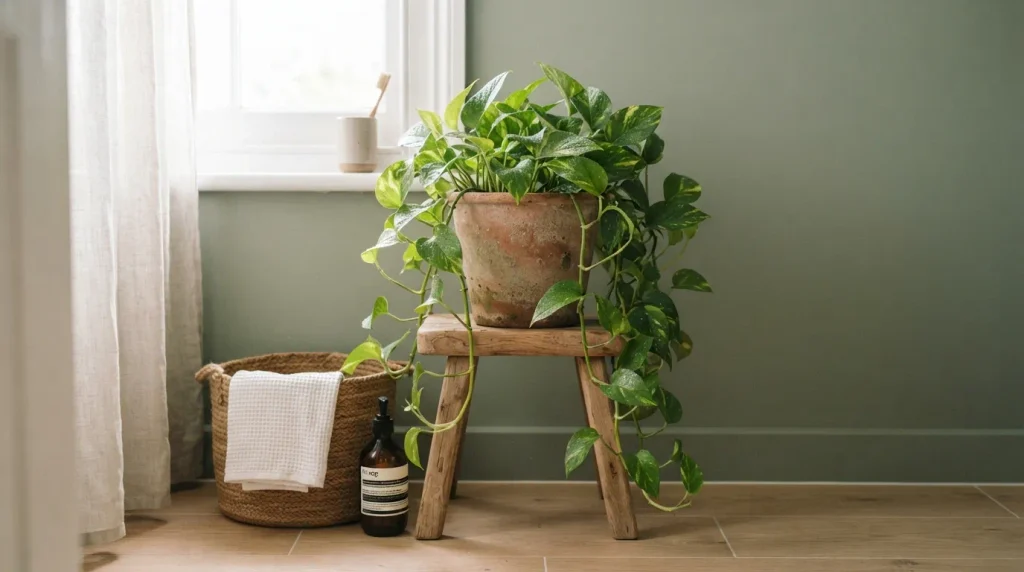
A small plant corner might be the simplest of all wabi sabi bathroom ideas, yet it makes one of the biggest differences. A trailing pothos, a small fern, or a hardy snake plant brings living texture into a space that often feels static and cold. That’s why many designers recommend choosing humidity-tolerant plants specifically for bathrooms, since not every variety thrives in that environment. A rough terracotta pot placed on a wooden stool or open shelf ties the greenery into the earthy, handmade feel of the rest of the room, without requiring any construction or major investment.
Greenery softens hard surfaces in a way almost nothing else can, breaking up the visual weight of tile, stone, and ceramic with something alive and slightly unpredictable. Even a single plant placed thoughtfully in a corner or windowsill draws the eye and adds a sense of calm to the entire room. I’ve seen this work well even in small apartment bathrooms with limited natural light, as long as the plant variety is chosen carefully. This small, low-cost addition brings warmth, color, and life, making the space feel more grounded, more natural, and far more inviting overall.
Also Read : 22 Palm Sunday Decorations Home Ideas for a Peaceful Space
7. Matte Stone Vessels
- Replaces plastic bottles with calming natural materials
- Small vessels add texture without cluttering counters
- Matte finishes hide water spots better than glossy ones
- Easy, affordable swap for everyday bathroom items
- Creates a cohesive, spa-like styling moment
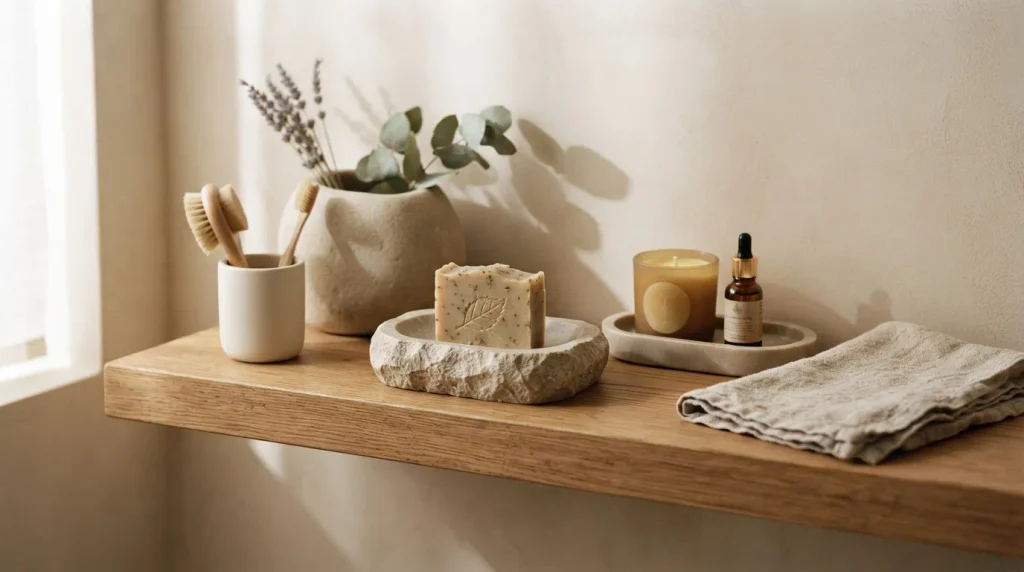
Small matte stone vessels quietly replace the clutter of plastic bottles that usually crowd a bathroom counter. A soapstone tray, a rough-textured soap dish, or a small carved bowl for cotton pads brings the same earthy calm as larger design choices, just on a smaller scale. This is one of those wabi sabi bathroom ideas that costs very little but changes how the entire counter feels day to day. In my experience, swapping just a few everyday items for natural material versions makes the whole space feel more curated, even when nothing else in the room has changed.
These small vessels do more than look good; they also solve the practical problem of visual clutter that plastic bottles and generic containers often create. Matte stone hides water spots and soap residue far better than glossy ceramic or plastic, keeping the counter looking clean with less daily effort. Grouped together on a tray or shelf, a few simple stone pieces create a small styled moment that feels intentional rather than random. It’s a detail-oriented upgrade that ties the whole bathroom together, proving that big transformations often start with the smallest, most overlooked items.
8. Imperfect Tile Patterns
- Adds handmade character standard tile can’t replicate
- Slight variations create depth and visual movement
- Works beautifully as an accent wall or backsplash
- Pairs naturally with wood, stone, and linen textures
- Elevates a small area without a full retile
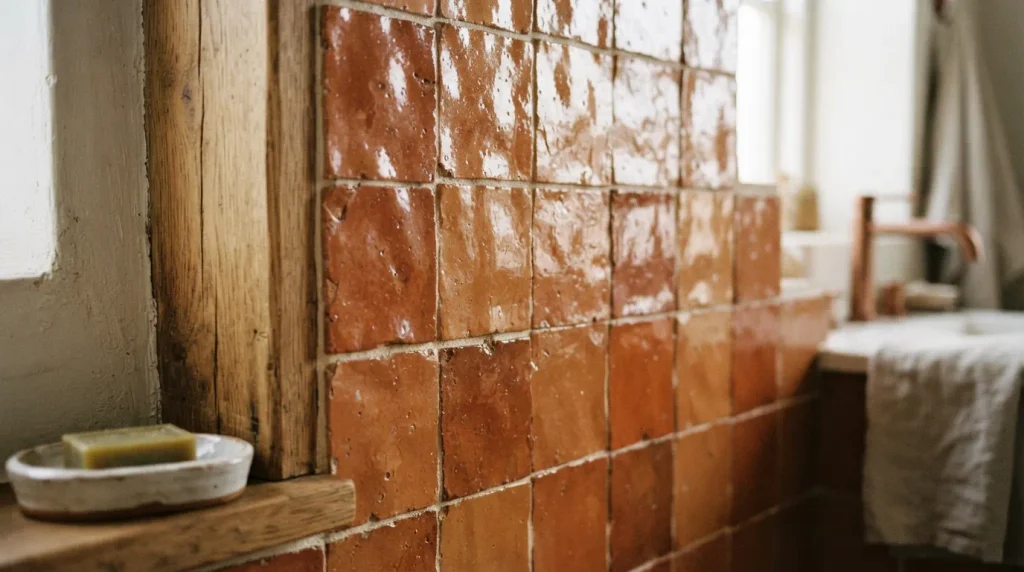
Handmade tile, like zellige or other artisanal styles, brings a level of character that perfectly uniform tile simply cannot achieve. Slight variations in shape, glaze, and color are intentional, giving each tile its own subtle personality rather than a flawless, repeated pattern. That’s why many designers recommend using it as an accent rather than covering an entire room, letting the texture speak without overwhelming the space. I’ve noticed that even a small backsplash or shower niche done in imperfect tile becomes the visual highlight of the whole bathroom, drawing the eye naturally toward its warmth and depth.
Using imperfect tile patterns is a smart way to introduce texture and interest without retiling an entire bathroom. A single accent wall, a shower niche, or a small border catches natural light differently across each tile, creating gentle movement and depth throughout the day. This approach pairs beautifully with wood trim, stone counters, or linen textiles already present in the space. Because the imperfections are handmade rather than accidental, the result feels intentional and artisanal rather than unfinished. It’s a small-scale investment that delivers a surprisingly large visual and emotional impact.
9. Low Wooden Stools
- Doubles as functional seating and styling piece
- Adds warmth next to cold stone or tile surfaces
- Simple shape keeps the look calm, not cluttered
- Great surface for towels, candles, or small plants
- Affordable furniture piece with lasting visual impact
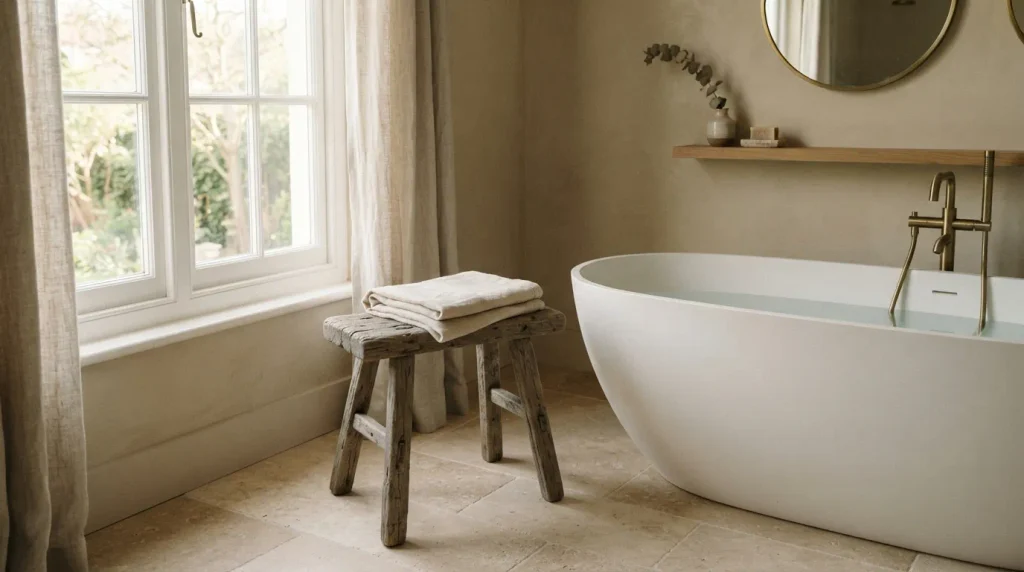
A low wooden stool is a small, often overlooked piece that does a surprising amount of visual and functional work in a wabi sabi bathroom. Placed beside a tub or in a shower corner, it offers a spot for towels, candles, or a small plant, while also softening the coldness of stone or tile flooring nearby. I’ve seen this work well in even the smallest bathrooms, where furniture options are limited but a compact stool still fits comfortably. Its simple, unfussy shape keeps the room feeling calm rather than cluttered, which is central to this entire design approach.
Beyond function, a wooden stool adds a layer of warmth that hard, cool surfaces can’t provide on their own. Its natural grain and slightly weathered finish echo the same imperfect beauty found in stone vessels, linen textiles, and handmade tile throughout the space. Because it’s a freestanding piece rather than a built-in fixture, it’s also one of the easiest updates to try, move, or replace without any real commitment. This small furniture choice quietly ties together the room’s earthy palette while offering genuine everyday usefulness, proving that thoughtful simplicity often outperforms decorative excess.
10. Rough Plaster Walls
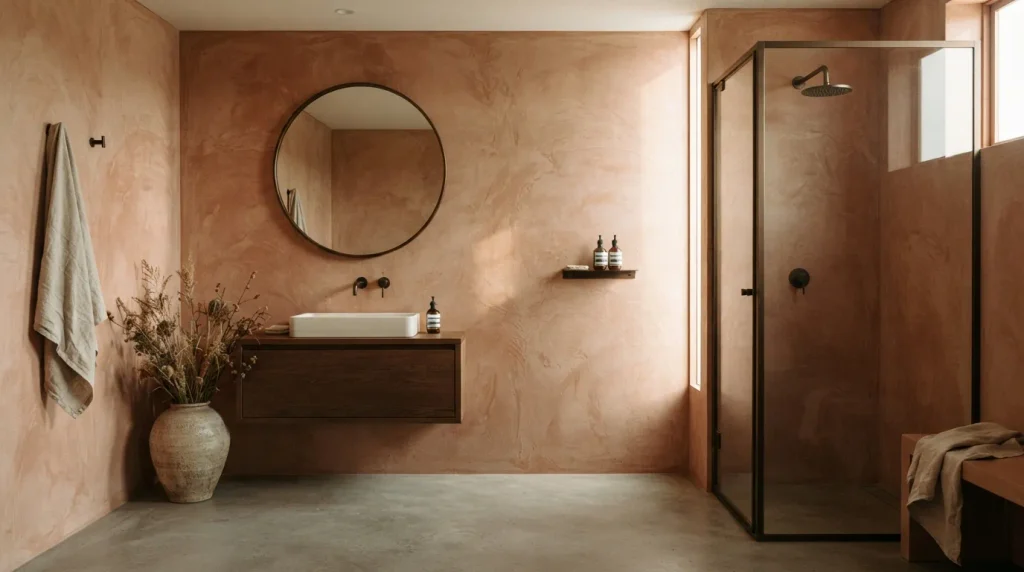
- Adds depth and warmth compared to flat painted walls
- Hides small imperfections better than smooth finishes
- Creates a handcrafted, artisanal feel throughout the room
- Works beautifully with warm or cool lighting alike
- A striking alternative to standard tile surfaces
Rough, hand-applied plaster walls bring a depth and warmth that flat paint or standard tile simply cannot match. Materials like tadelakt or lime plaster carry visible texture from the trowel, subtle color variation, and a soft matte finish that catches light in constantly shifting ways. This is one of the more striking wabi sabi bathroom ideas because it transforms an entire wall into a quiet, textured focal point rather than a plain backdrop. In my experience, homeowners who choose plaster over tile rarely go back, since the tactile, handmade quality adds a sense of craftsmanship that feels genuinely different from typical bathroom finishes.
Beyond its visual appeal, plaster is also remarkably forgiving with everyday imperfections, small marks or slight unevenness simply blend into its natural texture rather than standing out. Soft daylight or warm artificial lighting interacts beautifully with its surface, creating gentle shadows that shift throughout the day and add quiet visual interest. Paired with dark bronze fixtures or simple wooden accents, plaster walls anchor the entire room in an earthy, grounded palette. This finish proves that a single material choice can redefine a bathroom’s entire mood, turning a plain space into something that feels genuinely crafted by hand.
11. Soft Diffused Lighting
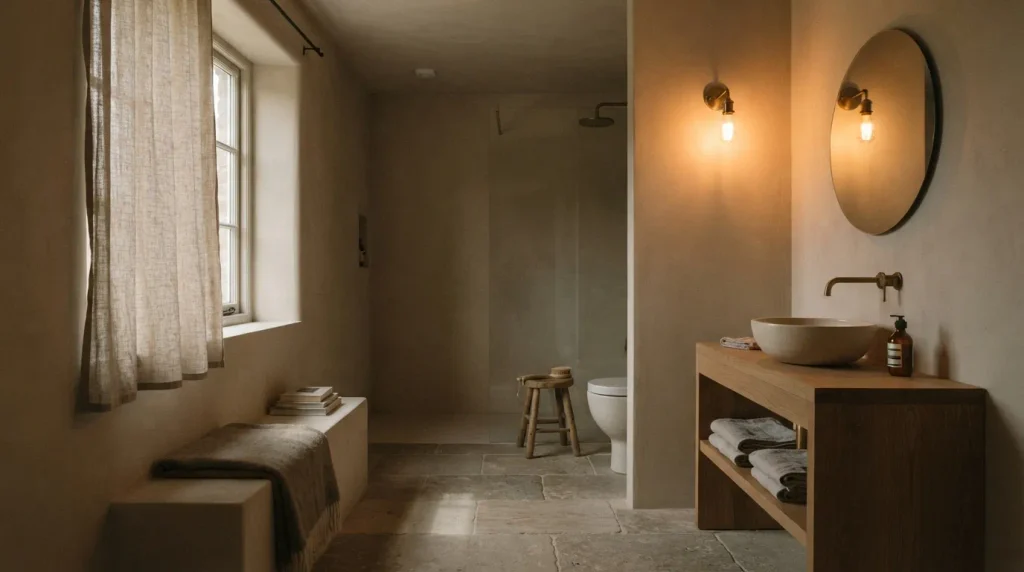
- Replaces harsh overhead light with a gentler glow
- Makes textures like stone and plaster feel richer
- Creates a calming, spa-like mood any time of day
- Easy upgrade with warm bulbs and simple fixtures
- Enhances photos and everyday relaxation equally well
Lighting quietly shapes the entire mood of a bathroom, often more than any single material choice. Soft, diffused light, whether from a linen curtain, a frosted glass fixture, or a warm-toned bulb, replaces the harsh brightness of standard overhead lighting with something gentler and more forgiving. That’s why many designers recommend layering light sources rather than relying on one bright ceiling fixture. I’ve noticed that this single change often does more to create a calm, spa-like atmosphere than an expensive renovation would, simply by softening how every other material and texture in the room is perceived.
Warm, diffused lighting also enhances every other design choice already in the space, making stone, plaster, and wood textures feel richer and more three-dimensional. Shadows fall gently rather than harshly, giving the room a quiet, restful quality throughout the day and into the evening. A simple wall sconce or a dimmable fixture with a warm bulb is an easy, affordable place to start. This small adjustment consistently makes the biggest difference in how calm and inviting a bathroom feels, proving that light itself is one of the most powerful design tools available.
12. Natural Fiber Rugs
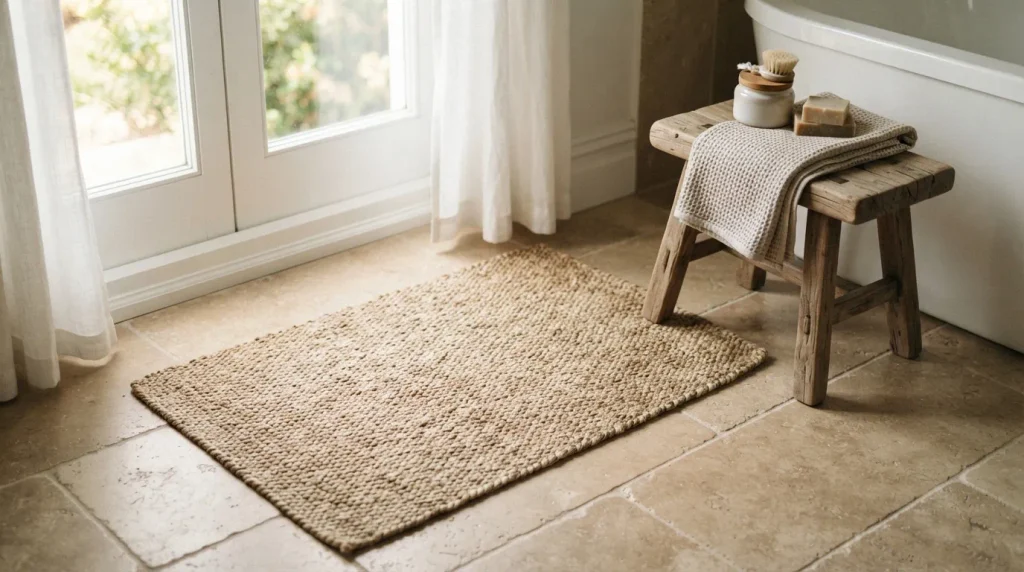
- Adds warmth and texture underfoot instantly
- Breaks up hard flooring without heavy patterns
- Natural fibers age gracefully instead of looking worn
- Easy, affordable update for any bathroom size
- Ties together wood, stone, and linen accents naturally
A natural fiber rug, like jute, sisal, or woven cotton, is one of the simplest ways to soften hard bathroom flooring underfoot. Unlike synthetic bath mats, these materials bring genuine texture and a slightly imperfect, handwoven quality that fits naturally into a wabi sabi bathroom. I’ve seen this work well in bathrooms with stone or tile flooring especially, where the contrast between hard and soft surfaces creates a comforting, grounded feel. It’s an affordable, low-effort update that instantly changes how the room feels to walk into, without requiring any structural changes or major investment.
Beyond comfort, a natural fiber rug visually ties together the earthy palette already present through wood stools, linen towels, or stone vessels elsewhere in the room. Its texture ages gracefully over time, developing a slightly worn character that adds to its charm rather than detracting from it. Because these rugs come in a range of sizes and weaves, they’re easy to fit into bathrooms of any layout, from small powder rooms to larger spa-style spaces. This small addition consistently makes the floor feel warmer, quieter, and far more inviting underfoot every single day.
13. Freestanding Stone Bathtub
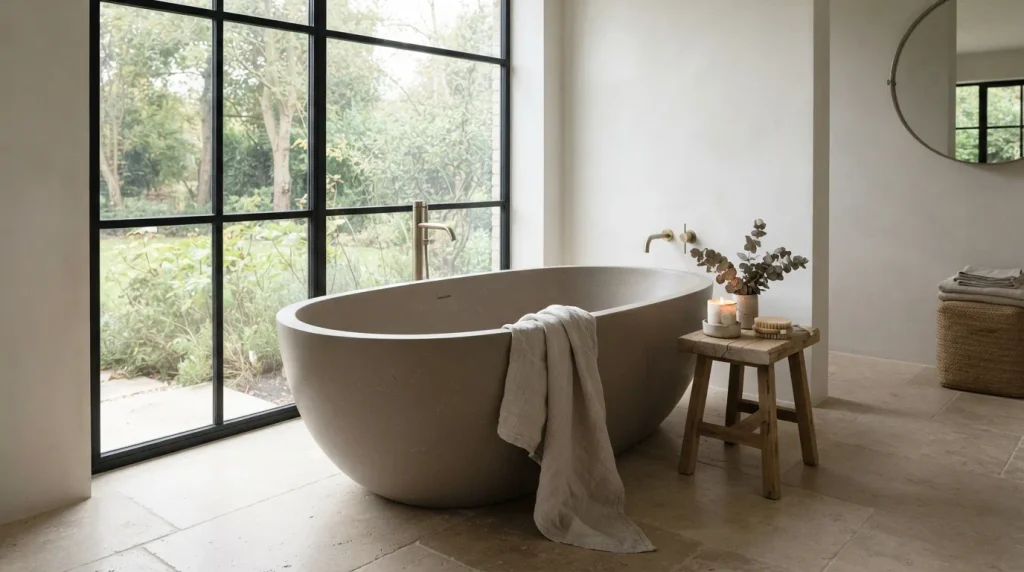
- Becomes the natural focal point of the entire room
- Solid stone retains heat better than standard acrylic tubs
- Simple oval shapes keep the look calm and timeless
- Pairs beautifully with minimal, uncluttered styling
- Elevates even a small bathroom into a retreat-like space
A freestanding stone bathtub instantly becomes the emotional and visual centerpiece of a bathroom, without needing anything else around it to compete for attention. Materials like solid surface stone or concrete composite carry a matte, slightly textured finish that feels far more grounded than glossy acrylic. This is one of the more investment-heavy wabi sabi bathroom ideas, but the impact is significant, transforming an ordinary bathroom into something that genuinely feels like a private retreat. In my experience, even a small stone tub placed thoughtfully near natural light can outshine an entire room full of smaller design details combined.
Beyond its striking appearance, a stone tub offers a practical benefit many people don’t expect: it retains heat noticeably better than standard acrylic, keeping bathwater warmer for longer. Its simple oval or rectangular shape keeps the overall look calm and uncluttered, allowing surrounding textures like wood, linen, or plaster to complement rather than compete with it. Positioned near a window, the tub interacts beautifully with shifting natural light throughout the day. This single fixture proves that sometimes one thoughtfully chosen piece can define an entire room’s atmosphere far more effectively than layers of smaller decor.
14. Woven Storage Baskets
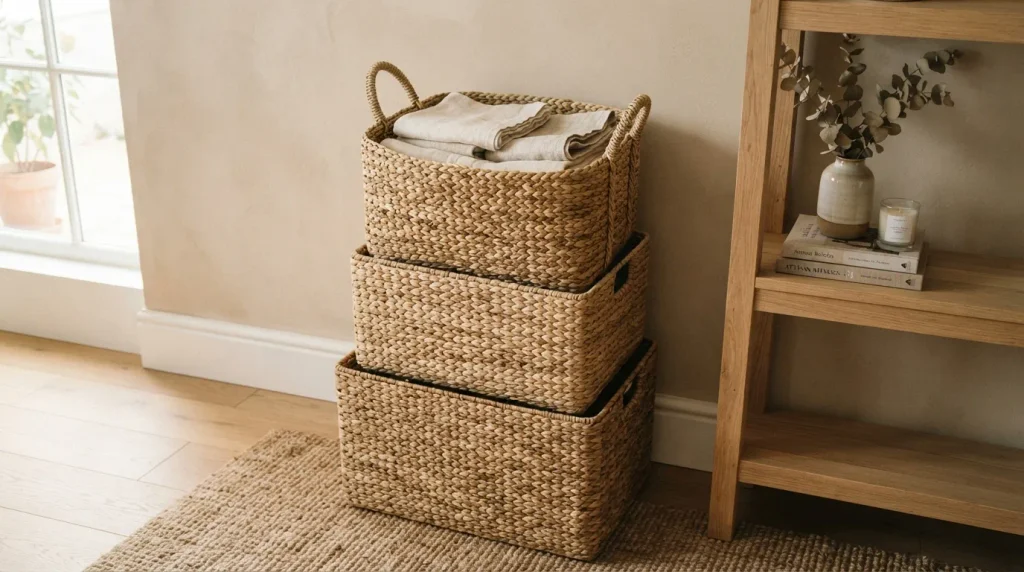
- Hides everyday clutter without looking cold or clinical
- Adds texture while keeping storage fully functional
- Natural materials blend seamlessly into an earthy palette
- Simple way to organize towels, products, or supplies
- Budget-friendly compared to built-in cabinetry solutions
Woven storage baskets solve one of the most common bathroom struggles: keeping everyday clutter out of sight without resorting to cold plastic bins or bulky cabinetry. Seagrass, rattan, or water hyacinth baskets bring the same natural texture found throughout other wabi sabi bathroom ideas, while still serving a genuinely practical purpose. That’s why many designers recommend them as an easy first step for anyone hesitant to commit to bigger renovations. I’ve noticed that swapping plastic organizers for woven baskets changes the entire feel of open shelving almost instantly, making storage look intentional rather than like an afterthought.
These baskets are also remarkably versatile, fitting neatly under sinks, on open shelves, or stacked in corners where extra storage is needed most. Their natural fiber texture blends effortlessly with wood stools, linen towels, and stone accessories already present in the space, creating a cohesive look without extra effort. Unlike built-in cabinetry, woven baskets require no installation and can be rearranged or replaced easily as needs change. This affordable, low-commitment solution proves that practical organization and quiet, natural beauty can absolutely coexist in the same small corner of a bathroom.
15. Aged Brass Fixtures
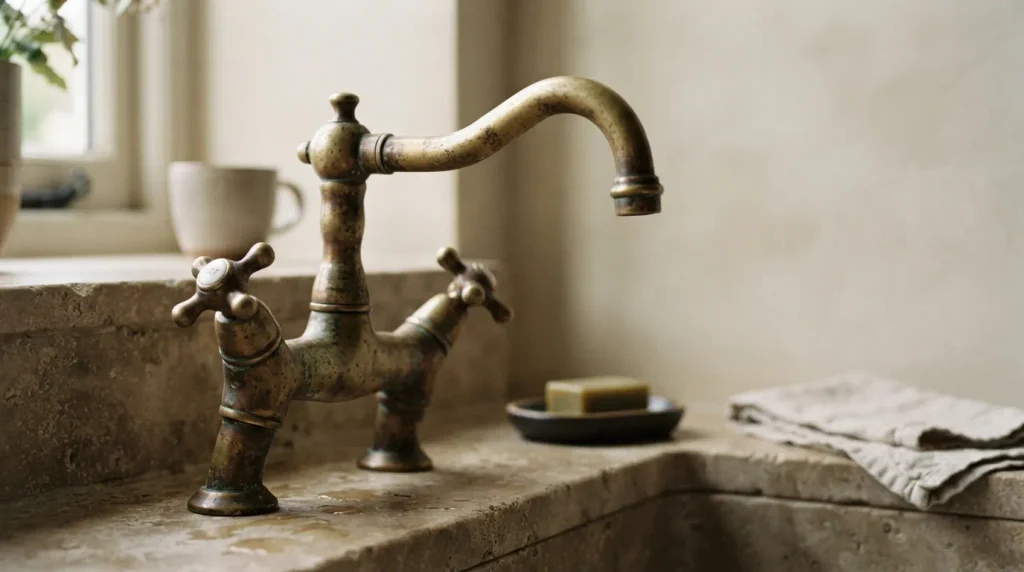
- Develops richer character the more it’s used
- Warms up cool stone or concrete surfaces nicely
- Small detail that elevates the entire vanity area
- Avoids the sterile look of chrome or steel
- Ages beautifully instead of needing constant polishing
Aged, unlacquered brass fixtures embrace one of the core ideas behind wabi sabi design: that materials become more beautiful, not less, as they change over time. Unlike chrome or stainless steel, unlacquered brass develops a natural patina with use, shifting from bright gold to a warmer, richer tone within months. This is one of the smaller wabi sabi bathroom ideas on this list, but it makes a noticeable difference in how the entire vanity area feels. In my experience, people are often hesitant at first, worried the fixture will look tarnished, but most come to love the character it develops.
This natural aging process also means far less maintenance than polished chrome, which shows every water spot and fingerprint almost immediately. Brass fixtures warm up cool surfaces like stone or concrete countertops, adding a soft golden tone that ties beautifully into an earthy color palette. Over months and years, the patina deepens further, creating a fixture that genuinely looks better with age rather than needing replacement. This small detail consistently surprises homeowners with how much personality it brings to an otherwise simple sink area, proving that imperfection truly can be the point.
16. Minimalist Open Shelving
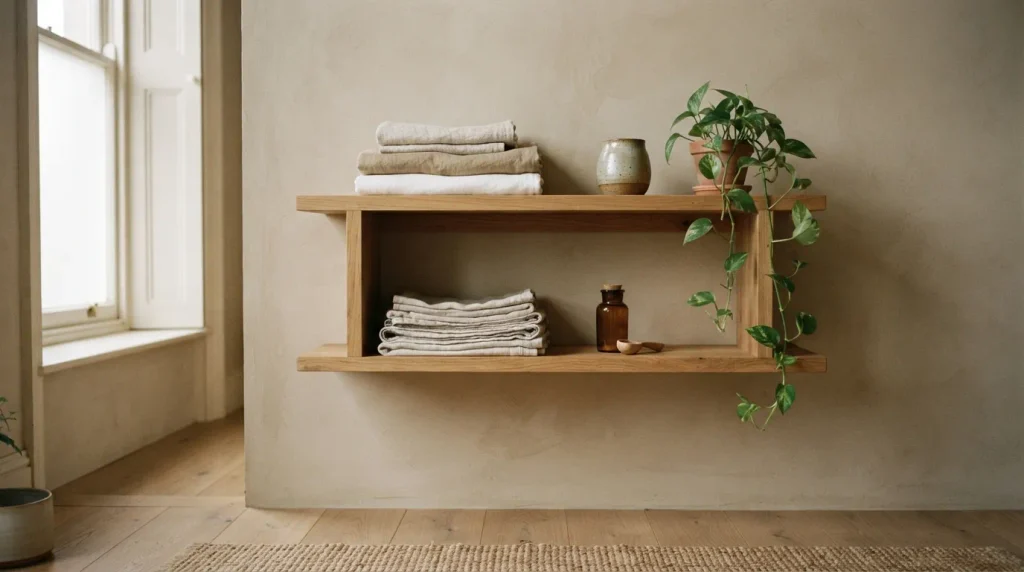
- Keeps only essential, beautiful items visible
- Encourages a calmer, less cluttered daily routine
- Adds warmth through wood without heavy cabinetry
- Easy to restyle seasonally with different accessories
- Affordable alternative to closed vanity storage
Open wooden shelving replaces bulky, closed cabinetry with a simpler, more intentional way to store everyday bathroom items. Rather than hiding everything behind closed doors, a few carefully chosen pieces, folded towels, a ceramic vessel, a small plant, become part of the room’s overall styling. This approach only works, though, when clutter is kept genuinely minimal, which is exactly why many designers recommend it as a gentle push toward simplifying daily routines. I’ve noticed that once people commit to open shelving, they naturally start owning fewer, better bathroom essentials, since everything stays visible.
Beyond its calming effect, open shelving is also one of the more affordable storage solutions compared to custom cabinetry or built-in units. A simple wood plank shelf mounted on a plaster or painted wall costs relatively little while adding real warmth and texture to the space. It’s also easy to restyle with the seasons, swapping in different textiles or accessories without any real commitment. This flexible, low-cost approach proves that thoughtful simplicity often creates a more inviting bathroom than an abundance of hidden storage ever could.
17. Neutral Layered Textures
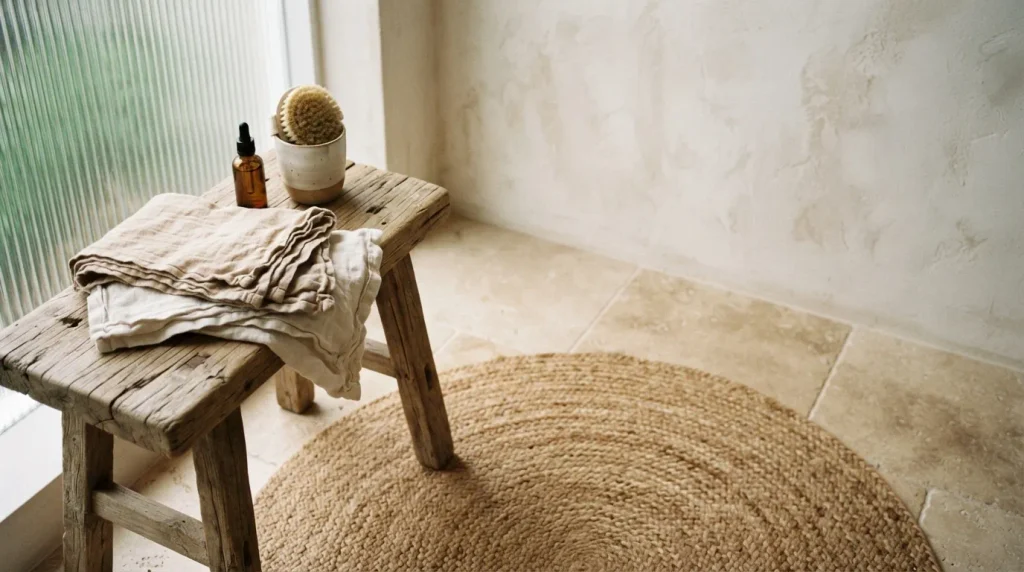
- Creates depth without relying on bold colors
- Combines materials so no single element feels flat
- Naturally cohesive since tones stay within one palette
- Adds richness through texture rather than pattern
- Works in bathrooms of any size or budget
Layering textures within a single neutral palette is one of the most effective ways to add depth to a bathroom without introducing bold colors or busy patterns. Stone flooring, a woven jute rug, linen towels, and a rough wood stool can all share the same warm, sandy tones while still feeling distinct from one another through texture alone. This is a technique many designers rely on constantly, because it creates richness and interest while keeping the overall look calm and cohesive. I’ve seen this work particularly well in smaller bathrooms, where bold colors can feel overwhelming but layered neutral textures never do.
The beauty of this approach is that it can be built gradually, one textile or accessory at a time, rather than requiring a full renovation all at once. Because everything stays within a similar warm, neutral color family, new pieces almost always blend in naturally rather than clashing with what’s already there. This makes it an especially forgiving design method for anyone updating a bathroom slowly, over months rather than all at once. The result is a space that feels intentionally layered, tactile, and calm, no matter how gradually it comes together.
18. Handcrafted Wooden Mirrors
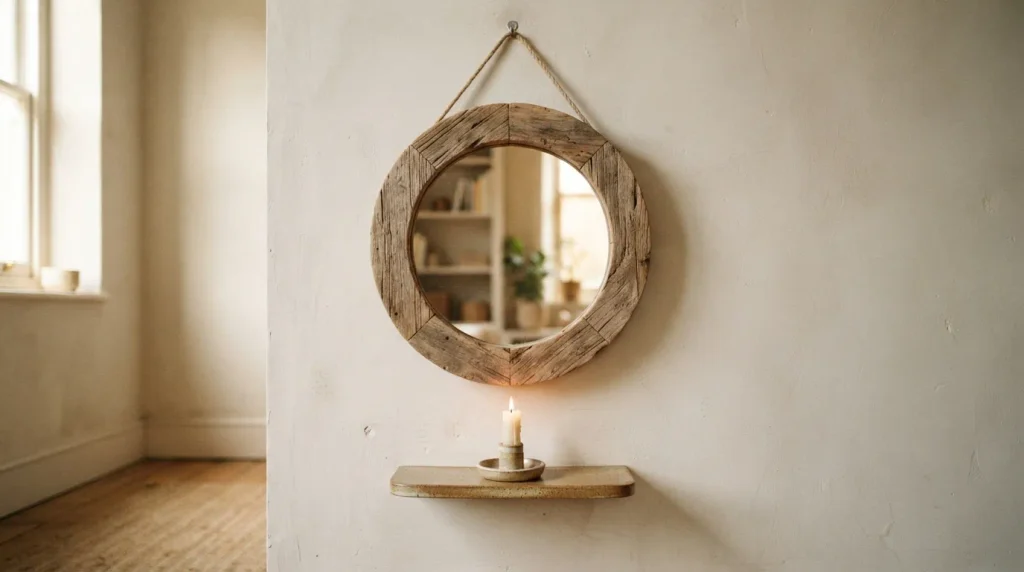
- Softens a typically cold, reflective surface
- Adds a handcrafted focal point above the sink
- Simple shapes keep the look calm, not busy
- Complements brass, stone, and linen finishes naturally
- Easy swap that instantly elevates the vanity area
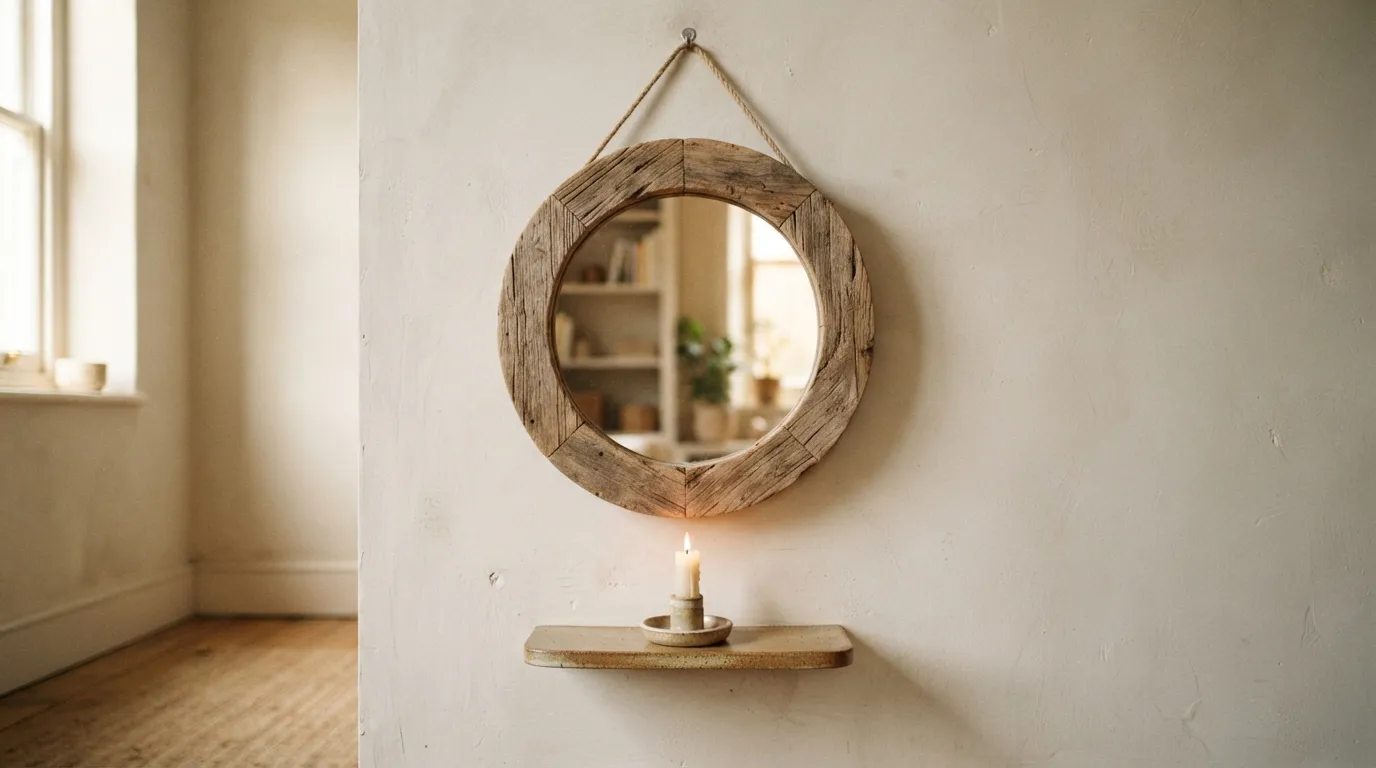
A handcrafted wooden mirror softens one of the coldest elements typically found in any bathroom: the mirror itself. Standard framed mirrors, especially in chrome or plastic, can feel sterile and disconnected from the warmer materials used elsewhere in a wabi sabi space. A round or organically shaped mirror framed in rough, unfinished wood immediately warms up the vanity area, becoming a quiet focal point rather than just a functional necessity. That’s why many designers recommend treating the mirror as a genuine design piece rather than an afterthought purchased purely for function.
This small swap also ties together other natural materials already present in the room, complementing aged brass fixtures, stone countertops, or linen textiles without competing for attention. A simple round or oval shape keeps the overall look calm and uncluttered, which matters more than an ornate frame ever could in this style. Because wooden mirrors are widely available and relatively affordable, they’re one of the easiest updates to make without any real commitment or renovation. This detail consistently elevates the entire vanity area, proving that even reflective surfaces can feel warm and grounded with the right frame.
19. Sunken Bathing Areas
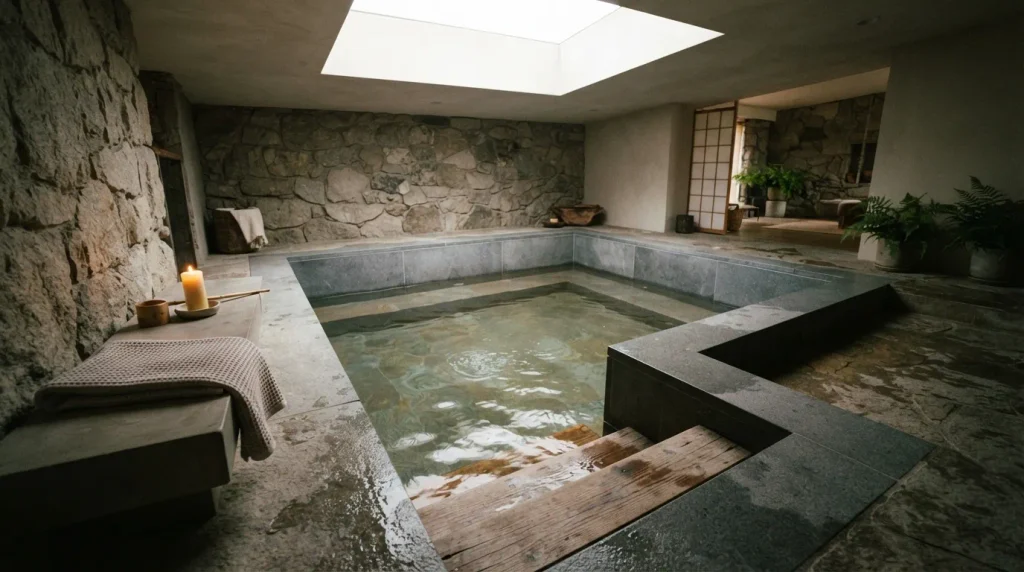
- Creates a dramatic, spa-like focal point
- Encourages slower, more mindful bathing rituals
- Adds architectural interest without excess decoration
- Pairs beautifully with natural stone and skylights
- A standout feature for larger renovation projects
A sunken bathing area transforms an ordinary bathroom into something closer to a private onsen, encouraging a slower, more mindful relationship with the daily ritual of bathing. Recessed slightly below the main floor level, a shallow stone soaking pool immediately becomes the architectural centerpiece of the room, without needing any additional decoration to draw the eye. This is one of the more ambitious wabi sabi bathroom ideas on this list, typically reserved for larger renovation projects, but the emotional impact is significant. In my experience, homeowners who invest in this feature rarely describe it as just a bathroom upgrade; they describe it as a genuine lifestyle change.
Beyond its striking appearance, a sunken bathing area also encourages a different pace entirely, inviting a slower morning or evening routine rather than a quick, functional shower. Natural stone surrounding the pool interacts beautifully with soft daylight, especially when paired with an overhead skylight or nearby window. Minimal wooden steps leading down keep the transition simple and uncluttered, avoiding unnecessary visual noise around the main feature. While this idea requires more significant investment than others on this list, it delivers a level of daily calm and architectural presence that few other bathroom updates can genuinely match.
20. Textured Concrete Surfaces
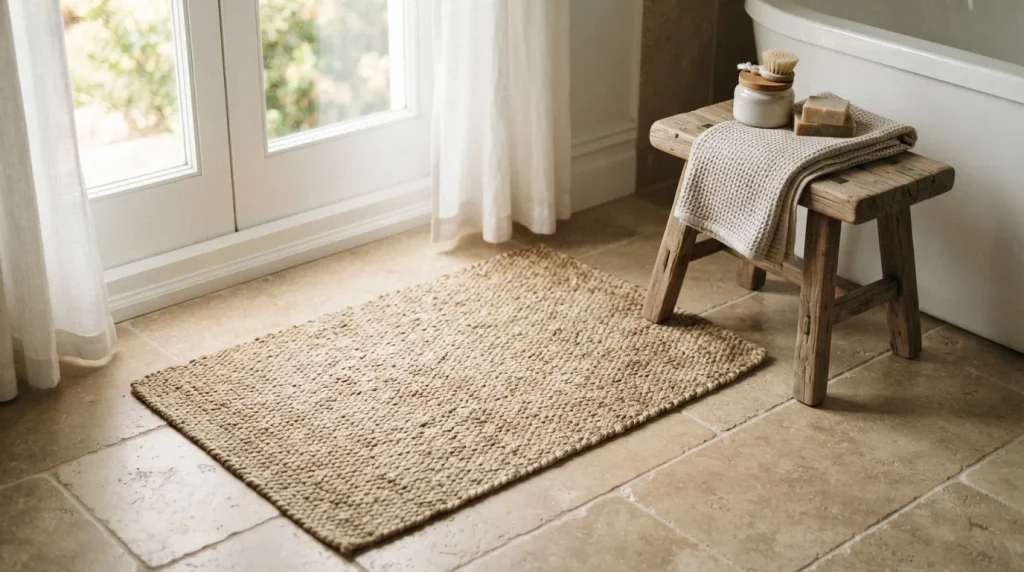
- Offers a modern, durable alternative to tile
- Ages gracefully with a naturally evolving patina
- Pairs surprisingly well with wood and linen textures
- Low-maintenance surface for counters and flooring alike
- Adds an understated, architectural quality to the space
Textured concrete brings a modern, architectural quality to a bathroom while still honoring the imperfect, natural aesthetic at the heart of wabi sabi design. Unlike polished tile, concrete carries subtle variations in tone and texture from the moment it’s poured, and it continues to develop character over years of use. This is why many designers recommend it for both countertops and flooring in bathrooms aiming for a slightly more contemporary, minimalist feel. I’ve noticed that concrete surprises people most in how warm it can feel once paired with wood shelving and soft linen textiles nearby.
Beyond aesthetics, concrete offers genuine practical advantages, it’s highly durable, low-maintenance, and resistant to the chips and cracks that can affect tile over time. Its naturally evolving patina means small marks or subtle color shifts simply become part of its story rather than signs of wear. Paired thoughtfully with warmer materials like wood or linen, concrete avoids feeling cold or overly industrial, striking a careful balance instead. This surface choice proves that durability and natural beauty aren’t mutually exclusive, offering a bathroom finish that performs as well as it looks over the long term.
21. Soft Shadow Play
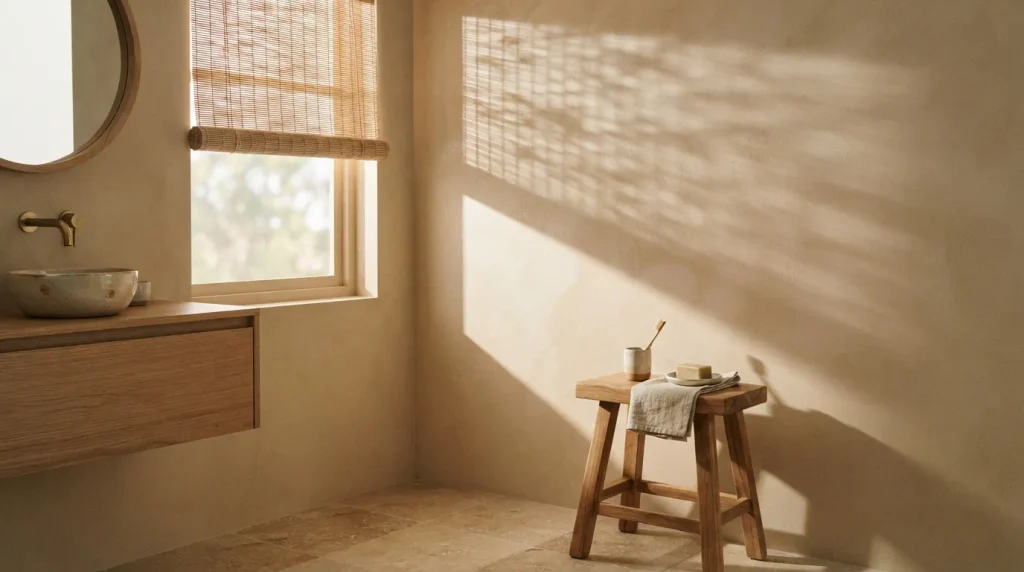
- Adds visual interest without any extra decor
- Changes naturally throughout the day for a living feel
- Enhances existing textures like plaster and stone
- Costs nothing beyond the right window treatment
- Creates a calm, ever-changing focal point
Soft shadow play is one of the most overlooked wabi sabi bathroom ideas, largely because it costs nothing beyond choosing the right window treatment. A woven blind, sheer linen curtain, or slatted shutter filters natural light into soft, dappled shadows that shift gently across walls and flooring throughout the day. That’s why many designers consider window treatments a design feature in their own right, not just a practical necessity for privacy. I’ve seen this work beautifully in bathrooms that otherwise feel plain, since the constantly changing shadows add a living, dynamic quality that static decor simply can’t replicate.
This effect also enhances every other texture already present in the room, making plaster walls, stone flooring, and wood accents feel more dimensional as shadows fall across their surfaces. Unlike a fixed decorative element, shadow patterns change with the time of day and season, keeping the space visually interesting without any additional effort or cost. A simple woven blind or linen curtain is often all it takes to introduce this effect into an existing bathroom. This small, nearly free adjustment proves that sometimes the most beautiful design elements are the ones that require no purchase at all.
22. Handmade Pottery Accents
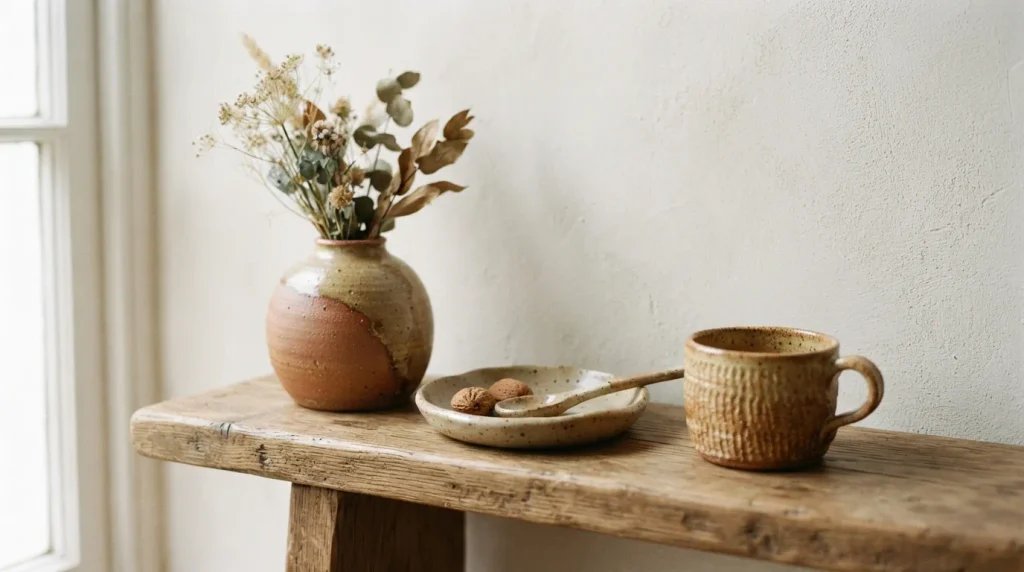
- Adds a personal, one-of-a-kind touch to the room
- Small pieces make a big styling impact
- Uneven glazes catch light in a beautiful way
- Easy to source from local artisans or markets
- Works well displayed on shelves or countertops
Handmade pottery accents bring a personal, collected quality to a bathroom that mass-produced decor simply cannot replicate. A small stoneware vase, a shallow dish for rings and small items, or a textured cup for toothbrushes each carries its own subtle imperfections, slightly uneven glaze, small variations in shape, that make them feel genuinely unique. This is one of the smaller wabi sabi bathroom ideas on this list, but it’s also one of the most personal, since each piece often comes with its own story or origin. In my experience, these small objects are frequently the details guests remember most after visiting a beautifully styled bathroom.
Sourcing handmade pottery from local artisans, markets, or small studios also supports the same values at the heart of wabi sabi philosophy, appreciating craftsmanship and imperfection over mass production. A few pieces grouped thoughtfully on a shelf or countertop create a small styled moment without requiring elaborate arrangement or expense. Because pottery pairs so naturally with other earthy materials like wood, stone, and linen, new pieces can be added gradually over time without disrupting the room’s overall cohesion. This slow, collected approach to styling proves that meaningful design details don’t need to arrive all at once to feel complete.
23. Warm Wooden Ceilings
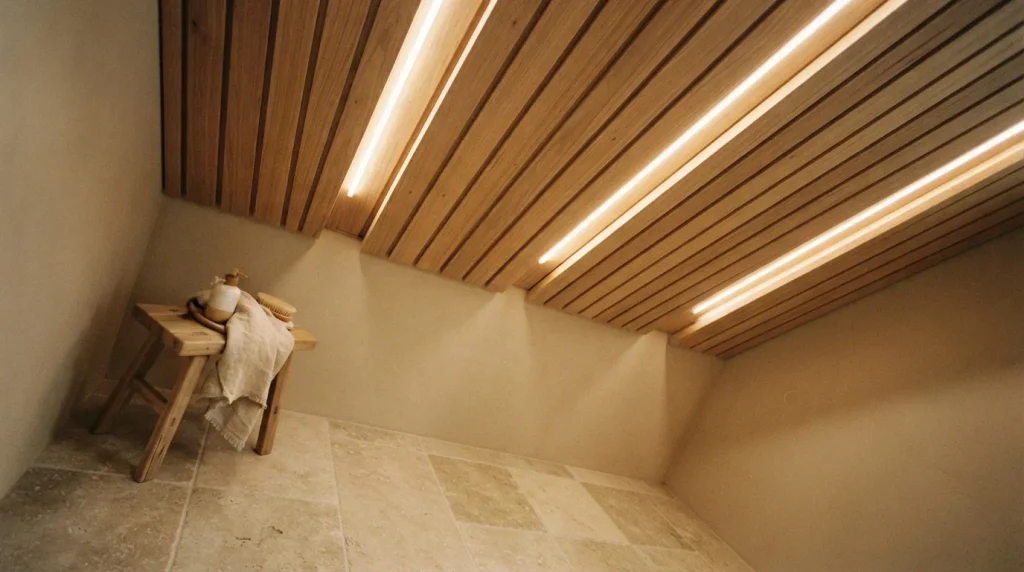
- Adds warmth to an often-overlooked surface
- Creates a cozy, enclosed feeling overhead
- Pairs beautifully with recessed ambient lighting
- Balances cooler stone or tile surfaces below
- A distinctive architectural detail few bathrooms include
A warm wooden ceiling addresses one of the most overlooked surfaces in bathroom design, the space directly overhead that rarely receives any real attention. Natural wood slats, whether cedar, pine, or reclaimed timber, bring an unexpected coziness to a room that typically features flat, painted ceilings at best. This is one of the more distinctive wabi sabi bathroom ideas precisely because so few bathrooms include it, making it an instant point of visual interest for anyone who walks in. I’ve noticed that this detail alone often prompts more comments from visitors than almost any other single design choice in the room.
Beyond its striking appearance, a wooden ceiling also balances cooler materials used elsewhere in the space, like stone flooring or concrete countertops, by introducing warmth from above rather than only at eye level. Recessed ambient lighting fits naturally between wood slats, creating a soft, cocooning glow rather than harsh, direct brightness. This architectural detail requires more planning than smaller updates on this list, but it delivers a genuinely unique atmosphere that few other bathrooms can match. The result is a space that feels warm and enclosed from every angle, not just at counter height.
24. Candlelit Bathing Corners
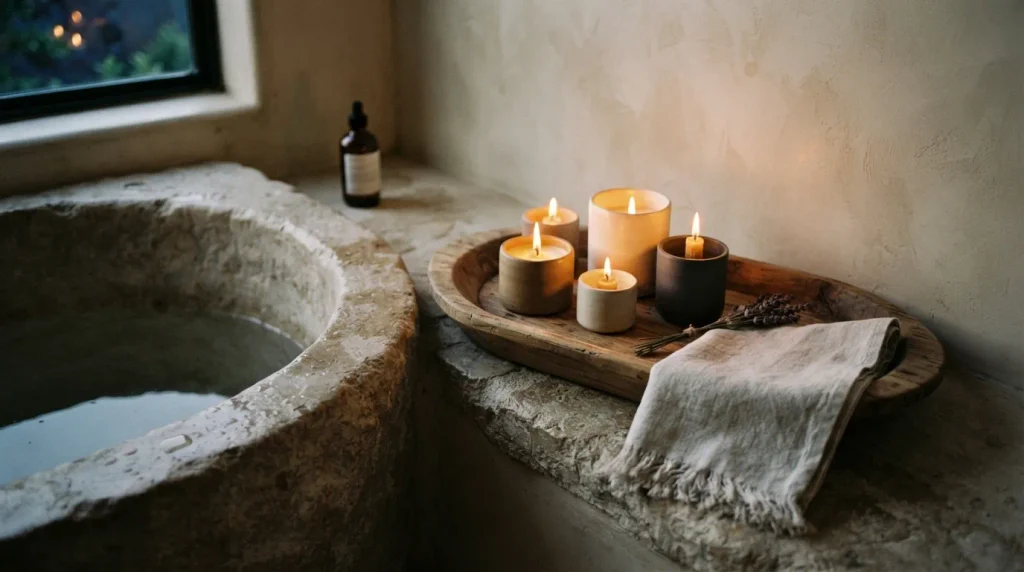
- Creates an instantly calming evening ritual space
- Adds warm, flattering light without electricity
- Small styling detail with a big emotional impact
- Pairs beautifully with stone, wood, and linen textures
- Easy to set up in any bathroom size
A candlelit bathing corner transforms an ordinary evening routine into something closer to a genuine ritual, using nothing more than a few thoughtfully placed candles. Grouped on a wooden tray or small stone dish beside the tub, candlelight creates a warm, flattering glow that standard bathroom lighting simply cannot match. This is one of the easiest wabi sabi bathroom ideas to try immediately, since it requires no renovation, no new fixtures, and very little cost. I’ve seen this work particularly well as an evening ritual, turning a quick bath into a genuinely calming, intentional pause at the end of a long day.
Candlelight also flatters every other material already present in the space, softening stone, wood, and linen textures with its warm, flickering glow in a way overhead lighting rarely achieves. A small collection of matte ceramic candle holders adds styling interest even when unlit, blending naturally into an earthy, textured bathroom palette. Because this idea requires no permanent changes, it’s easy to try immediately and adjust based on personal preference. This small, low-cost ritual proves that sometimes the simplest additions create the most meaningful, memorable moments within an everyday space.
25. Quiet Corner Vignettes
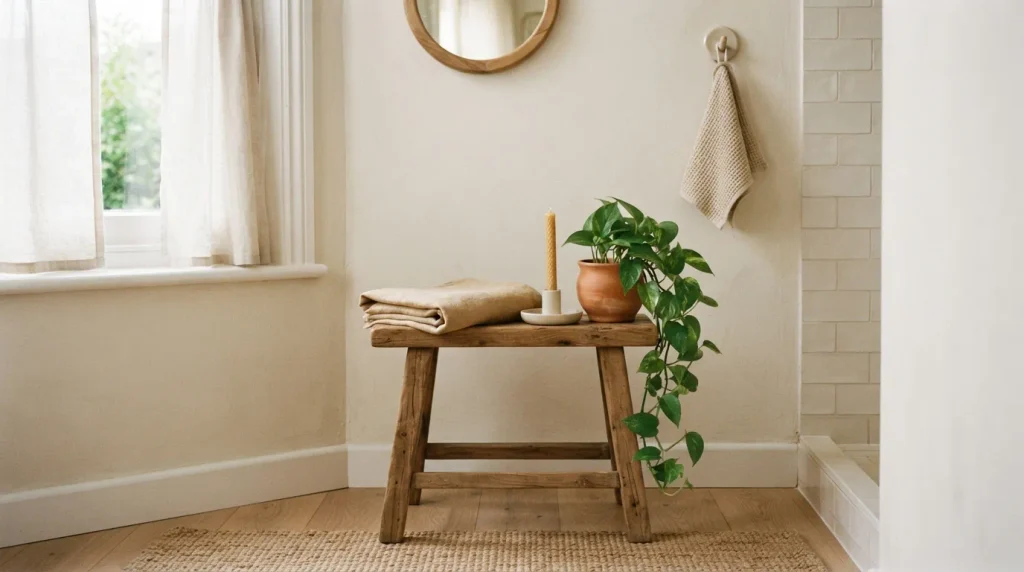
- Brings together texture, warmth, and simplicity in one spot
- Requires only a few carefully chosen items
- Creates a natural resting point for the eye
- Ties together wood, linen, plant, and ceramic accents
- Perfect finishing touch for any wabi sabi bathroom
A quiet corner vignette is often the final, finishing touch that pulls an entire wabi sabi bathroom together into one cohesive whole. Rather than styling every surface in the room, choosing just one corner, a wooden stool, a folded linen towel, a small trailing plant, a single candle holder, creates a natural resting point for the eye. This approach reflects the core philosophy behind wabi sabi bathroom ideas as a whole: restraint often creates more impact than abundance. In my experience, the bathrooms that feel most calm and intentional are rarely the most decorated; they’re the ones where a few thoughtful details are given room to breathe.
Building a vignette like this also serves as a practical way to test the aesthetic before committing to larger changes elsewhere in the room. A single corner takes minimal time, cost, or effort, yet it demonstrates how texture, warmth, and simplicity work together within this design philosophy. Once styled, it often becomes the most photographed and admired detail in the entire bathroom, precisely because it feels effortless rather than staged. This final idea proves that a wabi sabi bathroom isn’t built through more decoration, but through fewer, more meaningful choices placed with genuine care.
Conclusion
A calmer, more grounded bathroom doesn’t require perfection, it just needs a little intention. These wabi sabi bathroom ideas show that texture, natural materials, and a few imperfect details can transform an ordinary space into a genuine retreat. I’ve seen how small changes like a wooden stool, soft lighting, or a handmade ceramic vessel can completely shift how a room feels, often more than an expensive renovation ever could.
Start with just one idea. Try it, live with it, and notice the difference. Save this post to Pinterest so you can return to it anytime you need inspiration, and share it with anyone who could use a little more calm in their daily routine.