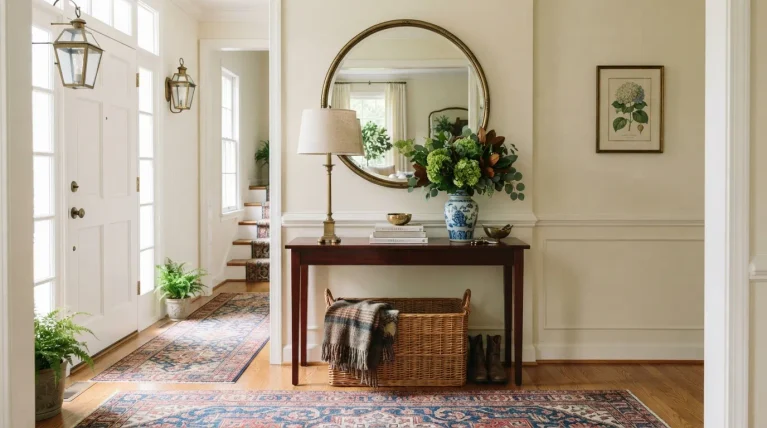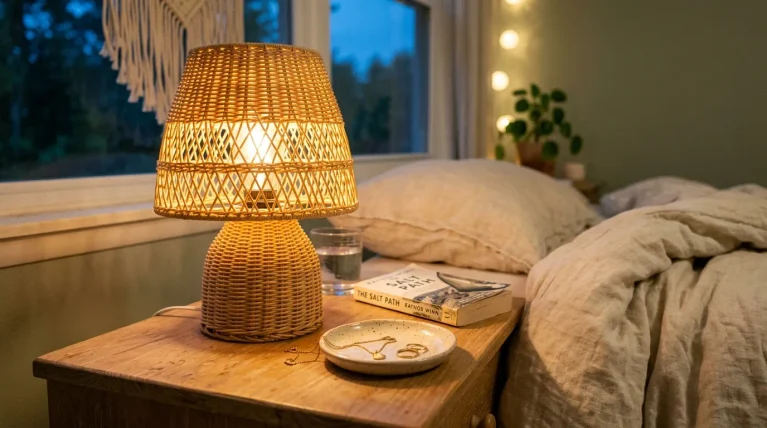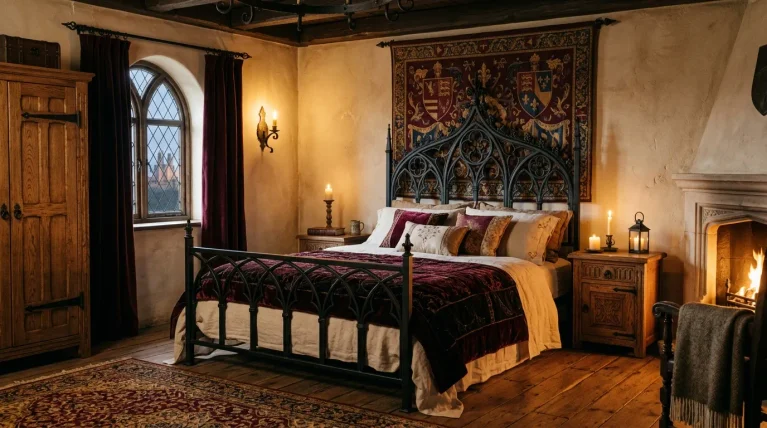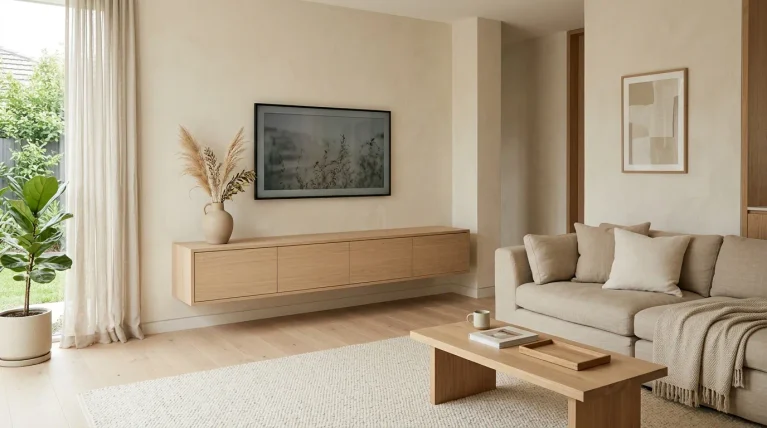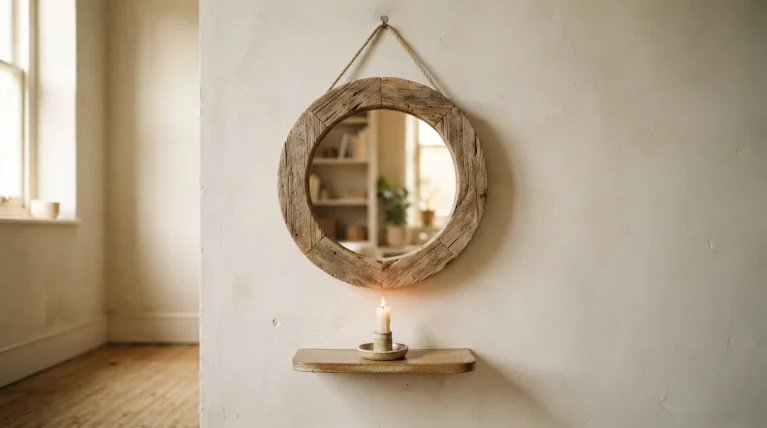
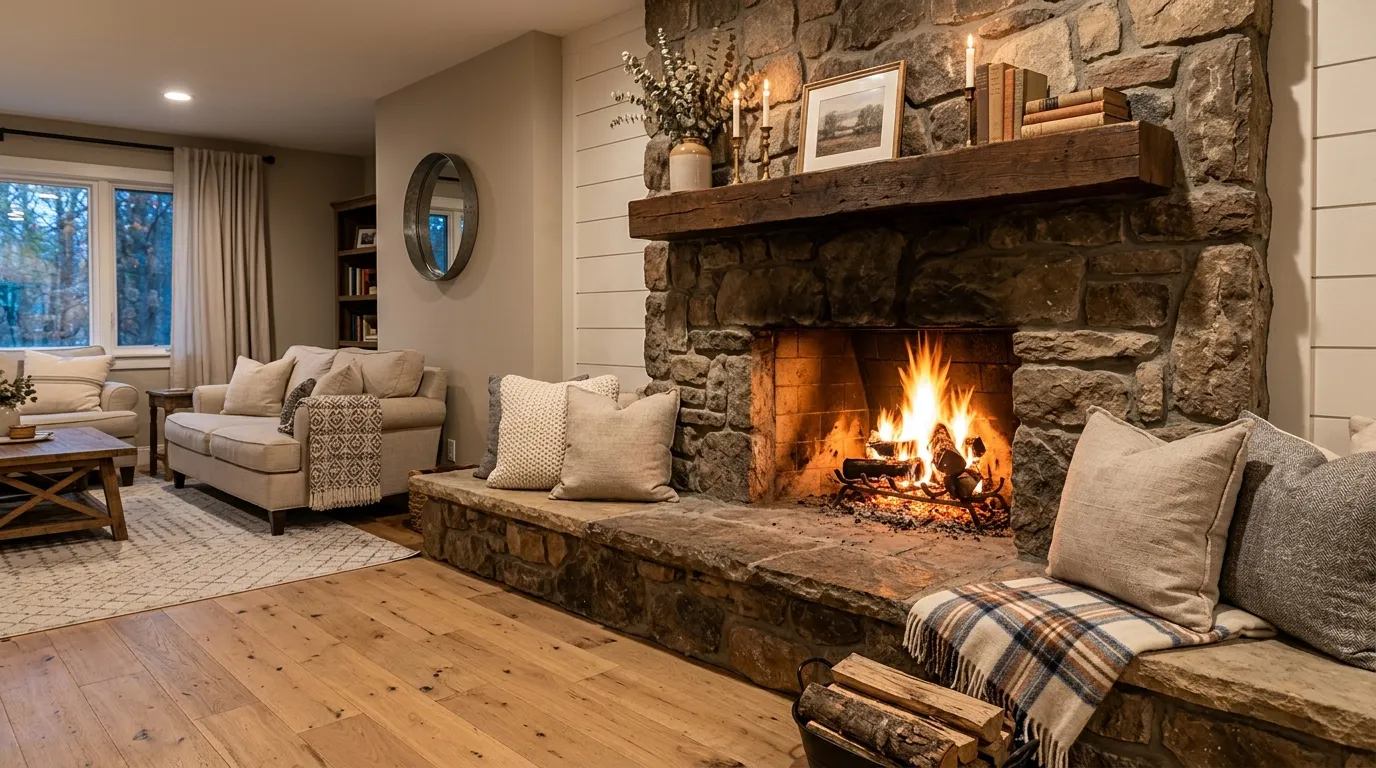
There’s something about a fireplace that instantly makes a house feel like home. It’s where people gather, slow down, and feel warm, both literally and emotionally. If you’ve been searching for modern farmhouse fireplace ideas to bring that same cozy feeling into your own living room, you’re in exactly the right place. In my experience, the fireplace is often the heart of a home’s design, yet it’s also the most overlooked when it comes to styling. This article walks through 25 practical, visually inspiring ways to transform your fireplace, from simple mantel updates to full surround makeovers. Whether you’re planning a small refresh or a bigger renovation, these ideas are designed to feel achievable, beautiful, and completely worth saving for later.
1. Shiplap Fireplace Wall
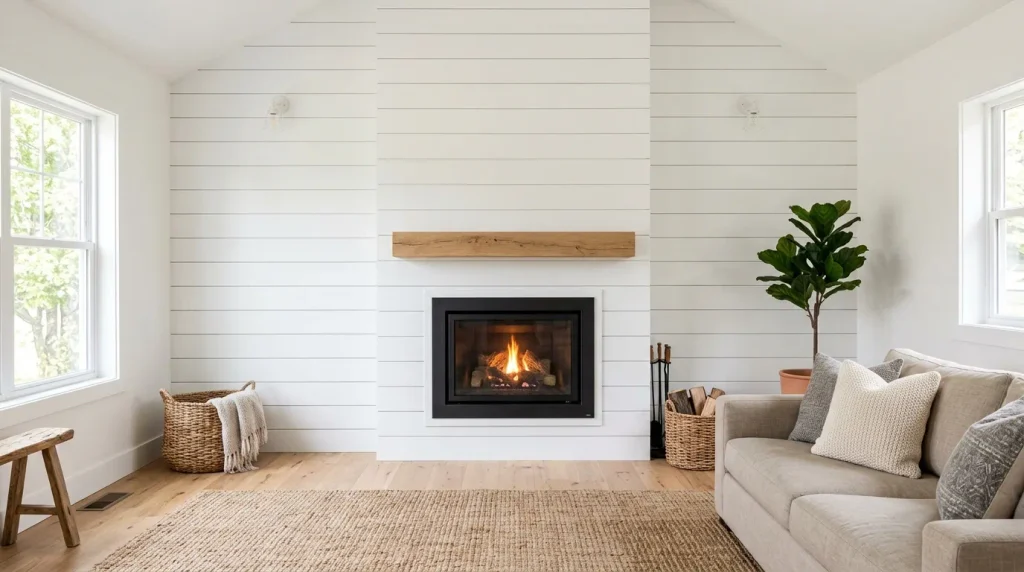
- Shiplap instantly adds texture without making the room feel busy
- Works well in both large and small living rooms
- Pairs beautifully with black or dark bronze fireplace hardware
- Easy to keep looking fresh with a simple coat of paint
- Adds subtle farmhouse character without feeling overdone
Shiplap walls have become one of the easiest ways to bring farmhouse charm into a modern space. The horizontal grooves catch light beautifully, especially in rooms with big windows or afternoon sun. In my experience, shiplap works best when paired with simple, uncluttered mantel styling, since the wall itself already carries visual interest. Homeowners often worry it will feel dated, but painted in a soft white or warm cream, it reads clean and current. This is one of those upgrades that photographs well too, which is exactly why it performs so strongly for anyone documenting their home renovation online.
A shiplap fireplace wall also solves a common design problem: blank, boring walls that feel unfinished. Instead of hanging multiple frames or shelves, the texture itself becomes the focal point of the room. I’ve noticed that homeowners who add shiplap tend to simplify the rest of their decor, letting the wall do the visual work. This creates a calmer, more cohesive living room overall. It’s a practical upgrade too, since shiplap is relatively affordable compared to full stone or tile installations, making it a smart first step for anyone starting a fireplace makeover on a budget.
Also Read : 22 Winter Wreaths Ideas for a Cozy Seasonal Welcome
2. Whitewashed Brick Surround
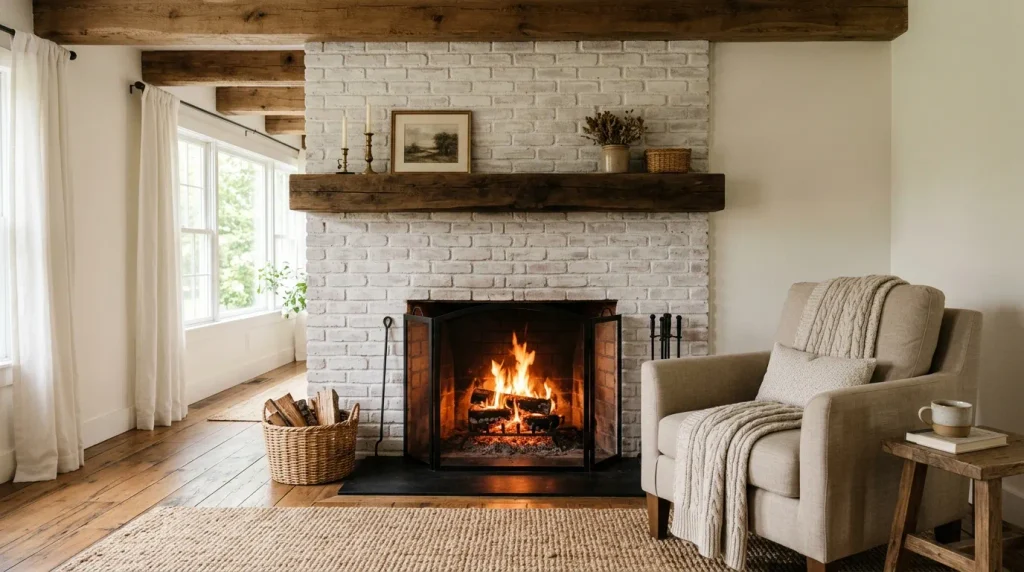
- Softens the heaviness of traditional red brick
- Keeps texture while brightening the entire room
- Works well with both vintage and contemporary furniture
- Low-maintenance compared to full brick removal
- Adds instant warmth without a full renovation
Whitewashing brick is one of those changes that looks dramatic but takes far less effort than people expect. The technique keeps the natural texture of the brick visible while lightening the overall tone of the room. That’s why many designers recommend it for older homes with existing brick fireplaces that feel outdated or too dark. Instead of ripping everything out, a simple whitewash creates a soft, farmhouse-inspired backdrop that suits almost any furniture style. The uneven, hand-painted look also adds a bit of character that flat paint colors simply can’t replicate on their own.
Beyond the visual upgrade, whitewashed brick tends to make small living rooms feel noticeably larger and brighter. Dark brick can absorb light and make a space feel closed in, while the whitewash reflects it instead. I’ve seen this work well in many homes where the fireplace was the darkest, heaviest part of the room. Once lightened, the same brick becomes a soft, textured feature instead of a visual weight. It also pairs effortlessly with neutral rugs, wood accents, and simple greenery, making it one of the most flexible farmhouse fireplace ideas for everyday living spaces.
Also Read : 23 Corner Fireplace Ideas for a Cozy Stylish Living Room
3. Floating Wood Mantel
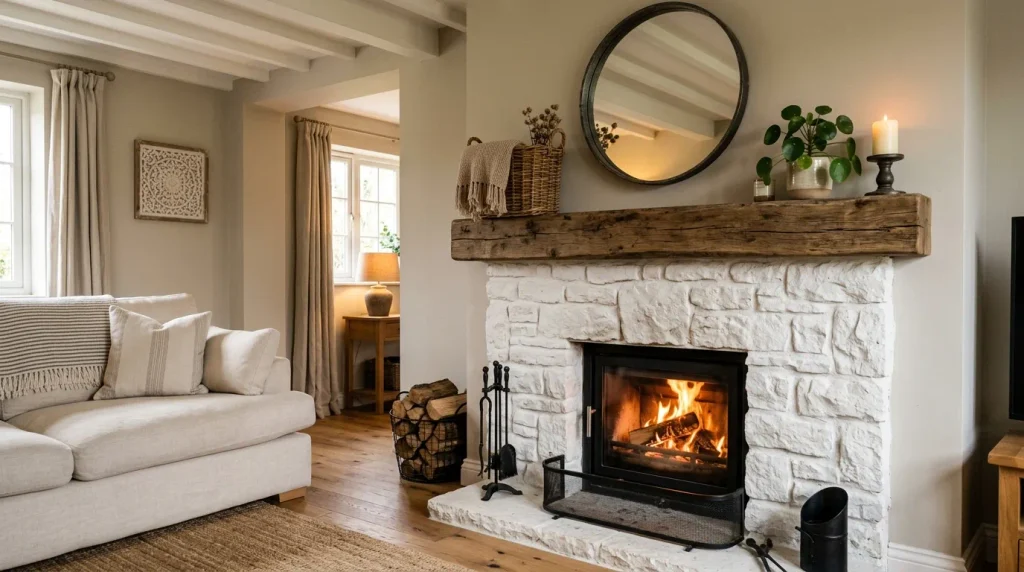
- Adds a natural, handcrafted focal point above the fireplace
- Creates open space for seasonal styling and decor
- Works with stone, brick, or painted surrounds
- Brings warmth through natural wood grain and texture
- Simple upgrade that doesn’t require a full remodel
A floating wood mantel is a small addition that makes a big visual difference in any living room. Because it appears to have no visible support, it creates a clean, modern look while still keeping that warm, natural farmhouse feel. Reclaimed or distressed wood works especially well here, since the texture adds character that new lumber often lacks. This is a popular choice for anyone wanting a rustic touch without committing to a full fireplace renovation. The mantel also gives you a dedicated space to rotate decor throughout the year, which keeps the room feeling fresh.
What makes this idea so practical is how easily it adapts to different styles underneath it. Whether your fireplace surround is stone, brick, or simple drywall, a floating wood mantel ties the whole look together. In my experience, keeping the styling minimal, just a plant, a candle, or a small frame, lets the natural wood grain stand out as the real feature. It also creates a strong sense of balance in the room, since the eye is naturally drawn upward toward the mantel and then back down to the fireplace itself, creating a cohesive visual flow.
Also Read : 25 Winter Mantel Decorating Ideas for a Cozy Holiday Home
4. Stacked Stone Accent
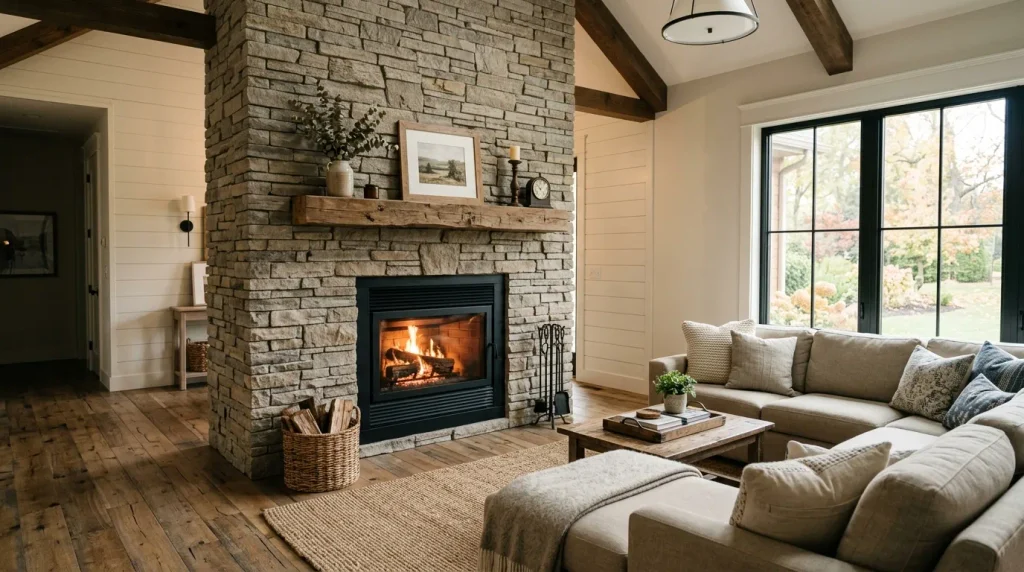
- Adds dramatic height and texture to the living room
- Works especially well in rooms with vaulted or tall ceilings
- Creates a strong natural focal point without extra decor
- Pairs beautifully with wood beams and neutral furniture
- Brings an organic, earthy feel to modern farmhouse spaces
Stacked stone is one of the boldest ways to transform a plain fireplace wall into a true statement feature. The varied texture and natural coloring bring depth to the room, especially when the stone extends all the way to the ceiling. This approach works particularly well in open-concept living rooms, where the fireplace often needs to hold its own visually against large windows or high ceilings. Unlike smooth surfaces, stacked stone catches light and shadow in a way that changes throughout the day, giving the space a subtle, ever-shifting sense of warmth and dimension.
While it looks like a major renovation, stacked stone veneer panels have made this look far more accessible than full masonry work. That’s why many designers recommend it for homeowners wanting a dramatic upgrade without structural changes. I’ve noticed that keeping the surrounding decor simple, a single mantel shelf or none at all, lets the stone remain the clear focal point. It also tends to age well, since the natural tones don’t feel tied to any single design trend. For anyone wanting a fireplace that feels timeless and grounded, this idea consistently delivers strong results.
Also Read: 23 Dark Blue Bedrooms Ideas for a Moody Stylish Retreat
5. Built-In Bookshelves
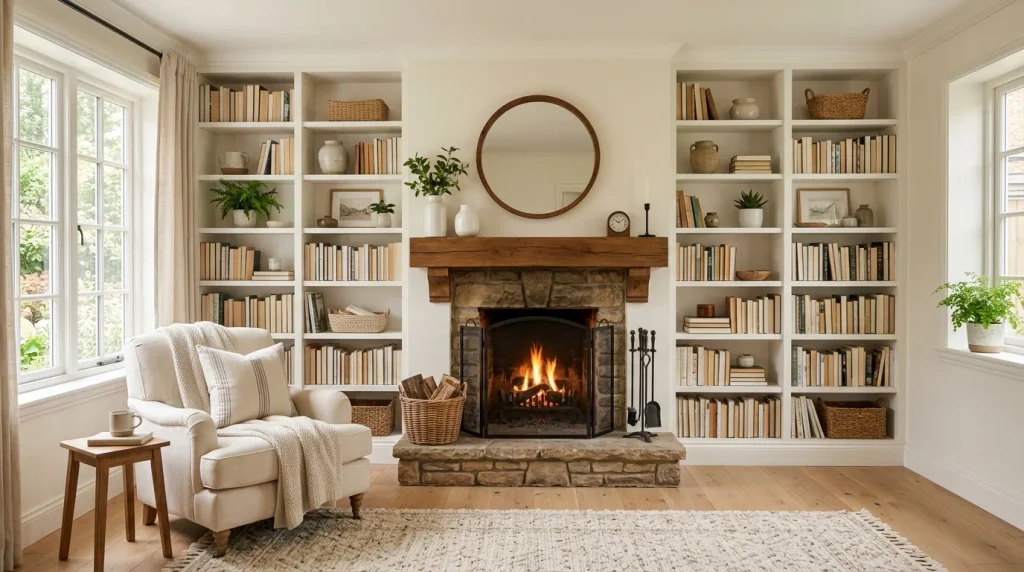
- Maximizes storage while keeping the fireplace as the focal point
- Adds symmetry and structure to the entire living room wall
- Creates space to display books, plants, and personal decor
- Balances open shelving with closed cabinet storage below
- Makes the room feel custom-built and intentionally designed
Built-in bookshelves flanking a fireplace solve two problems at once: storage and style. Instead of leaving empty wall space on either side of the fireplace, shelving fills it with purpose while framing the fireplace as the room’s centerpiece. This layout works in nearly any size living room, since shelf depth and height can be adjusted to fit the space. The symmetry also creates a sense of order that makes the whole wall feel finished and professionally designed, rather than like an afterthought added around an existing fireplace.
What makes built-ins so effective is how much personality they add once styled. Books, framed photos, woven baskets, and small plants all find a natural home here, giving the room a lived-in, collected feel over time. I’ve seen this work well in many homes where the fireplace wall previously felt bare or unbalanced. Adding closed cabinets at the base also hides clutter like media equipment or blankets. The result is a living room wall that feels both functional and beautifully composed, without requiring constant upkeep or styling adjustments.
Also Read : 21 Dark Boho Living Room Ideas for a Moody Cozy Space
6. Black Steel Fireplace Frame
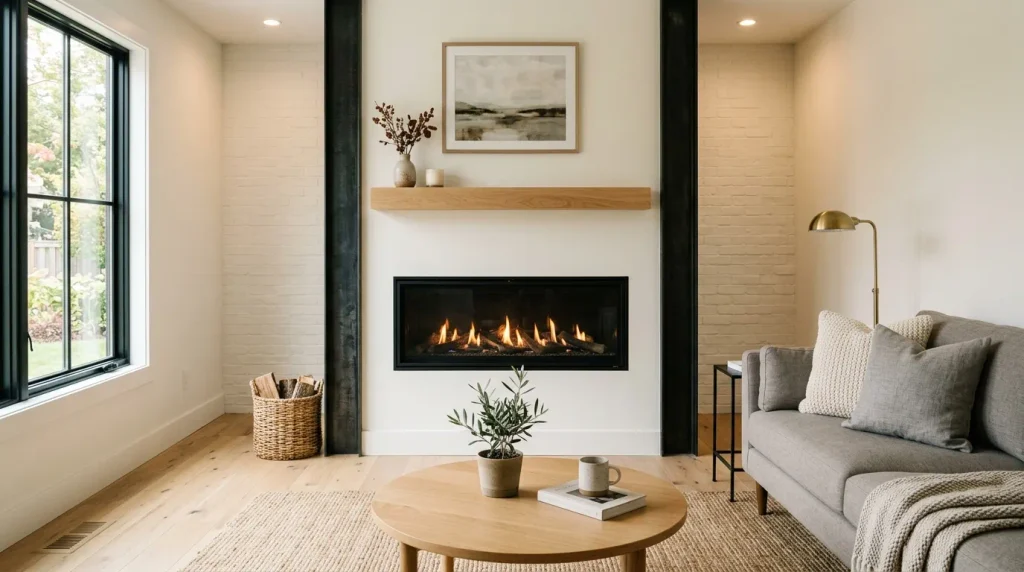
- Adds a bold, contemporary contrast to farmhouse interiors
- Creates a clean, defined edge around the fireplace opening
- Works well with white, cream, or light gray walls
- Introduces a modern industrial touch without feeling cold
- Pairs nicely with wood mantels for warmth and balance
A black steel frame around the fireplace opening brings a modern, almost industrial edge to an otherwise soft farmhouse space. The dark, thin lines create clean visual boundaries, making the fireplace feel more intentional and architecturally defined. This idea works especially well against light-colored walls, where the contrast naturally draws the eye toward the fireplace as a focal point. It’s a popular choice for homeowners blending farmhouse warmth with modern minimalism, since the steel frame adds structure without introducing heavy ornamentation or competing textures into the room.
The real strength of this idea lies in its balance between warmth and edge. Pairing black steel with a natural wood mantel keeps the space from feeling too cold or industrial. That’s why many designers recommend combining materials rather than committing fully to one style. I’ve noticed homeowners who choose this option often want their fireplace to feel current without abandoning farmhouse charm entirely. The result is a fireplace that reads as sleek and modern, yet still fits comfortably within a warm, textured, family-friendly living room setting.
Also Read : 24 Kitchen Trends to Inspire Your Next Home Update
7. Herringbone Tile Surround
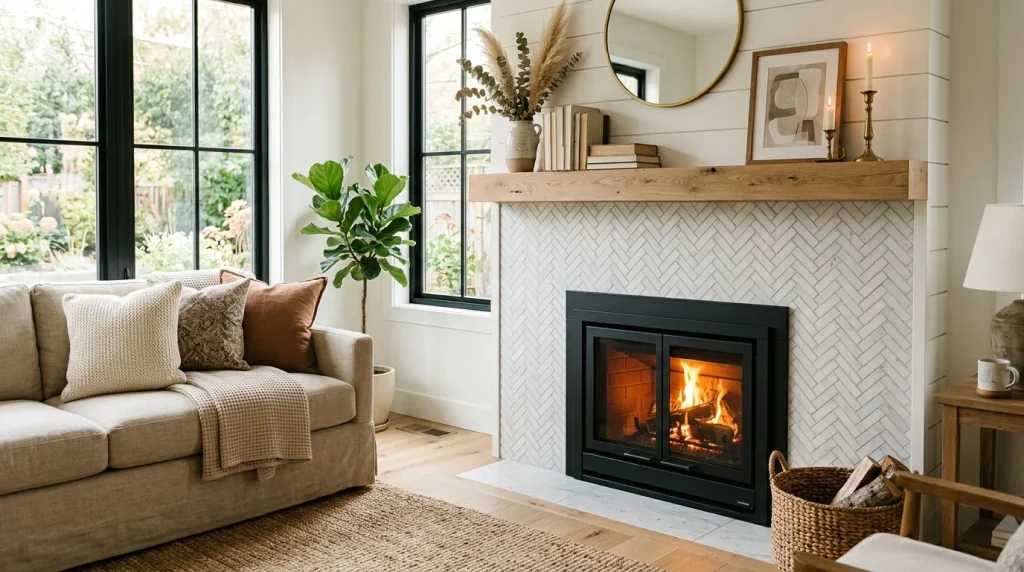
- Adds visual movement through a classic geometric pattern
- Works well in both traditional and modern farmhouse spaces
- Creates texture without relying on bold color
- Easy to pair with wood, black, or brass accents
- Elevates a plain fireplace into a designed feature
Herringbone tile brings a subtle sense of motion to a fireplace surround that flat tile simply can’t achieve. The zigzag pattern catches light differently depending on the angle, which adds depth even in a small living room. This idea works particularly well for homeowners who want something more detailed than plain subway tile but still simple enough to feel timeless. Because the pattern itself carries visual interest, the rest of the room can stay minimal, letting the fireplace surround act as a quiet but noticeable design statement.
What stands out most about herringbone tile is how versatile it is across different color palettes. White or cream tile keeps things soft and farmhouse-inspired, while gray or black tile leans more modern. In my experience, homeowners often choose this pattern specifically because it photographs beautifully, especially with natural light hitting the angled tile lines. It also holds up well over time, since the pattern itself doesn’t feel tied to a passing trend. For anyone wanting a slightly elevated look without going overly bold, herringbone tile is a dependable choice.
8. Rustic Barn Beam Mantel
- Brings authentic, weathered character to the fireplace
- Adds a strong farmhouse focal point above the hearth
- Works beautifully with stone, brick, or painted surrounds
- Offers a sturdy shelf for seasonal styling and decor
- Introduces natural texture that feels collected, not new
A rustic barn beam mantel carries a sense of history that new lumber simply can’t replicate. The visible knots, cracks, and weathering tell a story, making the fireplace feel like it has always belonged in the home. This idea is especially popular in farmhouse living rooms where authenticity matters more than polish. Reclaimed beams vary slightly in color and texture, which means no two mantels look exactly alike. That individuality is part of the appeal, giving homeowners a fireplace feature that feels personal rather than mass-produced or overly staged.
Beyond its rustic charm, a barn beam mantel is also incredibly practical for everyday styling. Its thickness and sturdiness make it easy to display heavier decor, like lanterns, framed art, or greenery, without worrying about a delicate shelf. I’ve seen this work well in many homes where homeowners rotate decor seasonally, since the neutral wood tone pairs with almost any color scheme. It also grounds taller fireplace walls, adding a horizontal line that balances vertical stone or tile work above and below it.
9. Symmetrical Wall Sconces
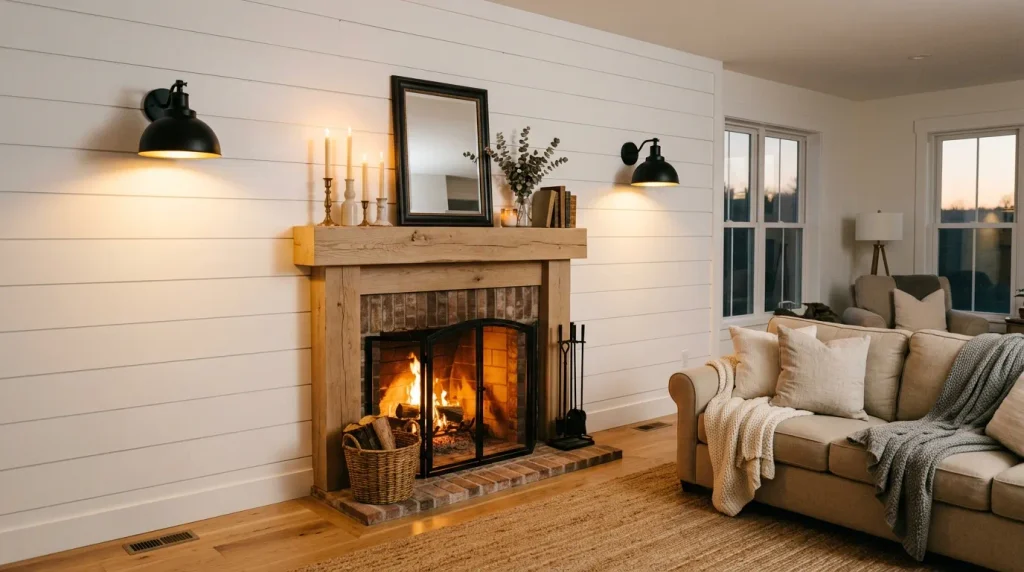
- Adds soft, ambient lighting on either side of the fireplace
- Creates visual balance and symmetry across the wall
- Reduces reliance on overhead lighting in the evening
- Works well with shiplap, brick, or painted surrounds
- Enhances the fireplace as the room’s central feature
Symmetrical wall sconces do more than light a room, they frame the fireplace in a way that feels intentional and polished. Placed at equal height on either side, they draw the eye directly toward the mantel, reinforcing it as the focal point of the living room. This idea works especially well in the evening, when warm sconce lighting creates a soft glow that overhead lighting often can’t replicate. It’s a small addition, but one that noticeably changes the mood and atmosphere of the space once installed and turned on.
Sconces also solve a common lighting problem in living rooms with limited natural light after sunset. That’s why many designers recommend adding them near seating areas close to the fireplace, since they provide functional light for reading or relaxing without overwhelming the room’s cozy atmosphere. I’ve noticed that black or aged brass finishes tend to complement farmhouse interiors particularly well, tying in with other metal accents nearby. Beyond function, the symmetry itself adds a quiet sense of order that makes the entire fireplace wall feel thoughtfully designed.
10. Vaulted Ceiling Focal Wall
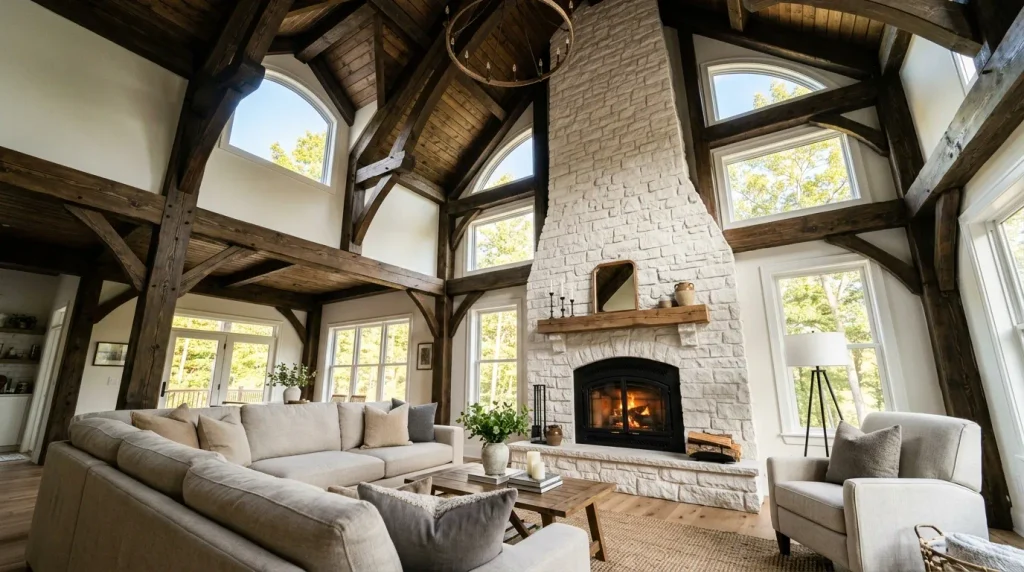
- Draws the eye upward, making the room feel more spacious
- Turns the fireplace into a dramatic architectural centerpiece
- Works especially well in open-concept great rooms
- Pairs beautifully with exposed wood beams overhead
- Creates a strong first impression for the entire living space
A fireplace that stretches up into a vaulted ceiling instantly becomes the most memorable feature in the room. Instead of stopping at a standard mantel height, the surround continues upward, following the natural slope of the ceiling and creating a dramatic sense of scale. This idea works best in homes with existing vaulted or cathedral ceilings, since the fireplace essentially completes the architecture rather than competing with it. Homeowners with great rooms or open-concept layouts often gravitate toward this look because it fills tall wall space that would otherwise feel empty or awkward.
The height also changes how light and shadow move across the fireplace throughout the day. In my experience, stone or tile surrounds work particularly well here, since their texture becomes more visible and interesting at a larger scale. Wood beams running along the ceiling further tie the whole wall together, reinforcing the farmhouse aesthetic from floor to peak. While this idea often involves more construction than others on this list, the visual payoff is significant, giving the entire living room a sense of grandeur without feeling overly formal or cold.
11. Hearth Seating Ledge
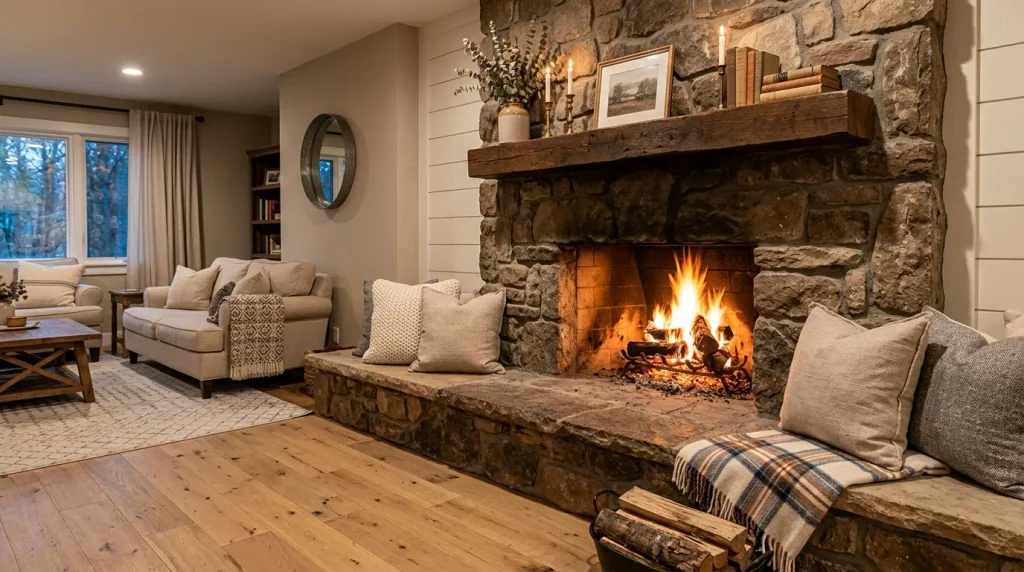
- Adds extra seating for gatherings without extra furniture
- Extends the stone or brick surround into a functional feature
- Creates a cozy spot for kids or pets near the fire
- Works well in family-oriented, high-traffic living rooms
- Blends function and design into one seamless element
A hearth seating ledge takes a purely decorative fireplace feature and turns it into something genuinely useful. By extending the stone or brick base outward at a comfortable sitting height, the fireplace becomes an informal gathering spot, perfect for extra seating during holidays or game nights. This idea works especially well in family living rooms, where floor space near the fire is often used anyway by kids, pets, or guests. Instead of leaving that area purely functional and unfinished, a built-out ledge makes it feel like a designed part of the room.
That’s why many designers recommend this feature for busy households that need flexible seating without adding bulky furniture. I’ve seen this work well in many homes where the extra ledge doubles as a spot for display, holding books, blankets, or seasonal decor when not in use for sitting. The wide surface also visually grounds the fireplace, making it feel more substantial and rooted in the room. It’s a practical upgrade that blends everyday function with the warm, welcoming feel farmhouse living rooms are known for.
12. Wood Plank Accent Wall
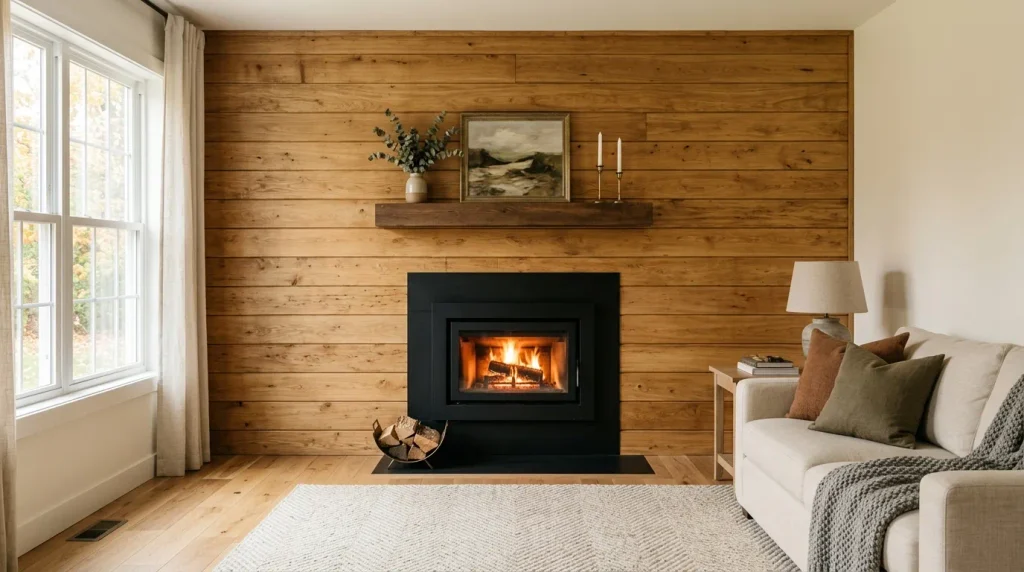
- Adds warmth and texture across the entire fireplace wall
- Creates a cohesive backdrop without competing patterns
- Works well with both black and stone fireplace inserts
- Softens the look of a plain drywall fireplace wall
- Brings natural material into an otherwise neutral space
A wood plank accent wall gives the fireplace a warm, grounded backdrop that plain painted drywall simply can’t match. Unlike shiplap’s thin grooves, wider planks create a bolder, more prominent texture that spans the entire wall, making the fireplace feel intentionally built into its surroundings. This idea works well for homeowners who want warmth without introducing stone or brick, since wood tones alone can carry that same cozy, farmhouse feeling. It’s also a flexible option, since the wood can be stained darker for drama or left light for a softer, airier look.
I’ve noticed that this approach works particularly well in rooms with limited natural light, since warm wood tones help offset the coolness of gray or white furniture nearby. The horizontal orientation of the planks also visually widens the wall, which is useful in narrower living rooms. Because the texture itself is the main feature, styling can stay minimal, just a mantel shelf and a few simple accents. The result is a fireplace wall that feels warm, natural, and effortlessly tied into the rest of the home’s design.
13. Curved Plaster Fireplace
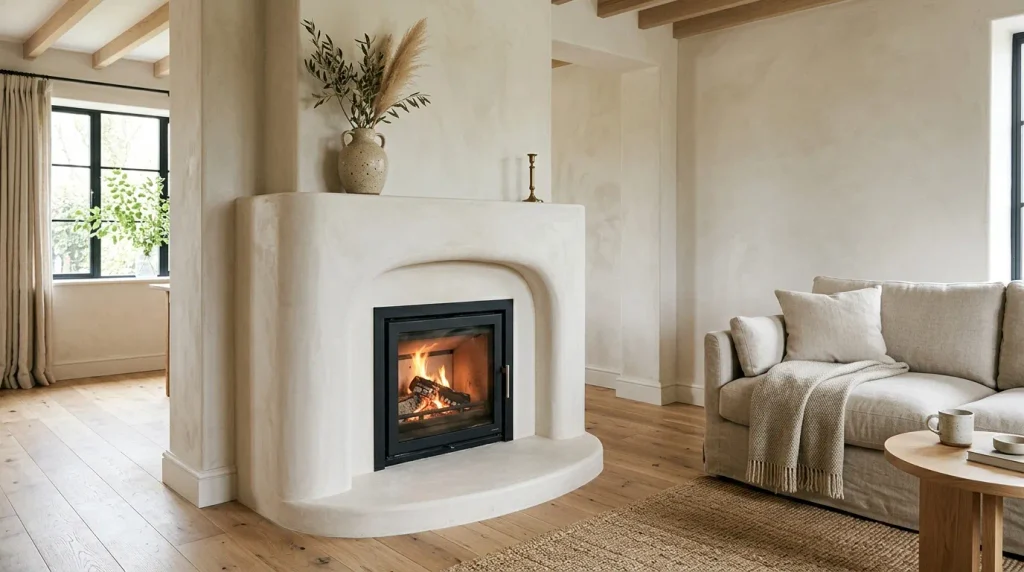
- Softens the room with rounded, organic architecture
- Creates a sculptural focal point without heavy decor
- Works beautifully in minimalist farmhouse interiors
- Adds subtle texture through hand-applied plaster finish
- Feels current while still complementing farmhouse warmth
Curved plaster fireplaces bring a softer, more organic feel to spaces that might otherwise rely on sharp lines and hard edges. The rounded surround catches light in a way that traditional square designs simply don’t, creating gentle shadows that shift throughout the day. This idea has grown popular among homeowners blending modern farmhouse with a slightly more contemporary, minimalist edge. Because the plaster finish itself carries texture and interest, the fireplace doesn’t need extra decor to feel complete, making it a strong choice for anyone who prefers a calmer, less cluttered living room.
That’s why many designers recommend this style for smaller living rooms, since the soft curves visually take up less space than a bulky square surround would. In my experience, this look pairs especially well with warm neutral furniture and simple, uncluttered mantel styling. The handcrafted texture of plaster also means every fireplace has slight variations, giving it a one-of-a-kind quality. For homeowners wanting a fireplace that feels both grounded in farmhouse tradition and forward-looking in design, curved plaster offers a fresh, understated alternative to more common surround materials.
14. Vintage Cast Iron Insert
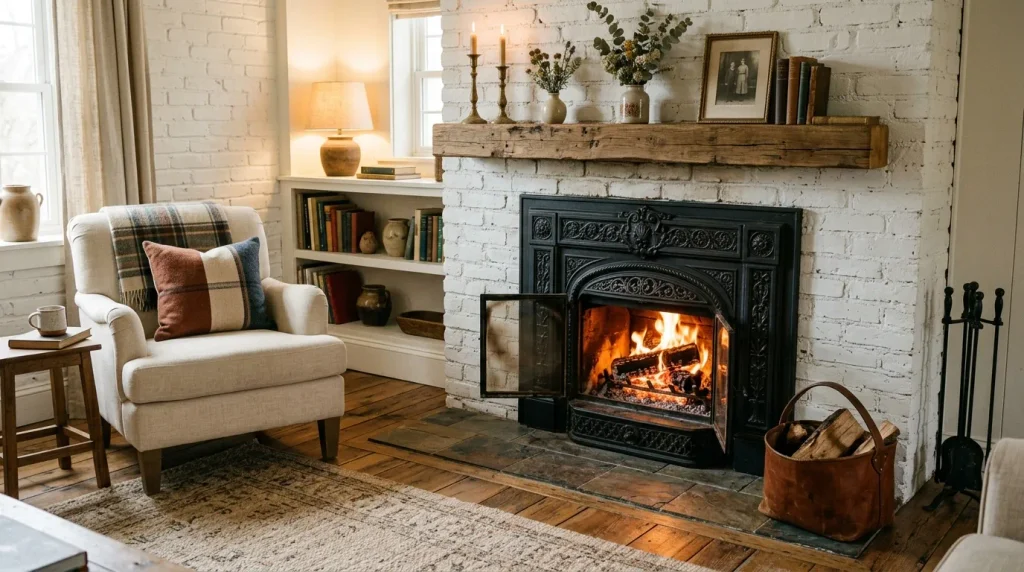
- Adds authentic vintage character to a modern farmhouse space
- Creates a strong focal point through detailed metalwork
- Works beautifully with brick, stone, or plaster surrounds
- Brings a sense of history and craftsmanship into the room
- Pairs well with antique or vintage-inspired furniture pieces
A vintage cast iron insert brings a level of detail and craftsmanship that modern fireplace inserts often lack. The ornate metalwork adds visual richness, especially when paired with a simpler surround like whitewashed brick or plain plaster. This idea appeals to homeowners who want their fireplace to feel like a genuine antique rather than a new addition, giving the living room a sense of history and depth. Even in a newly built home, this kind of insert can make the space feel established, layered, and full of character rather than freshly finished.
I’ve noticed that vintage inserts work best when the rest of the room stays relatively simple, since the fireplace itself already carries strong visual weight. Pairing it with a few well-chosen antique or vintage-style pieces, like an old mirror or a weathered side table, ties the whole look together without overwhelming the space. It’s a detail-oriented choice, but one that consistently draws attention and compliments. For anyone wanting their fireplace to feel collected over time rather than newly installed, this idea delivers genuine, lasting charm.
15. Floor-to-Ceiling Shiplap
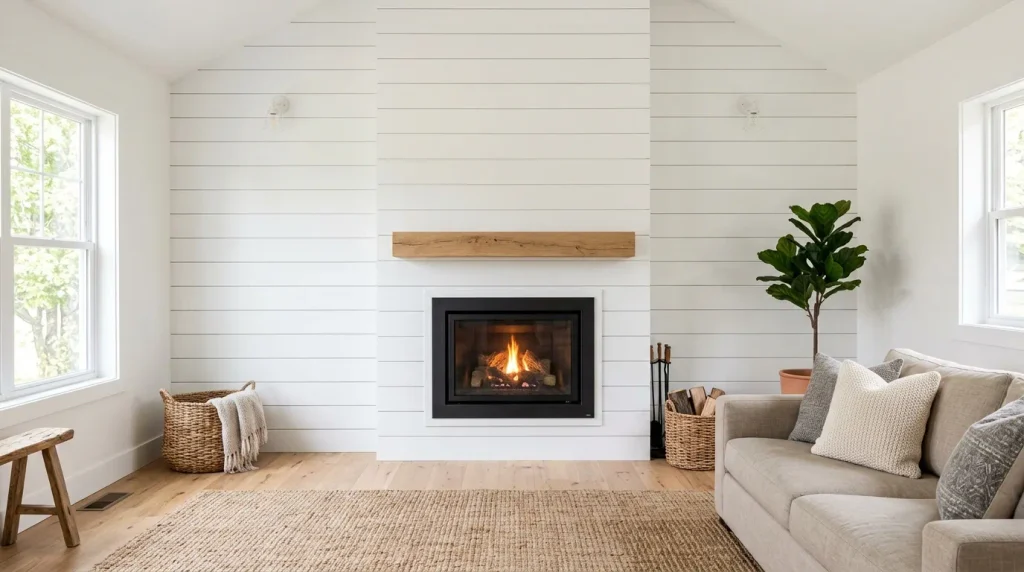
- Maximizes the impact of shiplap across the entire wall
- Creates a bright, clean backdrop for the fireplace
- Works well in rooms with high or standard ceilings
- Simplifies the wall design while keeping visual interest
- Makes smaller rooms feel brighter and more open
Taking shiplap from floor to ceiling amplifies everything that makes the material appealing in the first place. Rather than framing just the fireplace opening, the paneling covers the entire wall, creating a bright, unified backdrop that makes the room feel larger and more cohesive. This idea works particularly well in living rooms with lower ceilings, since the vertical grooves and light color help the eye travel upward, creating an illusion of added height. It’s a simple concept, but the full-wall execution gives it a noticeably bigger visual impact than a partial application would.
That’s why many designers recommend committing to the full wall rather than stopping at the mantel line, since a partial treatment can sometimes look unfinished or accidental. I’ve seen this work well in many homes where the goal was to brighten a dark or dated living room without a major renovation. Because the wall itself becomes so clean and bright, homeowners have more freedom with furniture color and styling elsewhere in the room. It’s an approachable, high-impact upgrade that consistently performs well in both real homes and design inspiration searches.
16. Reclaimed Wood Beam Mantel
- Adds rich, aged character above the fireplace opening
- Creates contrast against lighter stone or painted surrounds
- Works well for both traditional and transitional farmhouse styles
- Offers a sturdy surface for layered seasonal decor
- Brings a sense of history into a newly finished space
Reclaimed wood beams used as mantels carry a depth of character that’s difficult to achieve with new materials. Every knot, crack, and weathered mark tells a story, giving the fireplace a sense of history even in a recently built home. This idea works especially well when paired with a lighter surround, since the contrast between the aged wood and the clean background makes the mantel stand out as the clear focal point. Homeowners drawn to this look often want their fireplace to feel grounded and lived-in rather than polished or overly new.
In my experience, reclaimed beams also tend to be more forgiving when it comes to styling, since their natural imperfections make them easy to pair with almost any decor. A single beam can hold candles, framed photos, or seasonal greenery without looking cluttered, because the wood itself already carries enough visual interest. This idea is especially popular among homeowners who value sustainability, since reclaimed materials give old wood new purpose. The result is a fireplace mantel that feels authentic, warm, and full of quiet, understated character.
17. Two-Tone Fireplace Wall
- Adds visual interest through contrast without extra decor
- Creates a defined boundary between dark and light tones
- Works well in rooms wanting a bolder design statement
- Balances drama with simplicity using just two colors
- Draws attention to the mantel as a dividing feature
A two-tone fireplace wall offers drama without requiring texture, pattern, or elaborate materials, just a thoughtful color split. Typically, the lower portion is painted a darker shade while the upper wall stays light, creating a grounded, balanced look that feels intentional rather than accidental. This idea works particularly well for homeowners who want their fireplace to stand out but prefer a clean, modern approach over heavily textured surrounds like stone or brick. The mantel often becomes the natural dividing line, reinforcing its role as the room’s central architectural feature.
That’s why many designers recommend this technique in rooms with otherwise simple furnishings, since the wall itself provides enough visual weight to anchor the space. I’ve noticed that darker lower tones also help hide everyday marks or scuffs near the fireplace, making it a practical choice for busy households. The color contrast photographs well too, since it creates clear, defined lines that stand out clearly in both natural and artificial lighting. It’s a bold yet approachable way to modernize a fireplace wall without a full material change.
18. Fireplace Niche Shelving
- Adds built-in display space without bulky furniture
- Creates depth and dimension within the fireplace wall
- Works well for showcasing books, plants, and small decor
- Keeps the room organized while adding visual texture
- Turns unused wall space into a functional design feature
Recessed niches on either side of the fireplace make use of wall space that would otherwise sit empty and flat. Instead of adding furniture or shelving units, the storage is built directly into the wall, creating a seamless, architectural look that feels custom-designed. This idea works especially well in living rooms where floor space is limited, since it adds display and storage without taking up any additional square footage. The recessed depth also creates subtle shadows and dimension, making the fireplace wall feel more layered and visually interesting overall.
I’ve seen this work well in many homes where homeowners wanted a built-in look without the cost of full custom cabinetry. Niches are versatile too, since they can hold anything from books and framed photos to small plants or decorative baskets, allowing the styling to change easily over time. Because the niches are recessed rather than protruding, they keep the wall looking clean and uncluttered even when filled with personal items. It’s a smart, space-saving idea that adds both function and quiet architectural detail to the fireplace wall.
19. Antique Brass Fireplace Screen
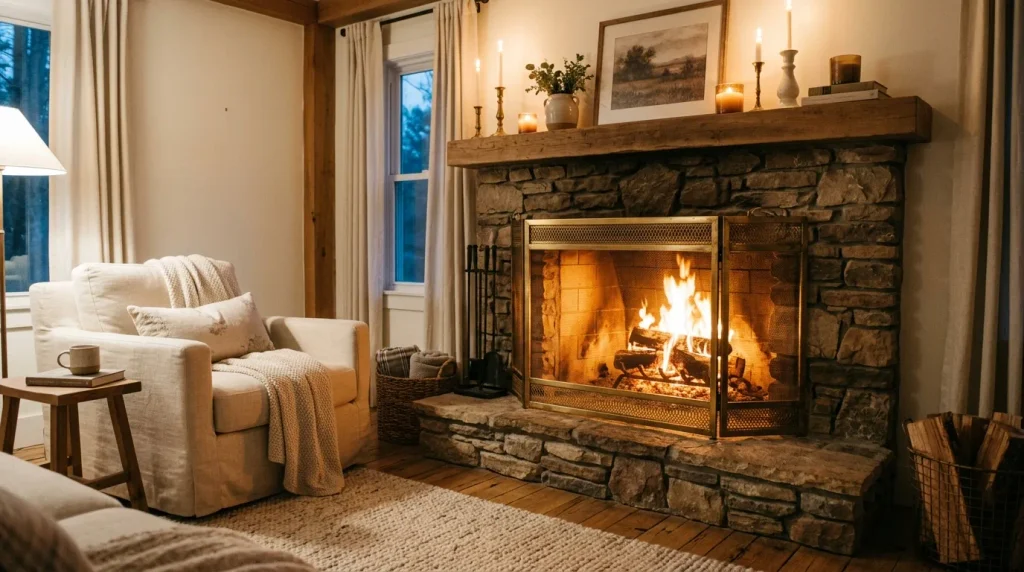
- Adds a soft metallic accent without overpowering the room
- Protects the space while enhancing the fireplace’s warmth
- Works well with stone, brick, or plaster surrounds
- Introduces a subtle vintage touch through aged brass tones
- Reflects firelight, adding extra glow in the evening
A brass fireplace screen does double duty, offering safety while quietly enhancing the overall look of the hearth. Unlike plain black screens, brass introduces warmth and a soft metallic shine that reflects the glow of the fire, making the whole area feel more inviting in the evening. This idea works well for homeowners who already have warm wood tones or vintage-inspired decor nearby, since brass ties those elements together naturally. It’s a small addition, but one that adds a noticeable layer of polish to an otherwise functional, safety-focused fireplace accessory.
That’s why many designers recommend brass over other finishes in farmhouse living rooms, since it complements both wood and stone surrounds without clashing. In my experience, slightly aged or antique brass tends to look more intentional than a bright, shiny finish, which can feel too modern or stark against rustic materials. The screen also softens the harder lines of a stone or brick surround, adding a rounded, decorative element to the front of the fireplace. It’s a simple upgrade that blends function and style effortlessly.
20. Sliding Barn Door Accent
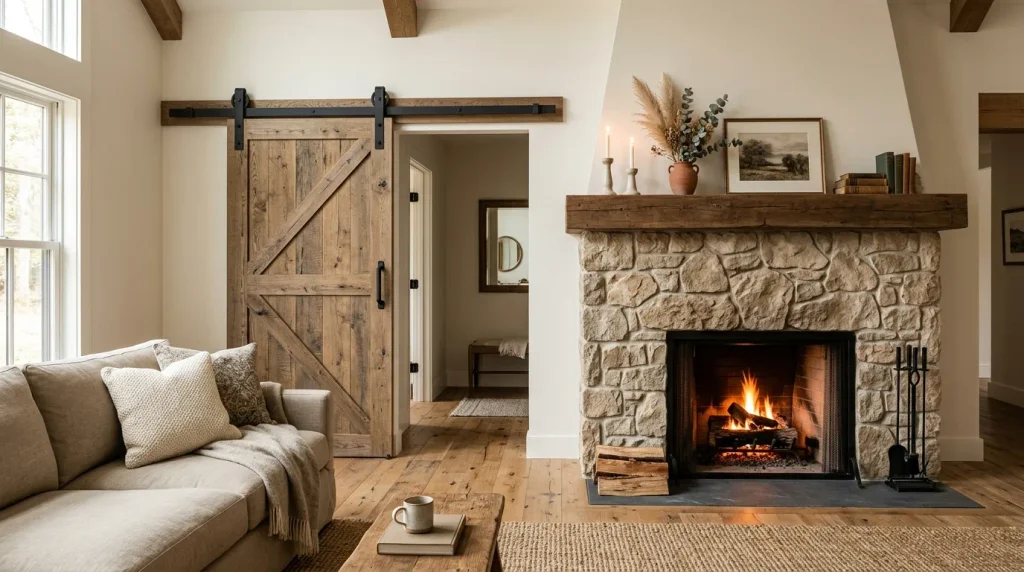
- Adds a functional farmhouse element beside the fireplace
- Conceals storage, media units, or awkward wall space
- Introduces rustic hardware and wood texture to the room
- Creates a strong visual anchor next to the hearth
- Blends practicality with classic farmhouse character
A sliding barn door placed near the fireplace wall serves as both a functional feature and a strong style statement. Often used to conceal a closet, media cabinet, or extra storage, the door adds rustic charm while solving a practical space problem many living rooms face. The black iron rail hardware contrasts beautifully against wood or painted surfaces, drawing the eye and reinforcing the overall farmhouse aesthetic. This idea works particularly well in living rooms where the fireplace shares a wall with built-in storage, giving the whole area a cohesive, intentional look.
I’ve noticed that homeowners often choose this feature specifically because it hides clutter without sacrificing style, unlike open shelving or plain doors. The texture of a reclaimed or distressed wood door also adds warmth that complements stone, brick, or shiplap surrounds nearby. Because the door slides rather than swings, it saves floor space too, which matters in smaller living rooms. It’s a practical, visually striking addition that reinforces the farmhouse feel while quietly solving everyday storage challenges near the fireplace.
21. Whitewashed Wood Paneling
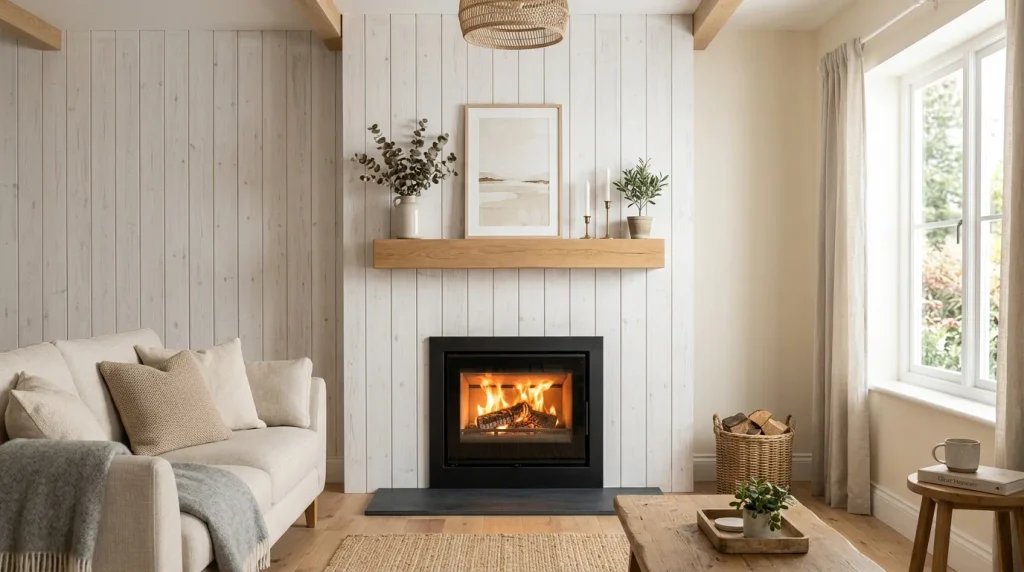
- Softens the look of wood while keeping natural texture
- Brightens the fireplace wall without losing warmth
- Works well in rooms with limited natural light
- Creates a subtle farmhouse feel without heavy contrast
- Pairs easily with both modern and traditional furniture
Whitewashed wood paneling strikes a balance between the brightness of paint and the warmth of natural wood grain. Rather than covering the texture completely, the whitewash technique allows the wood’s natural lines and knots to remain slightly visible, creating a softer, more layered look than flat white paint alone. This idea works especially well in living rooms that don’t get much natural light, since the lighter tone helps reflect what light is available. It’s a subtle upgrade, but one that noticeably changes the mood of the fireplace wall from heavy to airy and relaxed.
That’s why many designers recommend this technique for homeowners hesitant to commit to bold color or dark wood tones, since whitewashing offers a gentler middle ground. I’ve seen this work well in many homes transitioning from a more traditional style toward modern farmhouse, since the texture keeps things from feeling too stark or sterile. Vertical paneling also adds a subtle sense of height to the wall. Overall, it’s an easy way to introduce natural material without overwhelming the room with heavy wood tones.
22. Layered Rug and Textile Styling
- Adds warmth and texture to the flooring near the fireplace
- Creates a cozy, gathering-friendly seating area
- Works well with jute, wool, or woven rug combinations
- Softens hard flooring surfaces close to the hearth
- Enhances comfort without changing the fireplace structure itself
Layering rugs near the fireplace is one of the easiest ways to add warmth without touching the structure at all. Combining a natural jute base with a smaller wool or patterned rug on top creates depth and texture underfoot, making the seating area feel more intentional and cozy. This idea works especially well in living rooms with hard flooring, like wood or tile, where the area near the fireplace can otherwise feel cold or unfinished. It’s a low-cost, flexible upgrade that homeowners can change seasonally without any permanent commitment.
I’ve noticed that this layered approach also helps define the fireplace seating zone within a larger open-concept living space. Rather than furniture floating awkwardly in the room, the rugs visually anchor the seating area around the hearth, creating a clear sense of purpose. Adding a soft throw blanket over a nearby chair reinforces that same cozy feeling. Because textiles are easy to swap, this idea allows homeowners to refresh the fireplace area’s mood throughout the year without any major renovation or expense involved.
23. Fireplace Gallery Wall
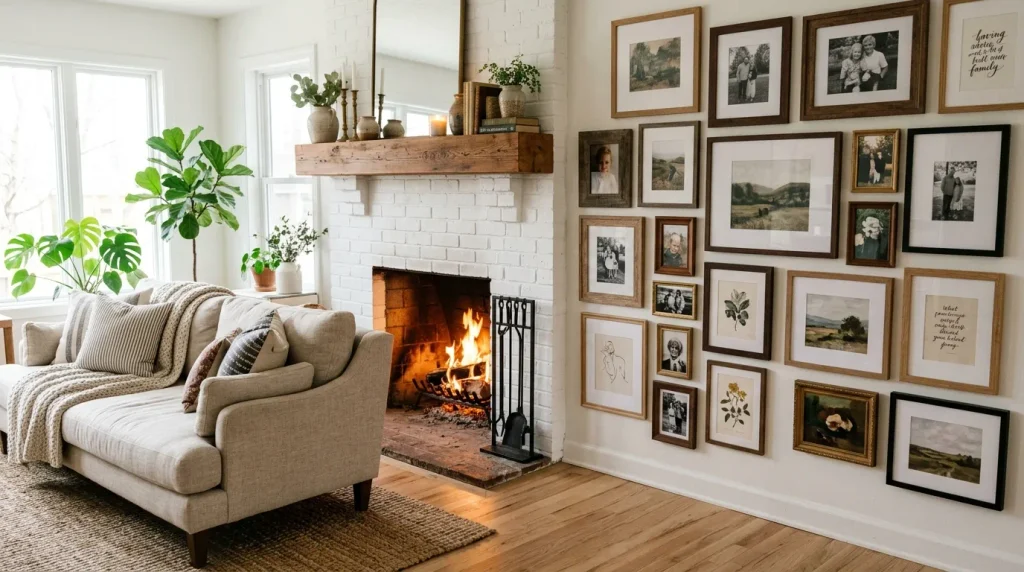
- Adds personality and personal storytelling above the fireplace
- Creates visual interest through varied frame sizes and art
- Works well when mantel space alone feels too plain
- Balances symmetry and asymmetry depending on preference
- Turns the fireplace wall into a personal, curated feature
A gallery wall around the fireplace transforms it from a purely architectural feature into something deeply personal. Mixing frame sizes, artwork, and family photos above or beside the mantel adds layers of visual interest that a single piece of art simply can’t achieve. This idea works particularly well for homeowners who want their fireplace to reflect their own story and taste, rather than following a strictly matched design formula. It also gives the wall a sense of history and warmth, since the collection often grows and changes over time as new pieces are added.
That’s why many designers recommend starting with a few anchor pieces and building outward gradually, rather than filling the entire wall at once. In my experience, mixing wood and black frames keeps the gallery from feeling too matched or overly styled, giving it a more natural, collected appearance. This idea works especially well alongside a simple mantel below, since the wall above carries most of the visual weight. It’s a flexible, evolving way to personalize the fireplace without altering its actual structure.
24. Copper Fireplace Accents
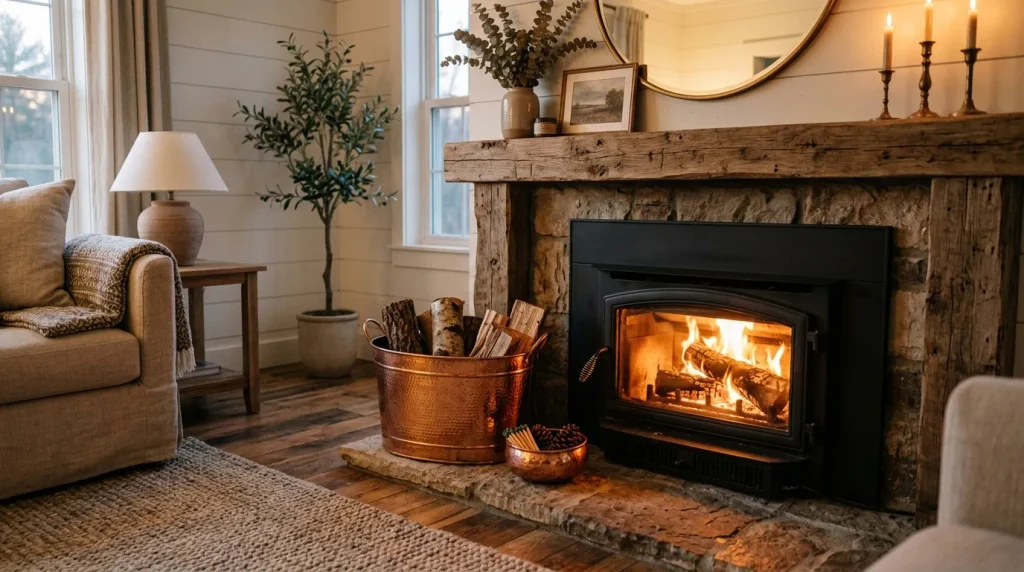
- Introduces warm metallic tones without a full renovation
- Adds subtle shine that reflects the fire’s natural glow
- Works well with wood, stone, or brick surrounds
- Brings a vintage-inspired warmth to modern fireplace styling
- Easy to update or swap out as trends shift
Copper accents offer one of the simplest ways to add warmth and shine to a fireplace without any structural changes at all. A copper log holder, small tray, or decorative bowl placed near the hearth catches the fire’s glow beautifully, creating soft reflections that enhance the room’s overall coziness. This idea works well for homeowners who want to experiment with metallic tones before committing to larger fixtures like a full copper surround. It’s an accessible, low-risk way to test whether warmer metals suit the existing style of the living room.
I’ve seen this work well in many homes where the fireplace felt slightly flat or one-dimensional in tone. Adding just a few copper pieces introduces contrast against black metal inserts or gray stone, without overwhelming the space. Because these accents are small and portable, they’re also easy to update seasonally or replace entirely if styles change over time. It’s a practical, affordable idea for anyone wanting to experiment with fireplace styling before making any permanent design decisions.
25. Cozy Reading Nook Beside the Hearth
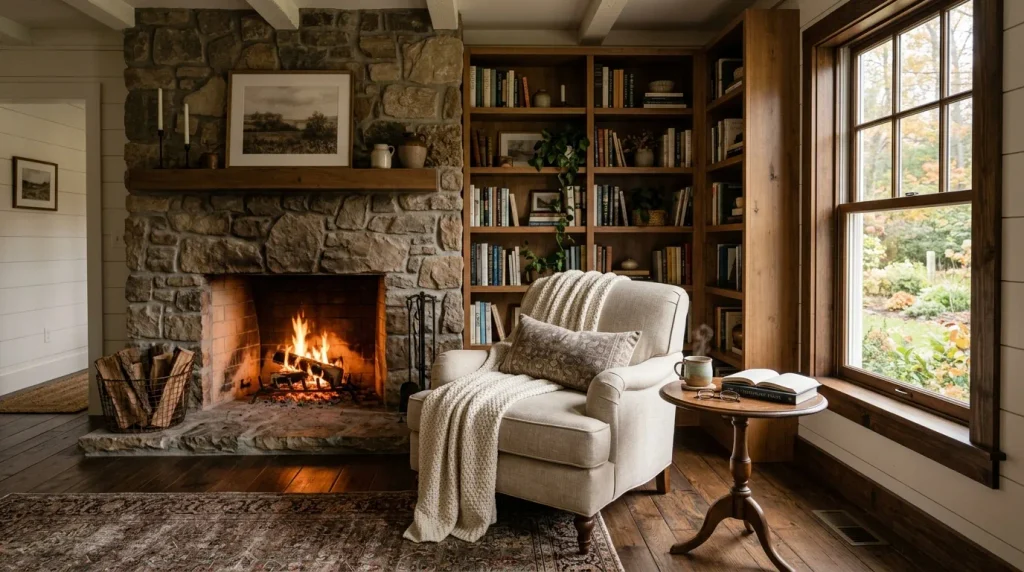
- Creates a dedicated quiet spot within a shared living space
- Adds comfort and function beside the fireplace’s warmth
- Works well in corners or underused areas near the hearth
- Encourages everyday use of the fireplace, not just decoration
- Brings a personal, intimate touch to a larger family room
A reading nook beside the fireplace turns an often-underused corner into one of the most inviting spots in the home. A single comfortable chair, positioned close enough to feel the fire’s warmth, gives the space a quiet purpose beyond general living room seating. This idea works especially well in larger or open-concept rooms, where a smaller, more intimate seating area helps break up the space without closing it off. It’s a simple addition, but one that consistently makes the fireplace feel like a lived-in, everyday part of the home rather than a purely decorative feature.
In my experience, this idea works best when paired with soft textiles, a throw blanket, a small side table, and good lighting for evening reading. Placing it near a built-in bookshelf, if space allows, reinforces the cozy, farmhouse feel even further. I’ve noticed that homeowners who add a dedicated nook near the fireplace tend to use that corner far more often than an empty one. It’s a small, thoughtful upgrade that turns passive fireplace space into an active, well-loved part of daily life.
Conclusion
A fireplace has the power to shape the entire feel of a living room, and these modern farmhouse fireplace ideas prove that even small changes can make a lasting difference. I’ve seen how something as simple as a new mantel or a warmer color palette can completely transform how a space feels day to day. Whichever ideas spoke to you most, start with one and let it inspire the rest. Save this post to Pinterest for later, share it with someone planning their own cozy makeover, and enjoy watching your living room become the warm, welcoming space you’ve always imagined.