That empty living room corner could become your favorite spot in the house.
A beautiful fireplace can add warmth, character, and a completely new feeling to the room.
A corner fireplace is especially useful when you want to make an awkward or underused area feel intentional and inviting. Whether your style is modern, rustic, farmhouse, Scandinavian, coastal, or cozy cottage, the right design can turn a forgotten corner into a standout feature. In this guide, you’ll find 23 inspiring ideas with practical details for choosing colors, materials, furniture, lighting, and decorative accents. I’ve noticed that even small changes around a fireplace can dramatically improve how a living room feels and functions. Use these ideas to find a look that fits your space, budget, and personal style.
1. Whitewashed Brick Hearth
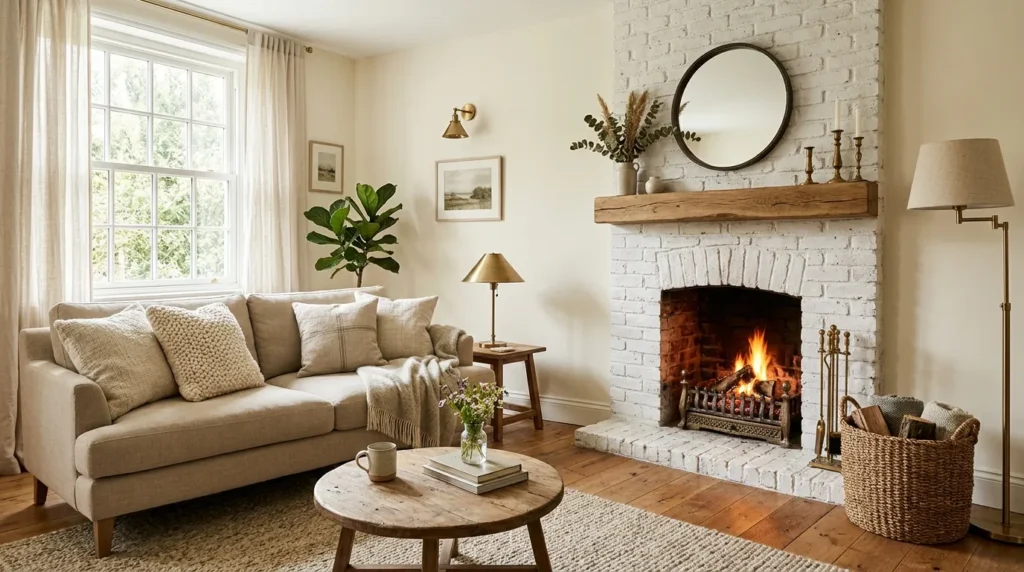
- Whitewashed brick brightens the corner while preserving plenty of cozy texture.
- Pair it with cream walls and warm wood for a relaxed look.
- Keep mantel decor simple so the masonry remains the visual star.
- This finish is especially useful in rooms that feel dark or enclosed.
A little white paint can completely transform a dark fireplace corner. Whitewashed brick creates soft texture while reflecting more light around the room, making the space feel brighter and more welcoming. Instead of appearing heavy or dated, the masonry becomes a calm architectural feature that works beautifully with cream walls and neutral furniture. Add a simple wooden mantel, a few ceramic pieces, and a woven basket nearby for warmth. This approach works particularly well when you want the fireplace to stand out gently without overwhelming the rest of your living room or competing with larger furniture.
The beauty of this setup comes from its balance of character and simplicity. Textured brick adds visual interest, while pale finishes keep the corner feeling open and airy. Place a comfortable sofa angled toward the fire, then soften the area with a neutral rug and natural fabrics. I’ve noticed that combining warm wood with creamy masonry prevents a light room from feeling flat or cold. For smaller spaces, keep mantel decorations low and uncluttered so the corner remains visually spacious. A few intentional accessories can create far more impact than a crowded arrangement filled with unrelated decorative pieces.
2. Modern Black Surround
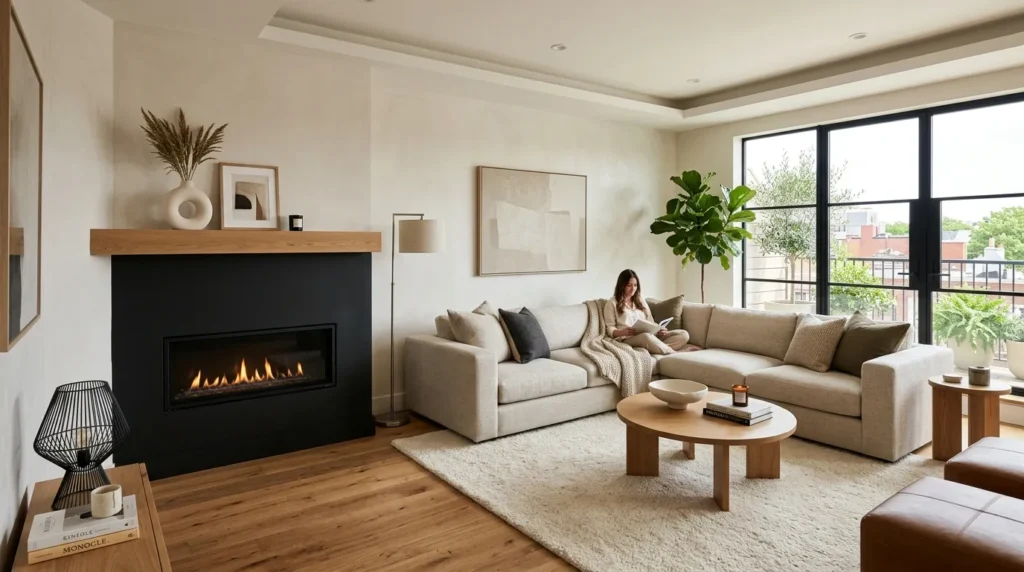
- A matte black surround creates an instant focal point with minimal decoration.
- Keep nearby furniture light to create an attractive visual contrast.
- Warm wood tones soften the stronger appearance of dark finishes.
- Small black accents elsewhere can make the design feel more cohesive.
For instant contrast, a black fireplace surround makes a surprisingly powerful statement. The deep finish draws attention toward the corner and gives the room a more architectural appearance without requiring bulky furniture or excessive decoration. Surround it with warm white walls, pale upholstery, and natural wood so the darker feature feels intentional rather than harsh. A simple mantel with one large artwork piece can complete the arrangement. This style is particularly effective in contemporary and transitional living rooms because the dark surround creates a strong anchor while maintaining clean lines and an organized overall appearance.
A modern black finish can also make an ordinary corner feel thoughtfully designed. The key is balancing the darkness with enough lighter surfaces nearby. Choose a cream sofa, pale rug, or light curtains to prevent the room from becoming visually heavy. Then repeat small black details through a lamp base, picture frame, or decorative bowl to connect the fireplace with the rest of the decor. I’ve seen this approach work especially well in open-plan homes because the fireplace creates a defined focal area without visually separating it from surrounding spaces. The result feels polished, comfortable, and timeless.
3. Rustic Stone Retreat
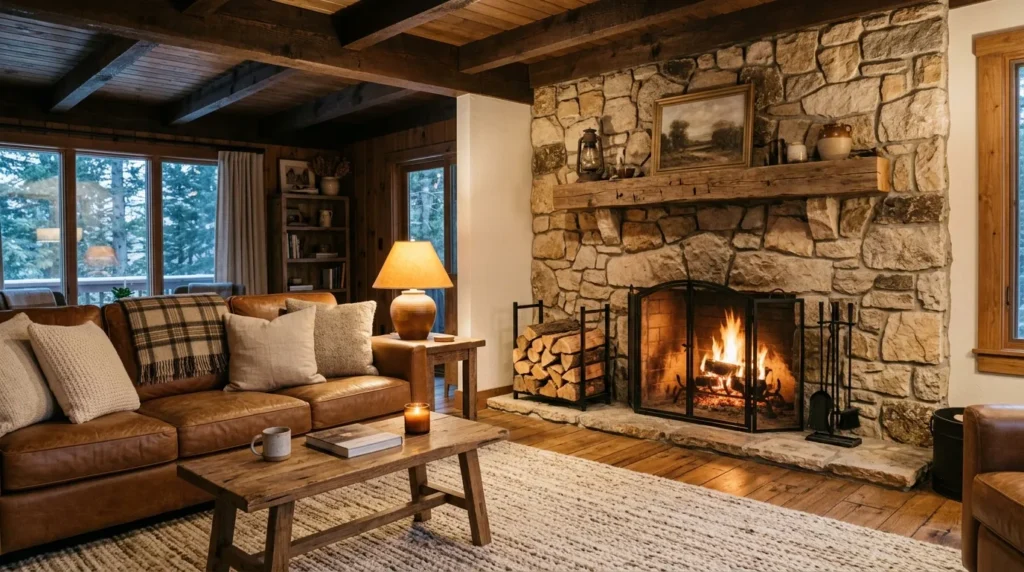
- Natural stone gives an unused corner a substantial, earthy focal point.
- Combine rough textures with soft upholstery to maintain everyday comfort.
- Reclaimed wood accents reinforce the rustic character without overdecorating.
- Warm lighting highlights the natural variations in the stone after sunset.
Nothing brings natural character into a living room quite like a stone fireplace tucked into an unused corner. Irregular stone surfaces create depth, texture, and a grounded feeling that instantly makes the space feel more established. Balance the substantial masonry with a soft cream sofa, woven rug, and warm wood accents so the room remains comfortable rather than overly rugged. A reclaimed timber mantel adds another layer of natural texture without competing with the stone. This arrangement works especially well when you want a cozy retreat that feels connected to nature while still looking practical for everyday family life.
Stone can feel substantial, but surrounding details can make it surprisingly welcoming. Keep the palette warm with beige, taupe, honey wood, and muted gray instead of introducing too many strong colors. Add a basket of neatly stacked logs or a textured throw beside the hearth for useful decoration. In my experience, warm lamps placed nearby are particularly effective because their soft glow brings out subtle variations in natural stone after dark. Rather than making every surface match perfectly, allow the materials to vary slightly. That contrast gives the corner a collected, authentic appearance that feels comfortable and lived-in.
4. Slimline Built-In Hearth
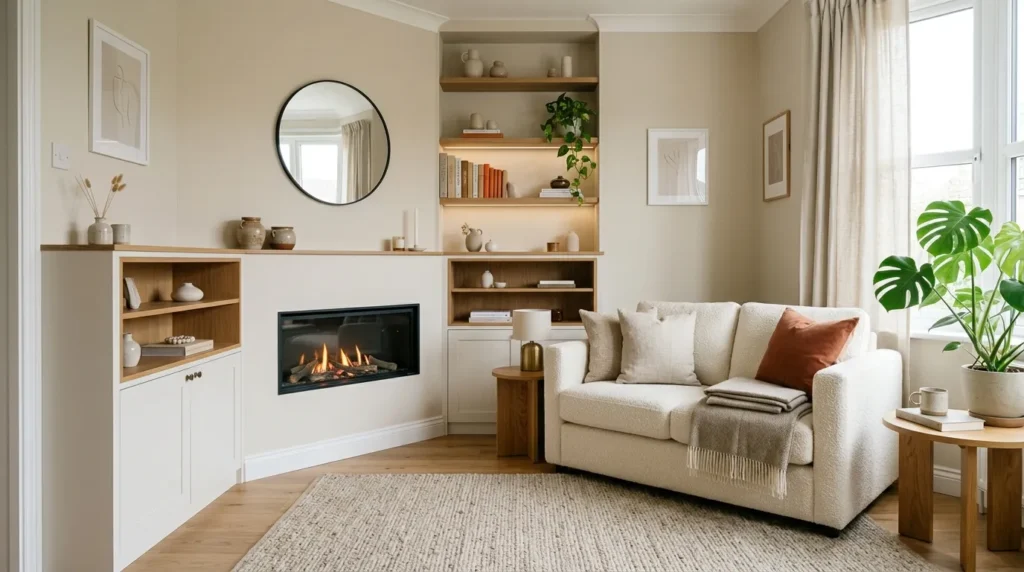
- A streamlined surround makes efficient use of an awkward corner.
- Built-in shelving adds useful storage without taking up floor space.
- Keep cabinetry the same color as the walls for a seamless effect.
- This layout works especially well in compact living rooms.
A slim built-in hearth can turn an awkward corner into one of the most useful areas in the room. Instead of allowing the space beside the fire to become dead floor area, integrate narrow shelves or cabinetry around the surround. Keep the finish close to the wall color so everything feels connected and visually calm. A compact sofa, small coffee table, and soft rug can complete the arrangement without crowding the room. This approach is especially helpful in smaller homes where every inch matters, because the fireplace becomes both a decorative focal point and a practical part of the overall layout.
The smartest corner designs often combine beauty with storage. Open shelves can hold books, framed prints, candles, or a few favorite objects, while closed cabinets hide less attractive everyday items. Choose simple hardware and clean lines if you want the area to feel modern and spacious. I’ve noticed that matching built-ins to the surrounding walls can make a compact room appear noticeably larger because there are fewer visual breaks. Leave enough breathing room around the firebox and avoid filling every shelf. A little empty space helps the entire installation look intentional rather than crowded.
5. Scandinavian Wood Accent
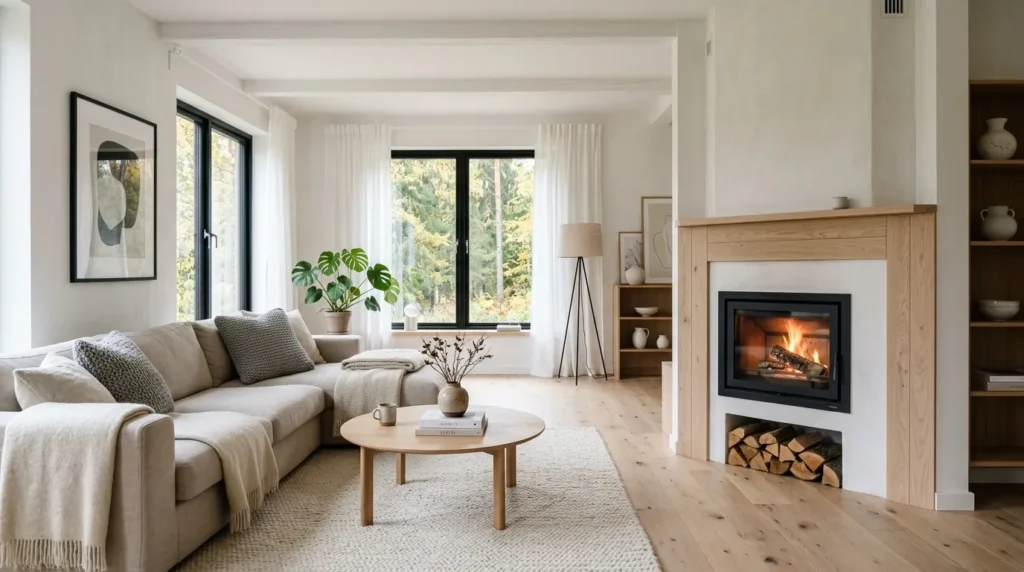
- Pale wood introduces warmth without making the corner feel visually heavy.
- Soft textiles create the comfortable simplicity associated with Scandinavian interiors.
- Use white, beige, and muted gray for an airy color palette.
- Natural materials keep the room inviting without excessive decoration.
Pale wood can make a fireplace corner feel instantly warmer and more welcoming. In a Scandinavian-inspired room, the goal is not to decorate every surface but to create a calm balance between useful furniture, natural materials, and soft textures. Frame the fire with light oak or another pale timber, then pair it with white walls, a beige sofa, and a simple wool rug. The lighter palette allows the natural grain of the wood to become a subtle design feature. Even a compact living room can feel bright, comfortable, and thoughtfully styled with this uncomplicated combination.
Scandinavian design works particularly well when you want a cozy room without visual clutter. Choose a few practical accessories, such as a ceramic vase, folded blanket, or small stack of books, rather than filling the mantel with decorative objects. Soft gray, cream, and natural wood create enough variation without making the space feel busy. Large windows or sheer curtains can strengthen the airy effect by allowing daylight to move across the room. The result is a corner that feels peaceful during the day and wonderfully intimate once the fire and warm lamps create a softer evening glow.
Also Read: 21 Dark Feminine Bedroom Ideas for a Moody Chic Retreat
6. Built-In Media Wall
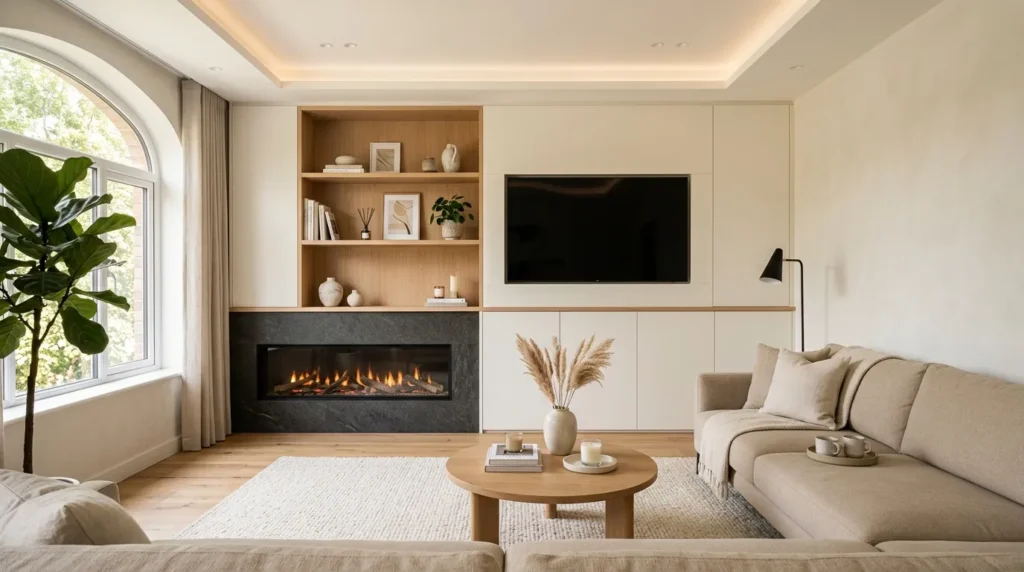
- Combining the fire with a television creates a practical entertainment zone.
- Built-in storage keeps electronics, books, and accessories organized.
- Use one consistent finish to make the wall feel visually unified.
- Position seating so both the screen and fire remain comfortable to enjoy.
Combining a fireplace with a media wall can make a corner much more functional without sacrificing style. Instead of treating the television and fire as separate focal points, use cabinetry, shelving, or matching wall finishes to visually connect them. A warm neutral palette keeps the installation from feeling too technical, while closed storage hides remotes, cables, and entertainment equipment. Position the main seating so the television remains easy to view without turning the entire room toward the screen. With thoughtful planning, this arrangement creates a comfortable entertainment zone that also feels polished and integrated into the living room.
A media wall needs careful proportion because too many large elements can quickly overwhelm a smaller space. Keep the cabinetry streamlined and avoid filling every open shelf with accessories. A few books, ceramics, and pieces of greenery can soften the built-in structure. If the television sits above or near the fire, consider the manufacturer’s installation requirements and viewing height before finalizing the layout. I’ve seen this type of setup work beautifully when the surrounding materials repeat elsewhere in the room. Matching wood tones, upholstery, and hardware helps the entire corner feel like one cohesive design rather than separate features.
7. Arched Fireplace Nook
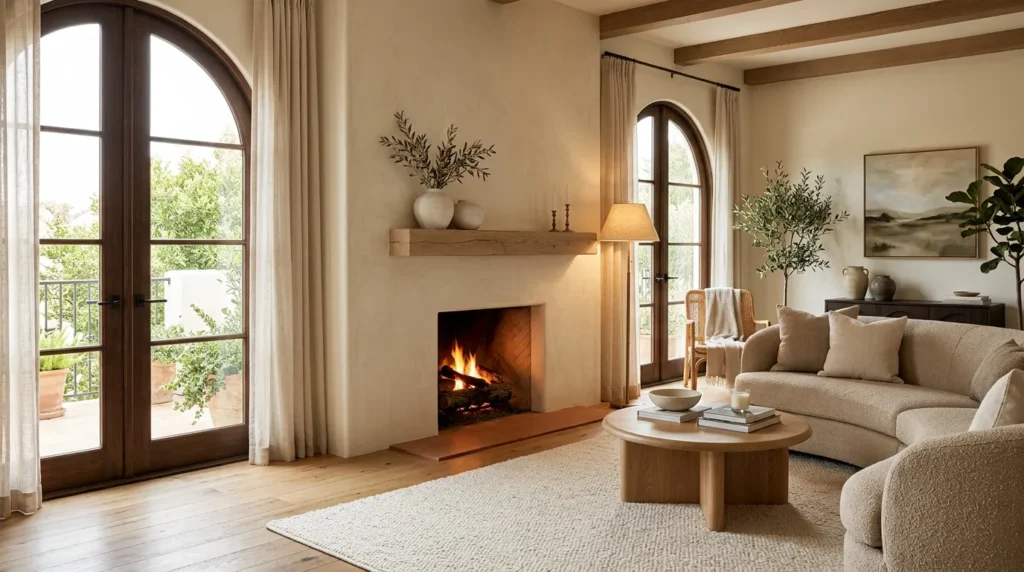
- An arched opening softens the straight lines commonly found in living rooms.
- Curved details make the fireplace feel more architectural and custom-designed.
- Keep surrounding furniture simple so the shape remains the main feature.
- Warm plaster tones work beautifully with natural wood and neutral textiles.
An arched fireplace nook can turn a simple corner into a memorable architectural feature. The curved opening immediately softens the harder lines of sofas, tables, and rectangular windows, creating a more balanced visual composition. Use warm ivory plaster, creamy paint, or softly textured walls around the opening, then introduce natural wood and rounded furniture nearby. The gentle curve adds character without requiring bold colors or elaborate accessories. This approach works especially well when you want the fireplace to feel like part of the home’s architecture rather than an appliance simply placed into an available corner.
Curved details also create a softer transition between the fireplace and the rest of the room. Choose a rounded coffee table, curved chair, or circular mirror nearby to repeat the shape without making the design feel themed. Keep the mantel styling restrained so the arch remains easy to appreciate from across the room. Natural materials such as oak, linen, plaster, and woven fibers complement the shape beautifully. In my experience, this combination gives a living room a relaxed, custom-built appearance while still feeling approachable enough for everyday family life and casual entertaining.
8. Floating Wood Mantel
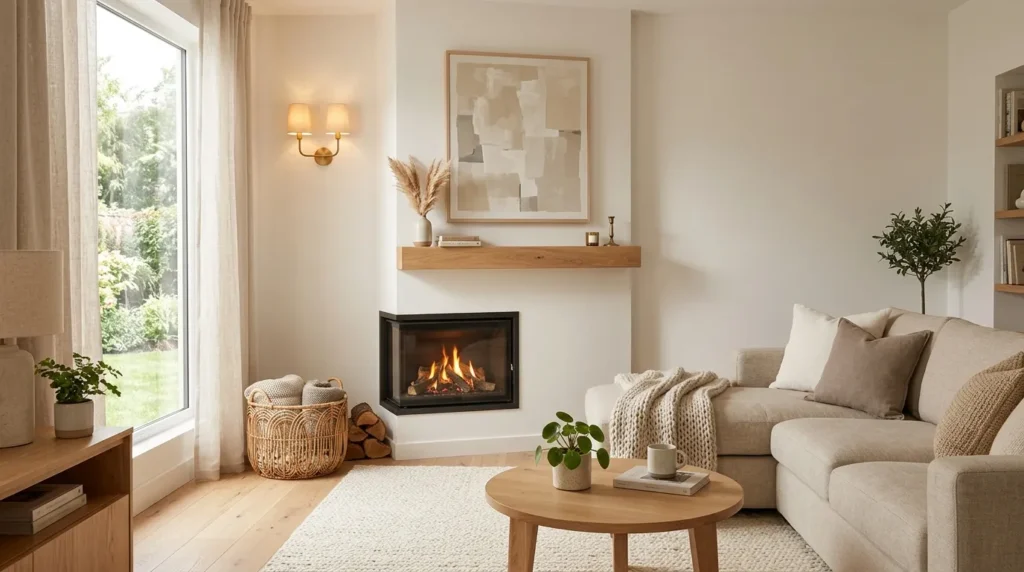
- A floating mantel adds warmth without making the fireplace look bulky.
- Natural wood introduces texture against smooth walls or painted surrounds.
- Keep the mantel shallow enough to preserve the openness of the corner.
- One oversized artwork piece can create a polished focal point.
A floating wood mantel can make a corner fireplace feel warmer and more finished without adding unnecessary visual weight. The clean horizontal line gives the eye a natural stopping point while the wood introduces warmth against painted walls, stone, or smooth plaster. Choose a simple slab with visible grain and avoid overly ornate brackets if you prefer a modern appearance. Place one large artwork piece or a small group of carefully selected objects above it. The result is a focal point that feels intentional but not overly styled, making the living room comfortable for both everyday use and guests.
The most successful floating mantels usually leave plenty of breathing room around them. Measure the wall and fireplace proportions before choosing the mantel length so it does not look too short or oversized. A nearby woven basket, soft throw, or wooden side table can repeat the natural material without creating clutter. I’ve noticed that one strong decorative element often looks better than several small pieces competing for attention. If the room already contains substantial furniture, keep the mantel visually light. This helps the corner remain open while still giving the fireplace enough presence to anchor the seating arrangement.
9. Moody Charcoal Corner
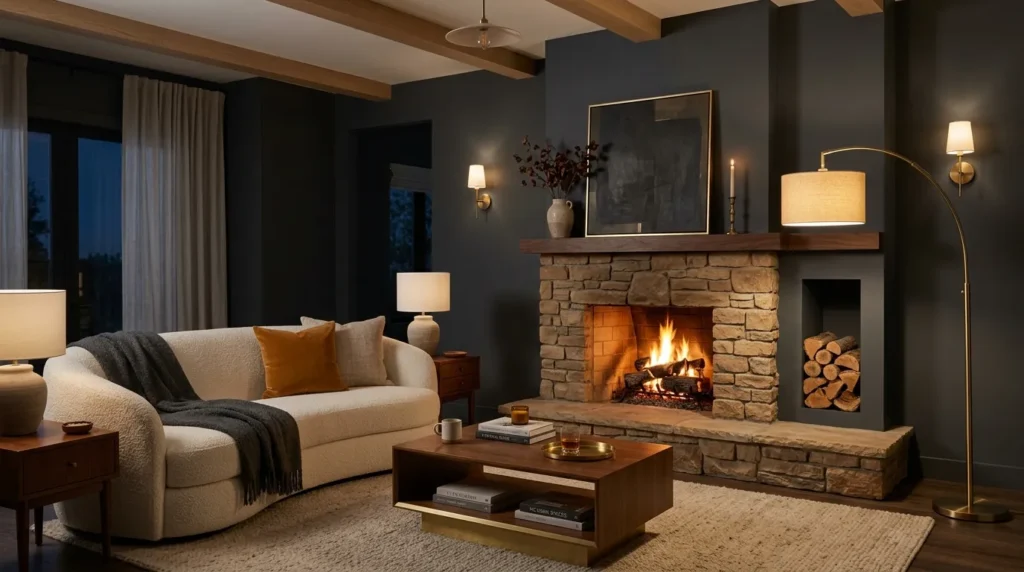
- Charcoal walls create a dramatic backdrop for a warm fire.
- Light furniture prevents the darker palette from feeling too enclosed.
- Brass, cream, and natural wood accents add softness and contrast.
- Layered lighting helps the corner remain inviting after sunset.
A charcoal fireplace corner creates drama without needing elaborate architectural details. Deep gray walls or a dark surround can make the fire appear warmer and brighter, while the darker background gives surrounding furniture a more sophisticated presence. Balance the intensity with cream upholstery, natural wood, and soft beige textiles so the room still feels comfortable rather than enclosed. Brass lighting or small metallic accents can add a gentle glow. This approach is especially effective in larger living rooms or spaces with plenty of natural light, where darker finishes can create depth without making the entire interior feel visually heavy.
The secret to making a moody corner inviting is layering enough lighter and warmer elements around it. A cream sofa, pale rug, wooden table, and soft lamps can prevent charcoal walls from becoming overwhelming. Keep decorative pieces simple and let the contrast between the dark background and lighter furnishings do most of the work. Warm bulbs are particularly useful in the evening because they complement the firelight instead of creating a stark, cool atmosphere. If you love dramatic interiors but still want everyday comfort, this palette offers a practical middle ground between bold design and cozy living.
10. Cream Plaster Finish
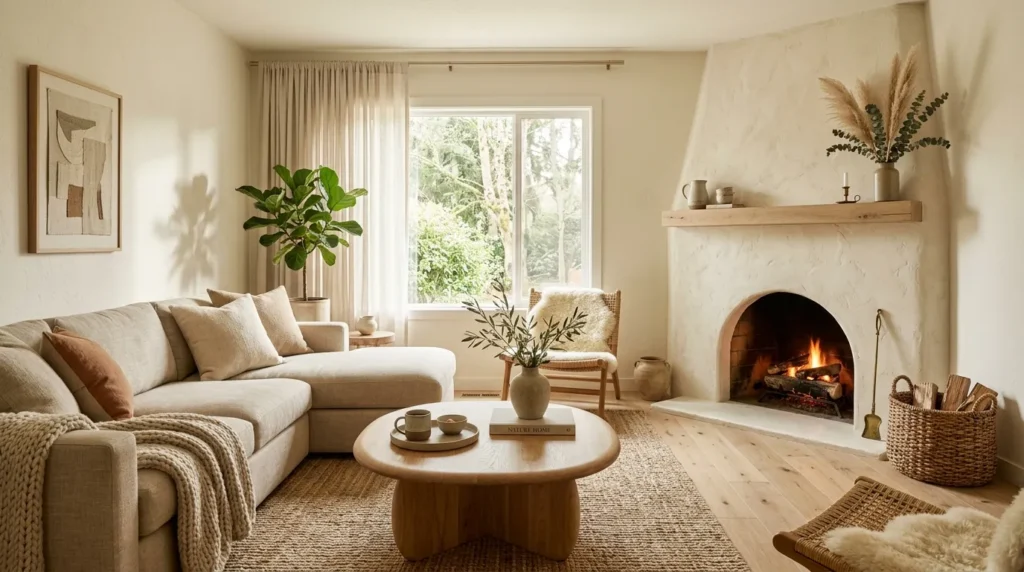
- Cream plaster creates a soft, seamless look around the hearth.
- The neutral finish works beautifully with warm wood and natural fabrics.
- Subtle wall texture adds interest without making the corner feel busy.
- Pair it with curved furniture for a relaxed, organic atmosphere.
Cream plaster gives a fireplace corner a soft architectural presence that feels timeless rather than overly decorated. The subtle texture catches natural light throughout the day, creating gentle variations across the wall without introducing a strong pattern. Pair the finish with light oak, linen upholstery, woven textures, and simple ceramics for an organic modern look. Because the palette stays neutral, the fireplace can become a natural focal point while still blending smoothly with the rest of the living room. This idea works particularly well when you prefer calm interiors with warmth, texture, and understated character.
The finish becomes even more effective when the surrounding furniture has similarly soft shapes and natural materials. A rounded coffee table, curved chair, or loosely woven rug can reinforce the relaxed appearance without making everything look perfectly coordinated. Keep accessories in warm whites, sand, beige, and muted wood tones for visual consistency. In my experience, textured plaster looks especially beautiful when daylight moves across it because the surface provides interest without relying on artwork or bold decoration. It is a practical choice for anyone who wants the fireplace area to feel finished while maintaining a light, uncluttered room.
11. Corner Bench Seating
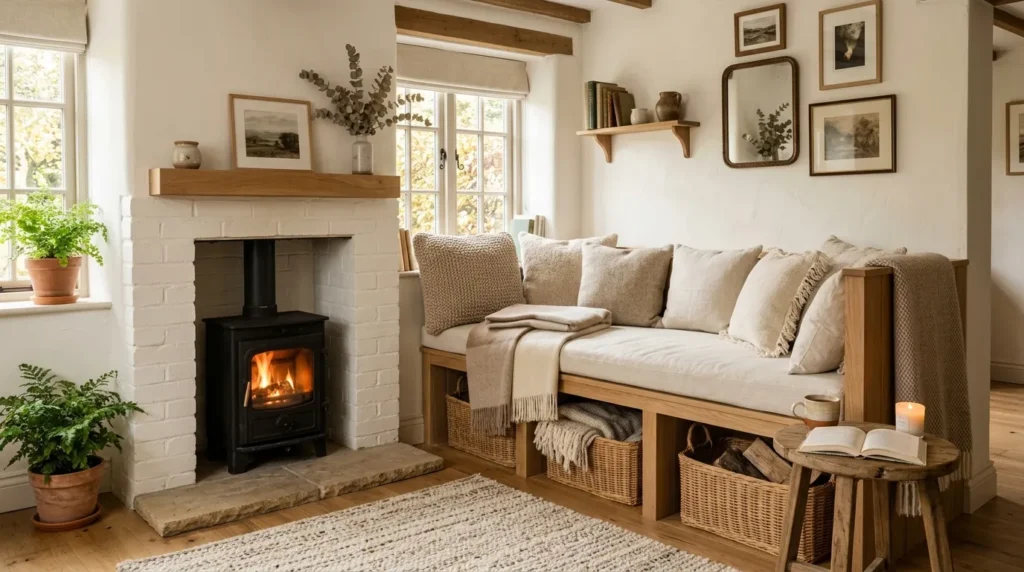
- A built-in bench makes the fireplace area more useful for relaxed seating.
- Cushions and layered textiles can turn the nook into a comfortable retreat.
- Storage beneath the bench provides space for blankets, books, or baskets.
- Keep the bench low enough to preserve a clear view of the hearth.
A corner bench can transform an overlooked fireplace area into one of the coziest places in the living room. Instead of leaving the surrounding floor unused, build a comfortable low seat nearby and layer it with cushions, throws, and a soft upholstered pad. The bench creates a natural reading or relaxing spot while keeping the main seating arrangement open. Choose wood that complements the floor or mantel, then use neutral fabrics to make the nook feel connected to the rest of the room. This setup is especially useful when you need extra seating without adding another bulky armchair.
The space beneath the bench can also provide surprisingly valuable storage. Woven baskets or built-in drawers can hold blankets, books, toys, or seasonal accessories while keeping the room organized. Make sure the seating remains a safe and comfortable distance from the heat source, following the fireplace manufacturer’s requirements. I’ve noticed that adding one small side table makes these nooks much more practical because it gives you a convenient place for a mug, book, or lamp. With a few thoughtful details, an unused corner becomes a useful feature instead of simply decorative space.
12. Farmhouse Wood Mantel
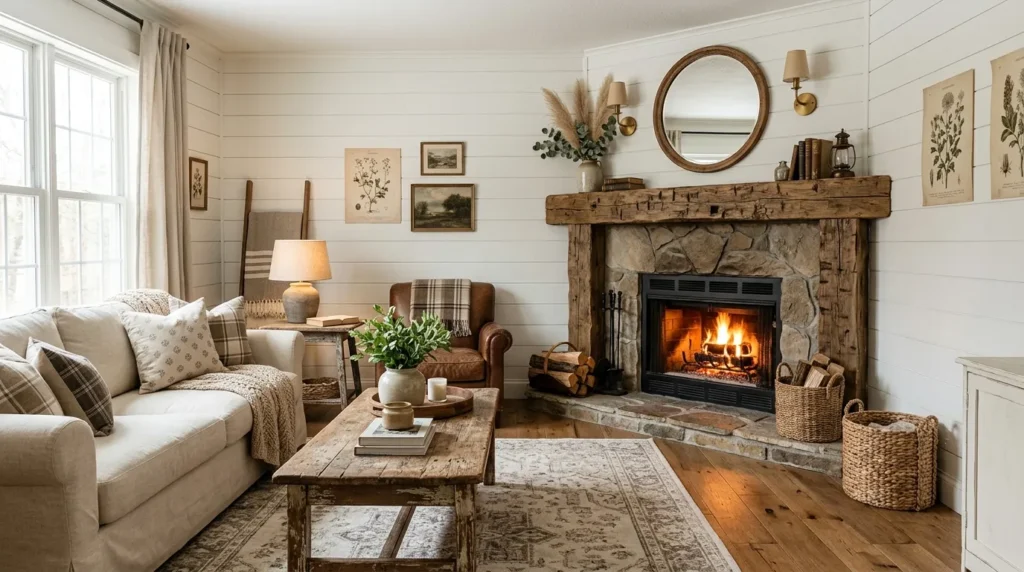
- A chunky wood mantel adds warmth and traditional farmhouse character.
- White or soft beige walls keep the heavier timber from dominating.
- Vintage-inspired accessories can reinforce the relaxed country aesthetic.
- Mix old-looking pieces with modern furniture to keep the room fresh.
A farmhouse wood mantel can give a simple fireplace corner instant warmth and personality. Choose reclaimed or naturally distressed timber with visible grain, knots, and subtle imperfections rather than a perfectly polished finish. Pair it with soft white walls, cream upholstery, woven baskets, and warm flooring to create the familiar relaxed feeling associated with farmhouse interiors. A few vintage-inspired accessories can add character, but avoid filling the mantel from end to end. Leaving some open space helps the substantial wood feel intentional instead of overwhelming the room or making the corner look like a themed display.
The most appealing farmhouse rooms usually mix rustic details with comfortable modern pieces. A clean-lined sofa can sit beautifully beside an aged timber mantel, while a contemporary lamp can keep the arrangement from feeling dated. Use muted colors such as oatmeal, warm white, taupe, and natural brown rather than relying heavily on bright farmhouse patterns. I’ve seen this combination work especially well in family rooms because the materials are forgiving and easy to live with. The result feels welcoming and practical, with enough texture and personality to make the fireplace corner memorable without becoming visually cluttered.
13. Built-In Book Nook
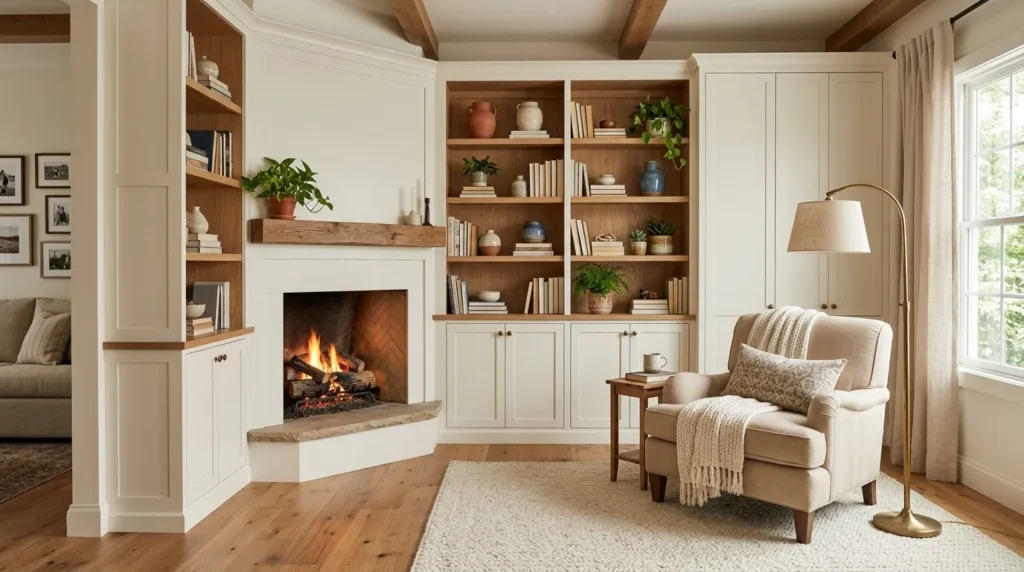
- Open shelving turns the fireplace corner into a useful reading zone.
- Books add color, texture, and personality without requiring extra artwork.
- A comfortable chair nearby creates a natural spot for quiet reading.
- Keep shelf styling varied with ceramics, baskets, and small plants.
A fireplace surrounded by bookshelves can turn an ordinary corner into a practical feature filled with personality. Built-in shelving gives the area a sense of purpose while providing room for books, framed photographs, ceramics, and small plants. Keep the cabinetry light if you want the space to feel airy, or choose warm wood for a richer appearance. A comfortable reading chair positioned nearby makes the corner feel naturally connected to everyday life. This arrangement works especially well for people who want their living room to feel personal and collected rather than styled entirely around decorative objects.
Good shelf styling depends more on balance than quantity. Mix vertical rows of books with a few horizontal stacks, then leave open spaces between decorative pieces so the shelves can breathe. Baskets can hide smaller items while plants soften the straight lines of the cabinetry. In my experience, using books that already belong to your household makes the space feel much more authentic than buying accessories simply to fill empty shelves. Add a warm floor lamp beside the reading chair, and the fireplace corner becomes a useful retreat that looks inviting even when nobody is sitting there.
14. Minimalist Concrete Surround
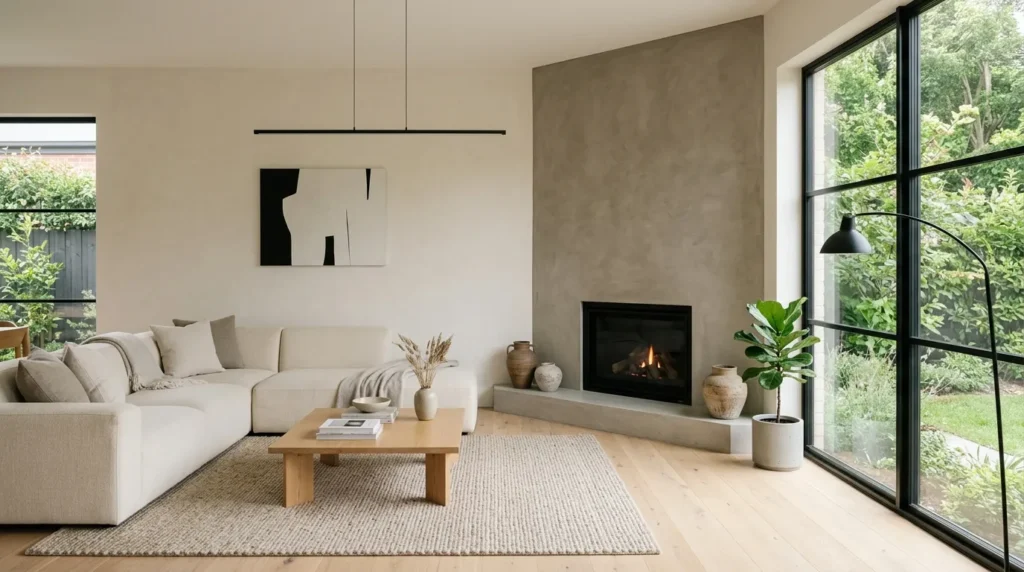
- Smooth concrete creates a clean, contemporary architectural statement.
- Pair the cool material with warm textiles to keep the room comfortable.
- Simple furniture prevents the surround from competing with other focal points.
- Wood accents provide useful warmth and visual balance.
A smooth concrete surround gives a corner fireplace a distinctly modern architectural presence. Its understated texture and gray tones create a strong foundation without relying on decorative patterns or ornate details. To keep the room inviting, balance the cool surface with warm oak flooring, cream upholstery, woven textiles, and soft lighting. Choose furniture with simple silhouettes so the fireplace remains visually important without making the room feel overly designed. This approach suits contemporary homes particularly well because concrete naturally complements clean lines, neutral colors, and open layouts while adding enough texture to prevent a minimalist room from feeling plain.
The key to making concrete feel comfortable is introducing warmth through everything around it. A natural wood coffee table, beige rug, linen curtains, and soft cushions can immediately soften the harder appearance of the surround. Avoid adding too many competing materials because the concrete already provides a noticeable architectural texture. Keep the mantel area simple or skip a traditional mantel altogether for a cleaner effect. I’ve noticed that warm evening lighting makes concrete especially appealing, revealing subtle surface variations that disappear in bright daylight and giving the corner a sophisticated but relaxed atmosphere.
15. Soft Beige Layers
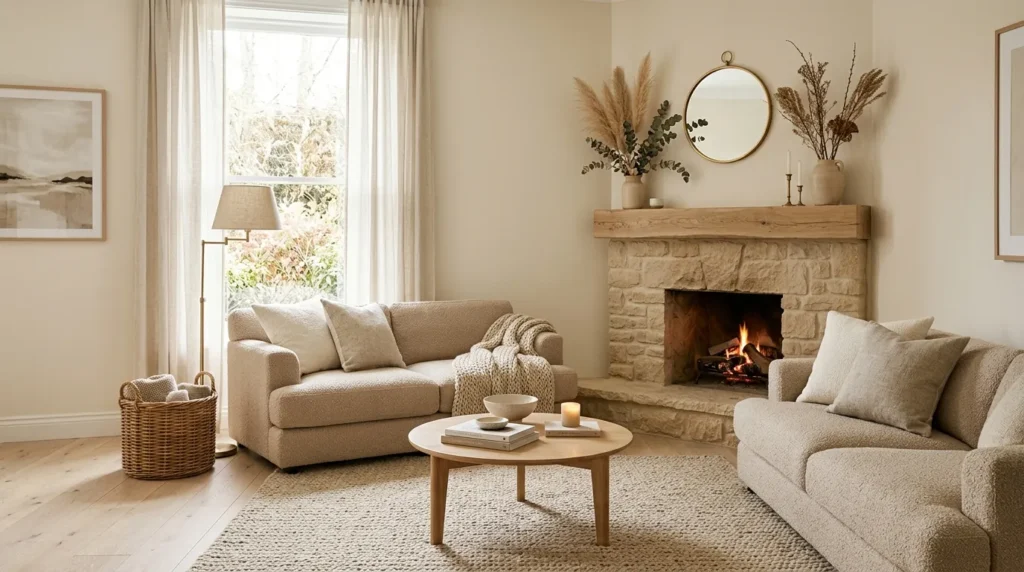
- Layered beige tones create a calm and cohesive fireplace setting.
- Different textures keep a monochromatic palette from looking flat.
- Linen, boucle, wool, and wood add warmth without introducing bold colors.
- Small black or brass accents can provide gentle contrast.
Soft beige layers can make a fireplace corner feel effortlessly comfortable without relying on bold colors. Instead of choosing one exact shade, combine ivory, oatmeal, sand, taupe, and warm cream across the walls, upholstery, rug, and accessories. The subtle differences create depth while keeping the overall room visually calm. Add contrasting textures such as boucle, linen, wool, woven fibers, and natural wood so the neutral palette does not become flat. This approach works especially well in living rooms where you want the fireplace to feel like part of a peaceful, coordinated environment rather than a separate decorative feature.
Texture becomes the most important design tool when working with several similar colors. A chunky wool rug can sit beneath a smooth coffee table, while linen cushions and a boucle chair add softness nearby. Keep the fireplace surround slightly different from the wall so it remains visible without creating a harsh contrast. A small brass lamp or black frame can add just enough definition to the palette. I’ve noticed that layered neutrals are particularly forgiving because they work with changing seasonal decor. You can easily add autumnal, winter, or spring accents without redesigning the entire room.
16. Coastal White Fireplace
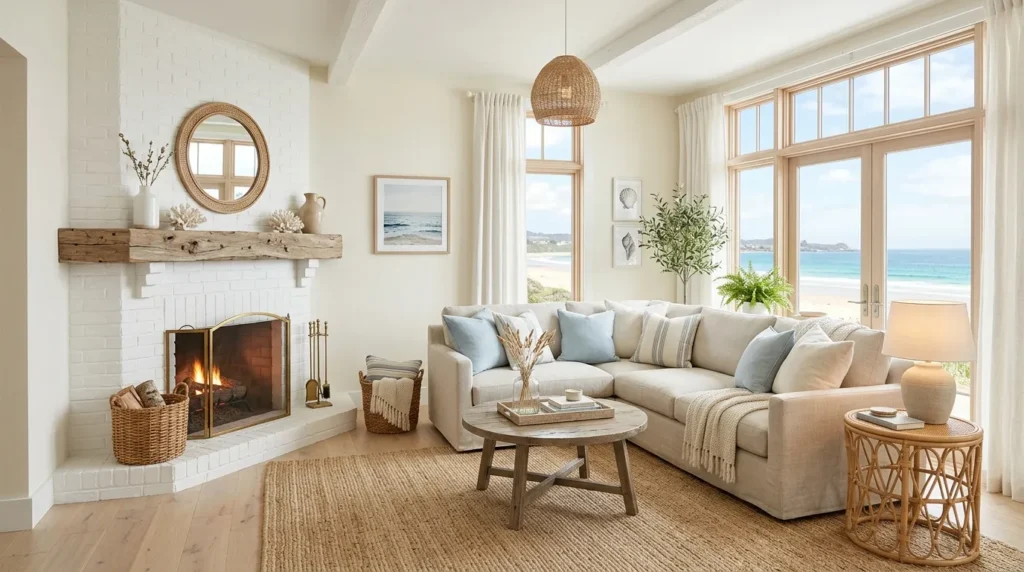
- Crisp white finishes make the fireplace corner feel bright and breezy.
- Pale blue accents add a subtle coastal touch without looking themed.
- Natural woven materials bring warmth to the lighter palette.
- Keep furniture relaxed with linen, rattan, and light wood.
A coastal white fireplace can make a living room feel brighter, lighter, and wonderfully relaxed. Use crisp white or warm ivory around the hearth, then introduce pale blue, sandy beige, and natural wood for subtle seaside character. Linen upholstery, woven baskets, jute rugs, and rattan furniture add texture without making the room feel busy. Keep the mantel simple with ceramics, a small piece of artwork, or a few natural accents. This style works especially well in rooms with plenty of daylight because the pale surfaces reflect light and help the corner feel open rather than enclosed.
The coastal look is most successful when it suggests the seaside without relying on obvious nautical decorations. Instead of anchors or themed signs, focus on natural textures and a restrained color palette. A light blue cushion, weathered wood accent, or softly textured rug is usually enough to create the right atmosphere. I’ve noticed that combining white walls with warm wood prevents a coastal room from feeling too stark. Add sheer curtains where possible so sunlight can filter gently through the space. The result is a comfortable fireplace corner that feels fresh during the day and cozy in the evening.
17. Terracotta Tile Hearth
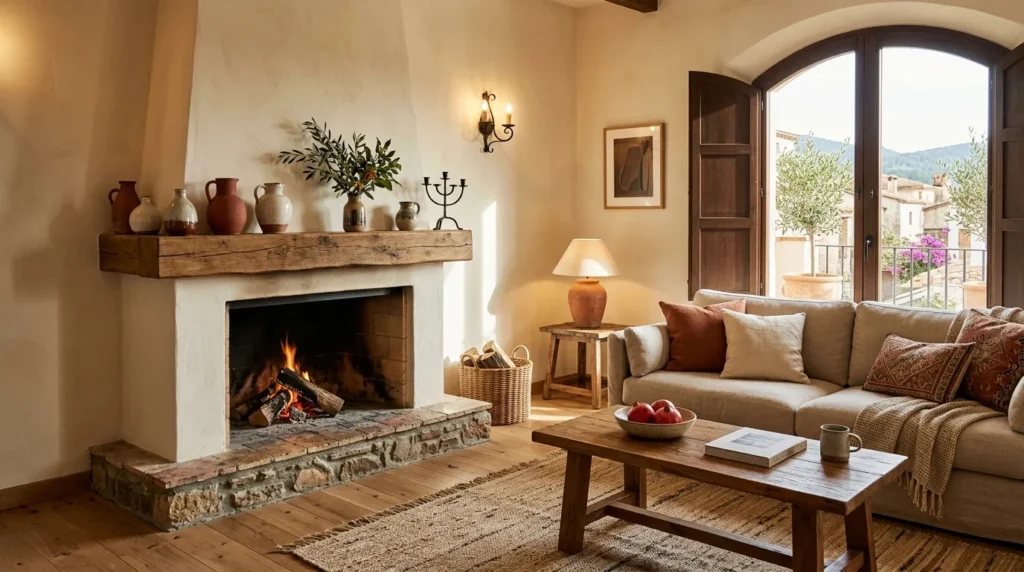
- Terracotta tiles bring warmth and handcrafted character to the fireplace area.
- Earthy colors pair naturally with cream walls and wooden furniture.
- Patterned or handmade tiles can create a distinctive focal point.
- Keep the surrounding decor simple so the tile remains visually prominent.
Terracotta tile can give a fireplace corner an instantly warm and handcrafted appearance. Its earthy rust, clay, and burnt-orange tones bring natural color into the room while pairing beautifully with cream walls, wood furniture, and woven textures. Choose simple square tiles for a relaxed traditional look, or use handmade variations for more visible character. Because the material already provides strong color and texture, keep nearby furniture relatively understated. This approach works particularly well when you want the fireplace to become a memorable focal point while still maintaining a warm, relaxed atmosphere throughout the living room.
The surrounding palette can determine whether terracotta feels rustic, Mediterranean, or contemporary. Pair it with creamy plaster, natural oak, linen, and muted olive tones for an earthy look that feels current rather than overly traditional. Avoid introducing too many additional colors because the tile should remain the strongest visual accent. In my experience, handmade-looking surfaces are especially effective when the rest of the room stays simple because their small variations become part of the design. Add warm lighting after sunset, and the earthy tile takes on an even richer appearance that makes the entire corner feel inviting.
18. Floor-To-Ceiling Stone
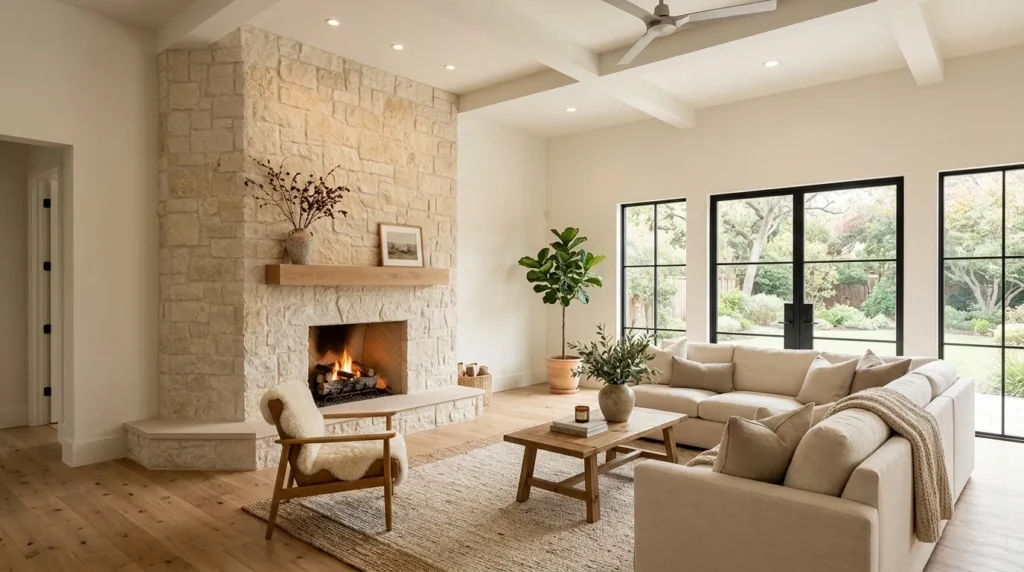
- Tall stonework draws the eye upward and adds architectural presence.
- Vertical height can make a low-ceilinged room feel more substantial.
- Choose lighter stone when you want the room to remain visually open.
- Minimal mantel styling keeps the tall surround from feeling overwhelming.
A floor-to-ceiling stone surround can transform an ordinary fireplace corner into a dramatic architectural feature. Extending the material upward draws the eye vertically, giving the room a stronger sense of height and presence. Pale limestone, warm beige stone, or lightly textured masonry can create this effect without making the space feel excessively dark. Keep the mantel and surrounding decor simple because the height and texture already provide plenty of visual interest. This design is particularly effective in rooms with tall ceilings, large windows, or open layouts where a stronger architectural anchor helps define the living area.
The scale of the stone should always relate to the size of the room. Large, heavily textured pieces can overwhelm a compact space, while lighter stone with smaller variations may feel more balanced. Keep furniture comfortable and low-profile so the fireplace remains visible without making the seating area feel crowded. A neutral rug can visually connect the stone with the sofa and flooring. I’ve noticed that warm lighting placed above or beside tall masonry helps emphasize its height in the evening. The result feels substantial and elegant while still maintaining the relaxed comfort expected from a living room.
19. Japandi Fireplace Corner
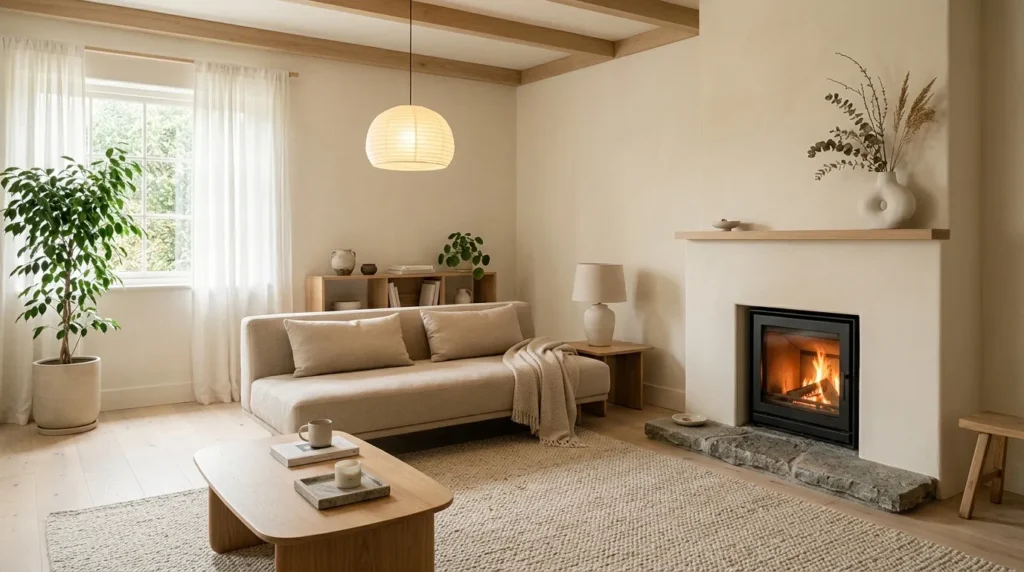
- Japandi styling combines warm minimalism with natural, calming materials.
- Keep the fireplace surround simple and free from unnecessary decoration.
- Low furniture helps maintain the relaxed, grounded feeling of the room.
- Wood, linen, stone, and soft neutral colors create visual harmony.
A Japandi-inspired fireplace corner brings together Japanese simplicity and Scandinavian warmth in a way that feels calm and highly livable. Keep the surround understated with smooth plaster, pale stone, or warm neutral tile, then use low-profile furniture and natural wood nearby. Linen upholstery, woven rugs, and simple ceramics add texture without creating visual clutter. The goal is to make every object feel purposeful rather than decorative for decoration’s sake. This approach works beautifully when you want the fireplace to contribute to a peaceful room where clean lines and natural materials create an inviting sense of balance.
The most important part of this style is restraint. Leave some empty wall and floor space around the fireplace instead of filling every available surface. Choose one or two sculptural objects for the mantel, then let the materials themselves provide interest. Soft beige, warm white, muted gray, and natural wood create a soothing palette that changes gently with daylight. In my experience, this kind of simplicity is particularly useful in busy households because fewer decorative objects mean less visual maintenance. The room can still feel warm and personal without becoming crowded or difficult to keep organized.
20. Vintage Cottage Hearth
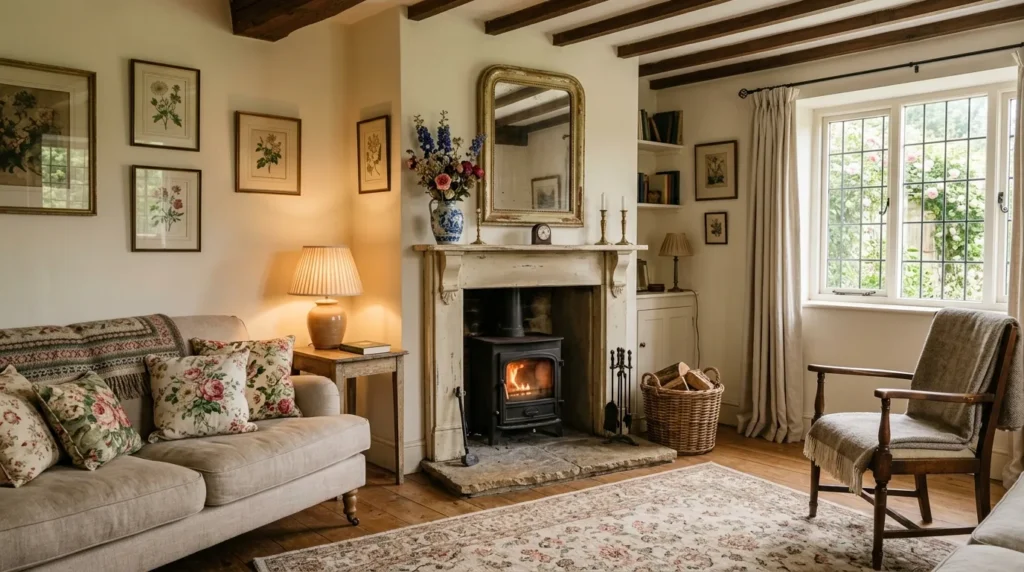
- A vintage-inspired surround gives the living room an inviting sense of history.
- Soft floral or checked textiles can add subtle cottage character.
- Aged wood and ceramic accessories complement traditional details beautifully.
- Mix vintage touches with comfortable modern seating for everyday practicality.
A vintage cottage hearth can make a fireplace corner feel collected, personal, and wonderfully lived-in. Choose a painted wood mantel, softly aged surround, or traditional tile detail, then layer the space with linen upholstery, woven baskets, old-fashioned ceramics, and muted patterns. Cream, sage, dusty blue, and warm beige work beautifully together without making the room feel overly colorful. The charm comes from small imperfections and familiar materials rather than expensive finishes. This approach is ideal for anyone who wants the living room to feel comfortable and established, as though the fireplace has naturally belonged there for years.
The trick is mixing vintage character with pieces that work for modern life. A classic-looking mirror can sit above the mantel while a comfortable contemporary sofa provides everyday seating. Choose floral or checked fabrics sparingly so the room stays relaxed rather than overly themed. Wooden furniture with visible grain adds warmth and helps connect the older-looking pieces. I’ve seen this style become especially inviting when soft lamps are used instead of relying entirely on overhead lighting. The combination of warm illumination, layered textiles, and traditional details gives the fireplace corner a distinctly cozy evening atmosphere.
21. Two-Tone Tile Design
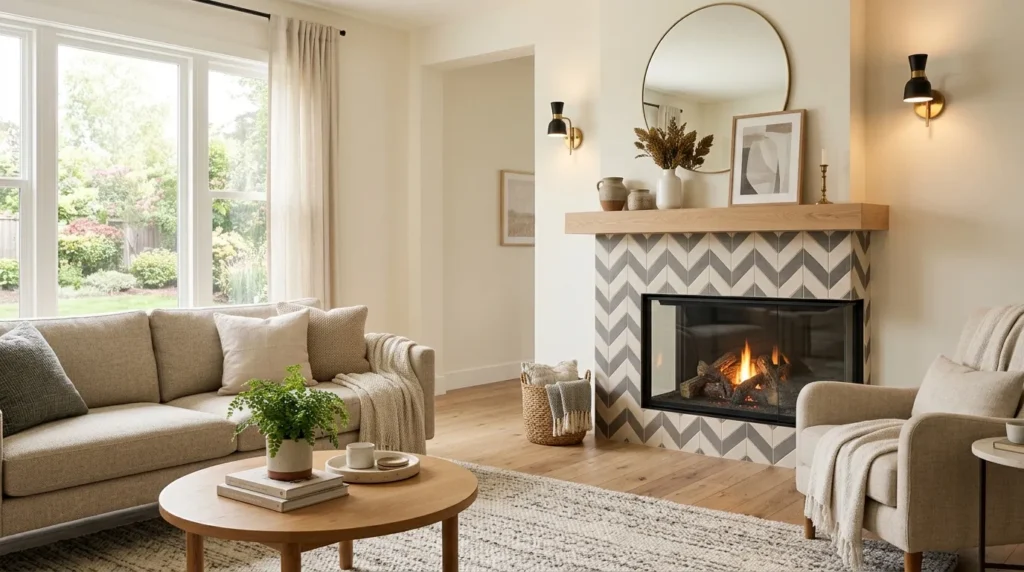
- Two tile colors create pattern and contrast without overwhelming the room.
- Use one dominant shade with a smaller contrasting border or accent.
- Simple furniture lets the tiled surround remain the main visual feature.
- Repeat one tile color elsewhere for a more connected design.
A two-tone tile surround can give a corner fireplace a custom-designed appearance without requiring an elaborate renovation. Combine a dominant neutral tile with a smaller contrasting shade, such as warm white and charcoal, cream and muted green, or beige and soft brown. The difference in color creates definition while the tile pattern adds texture and visual rhythm. Keep the furniture simple so the surround remains the main feature. This idea is especially useful when the rest of the living room has a restrained palette because the fireplace can introduce personality without forcing you to redesign the entire space.
Balance is important when using two tile colors. Let one shade cover most of the surround and use the second as a border, geometric accent, or small repeated detail. This keeps the design intentional rather than visually noisy. Repeat the accent color in a cushion, artwork frame, or small accessory somewhere else in the room for cohesion. In my experience, choosing one dominant neutral makes patterned tile much easier to live with over time. It gives you flexibility when changing seasonal decor while allowing the fireplace to remain a strong and recognizable focal point.
22. Floating Stone Hearth
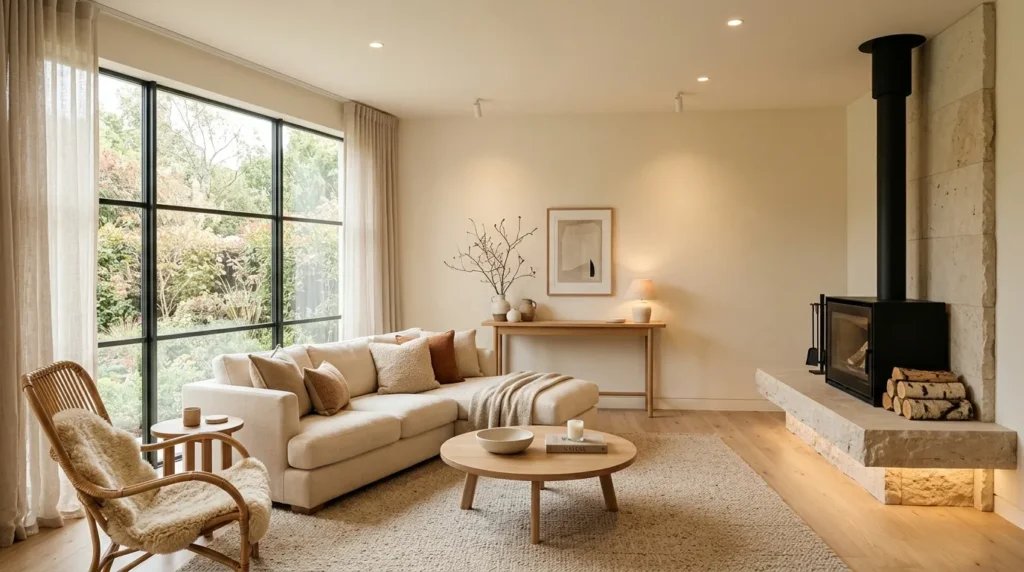
- A raised stone hearth adds dimension without requiring a large mantel.
- Light stone keeps the corner feeling bright and visually open.
- Floating construction creates a clean, contemporary appearance.
- Pair it with soft furniture to balance the harder material.
A floating stone hearth gives the fireplace area a clean architectural look while adding useful visual depth. Instead of extending heavily across the floor, the raised platform creates a subtle horizontal line that separates the fire from the surrounding surfaces. Choose pale limestone, travertine, or another warm-toned stone if you want the room to remain bright and airy. Pair it with simple furniture, natural wood, and soft textiles to balance the harder material. This design works especially well in contemporary living rooms where clean geometry and carefully chosen materials create a polished but comfortable atmosphere.
The raised structure can also make the area feel more deliberate without adding unnecessary decoration. Keep the stone finish simple and let its natural variation provide texture. A slim wood console or small basket nearby can introduce warmth, while a neutral rug visually connects the hearth with the seating area. Make sure the construction follows appropriate clearance and installation requirements for the specific fireplace. I’ve noticed that lighter stone works particularly well in smaller rooms because it provides architectural interest without visually closing in the corner. The finished space feels modern, practical, and quietly sophisticated.
23. Warm Modern Woodwork
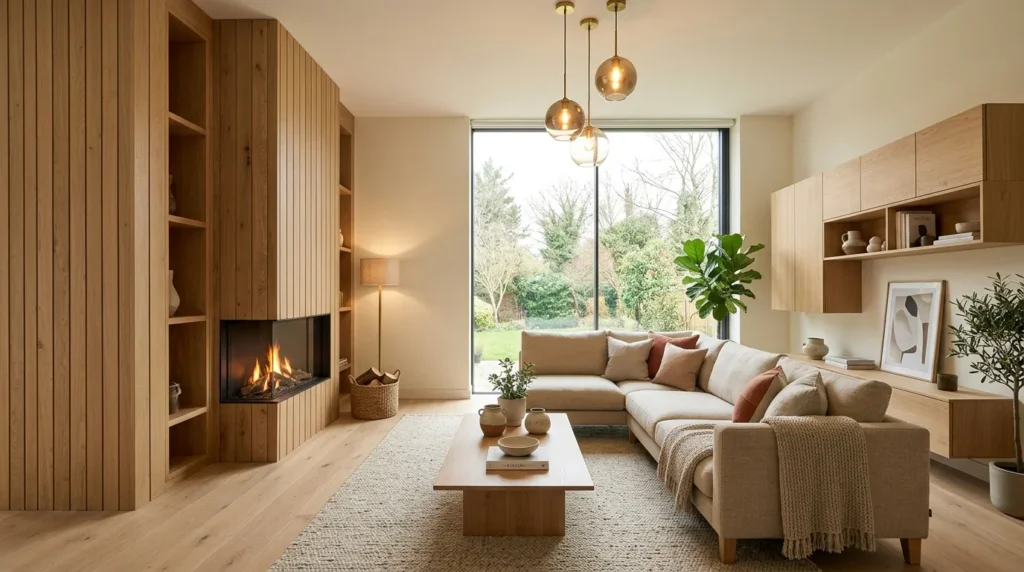
- Natural wood cabinetry brings warmth and practical storage to the fireplace wall.
- Vertical panels can add height and architectural detail.
- Combine warm timber with cream upholstery for a balanced palette.
- Keep hardware and accessories minimal for a polished finish.
Warm modern woodwork can turn a fireplace corner into a beautifully integrated part of the living room. Instead of treating the hearth as a standalone feature, surround it with natural oak panels, streamlined cabinetry, or vertical timber details. The wood adds warmth and texture while creating useful storage for books, media equipment, or everyday items. Pair the timber with cream upholstery, soft rugs, and neutral walls so the room feels balanced rather than overly dark. This approach is ideal when you want a polished contemporary space that still has enough natural warmth to feel comfortable and welcoming.
Vertical wood panels can also make the wall appear taller, particularly when their lines continue upward around the installation. Keep the cabinetry simple and choose hardware that blends into the overall design rather than becoming a separate focal point. A few ceramics, books, or plants can add personality without disrupting the clean composition. In my experience, natural oak is especially versatile because it works with both cool and warm neutral palettes. The finished corner feels custom, organized, and visually cohesive, while the surrounding woodwork provides practical function that a purely decorative treatment cannot offer.
Conclusion
A well-designed fireplace corner can completely change the atmosphere of your living room, making it feel warmer, more organized, and more inviting. From natural stone and rustic wood to sleek modern finishes and soft neutral layers, there are plenty of ways to create a space that feels uniquely yours. Choose one idea that fits your room and start with a simple change, such as a new surround, mantel, rug, or lighting detail. I’ve seen how small updates can make a surprisingly big difference. Save this post on Pinterest, try your favorite look, and share it with someone searching for living room inspiration.