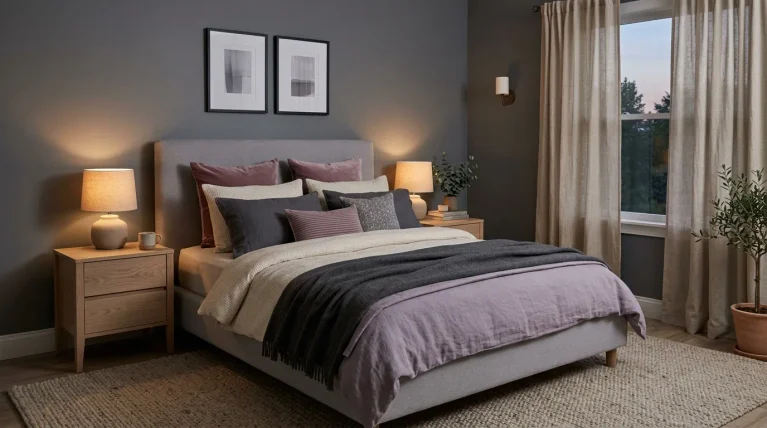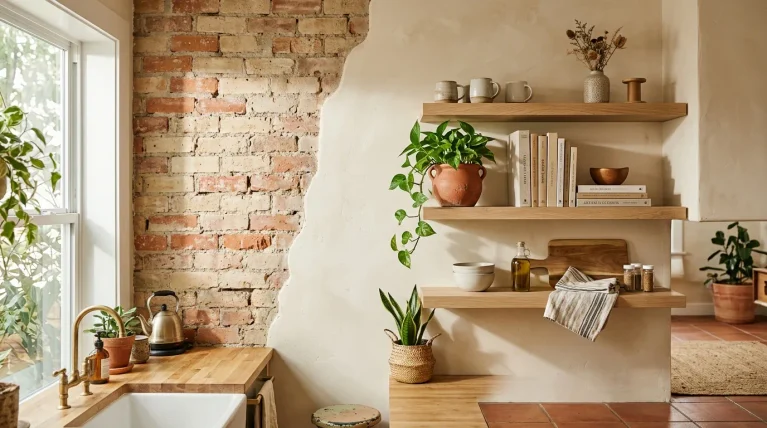
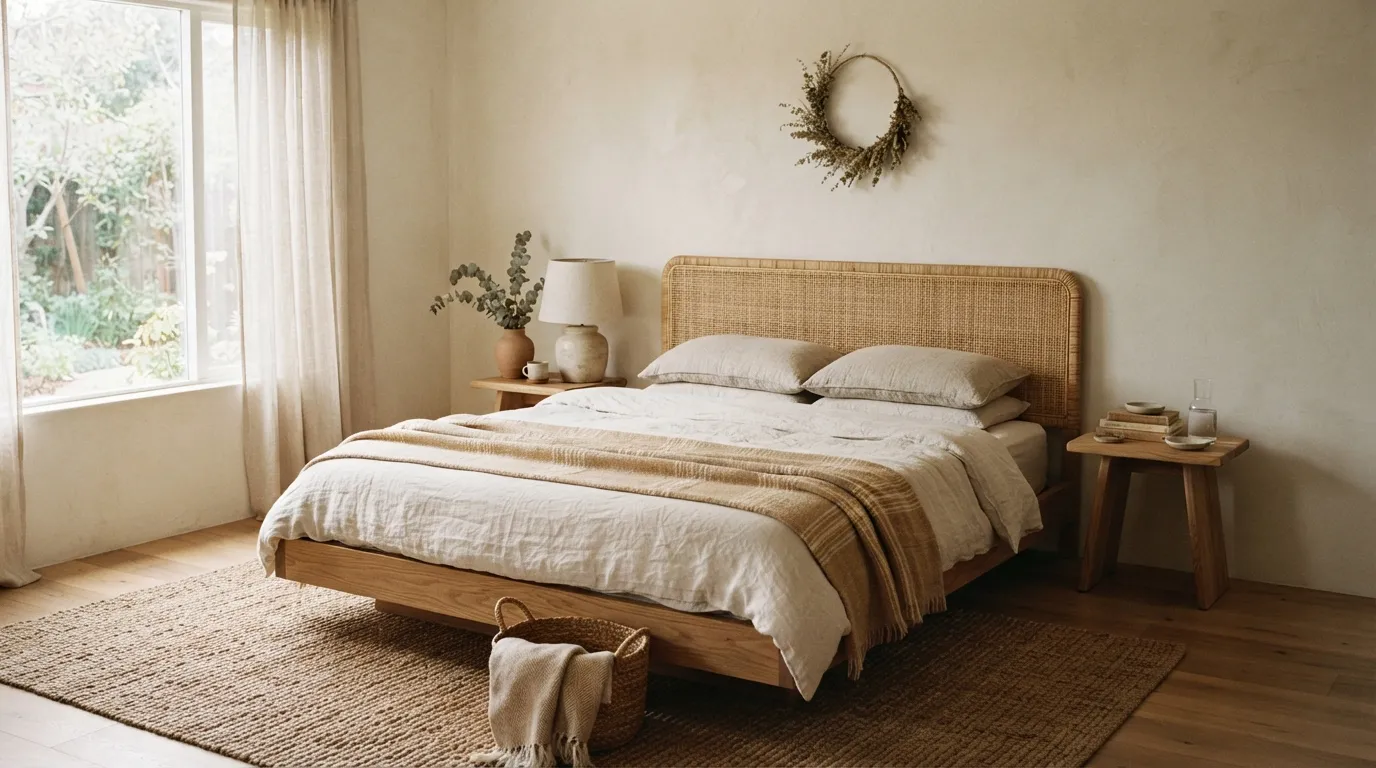
A bedroom can feel beautiful without feeling perfectly styled. Sometimes, the most inviting spaces are the ones that leave room to breathe. These wabi sabi bedroom ideas show how simple materials, soft textures, and natural imperfections can create that feeling.
If your bedroom feels cluttered, too polished, or simply lacks warmth, small changes can make a surprising difference. Think rumpled linen, raw wood, earthy colors, handmade ceramics, woven textures, and gentle lighting. You do not need to replace everything or follow a strict decorating formula. In my experience, choosing just one or two natural elements can completely shift how a room feels. Inside, you’ll find practical inspiration for creating a bedroom that feels grounded, comfortable, personal, and easy to live with. Save your favorite ideas and start with the change that feels most achievable.
1. Low Wooden Bed
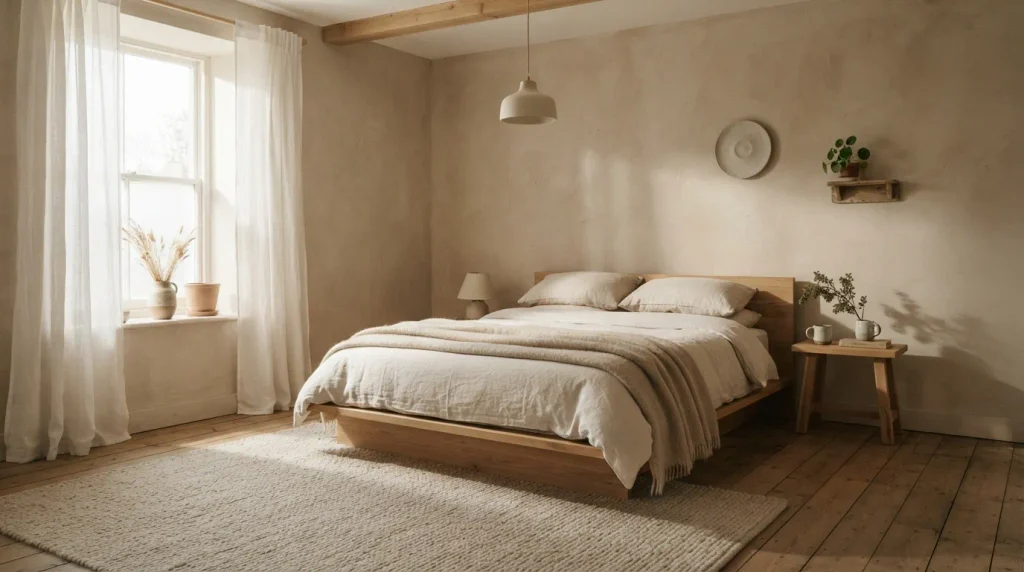
- A low bed instantly makes the room feel more grounded and visually open.
- Natural wood adds warmth without introducing heavy decoration.
- Keep the area around the frame mostly clear for a cleaner, calmer look.
- Choose a matte wood finish to highlight natural grain and subtle imperfections.
A low platform bed instantly gives a bedroom a grounded, uncluttered look that makes the whole space feel quieter. Choose a simple wooden frame with a matte, natural finish and pair it with bedding in oatmeal, cream, or soft gray. Keep the bed visually close to the floor, leaving generous open space around it instead of filling every corner. This arrangement works especially well in smaller rooms because the lower profile creates a sense of openness. In my experience, removing visual bulk from the bed is one of the easiest ways to make a room feel calmer and more intentional.
Natural materials become the star when a low wooden bed is surrounded by simple, tactile layers. Add a loosely woven throw, linen pillows, and a small wool rug beneath the frame to create warmth without making the room look busy. The result is a relaxed sleeping area with enough texture to feel inviting while still maintaining clean visual lines. Choose pale oak, walnut, or reclaimed wood according to the existing floor and furniture. A low profile also makes the ceiling appear taller, giving the room a spacious quality that feels especially useful when working with compact bedrooms or modest layouts.
Also Read : 24 Cherry Red Room Ideas for a Bold Stylish Home
2. Rumpled Linen Bedding
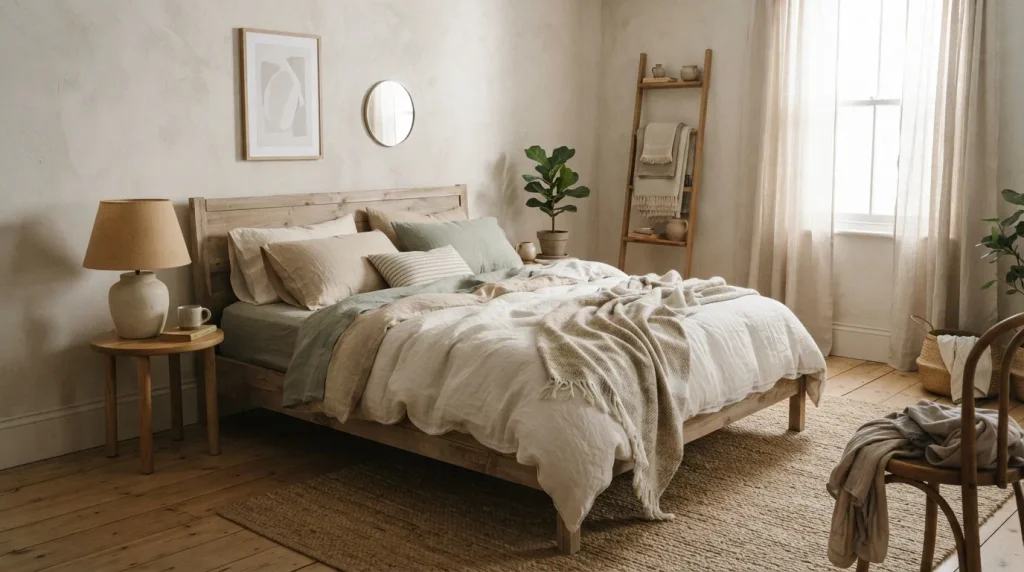
- Soft linen brings natural texture without making the bed look overly styled.
- Slightly rumpled sheets create an effortless, lived-in appearance.
- Stick to two or three muted shades for a cohesive bedding arrangement.
- Add one woven layer for warmth and visual depth.
Soft linen bedding brings effortless texture to a room while keeping the overall palette light and natural. Choose washed linen sheets in cream, sand, or muted sage for a relaxed, breathable bed that looks better slightly rumpled. Layering two or three simple textures creates depth without making the bed feel overly styled or formal. The best part is how forgiving linen can be; in my experience, it looks attractive even when the bed is not perfectly made. This simple bedding choice can give wabi sabi bedroom ideas a softer, more lived-in quality without requiring expensive decorative pieces.
Linen also works beautifully because its natural creases add character rather than looking messy. Let the duvet fall loosely over the sides, then place pillows casually instead of arranging them in perfectly symmetrical rows. Choose breathable fabrics with a slightly matte finish, avoiding shiny materials that can make the space feel more polished than relaxed. If the room feels visually plain, introduce a chunky cotton or wool throw at the foot of the bed. This combination creates gentle contrast through texture while keeping the sleeping area practical, comfortable, and easy to refresh each morning.
Also Read : 23 Corner Fireplace Ideas for a Cozy Stylish Living Room
3. Earthy Neutral Palette
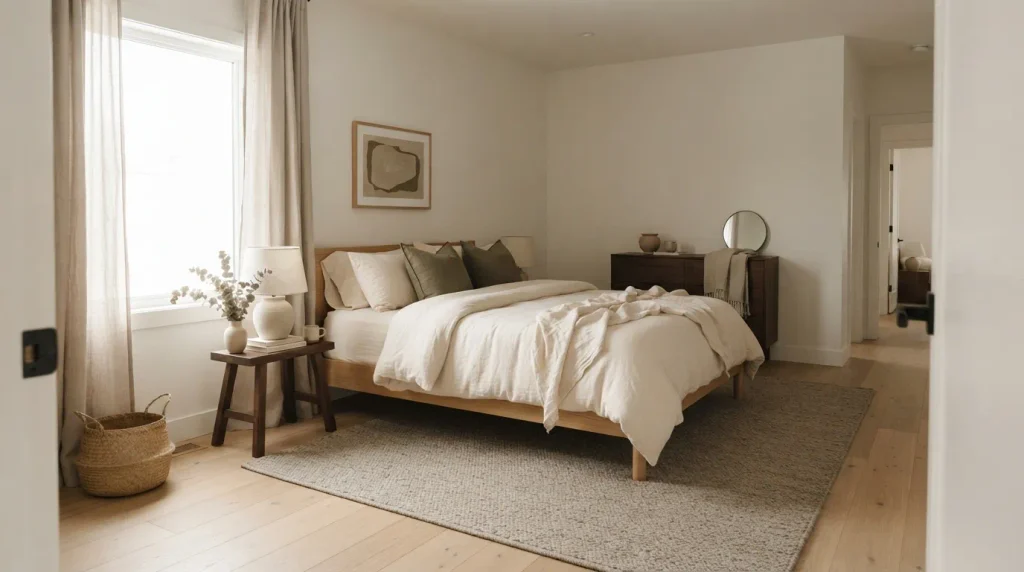
- Warm neutrals create a softer alternative to stark white interiors.
- Mix cream, beige, taupe, and muted olive instead of using one shade everywhere.
- Darker wood accents add definition without overpowering the palette.
- Repeat subtle colors across textiles and accessories for visual balance.
A muted palette can make a bedroom feel instantly more peaceful, especially when the room already has strong architectural details. Try warm white walls with bedding in beige, mushroom, dusty taupe, or faded olive, then add one darker wood accent for contrast. The colors work together because none of them demands attention, allowing texture and natural materials to become the visual focus. This approach is practical for everyday homes because it hides small imperfections better than stark white surfaces. I’ve noticed that restrained color combinations also make seasonal bedding changes easier without disrupting the room’s overall character.
Keep the palette cohesive by repeating two or three quiet shades across the bedding, curtains, rug, and accessories. Instead of matching everything exactly, vary the tones slightly so the room feels collected rather than coordinated from one store. A beige wall can sit comfortably beside cream bedding and a taupe rug, while olive cushions introduce a subtle earthy note. Natural wood adds warmth and prevents the space from feeling flat. For a small bedroom, lighter colors can also reflect daylight and make the room appear more open. The finished look feels soft, balanced, and easy to maintain throughout the year.
Also Read : 23 Moody Farmhouse Kitchen Ideas for a Cozy Rustic Space
4. Textured Plaster Walls
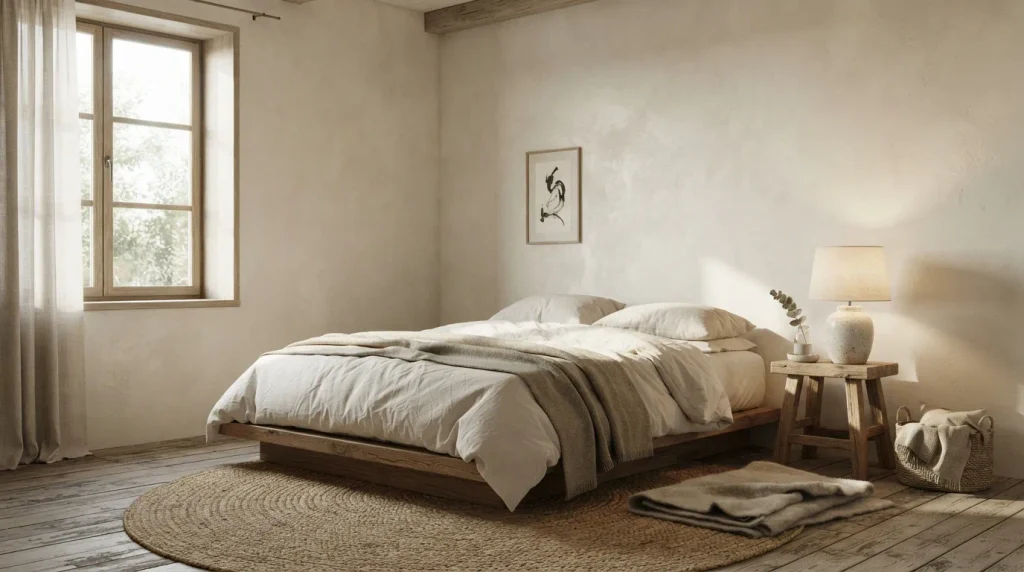
- Uneven plaster gives plain walls depth without adding artwork or clutter.
- Warm ivory and beige tones keep the texture subtle and versatile.
- Matte surfaces pair naturally with linen, wood, and woven materials.
- Use wall texture as the feature instead of covering every surface with decor.
Textured plaster walls can turn an otherwise plain bedroom into a quietly interesting space without adding visual clutter. The uneven surface catches daylight differently throughout the day, creating soft shadows and subtle variation that flat painted walls cannot provide. Choose warm ivory, chalky beige, or a pale mushroom shade to keep the effect understated. This works particularly well behind a simple bed because the wall becomes a natural backdrop rather than another decorative layer. In my experience, one textured wall is often enough to make a room feel finished, especially when the furniture and accessories are intentionally minimal.
The beauty of plaster is that it does not need to look perfectly uniform to feel polished. Small variations, visible brush marks, and gentle tonal changes can make the surface feel handcrafted and connected to natural materials. Pair it with linen bedding, unfinished wood, woven rugs, and handmade ceramics to create continuity across the room. If authentic plaster is not practical, a limewash or textured mineral paint can create a similar visual effect. Keep surrounding walls relatively simple so the texture has room to breathe. The result is a warm, tactile backdrop that adds personality while preserving the relaxed character of the space.
Also Read : 21 Sage Green Bedroom Ideas for a Calm Relaxing Retreat
5. Handmade Ceramic Accents
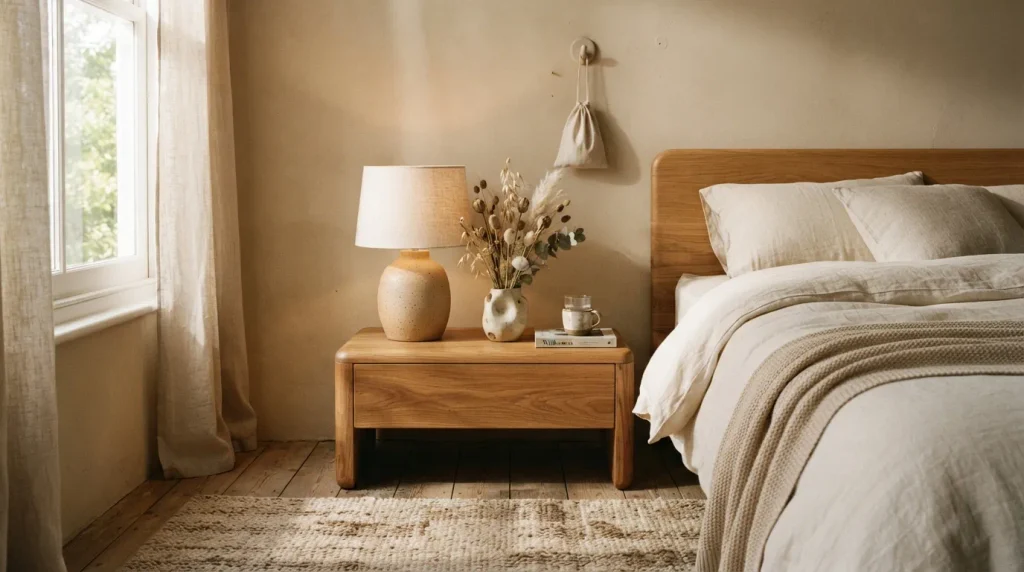
- Handmade ceramics add subtle character through irregular shapes and natural finishes.
- One or two meaningful pieces are more effective than a crowded collection.
- Matte clay surfaces complement linen, wood, and plaster beautifully.
- Choose imperfect forms that feel tactile rather than mass-produced.
Handmade ceramics bring a small but noticeable sense of character to a pared-back bedroom. A simple pottery vase, uneven ceramic lamp, or small clay dish can introduce organic shape without making the room feel decorated for display. Look for pieces with matte surfaces, soft imperfections, and earthy colors such as sand, terracotta, cream, or smoky gray. These details work especially well on a simple wooden nightstand where their irregular forms become easy focal points. The goal is not to collect lots of objects; it is to choose a few pieces that feel useful, tactile, and naturally connected to the room.
Try placing one handmade vase beside the bed with a few dried stems, then leave the surrounding surface mostly clear. This creates contrast between the organic object and the clean lines of the furniture. A ceramic lamp can provide another layer of texture while offering practical bedside lighting. I’ve seen this work well in homes where the owners wanted personality without adding shelves full of accessories. Choose pottery that shows the maker’s hand through uneven rims, subtle glaze variation, or small tonal differences. Those details make the room feel lived-in and authentic rather than perfectly staged.
Also Read : 25 Maximalist Kitchen Ideas for a Colorful Stylish Space
6. Woven Floor Textures
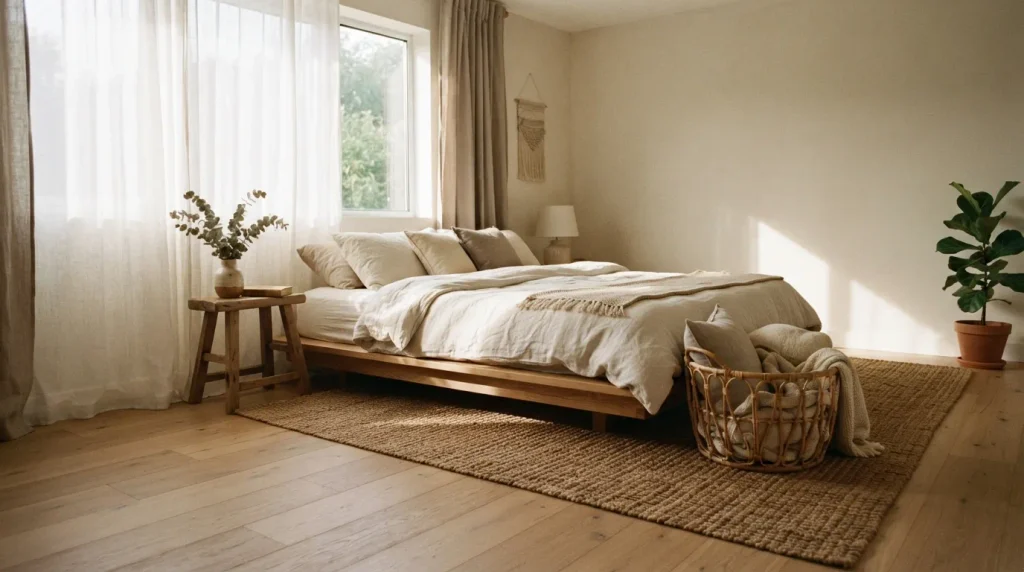
- A woven rug softens hard flooring while adding natural texture underfoot.
- Jute, sisal, wool, and cotton each create a slightly different visual effect.
- Choose a large rug that extends beyond the bed for stronger definition.
- Layer a smaller soft rug beside the bed for extra comfort.
A woven rug can make a bedroom feel warmer within minutes, especially when the existing floor is hardwood, concrete, or another hard surface. Natural fibers such as jute, sisal, cotton, and wool add texture while keeping the color palette grounded. For the strongest visual effect, choose a rug large enough to extend beyond both sides and the foot of the bed. This creates a defined sleeping zone without adding walls or bulky furniture. The subtle variation in woven fibers also complements the imperfect, natural character associated with wabi sabi interiors while giving your feet a softer landing each morning.
Consider the practical needs of the room before choosing the weave. A chunky jute rug creates strong texture and works beautifully in low-traffic bedrooms, while a flatter cotton or wool weave can feel softer and easier to walk across. Keep the color close to the flooring but slightly different so the rug adds definition without creating harsh contrast. A smaller woven runner beside the bed is another useful option when a large rug is not possible. Combined with linen, unfinished wood, and simple ceramics, natural flooring textures create a layered bedroom that feels warm without looking overly decorated.
Also Read : 25 Minimalist Christmas Decorations for a Simple Elegant Home
7. Raw Wood Nightstands
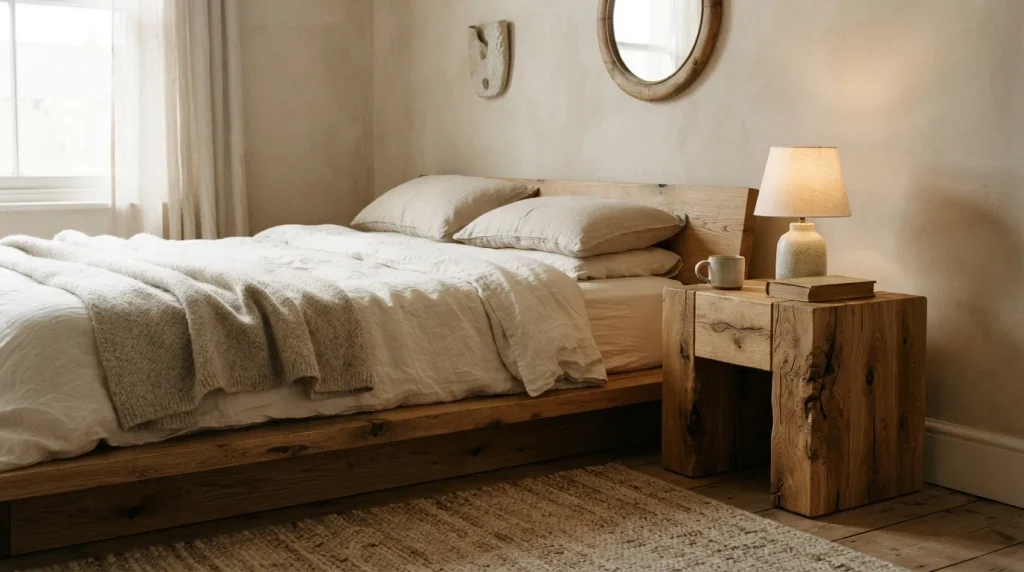
- Raw wood adds warmth and natural character beside a simple bed.
- Visible knots and grain make the furniture feel less manufactured.
- Choose one substantial piece instead of several small storage units.
- Keep the tabletop useful with only a lamp and one meaningful object.
A raw wood nightstand can add warmth to a minimalist bedroom while giving the space a useful, grounded surface. Look for unfinished or lightly sealed oak, ash, pine, or walnut with visible grain, knots, and natural variation. These details create interest without relying on decorative clutter. A simple block-style table beside a low bed works particularly well because its solid form balances soft linen and woven textiles. Keep the top practical with a small lamp, book, or ceramic dish rather than filling it with accessories. The result feels functional, tactile, and naturally connected to the rest of the room.
When choosing the right piece, pay attention to proportion as much as appearance. A nightstand that sits close to mattress height usually looks more intentional and is easier to use from bed. If storage is needed, choose a design with one drawer or an open shelf rather than a large cabinet. I’ve noticed that natural wood looks especially rich when paired with warm plaster, cream textiles, and muted flooring because each material reveals a different texture. Even a modest bedroom can feel thoughtfully designed when the furniture has honest materials, simple shapes, and enough empty space around it.
8. Organic Linen Curtains
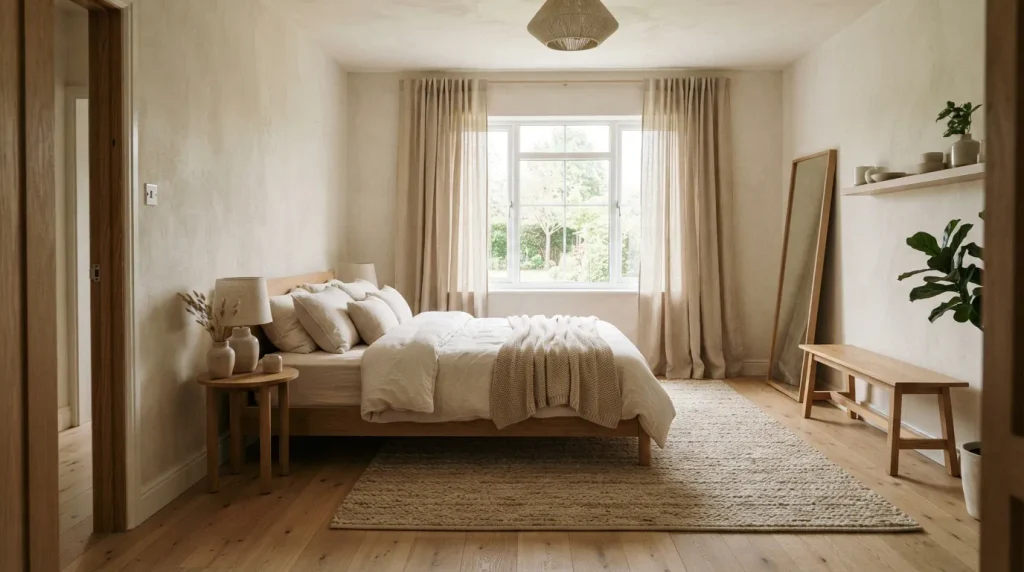
- Linen curtains soften strong daylight without making the room feel dark.
- Floor-length panels create a relaxed, flowing vertical line.
- Natural beige and oatmeal shades work with warm neutral interiors.
- Leave the window area simple so daylight remains the main feature.
Linen curtains can completely change the way natural light moves through a bedroom. Their slightly irregular weave softens bright sunlight while still allowing the room to feel airy and connected to the outdoors. Choose floor-length panels in oatmeal, warm beige, natural flax, or soft ivory, depending on your existing palette. Instead of using heavy patterned curtains, let the fabric’s texture provide visual interest. This approach works particularly well around large windows because the curtains frame the view without competing with it. In my experience, soft linen panels are one of the simplest upgrades for making a bedroom feel lighter and more relaxed.
Hang the curtain rod slightly above the window frame and allow the panels to reach the floor for a longer, more graceful silhouette. If privacy is important, layer lightweight linen with a simple sheer panel underneath. During the day, the fabric can diffuse sunlight across the bedding and walls, creating gentle tonal changes throughout the room. Keep the surrounding decor restrained so the window remains visually important. Natural linen also pairs beautifully with wood, plaster, woven fibers, and ceramic accents, making it an easy choice when building a cohesive bedroom around earthy materials.
9. Stone Bedside Tables
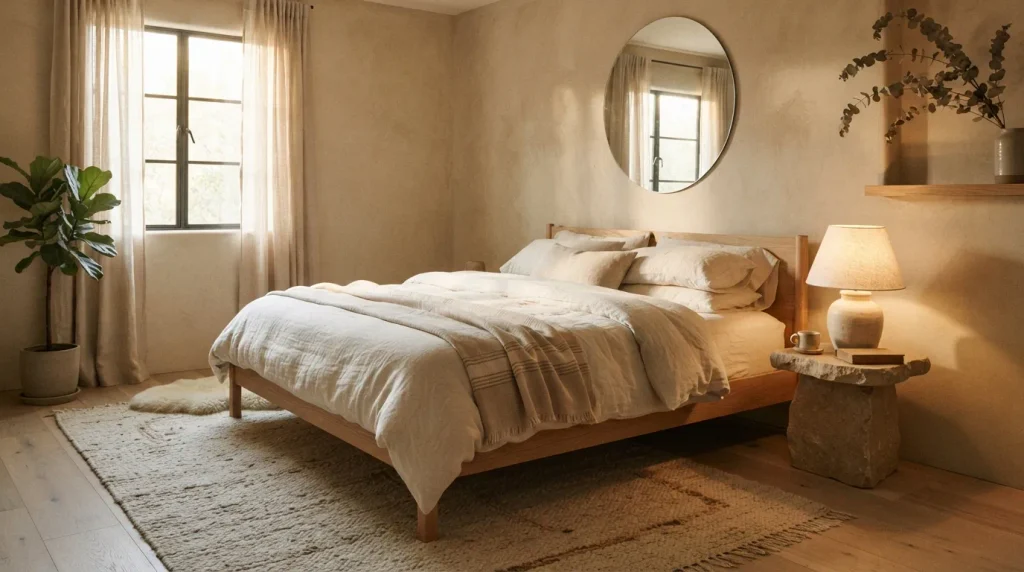
- Stone introduces a cool, grounding material beside warmer wood and linen.
- Irregular edges make the table feel naturally formed rather than overly polished.
- Choose a compact shape so the heavy material does not dominate the room.
- Pair gray or beige stone with warm textiles for balanced contrast.
A small stone bedside table introduces a grounded, architectural detail without requiring much decoration. Choose limestone, travertine, marble with soft veining, or another naturally textured stone in beige, cream, gray, or warm taupe. The material creates a subtle contrast against a wooden bed and soft linen bedding, making the room feel layered without adding bright color. Keep the shape simple and slightly irregular when possible. A compact pedestal or slab-style table can provide enough room for a lamp, book, and small ceramic object while preserving the open feeling that makes minimalist bedrooms so appealing.
Stone works best when balanced with warmer materials rather than used throughout the entire room. Place it beside an oak or walnut bed, then soften the contrast with linen bedding and a wool or woven rug. A handmade ceramic lamp can echo the table’s organic quality without matching it exactly. That variation keeps the room visually interesting. For smaller bedrooms, choose a narrow stone surface or rounded pedestal to avoid making the bedside area feel bulky. The finished combination feels refined but approachable, with natural materials providing the decoration instead of excessive accessories or strong patterns.
10. Soft Floor Cushions
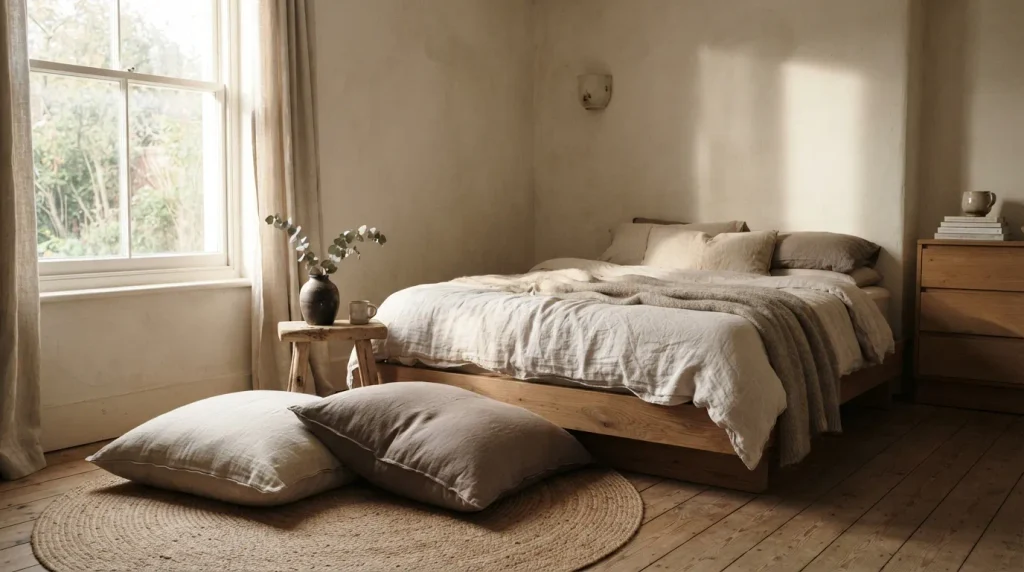
- Floor cushions create a relaxed seating spot without adding bulky furniture.
- Linen or cotton covers add softness and natural texture.
- Keep the colors close to the existing rug and bedding for visual harmony.
- A small wooden tray can turn the corner into a practical reading spot.
A pair of soft floor cushions can create a comfortable corner without introducing a large chair or bulky furniture. Choose oversized cushions covered in linen, cotton, or another natural fabric, using shades such as oatmeal, warm beige, faded olive, or soft taupe. Place them beside a window, near the foot of the bed, or on a woven rug where the floor already feels inviting. This simple arrangement gives the bedroom another useful zone for reading, stretching, or putting on shoes. It also keeps the furniture low, preserving the open sightlines that make a pared-back room feel spacious.
For a more finished setup, add a small raw-wood stool or low tray beside the cushions. It can hold a cup, book, candle, or ceramic piece without turning the corner into a full furniture arrangement. Choose cushions with visible weave or subtle wrinkles rather than perfectly smooth upholstery. I’ve noticed that slightly relaxed textiles make minimalist rooms feel much more approachable because they remove the showroom-like quality. If your bedroom is compact, two cushions can replace an occasional chair while still providing flexible seating that can be moved whenever you need more floor space.
11. Branch Arrangements
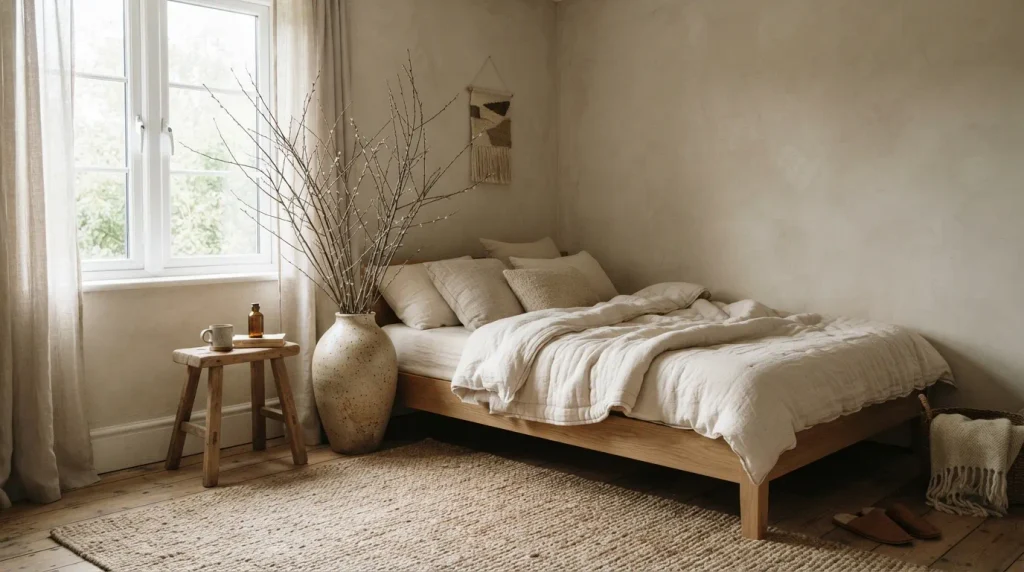
- Bare branches add height and shape without introducing bright floral color.
- A handmade ceramic vase gives the arrangement an imperfect, tactile base.
- Keep the branch count sparse for a cleaner visual effect.
- Position the arrangement where it can cast delicate shadows across the wall.
A simple branch arrangement can bring height, movement, and natural shape into a bedroom without adding a busy floral display. Choose a few slender branches with interesting curves, place them in a handmade ceramic vase, and let the arrangement remain intentionally sparse. Bare branches work particularly well because their silhouette stands out against a warm plaster wall while keeping the color palette restrained. Position the vase on a low dresser, wooden stool, or empty corner where its vertical shape balances the lower furniture. The result is decorative but understated, giving the room a connection to nature without overwhelming the space.
Choose branches that suit the scale of your bedroom rather than automatically selecting the tallest stems available. A small arrangement can look more natural on a bedside table, while taller branches can fill an empty corner beside a window. Let the shape remain slightly uneven instead of trimming every stem to identical lengths. Natural shadows become part of the display when sunlight passes through the branches, creating changing patterns on the wall throughout the day. This is an inexpensive way to add personality, especially when the rest of the room relies on quiet colors, simple furniture, and tactile materials.
12. Imperfect Clay Lamps
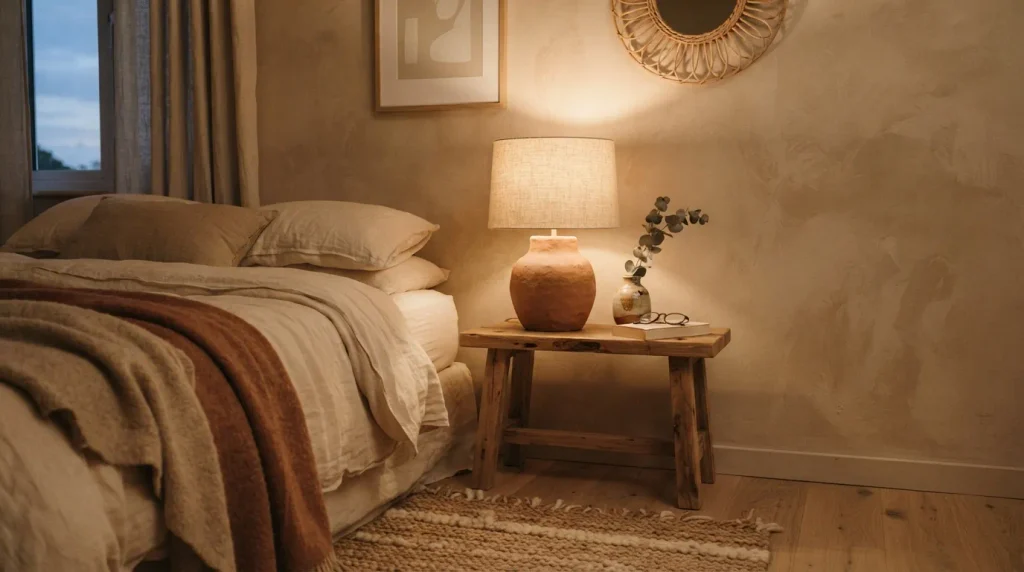
- Irregular clay shapes add handcrafted character to a simple bedside setup.
- Warm lampshades create a softer glow than bright overhead lighting.
- Choose matte beige, sand, terracotta, or muted brown finishes.
- Keep the lamp design simple so its texture remains the focal detail.
An imperfect clay lamp can make a bedside area feel warm and handcrafted while providing useful evening lighting. Look for a lamp with an uneven ceramic base, matte finish, or subtle handmade markings in shades of sand, cream, terracotta, or muted brown. Pair it with a natural linen or cotton shade that diffuses the light gently. Placing the lamp on a raw wooden nightstand creates a strong material contrast without needing additional decoration. This is one of the easiest ways to introduce handmade character because the piece serves both a practical purpose and a visual one.
Lighting becomes especially important after sunset, when the colors and textures of a bedroom can otherwise disappear into shadow. Use a warm-toned bulb and position the lamp so its glow falls softly across the wall rather than shining directly toward the bed. A small ceramic vase or book can complete the surface, but avoid filling every available space. In my experience, one distinctive handmade lamp often has more impact than several decorative objects because it creates both atmosphere and personality. The combination of warm light, clay, wood, and linen gives the room a softer evening character.
13. Muted Olive Accents
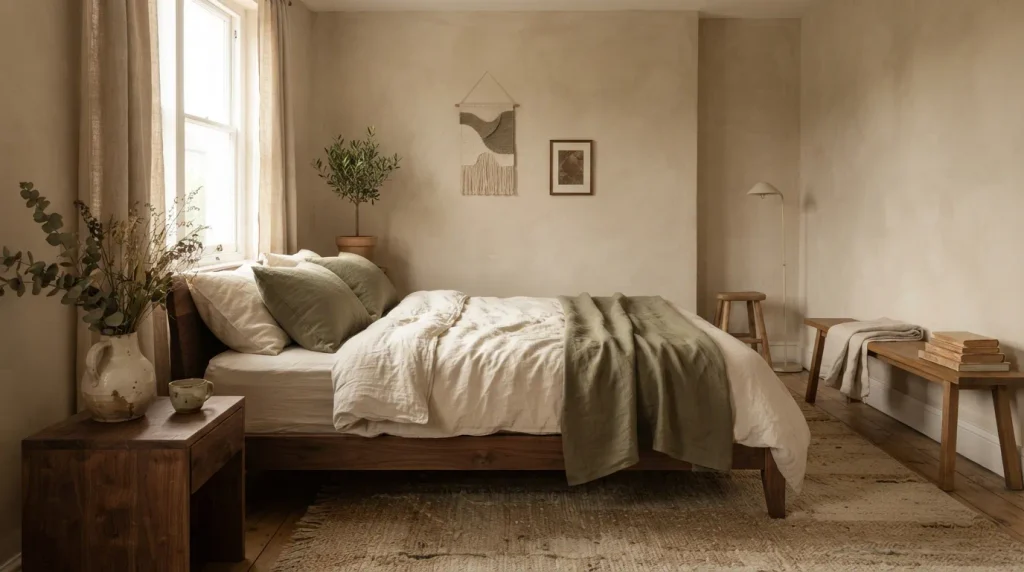
- Muted olive adds a gentle connection to nature without becoming a bold color statement.
- Use it through pillows, throws, artwork, or a small upholstered piece.
- Pair olive with cream, beige, warm white, and natural wood.
- Keep the green slightly dusty for a softer, more timeless effect.
Muted olive is an easy way to introduce a natural color while keeping a bedroom visually calm. Instead of using bright green, choose dusty olive, sage, or faded moss through a few carefully selected accents. An olive linen cushion, lightweight throw, or small upholstered stool can provide enough contrast to keep cream and beige surfaces from feeling flat. The color works especially well with warm wood and textured plaster because its earthy undertone connects naturally with both materials. Used sparingly, this shade adds personality while preserving the quiet, understated character that makes natural bedroom styling so appealing.
The key is to repeat olive subtly rather than turning it into the dominant color. For example, pair two muted green cushions with a small ceramic vase or artwork containing a similar undertone. Keep the larger surfaces neutral so the accent remains visually soft. I’ve noticed that dusty greens are particularly forgiving because they work across different seasons and lighting conditions without looking overly trendy. If your room already has plants, olive accents can also bridge the gap between greenery and neutral furnishings. The finished space feels organic, balanced, and gently connected to the natural world.
14. Open Wood Shelving
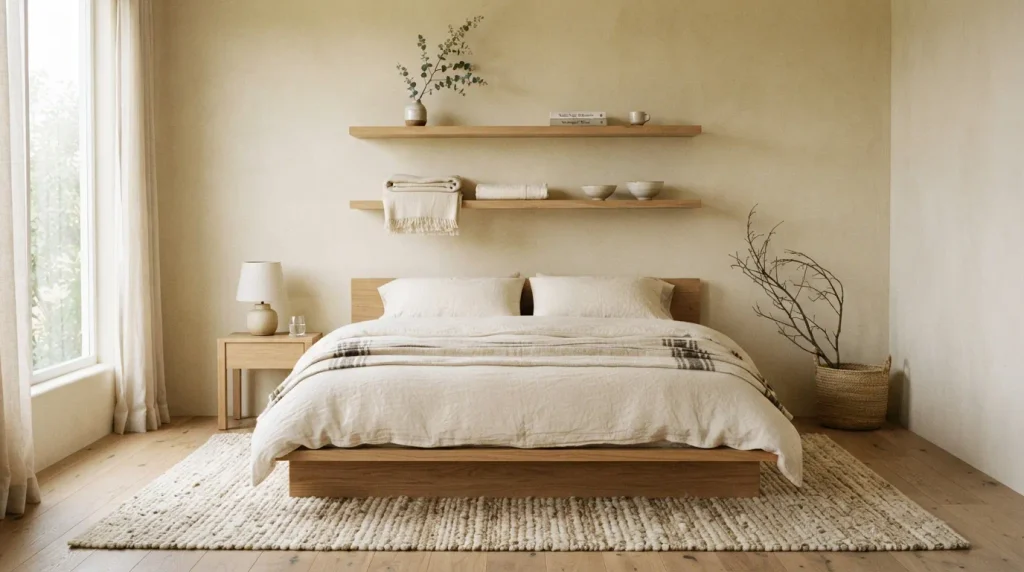
- Open shelves provide storage without making the walls feel visually heavy.
- Natural wood adds warmth against plaster or painted surfaces.
- Display only useful or meaningful objects to avoid visual clutter.
- Leave generous empty space between pieces for a lighter composition.
Open wood shelving offers practical storage while keeping a bedroom visually light. Two or three simple floating shelves in oak, ash, or reclaimed wood can hold books, ceramics, folded linens, or a small branch arrangement without requiring a large cabinet. The open design allows the wall behind each shelf to remain visible, which helps preserve a sense of space. Keep the styling intentionally sparse, using objects with natural materials and muted colors. This approach works particularly well in bedrooms where floor space is limited and additional furniture would make the room feel crowded.
Arrange objects at different heights rather than lining everything up in a rigid row. A small stack of books can sit beside a ceramic vessel, while an empty section of shelf provides necessary visual breathing room. Avoid treating the shelves as a display case that needs to be filled completely. In my experience, leaving about one-third of the shelf open can make even a small collection feel more considered. Choose items that are genuinely useful or personally meaningful, so the storage remains functional rather than becoming another source of clutter. The result feels organized, warm, and naturally collected.
15. Natural Fiber Headboard
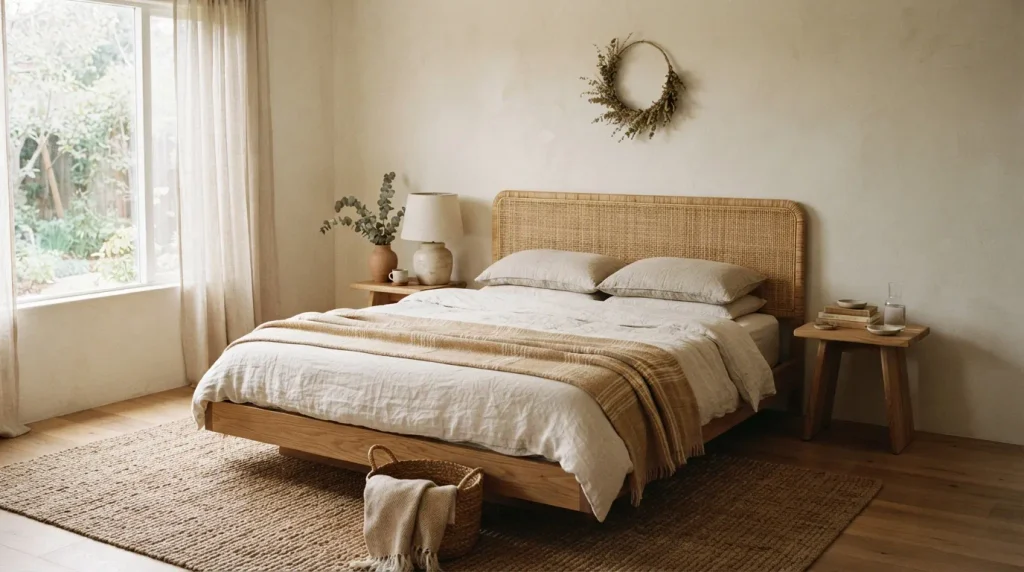
- Woven materials introduce texture without requiring bold patterns.
- Rattan, cane, seagrass, and rush create different levels of visual detail.
- Choose a simple headboard shape to keep the bedroom feeling uncluttered.
- Pair natural fibers with linen and wood for a cohesive material palette.
A natural fiber headboard can become the main visual anchor of a bedroom while keeping the overall design relaxed and understated. Rattan, cane, rush, seagrass, or woven reed can introduce pattern through texture rather than printed fabric. Choose a simple silhouette with an open weave so the wall remains partially visible behind it. This works beautifully with a low wooden bed because the combination creates layers of natural material without adding heavy visual weight. The warm honey, beige, or sandy tones of woven fibers also pair naturally with cream linen and earthy neutral walls.
Keep the rest of the furniture simple so the headboard has enough space to stand out. A woven design can look especially effective against a warm white or lightly textured plaster wall, where its pattern creates subtle shadows throughout the day. If the room already contains several wood elements, choose a slightly lighter fiber tone to prevent everything from blending together. Natural imperfections in the weave are part of the appeal, so avoid pieces that look overly glossy or perfectly uniform. The finished arrangement feels warm, tactile, and relaxed while still giving the bed a defined focal point.
13. Muted Olive Accents
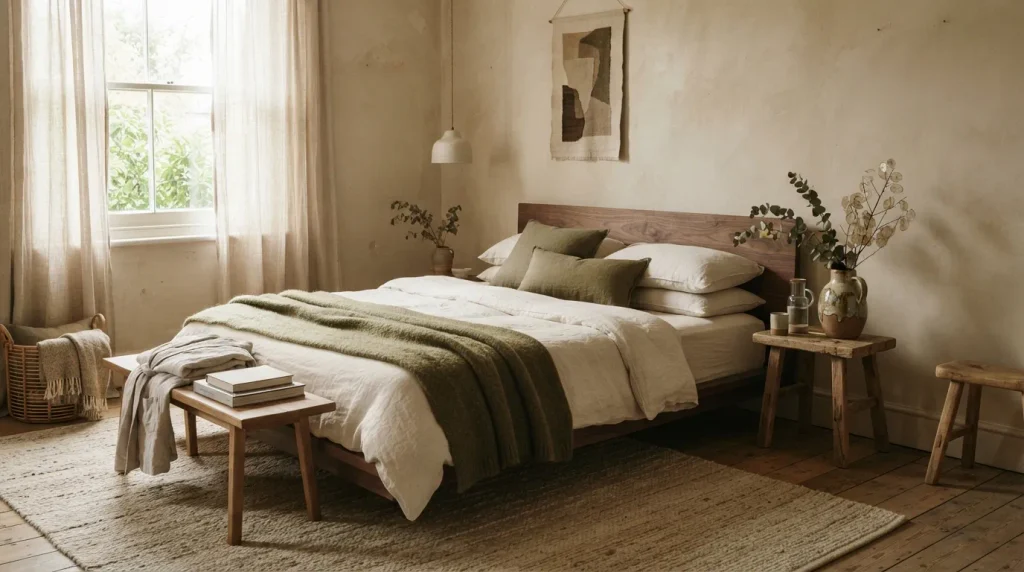
- Muted olive adds a gentle connection to nature without becoming a bold color statement.
- Use it through pillows, throws, artwork, or a small upholstered piece.
- Pair olive with cream, beige, warm white, and natural wood.
- Keep the green slightly dusty for a softer, more timeless effect.
Muted olive is an easy way to introduce a natural color while keeping a bedroom visually calm. Instead of using bright green, choose dusty olive, sage, or faded moss through a few carefully selected accents. An olive linen cushion, lightweight throw, or small upholstered stool can provide enough contrast to keep cream and beige surfaces from feeling flat. The color works especially well with warm wood and textured plaster because its earthy undertone connects naturally with both materials. Used sparingly, this shade adds personality while preserving the quiet, understated character that makes natural bedroom styling so appealing.
The key is to repeat olive subtly rather than turning it into the dominant color. For example, pair two muted green cushions with a small ceramic vase or artwork containing a similar undertone. Keep the larger surfaces neutral so the accent remains visually soft. I’ve noticed that dusty greens are particularly forgiving because they work across different seasons and lighting conditions without looking overly trendy. If your room already has plants, olive accents can also bridge the gap between greenery and neutral furnishings. The finished space feels organic, balanced, and gently connected to the natural world.
14. Open Wood Shelving
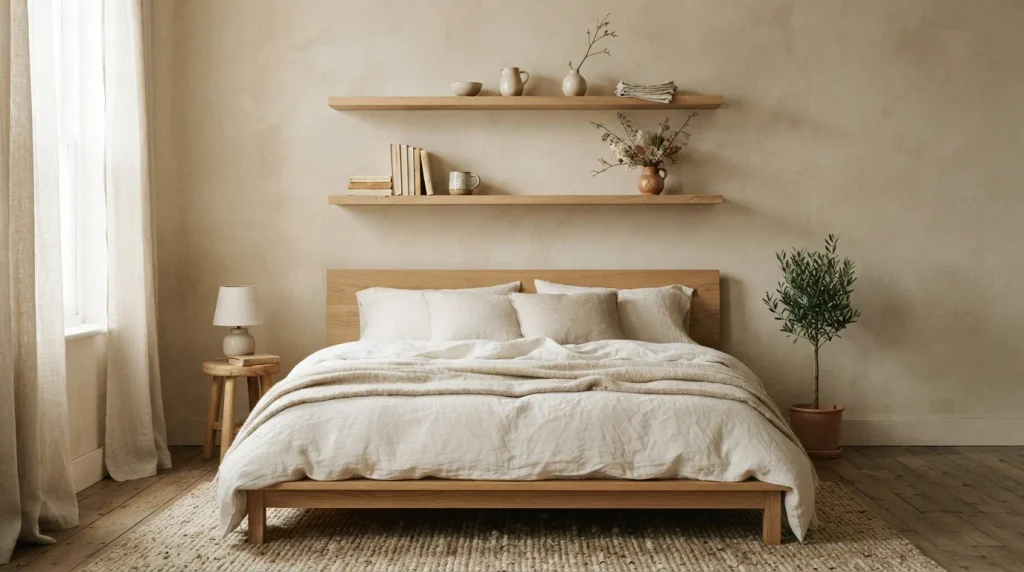
- Open shelves provide storage without making the walls feel visually heavy.
- Natural wood adds warmth against plaster or painted surfaces.
- Display only useful or meaningful objects to avoid visual clutter.
- Leave generous empty space between pieces for a lighter composition.
Open wood shelving offers practical storage while keeping a bedroom visually light. Two or three simple floating shelves in oak, ash, or reclaimed wood can hold books, ceramics, folded linens, or a small branch arrangement without requiring a large cabinet. The open design allows the wall behind each shelf to remain visible, which helps preserve a sense of space. Keep the styling intentionally sparse, using objects with natural materials and muted colors. This approach works particularly well in bedrooms where floor space is limited and additional furniture would make the room feel crowded.
Arrange objects at different heights rather than lining everything up in a rigid row. A small stack of books can sit beside a ceramic vessel, while an empty section of shelf provides necessary visual breathing room. Avoid treating the shelves as a display case that needs to be filled completely. In my experience, leaving about one-third of the shelf open can make even a small collection feel more considered. Choose items that are genuinely useful or personally meaningful, so the storage remains functional rather than becoming another source of clutter. The result feels organized, warm, and naturally collected.
15. Natural Fiber Headboard
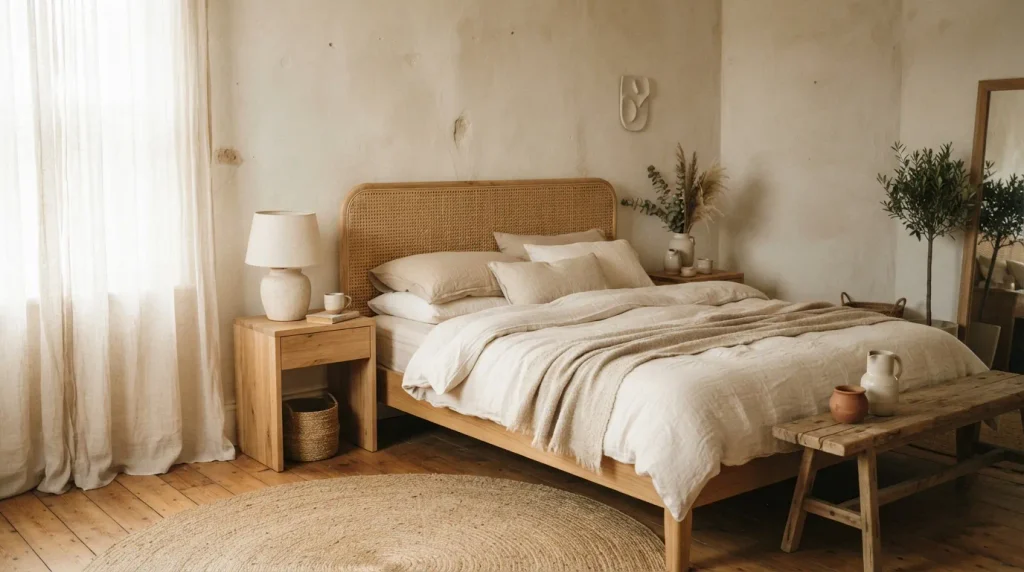
- Woven materials introduce texture without requiring bold patterns.
- Rattan, cane, seagrass, and rush create different levels of visual detail.
- Choose a simple headboard shape to keep the bedroom feeling uncluttered.
- Pair natural fibers with linen and wood for a cohesive material palette.
A natural fiber headboard can become the main visual anchor of a bedroom while keeping the overall design relaxed and understated. Rattan, cane, rush, seagrass, or woven reed can introduce pattern through texture rather than printed fabric. Choose a simple silhouette with an open weave so the wall remains partially visible behind it. This works beautifully with a low wooden bed because the combination creates layers of natural material without adding heavy visual weight. The warm honey, beige, or sandy tones of woven fibers also pair naturally with cream linen and earthy neutral walls.
Keep the rest of the furniture simple so the headboard has enough space to stand out. A woven design can look especially effective against a warm white or lightly textured plaster wall, where its pattern creates subtle shadows throughout the day. If the room already contains several wood elements, choose a slightly lighter fiber tone to prevent everything from blending together. Natural imperfections in the weave are part of the appeal, so avoid pieces that look overly glossy or perfectly uniform. The finished arrangement feels warm, tactile, and relaxed while still giving the bed a defined focal point.
19. Limewashed Ceiling
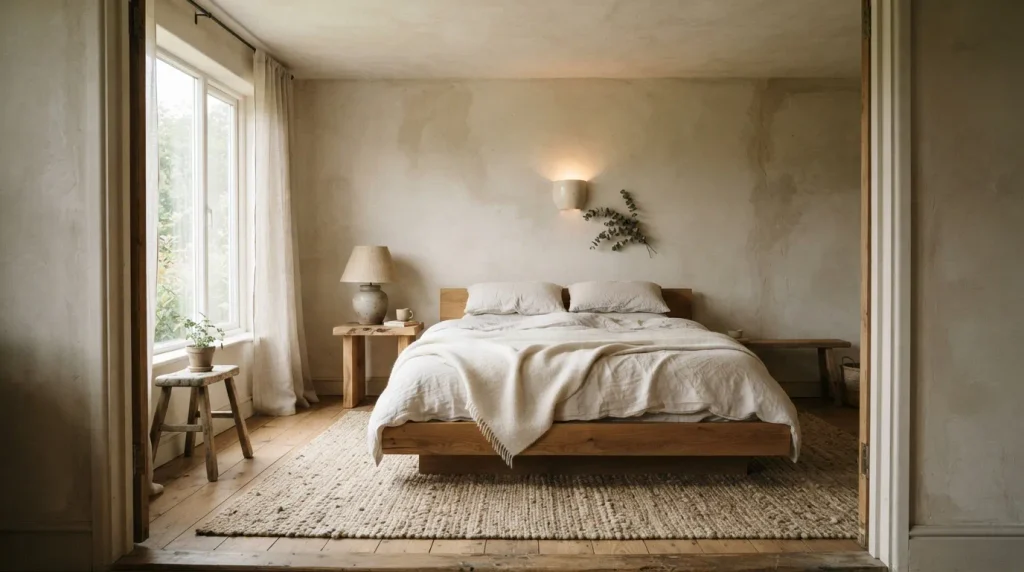
- A softly varied ceiling adds architectural interest without competing with the furnishings.
- Warm white and pale beige tones keep the effect subtle.
- Limewash works especially well with plaster walls and natural wood.
- Use the ceiling as a quiet finishing detail rather than a dramatic feature.
A softly limewashed ceiling can add another layer of natural texture while keeping the bedroom visually calm. Instead of a perfectly flat white surface, the subtle tonal variation creates gentle depth that becomes noticeable as daylight moves across the room. Choose warm white, ivory, or a very pale beige so the ceiling still feels bright and open. This treatment works especially well with plaster walls, linen bedding, and unfinished wood because the materials share a softly matte appearance. For rooms with high ceilings, the effect can make the architecture feel more connected to the earthy furnishings below.
The finish does not need to be dramatic to make a difference. A lightly mottled surface can catch morning and evening light in different ways, creating an understated sense of movement above the bed. If you are considering this among your wabi sabi bedroom ideas, keep the rest of the ceiling details simple and avoid glossy fixtures that interrupt the effect. A small pendant in linen, paper, clay, or woven fiber can complement the finish beautifully. The result is a cohesive room where even the ceiling contributes to the natural, imperfect character without becoming the main visual attraction.
20. Asymmetrical Wall Art
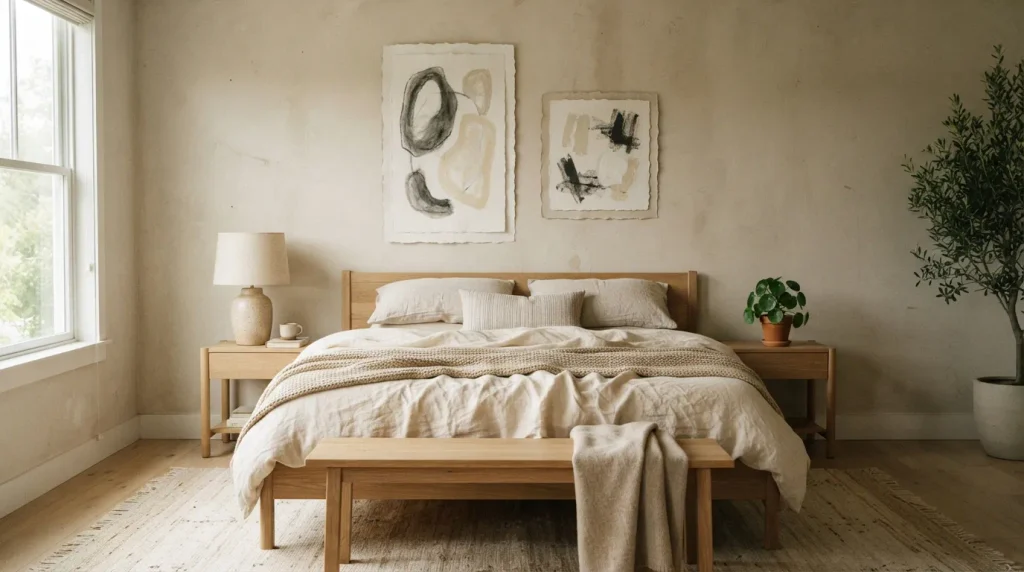
- Asymmetrical artwork creates interest without making the wall feel overly formal.
- Choose abstract pieces with soft, earthy colors and tactile surfaces.
- Leave generous wall space around the arrangement.
- Use natural wood or handmade frames to connect the artwork with the furniture.
Asymmetrical wall art can bring personality to a pared-back bedroom without making the space feel overly decorated. Instead of creating a perfectly centered gallery wall, hang two related pieces at slightly different heights or position one larger artwork beside a smaller one. Choose abstract forms, botanical sketches, handmade paper, or subdued landscapes in cream, charcoal, clay, taupe, or dusty olive. The uneven arrangement creates gentle visual movement while preserving plenty of empty wall space. This is particularly effective above a low bed because the artwork adds vertical interest without requiring a large headboard or collection of accessories.
Keep the artwork connected through color, texture, or subject rather than making every frame identical. Natural oak, walnut, or simple handmade frames can reinforce the material palette already present in the room. Leave enough breathing room between pieces and avoid filling the entire wall just because there is available space. I’ve noticed that a slightly imperfect arrangement often feels more relaxed than a rigid grid, especially when the rest of the bedroom uses organic shapes. The finished wall should look collected over time, not like every object was purchased as part of one matching set.
21. Low Reading Nook
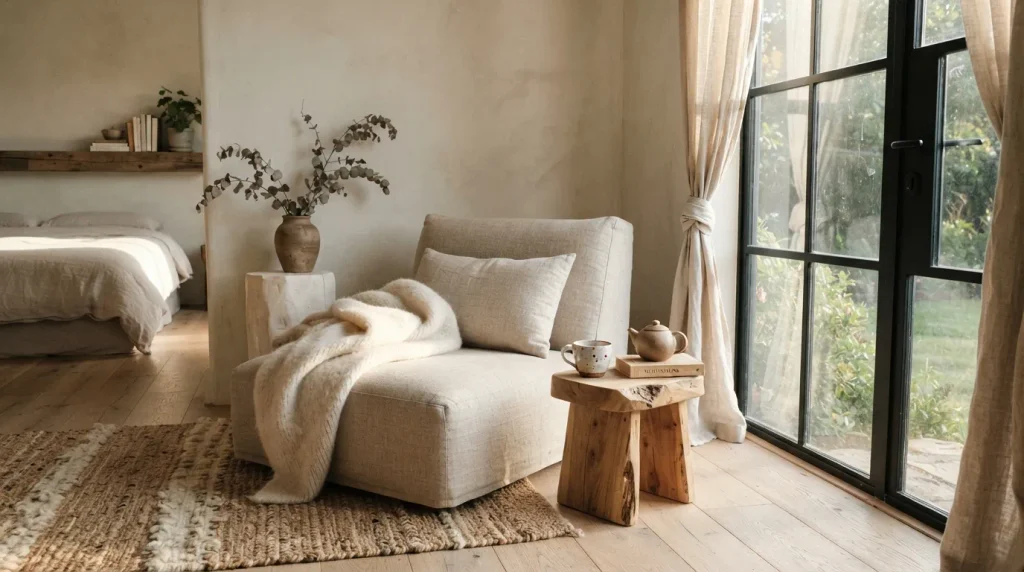
- A low reading nook adds function without filling the room with bulky furniture.
- Place it near a window to make natural light part of the setup.
- A floor chair, cushion, or low bench keeps the profile visually light.
- Add one small table for a book, cup, or reading lamp.
A low reading nook can turn an unused bedroom corner into a useful retreat while maintaining the room’s simple visual flow. Start with a floor cushion, low linen chair, or compact wooden bench positioned near a window where natural light is strongest. Add a small stool or side table for a book and cup, then finish with one soft wool throw. Keep the colors close to the bedding and rug so the nook feels like part of the same composition. This creates a practical secondary zone without introducing the visual weight of a conventional armchair or large lounge setup.
Think about comfort as carefully as appearance, especially if you plan to use the space regularly. A supportive floor chair may work better than a decorative cushion if you enjoy longer reading sessions. Add a small warm lamp for evenings and keep the surrounding floor clear so the area remains easy to access. In my experience, giving an empty corner one clear purpose can make a bedroom feel more thoughtfully planned without adding much furniture. The finished nook provides a quiet place to read, journal, or simply sit while keeping the overall room natural, flexible, and uncluttered.
Conclusion
Creating a calmer bedroom does not require a complete makeover. The right textures, natural materials, muted colors, and thoughtful imperfections can transform an ordinary space into a warm retreat. These wabi sabi bedroom ideas are meant to inspire simple changes that feel beautiful and practical in real homes. Start with rumpled linen, a wooden accent, soft lighting, or one handmade piece, then build slowly from there. I’ve seen how small changes like these can completely transform a space. Save this article on Pinterest, try your favorite idea, and share it with someone who would love a more peaceful bedroom. Let your space become beautifully yours.