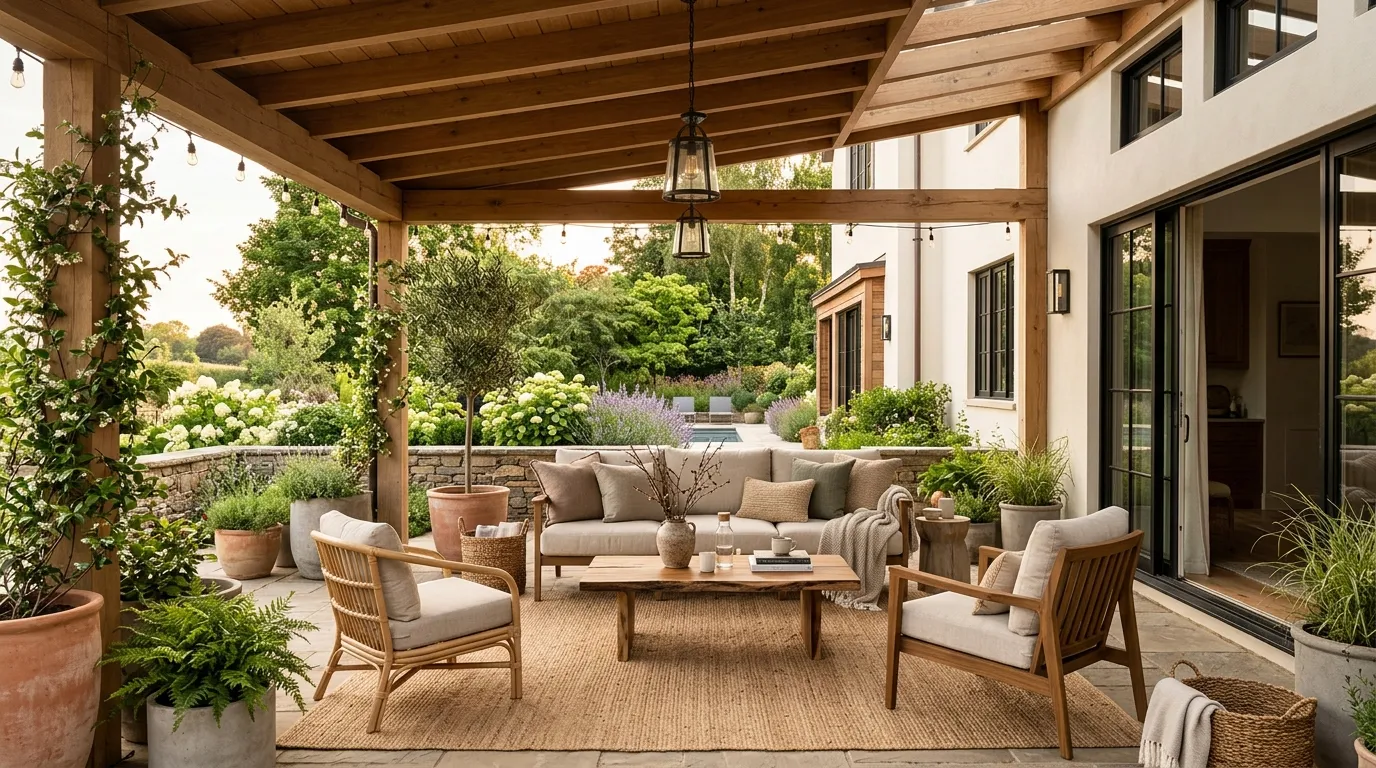
Your patio could become the favorite room of your home—without adding another indoor room.These covered patio design ideas can turn an overlooked outdoor area into a beautiful place to relax, dine, entertain, and enjoy everyday moments.
This collection brings together 25 practical styles, from cozy lounge seating and warm wood ceilings to outdoor kitchens, privacy screens, greenery-filled retreats, and flexible multi-zone layouts. Whether you have a compact patio or a spacious backyard, you’ll find ideas that can be adapted to your home, budget, and lifestyle. In my experience, the biggest transformations often come from simple changes: better furniture placement, thoughtful lighting, layered textures, and a clear purpose for the space. Use these ideas as inspiration, then choose the details that make your own patio feel comfortable and genuinely yours.
1. Slatted Wood Roof
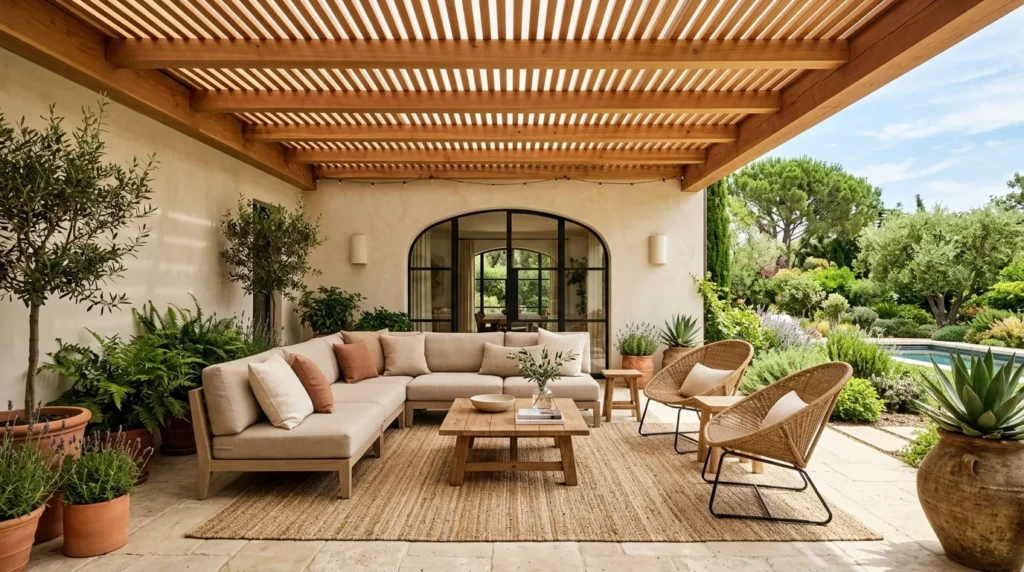
- Creates beautiful patterns of sunlight and shade across the patio.
- Warm wood tones make the outdoor area feel natural and welcoming.
- Open slats provide shade while keeping the space visually airy.
- Simple furniture allows the roof structure to remain the focal point.
- Weather-resistant materials make the setup practical for everyday use.
A slatted wood roof can instantly give a plain patio more structure and personality without making the space feel enclosed. Evenly spaced beams filter sunlight throughout the day, creating soft shadows that move naturally across the furniture and flooring. Warm cedar or wood-look finishes pair beautifully with neutral cushions, stone surfaces, and leafy plants. This approach works especially well beside a modern or traditional home because the natural material softens hard exterior lines. In my experience, keeping the furniture understated allows the overhead structure to become the visual feature while preserving a relaxed, spacious feeling.
For a practical arrangement, place a comfortable outdoor sofa beneath the covered area and position two lounge chairs across from it. A low wooden coffee table can anchor the seating without interrupting movement between the house and garden. Choose outdoor fabrics in cream, beige, or muted green to complement the warm roof tones. If the patio receives heavy rain, select treated wood or durable composite materials designed for outdoor exposure. The finished space feels polished without being overly formal, and the open roof design leaves plenty of opportunity to add pendant lighting, curtains, plants, or seasonal accessories later.
2. Cozy Lounge Seating
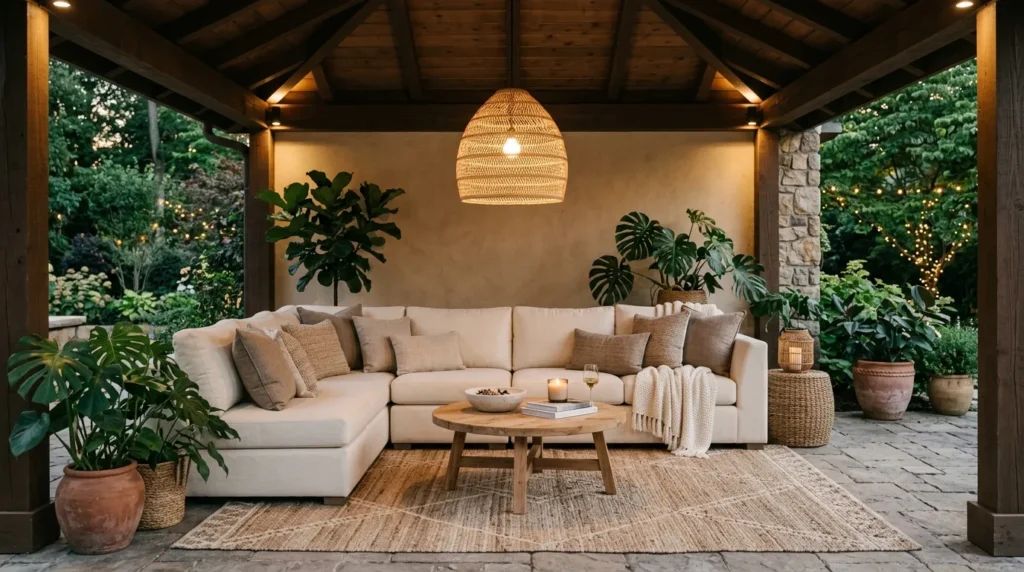
- A deep sectional makes the patio feel like an outdoor living room.
- Layered cushions add softness and visual depth.
- A low coffee table keeps drinks and accessories within easy reach.
- Warm lighting creates a welcoming atmosphere after sunset.
- Movable chairs make the arrangement flexible for guests and family use.
A comfortable seating arrangement can transform a covered outdoor area into a place where people naturally want to linger. Start with a generously cushioned sectional and arrange it so the seating faces the garden or a central coffee table. This creates an easy conversation zone while keeping the surrounding view open. Neutral upholstery in cream, taupe, or warm gray gives the space a relaxed foundation that works with almost any exterior. I’ve noticed that combining one substantial seating piece with lightweight chairs creates a finished look without making the patio feel crowded or difficult to navigate.
Small details can make this outdoor lounge feel considerably more comfortable and intentional. Add weather-resistant cushions in two or three coordinating shades, then introduce woven baskets, textured rugs, or natural planters for extra dimension. Keep a clear walking path between the house and seating area so everyday movement remains effortless. For evenings, use warm outdoor lighting near the seating rather than one bright overhead source. This creates a softer glow and makes the space feel inviting after dark. The result is a practical retreat that works equally well for morning coffee, afternoon reading, casual entertaining, or relaxed family gatherings.
3. Bright White Palette
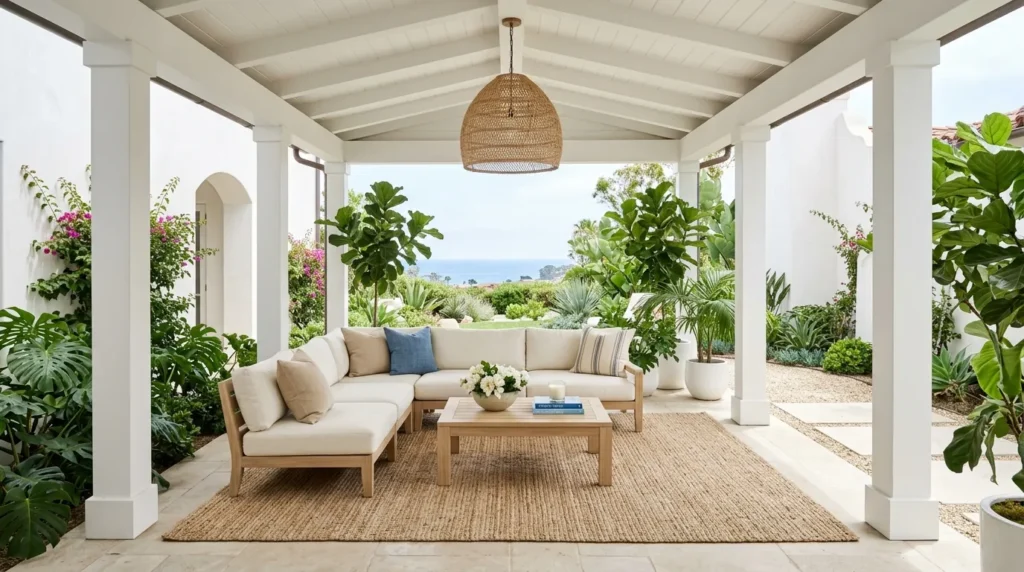
- White finishes make shaded spaces appear brighter and more open.
- Pale furniture keeps the visual weight of the patio light.
- Green plants provide natural contrast against the neutral backdrop.
- Wood accents add warmth to an otherwise crisp color scheme.
- Light surfaces complement coastal, modern, and transitional homes.
A bright white palette can make a covered outdoor area feel surprisingly spacious, especially when the roof naturally limits direct sunlight. White columns, cream cushions, pale walls, and light flooring reflect available daylight and create a fresh visual effect. Natural wood furniture prevents the space from looking too stark, while green plants add an easy touch of contrast. This style works beautifully when the patio connects directly to a light-colored home. Instead of competing with the surrounding architecture, the simple palette creates a smooth transition between indoor and outdoor spaces, making the entire property feel more cohesive and thoughtfully designed.
Keeping a pale outdoor space attractive also requires choosing materials that can handle everyday exposure. Look for performance fabrics that resist fading and moisture, particularly for cushions and rugs. A textured ivory rug can visually define the seating area while adding softness underfoot. Introduce planters in stone, terracotta, or natural wood for subtle variation without losing the clean appearance. In my experience, the best white outdoor spaces avoid using too many matching finishes. A few contrasting textures make the design feel layered and comfortable while preserving the bright, uncluttered appearance that makes this style so appealing.
4. Rustic Stone Shelter
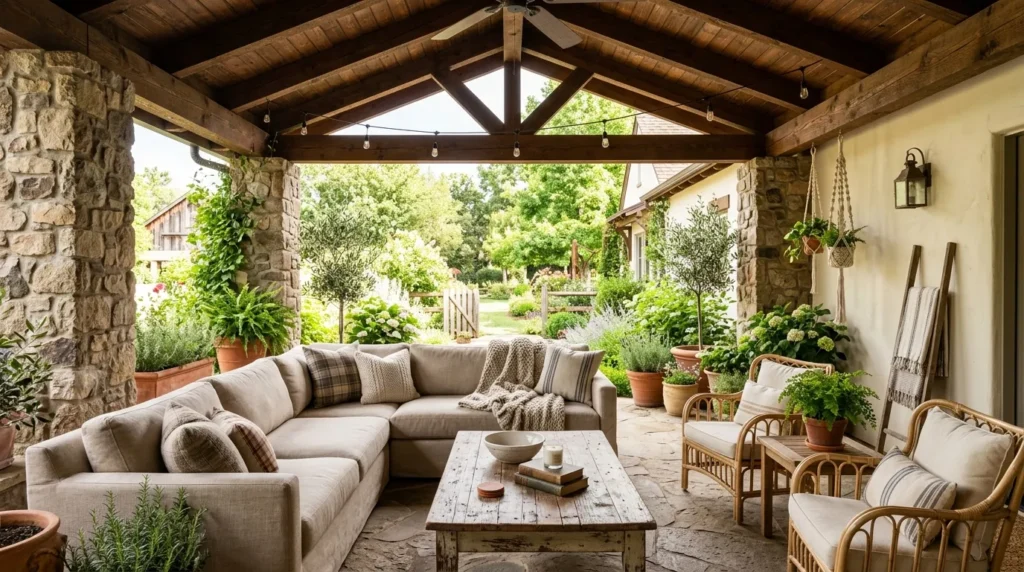
- Natural stone gives the structure a grounded, timeless appearance.
- Exposed timber adds warmth and rustic character overhead.
- Neutral furniture keeps the heavy materials from feeling visually crowded.
- Terracotta planters introduce earthy color and texture.
- Durable surfaces make this setup practical for frequent outdoor use.
Natural stone and exposed timber create a covered patio that feels connected to the landscape rather than separated from it. Stone columns provide a strong architectural foundation, while timber overhead brings warmth and texture into the space. Pair these materials with relaxed beige seating and simple wooden furniture to avoid making the area feel overly formal. This combination works particularly well around homes with brick, stucco, or natural exterior finishes. I’ve seen rustic materials look most polished when their natural imperfections remain visible instead of being covered with too many decorative accessories or competing patterns.
The flooring is an important part of making this style feel cohesive. Choose textured stone, slate, or another durable surface that can handle moisture and regular foot traffic. Add a woven rug beneath the seating to soften the harder materials and create a clear gathering zone. Keep plants in terracotta or aged stone containers for an earthy finish that complements the architecture. Warm-toned cushions can add comfort without distracting from the structure. The result is a welcoming outdoor room with plenty of character, while the natural materials provide a sturdy foundation that can continue looking attractive as they weather.
5. Black Framed Canopy
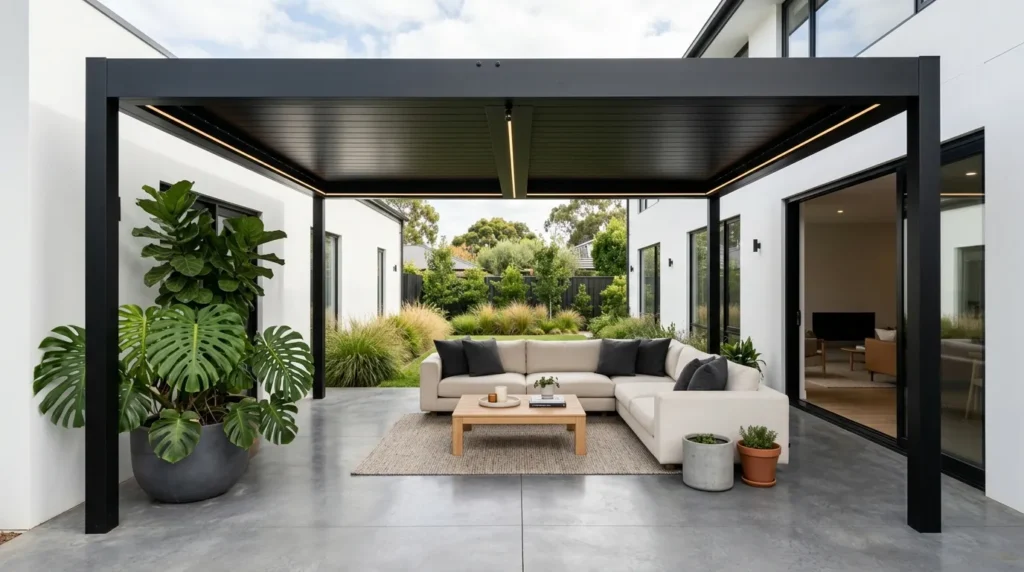
- Black framing creates strong architectural definition around the patio.
- Light furniture prevents the darker structure from feeling too heavy.
- Clean lines complement contemporary home exteriors.
- Warm lighting softens the contrast after sunset.
- Minimal accessories keep the modern structure visually prominent.
A black-framed canopy can give an ordinary outdoor space a crisp architectural edge while creating a strong contrast against pale walls and light furniture. Matte black metal works especially well with modern homes because its clean lines echo contemporary windows, doors, and exterior details. Pair the structure with cream upholstery, light wood, and simple greenery to keep the overall composition balanced. The darker frame naturally draws attention upward, making the covered area feel intentionally designed. This approach is particularly useful when you want a sophisticated outdoor setting without adding numerous decorative pieces.
Keep the furniture arrangement streamlined so the canopy remains the strongest visual feature. A large neutral sectional can sit along one side, while a compact coffee table and one or two movable chairs complete the seating zone. For flooring, concrete, large-format porcelain tiles, or smooth stone can reinforce the modern aesthetic. Add warm recessed lights or discreet wall fixtures to prevent the black structure from looking harsh at night. In my experience, introducing just a few natural elements, such as tall grasses or oversized planters, provides enough softness to balance the strong geometric framework.
Also Read : 24 White Brick Fireplace Ideas for a Bright Cozy Home
6. Outdoor Dining Nook
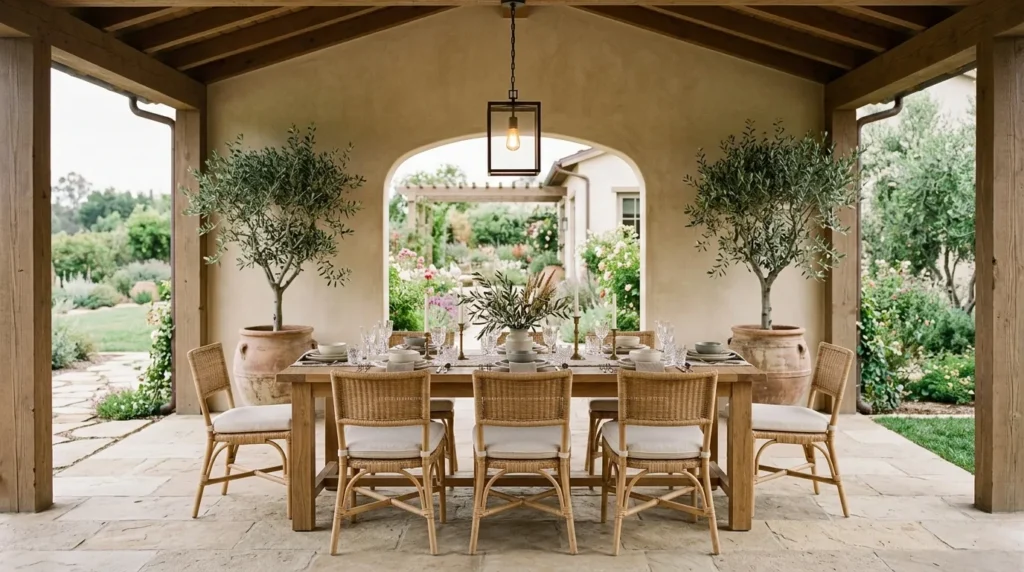
- A dedicated table makes outdoor meals easier and more comfortable.
- Woven chairs add texture while keeping the setting relaxed.
- A pendant light visually anchors the dining area.
- Large planters provide greenery without blocking movement.
- Durable flooring helps the space handle frequent entertaining.
A covered dining nook can make outdoor meals feel effortless while giving the patio a clear purpose beyond lounging. A rectangular wood table works well for families because it provides enough surface for plates, serving dishes, and drinks without requiring complicated furniture. Choose chairs with woven or weather-resistant materials to add texture while maintaining everyday comfort. Position the table beneath the most protected section of the roof, leaving enough space around each chair for people to move easily. This simple arrangement can turn even a modest patio into a useful dining destination for breakfasts, dinners, and weekend gatherings.
Lighting becomes especially important when the dining area is used after sunset. A simple pendant fixture above the table creates a natural focal point and provides practical illumination without flooding the entire patio with harsh light. Choose warm-toned bulbs to make the setting feel relaxed and inviting. For finishing touches, use ceramic planters, linen-look cushions, and a simple centerpiece rather than filling the table with decorations. I’ve noticed that outdoor dining spaces feel more comfortable when the design stays uncluttered, because guests need plenty of room to sit, serve food, and move around naturally.
7. Pergola Curtain Panels
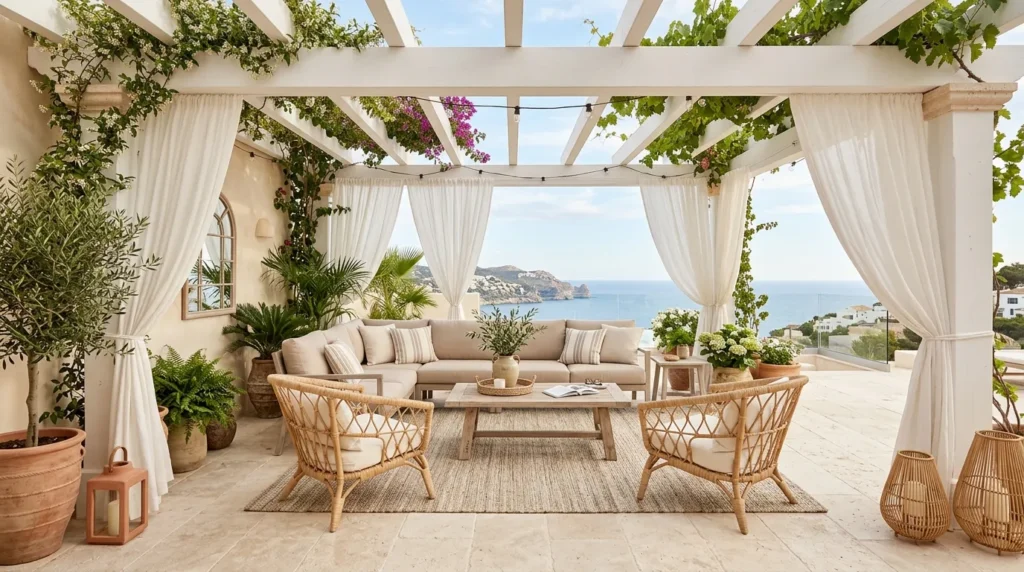
- Curtain panels add privacy without permanently closing the patio.
- Soft fabric introduces movement and texture around the structure.
- Light-colored panels help create a cooler, calmer appearance.
- Curtains can be opened when you want an unobstructed garden view.
- Outdoor-rated fabric makes the setup more practical in changing weather.
Outdoor curtains can make a covered patio feel instantly softer and more private while preserving the openness that makes outdoor living appealing. Choose lightweight panels in white, ivory, or warm beige and hang them along the sides of the structure. When opened, they frame the garden like a picture; when closed, they create a more secluded lounge. This works particularly well for patios that face neighboring homes or receive strong afternoon sun. In my experience, full-length panels create the most polished effect because they visually connect the roofline to the floor and make the structure feel taller.
The furniture underneath should remain relatively simple so the curtains become a soft architectural layer rather than another competing feature. A neutral sectional, woven chairs, and a low wood table provide enough contrast against pale fabric without overwhelming the setting. Choose curtain panels made specifically for outdoor use and secure them properly so wind does not constantly move them out of place. For an especially comfortable arrangement, leave one side partially open toward the garden. This maintains airflow and views while giving the seating area a defined, sheltered feeling that works beautifully for relaxing or entertaining.
8. Greenery Filled Retreat
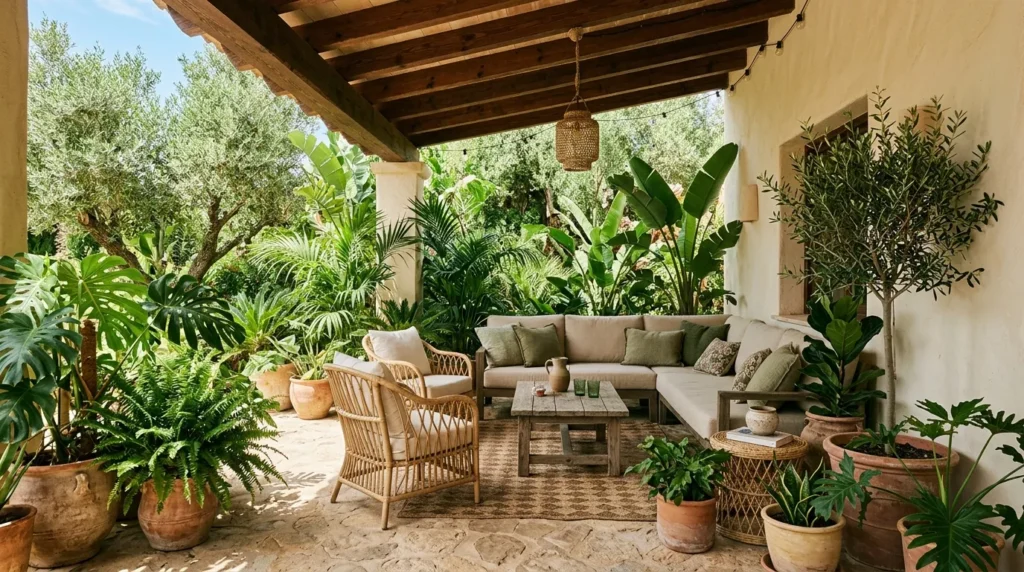
- Large plants soften hard walls, columns, and flooring.
- Different leaf shapes create natural visual variety.
- Terracotta containers add warmth and earthy contrast.
- Tall greenery can provide extra privacy around open edges.
- Plants help the patio feel connected to the surrounding landscape.
Bringing abundant greenery into a covered patio can make the space feel cooler, softer, and more connected to nature. Use a mixture of heights rather than placing identical plants around the perimeter. Tall planters can frame seating areas, medium plants can fill empty corners, and smaller pots can sit beside tables or steps. Choose species that suit the available light and local climate instead of selecting plants purely for appearance. This approach works particularly well when the patio has large blank walls or strong architectural lines because foliage naturally breaks up those surfaces.
Think about the plants as part of the furniture layout rather than as separate decorations. A tall plant can sit behind a lounge chair to create a visual backdrop, while a cluster of smaller pots can define an entrance without blocking the walkway. Use ceramic, terracotta, stone, or textured composite containers to introduce additional materials. I’ve noticed that grouping plants in odd numbers often creates a more natural composition than spacing every pot evenly. Leave enough breathing room around the seating, and the finished patio will feel lush without becoming difficult to use or maintain.
9. Warm String Lighting
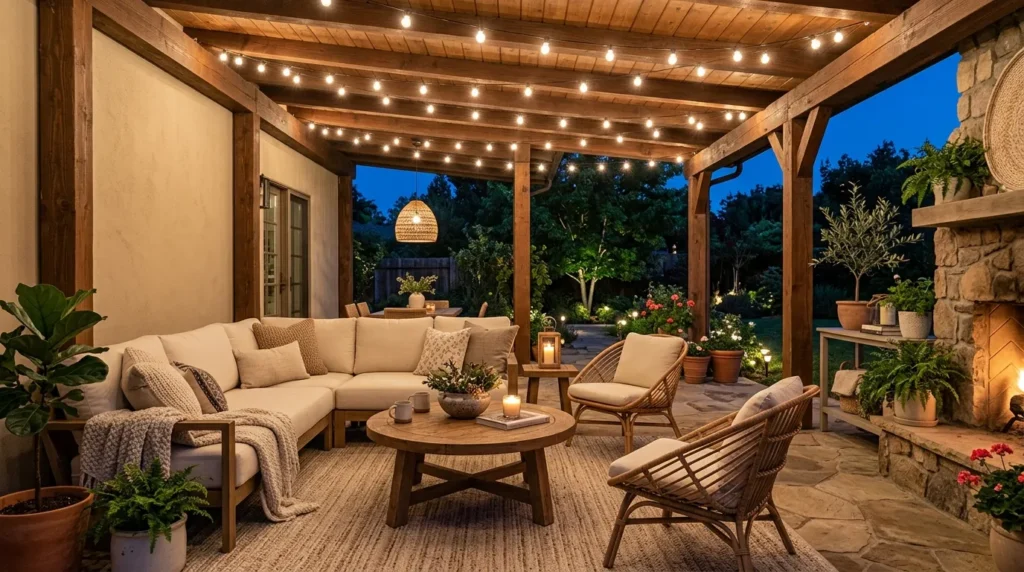
- String lights create a soft glow without overwhelming the seating area.
- Evenly spaced bulbs add visual rhythm overhead.
- Warm illumination makes evening gatherings feel more inviting.
- Simple furniture keeps the lighting effect noticeable but balanced.
- Proper outdoor-rated fixtures improve durability and everyday safety.
Warm string lighting can completely change the appearance of a covered patio once the sun goes down. Instead of relying on one bright ceiling fixture, use evenly spaced outdoor bulbs across beams or along the perimeter to create a gentle layer of illumination. The small points of light add rhythm overhead and make the entire seating area feel more intimate. Warm white bulbs generally work best with natural wood, beige upholstery, and greenery. This is an easy upgrade for an existing patio because it adds atmosphere without requiring major construction, making the space more useful long after daylight fades.
Placement matters as much as the type of light you choose. Keep the strands neatly aligned rather than allowing them to hang randomly, especially if the patio has a modern design. For a relaxed setting, one or two rows above the main seating area may be enough. Use outdoor-rated lights and secure the cables carefully along the structure. Add a small table lamp or wall fixture if you need more focused light for dining or reading. The result is a comfortable evening environment that feels warm and decorative while still leaving the patio functional for everyday use.
10. Natural Wood Ceiling
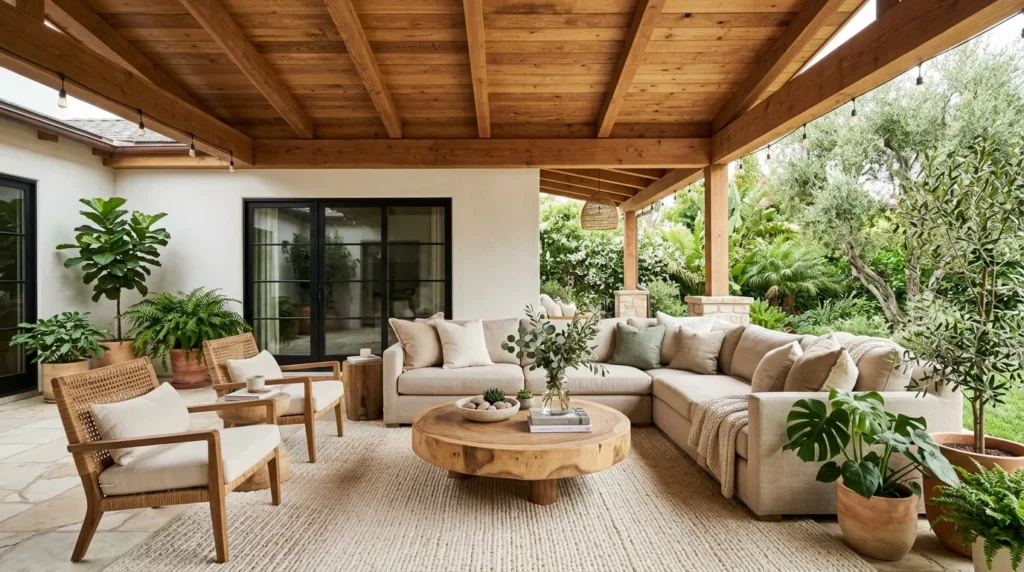
- A wood ceiling adds warmth and architectural character overhead.
- Natural grain creates visual texture without requiring extra decoration.
- Light furniture keeps the ceiling from making the patio feel heavy.
- Woven accents complement the organic material beautifully.
- A warm timber finish helps connect the patio with the garden.
A natural wood ceiling can make a covered outdoor area feel much more finished and inviting, especially when the surrounding walls and flooring are simple. Wide timber planks create a continuous visual layer overhead, adding warmth without taking up valuable floor space. Choose a light or medium wood tone if you want an airy appearance, or use a deeper finish for a richer, more dramatic look. The ceiling works particularly well with cream upholstery, woven furniture, and greenery. In my experience, natural wood overhead often makes an otherwise basic patio feel custom-built and thoughtfully connected to the home.
Balance the ceiling with furniture that has clean, uncomplicated shapes. A beige sectional can anchor the seating area, while woven chairs and a round wood table introduce complementary textures. Keep decorative pieces limited so the timber grain remains visible and becomes part of the design. For flooring, pale stone or large-format outdoor tiles can provide contrast without competing with the ceiling. Make sure the wood is properly treated for outdoor exposure and suited to your local climate. With the right finish and maintenance, this setup can provide both visual warmth and a durable architectural feature.
11. Built-In Bench Seating
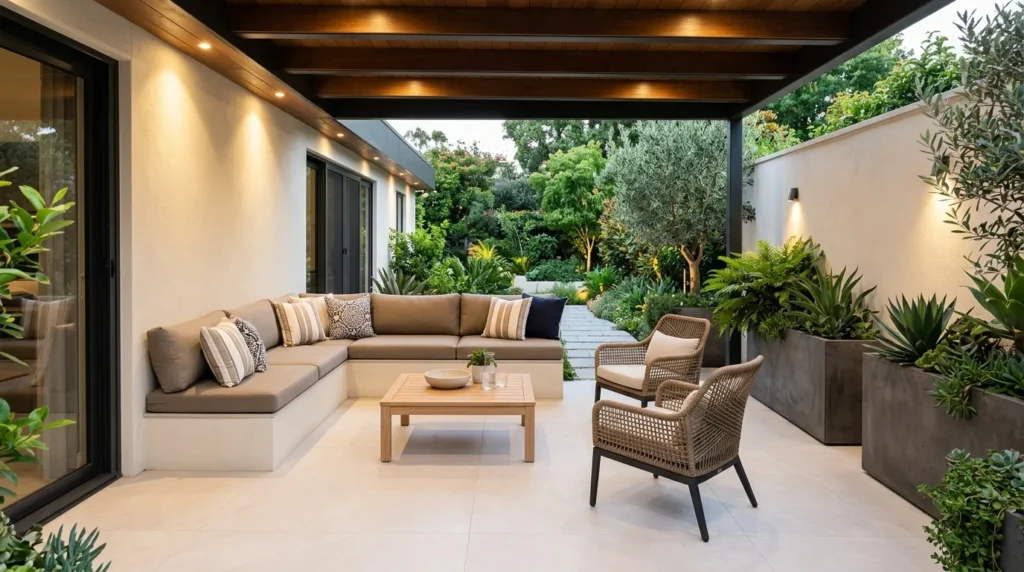
- Built-in seating makes excellent use of awkward patio edges.
- An L-shaped bench can provide generous seating without many separate pieces.
- Cushions add comfort while keeping the structure visually simple.
- Open floor space makes the patio easier to move through.
- Storage can sometimes be incorporated beneath the bench for extra function.
Built-in bench seating is a smart choice when you want generous seating without filling the patio with bulky furniture. An L-shaped bench along one or two walls creates a defined conversation area while leaving the center open for a coffee table or occasional chairs. This layout works particularly well in narrow patios where individual sofas can make circulation difficult. Use weather-resistant cushions in neutral shades to soften the fixed structure and make it comfortable for longer stays. The result feels intentional because the seating becomes part of the architecture instead of looking like furniture simply placed outdoors.
Consider adding hidden storage beneath the bench if the construction allows it. A lift-up seat or built-in compartment can hold outdoor cushions, small gardening tools, or entertaining accessories while keeping the patio tidy. Pair the bench with one or two lightweight chairs that can be moved when extra floor space is needed. Add tall planters at the corners to soften the straight lines and create a little privacy. I’ve seen this arrangement work especially well for families because the fixed seating provides plenty of room while the open center remains flexible for children, pets, or casual gatherings.
12. Outdoor Fireplace Wall
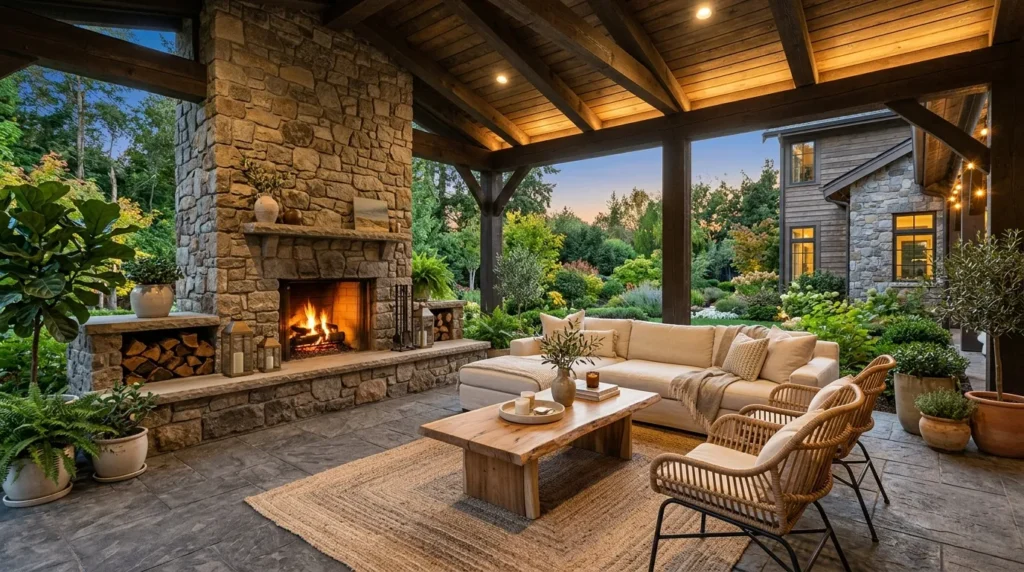
- A fireplace creates a natural focal point for the covered space.
- Stone or brick adds texture and visual weight to a simple patio.
- The hearth can anchor seating without needing excessive decoration.
- Warm lighting enhances the fireplace wall after sunset.
- A strong focal feature makes furniture placement easier to organize.
An outdoor fireplace can turn a covered patio into a comfortable gathering space with a clear visual center. A stone or brick wall provides texture while the fireplace naturally draws seating toward it. Place a sectional or several lounge chairs facing the hearth, leaving enough distance for safe circulation and comfortable conversation. The surrounding materials should complement the home rather than compete with it. Natural stone pairs well with timber and neutral fabrics, while smooth masonry can suit a more contemporary exterior. A fireplace wall also gives a large blank section of patio architecture a useful purpose.
Keep the surrounding decor restrained because the fireplace already provides plenty of visual interest. A simple wood coffee table, neutral cushions, and a textured rug can soften the masonry without hiding it. Add a few large plants toward the edges to create contrast and connect the structure with the garden. Before installing any fireplace, follow local building, ventilation, and fire-safety requirements and choose materials appropriate for outdoor heat exposure. With thoughtful planning, the finished feature can make the patio feel more like a dedicated outdoor living room while providing a strong focal point for evening gatherings.
13. Compact Bistro Corner
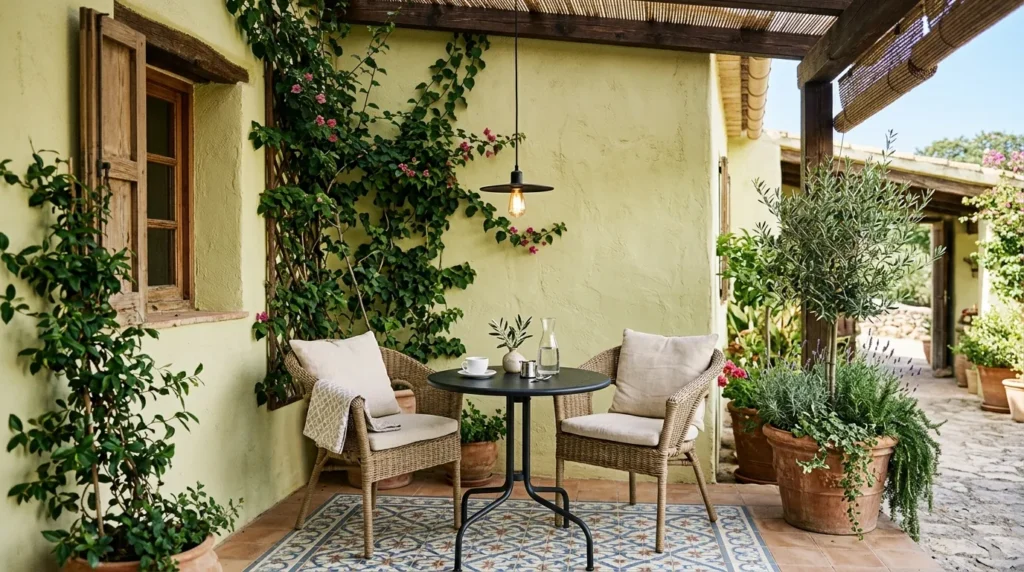
- A small table and two chairs can make a compact patio useful.
- Round furniture improves movement through tighter spaces.
- Vertical plants add greenery without taking valuable floor area.
- A pendant light gives the corner a defined visual center.
- Foldable chairs can provide extra flexibility when needed.
A compact bistro corner proves that a small patio can still feel purposeful and stylish. Instead of filling the area with oversized furniture, use a small round table paired with two comfortable chairs. The curved shape makes movement easier and avoids creating sharp visual lines in a narrow space. This setup works beautifully near a kitchen door, where it can become a convenient spot for morning coffee or quick meals. Choose light-colored cushions and a simple table finish to keep the area feeling open. A nearby planter can add greenery without taking attention away from the seating.
The best compact layouts use vertical space carefully. Hang a small pendant light overhead, mount a planter on the wall, or train climbing greenery along a nearby support to add interest without reducing floor space. Foldable furniture is another practical option if the patio occasionally needs to accommodate guests or larger activities. Keep accessories limited to one centerpiece, a small rug, or a few cushions so the corner does not become cluttered. In my experience, smaller patios often look better when every item has a clear purpose, allowing the design to feel intentional rather than simply reduced in size.
14. Privacy Screen Panels
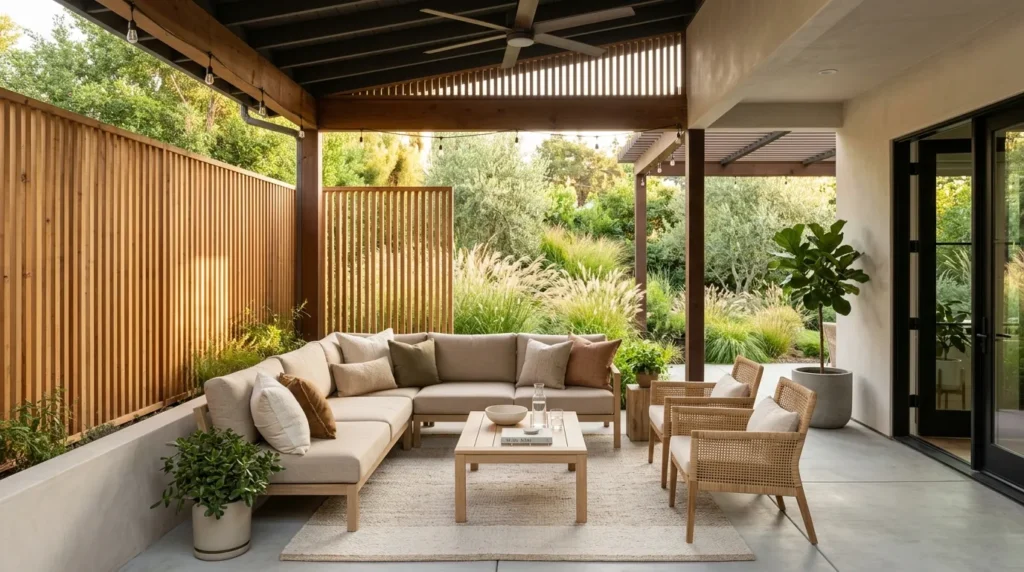
- Vertical screens provide privacy while adding architectural texture.
- Wood slats allow light and airflow to pass through.
- Tall grasses soften the edges of the structure.
- Neutral furniture keeps the screen from feeling visually dominant.
- Strategic placement can block unwanted views without closing every side.
Privacy screens can make an exposed patio feel considerably more comfortable without turning it into a completely enclosed room. Vertical wood slats are especially effective because they interrupt direct views while allowing light and airflow to continue moving through the space. Position the screen along the side facing a neighboring property, street, or busy walkway rather than enclosing the entire patio. This keeps the garden view open where you want it. Natural timber works beautifully with beige seating, stone flooring, and greenery because the materials create a cohesive outdoor palette instead of making privacy feel like an afterthought.
Think about the screen as both a practical feature and a design element. Choose evenly spaced slats for a modern appearance, or consider wider boards for a more substantial architectural effect. Tall ornamental grasses or narrow planters placed beside the screen can soften its edges and add another layer of privacy. Avoid placing furniture directly against the panels if it blocks airflow or makes the area difficult to clean. A carefully positioned screen can create a more secluded feeling while preserving openness, making the patio more comfortable for dining, relaxing, or entertaining throughout the day.
15. Coastal Blue Accents
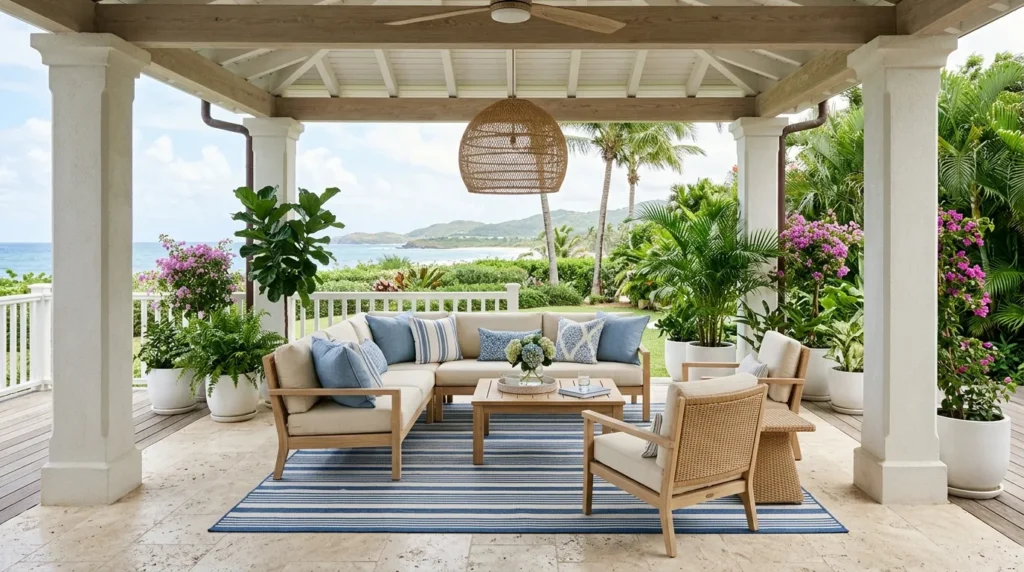
- Soft blue accents add color without overwhelming a neutral patio.
- White architectural elements reinforce a fresh coastal appearance.
- Pale wood introduces warmth and natural texture.
- Stripes can create subtle visual movement through cushions or rugs.
- Blue accessories are easy to replace when you want a seasonal refresh.
Soft blue accents can give a neutral covered patio a fresh coastal character without requiring a complete redesign. Start with a cream or white furniture foundation, then introduce dusty blue or muted navy through cushions, a rug, or small decorative pieces. Pale wood and woven textures help keep the palette relaxed rather than overly nautical. This color combination works particularly well in bright outdoor spaces because the cool blue tones balance warm sunlight. You can also adapt the intensity easily, using barely-there blue for a subtle effect or deeper navy accents when you want stronger contrast.
Keep the color story controlled by choosing one main blue shade and repeating it in a few locations. For example, matching cushions and a narrow rug stripe can visually connect separate parts of the patio. White ceramic planters and natural greenery add freshness without introducing unnecessary colors. Avoid using too many themed accessories because the strongest coastal spaces usually rely on color, texture, and light rather than obvious decorations. I’ve noticed that soft blue works especially well when the surrounding materials remain neutral, allowing the accent color to feel intentional and polished rather than overly decorative.
16. Modern Concrete Cover
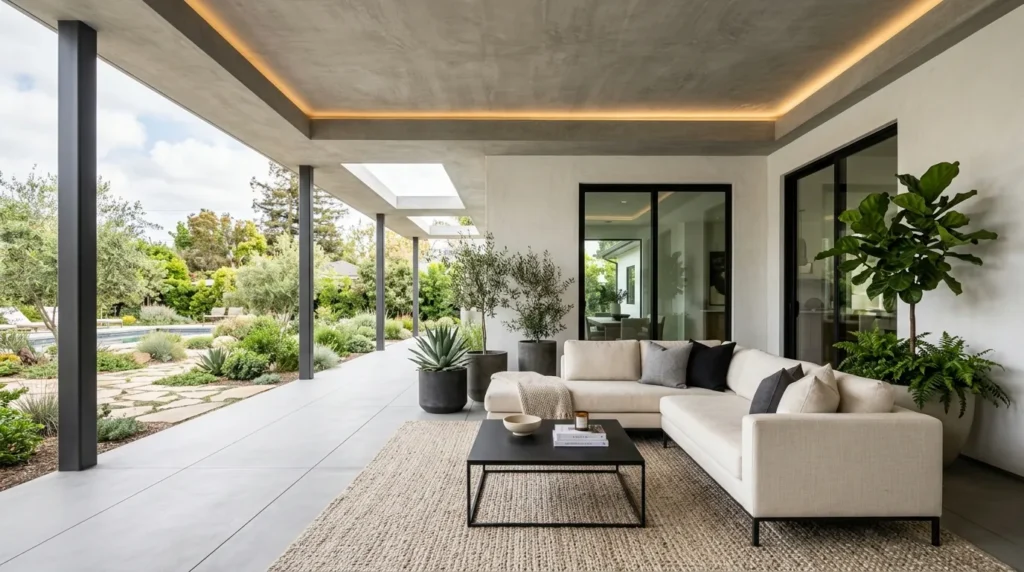
- A concrete roof creates a clean, architectural appearance.
- Slim dark columns add definition without visually closing the patio.
- Soft furnishings balance the harder concrete surfaces.
- Large plants introduce organic shapes and natural contrast.
- Recessed lighting keeps the ceiling visually uncluttered.
A smooth concrete cover can give an outdoor living area a sophisticated architectural character while providing strong protection from sun and rain. Its clean surface works especially well with modern homes featuring simple walls, large windows, and minimal exterior details. Because concrete can feel visually heavy, balance it with soft cream seating, warm wood, textured rugs, and plenty of greenery. This contrast creates a more comfortable composition without losing the contemporary appearance. The roof also provides a strong sense of permanence, making the patio feel like an intentional extension of the home’s architecture rather than a temporary outdoor setup.
Furniture placement should emphasize the clean geometry of the structure without making the area feel rigid. A large sectional can sit beneath the deepest portion of the roof, while a simple coffee table creates a central gathering point. Use large-format flooring in a similar neutral tone to create visual continuity between the ceiling and ground plane. Add recessed or concealed lighting for evenings so the ceiling remains clean and uninterrupted. In my experience, combining one or two warm materials with concrete is enough to prevent a modern patio from feeling cold, especially when plants are used to soften the strongest architectural lines.
17. Mixed Material Retreat
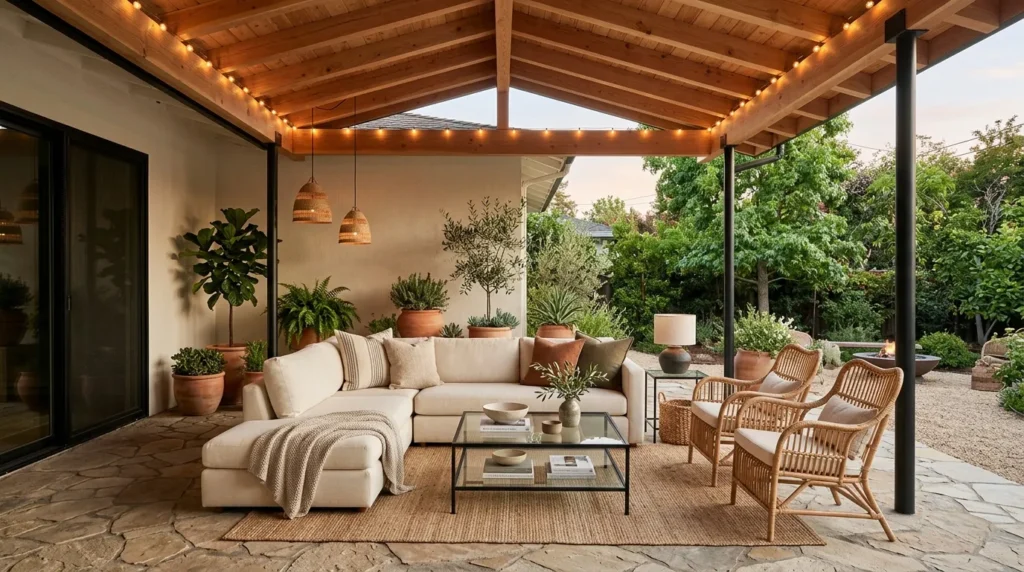
- Combining materials adds depth without requiring excessive decoration.
- Wood brings warmth to metal and stone surfaces.
- Stone provides durability and natural visual texture.
- Woven furniture softens stronger architectural elements.
- Repeating materials throughout the patio creates a cohesive appearance.
Mixing several complementary materials can make a covered patio feel layered, custom, and visually interesting without relying on lots of accessories. Combine warm wood overhead with black metal framing, natural stone flooring, and woven furniture for a balanced modern-organic appearance. Each material contributes a different texture, while a neutral color palette keeps the overall design connected. This approach is especially useful when the patio already includes several permanent finishes that cannot easily be changed. Instead of trying to hide those materials, repeat their tones through furniture and accessories so the entire space feels intentionally coordinated.
The key is choosing materials that contrast without competing. If the ceiling has prominent wood grain, keep the furniture relatively simple and let the stone provide the stronger texture below. Black metal can be repeated through lighting or small table details, creating visual continuity throughout the arrangement. Add greenery in terracotta or stone containers for an organic finishing layer. Avoid introducing too many unrelated colors because mixed materials already create plenty of visual interest. A controlled palette allows every surface to stand out while still making the patio feel comfortable, cohesive, and practical for everyday outdoor living.
18. Covered Outdoor Kitchen
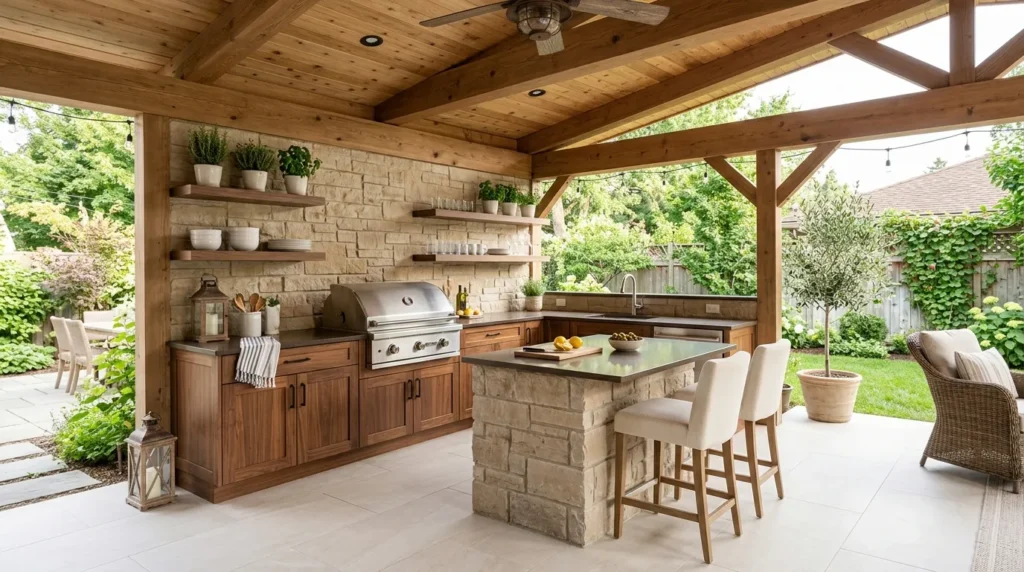
- A built-in kitchen makes outdoor entertaining much more convenient.
- Counter space provides room for food preparation and serving.
- Warm wood cabinetry balances stainless steel appliances.
- Bar stools create an easy casual dining spot.
- Open shelving can keep frequently used items within reach.
A covered outdoor kitchen can make the patio far more useful for people who enjoy cooking and entertaining outside. A compact island with a built-in grill provides preparation space while keeping the main cooking area protected from direct sun and changing weather. Choose durable stone countertops and weather-resistant cabinetry for easier maintenance. Position the cooking zone close to the dining area, but leave enough clearance for comfortable movement. This layout works especially well when the patio connects directly to the home’s kitchen, creating a natural flow between indoor preparation and outdoor serving.
Keep the design practical rather than filling the kitchen with appliances that rarely get used. A grill, small refrigerator, storage drawers, and generous counter space may be enough for everyday meals. Add bar stools along the island if the available space allows, creating an informal place for guests to sit while food is prepared. Use warm wood, stone, and neutral finishes to connect the kitchen with the surrounding patio. I’ve noticed that the most successful outdoor kitchens prioritize easy cleanup and accessible storage, because convenience matters just as much as appearance when the space is used regularly.
19. Arched Patio Structure
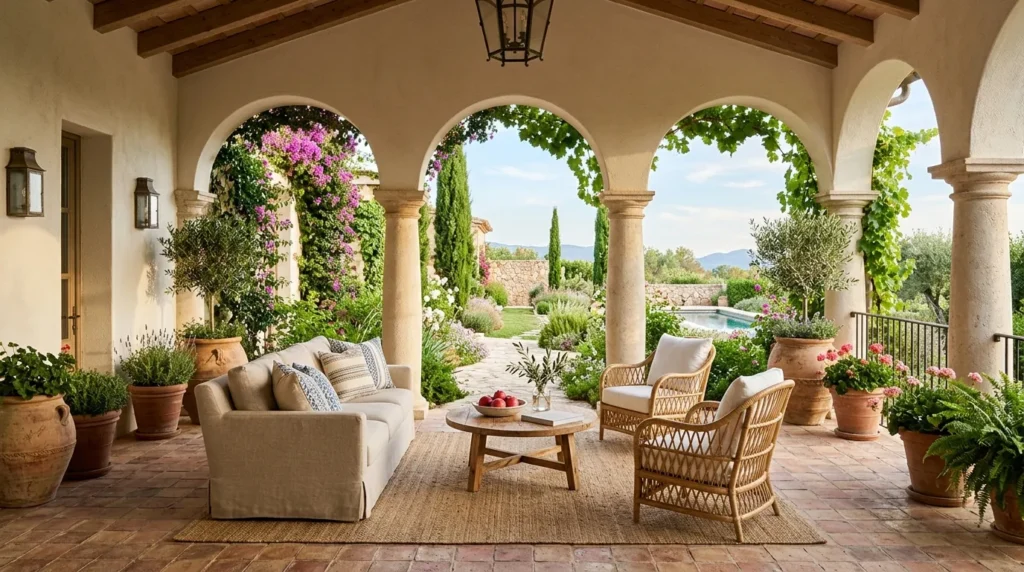
- Arched openings add architectural character without closing the patio.
- Cream stucco creates a warm Mediterranean-inspired foundation.
- Rounded furniture echoes the curves of the structure.
- Terracotta introduces earthy color and texture.
- Climbing plants soften the architectural edges naturally.
Arched openings can give a covered patio a distinctive architectural identity while keeping the space open to the garden. Soft curves feel less rigid than straight columns and can create a graceful transition between the home and outdoor area. Cream stucco, natural stone, or painted masonry works particularly well around arched structures because these materials emphasize the shape without requiring elaborate decoration. Pair the architecture with neutral seating and warm wood furniture for a relaxed Mediterranean-inspired appearance. This design can make even a simple covered area feel more custom and visually connected to the home’s exterior style.
Repeat the curved shapes through smaller details to make the arrangement feel intentional. A round coffee table, circular pendant light, or curved lounge chair can subtly echo the arches without becoming overly themed. Terracotta pots and climbing greenery add natural contrast against pale walls, while textured flooring grounds the design. Keep the center of the patio relatively open so the arches remain visible from different viewpoints. The result is a welcoming outdoor room with strong architectural character and a soft visual rhythm that feels especially beautiful during warm afternoon light or relaxed evening gatherings.
20. Layered Neutral Textures
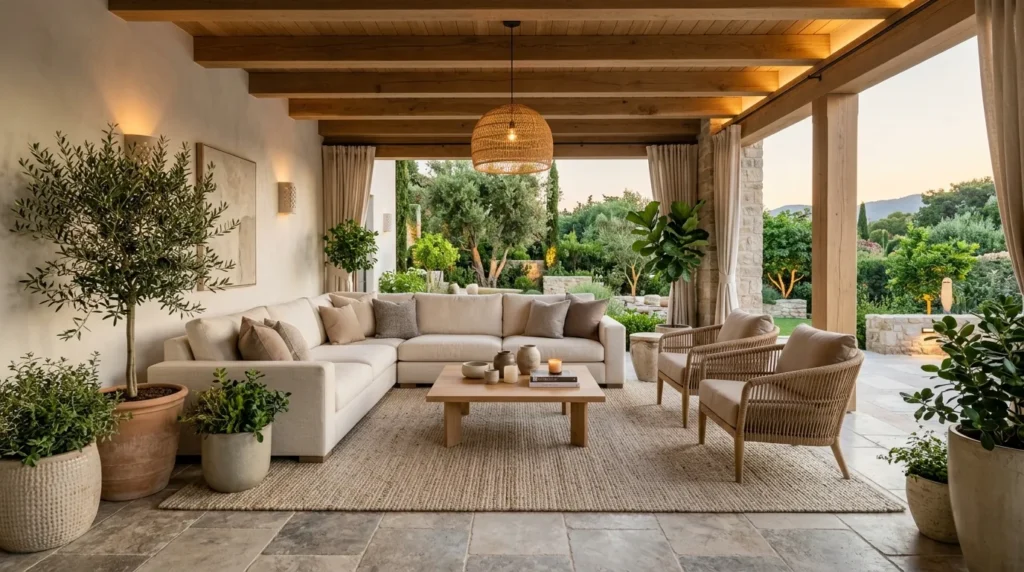
- Layered neutrals create depth without making the patio visually busy.
- Different textures keep a simple color palette interesting.
- Woven furniture adds warmth against smooth architectural surfaces.
- A textured rug helps define the seating zone.
- Ceramic and wood accessories introduce subtle material contrast.
A neutral palette does not have to look plain when different textures are layered thoughtfully. Combine cream cushions, taupe upholstery, woven chairs, natural wood, and a textured outdoor rug to create depth while keeping the overall appearance calm. This approach works particularly well when the architecture is already visually strong because the furniture remains understated and lets the structure shine. Use slightly different shades rather than matching everything exactly. The subtle variation makes the patio feel more collected and comfortable, while the restrained color scheme keeps the space looking spacious and easy to decorate throughout the year.
Texture becomes especially useful when you want a sophisticated patio without adding bold colors or patterns. Try pairing smooth stone flooring with a woven rug, wood table, ceramic planters, and softly textured cushions. Each surface catches light differently, creating visual interest even when the colors remain close together. Add greenery for a natural contrast and choose warm lighting for evening use. In my experience, neutral outdoor spaces look most inviting when there are at least three or four distinct textures present. This prevents the design from feeling flat while maintaining the clean, timeless appearance that works across many home styles.
21. Folding Glass Doors
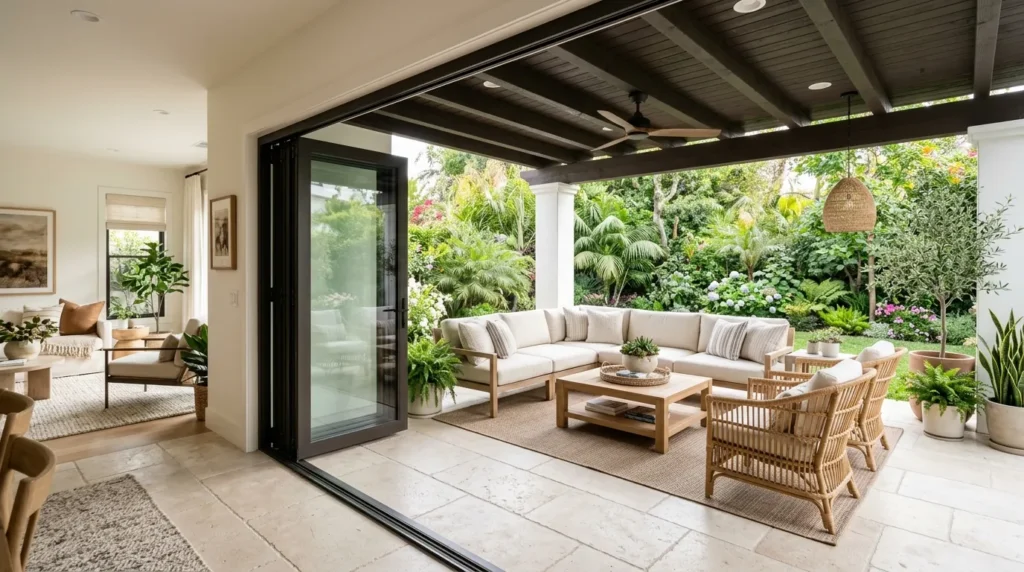
- Folding glass doors visually connect the patio with the interior.
- Wide openings make entertaining between both spaces easier.
- Matching flooring can create a seamless visual transition.
- Natural light makes the covered area feel more spacious.
- Minimal furniture keeps the doorway open and uncluttered.
Folding glass doors can make a covered patio feel like a natural continuation of the home’s interior rather than a separate outdoor zone. When the doors open wide, the living room and patio visually merge, creating a larger area for entertaining and everyday use. Keep the furniture arrangement close enough to connect both spaces but far enough away to preserve a clear doorway. Neutral upholstery, light flooring, and natural wood can create continuity between inside and outside. This setup is particularly effective for homes where the patio sits directly beside a kitchen, dining room, or family living area.
Pay attention to the transition between the two spaces because small details can make a major visual difference. Similar flooring tones, coordinated furniture colors, and repeated materials help the areas feel connected. Avoid placing large tables or bulky chairs directly in front of the doors, as this can interrupt movement and make the patio feel smaller. Use slim furniture near the opening and reserve larger pieces for the sides. I’ve noticed that keeping this central pathway open makes indoor-outdoor entertaining much easier because guests can move naturally between seating, food preparation, and the garden.
22. Raised Garden Borders
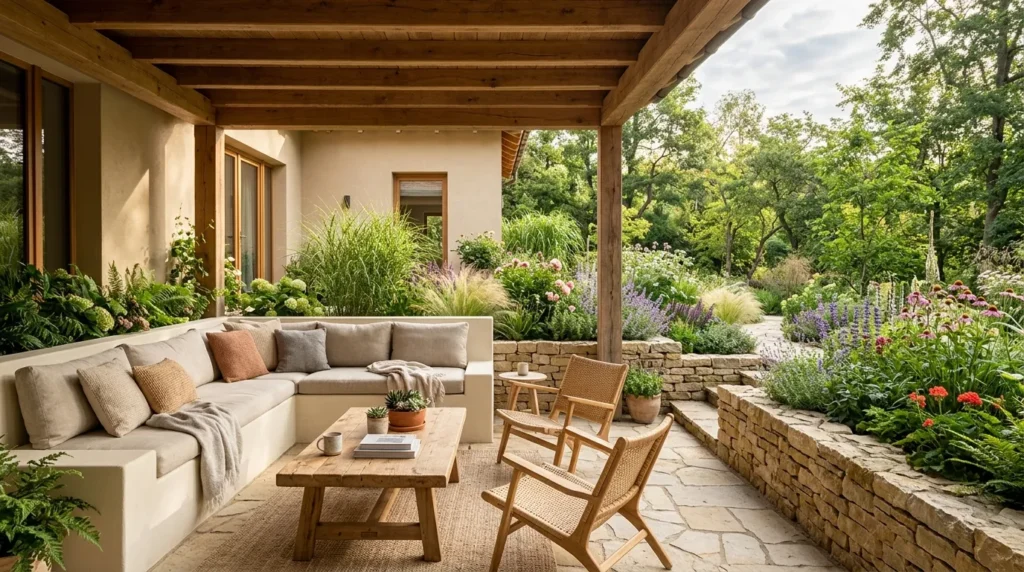
- Raised borders bring greenery closer to the seating area.
- Stone edges create a defined transition between patio and garden.
- Layered plants add privacy without completely blocking views.
- Built-in planting reduces the need for many separate pots.
- Seasonal flowers can introduce changing color throughout the year.
Raised garden borders can make a covered patio feel more integrated with the landscape by bringing plants directly around the living area. Instead of separating the patio from the garden with a hard edge, use low stone or masonry borders to create planting zones beside seating and walkways. Fill them with ornamental grasses, shrubs, flowers, or climate-appropriate greenery at different heights. The varied planting creates depth and softens architectural materials such as concrete, stone, and timber. This approach is especially useful when you want the patio to feel lush without filling the floor with numerous individual containers.
Plan the planting carefully so greenery enhances the space without becoming difficult to maintain. Keep taller plants toward the back and lower varieties closer to seating areas, allowing people to enjoy the garden without losing sightlines. Choose plants according to the sunlight available beneath the cover and consider drainage before building the borders. A restrained mix of foliage shapes often looks more sophisticated than too many unrelated varieties. The finished patio feels connected to nature while retaining clear areas for furniture and movement, creating a comfortable outdoor room that changes naturally with the seasons.
23. Pergola Dining Table
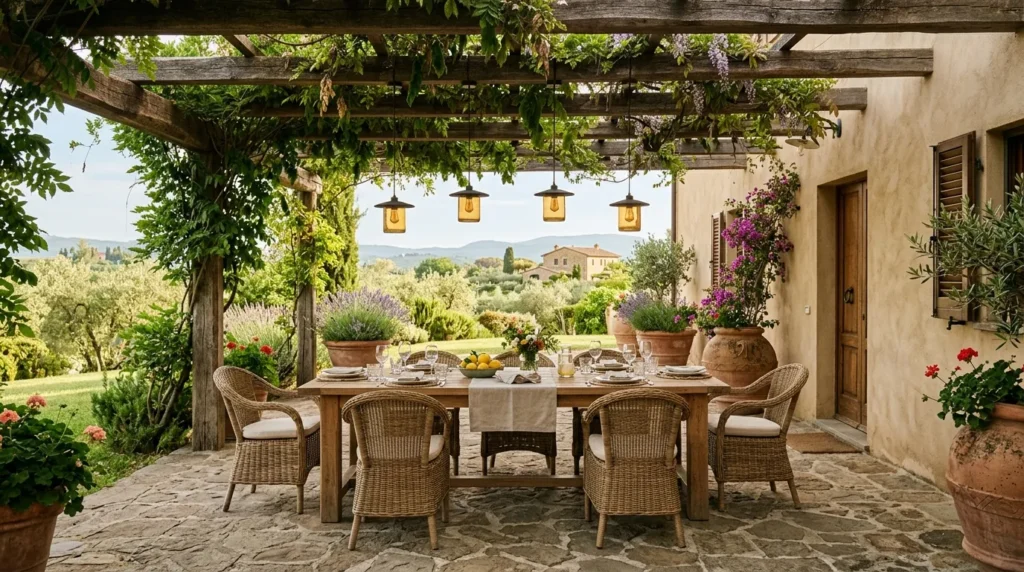
- A long table creates a natural gathering point for larger groups.
- Climbing greenery adds softness above the dining area.
- Woven chairs provide texture while maintaining a relaxed feel.
- Pendant lights make evening meals more comfortable.
- The open sides preserve airflow and garden views.
A long dining table beneath a covered pergola creates a welcoming setting for family meals, weekend lunches, and outdoor entertaining. Choose a table with enough room for everyday use without overwhelming the patio footprint. Natural wood adds warmth, while woven or metal chairs can provide contrast and durability. Position the table centrally beneath the roof so everyone receives similar shade and access to the surrounding views. This arrangement works particularly well when the patio is designed primarily for dining because the furniture immediately establishes a clear purpose while leaving the edges available for plants or serving stations.
Decorate the table lightly so guests still have plenty of space for plates and serving dishes. A simple centerpiece, lantern, or low planter can add personality without obstructing conversation. If the structure supports it, climbing plants or trailing greenery can soften the overhead beams and create a garden-like atmosphere. Add warm pendant lighting for evening meals and choose weather-resistant finishes throughout. I’ve found that outdoor dining areas are easiest to enjoy when the table remains the visual anchor, while surrounding accessories stay simple enough that cleanup and everyday movement never become complicated.
24. Retractable Roof System
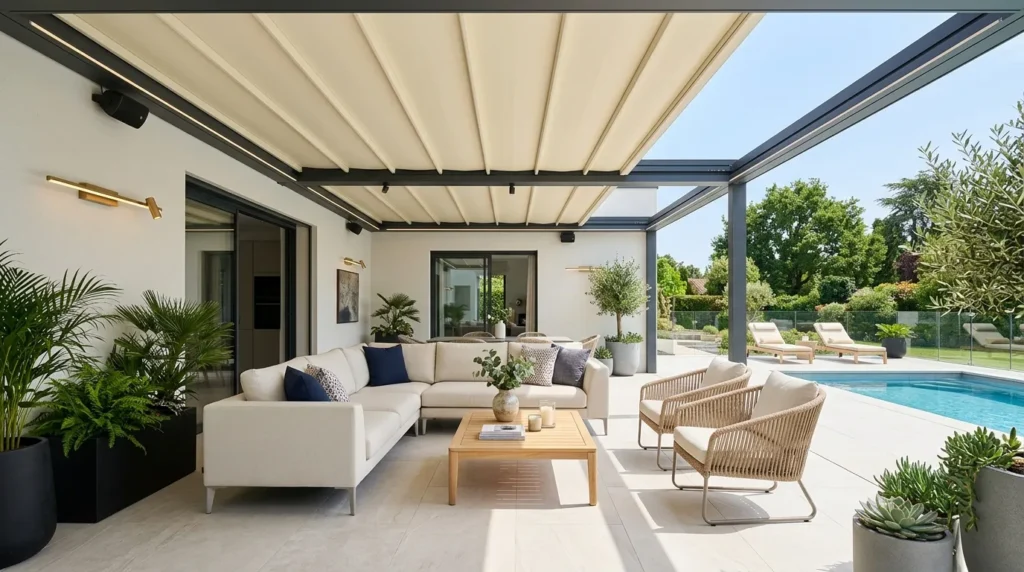
- A retractable roof offers flexibility between shade and open sky.
- Adjustable coverage can respond to changing weather conditions.
- Clean framing suits contemporary homes and minimalist furniture.
- Neutral materials keep the mechanism visually understated.
- Flexible overhead coverage makes the patio useful across different seasons.
A retractable roof gives you more control over how the patio functions throughout the day. Open the roof when you want direct sunlight and a stronger connection to the sky, then close it when the sun becomes intense or light rain arrives. This flexibility can be especially valuable for patios that receive changing amounts of sunlight across different seasons. Choose a streamlined frame and neutral roof material so the mechanism blends with the home’s architecture. Pairing it with simple outdoor furniture keeps the overall design sophisticated while allowing the adjustable roof to remain the main functional feature.
When planning this setup, think carefully about where shade is most useful and how the roof will interact with furniture, lighting, and drainage. A sectional can sit beneath the most frequently covered portion, while movable chairs provide flexibility when the roof is open. Use outdoor-rated lighting that remains functional in both configurations, and make sure water runoff is directed away from seating and walkways. Because retractable systems vary significantly in construction and installation requirements, professional planning is worthwhile. The result can provide a versatile outdoor room that adapts easily to sunny afternoons, cool evenings, and changing weather.
25. Multi-Zone Patio Layout
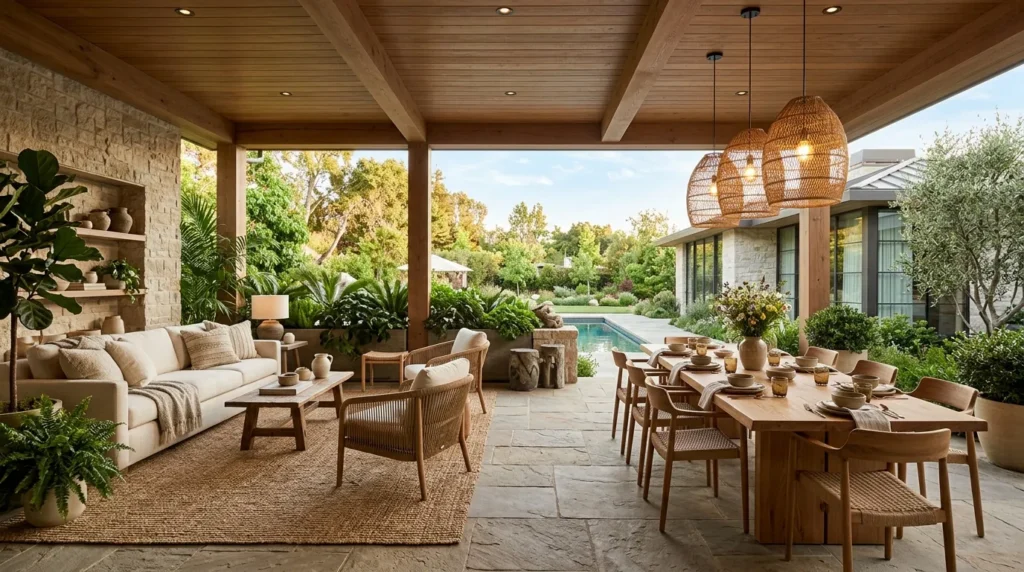
- Separate zones allow one patio to support multiple activities.
- Rugs help visually define seating and dining areas.
- Furniture placement creates natural boundaries without solid walls.
- Plants can separate zones while preserving an open atmosphere.
- A layered layout makes a large patio feel more organized.
A multi-zone layout can make a large covered patio feel organized without sacrificing the openness that makes outdoor living enjoyable. Instead of placing every piece of furniture in one central arrangement, divide the space according to how you actually use it. Create a comfortable lounge with a sectional and chairs on one side, then place a dining table on the other. Rugs, lighting, and planters can visually separate each area without requiring permanent walls. This approach makes the patio more versatile because different activities can happen simultaneously without the space feeling chaotic or disconnected.
Start by identifying the most natural traffic paths before positioning furniture. Keep the route between the house and garden open, then build each zone around that circulation area. Use a large rug beneath the lounge and a pendant light above the dining table to establish clear visual boundaries. Tall planters can provide additional separation without blocking views. In my experience, multi-purpose patios work best when each zone has one clear function and enough breathing room around it. The finished arrangement feels spacious, practical, and ready for everything from quiet mornings to larger gatherings.
Conclusion
A beautiful outdoor space doesn’t have to be complicated. These 25 covered patio design ideas show how thoughtful materials, comfortable furniture, smart layouts, greenery, lighting, and personal touches can transform an ordinary patio into a welcoming extension of your home. Start with one idea that fits your space and build from there. Save this article to your Pinterest boards so you can return to your favorite inspiration when you’re ready to refresh your patio. Share it with someone planning an outdoor makeover, too. I’ve seen how even small changes can completely transform a space, so choose an idea, make it yours, and enjoy it.