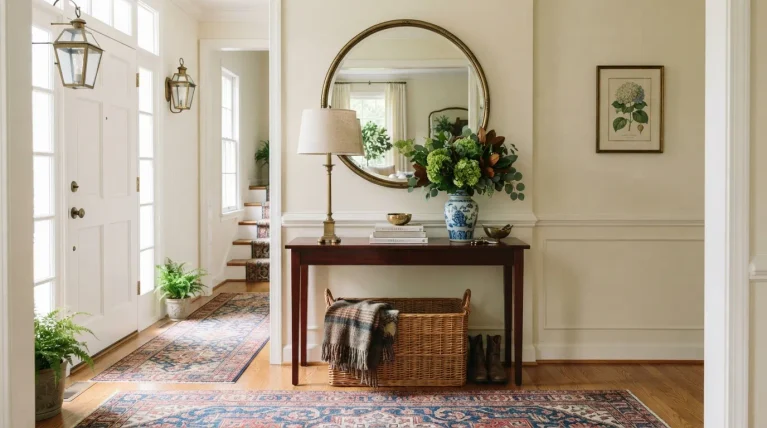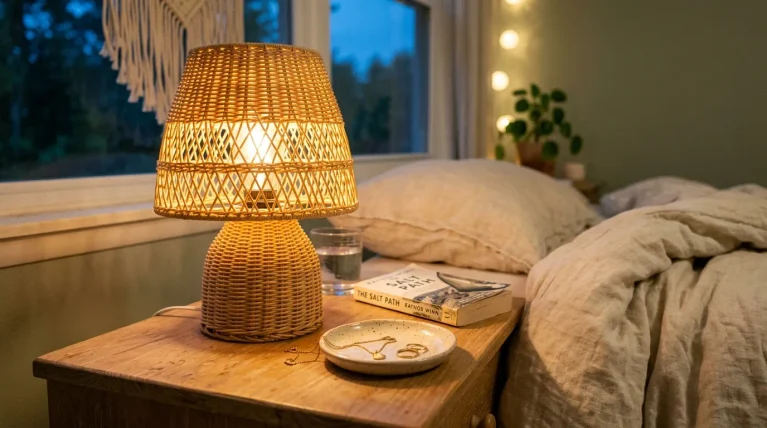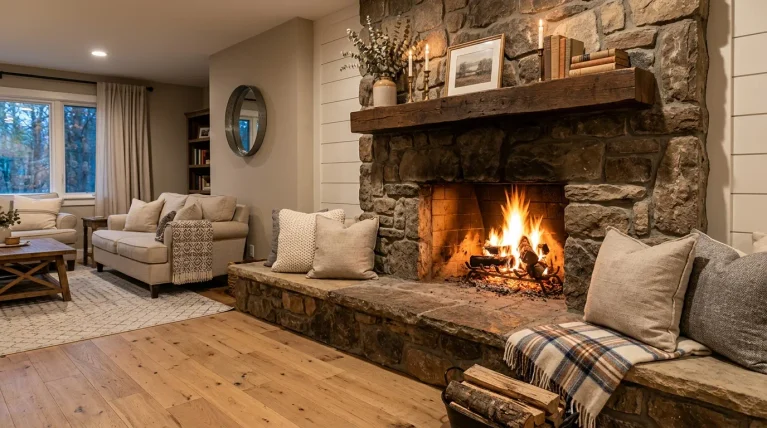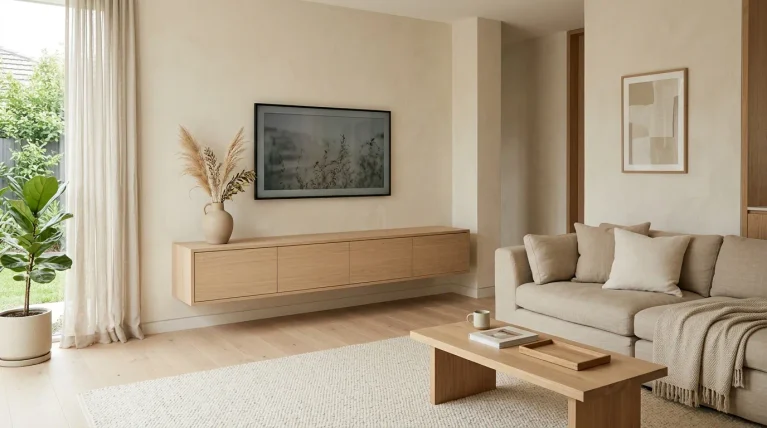
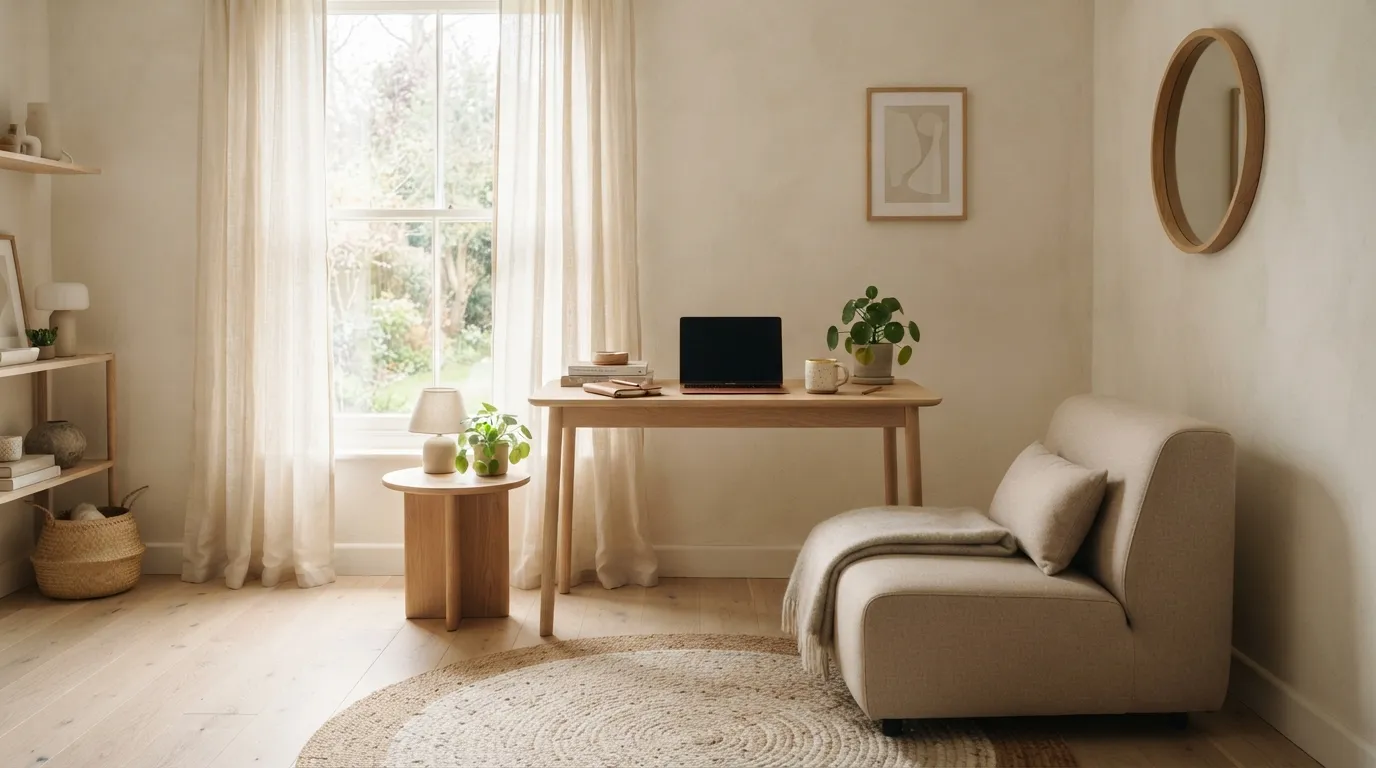
A calm workspace can change the way your entire day feels. Imagine opening your laptop to a room that feels light, organized, and genuinely peaceful. These japandi home office ideas can help you create exactly that feeling.
Japandi style brings together the warmth of Scandinavian design and the simplicity of Japanese interiors. The result is a workspace built around natural materials, soft neutral colors, thoughtful storage, and uncluttered furniture. Whether you are working from a dedicated office, bedroom corner, or compact nook, these ideas can help you make the most of your space without making it feel crowded. In my experience, small changes such as better lighting, hidden cables, natural textures, and a carefully chosen desk can make a noticeable difference. Explore these practical ideas for inspiration, then choose the details that fit your home and daily routine.
1. Light Oak Desk
- A slim oak desk brings warmth while keeping the room visually open.
- Pale wood pairs beautifully with cream, beige, and soft gray accents.
- An uncluttered desktop makes daily work feel more organized.
- Natural wood grain adds texture without overwhelming the space.
- Keep only useful essentials visible for a cleaner finish.
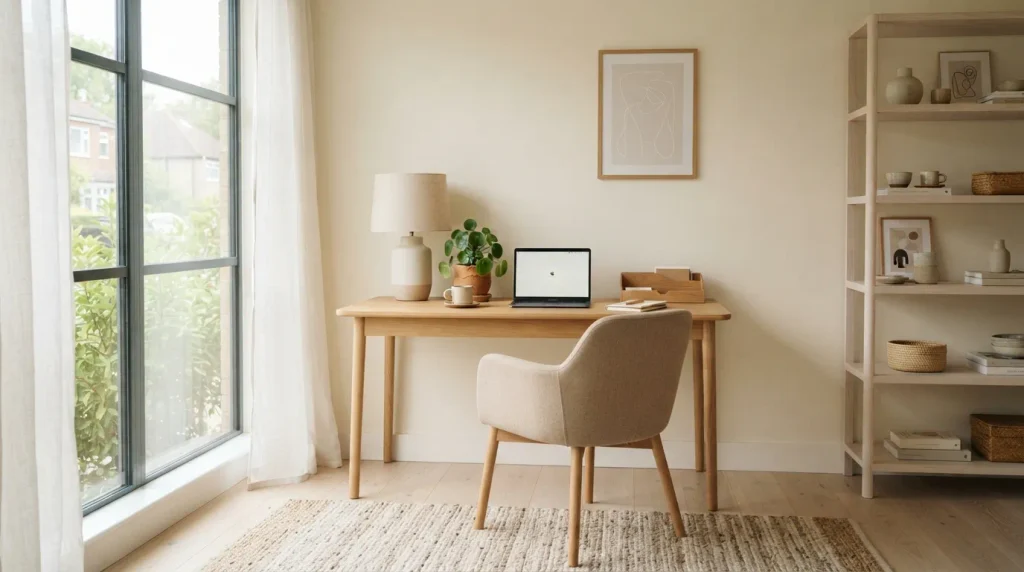
A clean desk can instantly make a workday feel lighter, and a warm oak workspace is one of the easiest ways to capture Japandi style. Choose a simple wooden desk with a slim profile, then pair it with a comfortable chair in beige, cream, or soft gray. Keep the surface intentionally open, using only a small lamp, notebook, and one natural accent such as a ceramic cup. I’ve noticed that limiting visible clutter makes compact home offices feel larger and calmer. Soft daylight, pale walls, and light wood flooring complete the quiet, balanced look without making the room feel cold.
A light wood desk brings warmth without visual heaviness, making it especially useful in smaller rooms where bulky furniture can quickly overwhelm the layout. For a polished setup, position the desk near a window so natural light falls across the work surface without creating screen glare. Add a textured rug underneath to soften the room and define the office zone. In my experience, this simple combination works beautifully because it balances practicality with softness. If storage is needed, choose one low cabinet with clean lines instead of several small organizers, keeping the overall composition peaceful and uncluttered.
Also Read : 21 Winter Decor Ideas for a Warm Cozy Home
2. Window Workspace
- Positioning the desk near a window maximizes useful natural light.
- Soft curtains can filter harsh sunlight while keeping the room bright.
- A rug helps visually separate the work area from the rest of the room.
- Low storage keeps necessary supplies close without crowding the desk.
- Choose a window with a pleasant view whenever possible for a refreshing backdrop.
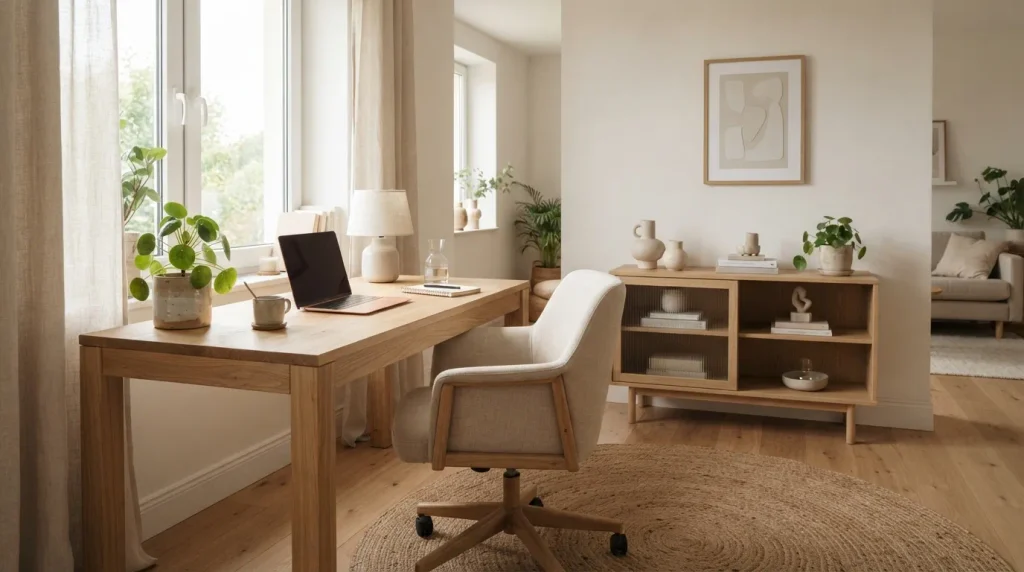
A workspace beside a bright window can make even a small room feel more spacious and inviting. Natural light highlights the grain of wooden furniture, softens neutral colors, and creates a pleasant setting for focused tasks. Place the desk perpendicular to the window when possible, especially if direct sunlight causes screen reflections. Add lightweight linen curtains for gentle diffusion and privacy. This arrangement is one of the most practical Japandi home office ideas because it uses the room’s existing light instead of relying heavily on artificial illumination. The finished space feels airy, functional, and naturally connected to the outdoors.
Good positioning also makes the office easier to use throughout the day. Keep frequently needed items within arm’s reach, but avoid filling the window area with tall furniture that blocks light. A low cabinet underneath or beside the desk can provide discreet storage while preserving the open feeling. I’ve seen this work well in many homes where the office shares space with a bedroom or living area. A simple woven rug beneath the chair adds warmth and quietly defines the workspace, helping it feel intentional without creating a visual barrier between the office and surrounding areas.
Also Read : 24 Winter Centerpieces for a Beautiful Seasonal Table
3. Warm Neutral Palette
- Cream and sand tones create a soft foundation for focused work.
- Pale oak prevents neutral rooms from feeling flat or sterile.
- Charcoal accents add just enough contrast to sharpen the design.
- Woven and linen textures introduce warmth without adding clutter.
- Keep decorative colors muted so the workspace remains visually restful.
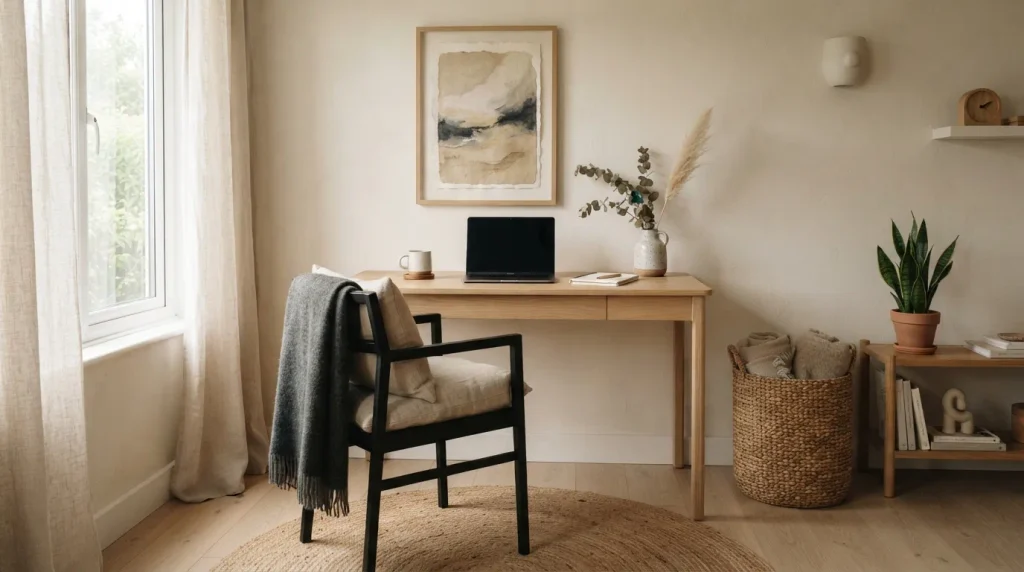
Warm neutrals can make a home office feel instantly more grounded, especially when paired with natural materials and simple forms. Build the palette around warm white walls, pale oak, sand-colored textiles, and subtle charcoal accents. A linen chair cushion, woven basket, or handmade ceramic piece can add texture without creating visual noise. Keep artwork minimal, preferably one abstract print with soft earthy tones. This approach suits Japandi home office ideas because it combines Japanese restraint with Scandinavian warmth. The result is a workspace that feels inviting enough for long hours while remaining visually quiet and easy to maintain.
The key is layering similar tones instead of making everything exactly the same shade. For example, combine creamy walls with a slightly darker beige chair and pale wooden furniture, then introduce one or two deeper accents for definition. This prevents the room from looking washed out while preserving its peaceful character. In my experience, texture becomes especially important in neutral spaces because it adds depth without demanding attention. Linen, wood, woven fibers, matte ceramics, and softly textured rugs can create a finished appearance that feels thoughtful rather than overly decorated.
Also Read : 22 Maximalist Living Room Ideas for a Bold Colorful Space
4. Minimal Wall Shelving
- Floating shelves provide useful storage without making the room feel crowded.
- Keep displayed items limited to books, ceramics, and a few natural accents.
- Vary object heights slightly for a relaxed, balanced arrangement.
- Leave some shelf space empty so the display can breathe.
- Choose pale wood or matte finishes that blend with the office palette.
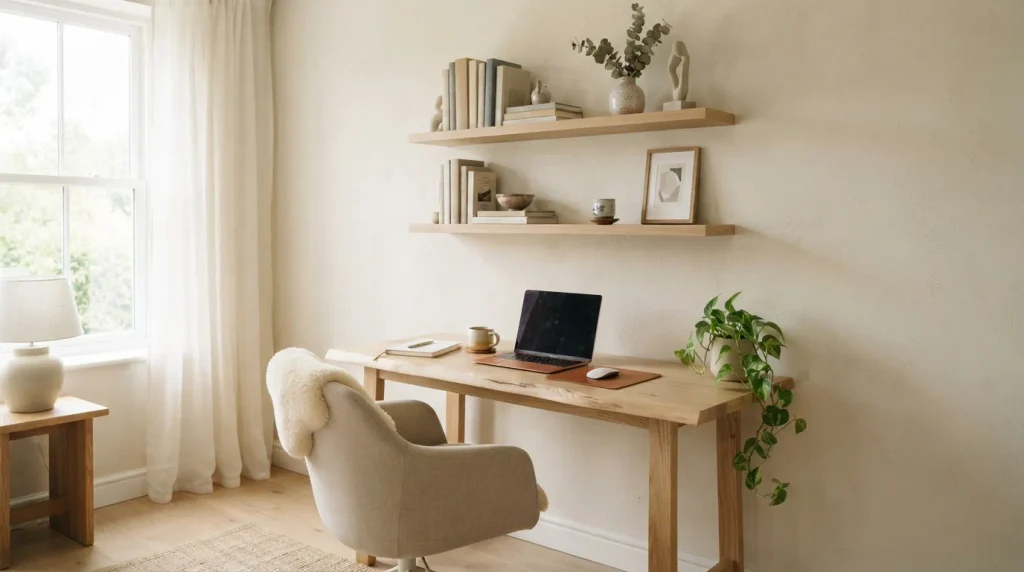
Minimal shelving adds personality without sacrificing the calm feeling that makes this style so appealing. Install one or two slim floating shelves above the desk and use them for only the things you genuinely enjoy seeing. A small stack of books, handmade ceramic vase, framed artwork, and tiny plant can be enough. Avoid filling every available space because empty areas are part of the design. I’ve noticed that thoughtfully spaced objects make shelves look more expensive and intentional, even when the pieces themselves are simple. Pale oak shelving also connects naturally with other wooden furniture throughout the room.
Shelves can also solve a practical storage problem when floor space is limited. Instead of adding a large bookcase, use vertical wall space for lightweight supplies and decorative pieces. Keep heavier everyday items lower and place delicate objects higher where they are less likely to interfere with your work. If the shelves sit above your desk, leave enough clearance so the arrangement never feels intrusive. A restrained display keeps your eyes from constantly jumping between objects, which can make focused work easier. The finished setup feels organized but personal, giving the office character without losing its peaceful visual rhythm.
Also Read : 25 Moody Blue Bathroom Ideas for a Dramatic Stylish Space
5. Curved Desk Chair
- Rounded furniture softens the straight lines commonly found in minimalist offices.
- A supportive chair makes long work sessions more comfortable.
- Bouclé, linen, or woven upholstery adds subtle tactile interest.
- Neutral upholstery keeps the furniture visually light.
- Choose a chair with practical ergonomic support rather than style alone.
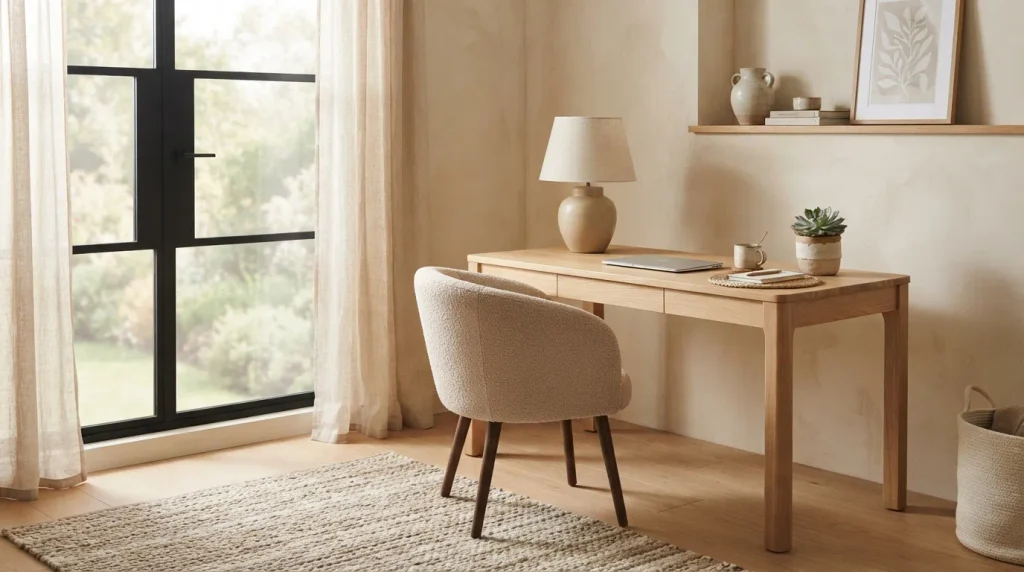
A softly curved chair can make a simple office feel warmer and more welcoming without adding unnecessary decoration. Look for rounded edges, natural upholstery, and a compact silhouette that fits comfortably beneath the desk. Beige linen, cream bouclé, or woven fabric works especially well with pale wood and warm neutral walls. The curved shape creates a gentle contrast against the straight desk surface and shelving. That small change can make the entire room feel more organic. For everyday use, prioritize back support and seat comfort first, because beautiful furniture only works when it genuinely supports your routine.
The chair can also become a subtle focal point without competing with the rest of the room. Choose upholstery that is slightly different from the wall color so its shape remains visible, then repeat the tone through a small cushion or rug detail. In my experience, this creates better visual balance than introducing a completely new accent color. If your office is tight on space, select a chair with a narrow base that slides fully under the desk. You’ll preserve valuable floor space while maintaining the soft, relaxed character associated with modern Japandi interiors.
Also Read : 25 Covered Patio Design Ideas for Stylish Outdoor Living
6. Low Profile Storage
- Low cabinets keep office supplies hidden while preserving an open sightline.
- Wood finishes add warmth and connect storage with the desk.
- Closed doors create a cleaner look than numerous open compartments.
- Use labeled containers inside for easier everyday organization.
- Leave some space above the cabinet for one simple decorative piece.
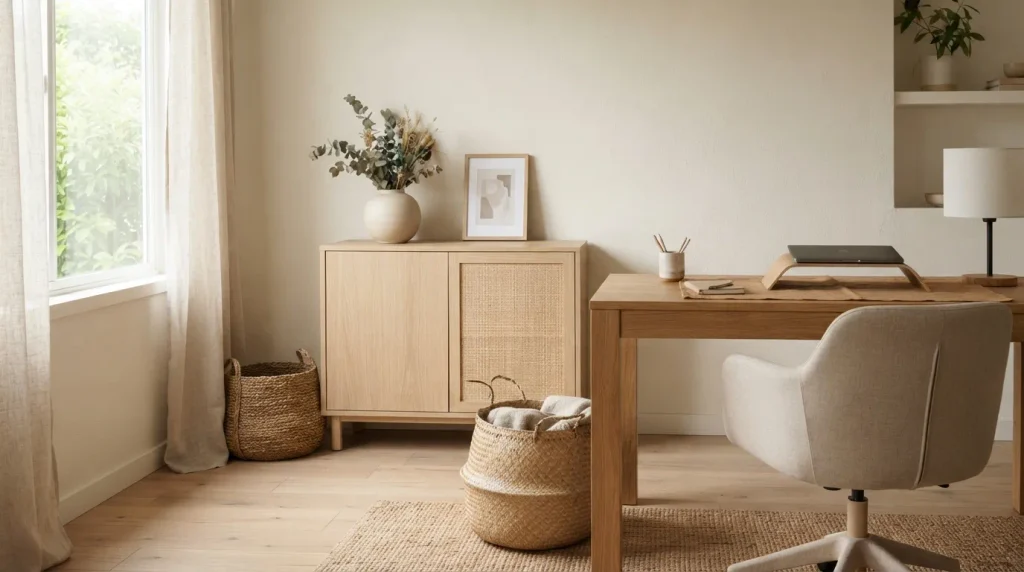
Low storage is a smart solution when you want the office to feel organized without making the furniture dominate the room. A long, low oak cabinet can hold paperwork, cables, notebooks, and supplies behind closed doors while keeping the upper portion of the room visually open. Choose simple fronts with minimal hardware for a cleaner appearance. This arrangement works particularly well in shared rooms because it feels more like intentional furniture than traditional office storage. The warm wood finish also adds character, while the low height keeps natural light and sightlines moving freely across the space.
For everyday organization, divide the cabinet interior into practical zones instead of letting everything collect in one large compartment. Use small boxes for cables, stationery, and documents, leaving frequently used supplies easy to reach. Keep the cabinet top mostly clear so it does not become another clutter zone. A single ceramic vase, small plant, or framed print is enough to finish the surface. I’ve noticed that closed storage is especially helpful for maintaining a calm workspace because the room can look tidy quickly, even after a busy workday.
Also Read : 27 Modern Rustic Living Room Ideas to Try Today
7. Natural Material Mix
- Pale wood, linen, and woven fibers add warmth without visual clutter.
- Mixing textures keeps a neutral room from feeling flat.
- Natural materials create a stronger connection with the outdoors.
- Repeat similar finishes throughout the room for visual continuity.
- Keep the palette soft with beige, cream, tan, and warm brown.
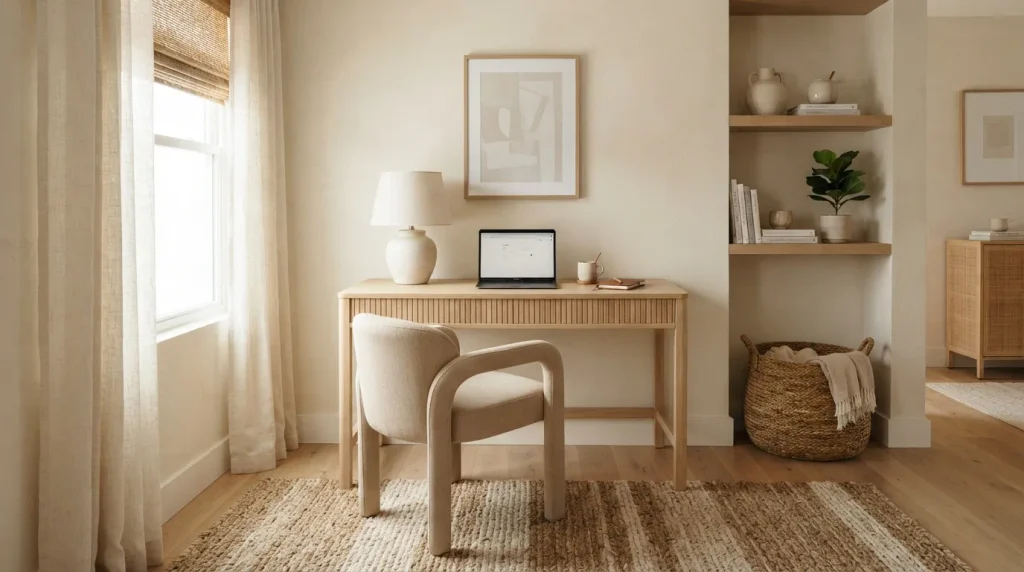
Natural materials give a Japandi office its warmth and help a minimalist room feel connected to the outdoors. Combine pale oak furniture with woven baskets, linen curtains, rattan details, or a small stone accessory. These materials introduce variation without relying on bright colors or busy patterns. Keep the palette grounded in beige, cream, tan, and soft brown so every element feels related. This approach is especially useful when a room feels too plain after removing clutter. In my experience, mixing three or four natural textures creates enough visual interest to make a simple workspace feel finished.
The best results come from choosing materials that are both beautiful and practical for daily use. A woven basket can hide chargers, while a linen curtain can soften strong sunlight and a wooden desk can withstand everyday work. Avoid mixing too many finishes because the room can quickly lose its quiet character. Instead, repeat similar textures in different areas to create continuity. A pale wood floor, woven rug, and ceramic accessories can work together effortlessly. The finished office feels warm and tactile, yet remains easy to clean, organize, and adapt as your work needs change.
8. Single Green Accent
- One leafy plant adds freshness without overwhelming the workspace.
- A ceramic planter keeps greenery aligned with the neutral palette.
- Natural foliage softens straight furniture lines.
- Place plants where they receive suitable indirect light.
- Limit greenery to maintain a clean, focused atmosphere.
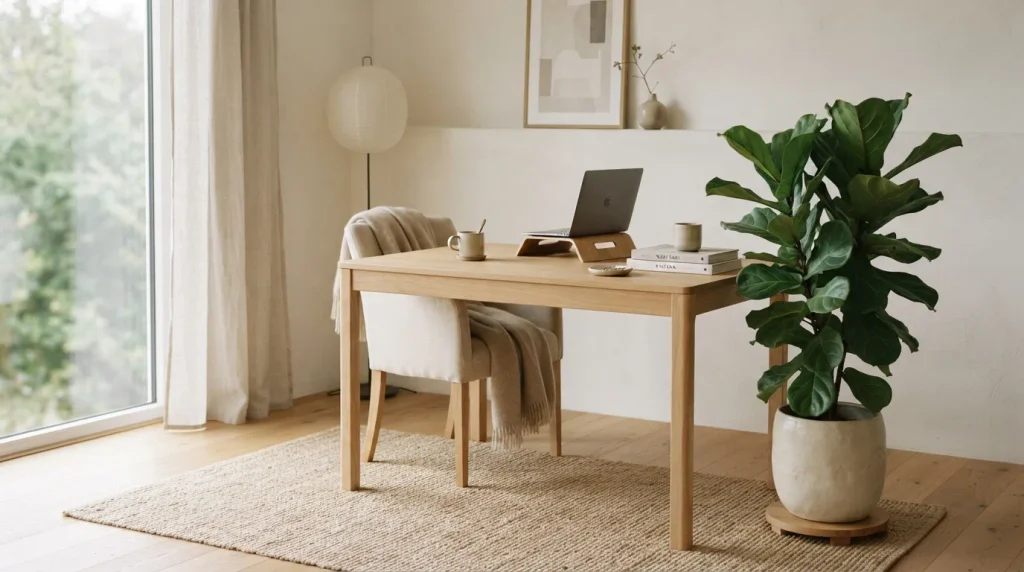
A gentle green accent can make a neutral office feel fresher without disrupting its peaceful palette. Choose one leafy plant with an uncomplicated shape and place it where it receives suitable indirect light. A ceramic planter in cream, sand, or muted gray keeps the arrangement cohesive. Plants also soften hard furniture edges and introduce natural movement into an otherwise structured room. I’ve noticed that even one healthy plant can make a workspace feel more welcoming, particularly when the surrounding colors are restrained. Keep the number of plants limited so the office remains focused rather than becoming a crowded indoor garden.
Placement matters just as much as the plant itself. Set greenery beside the desk, on a low cabinet, or near a window where it can brighten an empty corner without interfering with your work. Avoid placing large leaves directly beside your monitor or in a narrow walkway. For low-maintenance options, choose varieties suited to your room’s available light and watering routine. A simple plant can also provide a gentle color break against cream walls and pale wood. The result is subtle but noticeable: the office feels more alive while still preserving the uncluttered balance that defines this aesthetic.
9. Warm Task Lighting
- A warm desk lamp makes evening work feel softer and more comfortable.
- Focused lighting helps illuminate notebooks without flooding the entire room.
- Ceramic, paper, or wood lamp finishes suit the natural aesthetic.
- Layer task lighting with gentle ambient light when needed.
- Keep cords organized so the workspace stays visually clean.
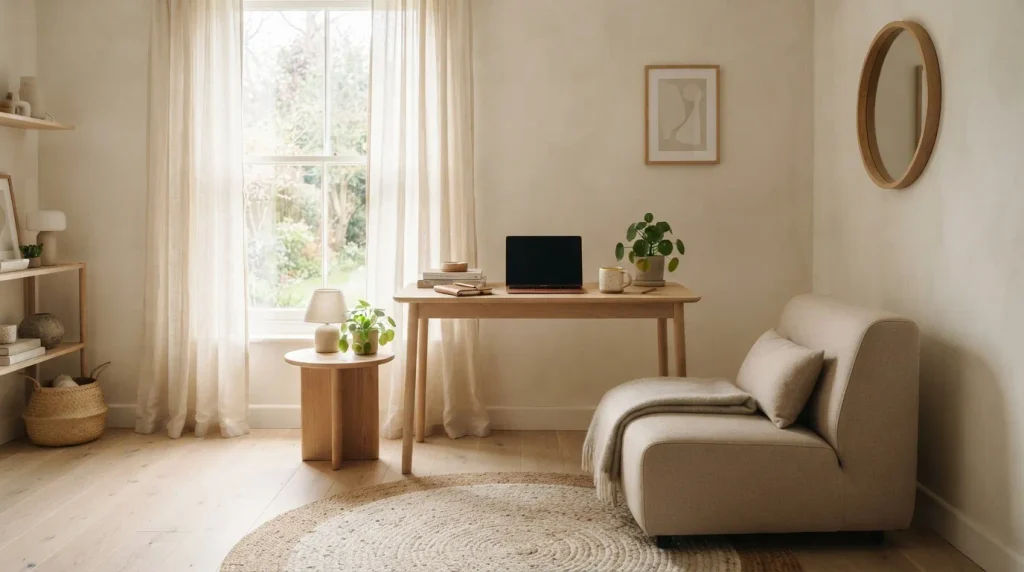
Soft lighting can completely change how a minimalist office feels once daylight fades. Start with a warm desk lamp that provides focused illumination without creating harsh glare on your screen. Add a small floor lamp or wall light only if the room needs additional ambient brightness. Choose matte ceramic, paper, or natural wood finishes so the fixtures feel integrated rather than decorative. This layered approach is one of the easiest ways to create a comfortable workspace for evening tasks. A warm glow also brings out the richness of oak furniture and makes neutral textiles appear softer after sunset.
Good lighting should support your eyes and your routine, not simply make the room look pretty. Position the desk lamp to illuminate notebooks and hands while keeping the bulb outside your direct line of sight. If you use overhead lighting, select a softer source and avoid relying on a single bright fixture. In my experience, combining task lighting with gentle ambient light makes an office feel calmer and more functional at night. Keep cords neatly managed and choose simple fixtures with clean shapes. The overall effect should feel warm, balanced, and quietly inviting rather than dramatic or overly styled.
10. Soft Linen Curtains
- Linen curtains soften strong daylight while preserving an airy atmosphere.
- Cream or oatmeal fabric works beautifully with pale wood furniture.
- Floor-length panels can make a small room feel taller.
- Choose lightweight fabric for gentle movement and filtered sunlight.
- Keep curtain hardware simple and visually discreet.
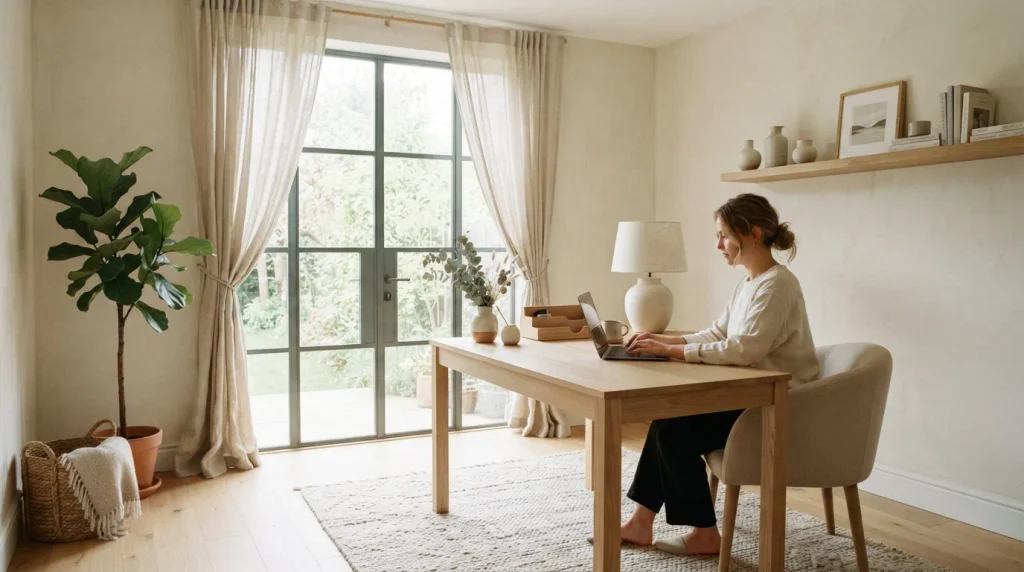
Soft linen curtains can make a home office feel instantly calmer while giving you better control over daylight. Choose lightweight panels in cream, oatmeal, or warm beige so sunlight can filter gently through the fabric. Floor-length curtains create a taller visual line and help soften the hard edges of desks and windows. They also provide privacy without making the room feel enclosed. For a balanced look, keep the curtain hardware simple and let the natural texture become the main decorative detail. The result is an airy workspace with softer light and a more comfortable atmosphere throughout the day.
Curtains are especially useful when your desk sits near a bright window and direct sunlight becomes distracting during afternoon work. Instead of closing heavy blinds completely, partially draw the linen panels to reduce glare while keeping natural brightness. This preserves the connection with the outdoors that works so well in this style. I’ve noticed that textured fabrics can also make neutral rooms feel more layered without adding unnecessary objects. Pair the curtains with pale wood, woven materials, and warm white walls for a cohesive finish. The office will feel softer, brighter, and more thoughtfully designed.
11. Floating Desk Design
- A wall-mounted desk keeps the floor visually open and uncluttered.
- This setup works especially well in compact rooms or unused corners.
- Choose sturdy construction for comfortable everyday work.
- Add one narrow drawer for essential stationery and small supplies.
- Keep the surrounding wall simple to emphasize the desk’s clean silhouette.
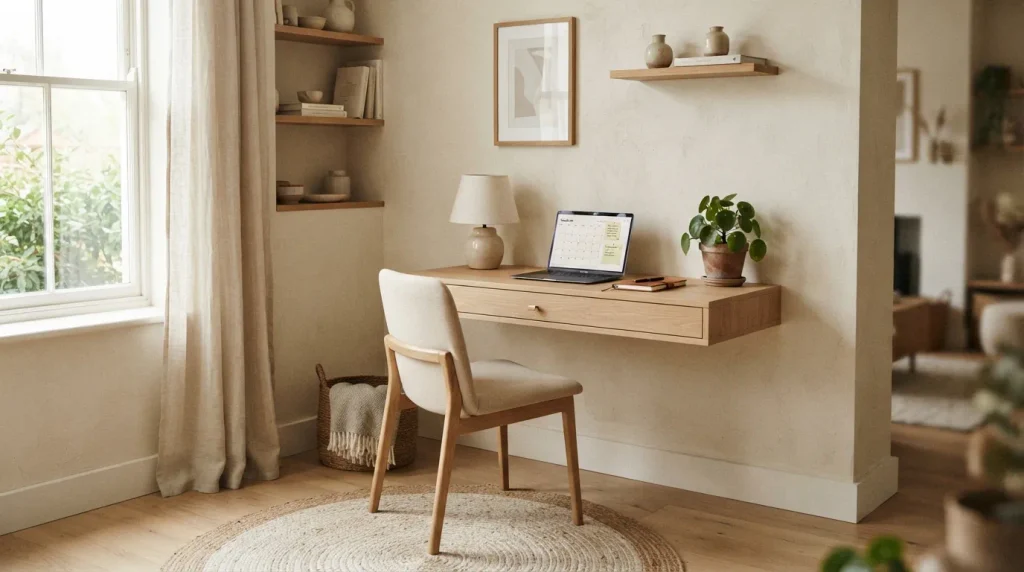
A floating desk is a clever way to create a dedicated workspace without making a small room feel crowded. Mounted directly to the wall, it leaves more visible floor area beneath and gives the furniture a lighter appearance. Choose a pale oak finish with a simple rectangular shape and enough depth for your monitor or laptop. A single drawer can hold everyday stationery while keeping the desktop clear. This setup is particularly useful for bedrooms, narrow alcoves, or multipurpose spaces where every inch matters. The clean silhouette also fits naturally with the restrained look of Japandi home office ideas.
Before installing a floating desk, check the wall structure and choose hardware suitable for the expected weight. Position the surface at a comfortable working height and leave enough legroom underneath for an ergonomic chair. Keep the wall above it relatively open rather than filling the space with shelves and artwork. In my experience, this restraint makes the desk feel like part of the architecture rather than an added office station. A small lamp, one plant, and a notebook can provide enough personality. The result is practical, space-saving, and visually quiet without sacrificing everyday functionality.
12. Textured Area Rug
- A natural fiber rug adds softness beneath a simple desk and chair.
- Subtle texture creates depth without introducing distracting patterns.
- Neutral shades connect the rug with wood and linen elements.
- A properly sized rug helps visually define the work zone.
- Choose a durable weave that can handle daily chair movement.
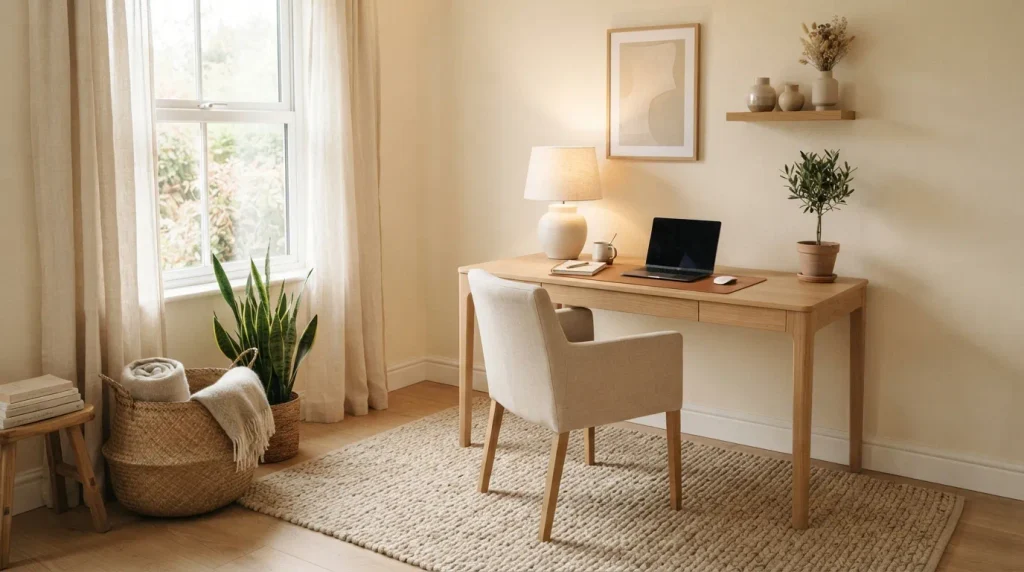
A textured rug can make a minimalist office feel warmer while quietly defining where the workspace begins and ends. Choose a natural fiber, flatweave, or softly textured rug in cream, beige, oatmeal, or muted taupe. Avoid bold patterns that compete with the clean furniture lines. A rug also absorbs some sound, which can make a hard-floored room feel more comfortable during long work sessions. Place it beneath the desk and chair so the main furniture feels connected. This small addition can bring softness to pale wood flooring while keeping the overall design simple and visually balanced.
Size matters when choosing a rug for a practical office. It should extend far enough beneath the chair that the legs remain on the surface when you move backward. A low-pile design is usually easier to roll across and less likely to interfere with chair wheels. I’ve seen textured rugs work especially well in neutral spaces because they add dimension without requiring extra decoration. Pair the rug with linen curtains, pale oak, and handmade ceramics for a cohesive material palette. The finished workspace feels softer underfoot, more defined visually, and comfortable enough for everyday use.
13. Built-In Wood Storage
- Built-in cabinetry uses wall space efficiently while keeping supplies hidden.
- Pale wood creates a warm connection with the rest of the office.
- Closed doors reduce visual clutter and make cleanup easier.
- Include a few open niches for carefully chosen decorative pieces.
- Plan storage around the items you actually use every day.
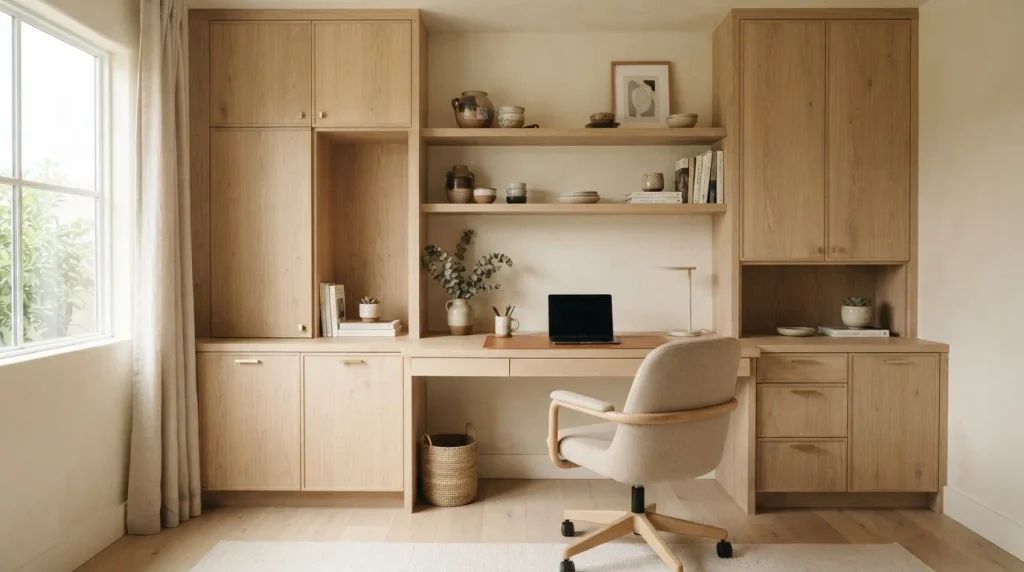
Built-in wood storage can turn an awkward wall into a highly functional part of the workspace. Floor-to-ceiling cabinetry provides room for documents, office supplies, books, and equipment while keeping most of those items out of sight. Pale oak or another light natural wood finish adds warmth and helps the cabinetry blend with the rest of the room. Keep the fronts simple, with minimal hardware and clean proportions. This approach works particularly well when you need substantial storage but want the office to retain an open, peaceful appearance instead of feeling like a traditional corporate workspace.
Thoughtful planning makes built-in storage much more useful than simply adding as many cabinets as possible. Reserve lower sections for heavier items and everyday supplies, then use upper areas for less frequently needed belongings. A couple of open niches can display books, ceramics, or a small plant, but keep them intentionally sparse. In my experience, mixing mostly closed storage with a few carefully styled openings creates the best balance between practicality and personality. Matching the cabinetry to the desk or flooring also helps the entire room feel cohesive, making storage appear like an architectural feature rather than visual clutter.
14. Paper Lantern Pendant
- A paper lantern adds softness to a room filled with clean furniture lines.
- Its rounded shape introduces an organic contrast against rectangular desks.
- Warm illumination creates a comfortable atmosphere during evening work.
- Choose an appropriately sized fixture for the room’s ceiling height.
- Keep the surrounding decor minimal so the pendant remains visually balanced.
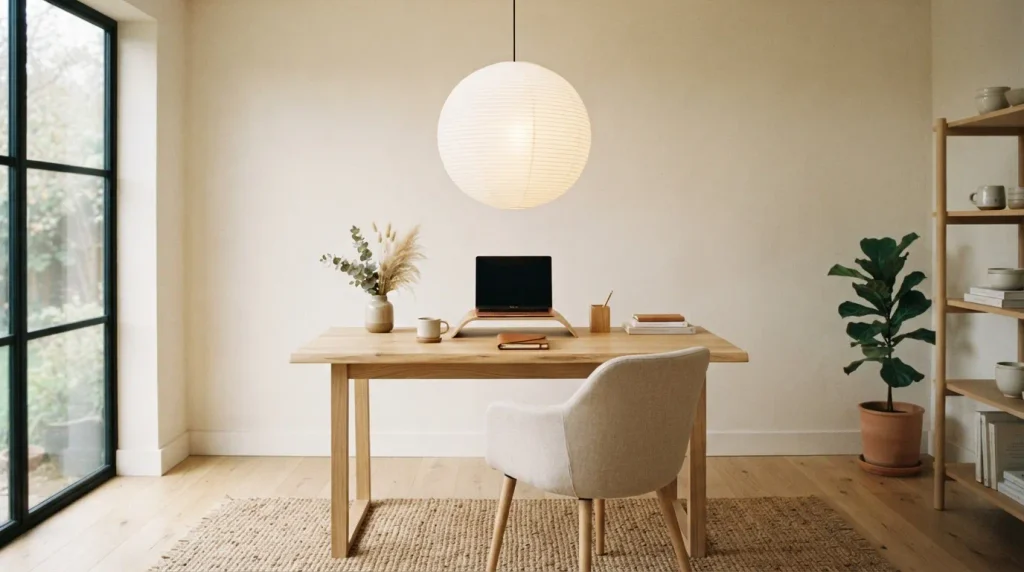
A simple paper lantern can become the softest focal point in a minimalist workspace. Its rounded shape contrasts beautifully with rectangular desks, shelves, and cabinets, creating a more relaxed visual rhythm. Choose an off-white or warm ivory shade that complements the room rather than introducing a strong contrast. When illuminated, the paper surface produces a gentle glow that makes evening work feel more comfortable. This type of fixture works particularly well when the rest of the room uses natural materials and restrained colors. The result is practical lighting that also contributes to the room’s overall sense of calm.
When choosing a pendant, consider the desk size, ceiling height, and viewing angles from nearby rooms. A fixture that is too large can dominate a compact office, while one that is too small may disappear visually. Hang it high enough to maintain comfortable sightlines and avoid placing it directly where it interferes with your monitor. I’ve noticed that rounded lighting fixtures are especially effective in minimalist interiors because they introduce softness without adding decorative clutter. Pair the lantern with pale wood, linen, and matte ceramics, allowing the warm illumination to tie those natural textures together after sunset.
15. Japandi Gallery Corner
- One small artwork grouping can personalize an otherwise restrained workspace.
- Choose simple botanical, abstract, or nature-inspired prints.
- Keep frames consistent for a cleaner visual effect.
- Use neutral backgrounds with muted earthy tones.
- Leave generous wall space around the artwork for a relaxed composition.
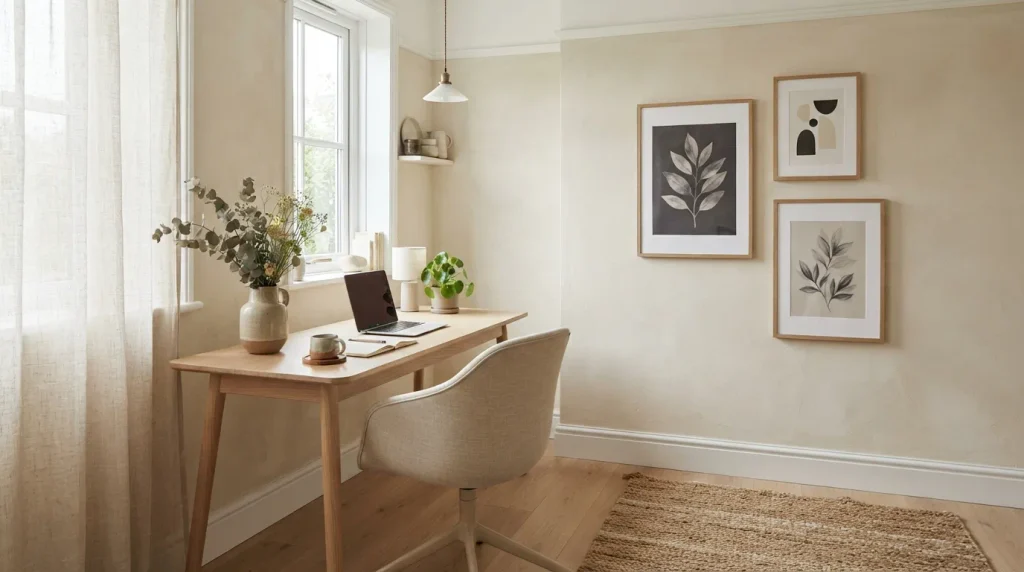
A small gallery corner can give a Japandi workspace personality without making the walls feel busy. Choose two or three simple prints featuring botanical shapes, quiet landscapes, abstract forms, or natural textures. Keep the frames similar in color and style so the arrangement feels intentional. Muted beige, charcoal, olive, and warm brown tones work beautifully with pale wood and cream walls. Position the artwork beside the desk rather than directly above a busy work surface. This creates a gentle focal point while leaving the main workspace visually clear and comfortable for everyday use.
The key is to treat the gallery as a carefully edited collection rather than filling the wall with every favorite print. Leave generous space between the frames and surrounding furniture so each piece has room to breathe. In my experience, three well-chosen artworks often create more impact than a larger collection in a small office. Consider mixing one botanical print with a simple abstract and a small nature-inspired photograph for subtle variety. The finished corner feels personal and creative while still maintaining the clean, balanced character that makes this design style so appealing.
16. Sculptural Desk Lamp
- A sculptural lamp adds personality while keeping the desk functional.
- Rounded or organic shapes soften the room’s straight furniture lines.
- Matte ceramic, wood, or metal finishes suit the neutral palette.
- Choose warm light for a softer evening workspace.
- Keep other desktop accessories minimal so the lamp remains the focal detail.
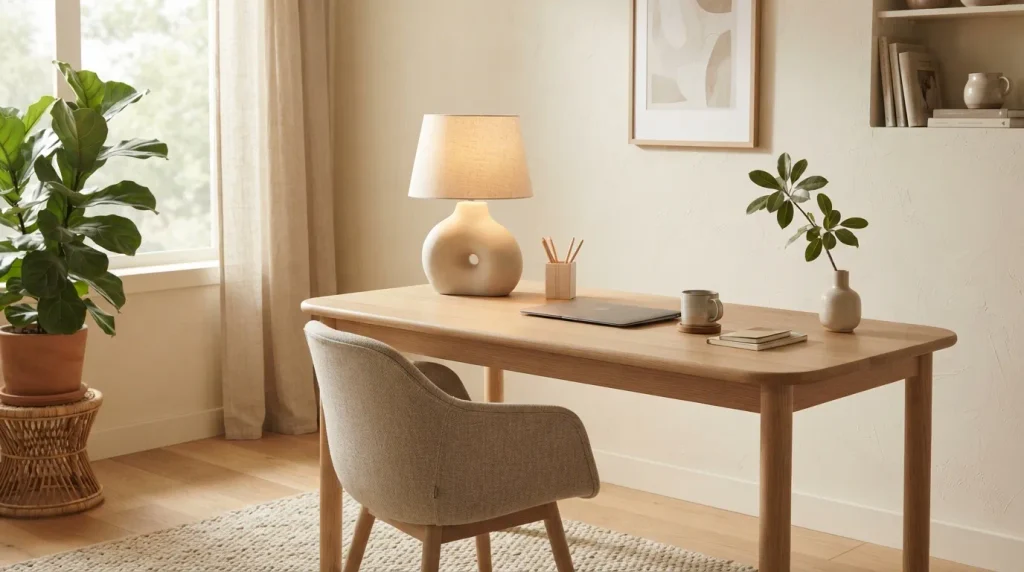
A sculptural desk lamp can turn an everyday work essential into a subtle design feature. Look for rounded, organic, or softly geometric shapes that contrast with the straight edges of the desk. Matte ceramic, brushed metal, or natural wood finishes work especially well with cream walls and pale oak furniture. Choose a warm bulb that provides comfortable task lighting without creating harsh shadows. Keep the rest of the desktop intentionally simple so the lamp has room to stand out. This small addition can make the workspace feel more considered while still serving a genuinely useful purpose.
The best lamp is one that balances appearance with practical lighting. Position it to one side of your monitor or notebook area so the light falls across the work surface rather than directly into your eyes. If you work late, a warm glow can also make the room feel less stark than bright overhead lighting. I’ve noticed that one distinctive functional object often adds more personality than several decorative accessories. Pair the lamp with a small ceramic tray, notebook, or plant, then leave plenty of open desk space. The result feels polished, useful, and visually calm.
17. Open Wood Nook
- An unused corner can become a dedicated workspace with minimal furniture.
- Vertical wood paneling adds warmth and subtle architectural interest.
- A compact desk keeps the footprint practical.
- One floating shelf can provide lightweight storage without crowding the nook.
- Use a consistent neutral palette to connect the nook with nearby rooms.
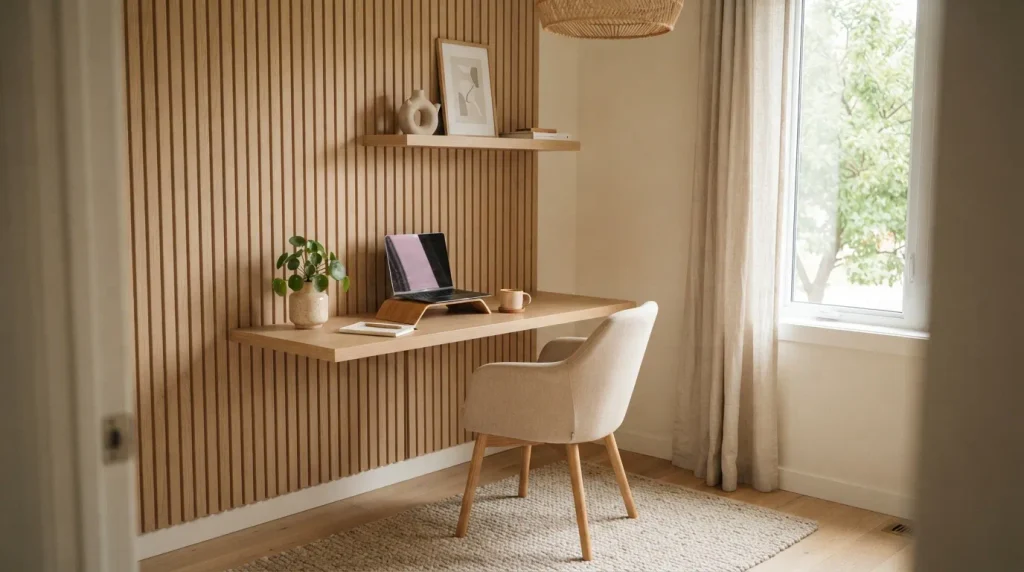
An unused corner can become one of the most useful areas in a home when it is treated as a dedicated workspace. A slim oak desk fitted into a small nook provides enough room for a laptop and notebook without taking over the surrounding space. Add subtle vertical wood paneling behind the desk if you want more architectural warmth, then keep the remaining surfaces simple. This setup is especially useful for apartments, bedrooms, and shared living areas where a full office room is unavailable. The compact footprint keeps the workspace practical while preserving valuable circulation space around it.
To make the nook feel intentional, define it with just a few coordinated elements. A small floating shelf can hold books or a ceramic object, while a woven rug visually separates the chair from the surrounding floor. Keep colors consistent with nearby rooms so the nook does not feel like an unrelated addition. In my experience, compact work areas look larger when furniture stays proportional to the wall and floor space. Avoid oversized chairs, deep desks, or multiple storage units. A carefully measured arrangement can provide everything needed for productive work while maintaining the light, uncluttered feeling of the room.
18. Low Contrast Palette
- Closely related shades create a softer visual flow throughout the office.
- Cream, beige, taupe, and pale wood work naturally together.
- Small charcoal accents provide definition without overwhelming the palette.
- Similar tones make compact spaces appear more continuous and open.
- Use texture instead of strong color for visual interest.
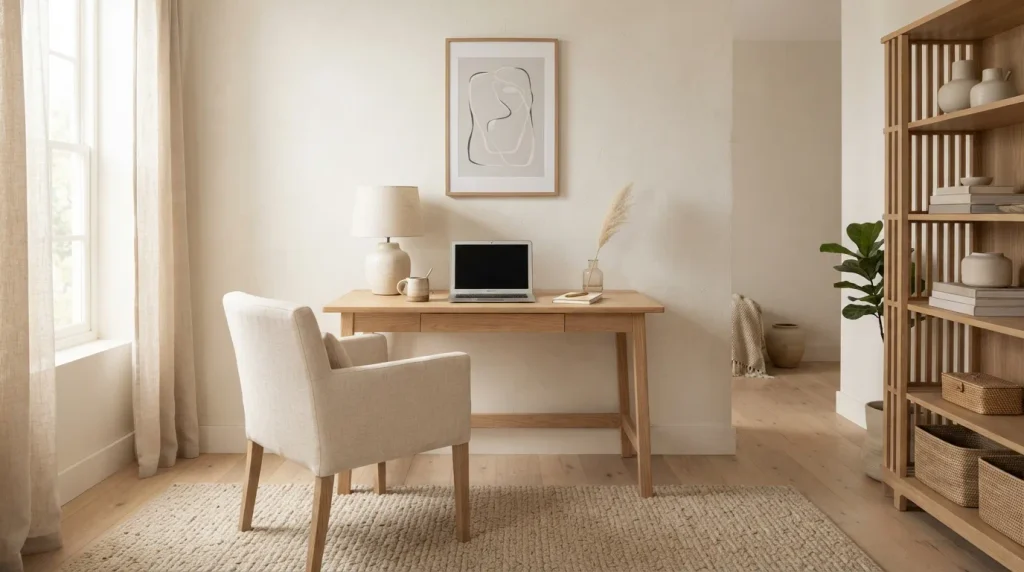
A low-contrast palette creates a gentle visual flow that can make a home office feel calmer and more spacious. Instead of relying on strong color changes, layer warm white walls with cream textiles, beige upholstery, taupe accents, and pale oak furniture. Add small touches of charcoal through artwork, hardware, or a desk accessory for subtle definition. This approach keeps the room visually cohesive and easy on the eyes. It works especially well in compact offices because closely related tones help different surfaces blend together, making the overall space appear more open, balanced, and thoughtfully coordinated.
Texture becomes especially important when the colors are intentionally quiet. A woven rug, linen curtain, natural wood grain, matte ceramic, and softly upholstered chair can each add depth without introducing visual noise. I’ve noticed that this combination feels much richer than using several contrasting colors to create interest. Repeat two or three neutral shades across different parts of the room so the eye moves naturally around the space. If the office starts feeling too flat, introduce texture rather than another bold color. The result is a sophisticated workspace that feels warm, peaceful, and easy to live with.
19. Hidden Cable Management
- Concealing cables instantly makes the workspace look cleaner and more intentional.
- Use clips, sleeves, or a discreet cable tray beneath the desk.
- Keep chargers grouped together instead of letting cords spread across the surface.
- Choose neutral cable covers that blend with the furniture.
- Leave only the essential technology visible on the desktop.
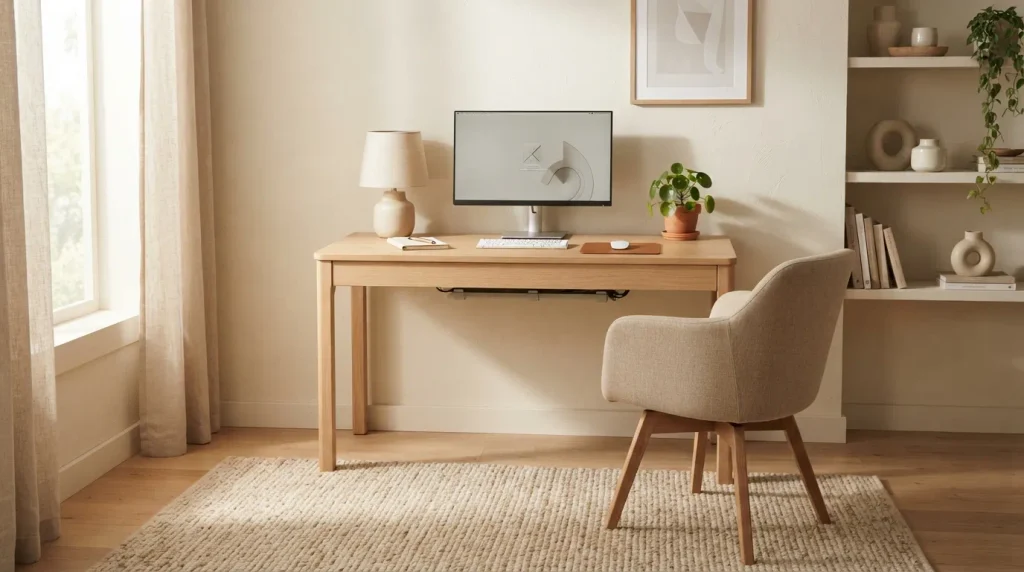
A beautifully styled office can still feel messy when cables are scattered across the desk or hanging visibly underneath it. Hidden cable management is a small practical upgrade that makes a surprisingly big visual difference. Use an under-desk tray, adhesive clips, or a fabric cable sleeve to group wires neatly and guide them toward the power outlet. Keep chargers together rather than allowing several cords to cross the workspace. This simple organization helps the desk look intentional from every angle. It also makes cleaning easier because there are fewer loose wires collecting dust around furniture and flooring.
Think about cable placement before arranging your computer, monitor, lamp, and other equipment. Position the desk close enough to an outlet to avoid long visible cords, then secure remaining wires underneath the surface. Neutral cable sleeves can blend with pale wood or cream walls when complete concealment is not possible. In my experience, removing visible technology clutter makes minimalist interiors feel dramatically calmer without requiring any new decorative pieces. Once the cables are organized, keep the desktop limited to essential equipment and one or two simple accents. The result is cleaner, more functional, and easier to maintain.
20. Natural Wood Backdrop
- A wood backdrop adds warmth behind a simple desk without extra decoration.
- Vertical boards can visually emphasize ceiling height in compact rooms.
- Choose pale oak or light ash for a softer appearance.
- Keep the grain natural rather than using glossy finishes.
- Pair the wall treatment with cream and beige furnishings for balance.
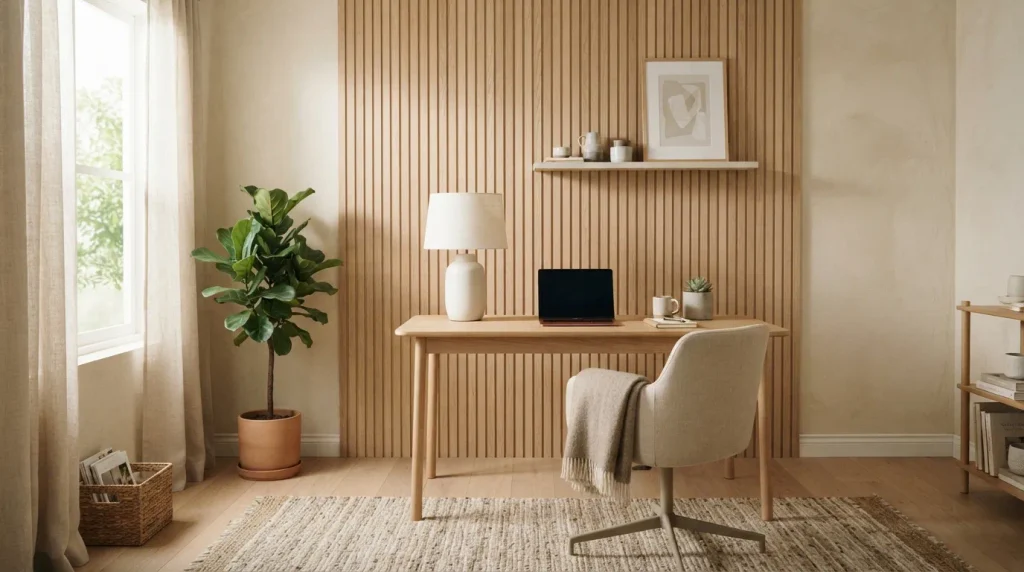
A natural wood backdrop can give a simple workspace a strong architectural presence without requiring lots of decoration. Pale oak or light ash boards behind the desk create warmth, texture, and a clear visual anchor while keeping the overall palette restrained. Vertical boards can also draw the eye upward, which may help a compact room feel taller. Keep the finish matte or natural-looking rather than glossy so the wood remains soft and understated. This approach works beautifully with cream walls, beige textiles, and simple furniture because the wood becomes the main textural feature without making the room feel visually heavy.
A wood accent wall should complement the existing furniture rather than compete with it. If the desk is also wooden, choose finishes with similar undertones so they feel connected instead of mismatched. Keep artwork and shelving minimal because the wall already provides plenty of visual interest. I’ve noticed that natural grain can make neutral offices feel much richer without introducing additional colors or patterns. If a full accent wall feels too strong, use wood only across the desk zone or one narrow section. This creates definition while preserving the airy, understated character of the workspace.
21. Serene Reading Corner
- A compact lounge chair can create a useful breakaway space beside the desk.
- Soft upholstery adds comfort without disrupting the minimalist layout.
- A small side table keeps books and drinks within easy reach.
- Natural light makes the corner feel connected to the main workspace.
- Keep the styling simple so the area remains visually restful.
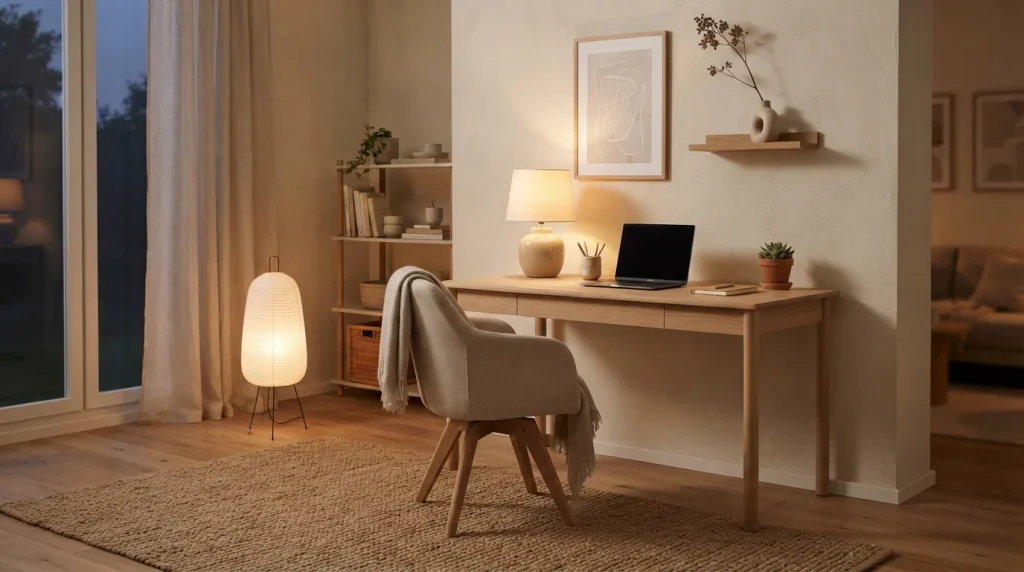
A small reading corner can make a home office more flexible while giving you a comfortable place to step away from the screen. Choose a compact lounge chair in beige, oatmeal, or soft gray and position it near a window or empty corner. A small wooden side table provides enough space for a book, cup, or notebook without taking over the floor. This extra zone can support short reading sessions, brainstorming, or quiet breaks between tasks. The key is keeping the furniture proportional so the corner feels like a natural extension of the workspace rather than a separate room.
For a cohesive look, repeat materials already used around the office. A light wood side table can echo the desk, while a woven rug and linen curtains continue the natural texture theme. Keep accessories limited to a few useful pieces so the corner remains easy to maintain. In my experience, having a comfortable spot away from the main desk can make a home office feel more functional throughout the day. It creates visual variety without adding clutter and gives the room another purpose while preserving the calm, balanced character that defines a thoughtfully designed Japandi workspace.
Conclusion
A peaceful workspace does not require a complete makeover. The right furniture, natural textures, warm lighting, smart storage, and thoughtful details can transform an ordinary corner into a space you enjoy using every day. These japandi home office ideas offer plenty of inspiration, whether you want to refresh one small area or redesign your entire workspace. I’ve seen how simple changes can completely shift the feeling of a room. Start with one idea that fits your needs, then build from there. Save this post on Pinterest for later, try your favorite ideas at home, and share it with someone creating their own calm workspace.