Your dining room can feel warm, beautiful, and pulled together without looking overly decorated. The right table, lighting, textures, and small details can completely change the mood of the space.
These 21 modern farmhouse dining room ideas are designed to help you create a dining area that feels cozy, practical, and effortlessly stylish. Whether you are working with a small breakfast nook, an open-plan room, or a larger dining space, you’ll find simple ways to add character without starting from scratch. Think reclaimed wood, soft linen, woven textures, vintage storage, natural light, and timeless neutral colors. In my experience, the biggest transformations often come from a few thoughtful changes rather than a complete makeover. Use these ideas as inspiration, choose what fits your home, and create a space you’ll genuinely enjoy gathering in.
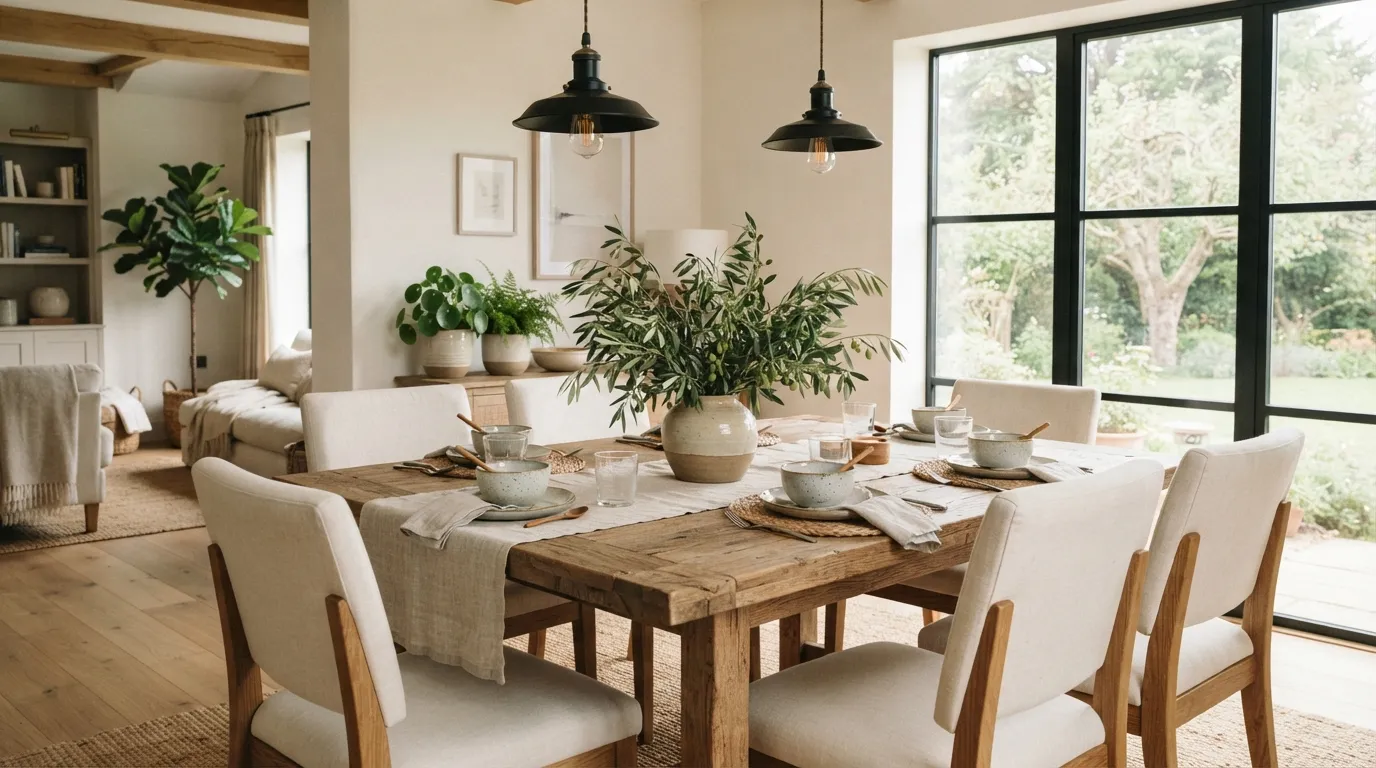
1. Reclaimed Wood Table
- A reclaimed wood table instantly adds warmth and natural character.
- Visible grain creates a beautiful focal point without excessive decoration.
- Pairing rustic wood with streamlined chairs keeps the room contemporary.
- A low centerpiece leaves plenty of space for everyday meals and conversation.
Start with a table that makes the whole room feel instantly grounded. A sturdy reclaimed-wood dining table brings warmth, visible grain, and a relaxed farmhouse character without making the space look dated. Pair it with simple upholstered or spindle-back chairs for contrast, then keep the centerpiece low so conversation stays easy. In my experience, natural wood works especially well when the surrounding finishes are light, because it gives the dining area a strong focal point without overwhelming smaller homes. Add a woven runner, ceramic vase, or bowl to soften the table and create an inviting everyday setting.
A substantial wood table also solves a practical problem: it can handle daily meals while still looking polished enough for guests. Choose a finish with a slightly weathered texture rather than heavy distressing, and leave enough walking space around all sides. Pale walls, warm flooring, and black or aged-brass accents help the table feel intentional rather than rustic. For a modern farmhouse dining room, this balance keeps the room clean and contemporary while preserving the warmth people expect from farmhouse style. The result is a welcoming centerpiece that feels useful, durable, and naturally connected to the rest of the home.
Also Read : 25 Modern Boho Kitchen Ideas for a Warm Stylish Space
2. Oversized Pendant Lights
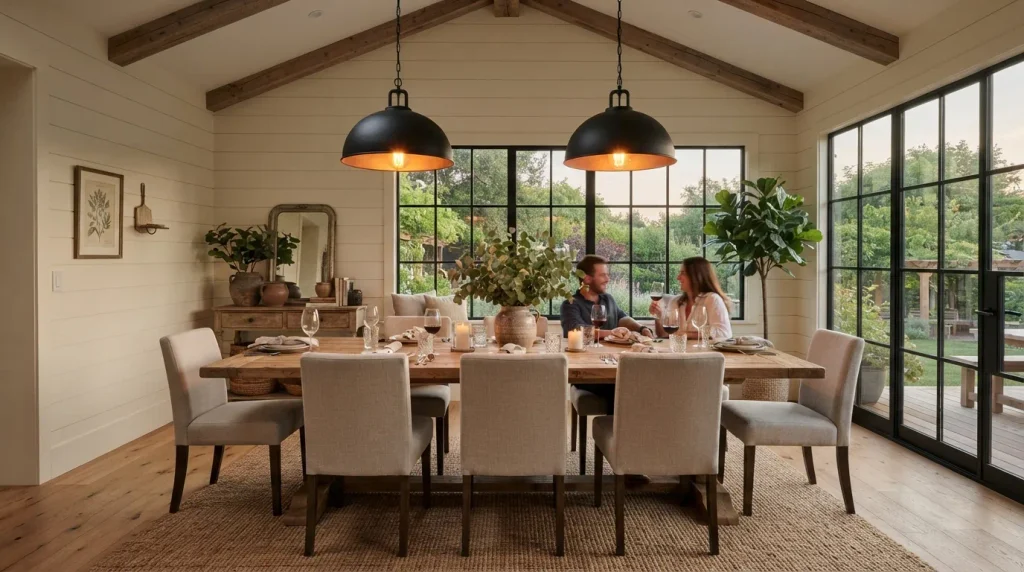
- Oversized pendants give the dining table a stronger visual anchor.
- Matte black adds contrast against light walls and natural wood.
- Warm bulbs create a softer atmosphere for evening meals.
- Simple fixture shapes prevent the room from feeling overly busy.
Let the ceiling carry the visual interest with a pair of oversized pendant lights. Choose fixtures in matte black, aged brass, or woven natural fibers, and hang them evenly above the dining table for a balanced composition. Soft warm bulbs create a flattering glow, while the larger scale gives the room a finished designer look. I’ve noticed that oversized lighting can make an ordinary dining area feel more intentional without requiring major furniture changes. Keep the fixture shape simple, especially if the table already has strong wood grain, so the room feels layered instead of visually crowded.
The right lighting does more than brighten dinner; it defines the entire dining zone. Center the pendants over the table, keeping their height comfortable for sightlines and conversation, then add dimming capability when possible. During the day, natural window light can highlight wood textures and neutral finishes, while evening illumination creates a cozy transition. In a modern farmhouse dining room, this combination of practical task lighting and sculptural detail helps the space feel both relaxed and refined. Choose warm-toned bulbs rather than cool white ones to preserve the soft, welcoming atmosphere that makes farmhouse-inspired interiors so appealing.
Also Read : 27 Modern Rustic Living Room Ideas to Try Today
3. Vertical Wall Paneling
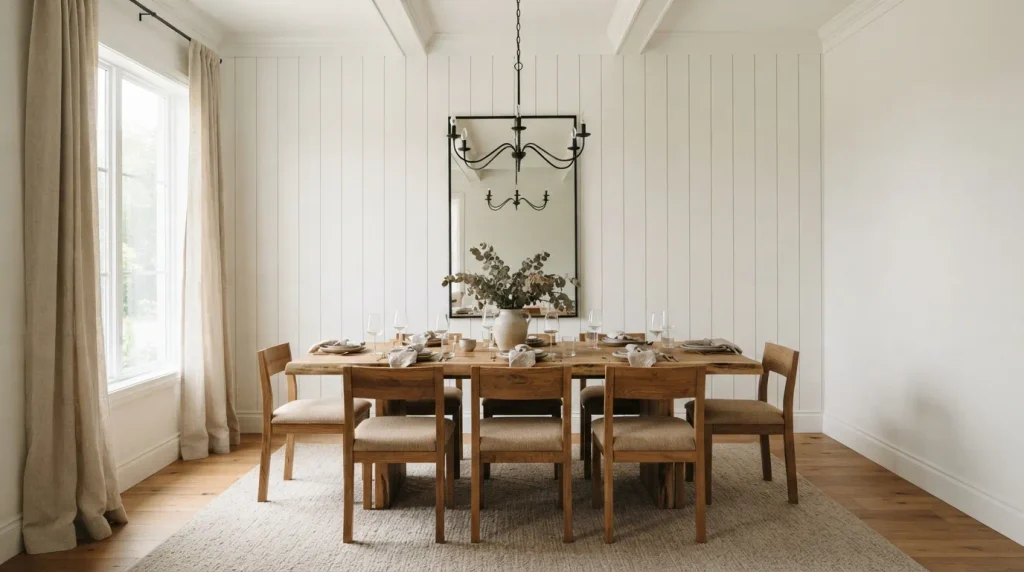
- Vertical paneling adds architectural interest without overwhelming the room.
- White or greige finishes keep the dining area bright and spacious.
- A simple mirror or artwork creates an easy focal point.
- Repeated vertical lines can make a modest room feel taller.
Turn an empty dining wall into a quiet focal point with simple vertical paneling. White or warm greige boards add architectural texture while keeping the palette light and airy, making them especially useful behind a dining table or buffet. Pair the wall treatment with a slim black-framed mirror, minimal artwork, or a single oversized piece for a clean finish. In my experience, wall texture is one of the easiest ways to add character without filling the room with accessories. The repeated lines also give the space subtle height, helping modest dining rooms feel more structured and thoughtfully designed.
Vertical paneling works beautifully because it adds detail without demanding constant styling. Keep the boards evenly spaced and paint them in the same family as the surrounding walls for a seamless, contemporary effect. A natural wood buffet, linen curtains, and woven chairs can then introduce warmer textures without competing with the wall. This approach is particularly helpful when the dining room lacks architectural features, because the paneling creates a built-in sense of character. The finished space feels fresh and collected rather than overly decorated, while the restrained backdrop gives everyday furniture room to stand out beautifully.
Also Read : 23 Colorful Minimalist Bedroom Ideas for a Bright Calm Space
4. Linen Slipcovered Chairs
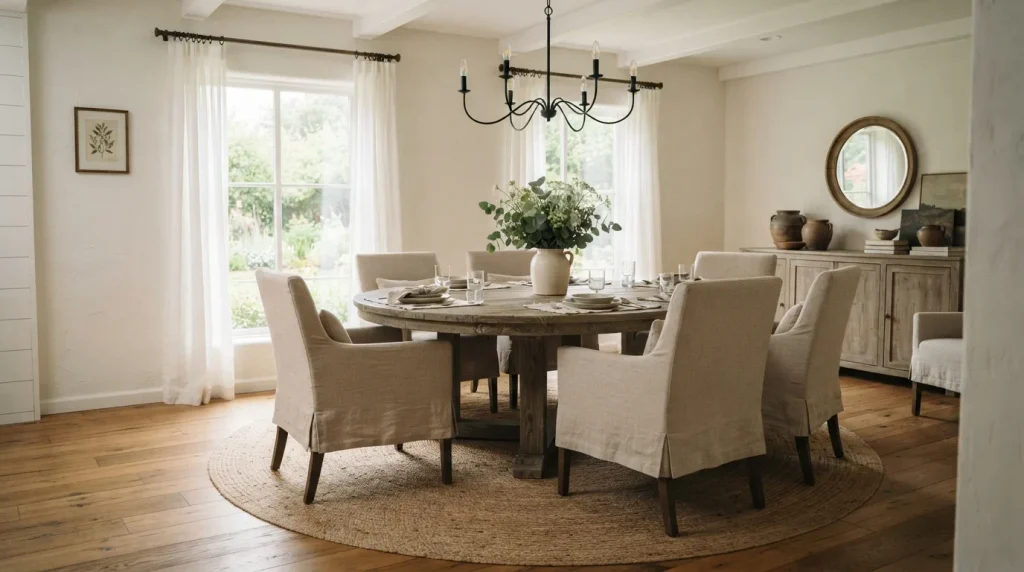
- Linen chairs soften the harder lines of a wooden table.
- Neutral upholstery keeps the room bright and visually calm.
- Washable or removable covers make everyday dining easier.
- Slightly relaxed fabrics add comfort without looking overly casual.
Bring softness to a sturdy dining table with relaxed linen slipcovered chairs. Their natural texture balances the harder surfaces of wood, metal, and stone while creating a comfortable look that feels easy rather than formal. Choose shades such as ivory, oatmeal, warm beige, or soft taupe to maintain a light palette. I’ve noticed that slightly relaxed upholstery works especially well in busy homes because it hides minor wrinkles and still looks intentional. Add a simple woven rug underneath to connect the chairs visually with the table and create a softer foundation beneath the entire dining arrangement.
Comfort matters just as much as appearance when choosing dining seating. Look for chairs with supportive backs and enough width for relaxed meals, especially if the dining room doubles as a workspace or gathering spot. Removable covers are another practical advantage because they can make everyday maintenance much easier. Keep surrounding décor simple, using ceramic pieces, greenery, or linen curtains to reinforce the natural palette. This approach gives a modern farmhouse dining room a welcoming softness while preserving its clean lines. The finished space feels polished enough for entertaining but comfortable enough for long breakfasts, homework sessions, and casual family dinners.
Also Read : 22 Stylish Bed Without Headboard Ideas for Bedrooms
5. Black Window Frames
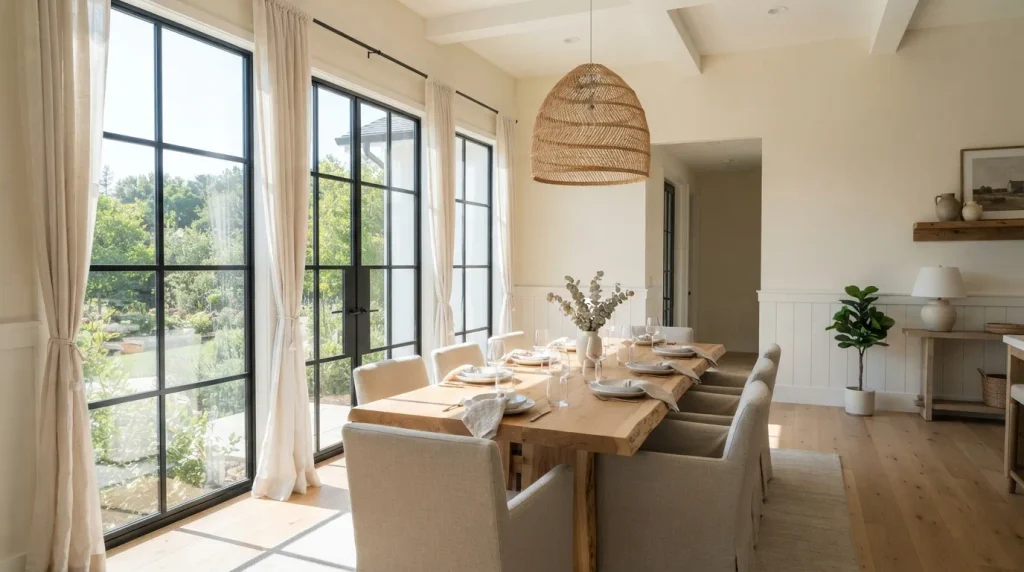
- Black frames create crisp contrast against pale farmhouse finishes.
- Large windows make natural textures look brighter and richer.
- Minimal curtains keep the architectural lines visible.
- The dark framing can visually connect other black accents throughout the room.
Create instant architectural contrast by framing the windows in black. Against creamy walls and warm wood furniture, dark window frames add definition without requiring bold colors or elaborate decoration. If replacing windows is not practical, black interior trim or carefully chosen framing details can create a similar visual effect. Keep window treatments simple with linen or cotton panels in soft white, beige, or oatmeal. The result is a brighter dining area with stronger lines and a more contemporary edge. This combination is especially effective when the room already includes black lighting, hardware, or picture frames.
Natural light becomes an important part of the design when windows are treated as a feature rather than something to hide. Arrange the dining table so daylight can reach the tabletop, then use reflective pale walls to spread brightness throughout the room. A black-framed mirror or slim metal chandelier can repeat the darker tone elsewhere for visual balance. In my experience, repeating one accent color in two or three small places makes a room feel much more cohesive. The finished dining space feels crisp, open, and thoughtfully styled while still keeping the warmth associated with farmhouse interiors.
Also Read : 21 Purple Gray Bedroom Ideas for a Soft Moody Retreat
6. Built-In Dining Bench
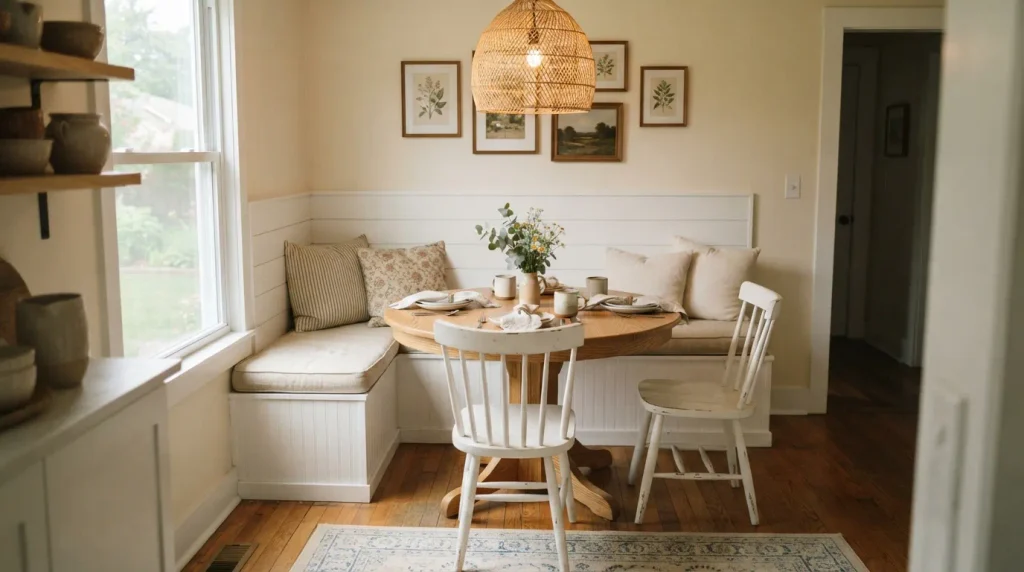
- A built-in bench makes excellent use of an awkward or narrow wall.
- Cushions add comfort while introducing soft farmhouse texture.
- Pairing the bench with chairs creates flexible seating.
- Hidden storage beneath the bench can add valuable everyday function.
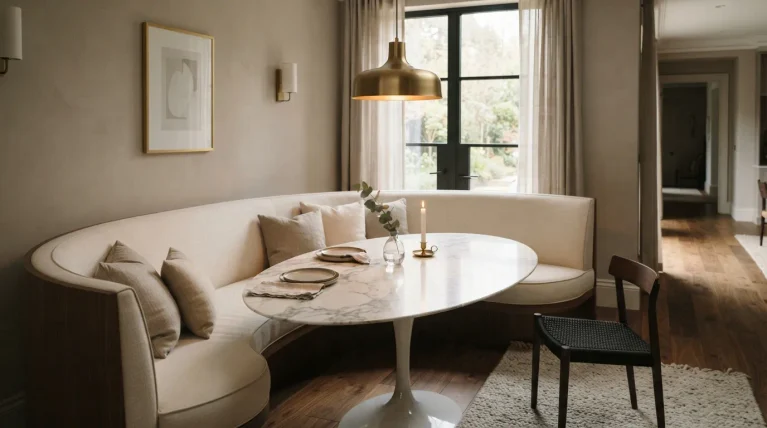
Make an underused wall work harder with a built-in dining bench. A simple painted base paired with a thick linen or cotton cushion creates comfortable seating while using less floor space than multiple chairs. Add two lightweight chairs opposite the bench to keep the arrangement flexible and visually balanced. This setup works especially well in breakfast nooks, open-plan kitchens, and smaller dining areas where every inch matters. I’ve seen this arrangement make compact rooms feel more organized because the seating follows the wall instead of interrupting the walking path around the table.
The bench can also become a practical storage opportunity when designed with lift-up seats or drawers underneath. Store placemats, table linens, seasonal dishes, or rarely used serving pieces where they remain close but out of sight. Keep the cushion in a durable neutral fabric and add one or two washable pillows for extra comfort. A natural wood table helps connect the bench with the rest of the room, while woven lighting and simple artwork add character. The result is a functional dining corner that feels custom, comfortable, and visually calm without sacrificing the farmhouse-inspired warmth.
Also Read : 24 Boho Style Bathroom Ideas for a Relaxed Natural Space
7. Farmhouse Gallery Wall
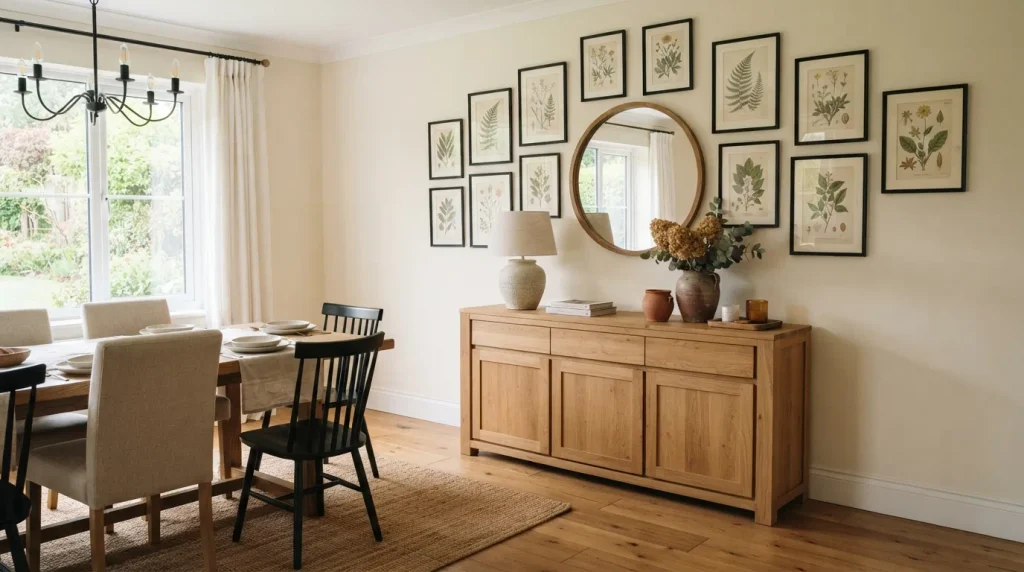
- A gallery wall fills an empty surface without adding bulky furniture.
- Botanical prints bring subtle color while keeping the palette natural.
- Matching frame tones make different artwork feel cohesive.
- Leave generous spacing so the arrangement looks curated rather than cluttered.
Give an empty dining wall personality with a carefully arranged gallery of botanical prints, vintage-inspired sketches, or simple landscape artwork. Choose frames in black, warm wood, or aged brass, then keep the artwork within a restrained palette of cream, green, brown, and charcoal. The mix should feel collected rather than perfectly matched. A slim sideboard underneath can anchor the arrangement while providing storage for serving pieces. This type of wall treatment adds visual interest at eye level, making the dining area feel finished without relying on excessive accessories or bright decorative colors.
The easiest way to keep a gallery wall polished is to establish a consistent visual rhythm. Lay the frames on the floor first, experiment with spacing, and keep the overall shape connected to the furniture below. Larger pieces can anchor the center, while smaller prints fill the surrounding spaces. In my experience, repeating one frame finish throughout the arrangement makes even thrifted or mixed artwork look intentional. Add a ceramic vase or small lamp on the sideboard, but avoid overcrowding the surface. The finished wall becomes a memorable backdrop that photographs beautifully and still feels comfortable in everyday life.
8. Woven Area Rug
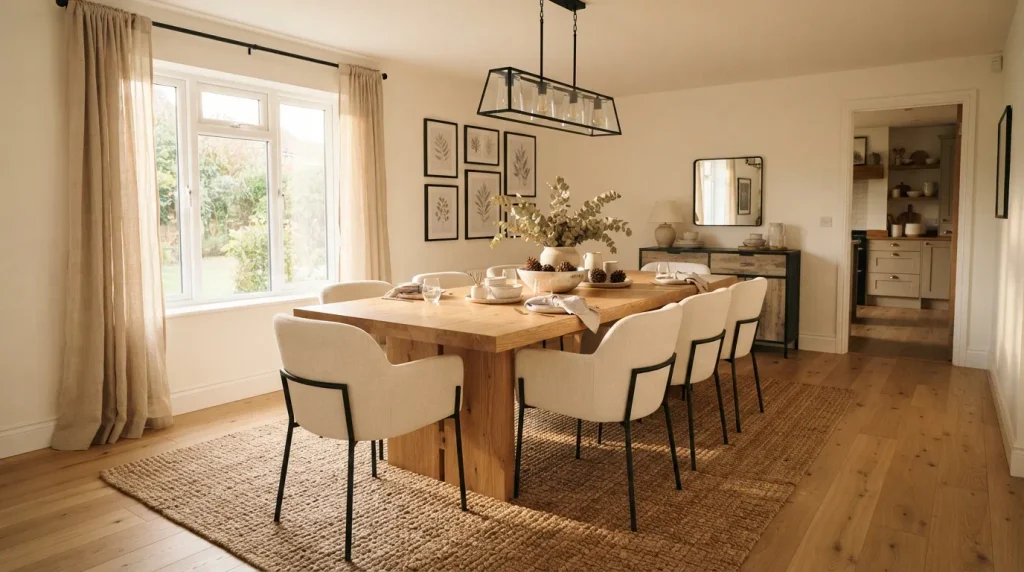
- A woven rug visually defines the dining area in an open layout.
- Natural fibers introduce warmth beneath pale furniture.
- Larger sizing keeps chairs comfortably supported when pulled out.
- Subtle texture adds interest without competing with the table.
Ground the dining furniture with a woven area rug that introduces warmth underfoot and visually separates the dining zone from nearby spaces. Jute, sisal, wool blends, and flatwoven cotton are excellent choices when you want natural texture without a busy pattern. Select a rug large enough for the table and chairs to remain comfortably positioned on top, even when someone pulls a chair backward. This simple sizing detail can make the entire arrangement feel more intentional. Against pale walls and natural wood, a neutral woven surface adds depth while preserving the relaxed character of the room.
Durability should guide your rug choice as much as appearance. Dining areas naturally collect crumbs and spills, so a low-pile or flatwoven design is often easier to clean than a thick, plush rug. If natural fibers are difficult to maintain, look for washable or performance-based alternatives with a similar woven appearance. Keep the surrounding palette simple so the texture remains the main feature. A modern farmhouse dining room benefits from this layered approach because the rug softens hard flooring, reduces visual emptiness, and creates a comfortable foundation without introducing unnecessary color or pattern.
9. Vintage Sideboard Styling
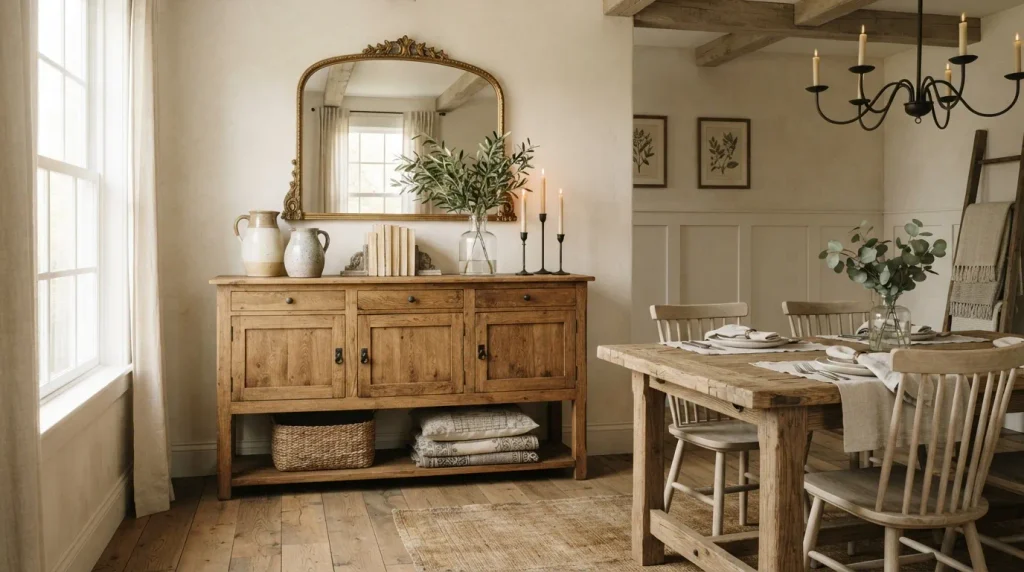
- A vintage sideboard adds storage while creating a strong secondary focal point.
- Mixing old and new pieces keeps the room from feeling overly themed.
- An oversized mirror can make the wall appear larger and brighter.
- Keep decorative groupings low enough to preserve the furniture’s shape.
Add character and useful storage with a vintage-inspired sideboard. Look for warm oak, pine, or painted finishes with simple profiles rather than overly ornate detailing. Style the top with a large mirror, ceramic vessel, small lamp, or branch-filled vase, leaving enough open surface to keep the arrangement practical. Mixing an older-looking piece with contemporary chairs and lighting creates a layered result that feels collected over time. This approach gives the dining room personality without turning it into a themed space, especially when the rest of the palette stays neutral and the materials remain natural.
A sideboard is also one of the most useful additions for everyday dining because it keeps serving pieces close without crowding the table. Use its cabinets for dishes, table linens, glassware, or entertaining supplies, then reserve the top for a few carefully chosen accents. I’ve noticed that one oversized mirror often looks more sophisticated than several small decorations scattered across the wall. Add black metal hardware or a simple frame to connect with other darker accents. The result is a practical storage zone that also gives the dining room a polished focal point and a sense of history.
10. Neutral Two-Tone Palette
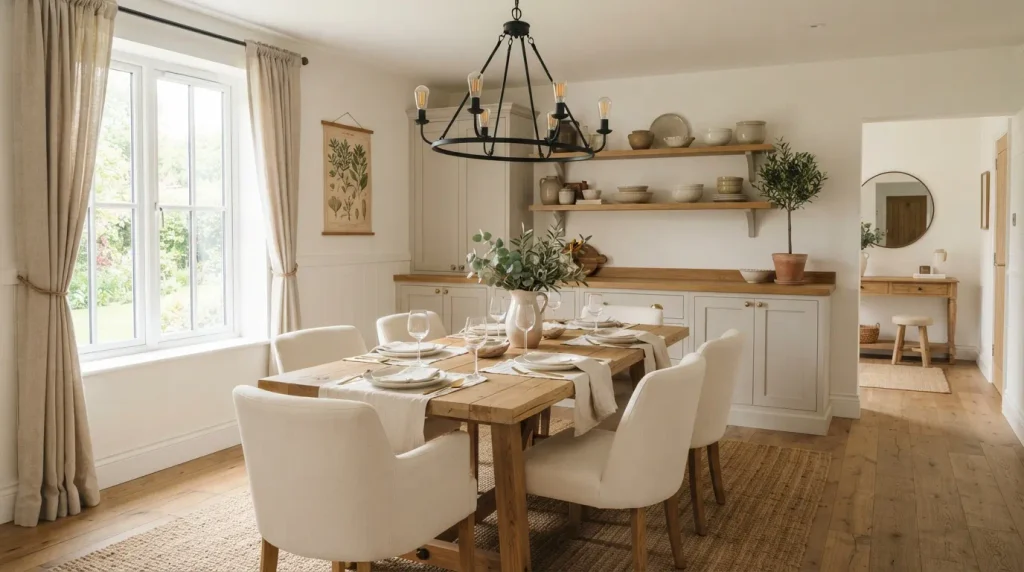
- Layering warm whites with beige and greige prevents a neutral room from feeling flat.
- Natural wood adds depth without introducing a strong color.
- Small olive or muted green accents bring gentle contrast.
- Black hardware or lighting provides definition against softer finishes.
Build the room around several warm neutrals instead of relying on a single shade. Cream walls, beige textiles, soft greige furniture, and natural oak create subtle contrast while keeping the overall look calm. This palette works particularly well when you want the dining area to feel bright without becoming stark or overly white. Add small touches of muted green through artwork, branches, or upholstery for gentle color. In my experience, varying the undertones is the key to making neutral interiors feel layered; warm shades generally work better together than mixing cool gray with yellow-based cream.
Texture becomes especially important when the colors remain restrained. Combine smooth painted surfaces with visible wood grain, woven rugs, linen curtains, and ceramic accessories to create depth without relying on patterns. Black lighting or hardware can provide just enough contrast to sharpen the composition. Keep the strongest color accents at eye level so they naturally draw attention toward the table and surrounding details. The result is a dining space that feels fresh and coordinated but still relaxed enough for everyday use, with a flexible palette that can easily adapt to seasonal décor changes.
11. Mixed Wood Tones
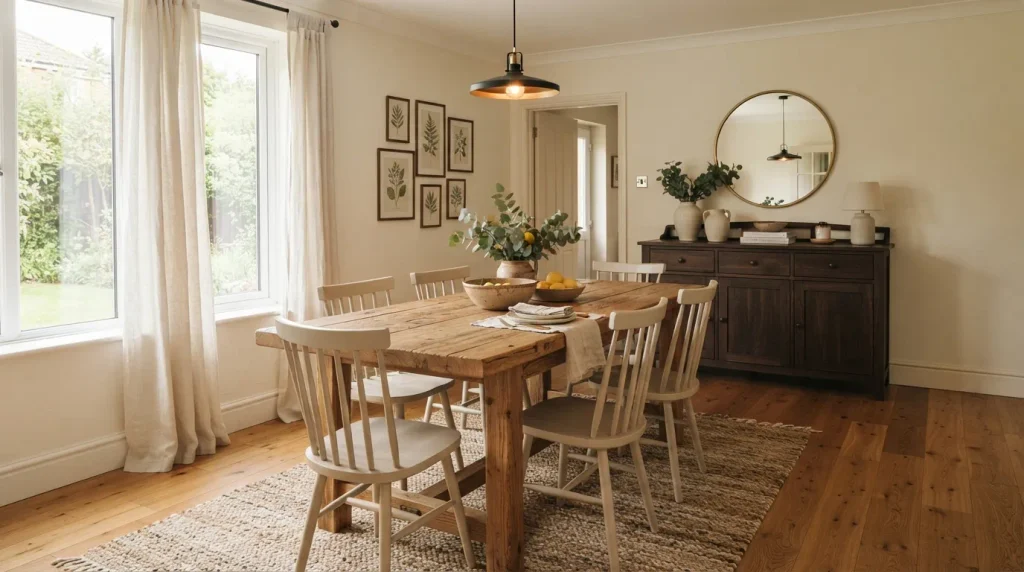
- Mixing wood tones creates depth and keeps the room from looking overly matched.
- Repeat each wood shade at least once for visual balance.
- Neutral walls help different finishes coexist without competing.
- A woven rug can soften transitions between contrasting wood surfaces.
Skip the matching furniture set and let different wood tones give the dining room more character. A medium-oak table can work beautifully beside lighter chairs and a darker sideboard when each finish is repeated elsewhere in small ways. The goal is coordination rather than exact matching. Keep the walls and textiles neutral so the natural grain remains visible without making the room feel busy. This approach is especially useful when you already own several pieces you love but their finishes differ. Instead of replacing everything, use rugs, lighting, and accessories to create a deliberate connection between them.
The easiest way to mix woods successfully is to repeat tones rather than scatter completely unrelated finishes throughout the room. For example, echo a darker sideboard with black or walnut accents, then use lighter wood chairs alongside a pale woven rug. Avoid introducing too many additional colors, because the grain and undertones are already providing visual variation. That balance helps the dining space feel collected and authentic. A modern farmhouse dining room often benefits from this imperfect combination because real homes naturally accumulate furniture over time, and thoughtful contrast can make the room feel more personal and less like a showroom.
12. Soft Arched Mirror
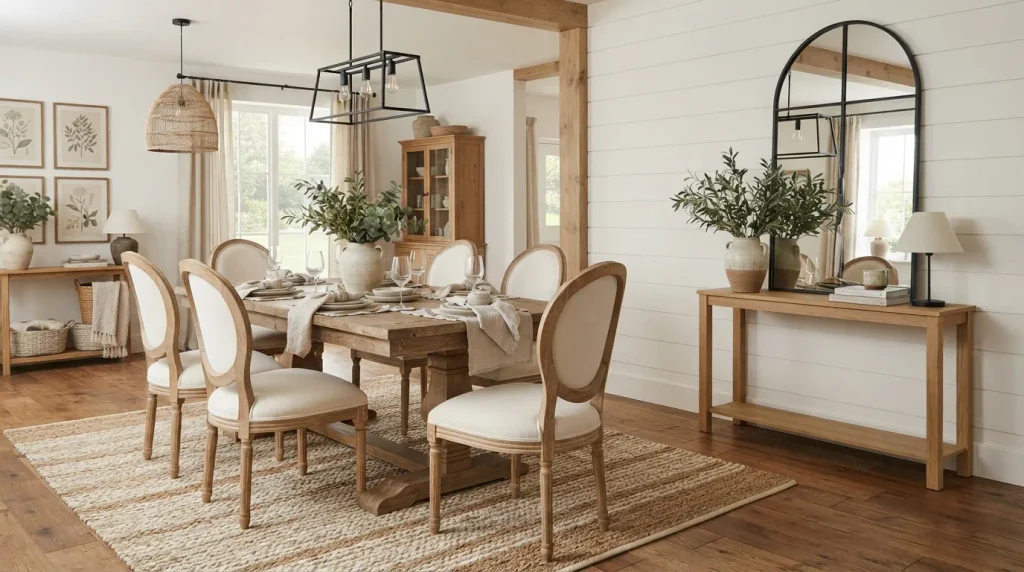
- An arched mirror introduces a softer shape against rectangular furniture.
- Reflective glass can help a compact dining area feel brighter.
- A slim frame keeps the feature modern and understated.
- Positioning it opposite a window can maximize reflected natural light.
Soften the straight lines of the dining room with an arched mirror placed above a slim console or sideboard. The curved top creates an architectural detail that contrasts beautifully with a rectangular table, paneled walls, and linear furniture. Choose a thin black, bronze, or natural wood frame depending on the other finishes in the room. When positioned near a window, the mirror can also reflect daylight and make the space feel more open. This is a simple upgrade that adds visual height and character without taking up valuable floor space.
Scale makes the biggest difference when choosing a statement mirror. A narrow mirror can disappear above a large sideboard, while an oversized design can overwhelm a small wall, so aim for a proportion that feels connected to the furniture beneath it. Keep the console lightly styled with one ceramic vessel, a small lamp, or a few branches rather than filling every inch. The curved silhouette provides enough decorative interest on its own. With warm wood, neutral textiles, and subtle black accents nearby, the mirror becomes a polished focal point that keeps the dining area bright and visually balanced.
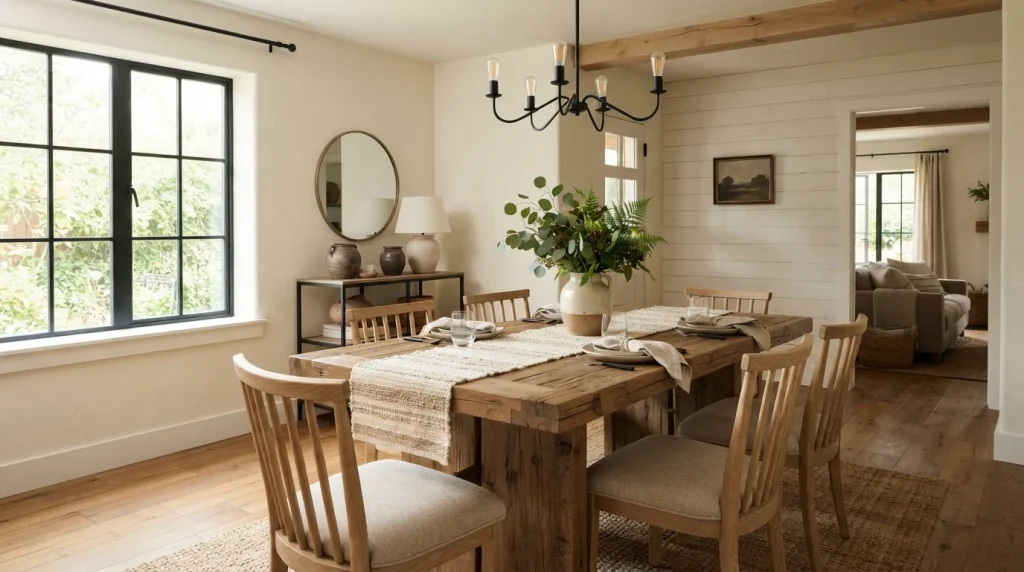
13. Shiplap Accent Wall
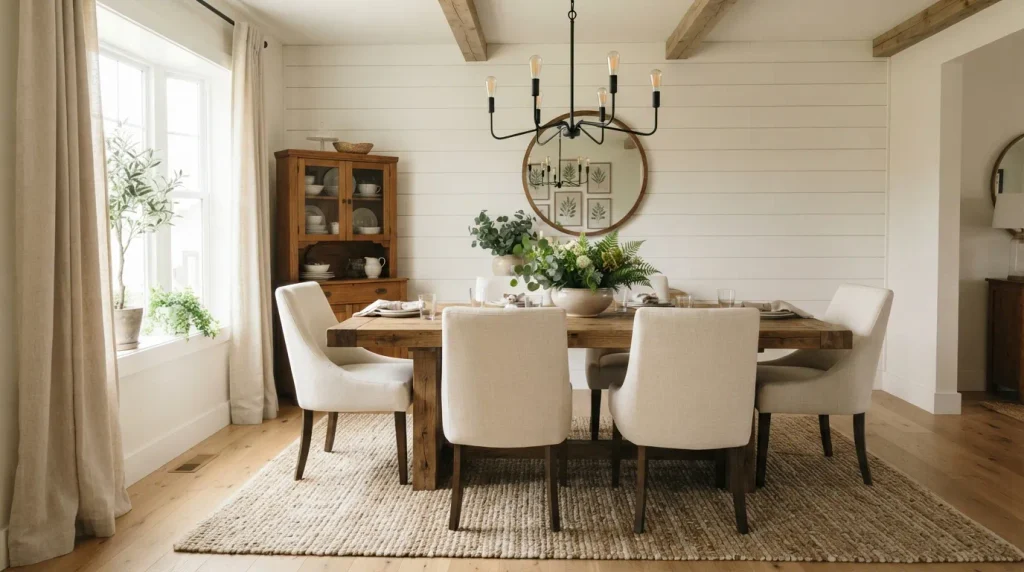
- A shiplap wall adds recognizable farmhouse texture with minimal decoration.
- Warm white paint keeps the horizontal boards feeling fresh and modern.
- Dark lighting creates contrast against the pale wall.
- Keep the remaining surfaces simple so the wall stays the focal point.
Give the dining area a classic farmhouse backdrop with a clean shiplap accent wall. Horizontal boards create subtle texture and visual rhythm while keeping the room bright when painted warm white, cream, or soft greige. Place the dining table directly in front of the wall so the texture naturally becomes part of the room’s focal point. Pair it with simple chairs and understated lighting rather than adding layers of competing décor. The result feels familiar and welcoming while still looking current, especially when natural wood and streamlined furniture are used throughout the space.
Modern shiplap works best when the installation feels intentional rather than overly decorative. Use consistent board spacing, clean edges, and a restrained finish, then let furniture provide most of the personality. A reclaimed wood table can add warmth, while black hardware or lighting creates enough contrast to define the pale wall. I’ve noticed that shiplap can become visually heavy when every surface carries farmhouse details, so limiting it to one feature wall usually creates a more balanced result. The finished dining area gains architectural interest without sacrificing the airy, uncluttered quality that makes contemporary farmhouse interiors so appealing.
14. Natural Fiber Curtains
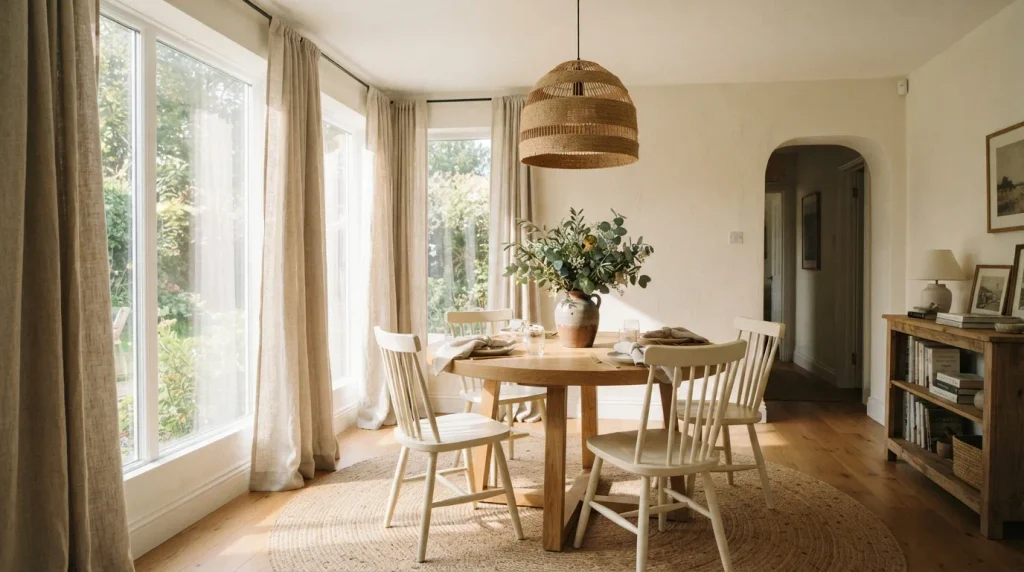
- Linen curtains soften strong window lines without blocking natural light.
- Oatmeal and ivory tones blend easily with wood and neutral furniture.
- Floor-length panels can make the room appear taller.
- Light-filtering fabrics create a softer atmosphere during bright afternoons.
Frame the windows with natural-fiber curtains to add softness without losing the bright, relaxed feeling of the dining area. Linen, cotton, and linen-blend panels in oatmeal, ivory, or warm beige work beautifully with natural wood and neutral upholstery. Hang the curtain rod slightly above the window frame and allow the panels to reach the floor for a taller, more finished appearance. This small adjustment can make the entire room feel more polished. Keep the fabric lightly textured rather than heavily patterned so the windows remain an important source of natural light.
Curtains also help balance the harder materials commonly found around a dining table, including wood, metal, glass, and tile. Choose a light-filtering fabric when you want gentle daylight throughout the day, or use lined panels if privacy and evening insulation are priorities. Keep the surrounding décor restrained so the fabric’s texture becomes part of the visual layering. A woven rug, ceramic centerpiece, and natural branches can reinforce the organic palette without making the room feel overly styled. The finished space feels softer, brighter, and more comfortable while maintaining clean farmhouse-inspired lines.
15. Rustic Black Chandelier
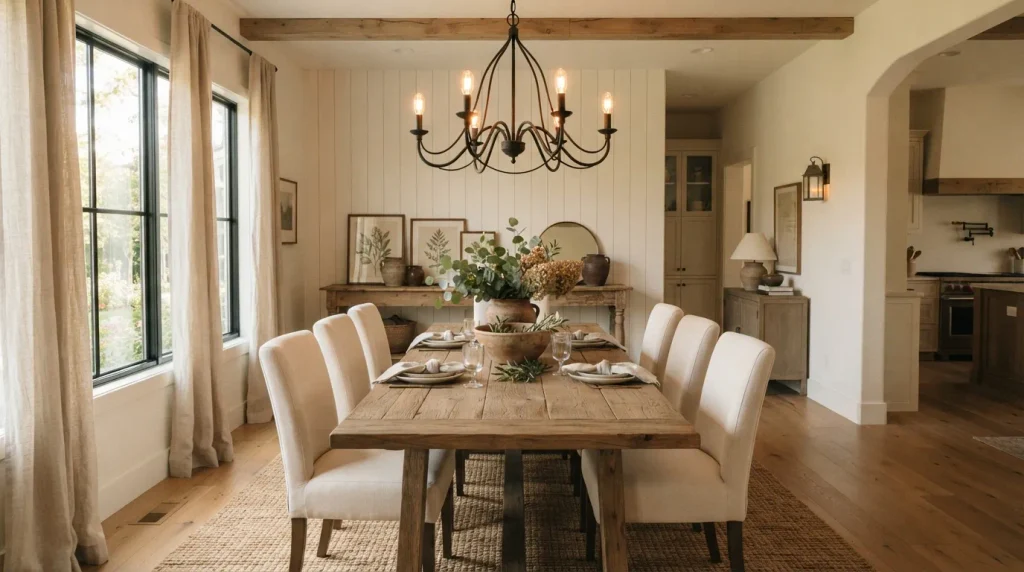
- A black chandelier adds a strong focal point above the dining table.
- Matte metal contrasts naturally with warm wood and pale walls.
- Multiple bulbs provide useful illumination for meals and gatherings.
- A simple silhouette keeps rustic character from becoming visually heavy.
Make the dining table feel anchored with a rustic black chandelier that introduces strong contrast overhead. Matte-black metal works particularly well against warm wood, cream walls, and neutral upholstery because it adds definition without introducing another bright color. Choose a fixture with a simple silhouette, such as curved arms, a lantern shape, or clean linear branches. Hang it centered over the table so the light visually connects the ceiling with the furniture below. This creates a clear focal point and gives the room a more finished appearance without requiring additional decorative pieces.
Lighting should be both beautiful and functional, especially in a dining space used every day. Select a chandelier that spreads light across the full table rather than concentrating it in one small area, and use warm bulbs for a comfortable evening glow. If the fixture has multiple arms, keep the surrounding décor simple so the silhouette remains easy to appreciate. Repeating black in picture frames, cabinet hardware, or chair details can create visual continuity. The result is a dining room that feels grounded and sophisticated while still retaining the relaxed character associated with farmhouse-inspired design.
16. Farmhouse Dining Nook
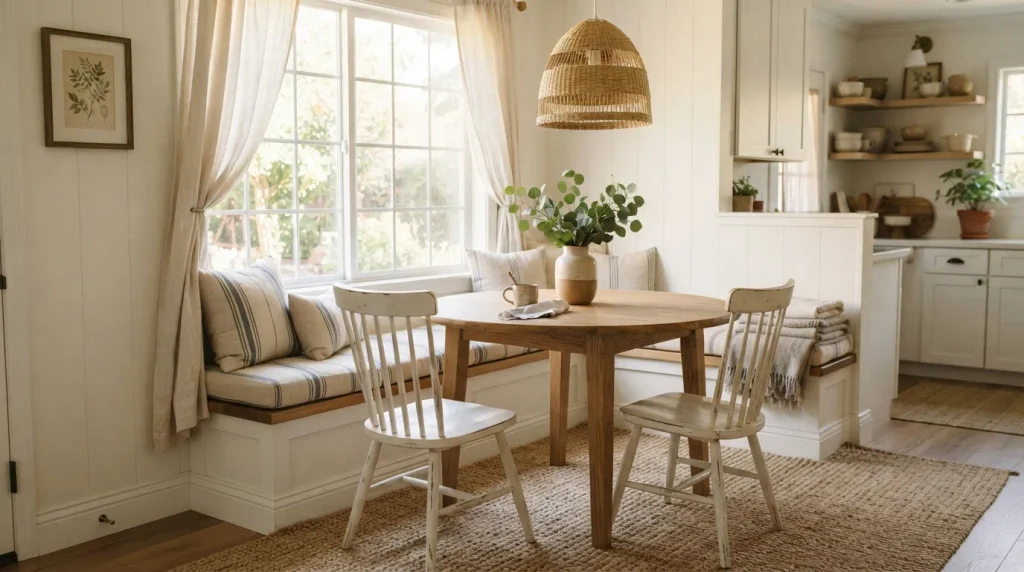
- A compact nook turns unused space into a practical dining area.
- Round tables improve movement in tighter rooms.
- Bench seating maximizes capacity without taking much floor space.
- Soft textiles make the corner feel comfortable and finished.
A small dining nook can become one of the most useful corners in the home with the right layout. Start with a round or compact rectangular table that leaves enough room for comfortable movement, then combine a wall-mounted bench with two lightweight chairs. This arrangement uses the perimeter efficiently while keeping the center of the room open. Position the nook near a window whenever possible so natural light becomes part of the design. The combination of warm wood, cream upholstery, and woven textures creates a relaxed setting that feels intentional rather than squeezed into leftover space.
Function should guide every choice in a compact dining nook. Choose chairs that can slide completely beneath the table, and consider a bench with concealed storage for linens or serving pieces. A round table is especially helpful where several walking paths meet because it eliminates sharp corners and makes circulation easier. Keep the wall décor minimal, perhaps using one framed print or a small shelf for everyday pieces. I’ve noticed that smaller dining areas often look better when fewer, larger elements are used. The result feels open, comfortable, and practical while still carrying plenty of farmhouse-inspired character.
17. Open Shelving Display
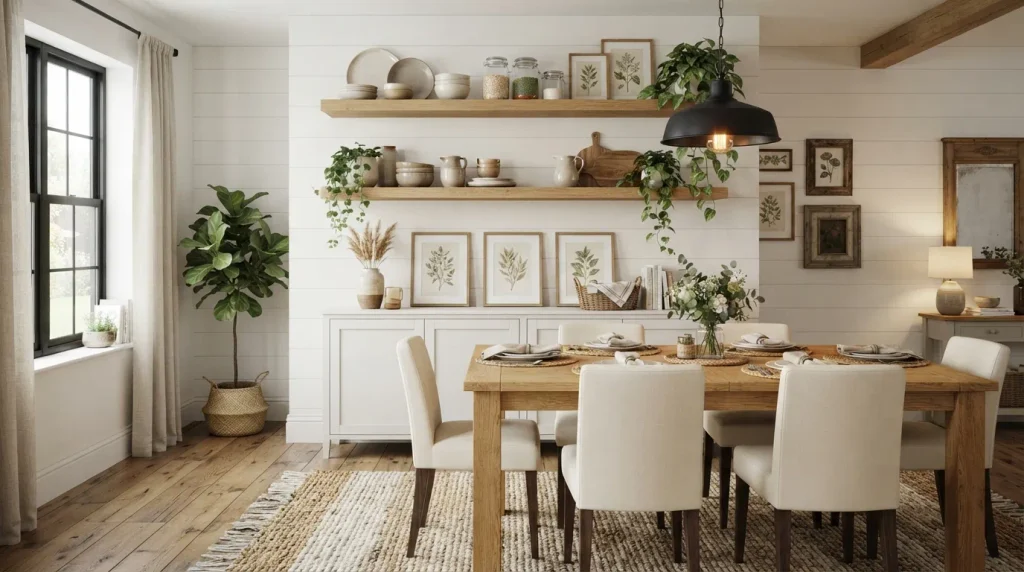
- Open shelves turn everyday dishes into simple decorative elements.
- Natural wood shelves add warmth against light walls.
- Grouping items by color keeps the display visually calm.
- Leave empty space between objects so the shelves do not feel crowded.
Turn everyday tableware into part of the décor with a pair of simple open shelves. Natural oak shelves against a warm white wall provide a soft contrast while giving you space to display ceramic plates, bowls, glassware, cookbooks, or small pieces of artwork. Keep the palette focused on cream, beige, white, natural wood, and muted green so the display feels cohesive. Rather than filling every inch, leave intentional gaps between groups. This makes the arrangement easier to maintain and gives each favorite piece enough visual space to stand out.
Open shelving works best when the objects are both useful and attractive. Place frequently used dishes within easy reach, then mix in a few decorative pieces to prevent the display from looking like storage. Use small stacks of plates, one or two bowls, and a simple vase or branch arrangement to create varied heights. If dust is a concern, reserve the shelves for items you use regularly rather than delicate pieces that sit untouched. This approach gives a dining area personality without adding bulky furniture, while the repeated wood and ceramic textures reinforce a warm, relaxed farmhouse aesthetic.
18. Farmhouse Banquette Seating
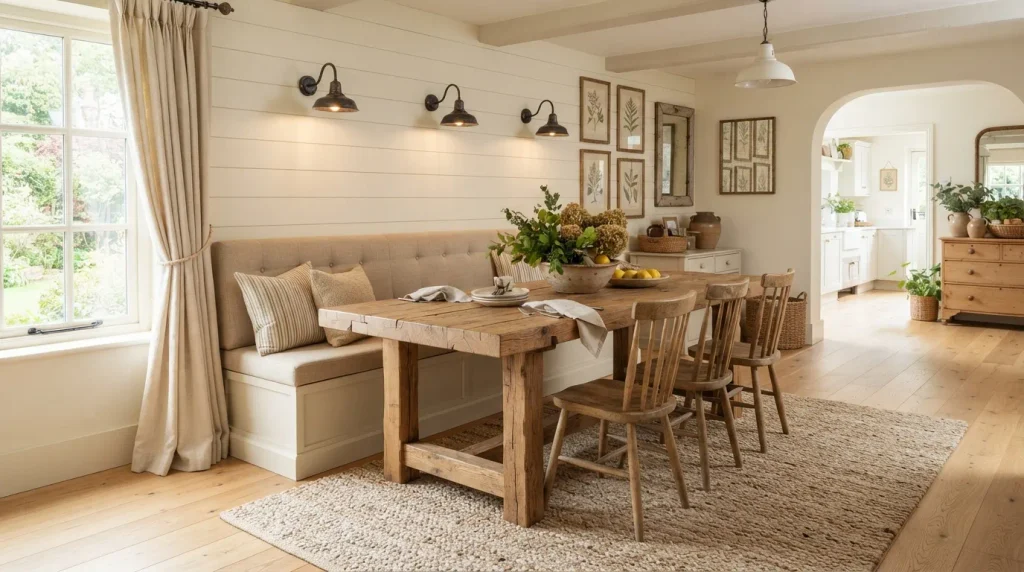
- A banquette creates generous seating while using wall space efficiently.
- Upholstered cushions make long meals more comfortable.
- Built-in storage can hide table linens and entertaining essentials.
- Pairing the banquette with individual chairs keeps the arrangement flexible.
Create a comfortable gathering spot with a built-in banquette along one side of the dining table. Upholster the seat in oatmeal, cream, or soft beige fabric, then pair it with a sturdy natural-oak table and individual chairs on the opposite side. This arrangement uses wall space efficiently and gives larger families or frequent hosts more seating without requiring a wide room. A slightly deeper cushion can make the bench comfortable for longer meals, while a few washable pillows introduce softness. The clean structure keeps the seating practical while preserving the relaxed character of farmhouse-inspired interiors.
A custom banquette can also provide valuable hidden storage beneath the seat. Use drawers or lift-up compartments for tablecloths, placemats, seasonal dishes, and other dining essentials that otherwise take up cabinet space. Keep the upholstery durable and easy to clean, particularly if the seating will be used every day. Add a pair of simple wall sconces above the bench to create focused evening light without taking up table or floor space. In my experience, this combination works especially well in open-plan homes because it creates a defined dining zone while keeping the overall room visually connected.
19. Farmhouse Table Centerpiece
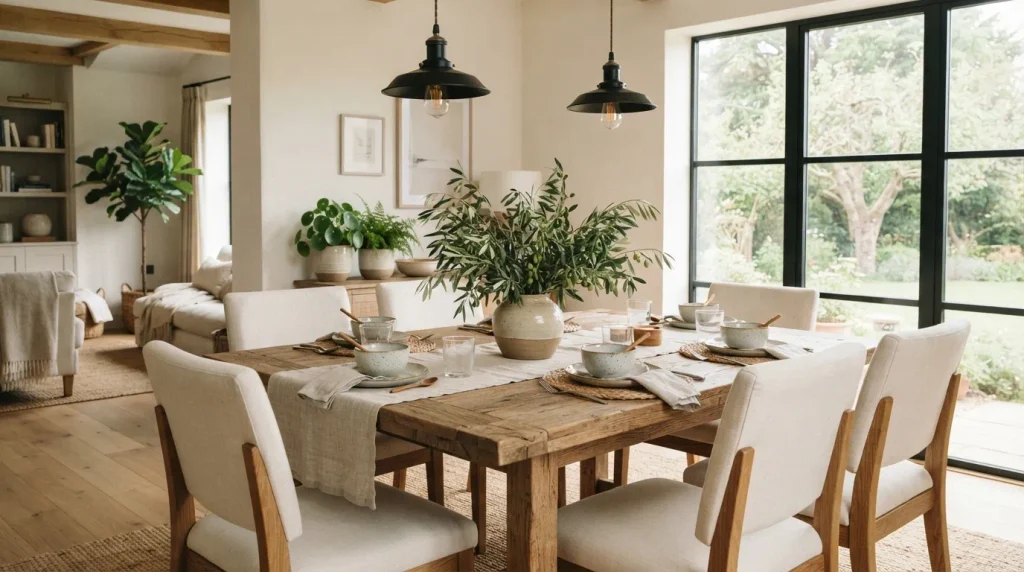
- A low centerpiece keeps the table attractive without blocking conversation.
- Ceramic and natural wood pieces add understated texture.
- Olive branches introduce soft greenery without overwhelming the neutral palette.
- A narrow linen runner creates a finished foundation for everyday styling.
Keep the dining table beautifully styled without making it difficult to use. A low ceramic vase filled with olive branches, eucalyptus, or simple seasonal greenery creates an effortless focal point while leaving plenty of space for plates and serving dishes. Add a narrow linen runner underneath to introduce softness and texture. Choose handmade-looking ceramics in cream, taupe, or muted gray for an organic finish. The key is restraint: two or three thoughtfully chosen pieces usually look more sophisticated than a crowded collection. This simple arrangement keeps the table ready for both ordinary breakfasts and casual entertaining.
A practical centerpiece should be easy to move when mealtime begins. Choose lightweight vessels, flexible branches, and washable textiles so the arrangement can be refreshed or cleared quickly. If your table is long, use two or three small vessels instead of one oversized centerpiece to create visual rhythm across the surface. I’ve noticed that natural elements tend to look better when they are slightly imperfect, so avoid overly symmetrical arrangements. The result is a welcoming table that adds farmhouse character without turning everyday dining into a styling project.
20. Antique Farmhouse Hutch
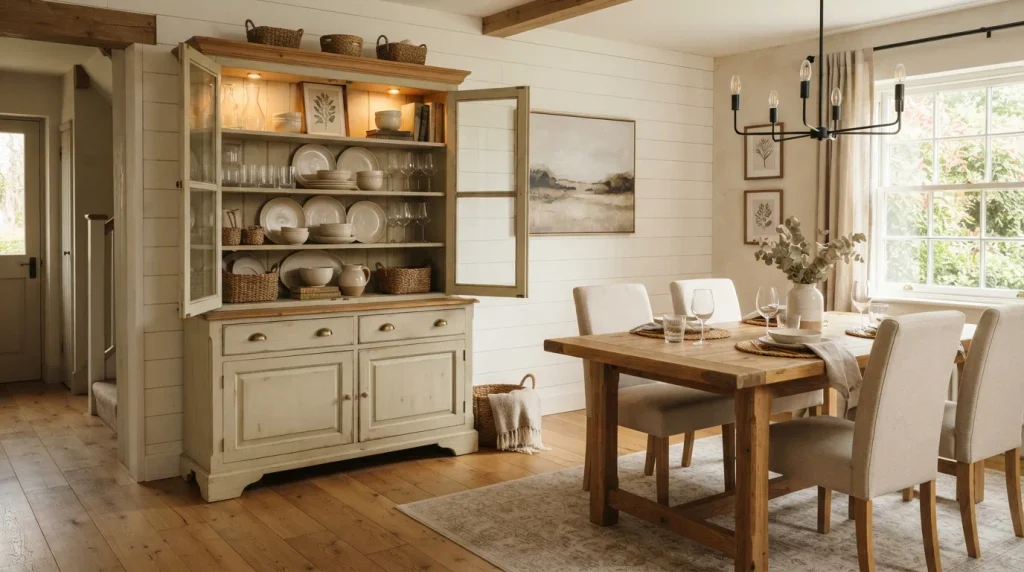
- An antique hutch adds storage and instant visual character.
- Glass doors let everyday dishes become part of the room’s décor.
- Painted finishes brighten heavier traditional furniture.
- Mixing vintage storage with modern seating keeps the look fresh.
Give the dining room a sense of history with an antique farmhouse hutch. Look for simple painted wood, glass-front doors, or softly weathered finishes that provide character without overwhelming the space. Use the shelves to display cream stoneware, clear glassware, woven baskets, and a few favorite serving pieces. Keeping the displayed items within a limited color palette makes the hutch look organized rather than cluttered. Place it against a light wall so its shape becomes a feature. This approach combines useful storage with decorative impact, making one piece work twice as hard.
A hutch is especially valuable when the dining room lacks built-in cabinetry. Use closed compartments for less attractive essentials and reserve visible shelves for pieces you enjoy seeing every day. Avoid packing dishes tightly together; leaving small areas of empty space helps the furniture feel lighter. Pair the vintage piece with contemporary chairs, streamlined lighting, or a simple oak table to create contrast between old and new. That balance keeps the room from feeling like a period set. Instead, it creates a comfortable dining space where traditional craftsmanship and modern simplicity complement each other naturally.
21. Layered Farmhouse Textures
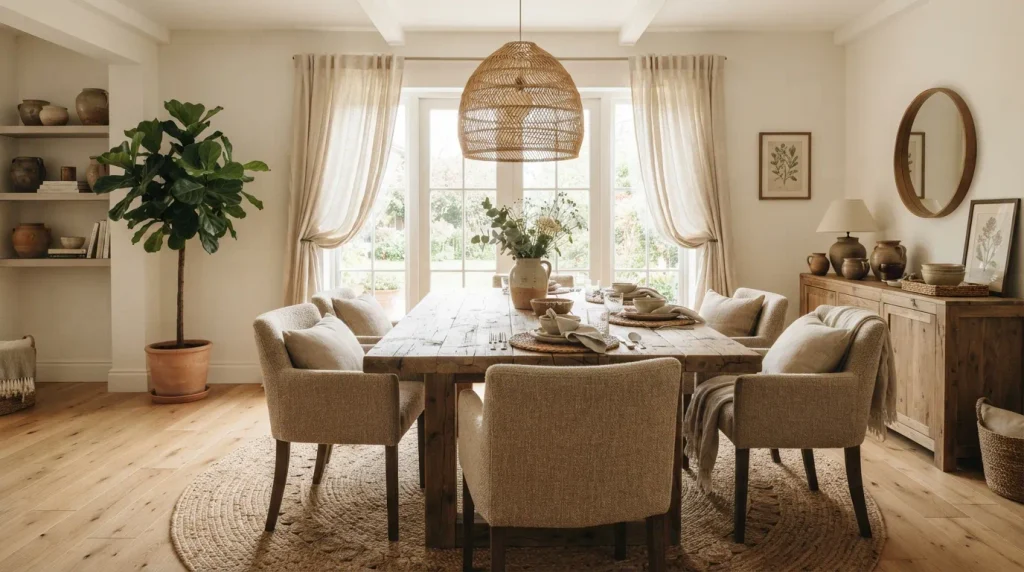
- Layered textures create depth when the color palette stays simple.
- Combining wood, linen, rattan, and ceramic keeps the room visually interesting.
- Repeating natural materials creates a cohesive look.
- Limiting patterns prevents the space from feeling busy.
Finish the dining room by layering natural textures instead of adding more color. Combine a wood table with linen seating, a woven rug, rattan or cane lighting, ceramic accessories, and softly textured curtains. Each material catches light differently, giving the room depth even when the palette remains mostly cream, beige, and brown. This is one of the easiest ways to make a neutral dining area feel finished without adding unnecessary decoration. The contrast between smooth ceramics, rougher woven fibers, and visible wood grain creates visual interest that feels natural and inviting.
Texture also helps the room feel comfortable rather than overly polished. Start with two or three dominant materials, then repeat them throughout the space so the design feels connected. For example, echo the wood of the dining table in a sideboard, use woven elements in both the rug and lighting, and repeat linen through the chairs or window treatments. Keep accessories simple and allow some surfaces to remain open. The result is a balanced farmhouse-inspired dining space with warmth, character, and practical comfort—an inviting room that feels thoughtfully designed without appearing overly decorated.
Conclusion
A beautiful dining room does not need to be complicated or expensive. The best modern farmhouse dining room ideas combine practical furniture, natural materials, comfortable textures, and simple details that make everyday life feel a little more inviting. Start with one change, whether it’s a woven rug, a statement light, a vintage sideboard, or softer seating, and build from there. I’ve seen how small updates can completely transform the feeling of a space. Save this article to Pinterest for your next decorating project, try an idea that fits your home, and share it with someone who loves cozy interiors. Your welcoming dining space can start today.