The right lighting can make an ordinary bedroom feel completely different after sunset. A soft glow, a beautiful bedside lamp, or a thoughtfully placed fixture can change the entire mood of the room.
These bedroom lighting ideas are designed to help you create a space that feels cozy, stylish, practical, and genuinely inviting. Whether your bedroom feels too dark, relies on one harsh ceiling light, or simply needs a little more personality, you’ll find easy ways to layer illumination and improve the atmosphere. From warm sconces and pendant lights to hidden LEDs, natural shades, and reading nook lamps, these ideas offer inspiration for different styles and room sizes. In my experience, small lighting changes often create a surprisingly noticeable transformation without requiring new furniture or a complete makeover.
1. Bedside Wall Sconces
- Free up nightstand space by moving the light onto the wall.
- Use adjustable sconces for comfortable bedtime reading.
- Choose warm bulbs to create a softer evening glow.
- Match the finish to your bed frame or hardware for a cohesive look.
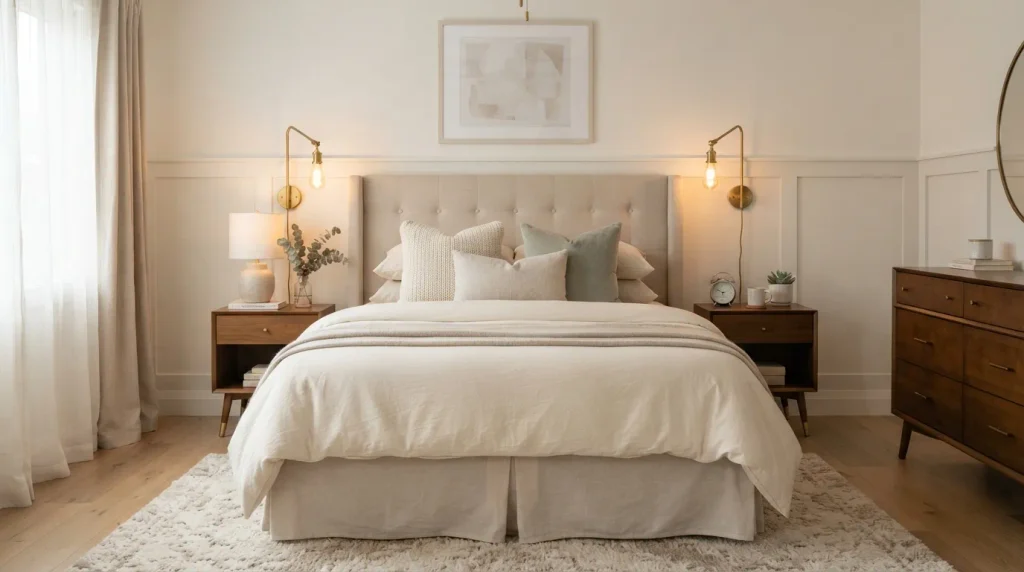
Nothing changes a bedroom faster than the right glow around the bed. A pair of warm bedside sconces creates a polished look while keeping nightstands clear for books, glasses, or a small decorative tray. Choose fixtures with adjustable arms if you like to read, and mount them slightly above eye level when seated. Brass, matte black, or aged bronze can add character without overwhelming the room. In my experience, wall-mounted lights also make compact bedrooms feel more open because they replace bulky table lamps and draw the eye upward toward the walls.
Picture a calm bedroom where the light feels soft, intentional, and beautifully balanced. Warm sconces beside the headboard provide focused illumination for reading while adding a layered glow after dark. Pair them with crisp bedding, textured pillows, and a simple upholstered headboard for a boutique-hotel effect. Keep the bulbs warm rather than cool to preserve a relaxing atmosphere, especially in the evening. If your walls are neutral, a sculptural fixture can become a subtle focal point. This setup is one of those bedroom lighting ideas that improves both everyday function and the overall visual mood.
Also Read : 24 Cherry Red Bedroom Ideas for a Bold Stylish Retreat
2. Pendant Bedside Lights
- Hang pendants beside the bed for a stylish alternative to traditional lamps.
- Choose woven shades for warmth or glass shades for a lighter appearance.
- Keep both fixtures at similar heights for a balanced composition.
- Use dimmable bulbs when you want flexibility from reading to relaxing.

Want a bedroom to feel instantly more designed? Swap bulky bedside lamps for hanging pendant lights that frame the bed beautifully. The vertical shape adds height and creates a clean focal point, while freeing the surface of each nightstand for practical essentials. Woven shades bring natural texture, while frosted or clear glass works well in contemporary rooms. I’ve noticed this approach is especially effective when the bedroom has a simple color palette because the pendants introduce visual interest without requiring extra decor. Choose adjustable hanging heights so the light feels comfortable rather than intrusive.
Pendant fixtures can also help define the sleeping area in an open or spacious bedroom. Hang each light close to the outer edges of the headboard, leaving enough clearance for comfortable movement around the bed. Warm white bulbs create a gentle pool of light that feels inviting at night, while dimmer controls let you reduce brightness before sleep. For a cohesive finish, repeat the pendant material somewhere nearby, such as brass hardware, wood accents, or woven baskets. The result feels intentional and sophisticated without making the room look overly decorated or difficult to maintain.
Also Read : 25 Modern Easter Decor Ideas for a Fresh Spring Look
3. Layered Ceiling Glow
- Combine a central fixture with softer accent lighting for greater flexibility.
- Use a dimmable ceiling light to control brightness throughout the evening.
- Add subtle bedside illumination so the overhead fixture does not do all the work.
- Choose a low-profile design when the ceiling is already visually busy.
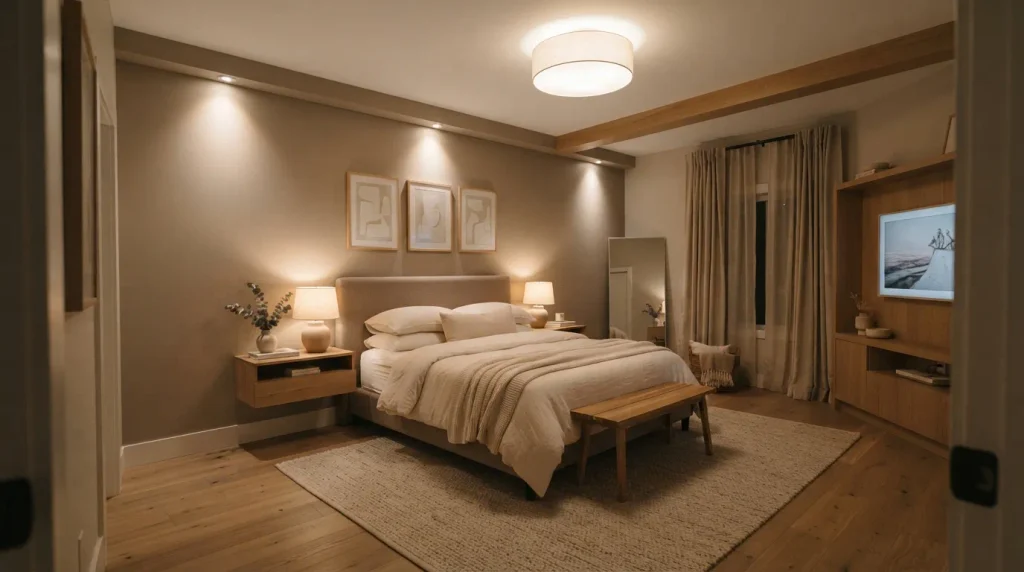
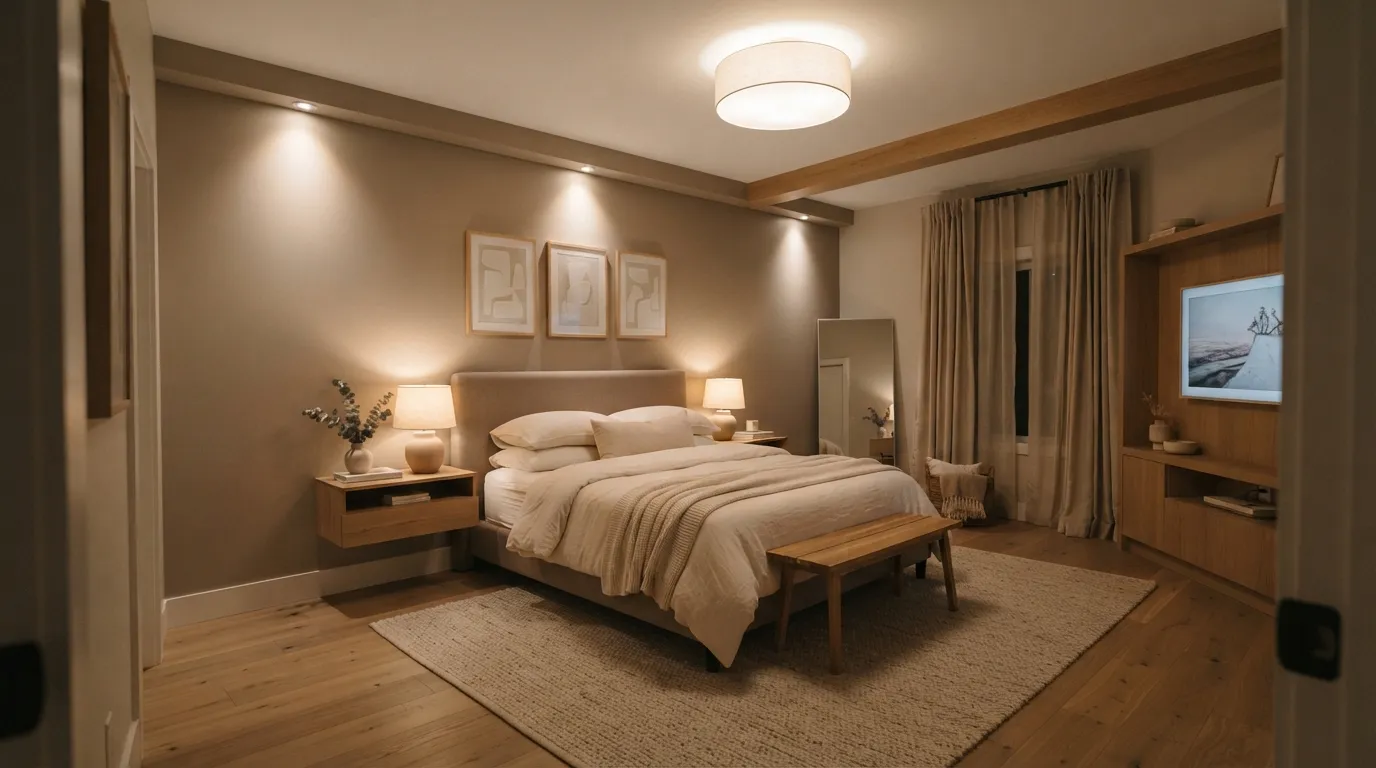
A single bright ceiling light can make a bedroom feel flat, but layered illumination creates a much more comfortable atmosphere. Start with a dimmable overhead fixture for general visibility, then add smaller sources near the bed or dresser. This gives you control over how the room feels at different times of day. During cleaning or getting dressed, brighter illumination is useful; later, a softer setting feels far more relaxing. In my experience, layering light is one of the easiest ways to make an ordinary bedroom feel more thoughtfully designed without changing the furniture or color scheme.
The best bedroom lighting ideas often work because they give every part of the room a purpose. A warm ceiling fixture can illuminate the main space, while bedside lights provide focused brightness and smaller accent sources highlight artwork, curtains, or architectural details. Keep the color temperature consistent so the room feels cohesive rather than patchy. If your bedroom is small, choose a slim flush-mount fixture that preserves visual space overhead. In a larger room, a simple statement fixture can anchor the layout. The goal is gentle, adjustable illumination that feels useful during the day and restful at night.
Also Read : 22 Maximalist Home Office Decor Ideas for a Bold Workspace
4. Headboard Backlighting
- Create a soft halo around the bed without adding another visible fixture.
- Use warm LED strips for subtle, indirect illumination.
- Hide the light source so only the gentle glow is visible.
- Try this approach when floor and nightstand space are limited.
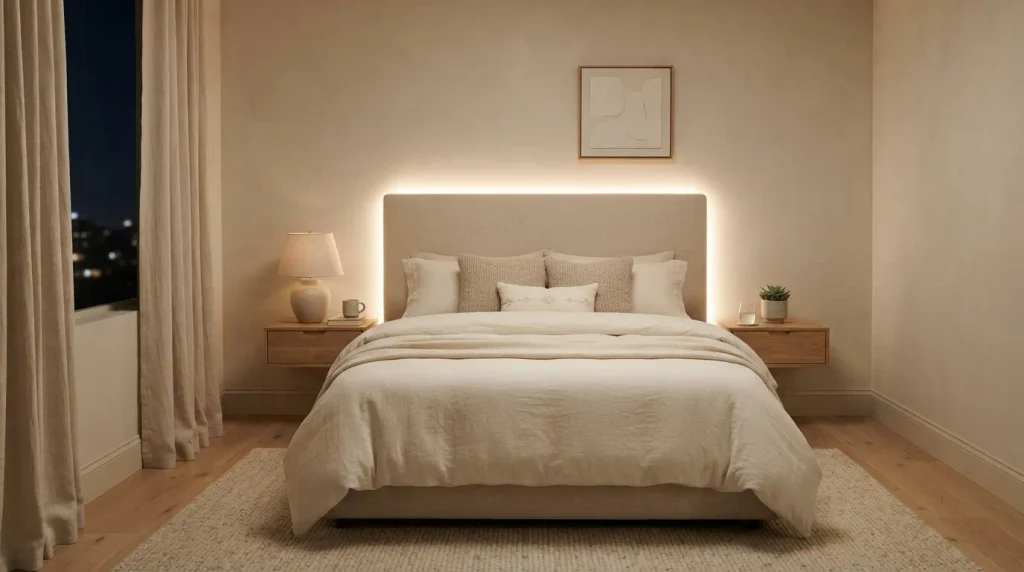
A soft glow behind the bed can make the entire room feel warmer and more sophisticated. LED strip lighting tucked behind a headboard or along its edges creates indirect illumination without adding visual clutter. Choose warm white rather than colorful strips for a calm, grown-up finish. Hide the light source carefully so you see the glow, not the individual bulbs. In my experience, this technique works particularly well with upholstered or wooden headboards because the material diffuses the brightness. It is also useful in bedrooms where you want atmosphere without sacrificing precious nightstand or floor space.
The beauty of concealed lighting is that it adds depth without demanding attention. Position the strip behind the upper edge of the headboard, beneath a floating shelf, or along a recessed architectural detail. Keep the brightness adjustable so the glow can shift from practical evening illumination to a barely-there nighttime accent. Pair it with neutral bedding, natural wood, and soft textiles to keep the room feeling restful. If the bedroom already has several decorative elements, hidden light can provide balance rather than another competing feature. The finished effect feels polished, cozy, and surprisingly luxurious.
Also Read : 24 Modern Fireplace Ideas for a Stylish Cozy Home
5. Dresser Table Lamp
- Add a decorative lamp to turn an ordinary dresser into a focal point.
- Choose ceramic, glass, wood, or fabric finishes that repeat existing textures.
- Use warm illumination to make nearby decor feel richer.
- Keep enough open surface for practical everyday items.
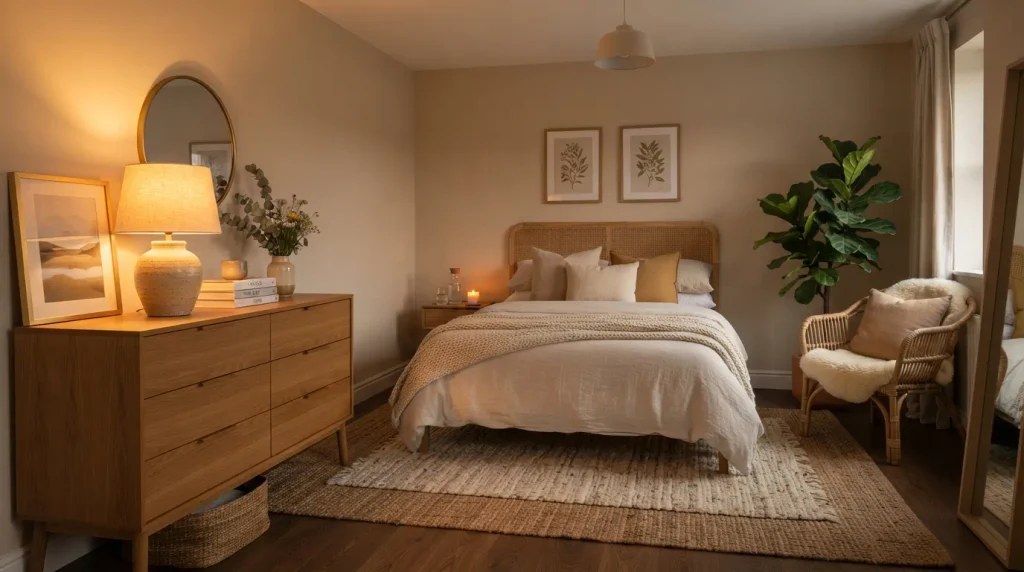
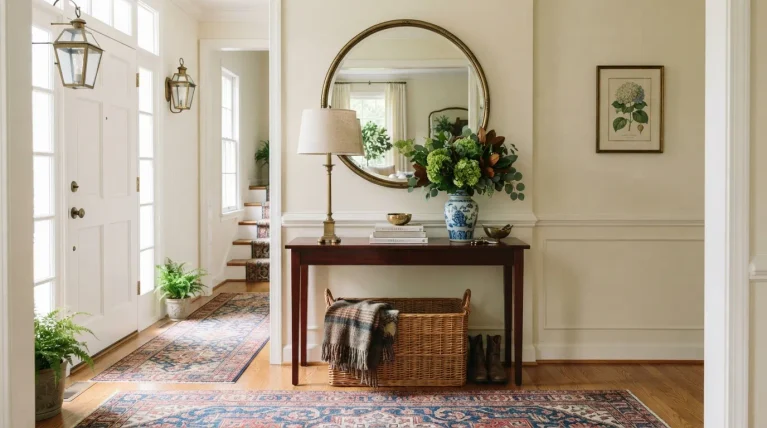
Few lighting upgrades feel as effortless as placing a beautiful lamp on a bedroom dresser. A sculptural table lamp can turn an ordinary surface into a styled focal point while providing a softer alternative to overhead illumination. Look for ceramic, glass, wood, or textured fabric bases that complement the room’s existing materials. Keep the shade proportional to the dresser so the arrangement feels balanced rather than crowded. I’ve noticed that a warm bulb instantly makes nearby decor, framed artwork, and wood finishes look richer. It is a simple change, but the atmosphere can feel completely different at night.
Use the dresser lamp to create a small lighting zone that supports both style and function. Place it beside a framed print, a small vase, or a stack of books, leaving enough open surface for everyday use. A fabric shade softens the glow, while a rounded ceramic base can add an organic touch to a modern room. Choose a dimmable model when possible, especially if the dresser sits opposite the bed. This extra layer reduces reliance on harsh ceiling illumination and gives the bedroom a welcoming glow that feels intentional without requiring a major redesign.
6. Corner Floor Lamp
- Fill an unused corner with useful, attractive illumination.
- Choose an arched style for reading areas or seating corners.
- Use a slim vertical design when floor space is tight.
- Keep the bulb warm for a softer evening atmosphere.
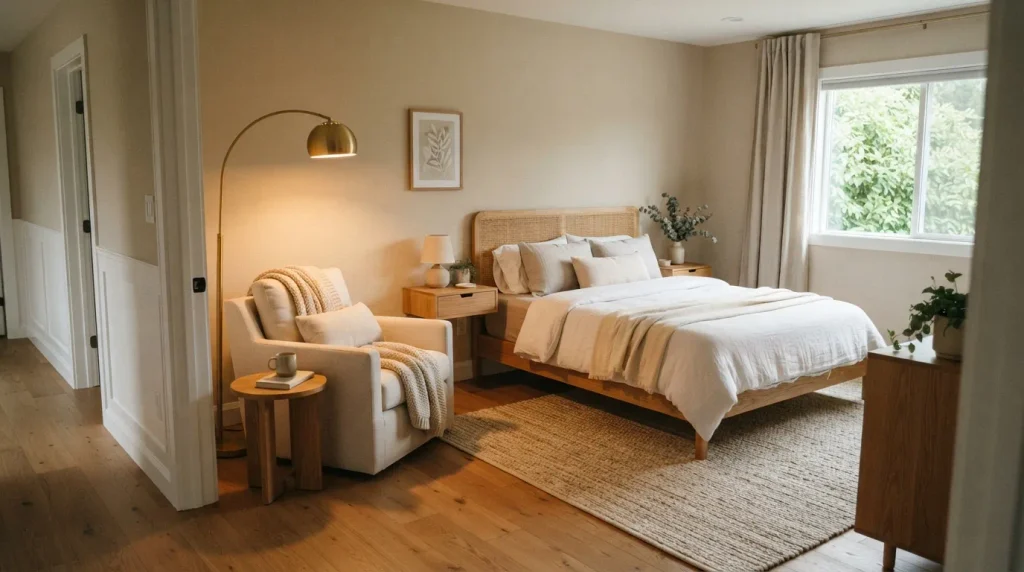
When floor space is limited, a slim floor lamp can bring useful illumination into an empty corner without making the bedroom feel crowded. Place it beside a reading chair, near a dresser, or in the corner where two walls meet. An arched design can extend light over a chair or bedside area, while a simple vertical lamp works beautifully in minimalist rooms. Choose a warm bulb and a shade that directs light gently downward. I’ve seen this work well in small bedrooms because the vertical profile fills unused space while keeping valuable surfaces completely clear.
A floor lamp also creates a natural transition between different areas of the bedroom. Use one beside a chair to establish a dedicated reading nook, or position it near a dresser to soften the space around larger furniture. Keep the base visually light if the room already feels full, and select a finish that echoes existing hardware or wood tones. The goal is not simply to brighten a dark corner, but to give that forgotten area a clear purpose. With the right placement, even a small bedroom can feel more balanced, layered, and thoughtfully arranged.
Also Read : 21 Earthy Minimalist Bedroom Ideas for a Calm Natural Retreat
7. Warm Fairy Lights
- Drape delicate lights around a headboard for an easy decorative glow.
- Choose warm white bulbs instead of cool tones for a softer effect.
- Keep the arrangement loose and simple so it feels intentional.
- Use battery-powered strands when nearby outlets are limited.
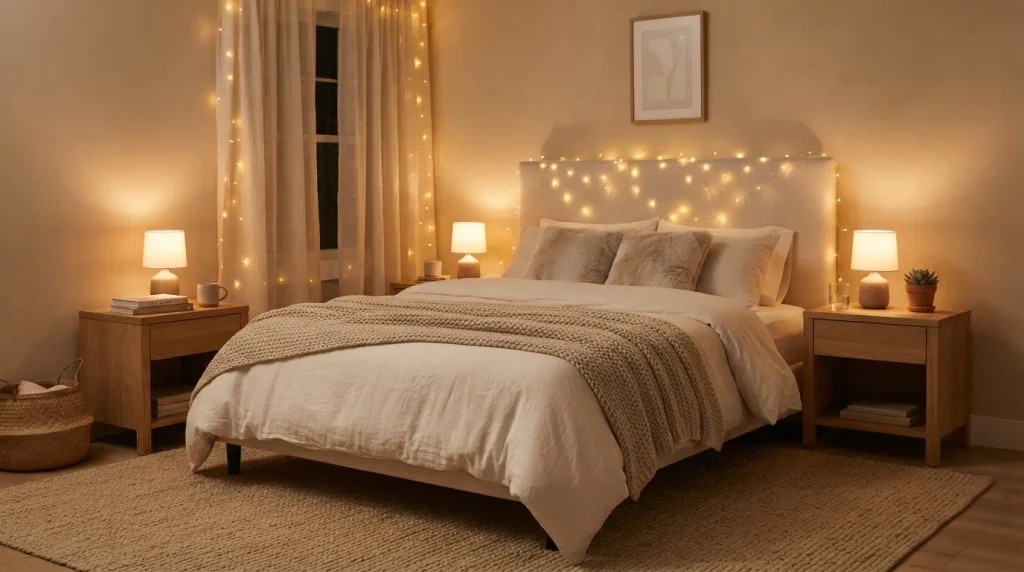
Tiny points of warm light can make a bedroom feel instantly softer and more inviting. Fairy lights work especially well around a headboard, along a curtain edge, or across a simple wall feature where they can add sparkle without overwhelming the decor. Choose warm white strands with closely spaced bulbs for an elegant appearance rather than a colorful holiday effect. In my experience, keeping the arrangement slightly loose looks more natural than creating perfectly straight lines. The gentle glow is especially lovely after sunset, when strong overhead lighting can make an otherwise comfortable room feel too harsh.
For a polished result, combine fairy lights with simple bedding and natural textures so the illumination remains the star. Conceal the wire where possible, and secure the strand with discreet hooks instead of letting it hang heavily. If you prefer a cleaner appearance, outline only the headboard or one architectural feature rather than covering the entire room. A timer or remote-controlled option can make evening use easier. This approach is particularly useful for renters because it can introduce personality without permanent electrical changes. The finished room feels warm, playful, and visually inviting while remaining simple to recreate.
8. Statement Chandelier
- Use a decorative chandelier to create an instant bedroom focal point.
- Choose a size that leaves comfortable visual space around the bed.
- Pair an ornate fixture with simple bedding to prevent visual overload.
- Select a dimmable design for adjustable evening brightness.
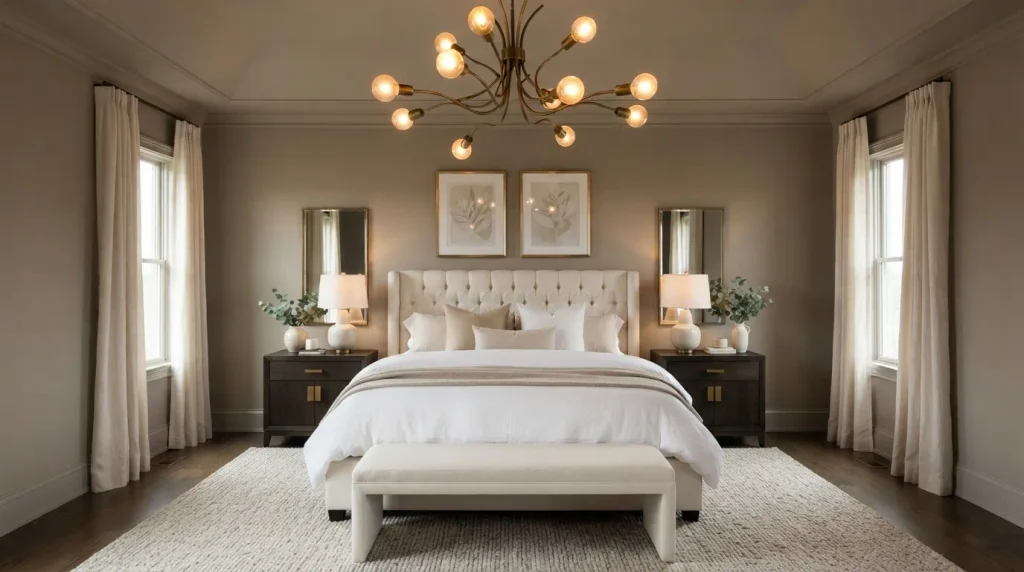
A statement chandelier can transform the ceiling into one of the most memorable features in the bedroom. Instead of treating the overhead fixture as purely functional, choose a design with sculptural shape, interesting materials, or delicate details that complement the room. A brass chandelier adds warmth, while matte black creates stronger contrast. Keep the bedding and surrounding furniture relatively simple so the fixture has room to stand out. That balance is important because a dramatic ceiling piece should feel like a deliberate focal point, not another competing decoration. A dimmer also makes the fixture much more versatile.
Before choosing a chandelier, consider the room’s ceiling height, bed position, and overall visual scale. A large bedroom can support a more substantial fixture, while a smaller space usually benefits from a compact design with an open silhouette. Hang it where it provides illumination without feeling too low over the sleeping area. Warm bulbs help soften reflective metals and create a comfortable evening atmosphere. When the chandelier echoes another finish in the room, such as brass drawer pulls or a mirror frame, the entire design feels more cohesive. The result is stylish without becoming overly formal.
9. Reading Nook Lamp
- Give a bedroom chair its own focused source of illumination.
- Choose an adjustable lamp that directs light toward the reading area.
- Place a small side table nearby for books and everyday essentials.
- Use warm, comfortable brightness rather than a harsh overhead beam.
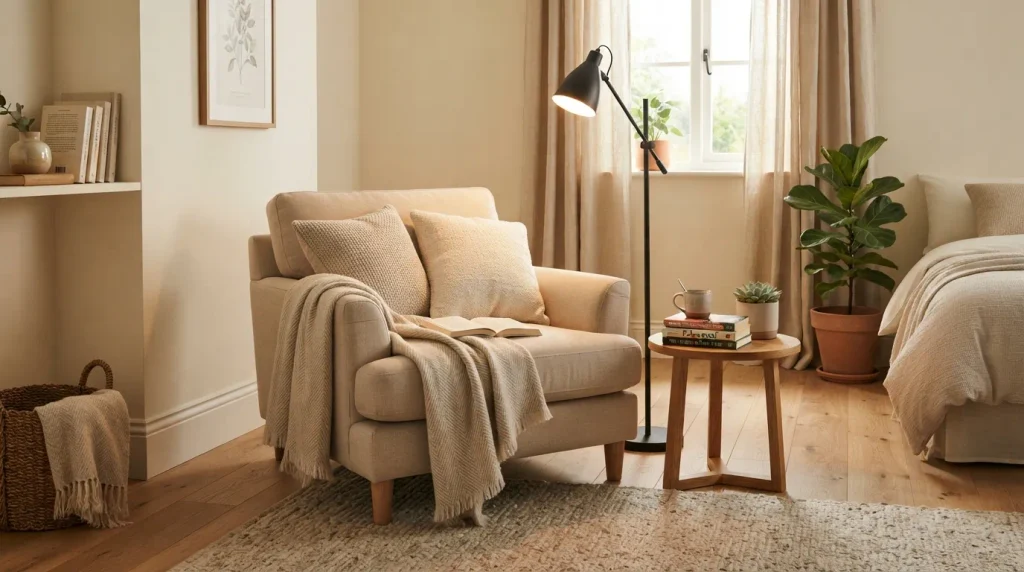
A comfortable reading chair becomes even more inviting when it has its own dedicated pool of light. Place an adjustable floor or table lamp beside the chair so the illumination falls directly onto your book without lighting the entire room. This creates a separate activity zone and makes a larger bedroom feel more thoughtfully arranged. Look for a flexible neck or adjustable shade that lets you control the direction easily. I’ve noticed that a reading nook feels much more complete when the lamp is positioned close enough for practical use but far enough away to keep the chair visually open.
Choose a lamp with a warm, comfortable brightness that allows you to read without creating glare. A small side table can hold books, a drink, or a decorative object while reinforcing the purpose of the corner. If your bedroom has limited space, a narrow floor lamp can provide focused illumination without taking up much room. For a more layered arrangement, keep the main ceiling fixture dim while using the reading lamp as the brightest source nearby. This simple setup adds function, personality, and a cozy destination within the bedroom without requiring major furniture changes.
10. Bedside Table Lamps
- Choose matching lamps to create a calm, symmetrical arrangement.
- Use fabric shades to soften the light around the bed.
- Select compact bases when nightstand space is limited.
- Keep lamp height comfortable for reading while sitting upright.
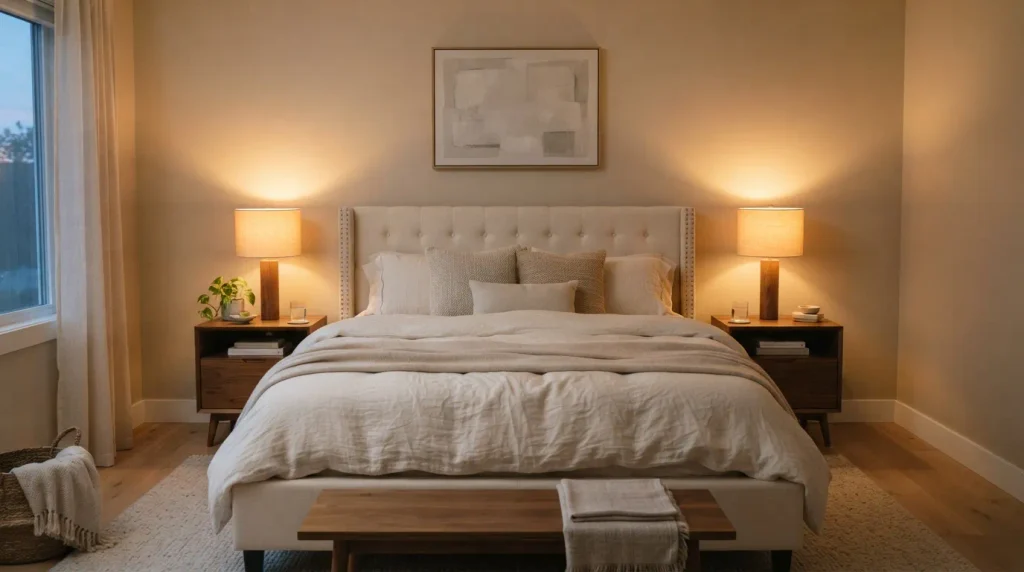
Few details make a bedroom feel as instantly balanced as matching lamps beside the bed. Place one on each nightstand to create symmetry, then choose shades that soften the glow rather than sending bright light directly across the room. Ceramic, wood, glass, and metal bases can all work, depending on your decor. Keep the scale proportional to the nightstands and headboard so the arrangement feels intentional. In my experience, simple lamps with warm bulbs are especially effective because they provide enough light for reading while creating a relaxed atmosphere that feels comfortable at the end of the day.
Think of bedside lamps as both practical tools and decorative anchors. A pair can visually frame the headboard, making the bed feel more finished without adding unnecessary accessories. If your nightstands are narrow, choose lamps with smaller bases or slender profiles that leave room for essentials. Warm white bulbs are usually more inviting than cool white ones, especially when paired with linen bedding, wood furniture, and soft neutral colors. If you prefer flexibility, choose lamps with dimmers or three brightness settings. This small upgrade can make everyday routines feel easier while giving the entire room a more polished appearance.
11. Recessed Ceiling Lights
- Use recessed fixtures for clean, uncluttered overhead illumination.
- Position lights carefully to avoid harsh brightness directly over the pillow.
- Combine them with warmer accent sources for a layered effect.
- Choose dimmable fixtures when you want more control at night.
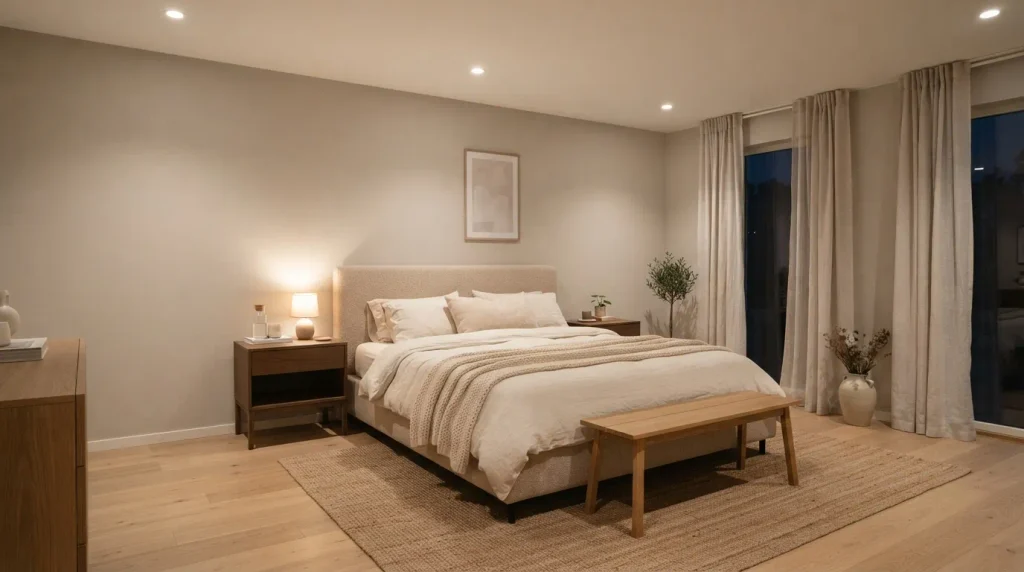
Clean lines can make a bedroom feel larger, and recessed ceiling lights are ideal when you want illumination without a visually heavy fixture. These small ceiling lights sit almost flush with the surface, keeping attention on the architecture, furniture, and textiles. Position them thoughtfully rather than creating a grid of overly bright spots. In my experience, fewer strategically placed fixtures usually feel more comfortable than many powerful lights. Use dimmable options whenever possible so the room can shift from bright and functional during the morning to soft and relaxing before bedtime.
Recessed lights work particularly well in modern, minimalist, and low-ceiling bedrooms where a hanging fixture might feel visually crowded. They can provide useful general illumination while smaller lamps or sconces handle reading and bedside tasks. Choose a warm color temperature so the room retains a welcoming atmosphere, especially alongside cream bedding and natural wood. Avoid placing intense light directly above the pillows because it can feel uncomfortable when lying down. When combined with softer accent sources, recessed fixtures become an unobtrusive foundation that keeps the bedroom bright, flexible, and visually streamlined.
12. Window Glow
- Use sheer curtains to soften strong daylight throughout the room.
- Let natural illumination become part of the bedroom’s overall design.
- Layer curtains for privacy without blocking every source of daylight.
- Keep furniture away from the window when possible to maximize brightness.
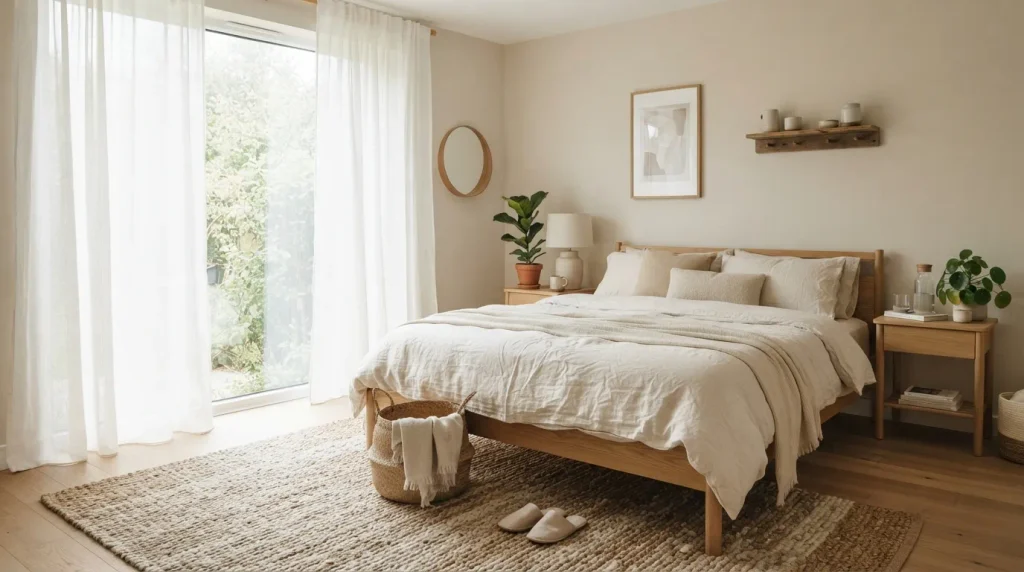
Natural daylight can do more for a bedroom than another decorative fixture ever could. Large windows, sheer curtains, and pale surfaces help sunlight spread gently across the room, creating a bright atmosphere during the day. Instead of blocking the window completely, use lightweight curtains that filter harsh rays while preserving the sense of openness. I’ve noticed that rooms with layered natural light often feel more spacious because the eye can move easily between the window, walls, and furniture. This approach also reduces the need for artificial lighting during daytime routines such as dressing, cleaning, or reading.
Make the most of window light by keeping the area around the glass visually simple. Sheer curtains can provide privacy while allowing daylight to pass through, and heavier side panels can be added when you need more darkness at night. Pale walls, mirrors, light bedding, and reflective surfaces can help distribute available light throughout the room. If the window is small, avoid placing tall furniture directly in front of it. Natural illumination becomes especially beautiful when paired with warm evening fixtures, creating a bedroom that feels bright by day and cozy after sunset.
13. Wall Wash Lighting
- Use soft wall illumination to make plain walls feel more dimensional.
- Highlight textured paint, paneling, or artwork without adding bulky fixtures.
- Choose warm bulbs for a gentle evening atmosphere.
- Keep the light indirect to avoid harsh shadows and glare.
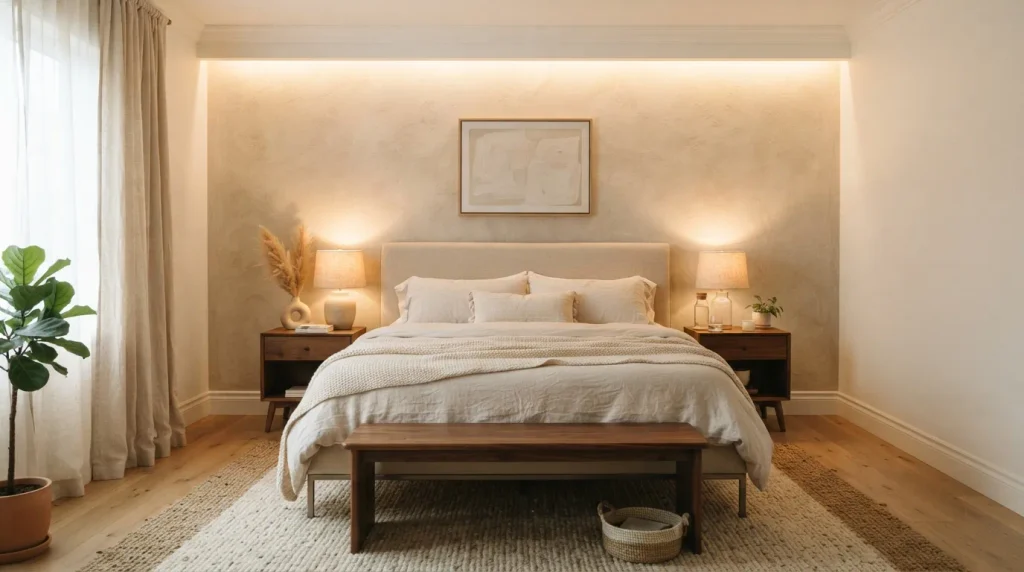
A softly illuminated wall can completely change how a bedroom feels after dark. Wall-wash lighting directs a gentle beam across a surface, revealing texture, color, artwork, or architectural details without creating harsh overhead brightness. Place the fixture near the wall and angle the light so it spreads evenly across the surface. This works beautifully behind a bed, beside artwork, or along a paneled feature wall. In my experience, indirect illumination is especially useful in neutral bedrooms because it adds depth and warmth without introducing another strong color or decorative element.
Use this technique to give a simple bedroom more visual dimension without filling it with accessories. A textured plaster wall, wood paneling, subtle wallpaper, or large artwork can become a quiet focal point when illuminated correctly. Keep the bulb warm and the brightness adjustable so the effect remains gentle at night. Avoid aiming the light directly toward the bed, where glare can become distracting. Instead, let the wall reflect the illumination back into the room. The result is a layered glow that makes the space feel more refined, comfortable, and intentionally designed.
14. Under-Bed Illumination
- Add a subtle glow beneath the bed for a floating visual effect.
- Use concealed LED strips to keep the light source invisible.
- Choose warm illumination for a relaxed nighttime atmosphere.
- Add motion sensors when you want practical low-level lighting.
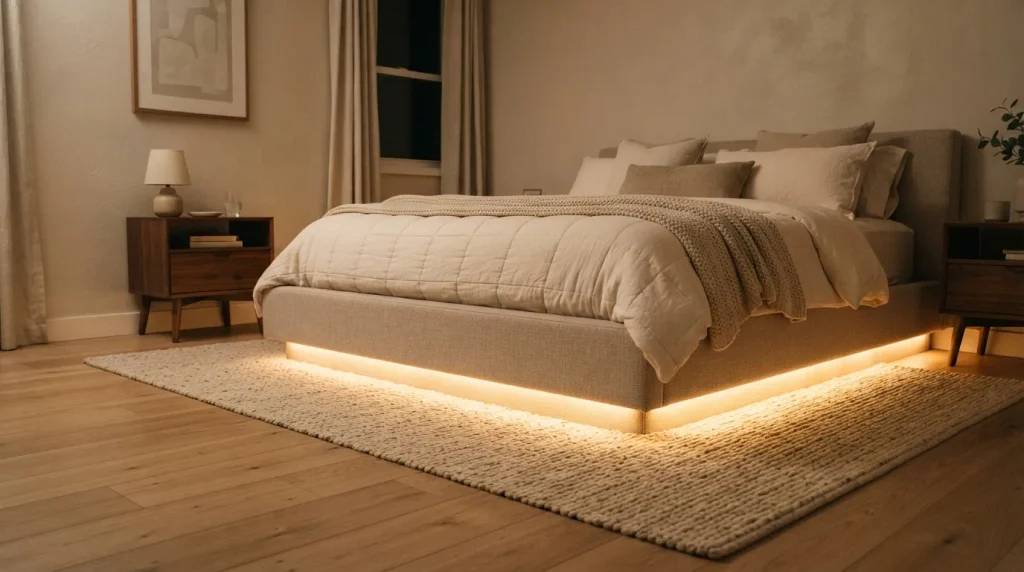
A gentle glow beneath the bed can add atmosphere while serving a surprisingly practical purpose. Concealed LED strips create a floating effect that makes the bed appear lighter, especially when the frame has a simple, streamlined shape. Keep the light source hidden beneath the base so only the reflected glow is visible. Warm illumination works best because it feels calm rather than clinical. I’ve noticed this technique is particularly useful at night because it provides enough low-level visibility to move around the room without switching on a bright ceiling fixture or disturbing someone who is already sleeping.
For an even more functional setup, choose motion-activated or dimmable lighting that turns on gently when needed. This is helpful for late-night trips across the bedroom because the light stays close to the floor instead of shining directly into your eyes. Under-bed illumination also works beautifully in minimalist spaces where visible fixtures might interrupt the clean aesthetic. Keep the brightness restrained and let the flooring reflect some of the glow. Combined with bedside lamps or sconces, this low-level source creates a layered environment that feels modern, practical, and quietly luxurious.
15. Vintage Glass Lamps
- Add character with softly diffused glass shades and classic silhouettes.
- Choose amber, smoked, or clear glass to suit the bedroom palette.
- Pair vintage-inspired lamps with modern furniture for contrast.
- Use warm bulbs to enhance the glass texture and glow.

Vintage-inspired glass lamps bring personality to a bedroom without requiring a complete change in decor. Amber, smoked, ribbed, or clear glass can catch and soften warm illumination, creating an attractive glow around the bedside area. Choose a silhouette that complements the room rather than matching every other piece exactly. A classic glass lamp can look surprisingly fresh beside a modern upholstered bed or streamlined nightstand. That contrast keeps the space from feeling too coordinated. For a timeless result, combine the glass with warm metal details and neutral textiles that let the fixture remain visually interesting.
Use vintage-style lamps when your bedroom needs a little more character or feels overly plain. Ribbed glass can introduce texture, while amber glass adds warmth to an otherwise neutral palette. Place matching lamps on both sides of the bed for a traditional look, or use slightly different shapes when you prefer a collected aesthetic. Keep the bulbs warm to bring out the glass color and avoid cool illumination that can make the fixture feel harsh. This small decorative upgrade combines function with personality, giving the bedroom a cozy glow that feels distinctive rather than mass-produced.
16. Bedside Pendant Clusters
- Hang two or three small pendants together for a more decorative bedside arrangement.
- Mix different shapes while keeping the materials visually related.
- Use warm bulbs to create a soft focal point beside the bed.
- Keep the cluster compact so it does not overpower the headboard.
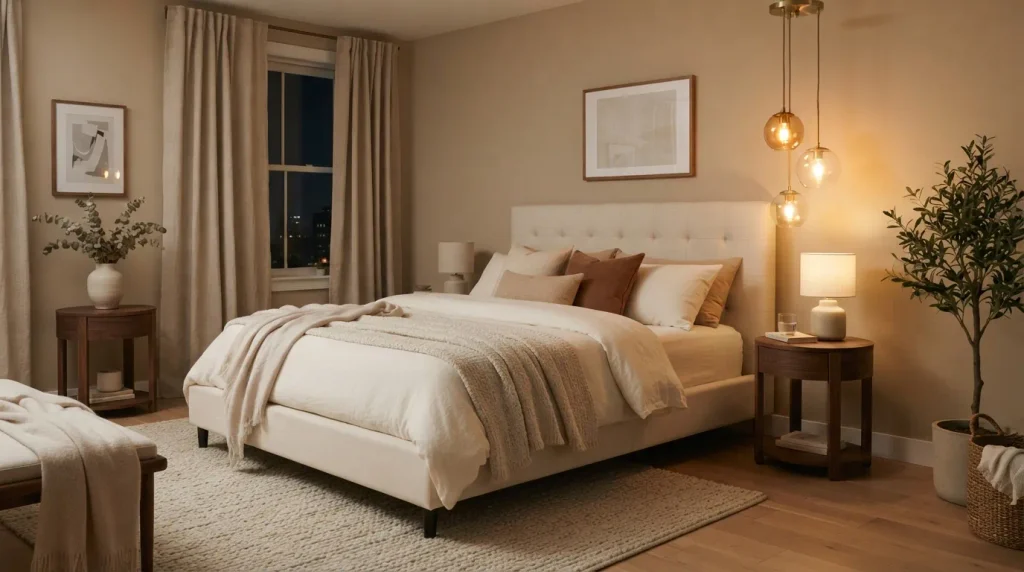
A cluster of pendant lights can turn an ordinary bedside wall into a striking design feature. Instead of using one fixture on each side, group two or three smaller pendants together at slightly different heights. Glass shades create an airy appearance, while woven or metal designs add stronger texture. Keep the cluster relatively compact so it frames the bed rather than competing with it. I’ve noticed that varied heights can make a room feel more layered because the eye naturally moves through the arrangement. Choose matching finishes to keep the composition intentional and visually calm.
For a cohesive bedroom, repeat one material from the pendant cluster elsewhere in the room. Brass can appear in drawer pulls, a mirror frame, or small decorative accents, while black fixtures can connect with dark furniture or artwork. Keep the bulbs warm and consider dimmable options for better nighttime control. If the pendants hang beside the bed, position them where they provide useful illumination without interfering with movement. This approach works especially well when nightstand surfaces are small because the lighting moves upward, leaving more room below for books, drinks, and personal essentials.
17. Picture Light Accent
- Highlight artwork above the bed with a slim, focused fixture.
- Use warm illumination to make artwork feel softer after sunset.
- Choose a finish that complements nearby hardware or furniture.
- Keep the light subtle so the artwork remains the main feature.
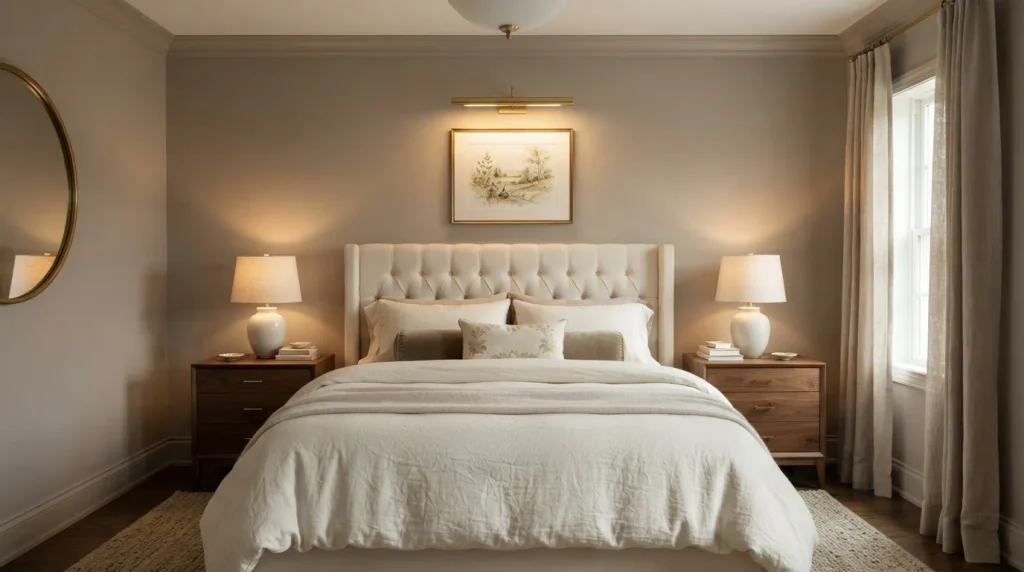
A simple picture light can make bedroom artwork feel like a carefully curated focal point. Mount the fixture above a framed print, painting, or collection and angle the beam downward so the artwork receives a soft, concentrated glow. Brass adds warmth, while matte black creates a crisp contrast against pale walls. Keep the surrounding decor relatively restrained so the illuminated artwork remains the center of attention. This technique is especially useful when the bedroom already has sufficient general illumination but still feels visually flat after dark. The focused glow adds depth without requiring another large fixture.
Choose a picture light that is slightly narrower than the artwork for a balanced appearance, and avoid excessive brightness that could create glare on glass-covered frames. Warm illumination usually works best with bedrooms because it complements neutral fabrics and natural materials. If you have several smaller pieces arranged together, a longer fixture can illuminate the entire composition evenly. Pairing this accent with bedside lamps creates a layered effect where each source has a clear purpose. The result feels sophisticated and personal, while the wall art gains visibility and presence during evening hours.
18. Soft Cove Lighting
- Use concealed illumination to create an even glow around the ceiling.
- Highlight architectural details without adding visible fixtures.
- Choose warm LEDs for a relaxed, sophisticated atmosphere.
- Pair the cove effect with simple bedside lights for balanced layering.
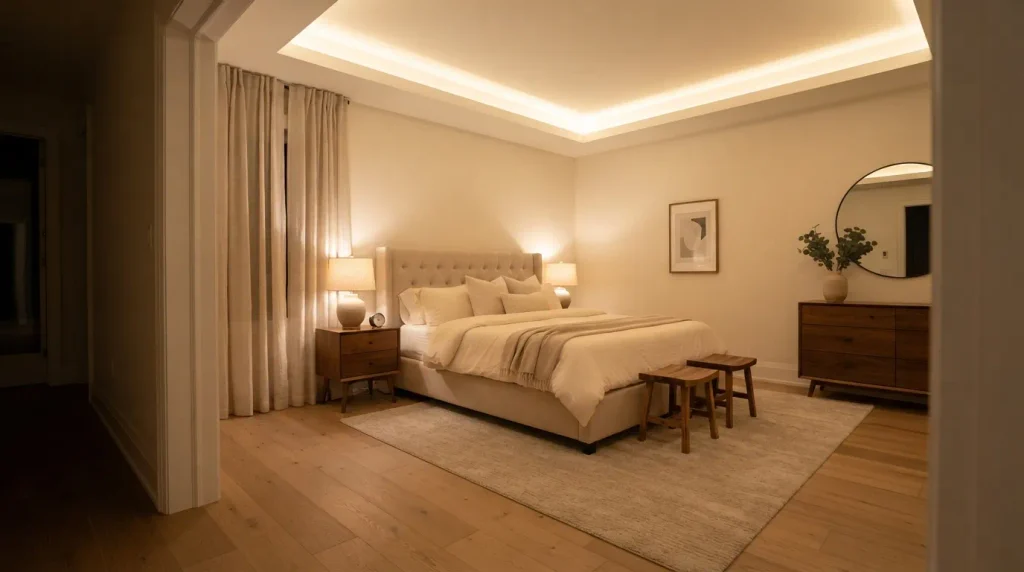
Soft cove lighting creates a gentle ceiling glow that makes the entire bedroom feel more atmospheric. Instead of seeing the light source directly, you see illumination reflected from a recessed edge, molding, or architectural detail. This indirect approach reduces harsh shadows and gives the ceiling more visual depth. Warm LEDs are ideal for bedrooms because they create a relaxed evening mood without making the space feel overly dramatic. In my experience, concealed lighting works particularly well in rooms with simple furnishings because it adds sophistication through the architecture rather than relying on extra decorative objects.
If your bedroom has a tray ceiling, crown molding, or another recessed detail, this technique can emphasize its shape beautifully. Keep the illumination even and avoid excessive brightness so the ceiling remains softly highlighted rather than glowing intensely. Pair the cove effect with bedside lamps or sconces to provide focused illumination where you actually need it. Consistent warm tones will help all the light sources feel connected. The finished room has a calm, upscale appearance while remaining practical, making this approach especially appealing for anyone who wants subtle drama without a visually crowded ceiling.
19. Mirrored Lamp Pair
- Use reflective lamp bases to bounce warm light around the room.
- Place matching lamps on both sides of the bed for visual balance.
- Pair reflective finishes with soft fabrics to prevent a cold appearance.
- Choose simple silhouettes when the room already has plenty of decor.
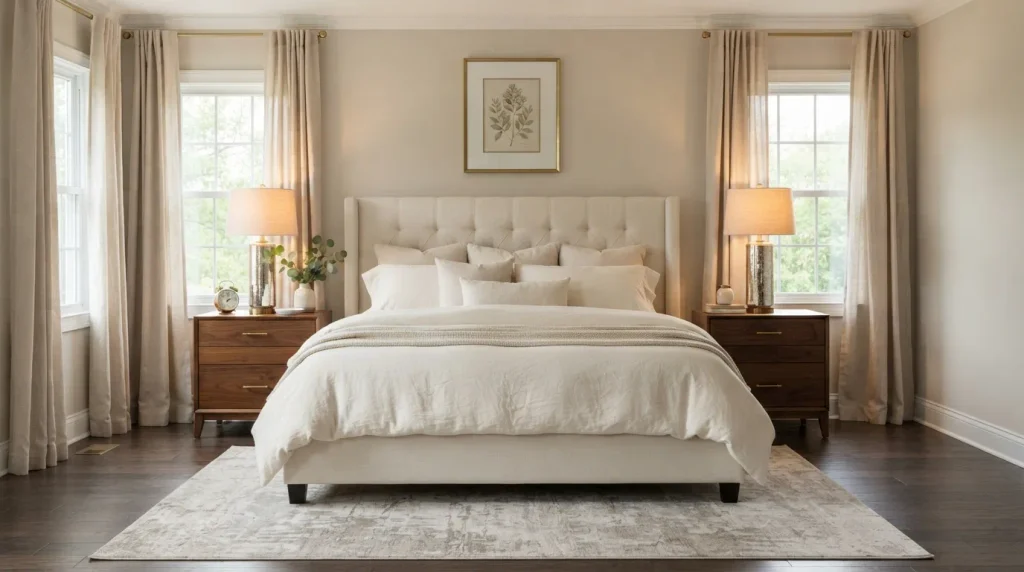
Reflective lamp bases can make a bedroom feel brighter while adding a subtle touch of elegance. Mirrored glass, polished metal, or lightly reflective ceramic catches nearby illumination and gently distributes it across the room. Place matching lamps on both sides of the bed to create symmetry and give the sleeping area a finished appearance. Because reflective materials can feel cool on their own, balance them with linen bedding, upholstered furniture, wood, and woven textures. I’ve noticed this combination works particularly well in neutral bedrooms where a little extra brightness can make the space feel more open.
The key is to use reflection as an accent rather than covering the room with shiny surfaces. Choose lamps with simple silhouettes and soft fabric shades so the overall effect remains comfortable and relaxed. Warm bulbs will reflect gently from the base without producing an overly bright appearance. Position the lamps where they can interact with nearby mirrors, artwork, or light-colored walls for additional visual depth. This setup can make a smaller bedroom feel more spacious while maintaining a cozy atmosphere. The result is polished, balanced, and easy to coordinate with existing furniture.
20. Natural Rattan Shades
- Add warmth and texture with woven shades made from natural materials.
- Pair rattan with linen, cotton, and light wood for a relaxed look.
- Use warm bulbs to emphasize the woven texture after sunset.
- Choose open-weave designs when you want more light diffusion.

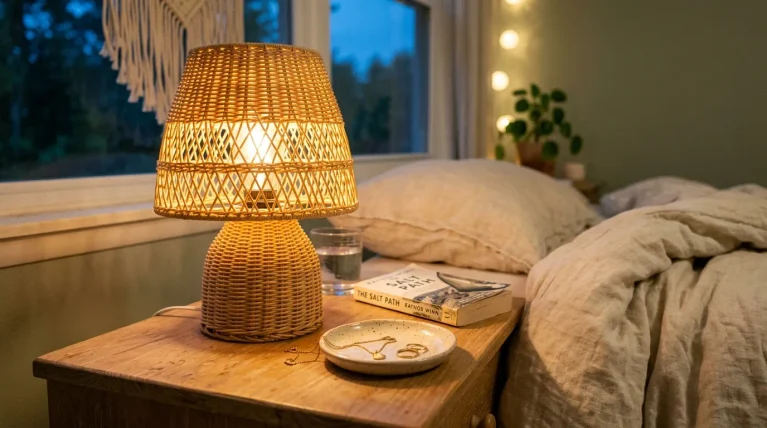
Natural woven shades bring texture into the bedroom while softening the light at the same time. Rattan, cane, bamboo, and other natural fibers work beautifully with neutral bedding and light wood furniture because they introduce warmth without adding strong color. The weave allows small amounts of illumination to filter through, creating gentle patterns on nearby surfaces. In my experience, this style is especially effective in bedrooms that feel too plain or overly polished because the natural material adds an imperfect, handcrafted quality. Pair the shade with warm illumination to keep the overall atmosphere soft and inviting.
Use woven fixtures beside the bed, above a reading chair, or as a central ceiling feature depending on the room’s layout. Open-weave shades allow more light to escape, while tighter patterns create a more concentrated glow. Keep other accessories relatively simple so the natural texture remains noticeable without making the room feel busy. Light oak, cream linen, beige walls, and muted earthy tones create an especially cohesive combination. These bedroom lighting ideas can bring visual warmth and character to the space while maintaining a relaxed aesthetic that feels comfortable rather than overly styled.
21. Dimmable Ambient Glow
- Install dimmable fixtures to adjust brightness for different bedroom activities.
- Keep illumination softer in the evening to support a relaxing atmosphere.
- Combine several low-level sources instead of relying on one bright fixture.
- Choose consistent warm tones so the room feels visually cohesive.
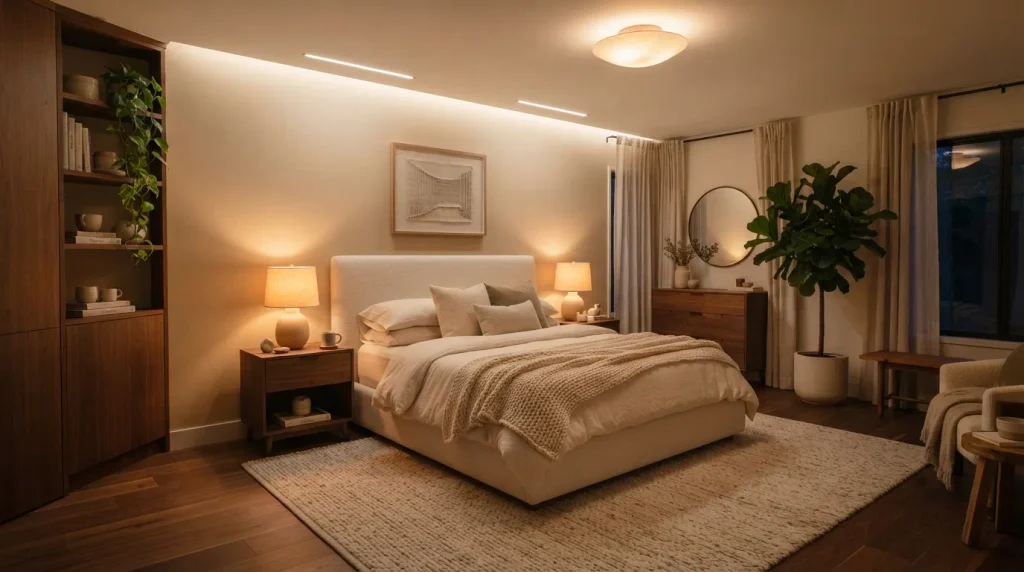
The most comfortable bedroom is rarely the brightest one; it is the one where you can control the atmosphere. Dimmable fixtures let you increase illumination when getting dressed or tidying the room, then lower it when reading, relaxing, or preparing for sleep. Instead of depending on one powerful ceiling light, combine several softer sources throughout the space. This creates flexibility while keeping the room visually balanced. In my experience, having control over brightness is one of the most useful upgrades because the same bedroom can feel energetic in the morning and peaceful at night.
Start with a warm-toned ceiling fixture, then add bedside lamps, sconces, or accent lights that can be adjusted independently. Keep the brightest illumination away from the pillow area and use softer sources closer to the floor or walls after sunset. Consistent color temperatures prevent the room from feeling visually mismatched. Smart bulbs, dimmer switches, and lamps with built-in brightness controls can all provide flexibility depending on your setup. The result is a bedroom that adapts to your routine, feels more comfortable at night, and looks thoughtfully layered without requiring expensive decorative changes.
Conclusion
A cozy bedroom doesn’t always need a major makeover. Sometimes, changing the way light is layered throughout the space is enough to make it feel warmer, calmer, and more polished. These bedroom lighting ideas can help you create better bedside illumination, highlight favorite details, brighten darker corners, and build a relaxing atmosphere for evenings. I’ve seen how small changes like adding a dimmable lamp or soft accent glow can completely transform a room. Save this post on Pinterest so you can revisit your favorite ideas, try one in your own space, and share it with someone looking for bedroom inspiration. Your coziest room may be one simple light away.