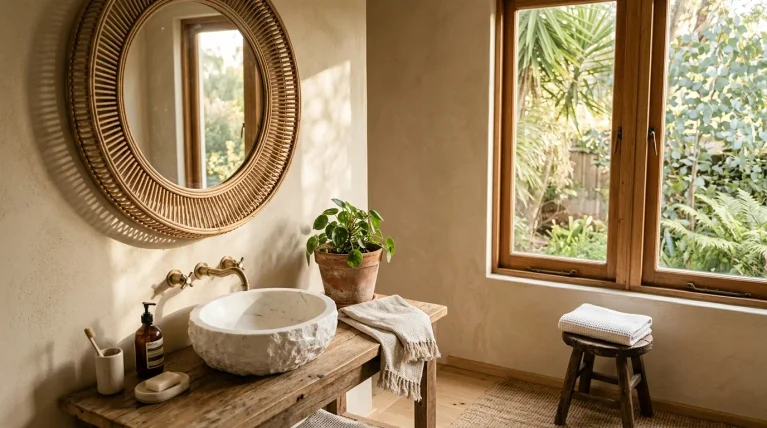
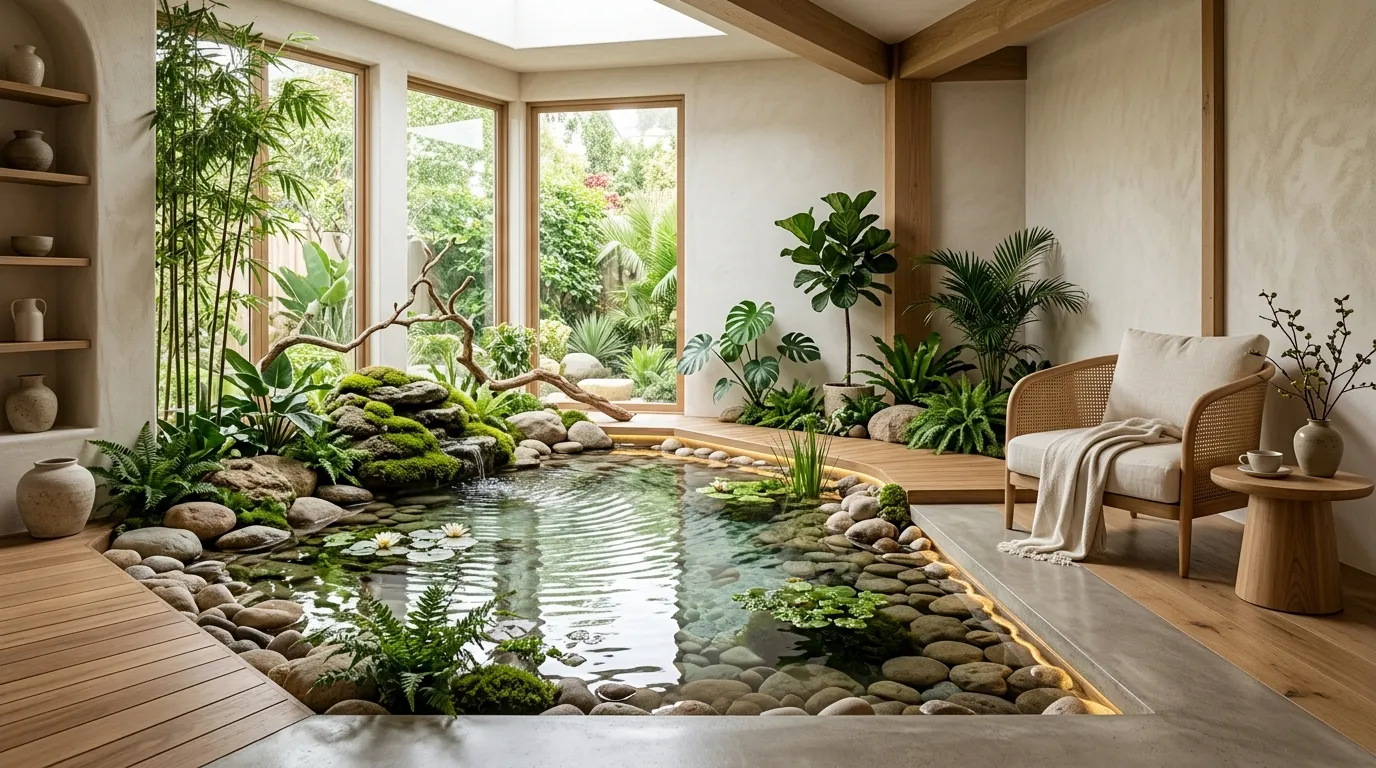
There’s a quiet kind of magic in the sound of water inside a home. It slows everything down. A soft trickle, a still reflection, a few floating leaves, these small details can turn any room into a peaceful retreat, no matter how big or small your space is.
In my experience, the best indoor pond ideas aren’t always the most elaborate ones. Sometimes a simple tabletop basin brings just as much calm as a full sunken pond. Whether you’re working with a tiny apartment corner or an entire sunroom, there’s a version of this idea that fits your home.
From koi-filled centerpieces to minimalist black basins, these 23 ideas are meant to inspire you to bring a little more stillness and nature indoors. Save the ones that speak to you, and start building your own peaceful home oasis, one pond at a time.
1: Tabletop Zen Pond
- Small enough to fit on any desk, shelf, or console table
- Brings a calming water feature into tight spaces or apartments
- Easy to maintain with minimal filtration needed
- Great starter option for anyone new to indoor water features
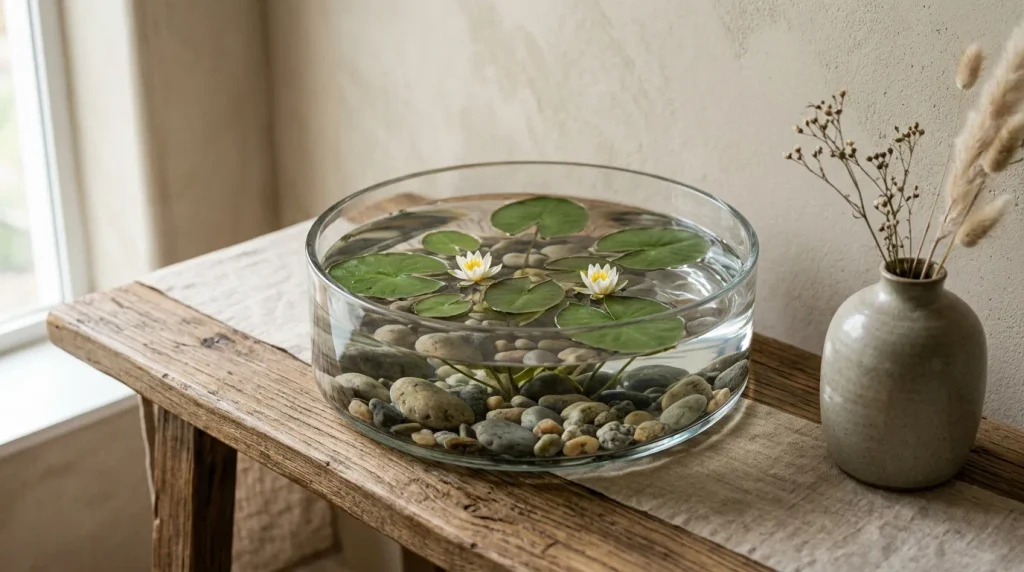
A tabletop zen pond is one of the easiest ways to bring the calming sound and look of water into a small space without any major setup. A simple glass or ceramic basin filled with a few inches of water, some smooth stones, and a floating plant is often enough to create a peaceful focal point. This is one of those indoor pond ideas that works even in studio apartments or offices with very limited room. In my experience, adding a tiny battery-powered pump makes a noticeable difference by introducing gentle movement and sound to the water.
What makes this idea so accessible is how little commitment it requires compared to a full indoor pond setup. I’ve noticed that even a small tabletop version creates a surprisingly calming effect, especially when placed somewhere you sit often, like a desk or reading nook. It doesn’t need fish or complex filtration to feel complete. A few floating plants and stones are often enough to make the water feel alive. By the end, the corner feels quieter, more grounded, and genuinely peaceful to look at throughout the day.
2: Sunken Living Room Pond
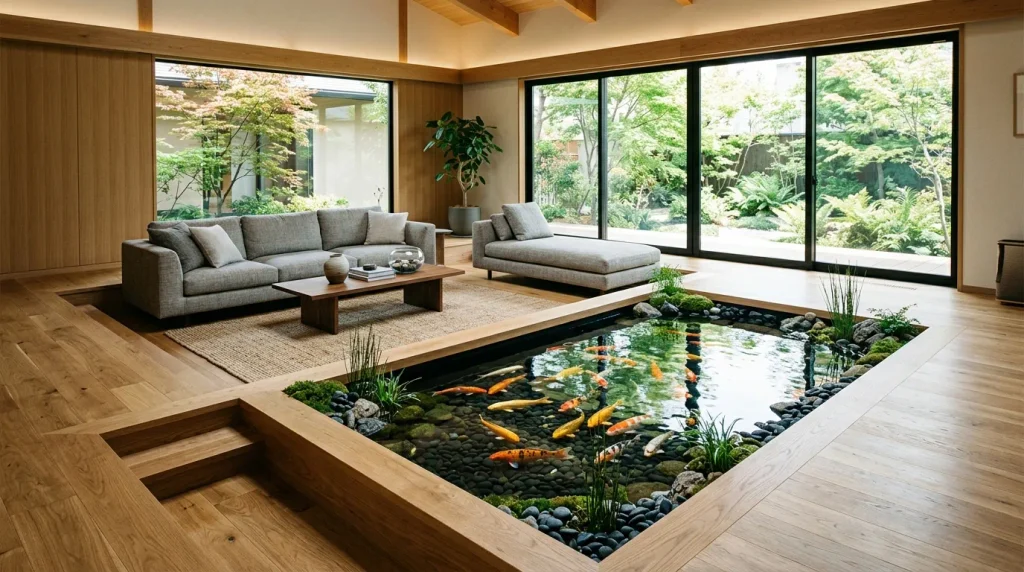
- Creates a dramatic architectural feature built into the floor
- Works best in homes with existing sunken or lowered sections
- Adds a striking visual centerpiece for open living spaces
- Best suited for larger renovation projects with proper waterproofing
A sunken pond built directly into a lowered section of flooring turns an ordinary living room into something that feels architecturally intentional and genuinely unique. This works best when a home already has a step-down or sunken area, since the change in level naturally frames the water feature. I’ve seen this work well in open-concept homes where the pond becomes the visual anchor of the entire room. Proper waterproofing and drainage are essential here, so this is generally a project that benefits from professional installation rather than a weekend DIY attempt.
What makes this idea stand out among other indoor pond ideas is the sense of permanence and architectural value it adds to a home. Unlike smaller tabletop features, a sunken pond becomes part of the structure itself, which increases both its visual impact and its long-term investment value. I’ve noticed that homes with this feature often use it as a genuine conversation piece for guests. Adding koi or small aquatic plants brings life and movement to the space. By the end, the room feels calm, sophisticated, and unmistakably distinctive.
3: Corner Water Garden
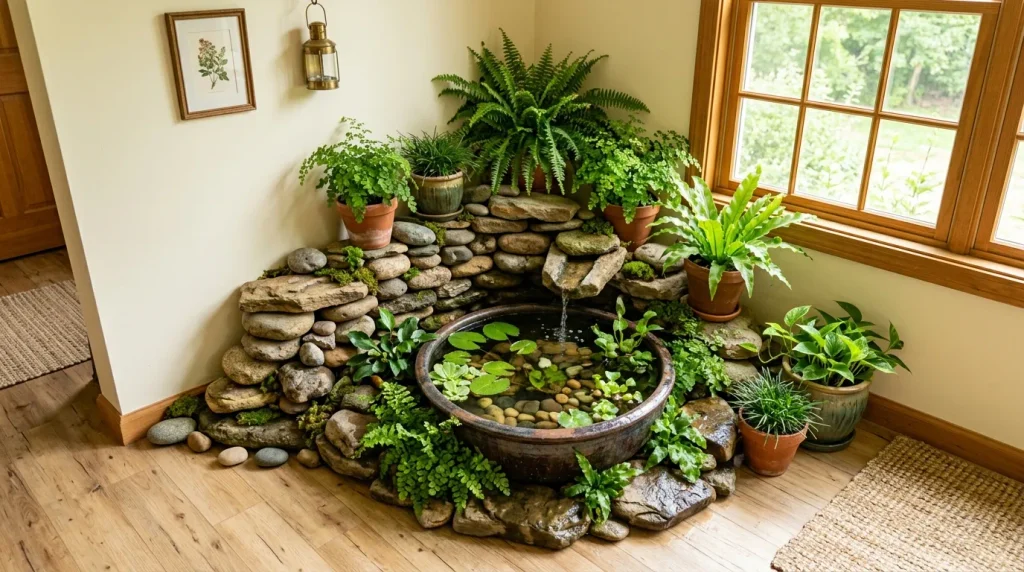
- Fills an awkward empty corner with a lush, living feature
- Combines water, plants, and stone for a layered natural look
- Works well in living rooms, hallways, or sunlit corners
- Flexible size options depending on available floor space
An empty corner is often the most overlooked space in a home, yet it’s ideal for a small water garden that combines a shallow pond basin with surrounding potted plants and stacked stones. Layering ferns or trailing plants around the water’s edge creates a lush, natural look that feels more like a mini ecosystem than a simple decoration. I’ve tried this setup in a hallway corner that previously felt empty and unused, and it completely changed how the space felt to walk past daily. Sunlight nearby helps plants thrive alongside the water feature.
This idea works particularly well because it makes use of dead space that most homes have but rarely decorate intentionally. I’ve noticed that corner water gardens feel less like a single decoration and more like a small living scene, which adds depth to a room. That’s why many designers recommend corners specifically for layered features like this, since walls on two sides help frame the setup naturally. It also requires less floor space than a centered pond would. By the end, the corner feels green, calming, and quietly transformative.
4: Koi Fish Display Pond
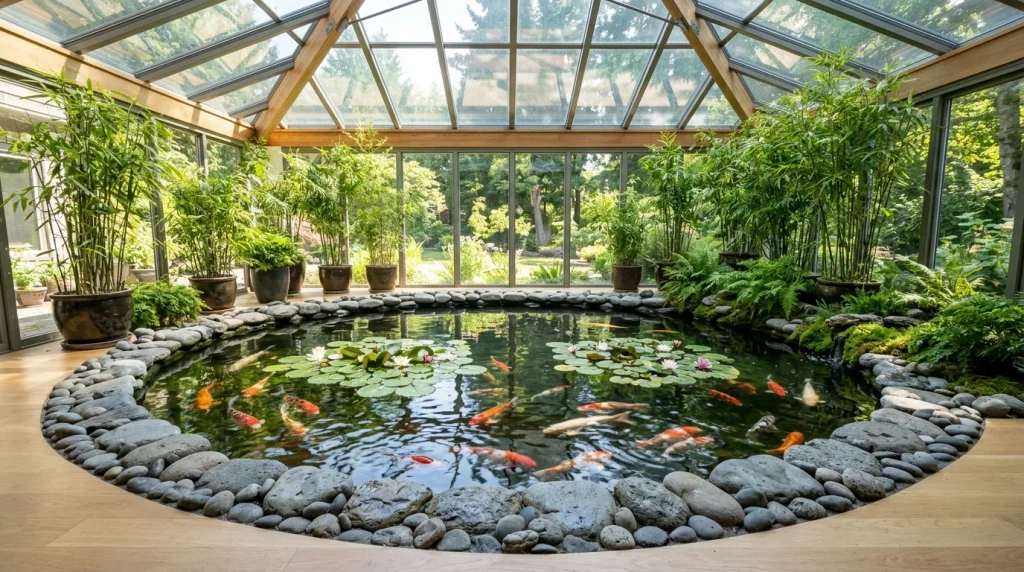
- Adds movement and color that plain water features can’t offer
- Works well as a centerpiece in larger living rooms or sunrooms
- Requires proper filtration and oxygenation for fish health
- Creates a living focal point that changes daily with fish activity
A koi fish display pond brings a level of life and movement that static water features simply can’t replicate, since the fish themselves become part of the daily scenery. This works best in sunrooms or larger living spaces where natural light supports both plant growth and fish health throughout the year. In my experience, koi ponds require a bit more upkeep than plant-only setups, but the payoff is a feature that genuinely feels alive rather than decorative. Proper filtration is non-negotiable here, since fish waste builds up quickly in a contained system.
Among indoor pond ideas, this one tends to have the most emotional pull, since people naturally connect with moving, living creatures more than still water. I’ve noticed that even skeptical guests slow down to watch the fish once they notice them swimming. That’s why many designers recommend koi ponds specifically for spaces where people gather, since the movement draws attention naturally. Adding lily pads gives the fish shade and the pond visual texture. By the end, the room feels lively, calming, and genuinely engaging to spend time near.
5: Floating Candle Pond Bowl
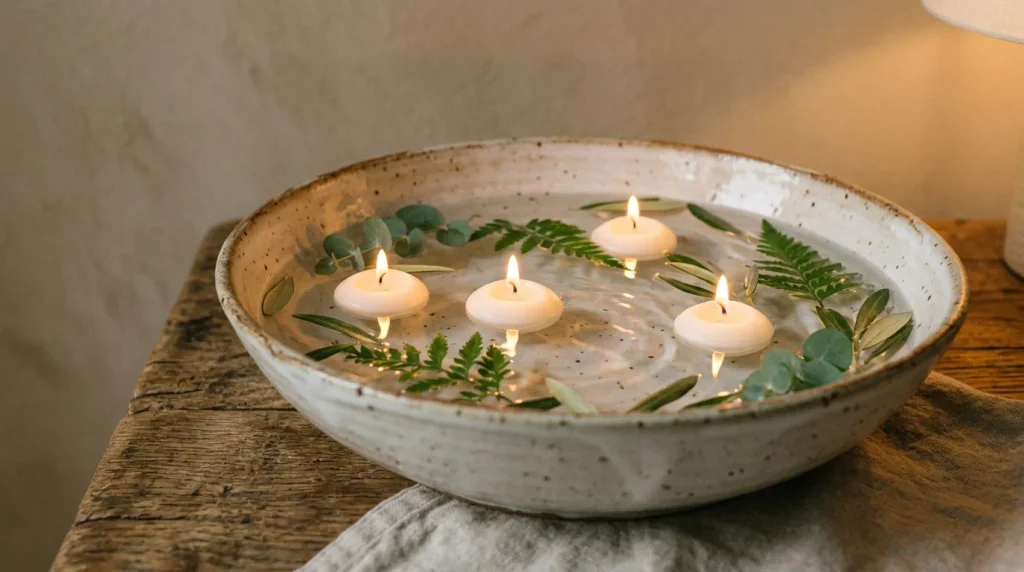
- Combines water with candlelight for a soft, romantic glow
- Simple setup that requires no pump or filtration system
- Works well on side tables, entryways, or dining spaces
- Easy to change seasonally with different floating elements
A floating candle pond bowl is one of the simplest indoor pond ideas to set up, since it needs nothing more than a wide, shallow container filled with water. Add a few floating candles and some greenery or petals, and the still water instantly reflects the warm glow once lit in the evening. I’ve tried this on an entryway table, and the reflection alone made the whole space feel calmer the moment I walked in. There’s no pump or filtration required, which makes it incredibly low-maintenance compared to other water features on this list.
What makes this idea so appealing is how easily it adapts to different seasons or occasions just by changing what floats on top. I’ve noticed that swapping candles for seasonal leaves or flowers keeps the display feeling fresh without any real effort. That’s why many designers suggest this kind of feature for anyone who wants ambiance without commitment. It also works beautifully as a centerpiece for a dinner table or gathering. By the end, the space feels soft, warm, and quietly elegant after dark.
Also Read : 23 Masculine Home Office Ideas for a Stylish Workspace
6: Vertical Wall Water Feature
- Saves floor space by using vertical wall area instead
- Creates soothing background sound from flowing water
- Works well in hallways, offices, or small living rooms
- Available in slim, mountable designs for easy installation
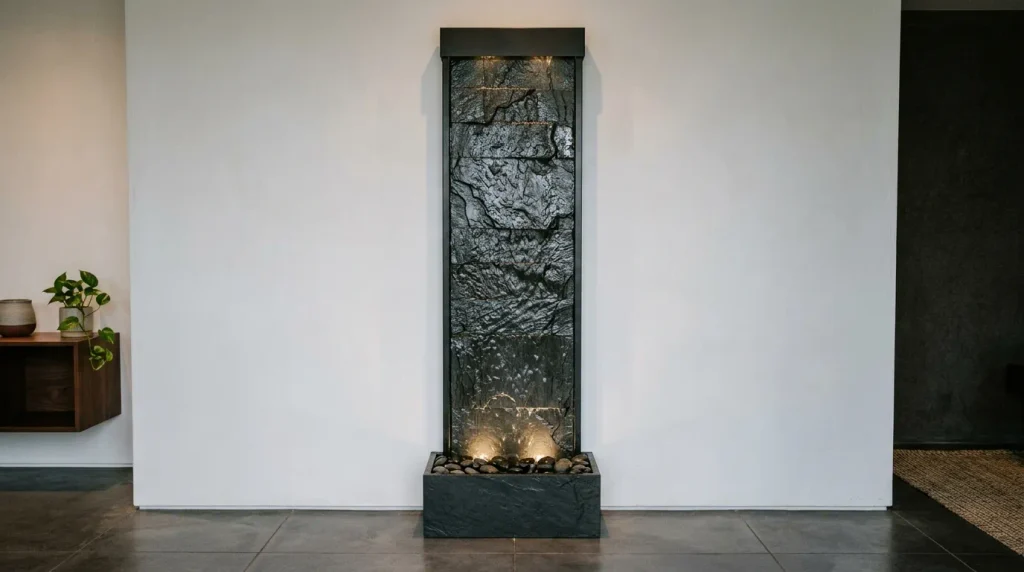
A vertical wall water feature solves one of the biggest challenges with indoor ponds, which is limited floor space, by moving the entire feature onto a wall instead. Water flows gently down textured stone or slate panels into a small collection basin, creating both a visual and audible calming effect. I’ve tried this in a narrow hallway that had no room for a traditional pond, and it worked perfectly without disrupting the walkway at all. Many versions come as slim, mountable panels that simplify installation significantly compared to floor-based options.
This idea stands out because it brings the benefits of moving water, sound, movement, and humidity, into spaces that would otherwise never accommodate a pond. I’ve noticed that the sound alone tends to mask outside noise, making it especially useful in offices or apartments near busy streets. That’s why many designers recommend vertical features for smaller homes where every square foot of floor space matters. It also draws the eye upward, making rooms feel taller. By the end, the space feels calm, modern, and acoustically soothing.
7: Sunlit Atrium Pond
- Uses natural skylight or glass ceiling for plant and fish health
- Creates a bright, greenhouse-like feel within the home
- Works best in homes with existing atrium or skylight structures
- Combines aquatic and tropical plants for a lush layered look
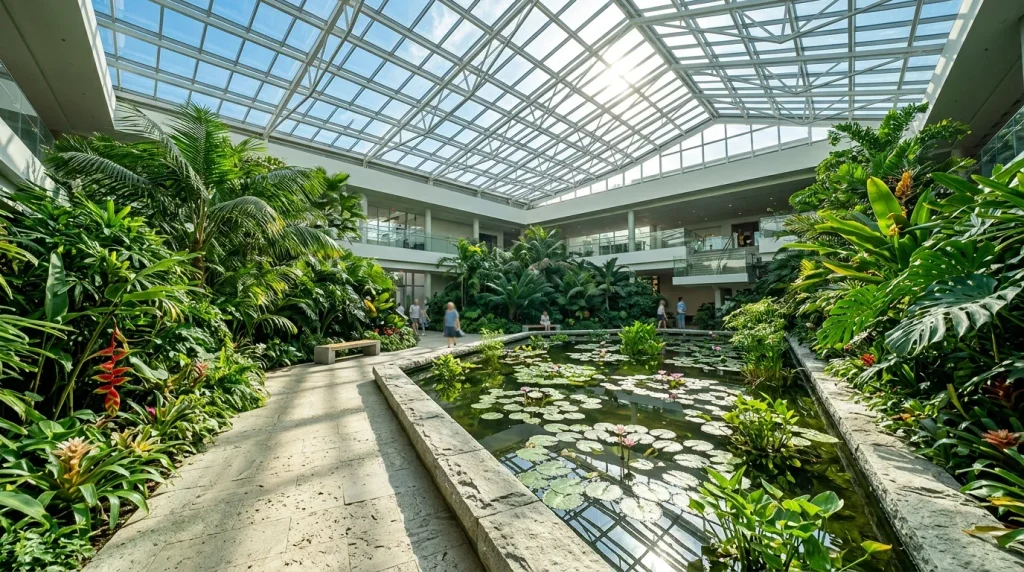
An atrium pond takes full advantage of natural skylight to create a bright, almost greenhouse-like feel that supports both aquatic and tropical plant life. This idea works best in homes that already have a skylight or glass ceiling section, since that natural light does most of the work in keeping the space thriving. I’ve seen this work well in homes where the atrium was previously an underused, awkward space. The sunlight brings out color in the water and surrounding plants that artificial lighting simply can’t replicate. It becomes one of the brightest, most alive corners of the entire home.
Among indoor pond ideas, this one relies most heavily on existing architecture, which makes it less common but especially striking when it works. I’ve noticed that atrium ponds tend to become the most photographed space in a home, since the natural light and greenery combination photographs beautifully at almost any time of day. That’s why many designers treat atriums as a priority feature rather than an afterthought. Layering tropical plants around the pond edge adds fullness. By the end, the space feels bright, lush, and genuinely oasis-like.
8: Rock Waterfall Pond
- Adds gentle cascading movement for a naturalistic feel
- Combines stacked stones with a small submerged pump system
- Creates soothing sound similar to a nature retreat
- Works well as a statement feature in larger open rooms
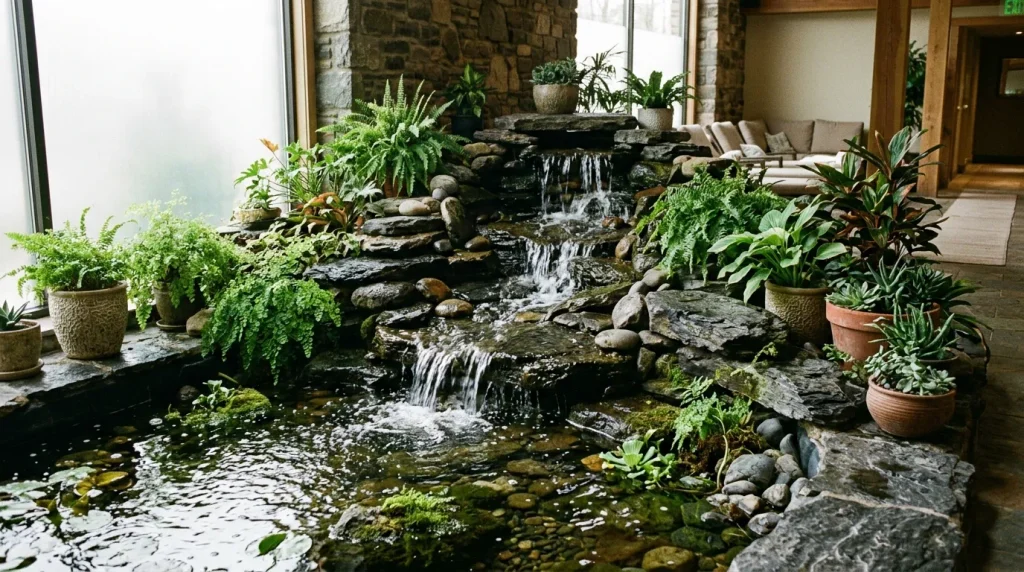
A rock waterfall pond brings the soothing sound of cascading water indoors by stacking natural stones and running a small submerged pump behind them. Water trickles down the formation into a lower pool, creating movement and sound that feels closer to a nature retreat than a typical home feature. I’ve tried smaller versions of this in a living room corner, and the sound alone made the space feel noticeably calmer within minutes of turning it on. Surrounding the base with ferns or leafy plants softens the stone and ties the whole feature together naturally.
This idea works particularly well for people who want the sensory experience of moving water without needing fish or heavy maintenance. I’ve noticed that the sound of the waterfall tends to have the biggest impact, often more than the visual itself, especially for relaxation or focus. That’s why many designers recommend this style specifically for meditation rooms or quiet reading corners. The stacked stone design also adds textural interest even when the pump is turned off. By the end, the room feels grounded, calm, and spa-like.
9: Minimalist Black Pond Basin
- Creates a sleek, modern contrast against lighter interiors
- Dark basin makes reflections and lily pads stand out clearly
- Works well in contemporary or minimalist styled homes
- Simple shape keeps the feature from feeling busy or cluttered
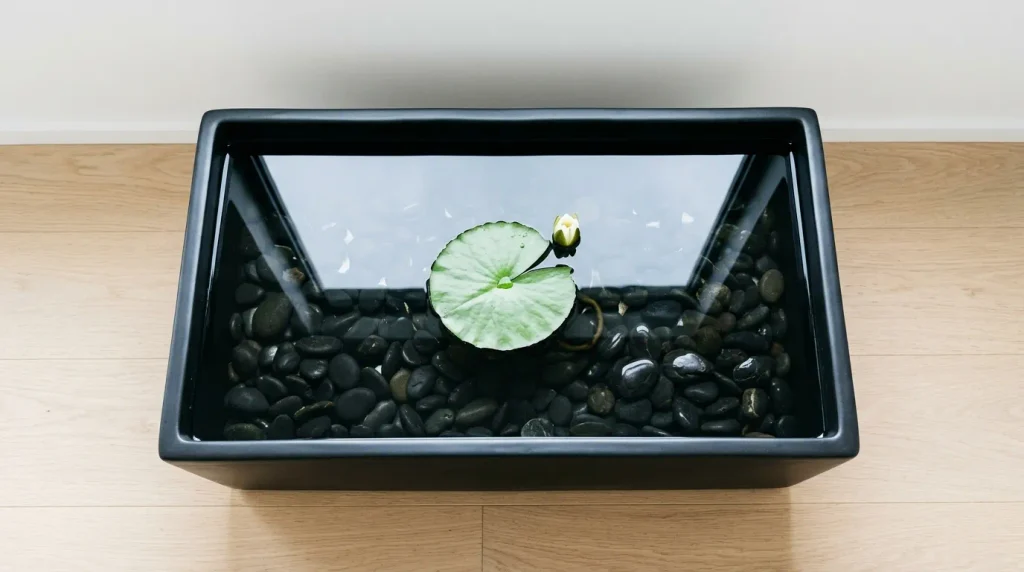
A minimalist black pond basin uses color contrast to make a strong visual statement without needing any elaborate styling around it. The dark surface makes the water’s reflection more pronounced, and even a single floating lily pad stands out clearly against the deep tone. I’ve tried this in a bright, all-white room, and the contrast alone made the pond feel like an intentional design choice rather than an accessory. It works particularly well in modern or minimalist homes where clean lines and simplicity are already part of the aesthetic.
What makes this idea effective is its restraint, since it proves that indoor pond ideas don’t need to be elaborate or plant-heavy to feel impactful. I’ve noticed that simple, dark basins photograph exceptionally well because the reflection creates a striking visual on its own. That’s why many designers lean toward minimal styling when working with contemporary spaces, letting the water and light do the visual work. A single stone or plant is often all it needs. By the end, the space feels sleek, calm, and quietly sophisticated.
10: Bamboo and Pond Corner
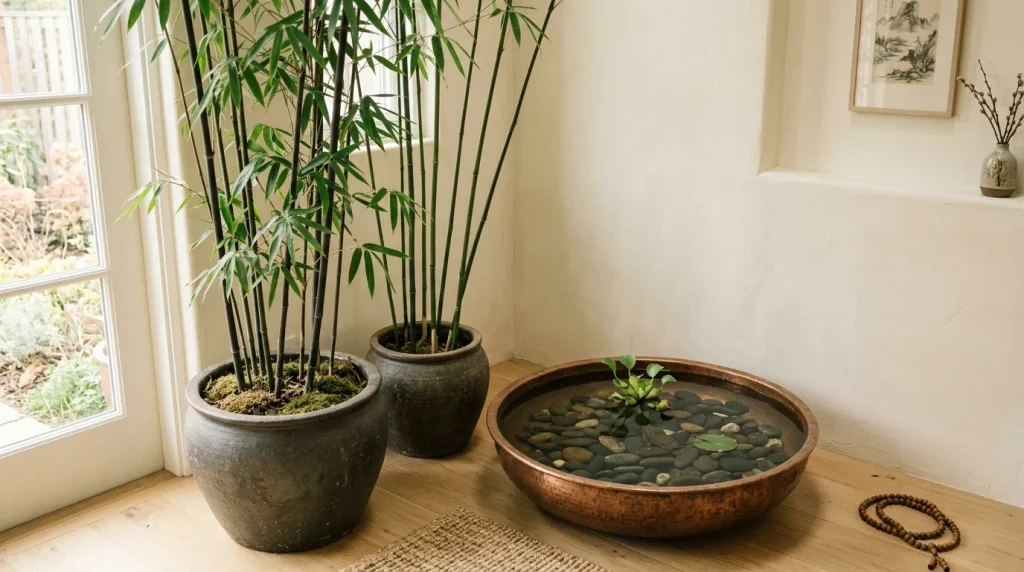
- Combines bamboo stalks with water for an Asian-inspired calm
- Adds height and vertical interest beside a low water feature
- Works well in living rooms, offices, or meditation spaces
- Easy to maintain since bamboo thrives in humid, moist settings
Pairing bamboo with a shallow pond basin creates a calm, Asian-inspired corner that balances height with the stillness of water below. The tall stalks add vertical interest that a pond alone can’t provide, while the water reflects light and softens the overall look. I’ve tried this combination in a home office corner, and it created a noticeably calmer atmosphere without taking up much floor space. Bamboo also thrives in the humid conditions near water, which makes maintenance easier than pairing a pond with plants that need drier soil.
This idea works well because it layers two calming elements, height and stillness, into one cohesive corner setup. I’ve noticed that bamboo’s natural movement in airflow adds subtle motion to a space that would otherwise feel completely static. That’s why many designers pair tall greenery with low water features, since the contrast in height creates visual balance. It also suits meditation or yoga spaces particularly well. By the end, the corner feels serene, grounded, and quietly complete.
11: Glass-Bottom Pond Feature
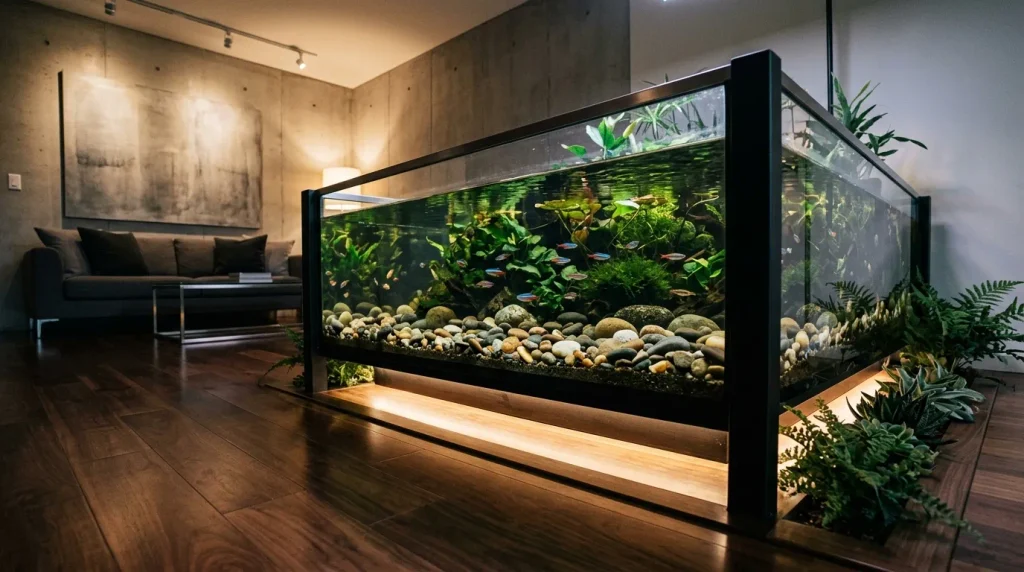
- Allows light to pass through and illuminate the water from below
- Creates a striking modern effect, especially with underlighting
- Works best as a raised or elevated pond structure
- Adds a unique visual element rarely seen in typical home decor
A glass-bottom pond feature adds a genuinely unique visual element by allowing light to pass through and illuminate the water from underneath rather than just from above. This works best as a raised structure, since the glass base needs open space beneath it for lighting or viewing. I’ve seen this work well in modern homes where the pond doubles as both a water feature and a lighting fixture after dark. It’s less common than other indoor pond ideas on this list, which makes it feel especially distinctive to guests seeing it for the first time.
What makes this idea stand out is the way it transforms at night, going from a simple water feature during the day to a glowing centerpiece once the underlighting turns on. I’ve noticed that this kind of feature tends to become the focal point of an entire room, often more so than furniture or artwork. That’s why many designers treat it as a signature piece rather than a supporting element. Fish or plants above the glass add extra movement and color. By the end, the room feels modern, striking, and genuinely one of a kind.
12: Meditation Room Pond
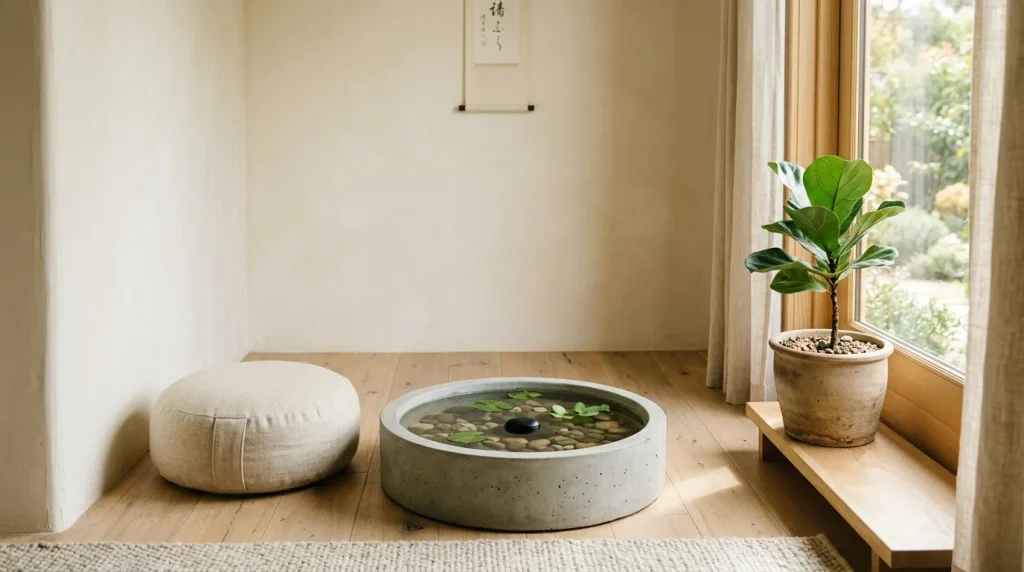
- Designed specifically to support stillness and quiet reflection
- Combines soft water sound with minimal, calming decor
- Works well in dedicated yoga or meditation spaces
- Simple design keeps the focus on relaxation rather than visuals
A meditation room pond is designed with a very specific purpose in mind, supporting stillness rather than serving as a visual centerpiece for guests. A low, simple basin with gently moving water placed near a floor cushion or seating area gives the room a focal point for breathing exercises or quiet reflection. I’ve tried sitting beside a small pond like this during meditation, and the sound of water made it noticeably easier to stay present and focused. The design intentionally stays minimal, since the goal here is calm, not visual complexity.
This idea works because it treats the pond as a functional tool for relaxation rather than pure decoration, which is a different approach among indoor pond ideas. I’ve noticed that even a very small amount of moving water can meaningfully change the acoustic feel of a quiet room. That’s why many designers recommend keeping meditation spaces sparse, letting the water sound be the primary sensory element. A single plant is often enough to complete the space. By the end, the room feels calm, focused, and genuinely restorative.
13: Lily Pad Floating Garden
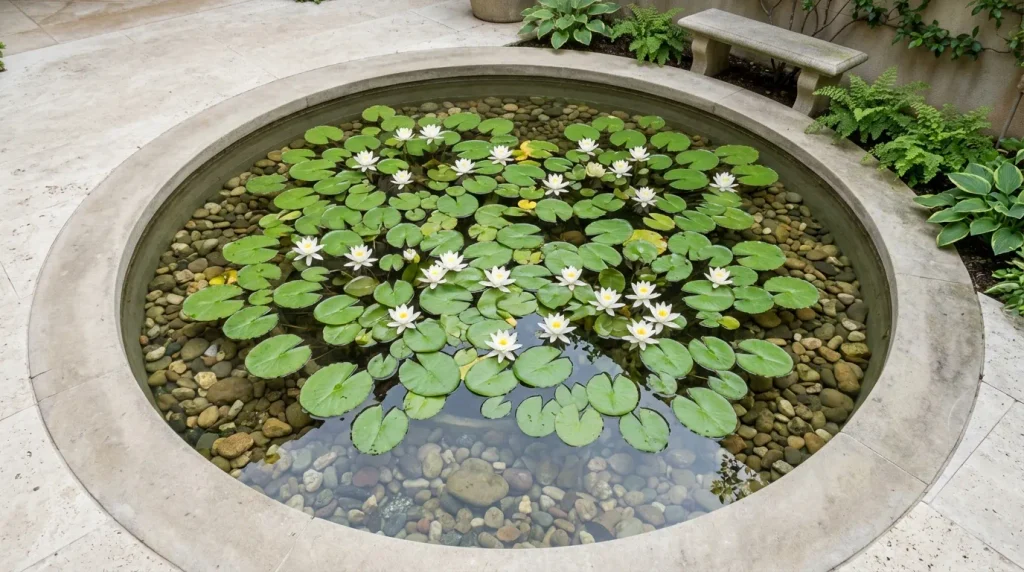
- Creates a soft, natural look with minimal upkeep required
- Floating plants filter water naturally while adding visual texture
- Works well in still or slow-moving pond setups
- Simple way to add greenery without rooted planting beds
A lily pad floating garden adds natural texture to still water without requiring any rooted planting beds or complex setup. Simply place a few floating lily pads or small water lilies directly into the pond, and they’ll spread naturally across the surface over time. I’ve tried this in a basin that initially felt too plain and empty, and the floating plants filled it out beautifully within just a few weeks. They also help filter the water naturally, reducing algae buildup without needing extra equipment. It’s one of the lowest-maintenance ways to add life to a pond.
What makes this idea appealing is how much visual softness it adds compared to bare, open water. I’ve noticed that floating plants make even a small pond feel more established and mature, rather than freshly set up. That’s why many designers recommend starting with a few lily pads before adding fish or additional features, since the plants create a healthier base environment first. The pads also provide shade for fish if added later. By the end, the pond feels lush, balanced, and naturally alive.
14: Stone Path Pond Walkway
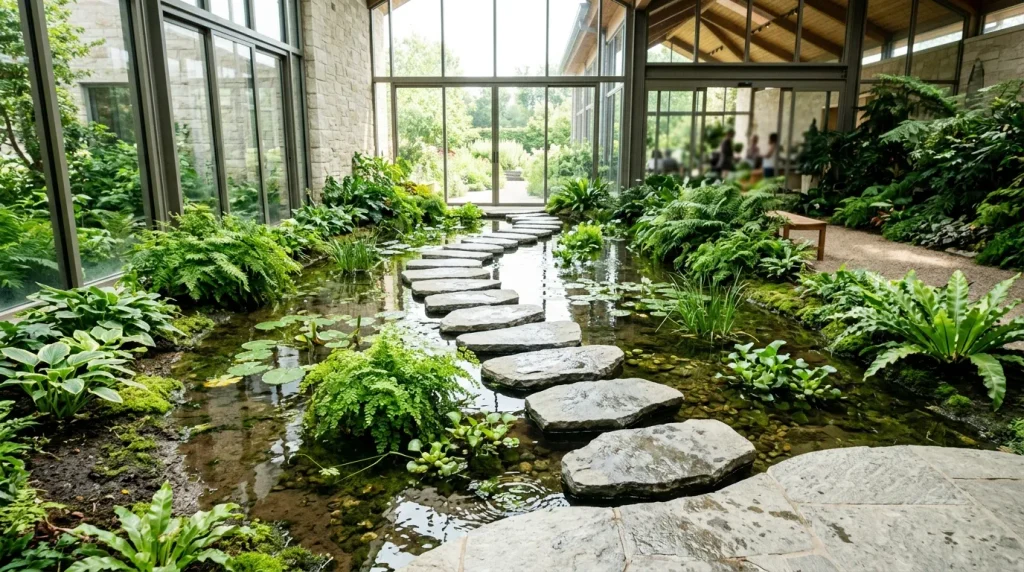
- Adds an interactive element by letting you walk near or over water
- Combines flat stepping stones with a shallow surrounding pond
- Works well in larger sunrooms or converted indoor spaces
- Creates a striking sense of immersion within the home
A stone path pond walkway turns a water feature into something interactive rather than purely visual, letting people walk directly across or beside the water using flat stepping stones. This works best in larger sunrooms or converted spaces where there’s enough room for both the pond and a walking path. I’ve seen this work well in homes that wanted their pond to feel like part of the daily experience rather than something only viewed from a distance. Ferns and small aquatic plants along the edges soften the stone and tie the whole path into the water naturally.
This idea stands out among indoor pond ideas because it creates genuine immersion, making the water feel like part of the home’s layout rather than a separate feature. I’ve noticed that walking near or across water tends to have a stronger calming effect than simply viewing it from a couch. That’s why many designers treat this as a signature design element for larger open spaces. The stepping stones also add a playful, tactile quality to the room. By the end, the space feels immersive, calming, and genuinely memorable.
15: Terrarium-Style Mini Pond
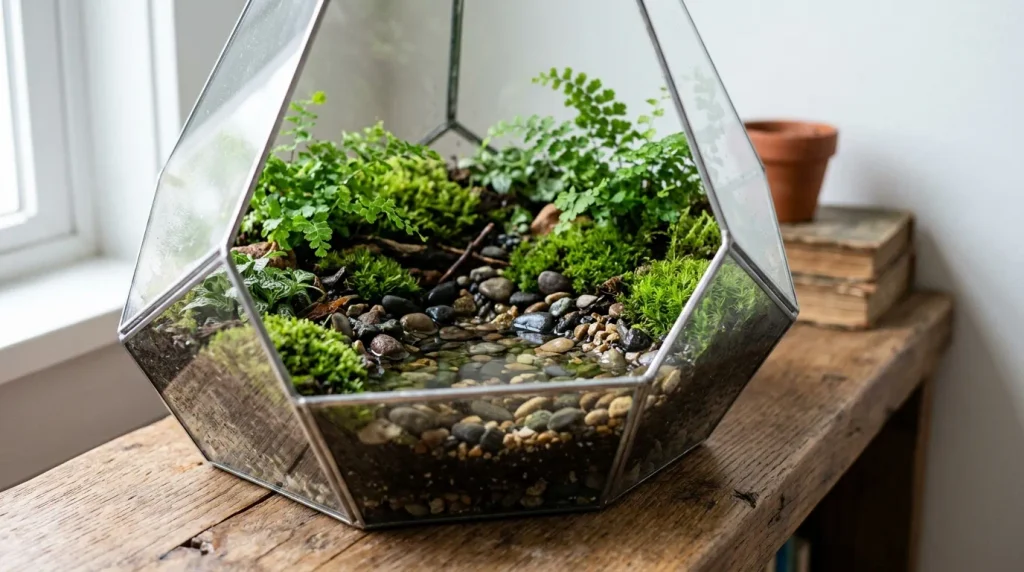
- Combines a glass enclosure with a tiny built-in water feature
- Creates a self-contained, low-maintenance miniature ecosystem
- Works well as a decorative piece for shelves or side tables
- Easy to customize with moss, small plants, and tiny stones
A terrarium-style mini pond combines the enclosed, self-sustaining nature of a terrarium with a tiny built-in water feature, creating a miniature ecosystem that requires very little upkeep. Moss, small ferns, and pebbles surround a small pool of water inside a glass enclosure, which retains humidity and keeps the plants thriving with minimal watering. I’ve tried building one of these on a shelf that previously held plain decorative objects, and it became one of the most interesting details in the room. It’s compact enough to fit almost anywhere with a bit of natural light.
Among indoor pond ideas, this one is by far the most low-commitment, making it ideal for people who want the look of a pond without dedicating floor space or ongoing maintenance to it. I’ve noticed that terrariums like this tend to fascinate guests simply because of their miniature scale and detail. That’s why many designers suggest starting here for anyone hesitant about a full-sized indoor pond. It also makes a thoughtful, unique gift. By the end, the shelf feels lush, detailed, and quietly captivating.
16: Japanese Garden Pond Room
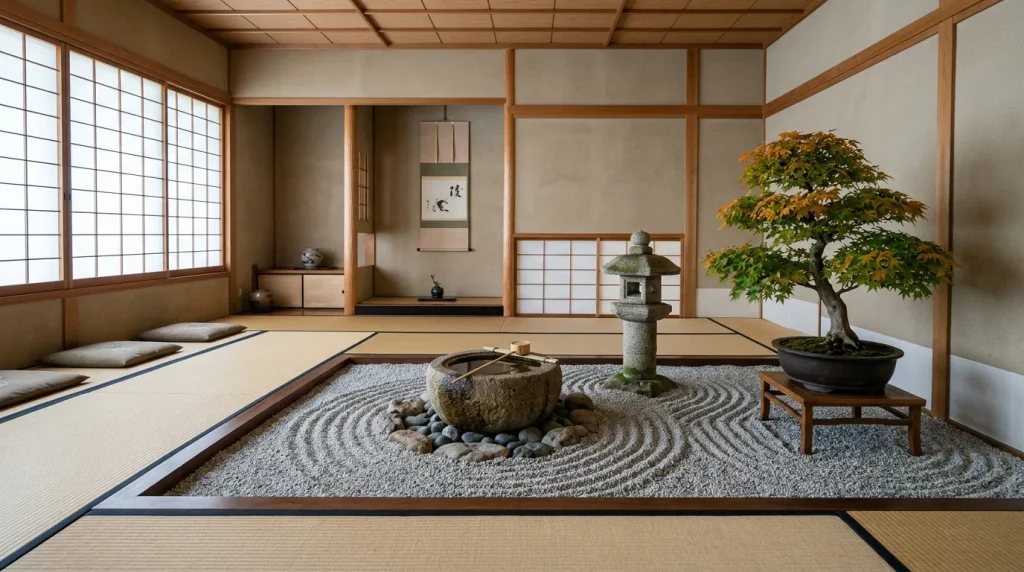
- Recreates a traditional zen garden feel within an indoor space
- Combines raked gravel, stone lanterns, and a still water basin
- Works well as a dedicated peaceful retreat room
- Focuses on simplicity and intentional placement over abundance
A Japanese garden pond room recreates the quiet intentionality of a traditional zen garden by combining still water with raked gravel, stone elements, and carefully chosen plants like bonsai. Every element here is placed with purpose rather than density, since the goal is calm simplicity rather than visual abundance. I’ve seen this work well in a converted spare room that previously had no clear function. Even a small stone lantern beside the pond adds authenticity without overcrowding the space. The stillness of the water is just as important as the water itself in this style.
This idea stands out among indoor pond ideas because it treats the entire room as one cohesive, meditative environment rather than a single feature within a larger space. I’ve noticed that the restraint in styling, fewer elements, more intentional placement, is what actually makes this approach feel authentic rather than themed. That’s why many designers recommend researching traditional zen garden principles before attempting this look. Raked gravel patterns add subtle texture nearby. By the end, the room feels tranquil, intentional, and genuinely restorative.
17: Underlit Nighttime Pond
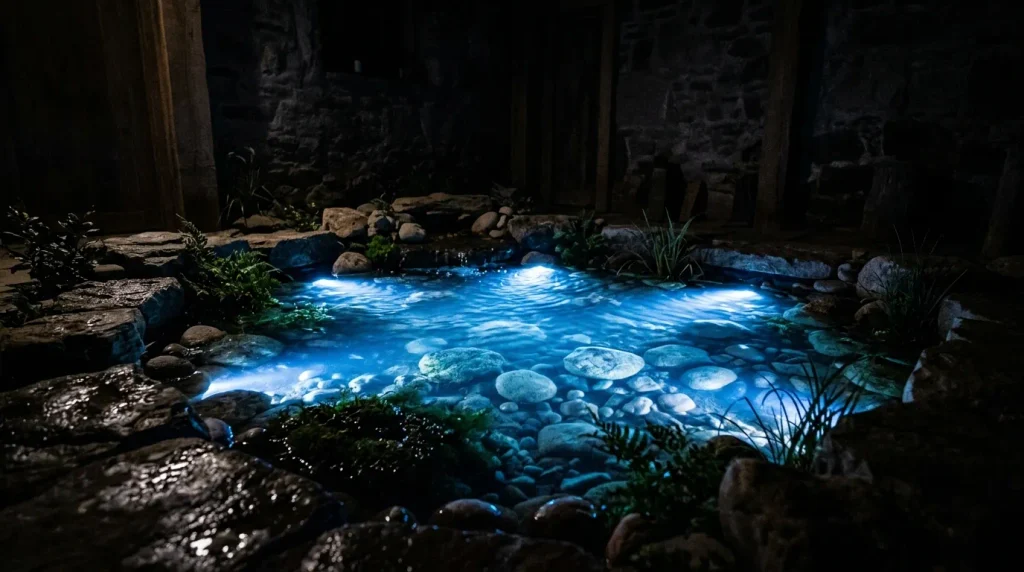
- Uses submerged LED lighting for a glowing evening effect
- Transforms a simple daytime pond into a striking nighttime feature
- Works well in living rooms or entertaining spaces
- Color-changing options allow for adjustable mood lighting
An underlit nighttime pond uses submerged LED lighting to completely transform how a water feature looks after the sun goes down. During the day it might read as a simple, understated pond, but once the lights turn on, it becomes a glowing centerpiece that changes the entire mood of the room. I’ve tried color-changing LED options specifically, and switching between soft blue and warm white completely shifted the atmosphere depending on the occasion. This works especially well in spaces used for entertaining, since guests are almost always drawn to the glow.
What makes this idea effective is the dual personality it gives a single feature, functioning one way during daylight and an entirely different way at night. I’ve noticed that lighting tends to be an afterthought in most pond setups, yet it can be the single biggest factor in how memorable the feature actually feels. That’s why many designers recommend underlighting as a worthwhile upgrade even for existing ponds. Adjustable colors also let you match the mood to different occasions. By the end, the room feels dramatic, glowing, and genuinely striking after dark.
18: Small Space Balcony-Style Pond
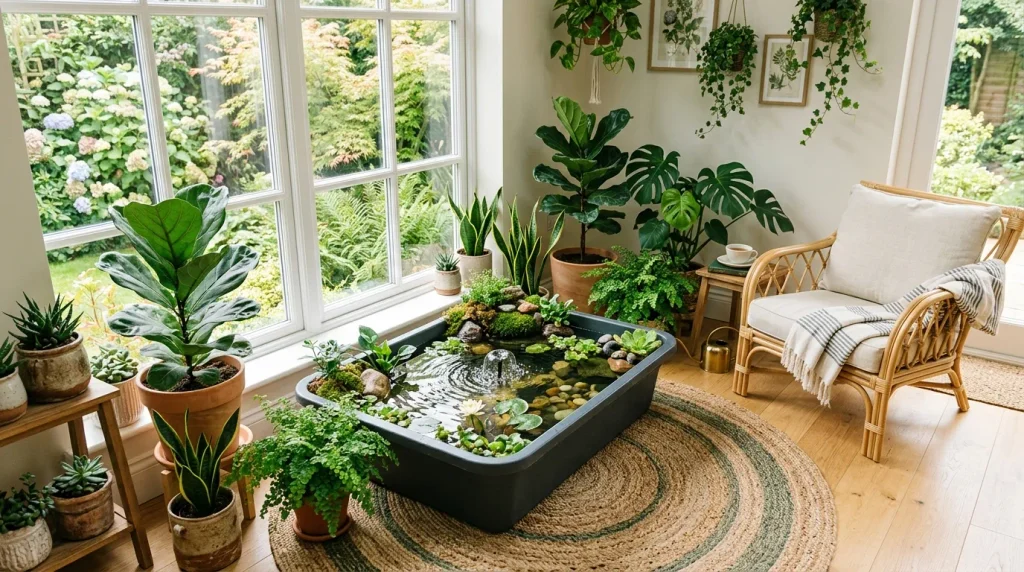
- Adapts outdoor balcony pond concepts for indoor sunrooms
- Works well near large windows with strong natural light
- Combines compact design with lush surrounding plant life
- Ideal for apartments craving an outdoor garden feel indoors
A small space balcony-style pond borrows design cues from outdoor balcony gardens and adapts them for an indoor sunroom or window-adjacent nook. A compact basin surrounded by potted tropical plants and a woven, outdoor-inspired rug creates the feel of a garden retreat without ever stepping outside. I’ve tried this setup near a large south-facing window, and the strong natural light made the plants thrive just as well as they would outdoors. It’s especially useful for apartment dwellers who want a garden feel but don’t have access to outdoor space.
This idea works particularly well because it borrows familiar outdoor design language and translates it convincingly into an indoor context. I’ve noticed that people often respond to this setup with genuine surprise, since it doesn’t feel like a typical indoor pond arrangement. That’s why many designers recommend leaning into outdoor textures, like rattan, woven rugs, or terracotta, when creating this specific look. Strong natural light is essential for the plants to thrive here. By the end, the space feels airy, lush, and quietly transporting.
19: Aquatic Plant Sanctuary Pond
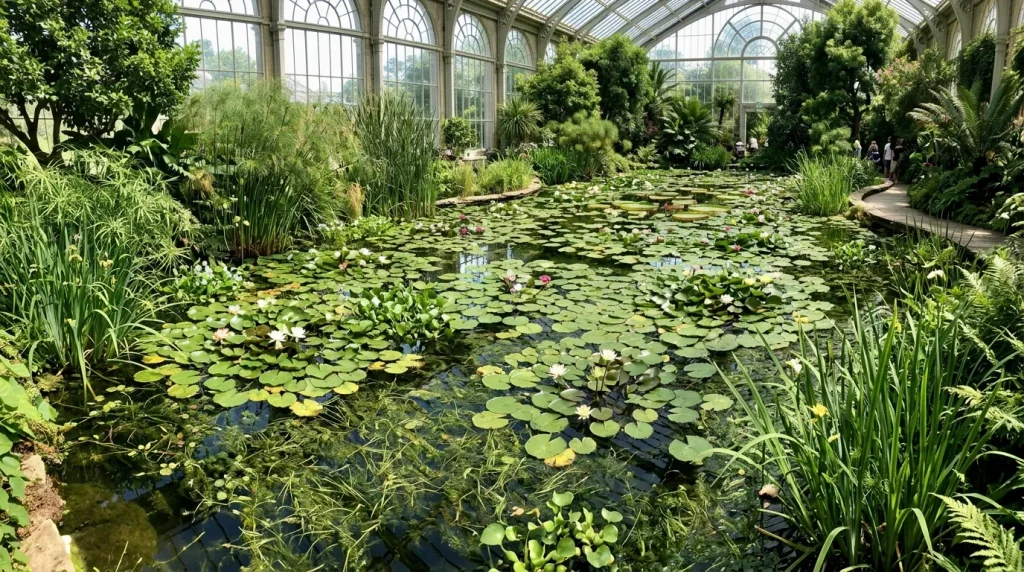
- Focuses heavily on plant variety rather than fish or stone features
- Creates a dense, jungle-like feel within a contained water space
- Works well for plant enthusiasts wanting an aquatic focus
- Combines floating, submerged, and marginal plants for layered depth
An aquatic plant sanctuary pond shifts the focus away from fish or decorative stone and puts plant variety at the center of the entire feature. Combining floating plants, submerged grasses, and taller marginal plants along the edges creates a dense, layered look that feels closer to a jungle pocket than a typical decorative pond. I’ve tried building one of these with a mix of just three or four plant types, and the growth alone filled the space beautifully within a couple of months. It requires patience, since plants take time to establish and spread.
Among indoor pond ideas, this one appeals most to people who genuinely enjoy gardening and want their pond to feel like a living, evolving project rather than a static feature. I’ve noticed that plant-focused ponds tend to look different every few months as growth patterns shift, which keeps the space feeling fresh without any added effort. That’s why many designers suggest this approach for hands-on plant lovers specifically. Fish can always be added later once plants establish. By the end, the pond feels lush, evolving, and genuinely alive.
20: Hallway Transition Pond
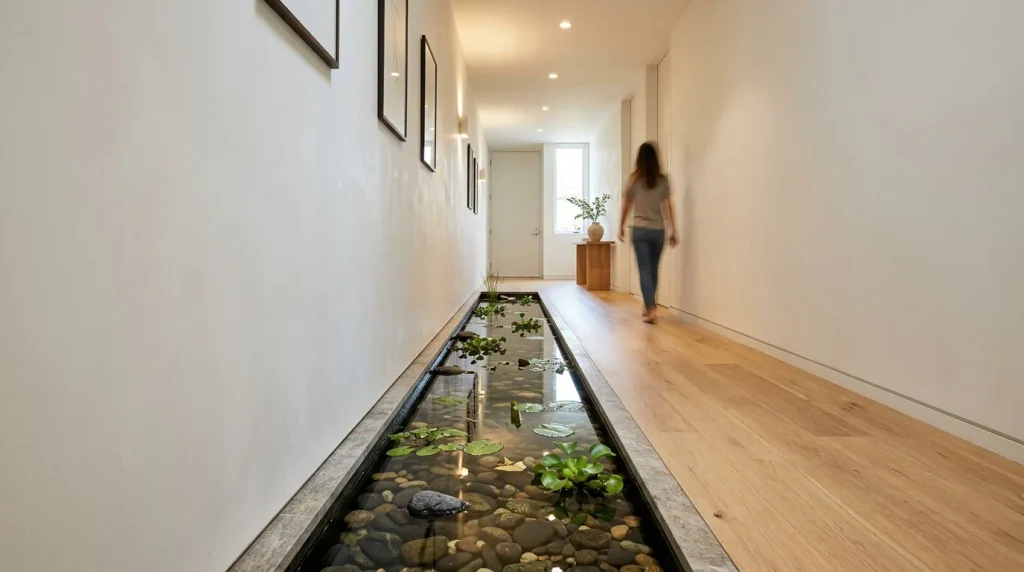
- Fills a narrow, often-overlooked passage with a calming feature
- Uses a slim, elongated basin to fit tight wall space
- Creates a peaceful moment between two rooms or floors
- Works well with soft lighting to highlight the water below
A hallway transition pond takes an often-ignored narrow passage and turns it into a small, calming pause point between two rooms. A slim, elongated basin fits neatly along one side of the hallway without obstructing movement, while still offering the visual and acoustic benefits of moving water. I’ve seen this work well in longer hallways that previously felt purely functional, with nothing to look at while walking through. Soft lighting placed above or beside the pond highlights the water below, especially in hallways that don’t receive much natural daylight.
This idea stands out because it treats transitional spaces, the parts of a home people usually just walk through, as worthy of the same care as main living areas. I’ve noticed that even a narrow water feature can shift how a hallway feels, turning a rushed walkway into a small daily moment of calm. That’s why many designers encourage clients to look at overlooked spaces first when planning water features. It also uses square footage that would otherwise sit empty. By the end, the hallway feels intentional, calm, and quietly elevated.
21: Reflective Ceiling Pond Design
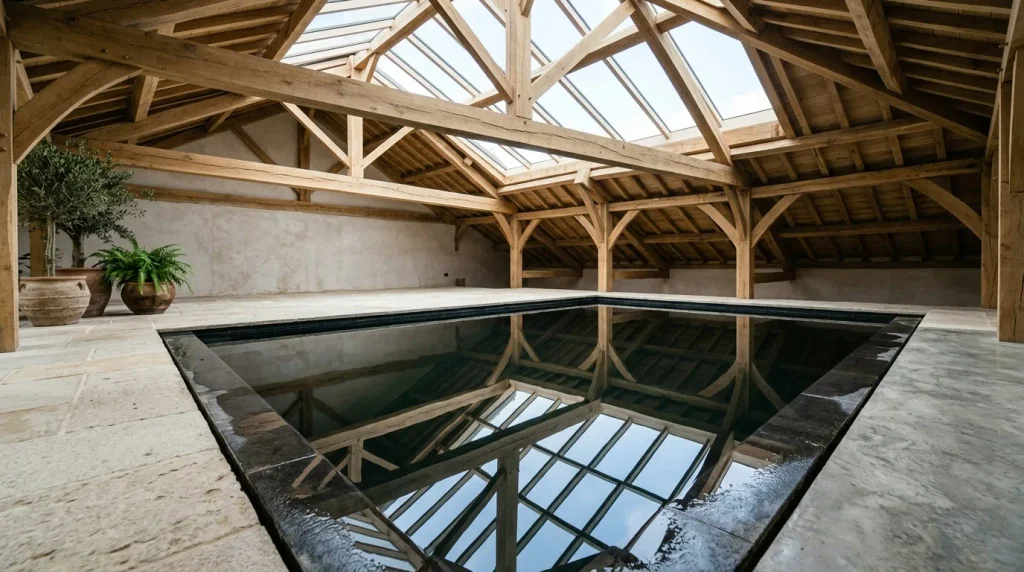
- Positions the pond to mirror architectural details above it
- Creates a striking visual doubling effect in still water
- Works best under skylights, exposed beams, or unique ceilings
- Simple styling keeps focus on the reflection itself
A reflective ceiling pond design is built specifically around what’s above it, using still water to mirror architectural details like exposed beams, skylights, or unique ceiling shapes. This only works with genuinely still water, since any ripple or movement breaks the reflection and the effect disappears. I’ve tried positioning a shallow pond beneath a beamed ceiling specifically to capture this mirroring effect, and the result looked far more dramatic than the pond alone would have. It requires very little additional styling, since the reflection itself becomes the main visual feature.
What makes this idea unique among indoor pond ideas is that it essentially doubles the visual interest of a room without adding anything physical beyond the water itself. I’ve noticed that people are often surprised the first time they notice the reflection, since it’s not immediately obvious until the light hits correctly. That’s why many designers recommend checking a room’s ceiling architecture first before deciding where to place a still-water feature. Bright natural light makes the reflection far more visible. By the end, the room feels artful, striking, and quietly clever in its design.
22: Freestanding Ceramic Pond Sculpture
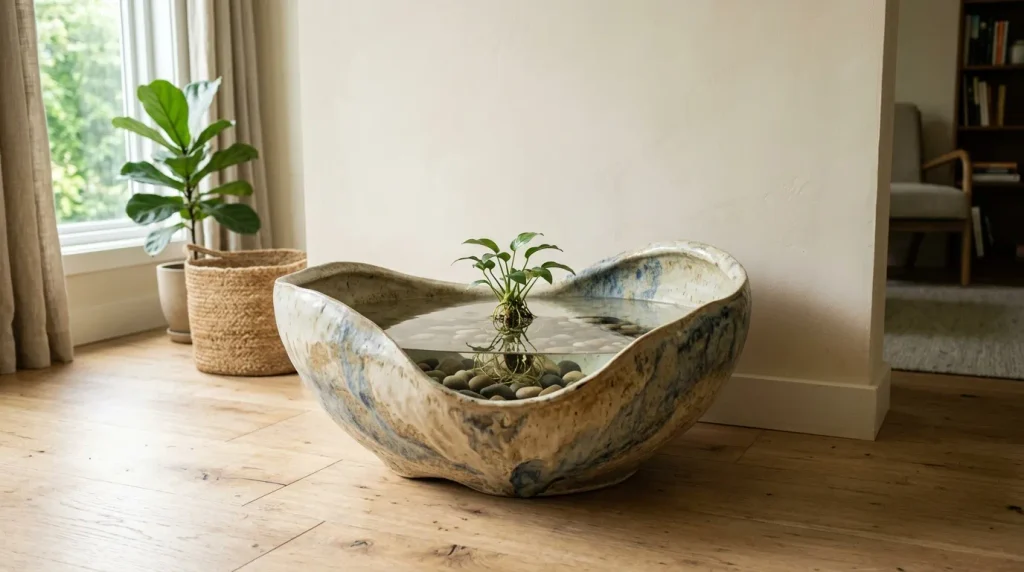
- Functions as both sculptural art and a small water feature
- Works well as a statement piece in entryways or living rooms
- Requires no built-in plumbing since it’s a standalone unit
- Available in varied shapes, sizes, and finishes to match decor
A freestanding ceramic pond sculpture works as much like art as it does a functional water feature, since the shape and finish of the basin itself becomes part of the visual appeal. Because it’s a standalone unit, there’s no plumbing or built-in installation required, which makes it one of the more flexible indoor pond ideas for renters or anyone hesitant about permanent changes. I’ve tried placing one of these in an entryway that felt too plain before, and the sculptural shape alone gave the space personality, even before adding any water or plants.
This idea works particularly well for people who want a water feature that also functions as a genuine decorative object in its own right. I’ve noticed that organic, curved shapes tend to feel more artistic than perfectly geometric basins, giving the piece a handmade, intentional quality. That’s why many designers treat freestanding basins as furniture pieces rather than simple accessories. A single small plant is often enough to complete the look. By the end, the space feels artistic, calm, and effortlessly styled.
23: Seasonal Rotating Pond Display
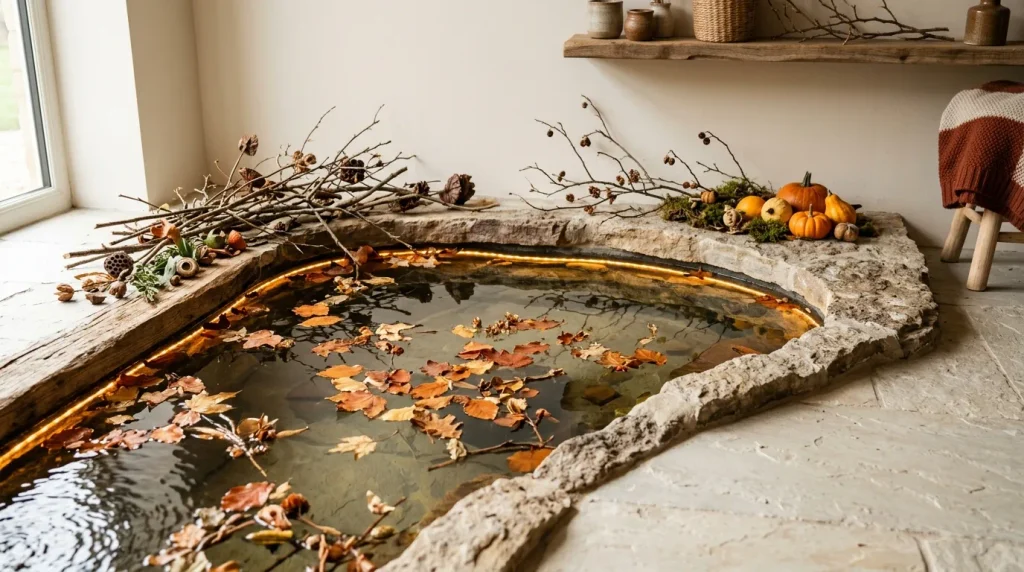
- Changes plants, lighting, or decor elements throughout the year
- Keeps a single pond feature feeling fresh and current
- Works well for anyone who enjoys seasonal home styling
- Simple swaps make a big visual difference without new equipment
A seasonal rotating pond display takes a single, permanent water feature and refreshes it throughout the year with small styling changes rather than treating it as a fixed, unchanging element. Floating leaves and warm lighting in autumn, fresh blossoms in spring, or subtle lighting shifts in winter keep the same pond feeling relevant no matter the season. I’ve tried rotating small decorative elements around a basin every few months, and it kept the feature from ever feeling stale or overlooked, the way static decor sometimes does over time.
This idea works well because it maximizes the value of a single pond investment by treating it as a flexible canvas rather than a one-time setup. I’ve noticed that seasonal swaps require very little cost or effort compared to the visual difference they make, since lighting and small props do most of the work. That’s why many designers recommend building ponds with neutral bases specifically so they adapt easily to seasonal styling later. It keeps the feature feeling intentional year-round. By the end, the pond feels current, cared for, and consistently worth noticing.
Conclusion
Bringing water indoors doesn’t require a major renovation or a huge budget to feel meaningful. As these 23 indoor pond ideas show, even a small basin with a floating plant can shift the entire mood of a room. I’ve seen this play out again and again: the most peaceful homes are often the ones with the simplest, most intentional touches. Whether you start with a tabletop zen pond or work toward a full sunken feature over time, the goal remains the same, creating a space that feels calm, grounded, and genuinely restorative. Pin your favorite ideas, save this list for later, and take the first step toward your own peaceful home oasis.