21 Pantry Organization Ideas for Small Kitchens That Actually Work
I know the feeling of opening the pantry and finding the same three things at the front while everything I actually need hides at the back. The pasta I bought twice, the spice I know I own somewhere, the tin that expired two years ago because it slid behind the cereal. A small pantry is not the problem. A small pantry with no system is the problem, and that is a much easier thing to fix. I have reorganized my own shelves more times than I can count, and the versions that lasted were the ones where everything had a place I could reach without moving five other things first.

Photo: Deevaya Home (@deevayahome) on Instagram
These pantry organization ideas for small kitchens are built for real pantries: one cabinet, one closet, one wall of shelves, or a door with a rack on it. No walk-in required, no matching containers bought in bulk before you know what goes where. The method is simple: zone the deep shelves first, then use the door and the awkward gaps, then lay out the small space so it works every day, and finish with labels and bins that keep it that way. If the rest of your kitchen needs the same treatment, these home organization ideas are a good place to start the whole reset.
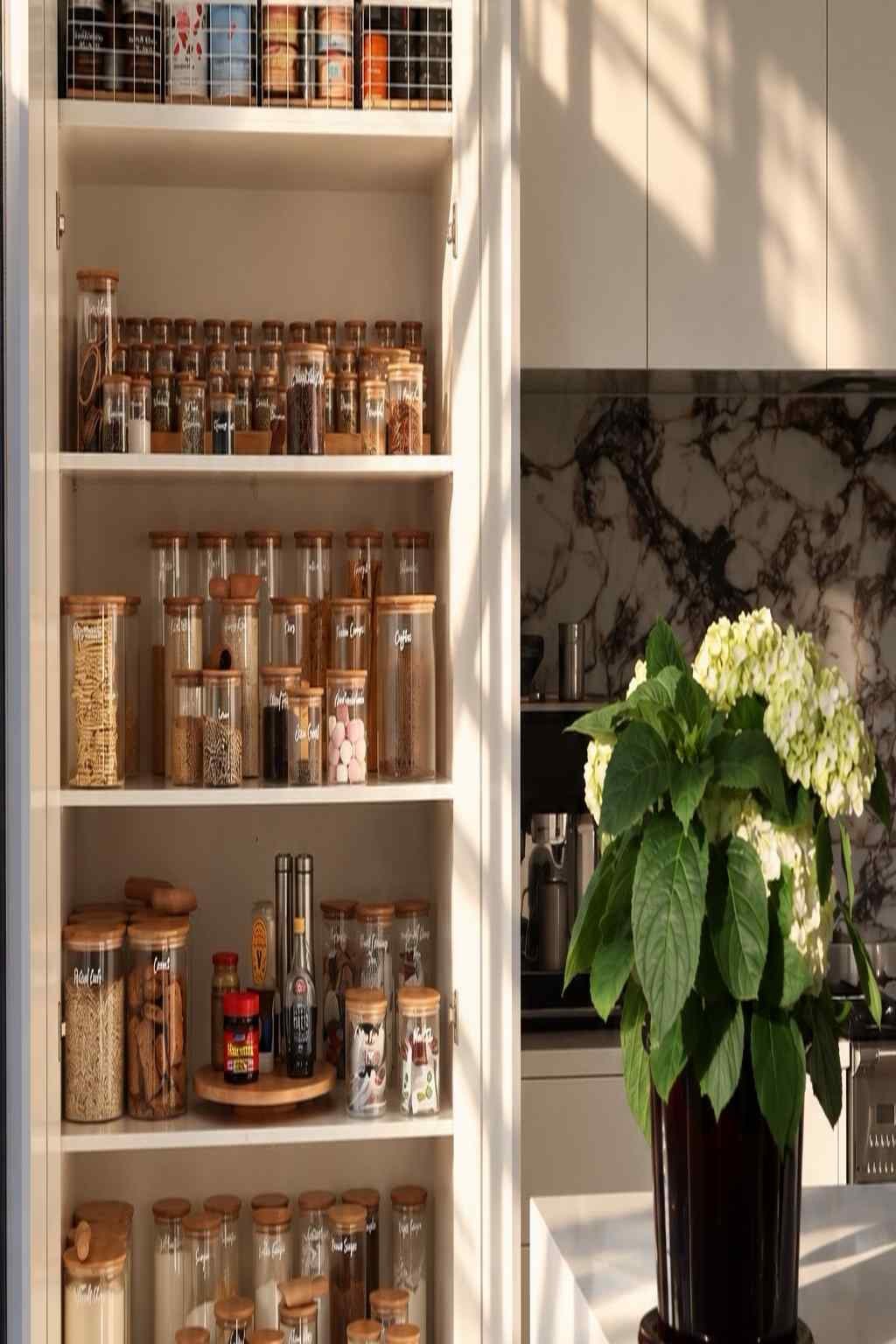
Photo: Simone Anderson (@simone_anderson) on Instagram
How Do You Organize Deep Shelves So Nothing Gets Lost?
Deep shelves are the number one complaint in a small pantry, because the back half of every shelf becomes a place where food goes to be forgotten. The fix is not shallower shelves. It is giving every shelf a job and putting everything in something that slides out, so the back of the shelf is as easy to reach as the front.
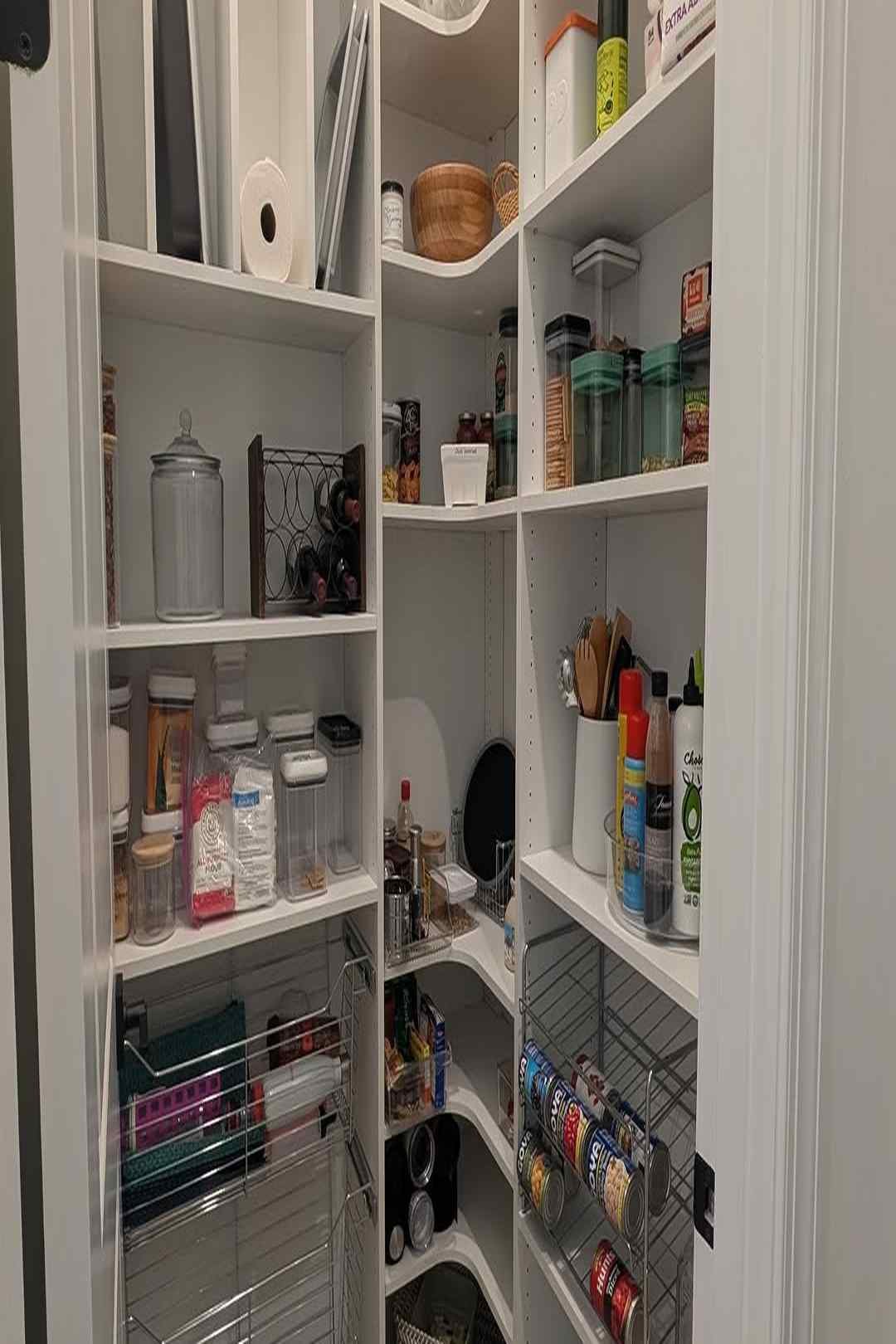
Photo: Catalina Galaz Della-Porta (@catalina.dellaporta) on Instagram
1. Zone Every Shelf by How Often You Cook With It
Best For: small pantries where everything ends up mixed together and the things you use daily hide behind the things you use twice a year. Zoning by frequency matches the shelf to your hands instead of to a category chart. How to Create It: put everyday cooking things at eye level, weekly things one shelf up or down, and backstock and special-occasion things on the highest or lowest shelf. Breakfast things can share one shelf and baking things another, but frequency decides the height. When the everyday shelf is the easy shelf, the pantry starts working for you instead of against you.

Photo: live.life1305 (@lubnascozyvibe) on Instagram
2. Put a Pull-Out Basket on Every Deep Shelf
Best For: deep shelves where tins and packets slide to the back and disappear for months. A basket that pulls out like a drawer turns dead space into usable space. How to Create It: measure the depth and height of each shelf, then choose baskets that leave a finger’s width on each side so they slide freely. Keep one category per basket. If the whole kitchen feels like a jigsaw of stuff with no place to go, these small home declutter ideas will help you clear the shelves before you zone them.
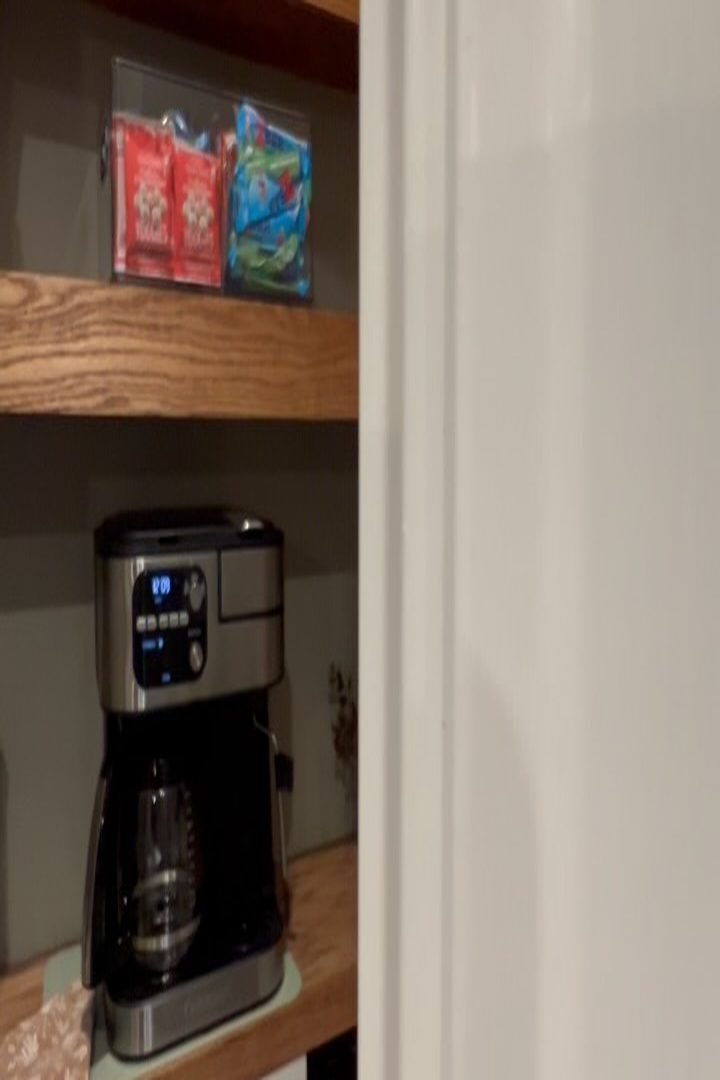
Photo: Emily Ann (@emilyann_at_home) on Instagram
3. Decant Dry Goods Into Matching Jars
Best For: open shelves and glass-front cabinets where half-empty packets make the whole pantry look messy. Matching jars let you see at a glance what is running low, and a lidded jar keeps flour, rice, and pasta fresher than a folded packet. How to Create It: decant only what you use every week, and keep the rest in its packet until it earns a jar. Choose one jar shape in two or three sizes so they stack neatly, and label each jar on the front.
Photo: Zenia Olivares (@styleitprettyhome) on Instagram
4. Give Every Category Its Own Basket
Best For: pantries where packets migrate across the shelf and categories blur into one long row of food. One basket per category is the simplest boundary there is. How to Create It: sort everything into piles on the counter first: breakfast, snacks, baking, tins, pasta and rice, sauces. Then give each pile a basket that fits the pile, not the other way around. Wicker baskets warm up a white pantry, while clear bins suit a pantry where you want to see everything at once.

Photo: Tricia Crist (@ourfrenchcountryfarm) on Instagram
5. Keep Heavy Things Low and Light Things High
Best For: small pantries where lifting a heavy pot of flour from a high shelf feels risky and the top shelf holds things you never touch. Weight decides height. How to Create It: put heavy things like flour, sugar, and big tins on the lowest shelf or the floor of the pantry, medium things at eye level, and light things like cereal boxes, paper goods, and spare containers up high. A basket on a high shelf holds light things safely; a falling bag of flour is another story.

Photo: Shade Egun (@_homeofshade) on Instagram
6. Keep a Backstock Shelf and a Running List on It
Best For: households that keep buying a third bottle of soy sauce because nobody remembers the two already at the back. A backstock shelf only works when you write down what runs out. How to Create It: choose one shelf, high or low, for spares and extras only, and keep it separate from the everyday shelves. Stick a small notepad on the inside of the pantry door, and write things down the moment they run out. The list is the system; the shelf is just where the spares live.
What If Your Pantry Is a Door, a Cabinet, or a Wall?
Most small kitchens do not have a pantry room, and that is fine. A door with a rack, a single cabinet, or one wall of open shelves holds just as much food when every inch is used on purpose. Treat the door and the gaps as storage, not leftovers, and choose one cabinet to be the pantry instead of spreading food across three.
7. Hang a Spice Rack on the Pantry Door
Best For: kitchens where spices live in a jumbled drawer or a crowded shelf and you buy duplicates because you cannot see what you own. The inside of a pantry door is wasted space in most homes, and a slim spice rack turns it into the most-used storage there. How to Create It: measure the door and the clearance when it closes, then fit a rack no deeper than the gap allows. Arrange spices alphabetically or by cuisine, and keep the ones you reach for daily at eye level.
8. Add Baskets and Hooks to the Pantry Door
Best For: narrow pantries where the shelves are full but the door is bare. Small baskets on the door hold the fiddly things that otherwise end up in a pile. How to Create It: use an over-door rack or screw small baskets directly to the door, and keep hooks at the bottom for aprons, reusable bags, and the step stool. Test the door fully loaded before you call it done.
9. Turn a Narrow Gap Into a Pull-Out Pantry
Best For: kitchens with a wasted gap between the fridge and the wall, or beside the oven, that is too narrow for a cabinet. A slim pull-out on runners fits a surprising amount of tins, bottles, and packets into six inches of space,, one of those small storage tricks that shows up in every round-up of clever kitchen trends to inspire a rethink. How to Create It: measure the gap at the top, middle, and bottom, because old walls are rarely straight, and build or buy the pull-out to the smallest measurement. Keep tall bottles on the bottom tier and short tins above.
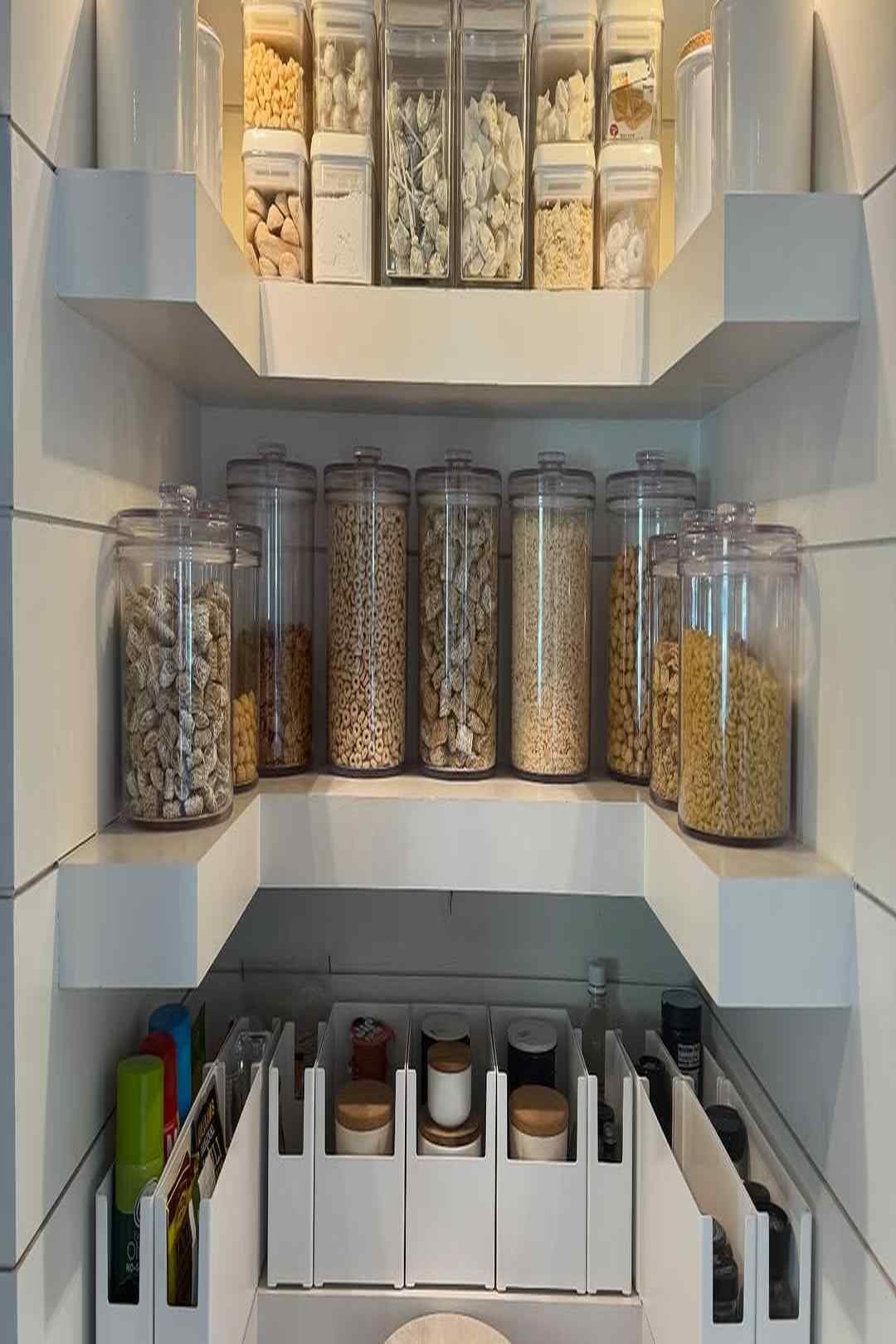
Photo: Katie Tuttle (@theclearhome) on Instagram
10. Turn One Cabinet Into the Whole Pantry
Best For: kitchens with no pantry at all, where food is scattered across three cabinets and nobody knows where anything lives. One cabinet, given the full pantry treatment, beats three half-organized ones. How to Create It: empty the cabinet completely and divide its shelves by frequency, just like a walk-in pantry: heavy and bulky at the bottom, everyday in the middle, baking above, and backstock at the top. Add small shelf risers so nothing hides behind anything else.
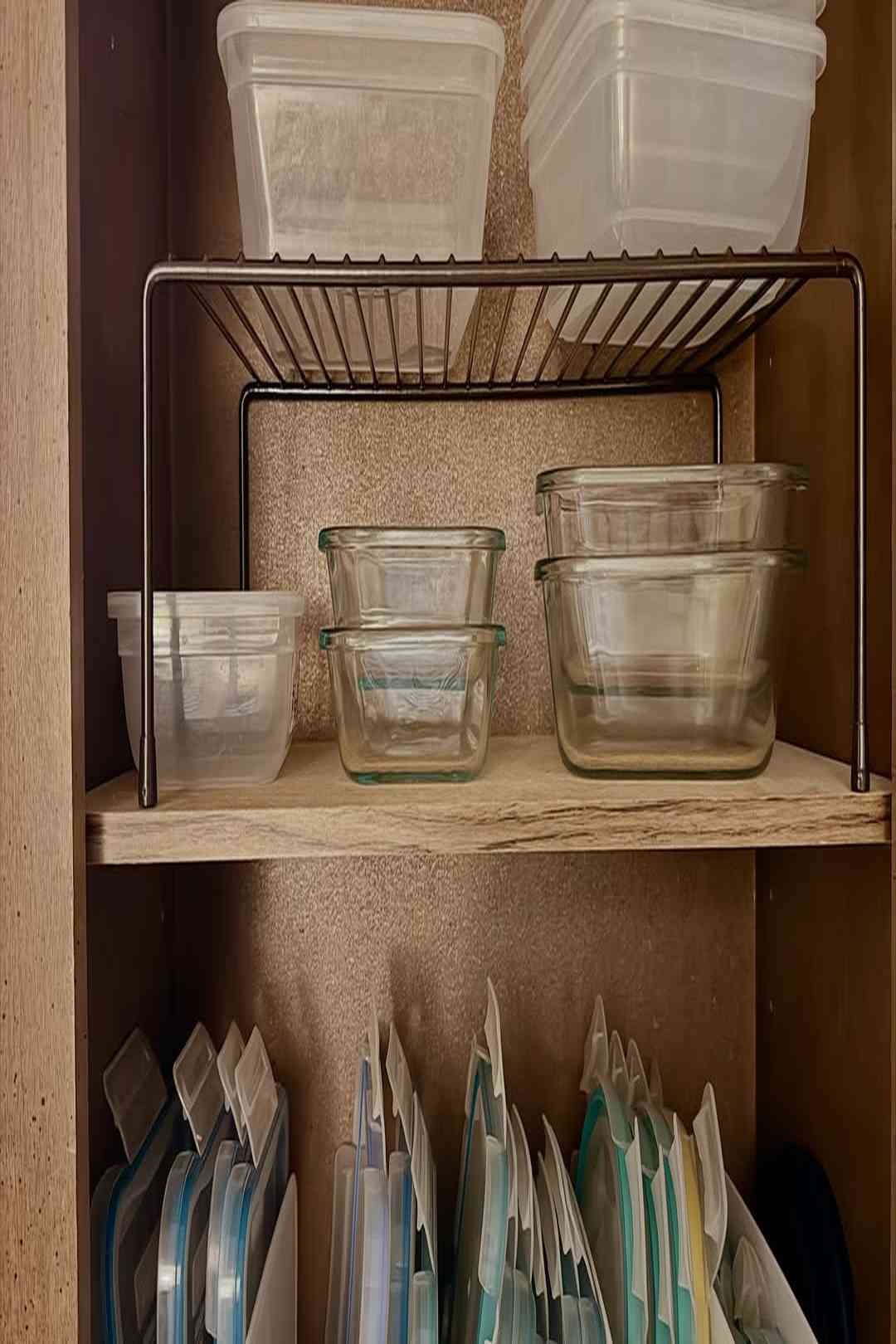
Photo: The Taylored Life (@the_taylor_ed_life) on Instagram
11. Build an Open-Shelf Pantry Wall
Best For: renters and small kitchens where a wall of open shelves can hold as much as a closed pantry and looks better doing it. Open shelves force honesty: if it does not look good in a jar, it does not belong there. How to Create It: fit two or three shelves on one wall, deep enough for jars and baskets but shallow enough that nothing hides behind anything else. Keep the prettiest jars at eye level and the plain baskets below, and leave one stretch of shelf empty so the wall can breathe. For the wider kitchen around it, these Japandi kitchen ideas show how calm a small kitchen looks when storage is simple and visible.

Photo: Belle (@thelittlewhiteedit) on Instagram
How Do You Lay Out a Small Pantry So It Works Every Day?
A pantry layout is really a cooking layout. The shelves should follow the order you cook in: breakfast together, cooking together, snacks where hands can reach them, and appliances where they can come out without a struggle. When the layout matches your day, the pantry stays tidy.

Photo: Joyce Moralez (@joyce_moralez) on Instagram
12. Plan a Galley Layout: One Wall, One Job
Best For: narrow pantries where two facing walls of shelves make the middle feel like a corridor. A galley layout gives each wall one job. How to Create It: put all the food on one wall and all the equipment, baskets, and backstock on the other, or split by meal: breakfast and snacks on the left, cooking and baking on the right. Keep the middle clear so two people can pass.
13. Give Spices a Drawer of Their Own
Best For: cooks with more than twenty spices who lose them in a deep cupboard. A shallow drawer with jars lying flat, labels facing up, turns spice-hunting into a glance. How to Create It: line the drawer with a non-slip mat, lay the jars on their sides in rows, and label the lids so you can read them from above. Keep the drawer near the hob, and refill jars from a backstock bag on a high shelf.
14. Make a Snack Zone Children Can Reach
Best For: families where children ask for snacks by pulling everything off a shelf. A low basket they can reach, filled only with snacks you approve of, ends the daily shelf avalanche. How to Create It: choose the lowest shelf or a low basket and fill it with single portions in clear bags or small boxes. Keep the rest of the snacks on a high shelf, and refill the basket once a week.
15. Set Up a Breakfast Station in One Spot
Best For: slow mornings where cereal, bowls, honey, and tea bags live on four different shelves. A breakfast station puts the whole morning in one place so nobody has to think before coffee, the kind of calm corner Scandinavian kitchen ideas do best. How to Create It: gather cereal, oats, honey, jam, tea, and coffee onto one shelf, with bowls and mugs directly above or below. Keep the toaster and kettle nearby, and keep everything else off that shelf.
16. Keep a Coffee and Tea Corner Together
Best For: kitchens where coffee and tea things are scattered across the pantry and the worktop. One small corner for everything hot-drink related makes the first cup of the day easy. How to Create It: put mugs, filters, beans, tea boxes, and sweeteners on one shelf or in one basket, and keep the machine or kettle on the worktop directly beneath it. A small tray inside the basket stops the little things sliding around.
17. Park Small Appliances on One Shelf
Best For: small kitchens where the blender, food processor, and hand mixer migrate around the pantry and never have a home. One shelf for appliances, with space to lift them out without moving food, ends the migration, and open appliance shelves are a familiar sight in modern boho kitchen ideas. How to Create It: choose a shelf at waist height so lifting is easy, and give each appliance its own patch of shelf with its parts stored beside it, not underneath it. Keep weekly appliances at the front and monthly ones at the back.
How Do Labels and Bins Keep a Small Pantry Tidy?
Labels and bins are not decoration. They are the memory of the pantry: they tell everyone in the house where things live and where they go back. A pantry without labels depends on one person remembering everything, and that person gets tired. A labelled pantry looks after itself.

Photo: Simone Anderson (@simone_anderson) on Instagram
18. Label Your Spices and Oils
Best For: cooks who own five brown powders and cannot tell the cumin from the cinnamon. Labelled spice jars and oil bottles are the cheapest upgrade a pantry can get. How to Create It: label the front of every jar where you can read it at a glance, and label the lid too if the jars live in a drawer. Use one label style across the pantry, and write the date on the back when you refill a jar so old spices get used first.

Photo: Angela Davis (@thekitchenista) on Instagram
19. Bin by Category, Not by Brand
Best For: pantries where every brand has its own corner and the categories are impossible to find. Brands change with the weekly shop; categories stay the same, so bins should follow categories. How to Create It: sort by what the food is for, not who made it: one bin for breakfast, one for snacks, one for baking, one for tins. When a new brand arrives, it goes in the category bin without a second thought.
20. Use Clear Containers for the Things You Run Out Of
Best For: households that discover the rice ran out halfway through cooking dinner. Clear containers show the level at a glance, so you notice a shortage before it matters. How to Create It: use clear containers for the five things you run out of most, usually rice, pasta, flour, sugar, and coffee, and keep them at eye level. Opaque baskets suit everything else.
21. Do a Five-Minute Reset Every Sunday
Best For: pantries that look wonderful the day they are organized and chaotic three weeks later. A short weekly reset catches the drift before it becomes a reorganization. How to Create It: once a week, pull the front row of each shelf forward, push everything back into its basket, throw out anything past its date, and add anything that ran out to the list on the door. Five minutes a week, and the pantry never needs a full day of work again. For the kitchen that holds the pantry, these moody farmhouse kitchen ideas show how a small kitchen can feel warm and finished even when it is working hard.
A small pantry does not need more space. It needs a shelf for everyday things, a basket that slides, a label you can read, and five minutes a week to keep it honest. Start with one shelf tonight, the one that annoys you most, and zone it by frequency before you buy a single container. When that shelf works, the rest of the pantry will follow. I have never regretted the hour I spent sorting a pantry, and I have never once wished I had left it messy.

Photo: Simone Anderson (@simone_anderson) on Instagram
💬 Join Our Decor Community
Decor Fern | Home Decor Ideas & Inspiration — share your rooms, get ideas, and chat with fellow decor lovers.
Join the Facebook GroupFollow on Facebook