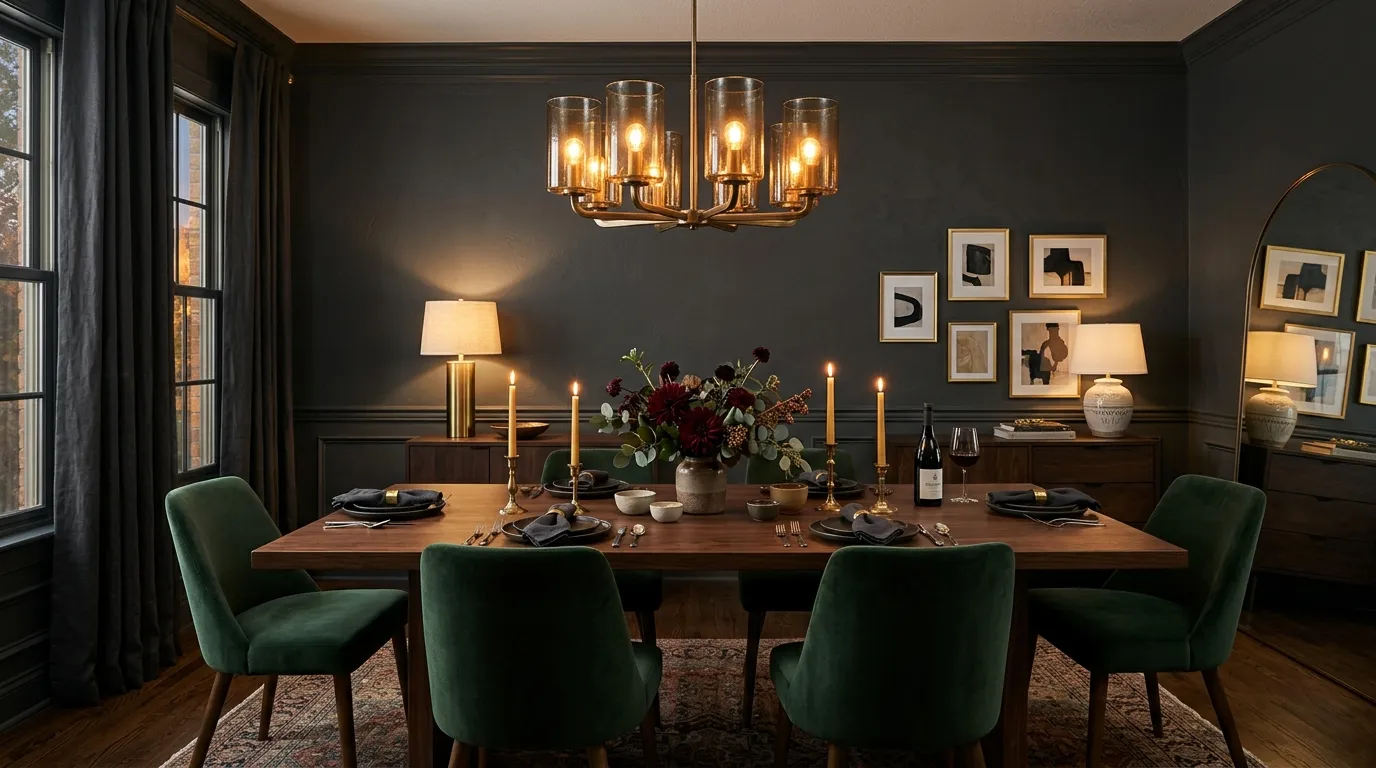
Want a dining room that feels dramatic, cozy, and unforgettable the moment you walk in? A few thoughtful changes can completely shift the atmosphere. A moody dining room does not have to feel dark, cold, or overwhelming.
This collection of 21 ideas shows how rich colors, warm wood, layered lighting, textured fabrics, statement furniture, and carefully chosen decor can create a dining space that feels both stylish and comfortable. Whether you are decorating a small dining area or refreshing a larger room, these ideas offer practical ways to add depth without making the space feel cluttered. In my experience, the most successful dramatic rooms are built through layers rather than one big change. Save your favorite ideas, choose one starting point, and let your dining space evolve naturally.
1. Charcoal Cocoon Walls
- Deep wall color creates an instantly intimate backdrop.
- Matte finishes keep dark paint soft instead of overly reflective.
- Natural wood adds warmth and prevents the room from feeling heavy.
- Matching trim can make a small dining area feel more seamless.
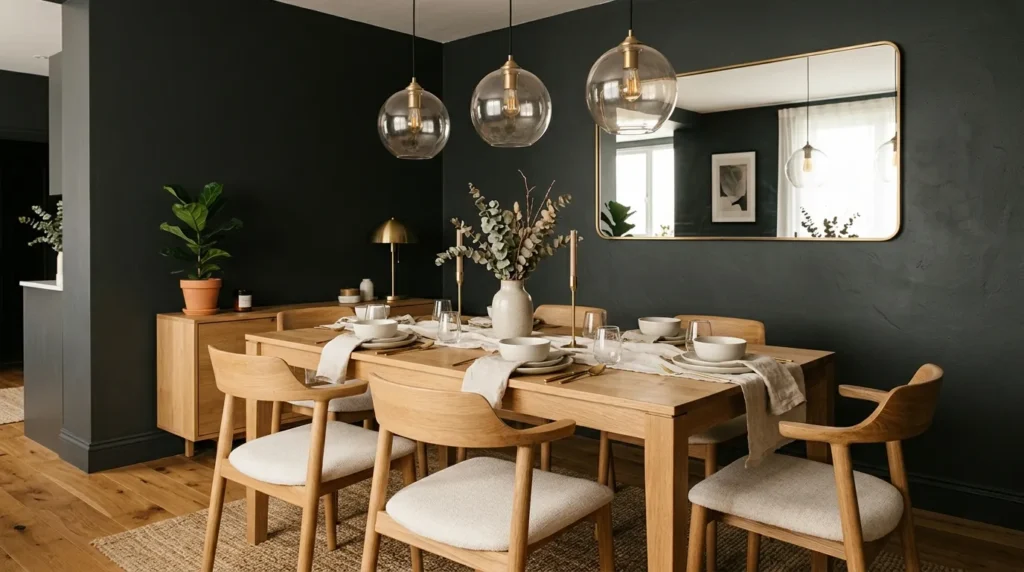
Dark walls can make a dining room feel instantly intimate, especially when the color wraps around every surface. Deep charcoal, smoky navy, forest green, or rich brown creates a cocooning backdrop for a table and chairs. In my experience, the key is choosing a finish with enough softness to avoid looking flat. Matte or eggshell paint works beautifully because it absorbs harsh reflections while still showing subtle texture. Keep the furniture lighter or warmer, such as natural oak, walnut, or aged brass, so the room feels layered rather than heavy. This approach suits both modern homes and traditional dining spaces.
A dark painted envelope also gives ordinary furniture more presence, which makes decorating easier. Picture a simple wood table against a charcoal wall, surrounded by cream linen chairs and a low pendant overhead. The contrast creates depth without requiring many accessories. For smaller rooms, continue the same color onto the trim or nearby doors to make the edges visually disappear and create a more seamless look. Add a mirror opposite a window if the space needs more brightness. The result is a dining room that feels intentional, warm, and polished instead of gloomy or cramped.
2. Warm Wood Contrast
- Warm wood instantly softens deep wall colors.
- Visible grain adds natural texture without extra decoration.
- Repeating one wood tone creates a subtle sense of connection.
- Aged brass or blackened iron adds contrast without overwhelming the room.
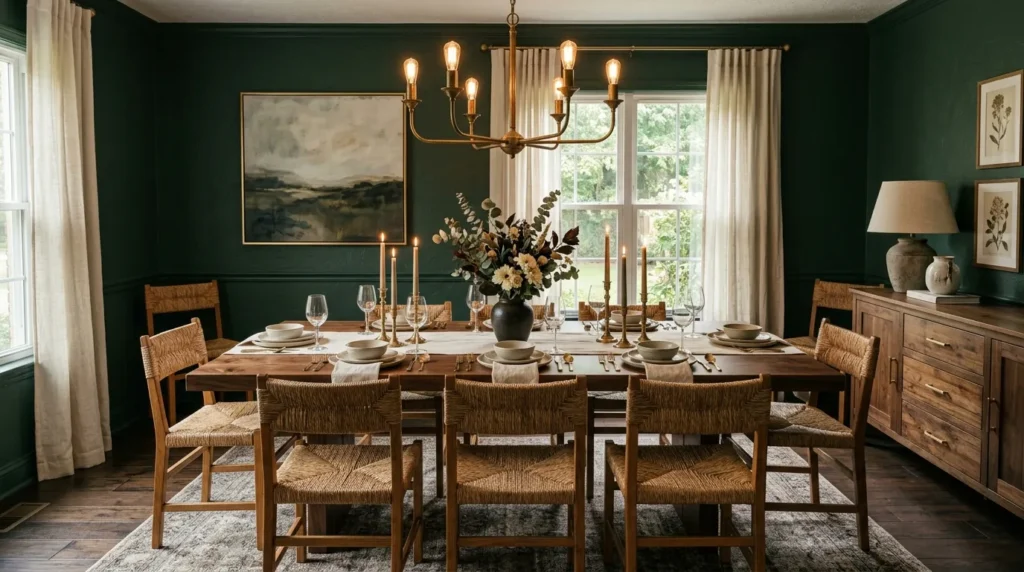
Warm wood can soften the intensity of deep wall colors while adding natural texture and visual balance. Choose a solid oak, walnut, or medium-toned wood dining table and let its grain become part of the room’s decoration. I’ve noticed this pairing works especially well when the surrounding finishes are simple, because the table becomes a grounding focal point without feeling overly styled. Add woven seats, leather chairs, or linen cushions to introduce another tactile layer. The combination feels collected and comfortable, while the darker backdrop provides enough contrast to make every warm wood detail stand out beautifully.
The easiest way to make this contrast feel cohesive is to repeat the wood tone in small places around the room. A wooden frame, sideboard, serving board, or set of dining chairs can quietly connect the furniture without making everything match. Keep metal accents restrained, using aged brass or blackened iron for a refined finish. In real homes, this approach is practical because wood hides everyday wear better than many delicate finishes, especially around a busy dining table. The overall effect is cozy, grounded, and visually rich, with enough contrast to keep the space from becoming too dark.
3. Statement Pendant Glow
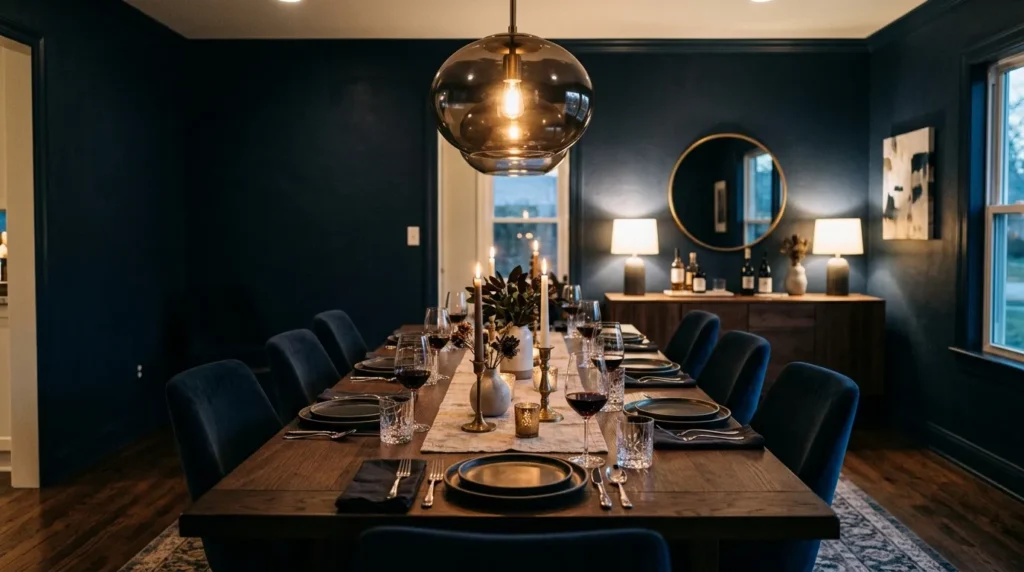
- A sculptural pendant immediately establishes a focal point.
- Warm bulbs make rich wall colors feel softer and deeper.
- Dimmable lighting allows the atmosphere to change throughout the day.
- Layered light from candles or lamps prevents dark rooms from feeling flat.
A statement pendant can turn a simple dining table into the visual center of the entire room. Look for a sculptural fixture in smoked glass, aged brass, black metal, or textured fabric, depending on the style you want. Hang it low enough to create intimacy, but high enough that guests can comfortably see across the table. Soft, warm bulbs are especially effective because they bring out the richness of dark paint and natural materials. I’ve seen this work well in both compact and spacious rooms because one carefully chosen light can add drama without filling the space with unnecessary decoration.
For the strongest result, treat the lighting as part of the room’s atmosphere rather than simply a source of brightness. A dimmable pendant lets you shift from brighter family meals to a softer evening setting without changing the decor. Choose a fixture sized to the table, leaving enough visual breathing room around its edges. If the room has high ceilings, a larger sculptural shade can fill the vertical space beautifully. Pair it with candles or low lamps on a nearby sideboard for layered illumination. This creates a warm, intimate dining area that feels inviting long after sunset.
4. Deep Green Walls
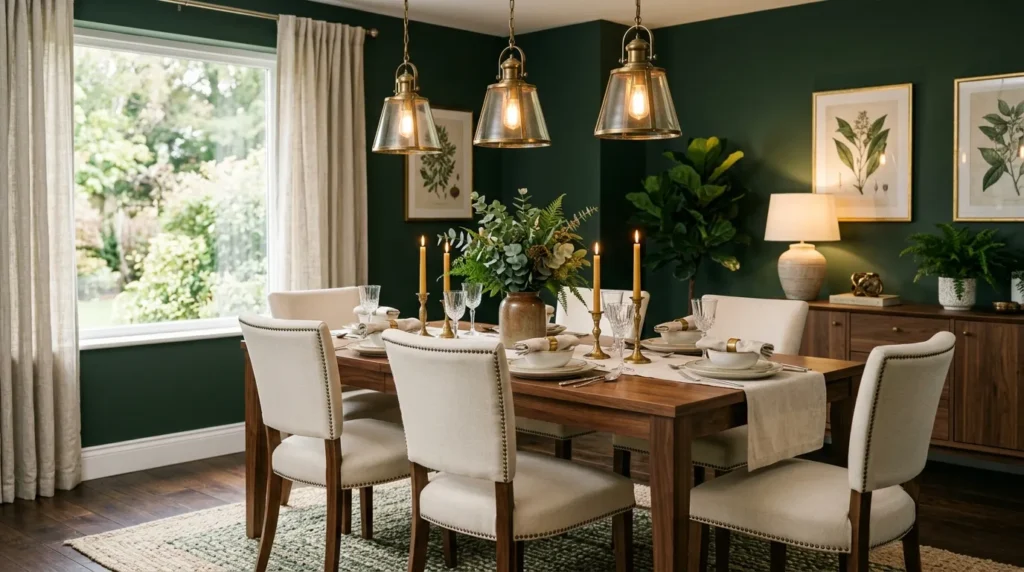
- Forest green creates depth while still feeling connected to nature.
- Brass details add warmth against saturated walls.
- Cream upholstery keeps the palette balanced.
- Natural greenery can soften the darker color scheme.
Few colors create depth as naturally as a rich forest green wall. This shade brings a grounded quality to the dining area while giving furniture and lighting a stronger visual presence. Pair it with walnut, oak, or rattan to keep the palette connected to natural materials. Cream upholstery and pale ceramics can provide small areas of brightness without breaking the moody character. In my experience, green works particularly well when a dining room has windows or plants nearby because the color feels like an extension of the outdoors. The result is dramatic but still comfortable enough for everyday meals.
When using a saturated green, balance matters more than adding lots of decoration. Choose warm lighting so the walls appear rich rather than cold, especially after sunset. A brass pendant, framed artwork, or antique-style mirror can introduce subtle highlights across the darker surface. If the room feels visually dense, bring in cream curtains or a lighter rug underneath the table. Keep the remaining colors restrained so the green remains the defining feature. This creates a layered dining space with personality, where natural textures, warm finishes, and controlled contrast work together without making the room feel overly decorated.
5. Moody Floral Wallpaper
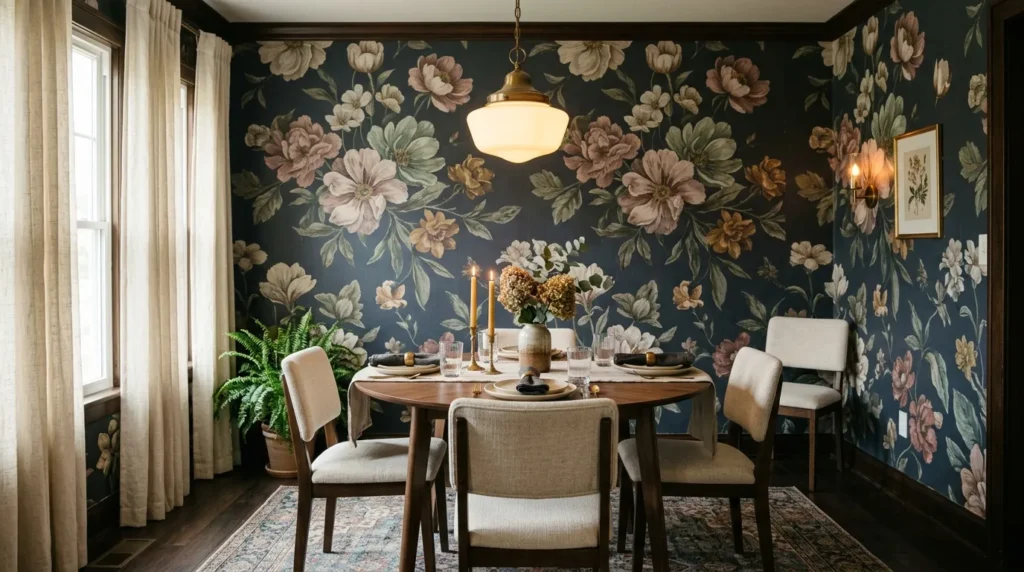
- Dark floral wallpaper adds pattern without sacrificing depth.
- Oversized botanical prints create a strong focal wall.
- Solid furniture keeps the pattern from becoming overwhelming.
- Repeating one wallpaper color in textiles creates visual harmony.
Dark floral wallpaper can bring pattern, depth, and personality into a dining space without making it feel overly formal. Choose a design with muted greens, burgundy, taupe, charcoal, or dusty blue rather than extremely bright colors. Large botanical prints work especially well because they create visual impact from across the room. Keep the furniture relatively simple so the walls remain the star. A round wood table, upholstered chairs, and a few understated accessories can provide enough contrast. This type of backdrop is particularly useful when plain paint feels too predictable but you still want a sophisticated, intimate atmosphere.
The secret to making patterned walls feel intentional is repeating one or two colors from the wallpaper elsewhere in the room. A linen cushion, ceramic vase, artwork frame, or dining chair can quietly echo the pattern without matching it exactly. If the wallpaper is especially detailed, avoid filling every surface with accessories. Let some areas breathe so the eye has somewhere to rest. I’ve noticed this approach makes even smaller dining areas feel thoughtfully designed because the wallpaper provides much of the decoration. Warm lighting then softens the pattern and makes the entire setting feel inviting during evening meals.
Also Read: 25 Jewel Tone Bedroom Ideas for a Rich Luxurious Look
6. Antique Dining Table
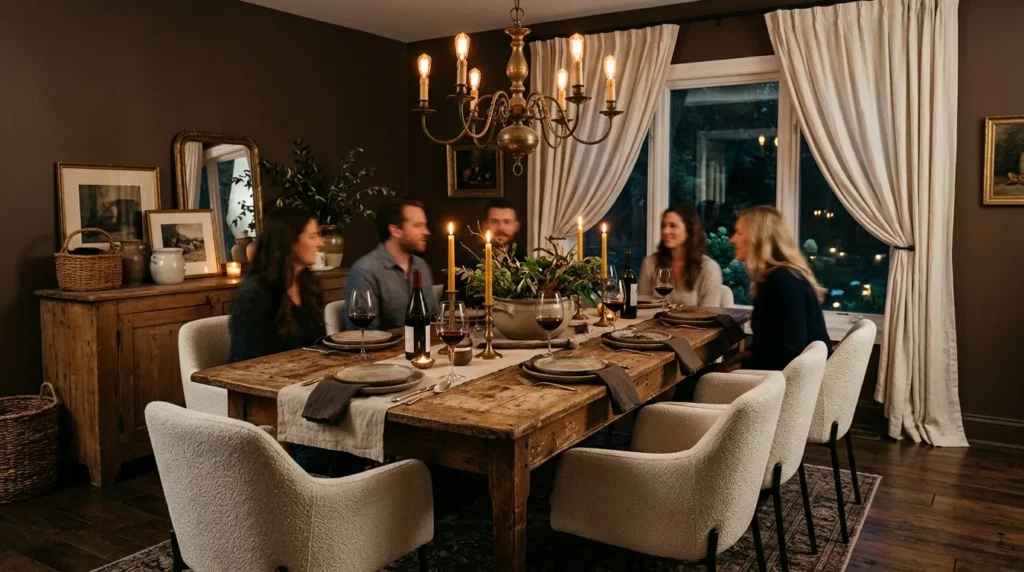
- A vintage table introduces character that new furniture often lacks.
- Natural imperfections add warmth and visual texture.
- Modern chairs can keep the arrangement from feeling dated.
- A simple centerpiece lets the table remain the focal point.
An antique dining table can instantly give a darker room a sense of history and character. Look for visible grain, softened edges, knots, or subtle imperfections rather than a perfectly uniform finish. These details add texture and make the furniture feel established rather than newly staged. Pairing an older table with contemporary chairs creates an especially appealing contrast, because the room feels collected over time. A deep walnut or weathered oak surface also works beautifully against saturated walls. The natural variation in the wood catches warm lighting and keeps the overall palette from looking flat or overly coordinated.
You do not need a large collection of vintage pieces to achieve this effect. Let the table provide the strongest historic element, then keep surrounding furniture relatively restrained. A modern pendant, simple artwork, or clean-lined sideboard can prevent the room from becoming too traditional. For everyday practicality, choose finishes that can handle spills and regular use, especially if the dining area is busy. In my experience, small imperfections actually make wooden tables easier to live with because everyday marks blend naturally into the existing character. The finished space feels warm, authentic, and comfortable rather than perfectly staged.
7. Dramatic Black Trim
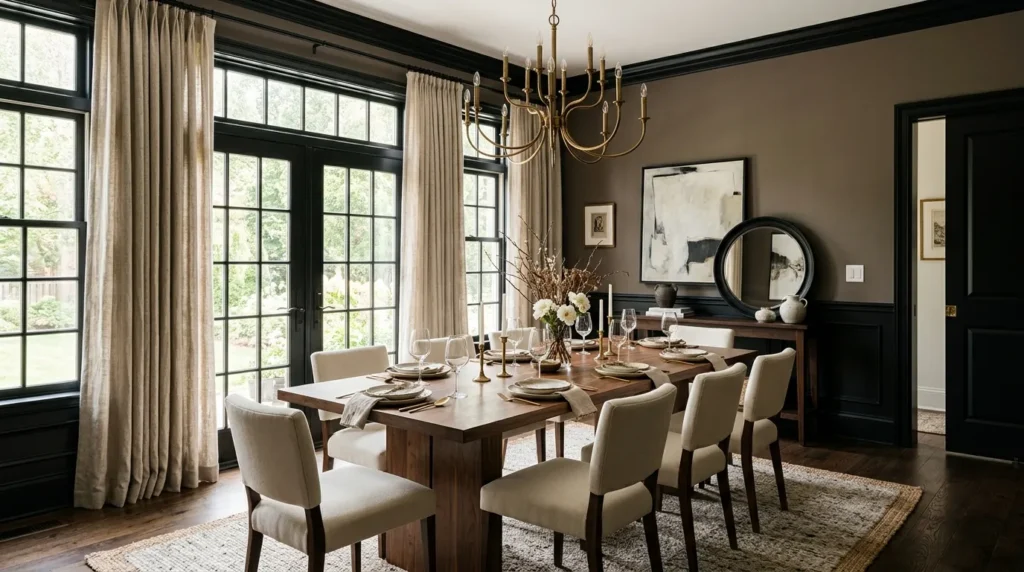
- Black trim creates architectural definition around lighter or darker walls.
- Painting doors and frames the same color creates a seamless look.
- Warm wood furniture softens the sharper contrast.
- Metallic accents add small points of reflected light.
Black trim can completely change the character of a dining room without requiring a full renovation. Painting door frames, window casings, baseboards, or built-in shelving in a deep black shade adds architectural definition and makes ordinary details feel intentional. The contrast is especially striking against taupe, warm white, muted beige, or smoky green walls. Keep the furniture warm through walnut, oak, leather, or natural linen so the darker edges feel balanced. This technique works particularly well in homes with older architectural features because the trim emphasizes shapes that might otherwise disappear into the background.
For a cohesive look, consider extending the dark trim color onto nearby doors or built-ins instead of using it in isolated spots. This creates a visual rhythm around the room and makes the darker details feel connected. If your dining area is small, avoid adding too many competing dark elements at eye level. Let the trim provide the drama while keeping the table and upholstery slightly lighter. I’ve noticed that this simple change can make inexpensive furniture look more refined because strong architectural lines naturally give the entire room a more finished appearance.
8. Candlelit Table Setting
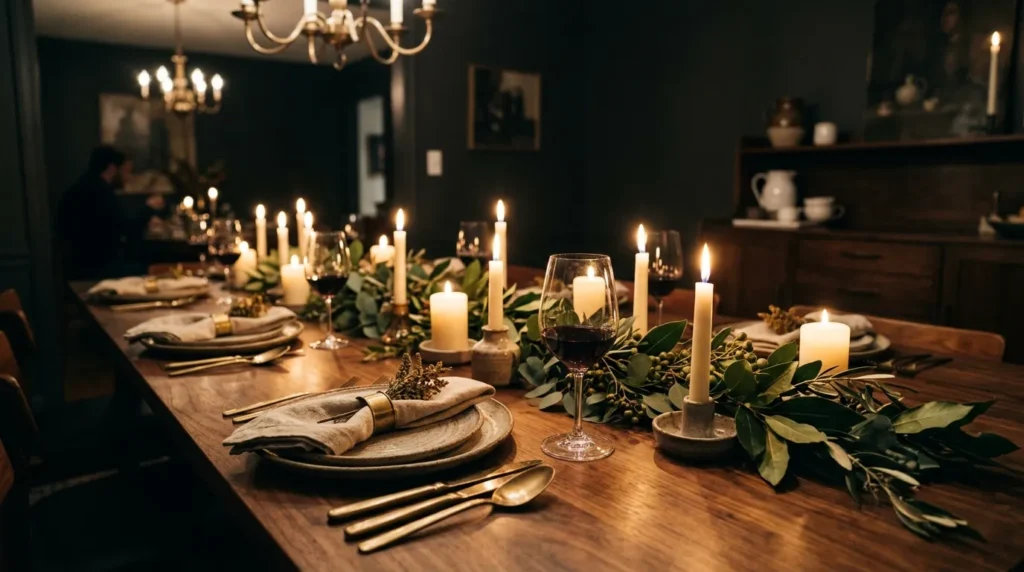
- Candlelight creates warmth without adding permanent fixtures.
- Mixed candle heights give the table more visual dimension.
- Ceramic and glass holders introduce subtle texture.
- Keep the centerpiece low enough for easy conversation.
Candlelight can transform an ordinary dinner into a warm visual experience, especially when the surrounding palette is deep and understated. Arrange several candles at different heights along the center of the table, using simple ceramic, glass, or brass holders. Keep the arrangement low enough that people can see across the table comfortably. Ivory or warm cream candles provide a gentle contrast against dark wood and saturated walls. The flickering light also creates small reflections that move across glassware, metal, and polished surfaces. This simple styling trick adds atmosphere without requiring expensive furniture or major changes.
For everyday use, keep the centerpiece flexible so it can be moved easily when meals are served. A narrow tray can hold several candleholders together while protecting the tabletop from wax and keeping the arrangement visually organized. Combine candles with a few branches, dried stems, or small ceramic pieces rather than filling the entire surface. I’ve noticed that restraint makes candlelit tables look more sophisticated because each glow has room to stand out. The finished setting feels intimate and layered, while the natural imperfections of flame and handmade materials keep it from looking overly staged.
9. Velvet Dining Chairs
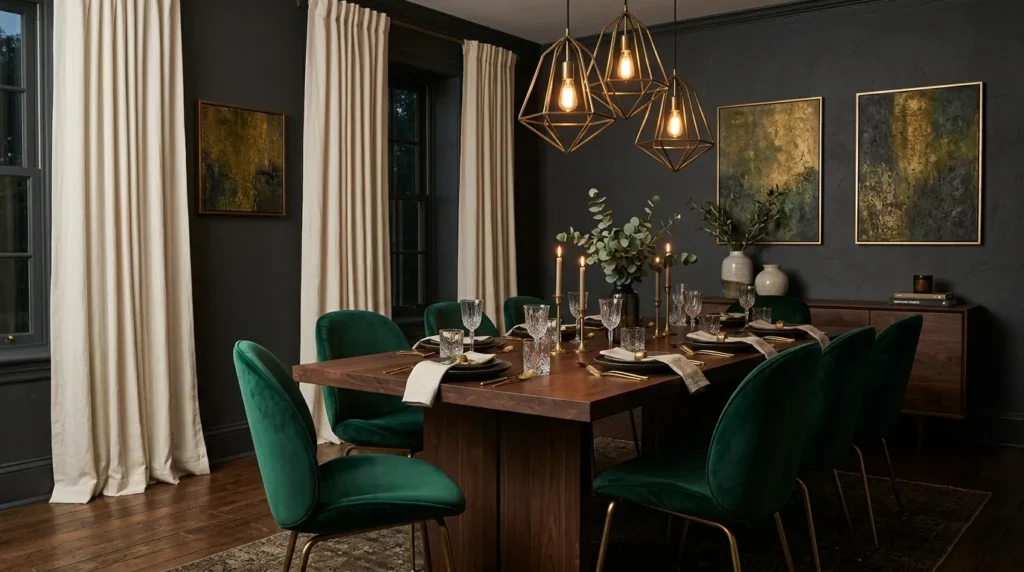
- Velvet adds softness and visual richness around a hard wooden table.
- Deep jewel tones reinforce a dramatic color palette.
- Upholstered seats make longer dinners more comfortable.
- Mixing velvet with wood prevents the room from feeling overly formal.
Velvet dining chairs bring softness and depth to a room filled with harder materials such as wood, stone, metal, or glass. Deep emerald, burgundy, navy, chocolate, or charcoal upholstery can reinforce a rich color palette while making the seating feel more inviting. Choose a simple chair silhouette if the fabric has a strong color, allowing the texture to provide enough visual interest. Around a walnut or dark oak table, velvet creates an appealing balance between comfort and sophistication. It also catches warm lighting beautifully, giving the upholstery subtle changes in tone as the room becomes darker.
Comfort matters just as much as appearance when choosing upholstered dining chairs. Look for supportive backs, durable fabric, and a seat height that works naturally with your table. If you worry about maintenance, choose performance velvet or a fabric designed for regular household use. There is no need to make every chair identical if you prefer a collected look, but keeping the upholstery color consistent can help the arrangement feel intentional. In my experience, one strong textile choice can make a dining room feel considerably warmer, especially when the walls and flooring already have darker finishes.
10. Oversized Dining Artwork
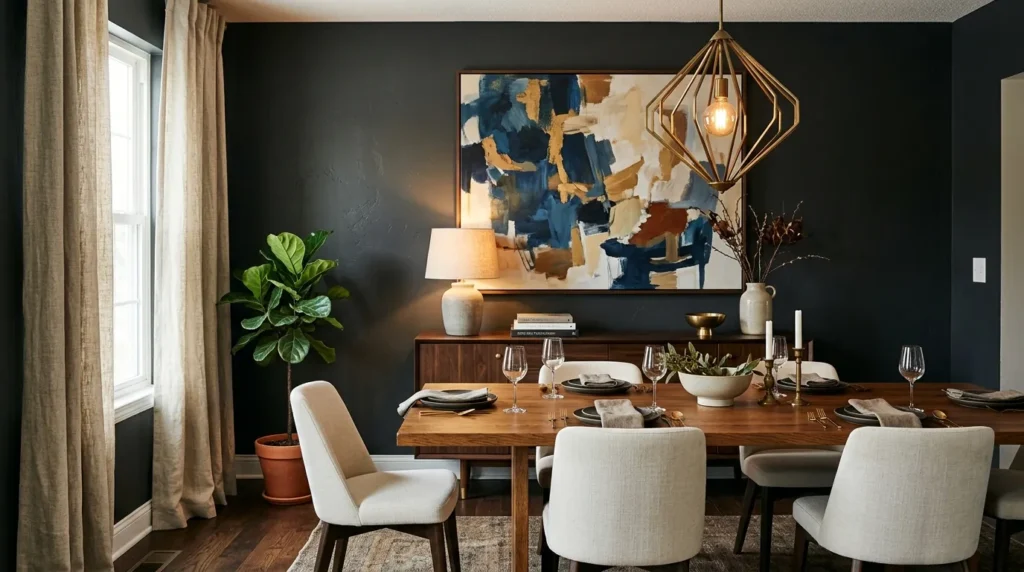
- A large artwork piece creates an immediate focal point.
- Dark backgrounds can make colorful details stand out beautifully.
- Oversized proportions help balance a long dining table.
- Simple frames keep the overall arrangement polished.
A single oversized artwork can give a dining room instant personality without filling every wall with decoration. Choose an abstract painting, atmospheric landscape, botanical print, or textured canvas with colors that connect to the furniture and surrounding finishes. Large artwork works particularly well above a sideboard or along the main wall because it creates a clear visual anchor. Instead of competing with the dining table, it gives the eye somewhere to travel beyond the seating area. I’ve noticed that one substantial piece often looks more intentional than several small frames scattered across the same wall.
Scale is the most important detail when choosing statement artwork. A piece that is too small can make a large wall feel unfinished, while one that is proportionate to the furniture creates balance. Aim for artwork that visually relates to the width of the table or sideboard beneath it. Keep the frame simple if the artwork is colorful or heavily textured. If the room already has dark walls, lighter artwork can create useful contrast without making the space feel brighter than intended. The finished arrangement feels collected, sophisticated, and easy to update as your style changes.
11. Layered Area Rug
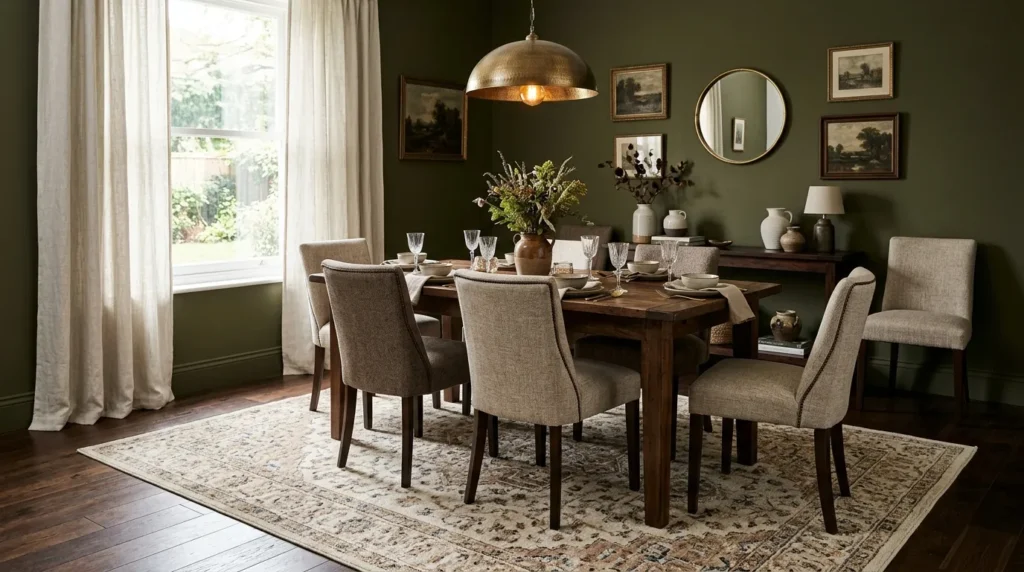
- A rug visually anchors the dining furniture.
- Soft texture balances harder flooring materials.
- Subtle patterns hide everyday crumbs and minor marks.
- Warm neutral tones prevent a dark room from feeling visually heavy.
A well-sized area rug can make the entire dining arrangement feel more grounded and complete. Choose a design with subtle pattern, faded tones, or textured fibers so it adds interest without competing with darker walls and furniture. The rug should extend beyond the chairs enough that they remain on the surface when pulled back from the table. This small measurement detail makes a surprisingly big difference in daily use. Wool, flatweave, or durable low-pile options can work particularly well because they provide warmth underfoot while remaining practical around a dining table.
Color is another easy way to balance a darker dining area. A rug combining taupe, cream, muted olive, rust, or soft gray can connect multiple elements without requiring everything to match. If your flooring is already dark, choose slightly lighter tones to create separation beneath the furniture. For busy households, avoid extremely pale rugs or thick high-pile textures that are difficult to clean around meals. In my experience, a subtly patterned rug is one of the most useful upgrades because it hides small everyday marks while making the room feel noticeably more layered and finished.
12. Built-In Bar Cabinet
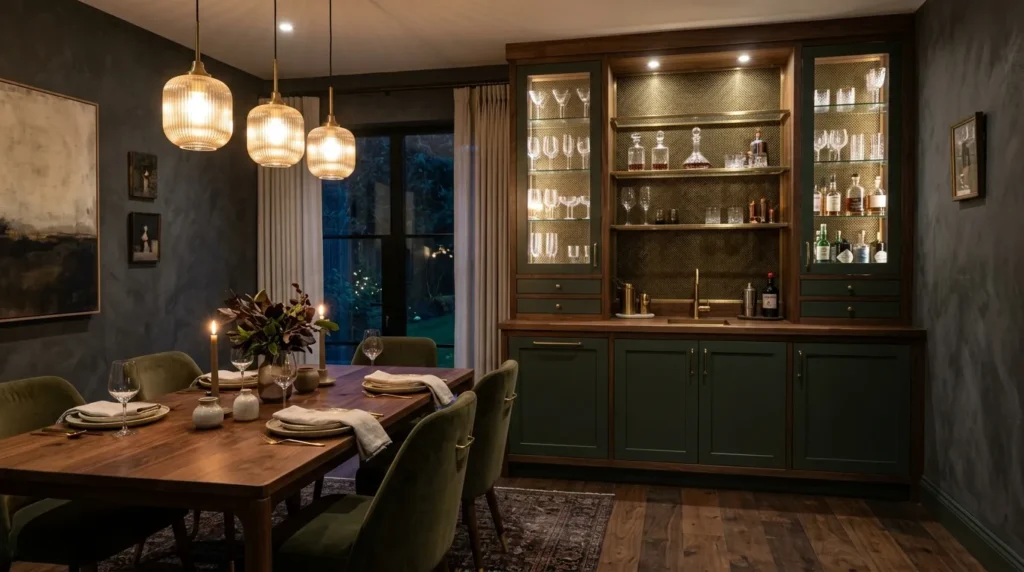
- A compact bar cabinet adds useful storage and visual interest.
- Dark cabinetry blends naturally into a dramatic palette.
- Glassware becomes decorative when displayed thoughtfully.
- Brass hardware provides a small, warm contrast.
A built-in bar cabinet can turn an unused dining wall into a practical feature while adding architectural character. Deep green, charcoal, navy, or espresso cabinetry works beautifully in a dramatic dining setting because the storage feels integrated rather than visually separate. Glass doors can display carefully chosen stemware, while closed sections hide serving pieces, linens, and everyday clutter. This arrangement is especially helpful when kitchen storage is limited. Instead of adding a freestanding piece that takes up valuable floor space, use vertical cabinetry to make the most of the wall while keeping the dining table area open.
The finishing details can make the cabinet feel more like furniture than ordinary storage. Choose aged brass handles, dark hardware, or simple wood pulls that connect with the room’s other materials. Add a warm interior light if the cabinet includes glass doors, but keep the illumination subtle. Avoid overcrowding the shelves; a small selection of glassware, ceramics, and serving pieces usually looks more refined. This approach creates a useful station for hosting without sacrificing style. The result is a dining space where storage, display, and atmosphere work together naturally.
13. Black Ceiling Detail
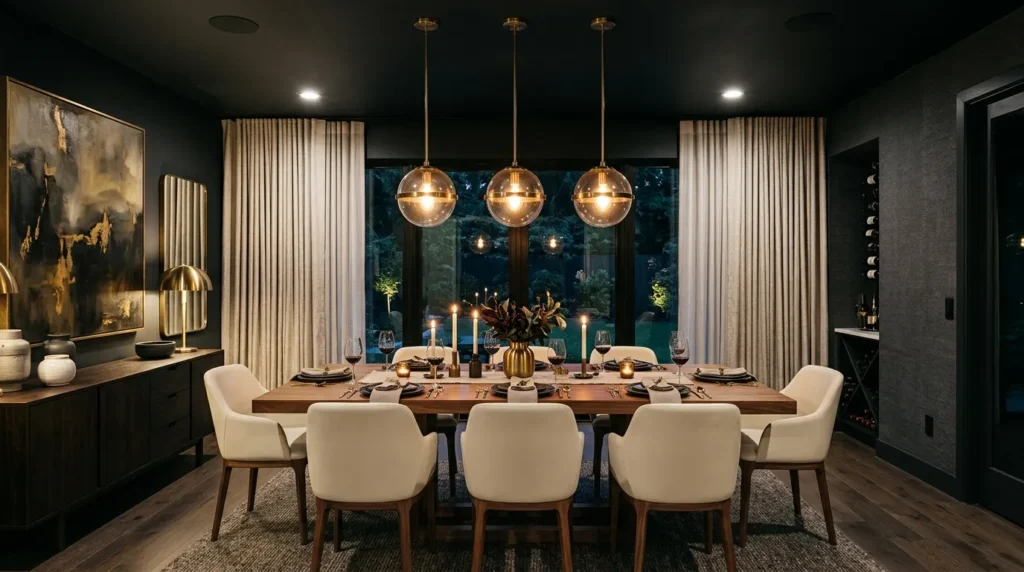
- A dark ceiling creates a more intimate visual envelope.
- Repeating the wall color can make the finish feel intentional.
- Warm lighting prevents the overhead surface from feeling too heavy.
- Light furniture creates useful contrast below.
A dark ceiling can make a dining room feel dramatically different by drawing attention upward and creating a more enclosed atmosphere. Matte black, charcoal, deep navy, or rich brown can work particularly well when paired with similarly saturated walls. Instead of making the room feel smaller, the darker overhead surface can visually soften the boundaries and create a cozy dining environment. Warm wood furniture and lighter upholstery provide enough contrast below. In my experience, this technique works best when the lighting is carefully planned, because a beautiful dark ceiling needs warm, intentional illumination to avoid looking flat or oppressive.
If you have standard-height ceilings, keep the rest of the room relatively uncluttered so the darker overhead surface does not compete with too many details. A sculptural pendant can become the transition point between the ceiling and dining table, giving the eye a natural focal point. For rooms with higher ceilings, a deep ceiling color can make the proportions feel more balanced and intimate. Use warm bulbs and multiple light sources rather than relying on one fixture. The result is a dramatic dining space with a cocooning quality that feels especially inviting during evening gatherings.
14. Moody Window Drapes
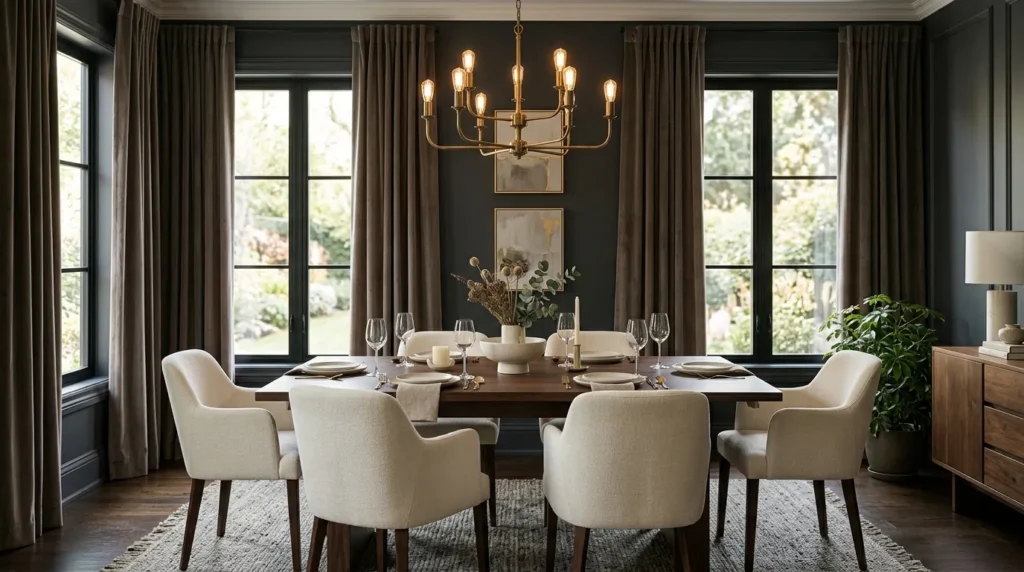
- Floor-length curtains soften strong architectural lines.
- Heavy fabrics add warmth and acoustic softness.
- Deep neutral colors reinforce the room’s dramatic palette.
- Full-height installation can make windows appear taller.
Window treatments can add softness to a dramatic dining room while making the space feel more finished. Floor-length curtains in deep taupe, chocolate, charcoal, olive, or muted burgundy can reinforce the richer palette without overwhelming the furniture. Choose linen for an airy texture or velvet for a heavier, more intimate effect. Hanging the curtain rod close to the ceiling and allowing the fabric to reach the floor can also make the room appear taller. This simple adjustment changes the proportions of the space and gives even modest windows a more substantial architectural presence.
Function should guide the fabric choice as much as appearance. If the room receives strong afternoon sunlight, lined curtains can help control glare while protecting furniture from prolonged exposure. For a softer look, combine heavier side panels with lightweight sheers that filter daylight. Keep the color connected to the walls or upholstery rather than introducing an unrelated shade. I’ve noticed that coordinated curtains often make a dining room feel calmer because they visually frame the entire setting. They also help absorb sound, which can make conversations more comfortable in rooms with hard flooring and large surfaces.
15. Sculptural Sideboard
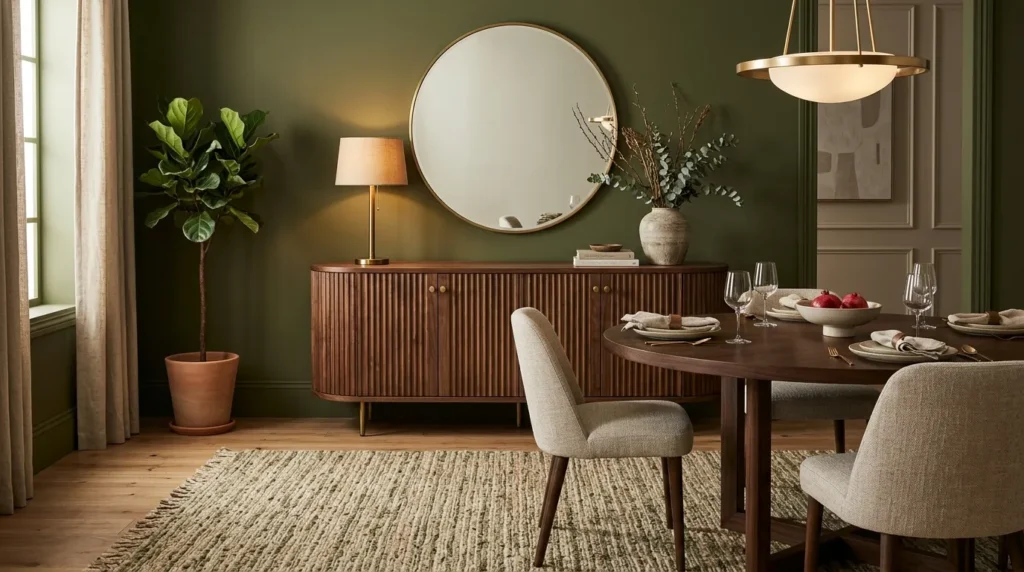
- A sculptural sideboard adds storage without looking purely functional.
- Fluted or curved fronts introduce tactile detail.
- Low styling keeps the furniture visually grounded.
- Decorative lighting can highlight the cabinet after dark.
A sculptural sideboard can bring both storage and personality to a dining room without making the space feel crowded. Look for curved edges, fluted doors, carved details, or naturally expressive wood grain that gives the cabinet a furniture-like quality. Deep walnut, espresso, or black finishes work especially well against rich wall colors. Use the cabinet to store table linens, serving dishes, candles, and entertaining essentials so the dining table remains clear. This balance between beauty and function is particularly useful in smaller homes where every piece of furniture needs to contribute something practical.
Keep the top of the sideboard intentionally styled rather than filling every inch with accessories. A large round mirror, sculptural vase, framed artwork, or small table lamp can provide enough height and texture. If the cabinet has a strong silhouette, let it remain the dominant feature instead of competing with numerous decorative objects. Warm lighting can also emphasize fluted surfaces and wood grain after sunset. The result is a dining area that feels organized but not overly minimal, with useful storage quietly built into the overall design.
16. Mixed Metal Accents
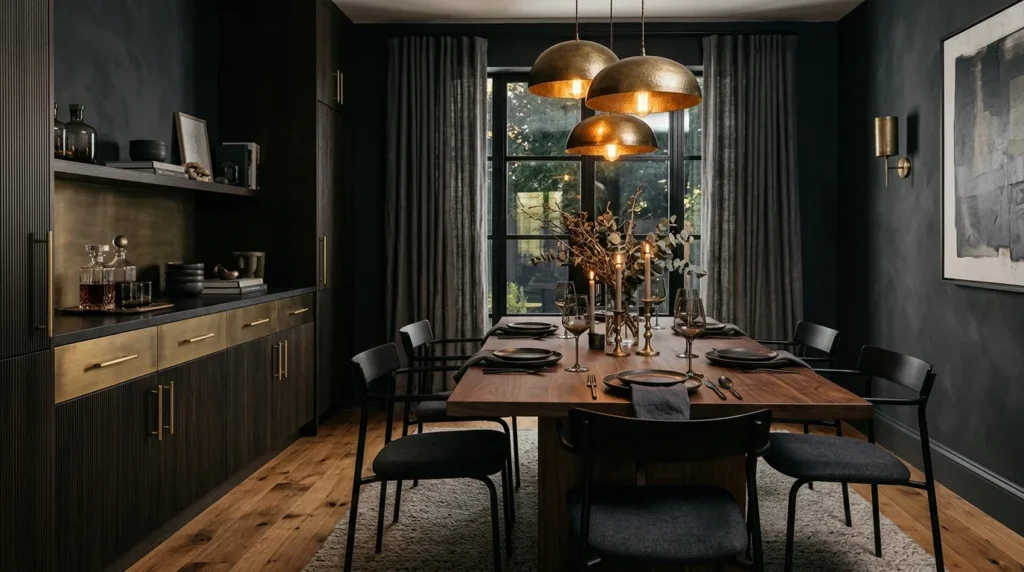
- Combining two complementary metals creates layered visual interest.
- Aged brass adds warmth against dark finishes.
- Black metal keeps the arrangement grounded and modern.
- Repeating metals in small details makes the mix feel intentional.
Mixed metal accents can give a dark dining space more dimension without requiring additional color. Aged brass, blackened iron, brushed nickel, or antique bronze can work together when each finish has a clear purpose. For example, use aged brass on the pendant and cabinet hardware while repeating black metal through chair frames or picture frames. This creates contrast while keeping the palette controlled. In my experience, the combination looks more natural when one metal clearly dominates and the second appears in smaller supporting details. That prevents the room from feeling like a collection of unrelated finishes.
You do not need to match every metal perfectly to create a cohesive arrangement. Instead, repeat each finish at least twice so the eye recognizes a deliberate connection. Warm metals are especially useful when dark walls and wood furniture need a little reflected light. Keep highly polished surfaces limited if you prefer a softer atmosphere; brushed or aged finishes usually feel more relaxed. This strategy works across modern, traditional, and transitional interiors because the materials can change while the basic principle remains the same. The result is a layered room with subtle highlights and plenty of visual depth.
17. Textured Stone Walls
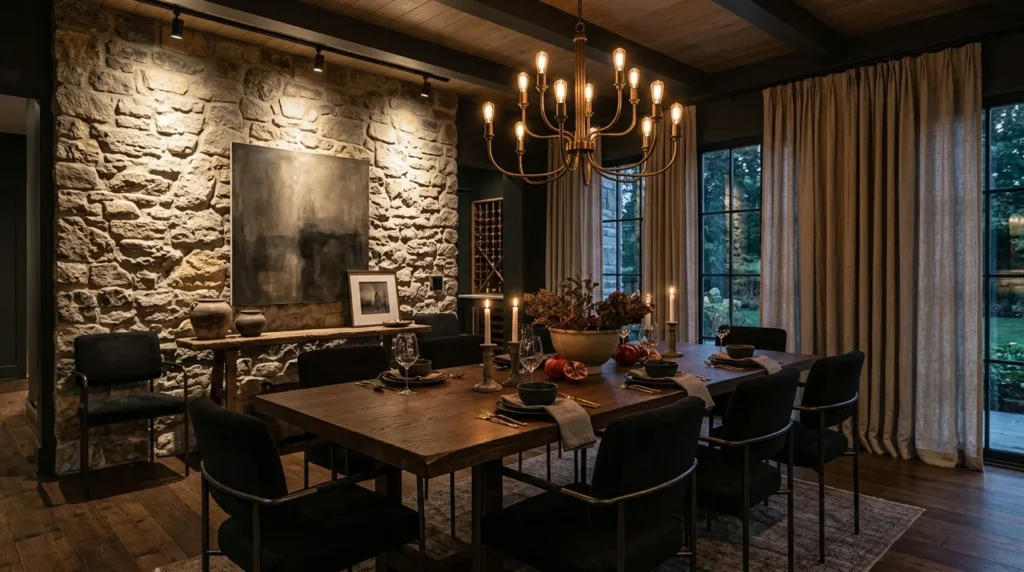
- Stone adds natural texture to a darker palette.
- Rough surfaces create depth without relying on bold patterns.
- Warm stone tones soften black and charcoal finishes.
- Minimal furniture allows the wall texture to stand out.
A textured stone wall can introduce depth and natural character that painted surfaces cannot easily replicate. Limestone, slate, exposed brick, or softly irregular stone can work beautifully as an accent behind a dining table or sideboard. Choose warm gray, taupe, brown, or muted beige tones if the rest of the room is already dark. The natural variation in the surface creates visual movement without adding a busy pattern. This makes stone particularly effective in dining rooms where you want a strong architectural feature but still want the furniture and lighting to remain part of the overall composition.
Lighting becomes especially important when using textured walls because shadows reveal the material’s natural character. A wall sconce, directional ceiling light, or pendant can highlight ridges and irregular surfaces after sunset. Keep nearby furniture relatively streamlined so the stone has room to breathe visually. If real stone is outside the budget, quality stone veneer or textured wall treatments can provide a similar layered effect when installed carefully. I’ve seen this approach work particularly well in open-plan homes because an accent wall can visually define the dining zone without requiring a physical divider.
18. Dark Wood Flooring
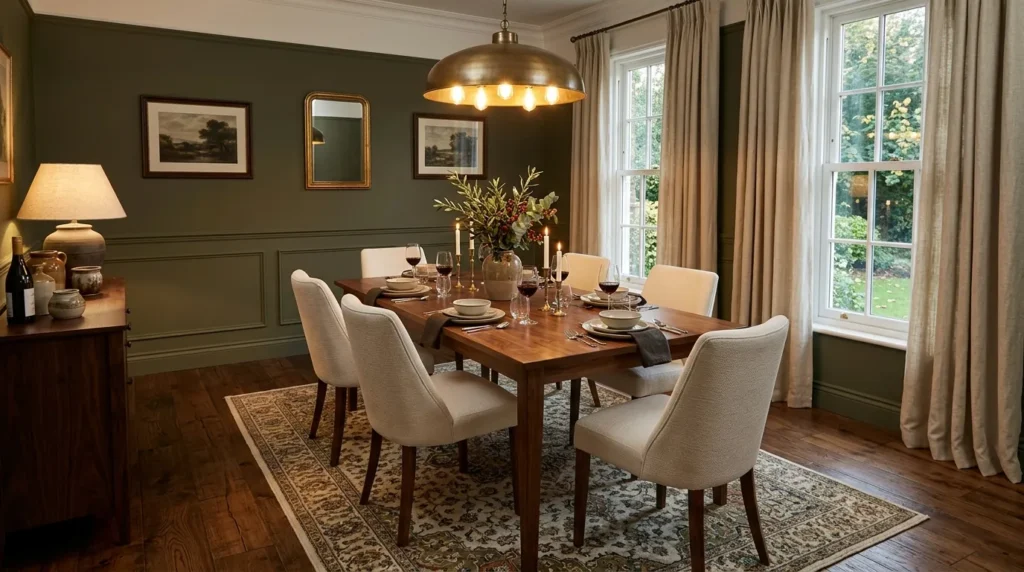
- Dark flooring creates a strong foundation for the dining furniture.
- Natural grain prevents the surface from looking completely flat.
- Lighter rugs create separation beneath the table.
- Warm wood tones keep the room from feeling cold.
Dark wood flooring can give a dining room a grounded, substantial feeling while connecting beautifully with deeper furniture and wall colors. Walnut, espresso oak, smoked wood, or dark-stained planks create a strong foundation beneath the table and chairs. To prevent the floor from visually blending into everything else, introduce a lighter rug with warm cream, taupe, muted green, or faded rust tones. Natural wood grain is also valuable because it adds subtle variation across the floor. The combination creates depth without requiring multiple decorative patterns or bright colors.
When choosing dark flooring, consider how much natural light enters the room throughout the day. Rooms with large windows can usually handle deeper tones easily, while spaces with limited daylight may benefit from warmer wood rather than an almost-black finish. Keep furniture slightly different in tone so each surface remains distinguishable. A rug can provide another visual break while protecting the floor beneath a frequently used table. The result is a cohesive dining setting that feels warm and substantial, with enough tonal variation to keep the darker palette visually interesting.
19. Layered Ambient Lighting
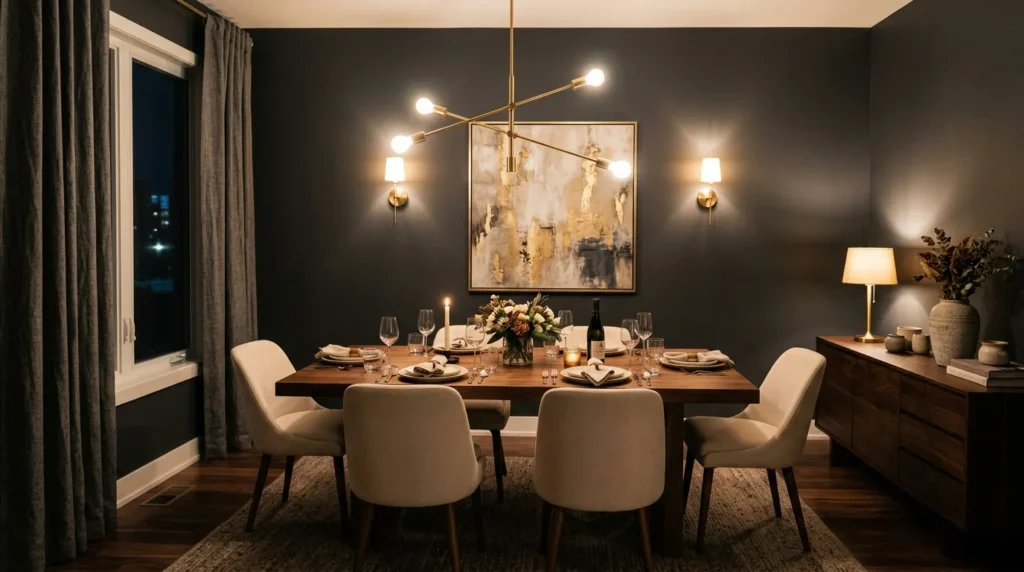
- Multiple light sources create depth across the room.
- Wall sconces add a soft glow without using table space.
- Warm bulbs make dark finishes feel richer.
- Dimmers allow the atmosphere to change throughout the evening.
Layered lighting can make the difference between a dark dining room that feels cozy and one that simply feels dim. Instead of relying entirely on a central pendant, combine overhead lighting with wall sconces, a nearby lamp, or strategically placed accent lights. Each source should provide a different level of illumination, creating soft pools of light across the room. Warm bulbs around 2700K usually complement deep paint colors, wood, and brass beautifully. This approach also gives you more control during everyday meals, family gatherings, and quieter evenings when you want the room to feel more intimate.
Start with the pendant above the table, then consider where additional light would be useful. Wall sconces can brighten vertical surfaces while adding architectural interest, and a small lamp on a sideboard can create a gentle glow at eye level. Dimmers are particularly valuable because they let you adjust brightness without changing the design. In my experience, layered lighting also makes decorative details more noticeable after sunset because artwork, wood grain, and textured fabrics receive small highlights. The finished room feels warmer, more dimensional, and much more inviting than a space illuminated by one bright ceiling fixture.
20. Dramatic Mirror Placement
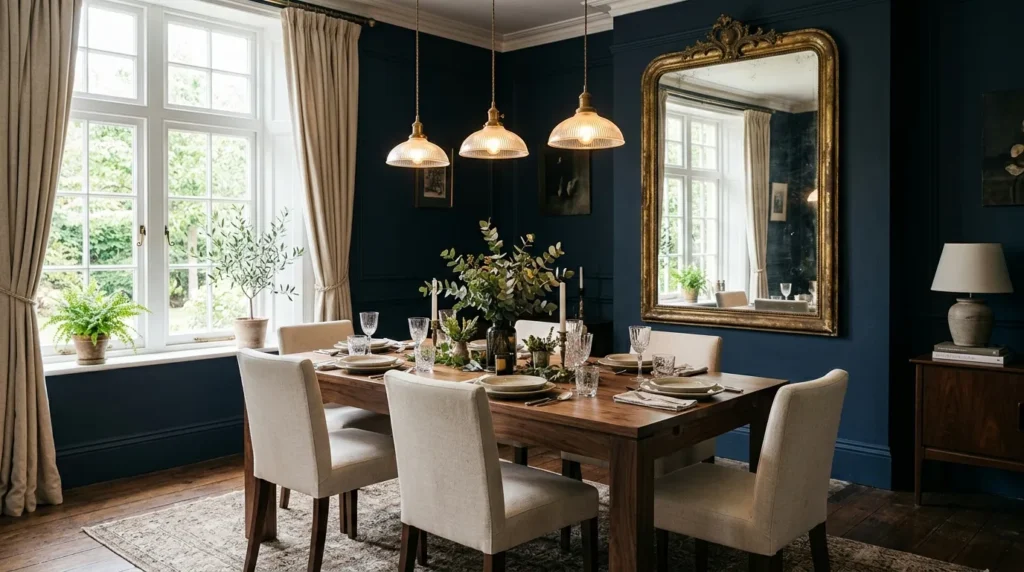
- A large mirror reflects natural light across darker surfaces.
- Decorative frames add another layer of personality.
- Placing it opposite a window can visually expand the room.
- Antique glass creates softer reflections than perfectly clear modern mirrors.
A well-placed mirror can make a darker dining room feel more spacious while adding another decorative focal point. Hang a large mirror opposite or slightly angled toward a window so it can reflect available daylight across the room. Antique, smoked, or aged glass is especially attractive when you want a softer reflection that suits a dramatic interior. Choose a frame in wood, aged brass, black metal, or another finish already present in the room. The mirror should feel connected to the overall design rather than looking like a separate functional object placed simply to fill an empty wall.
Scale matters when choosing a mirror for a dining area. A small mirror above a large sideboard can look lost, while an oversized piece creates a stronger visual relationship with the furniture beneath it. Avoid positioning mirrors where they reflect clutter, harsh lighting, or an unattractive view. Instead, use them to highlight windows, artwork, greenery, or a beautiful pendant. I’ve noticed that mirrors work particularly well in compact dining spaces because they create visual depth without taking up floor area. The result feels brighter, more open, and layered while maintaining the room’s darker character.
21. Cozy Layered Textiles
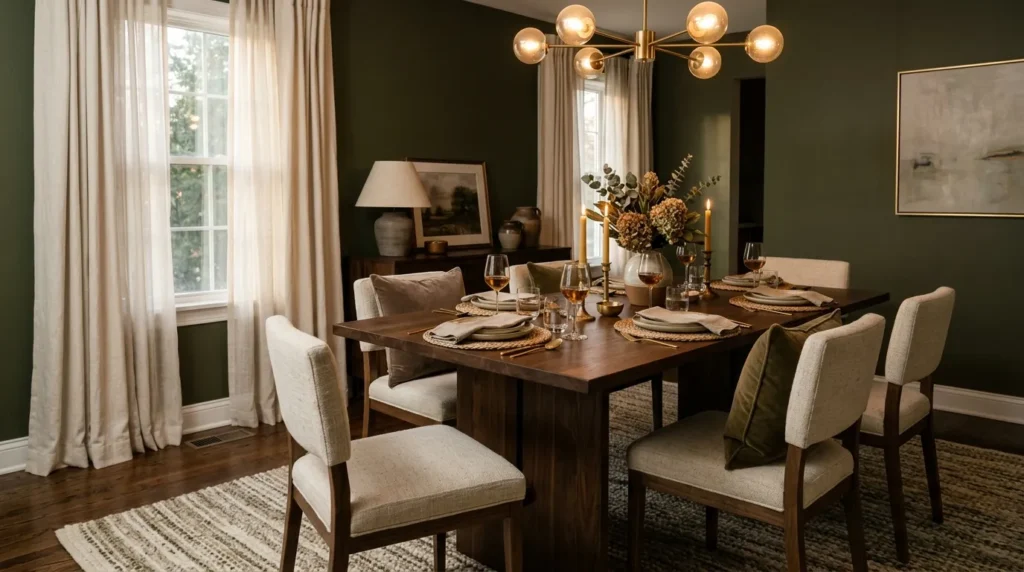
- Soft textiles make hard dining surfaces feel more welcoming.
- Linen, wool, velvet, and cotton create useful tactile contrast.
- Coordinated textures add richness without requiring bold patterns.
- Washable fabrics make the look easier to maintain.
Layered textiles can soften the harder materials that naturally dominate a dining room, including wood, stone, metal, and glass. Start with one substantial texture, such as a wool rug or upholstered chairs, then add smaller elements like linen curtains, woven placemats, cotton napkins, or velvet cushions. Keep the colors within a related palette so the room feels cohesive rather than busy. Warm cream, taupe, olive, rust, chocolate, and muted gray can all work beautifully with darker walls. The goal is not to fill every surface, but to introduce enough softness that the space feels comfortable and lived-in.
Practicality should guide the final textile choices, especially if the dining room is used every day. Removable cushion covers, washable napkins, durable upholstery, and low-pile rugs can make the layered look much easier to maintain. Varying texture is often more effective than adding lots of patterns because the room gains visual interest without becoming overwhelming. In my experience, this is one of the easiest ways to make a dramatic dining space feel approachable. The combination of soft fabrics, warm materials, and controlled color creates an inviting setting that feels equally suitable for everyday dinners and special occasions.
Conclusion
Creating a beautiful dining space does not require a complete makeover. A deeper wall color, warmer lighting, textured textiles, natural wood, or one striking decorative piece can make a surprising difference. These ideas show how small, intentional changes can turn an ordinary dining area into a space that feels welcoming, sophisticated, and full of character. A moody dining room can be both dramatic and comfortable when the colors, textures, and lighting work together. I’ve seen how thoughtful details can completely transform a room. Save this post on Pinterest, try your favorite idea, and share it with someone planning their own cozy dining space.