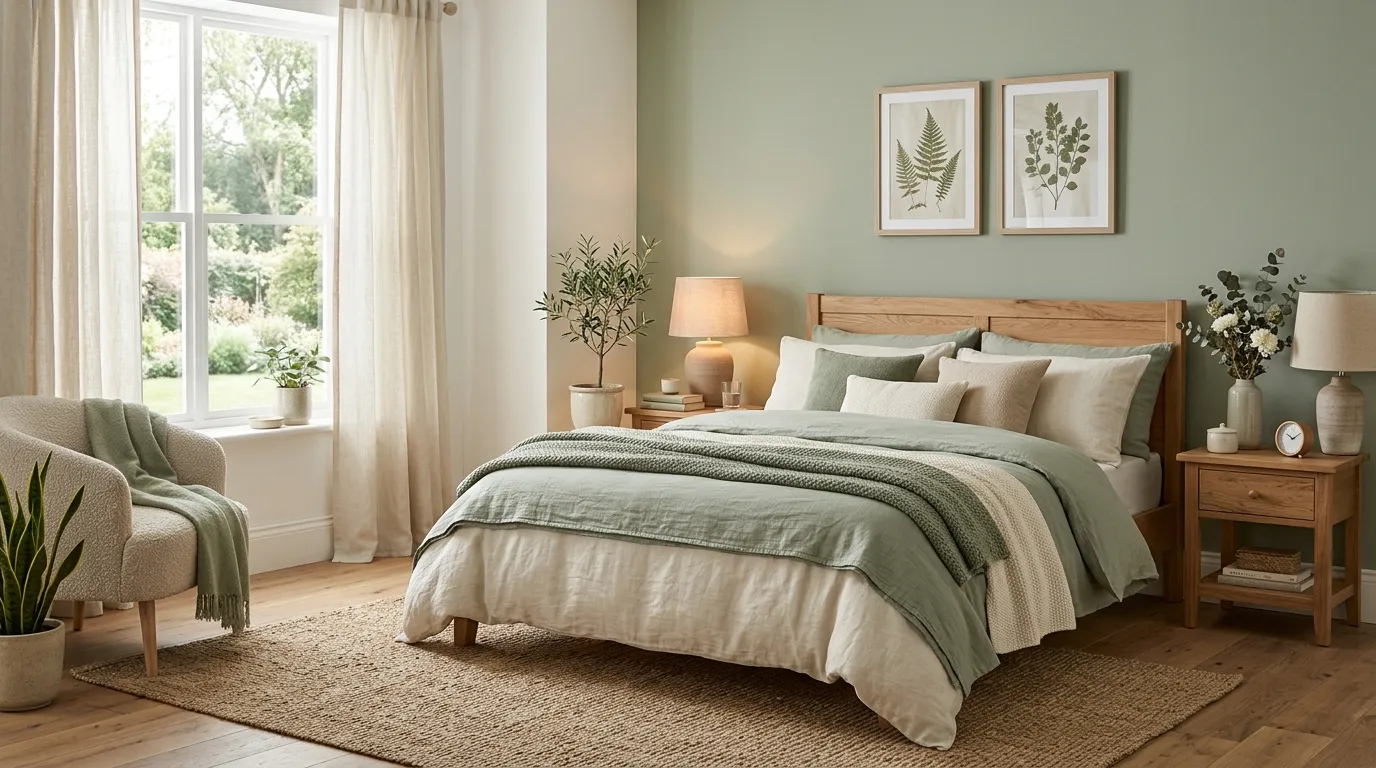
Ready to turn your bedroom into the calmest room in the house? A sage green bedroom can make even a plain space feel softer, warmer, and more relaxing. This muted green shade works beautifully with cream bedding, natural wood, cozy textures, and soft lighting, making it easy to create a peaceful retreat without a complete makeover. Whether you love minimalist spaces, cottage charm, modern interiors, or nature-inspired decor, there’s a sage green idea to suit your style. In my experience, even small touches of muted green can noticeably change how a bedroom feels. These ideas will help you choose colors, furniture, textures, and accents that create a space you’ll genuinely enjoy coming home to.
1. Soft Sage Walls
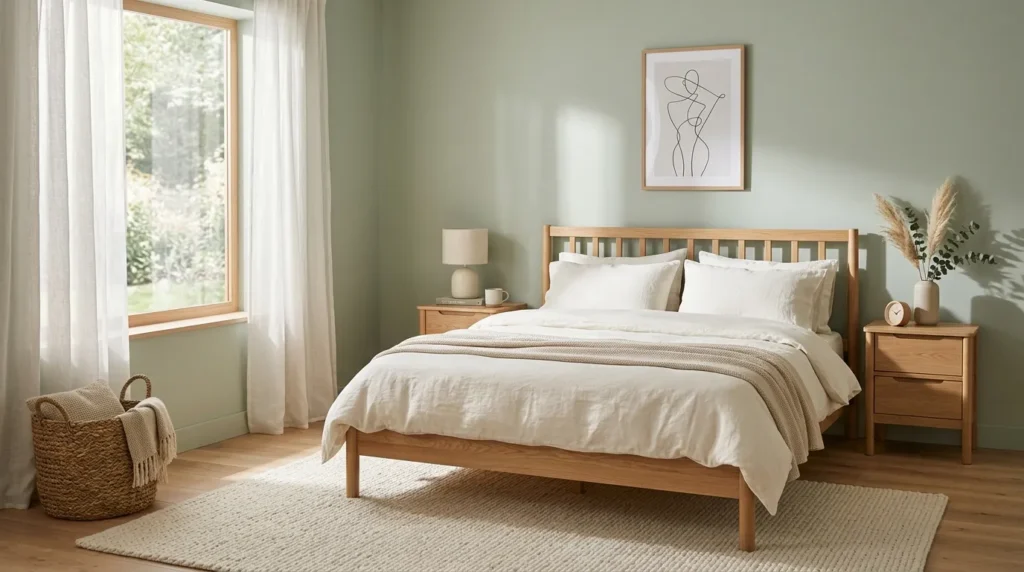
- Soft sage walls create a gentle backdrop without making the bedroom feel dull.
- Pair the color with warm white bedding for a fresh, balanced look.
- Natural wood furniture adds warmth and prevents the palette from feeling too cool.
- Keep accessories simple so the calming wall color remains the main feature.
The right wall color can completely change how a bedroom feels, and soft sage is especially effective at creating a calm visual backdrop. Its muted green tone feels connected to nature without becoming overpowering, making it easy to live with every day. Pair sage walls with warm white bedding, light oak furniture, and cream textiles for a balanced palette that feels fresh and restful. This combination works beautifully in both small and spacious bedrooms because the color adds personality without creating visual heaviness. The result is a peaceful foundation that makes the entire room feel more intentional.
A sage-painted room becomes even more inviting when you introduce natural textures instead of relying on more color. Try linen bedding, a woven basket, a wool rug, or simple ceramic accessories to create subtle layers. Keep the furniture relatively light so the walls remain the visual anchor. In my experience, warmer whites work better than icy whites because they soften the green and make the bedroom feel more comfortable. Add sheer curtains to let daylight filter gently across the walls, and the changing light throughout the day will give the color a beautifully natural appearance.
2. Sage Linen Bedding
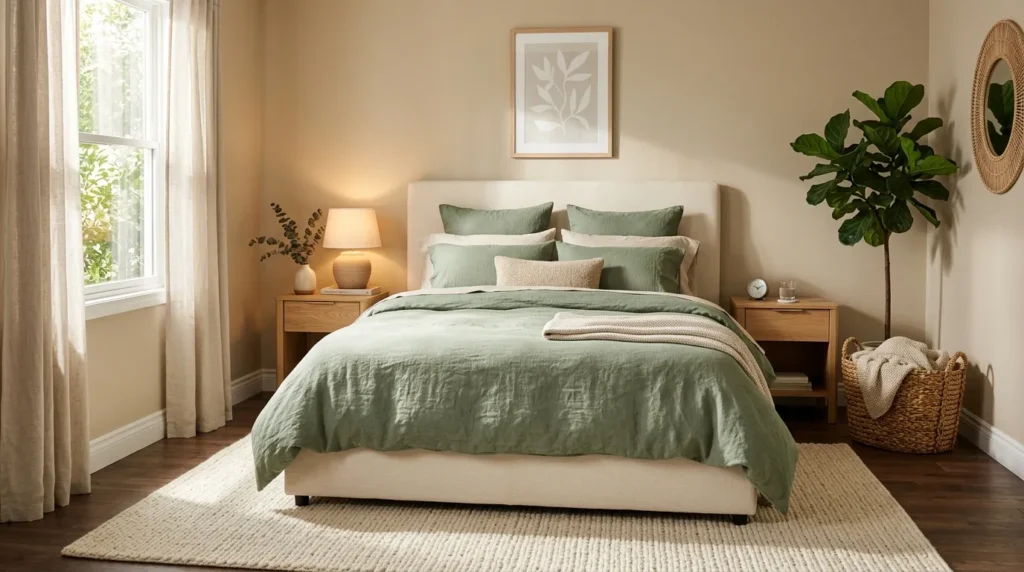
- Sage linen bedding adds color without committing to painted walls.
- The relaxed texture makes the bed look comfortable and inviting.
- Layer cream, beige, and white pillows for gentle contrast.
- This is an easy option for renters or frequent seasonal decorators.
Sometimes the easiest way to introduce a calming green palette is through the bed itself. Sage linen bedding adds a soft wash of color while keeping the rest of the bedroom flexible. The natural wrinkles and texture of linen make the bed look relaxed rather than overly styled, especially when layered with cream, ivory, beige, and muted white pillows. This idea is perfect if you do not want to repaint your walls or make a permanent change. Simply switching the bedding can give the room a noticeably different atmosphere while keeping your existing furniture and layout.
The key is creating enough texture so the bedding feels rich without needing bold patterns. Start with a sage duvet or quilt, then add two or three neutral layers in different fabrics. A chunky knit throw at the foot of the bed can make the arrangement feel especially inviting during cooler months. I’ve noticed that muted sage works beautifully with natural wood because both colors have an organic quality. If you want a seasonal refresh later, you can easily replace the green bedding with another shade while keeping the neutral foundation and furniture unchanged.
3. Sage and Cream Palette
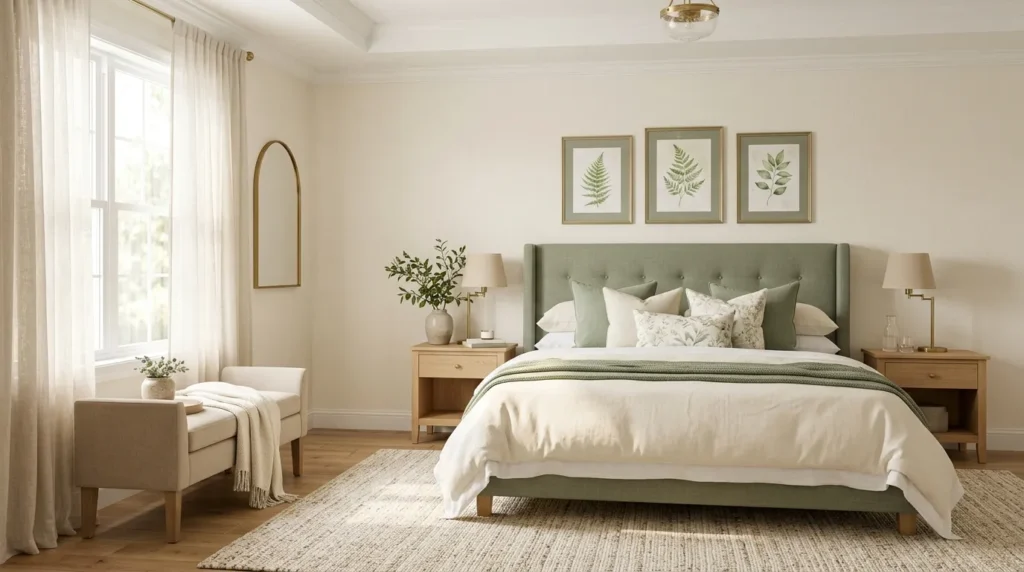
- Sage and cream create a soft combination that feels timeless and restful.
- Use cream on larger surfaces to keep the room visually bright.
- Introduce sage through bedding, curtains, artwork, or an upholstered headboard.
- Natural wood accents add warmth between the two gentle tones.
Few color combinations feel as naturally soothing as sage and cream. Cream keeps the bedroom light and warm, while muted green adds just enough color to create personality and visual depth. Use cream across the walls, bedding, or rug, then bring sage into the headboard, curtains, cushions, or artwork. Natural oak furniture fits easily between the two shades and prevents the room from feeling overly coordinated. This palette works particularly well when you want a relaxing bedroom that feels sophisticated but still comfortable and approachable, with colors that remain easy to update over time.
For a more layered result, vary the textures instead of adding more colors. A cream linen duvet, sage velvet cushion, woven rug, and oak nightstand can create plenty of visual interest while keeping the palette restrained. Small brass details can add a little warmth without disrupting the peaceful mood. I’ve seen this combination work especially well in bedrooms with limited natural light because the cream surfaces help reflect available daylight. Keep window treatments light and uncluttered, allowing soft sunlight to move through the room and highlight the subtle differences between the green and neutral materials.
4. Sage Accent Wall
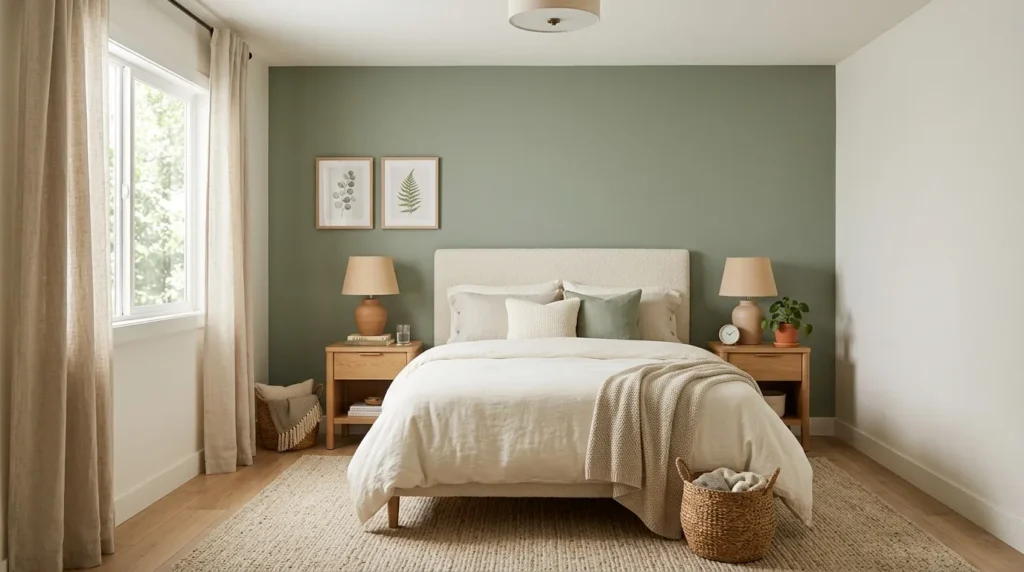
- An accent wall adds color without overwhelming the entire bedroom.
- Place it behind the bed to create a natural focal point.
- Keep the remaining walls warm white, beige, or soft cream.
- Use matching green accents sparingly throughout the room for cohesion.
A sage accent wall can give your bedroom a fresh focal point without requiring a complete color makeover. The wall behind the bed is usually the strongest choice because it naturally frames the largest piece of furniture. Keep the other walls warm white or soft beige, then repeat small touches of green through cushions, artwork, or a throw. This creates a connected look without making the room feel overly green. For smaller bedrooms, an accent wall can also add depth and personality while keeping most of the space light, open, and visually comfortable.
The best accent walls feel intentional rather than isolated. Choose a sage shade that works with your existing flooring and furniture before painting, because natural light can make green appear warmer or cooler at different times of day. A light oak bed frame and cream bedding create an especially easy combination. I’ve noticed that repeating the wall color in just two or three small accessories is enough to create cohesion. You do not need matching curtains, rugs, pillows, and artwork. Leaving some elements neutral helps the accent wall remain interesting without becoming the only thing your eye notices.
5. Sage Upholstered Headboard
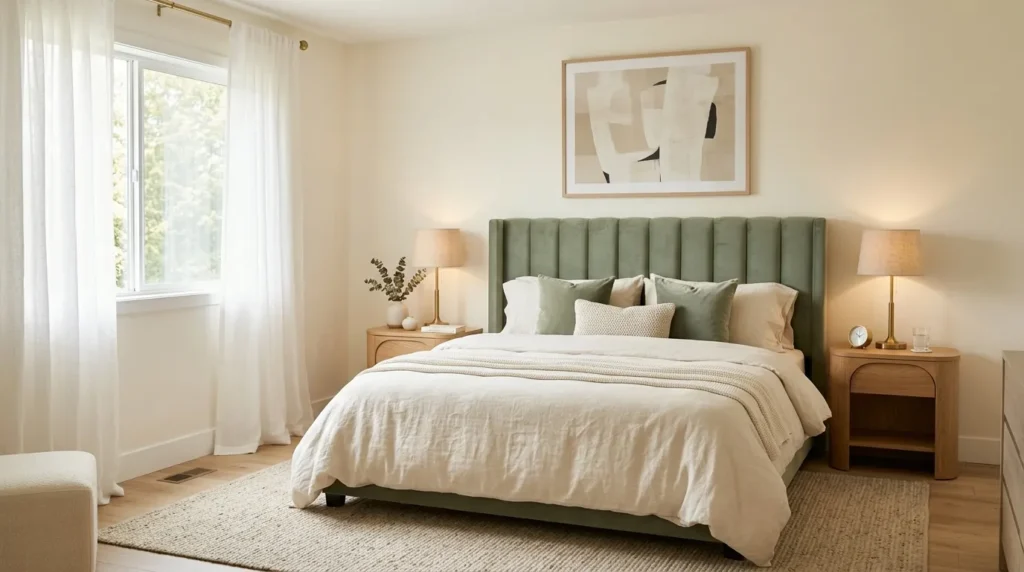
- A sage upholstered headboard adds color while keeping the walls neutral.
- Soft fabric makes the bed feel more comfortable and inviting.
- Cream bedding creates a clean contrast against the muted green.
- Choose curved edges for a softer, more relaxed bedroom aesthetic.
A sage upholstered headboard can become the centerpiece of a bedroom without requiring dramatic changes to the walls. The muted green fabric adds color and softness at eye level, while the neutral backdrop keeps the overall space bright. Pair the headboard with cream bedding, pale wood nightstands, and a textured beige rug for a balanced look. Curved headboards can make the room feel even softer by introducing gentle shapes alongside rectangular furniture. This approach is especially useful if you want a sophisticated bedroom that feels cozy rather than formal, with the bed providing most of the visual personality.
Fabric choice can make a noticeable difference in how the green appears. Linen and cotton create a relaxed, natural feeling, while velvet gives the same color a richer and more luxurious appearance. Keep the bedding relatively simple so the headboard remains visible instead of being covered by layers of pillows. In my experience, warm ivory bedding works particularly well because it softens the contrast and keeps the green looking muted. Add one small sage accessory elsewhere, such as a ceramic lamp or cushion, to connect the headboard with the rest of the room without making the color feel repetitive.
Also Read : 24 Colorful Bedroom Ideas for a Bright Happy Space
6. Botanical Sage Decor
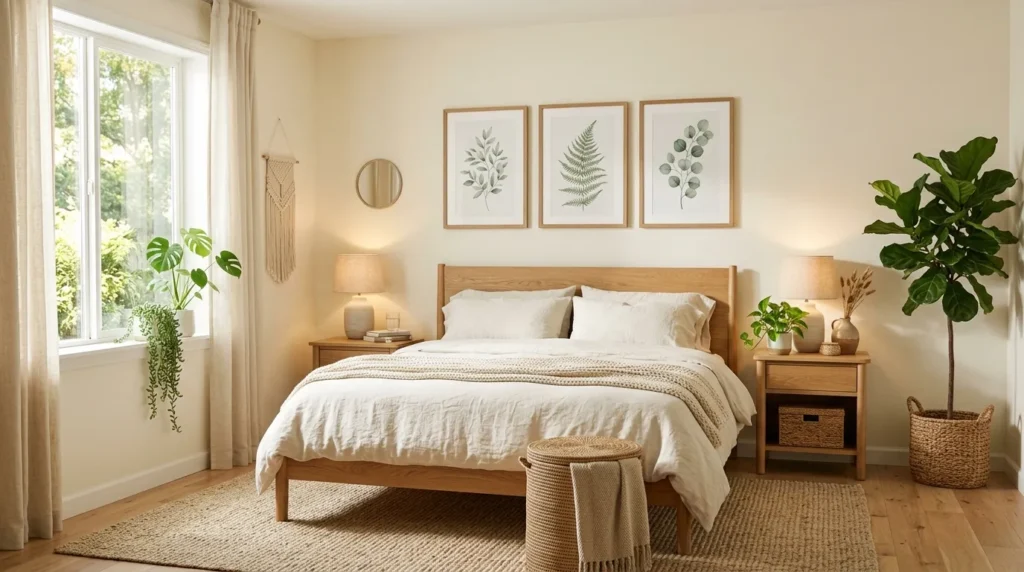
- Botanical artwork reinforces the natural qualities of muted green.
- Mix leafy prints with neutral walls for a subtle nature-inspired theme.
- Real or faux greenery adds texture and life around the room.
- Natural wood and woven accessories complete the organic look.
Botanical decor can bring the natural character of sage green into the bedroom without relying on large areas of paint. Choose artwork featuring leaves, delicate stems, or soft botanical illustrations, then surround it with cream walls, natural wood, and muted textiles. A few plants can add another layer of green while bringing variation in shape and texture. Keep the artwork and accessories within a restrained palette so the room feels peaceful rather than like a busy indoor garden. This approach is easy to personalize and works well whether your existing furniture is modern, traditional, or somewhere in between.
Natural materials make botanical decoration feel more cohesive. Try placing a small plant in a ceramic pot on the nightstand, adding a woven basket beside the bed, or choosing a jute rug underfoot. These details reinforce the connection to nature without requiring every item to feature leaves or green tones. I’ve noticed that botanical artwork looks particularly effective when it has plenty of white or neutral space around the illustrations. That breathing room keeps the bedroom feeling calm. Choose one larger print or a small coordinated gallery rather than filling every wall, especially if the room is compact.
7. Sage Green Bedding Layers
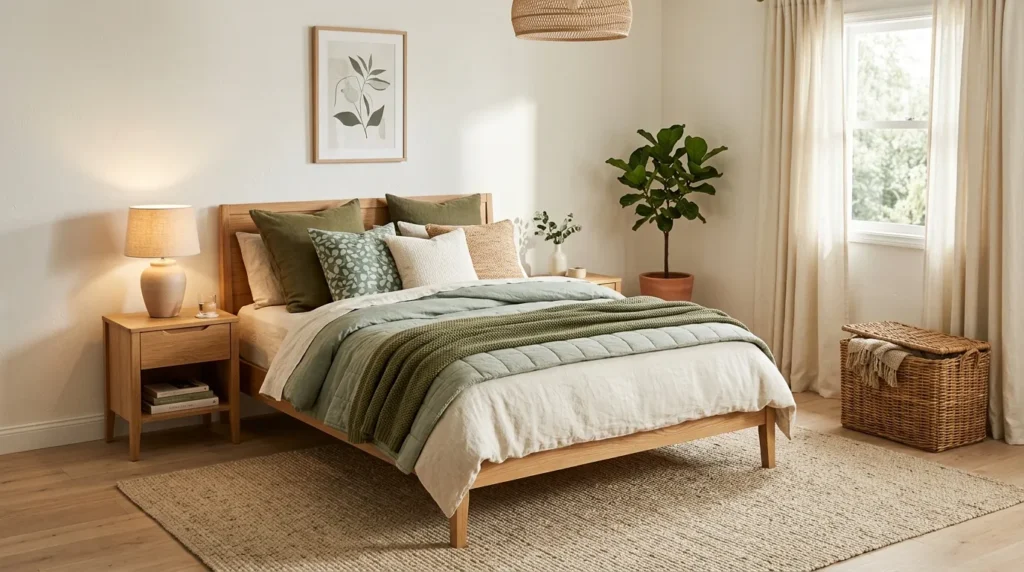
- Layering different green tones makes the bed look richer and more inviting.
- Combine sage with olive, eucalyptus, or muted moss for subtle depth.
- Keep larger pieces neutral to prevent the palette from feeling heavy.
- Textured throws and cushions add softness without requiring bold patterns.
Layered green bedding can make the bed feel instantly more inviting while adding depth to a calm bedroom palette. Instead of choosing one identical shade for every piece, combine soft sage with muted eucalyptus, olive, or moss accents. Keep the sheets and larger pillows cream or warm white so the different greens have room to breathe. A textured throw at the foot of the bed can add another layer without making the arrangement complicated. This approach works particularly well when you want a bedroom that feels cozy and thoughtfully styled but still relaxed enough for everyday living.
Texture matters just as much as color when building a layered bed. Try pairing smooth cotton sheets with a washed linen duvet, a knitted throw, and softly structured cushions. The slight differences between materials prevent the green palette from looking flat. Keep the surrounding furniture simple and warm, especially natural wood, because it complements muted green beautifully. A small amount of contrast can make the bedding stand out without disturbing the calm atmosphere. If you like changing your bedroom seasonally, you can also replace heavier throws and cushions while keeping the sage foundation throughout the year.
8. Sage Green Paneling
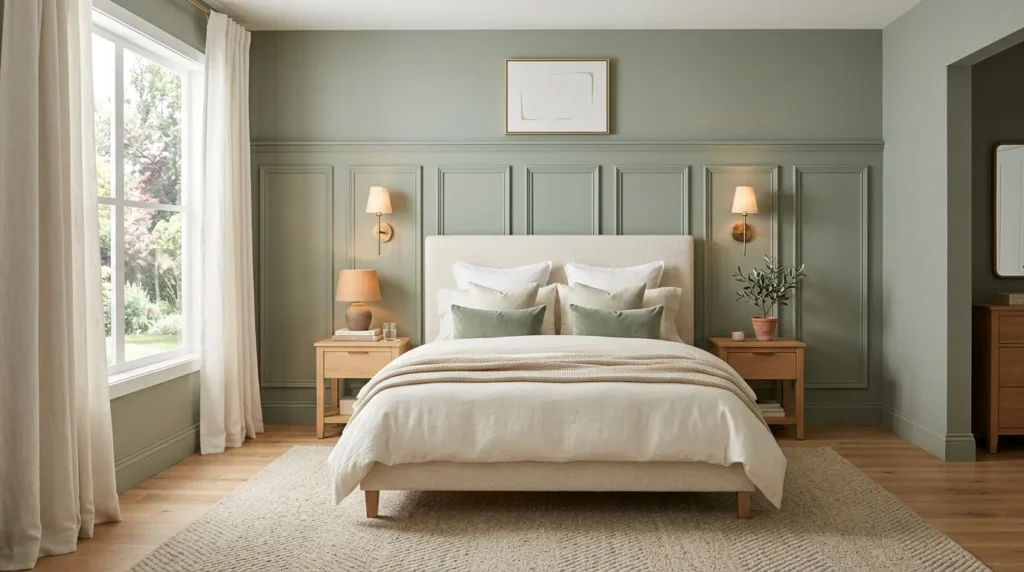
- Wall paneling adds architectural detail while giving the room a refined finish.
- Paint the panels and surrounding wall in the same muted green for continuity.
- Traditional panel shapes work with both classic and modern furniture.
- Keep accessories minimal so the wall texture remains visible.
Sage wall paneling adds character and structure while keeping the color palette calm. Whether you choose traditional rectangular molding, narrow vertical panels, or simple board-and-batten detailing, painting the entire feature in one muted green shade creates a polished effect. Place the paneling behind the bed to naturally frame the sleeping area, then balance it with cream bedding and warm wood furniture. The architectural lines provide enough visual interest that you can keep the rest of the room simple. This makes the design feel finished without requiring lots of artwork, patterns, or decorative accessories.
The style of paneling can change the personality of the bedroom. Narrow vertical panels can emphasize ceiling height, while traditional molding creates a more classic appearance. If you prefer a modern look, use simple, evenly spaced sections with minimal trim. Choose warm lighting that highlights the raised details after sunset without creating harsh shadows. I’ve noticed that keeping the panel color muted is important because highly saturated green can make architectural details feel too dominant. A softer shade allows the texture to remain visible while preserving the restful quality that makes this color so appealing for bedrooms.
9. Sage and Natural Wood
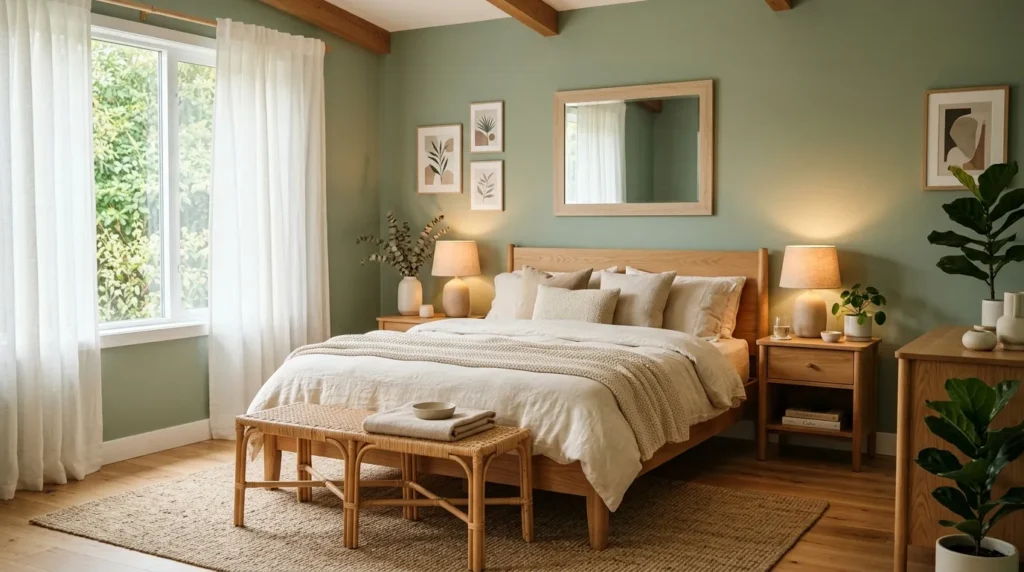
- Natural wood adds warmth and contrast to a muted green bedroom.
- Light oak creates an airy Scandinavian-inspired appearance.
- Darker walnut can make the palette feel richer and more sophisticated.
- Mix wood textures carefully to keep the room visually balanced.
Sage green and natural wood make an especially effortless pairing because both bring an organic feeling into the bedroom. Light oak creates an airy, Scandinavian-inspired atmosphere, while walnut or deeper wood tones give the same palette a richer, more sophisticated character. Use sage on the walls, bedding, or upholstered furniture, then let wood provide warmth through the bed frame, nightstands, bench, or flooring. Keep textiles neutral so the natural grain remains noticeable. The combination creates a bedroom that feels grounded and welcoming without relying on strong patterns or dramatic contrasts.
The wood tone you choose can also influence how the green appears. Pale oak keeps sage looking fresh and light, while darker walnut makes it feel deeper and more elegant. Avoid mixing too many unrelated wood colors because they can make a calm room feel visually fragmented. Instead, repeat one main timber finish and introduce a second shade only through small accents. In my experience, woven materials such as rattan and jute help bridge different wood tones naturally. Add cream linen bedding and soft lighting, and the result feels warm, relaxed, and easy to maintain.
10. Sage Ceiling Accent
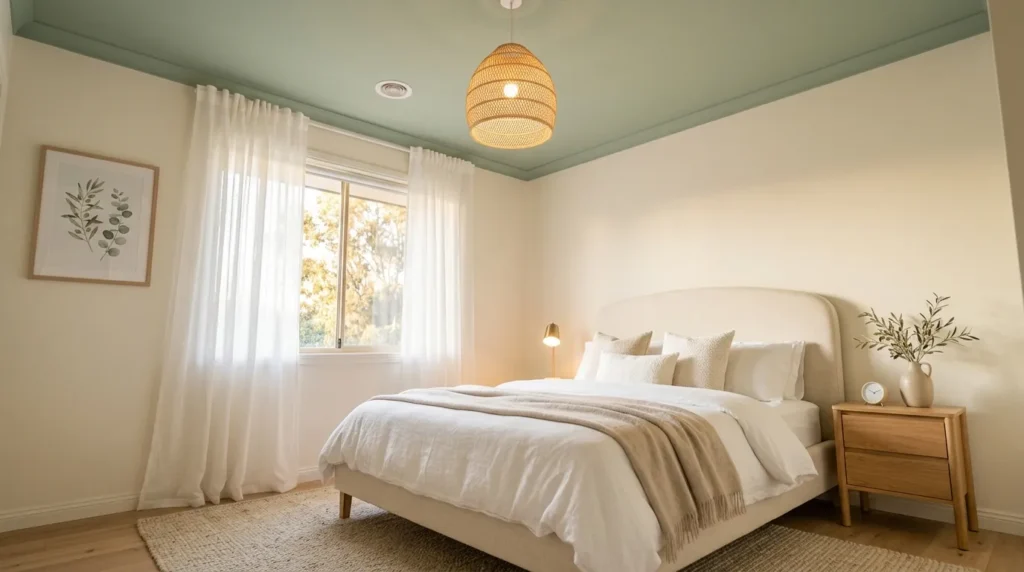
- A painted ceiling creates an unexpected layer of color.
- Soft sage overhead can make the bedroom feel more cocooning.
- Keep the walls lighter to maintain visual balance.
- Warm lighting helps the green ceiling feel inviting at night.
A sage ceiling can create a surprisingly cozy transformation without changing the entire room. Painting the fifth wall in a muted green draws the color overhead and gives the bedroom a more enclosed, restful feeling. Keep the vertical walls warm white or cream so the ceiling remains the main color feature without making the room feel smaller. Light oak furniture and neutral bedding provide warmth and balance. This idea is particularly effective in bedrooms with higher ceilings because the soft color visually lowers the space slightly, creating a more intimate atmosphere that feels comfortable at bedtime.
The finish and lighting are important when adding color overhead. A matte or low-sheen paint usually works best because it minimizes distracting reflections and gives the ceiling a soft appearance. Choose warm bulbs for pendant lights, sconces, or bedside lamps so the green remains gentle after sunset. I’ve noticed that ceilings often get overlooked when decorating, even though they can dramatically influence how a room feels. If you are hesitant about painting the entire ceiling, try a shallow border or painted tray section first. It can provide the same design idea in a more subtle way.
11. Sage Velvet Accents
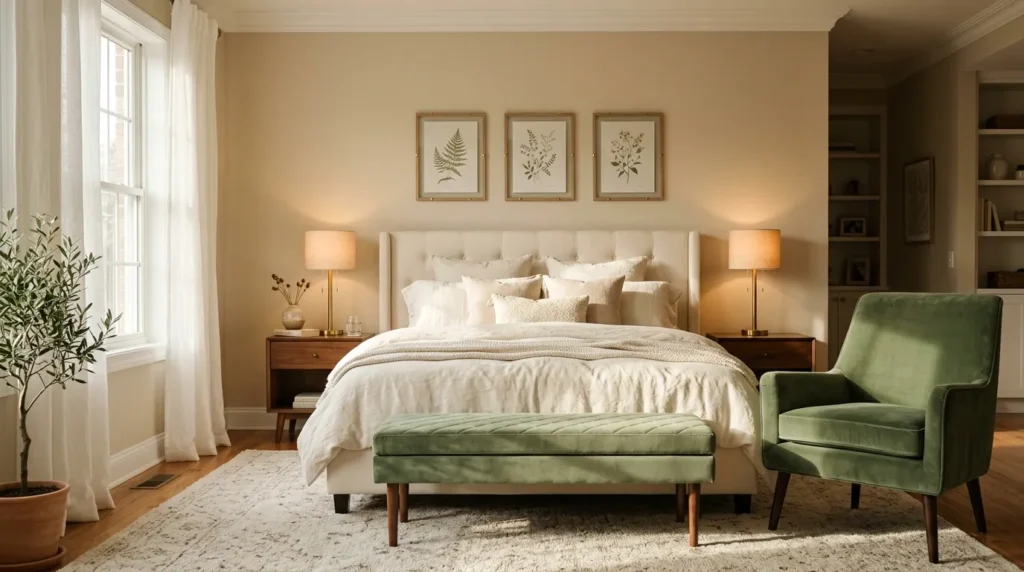
- Velvet introduces a richer texture while keeping the green palette sophisticated.
- Use it on a bench, accent chair, or decorative cushions.
- Pair velvet with linen and cotton to prevent the room feeling overly formal.
- Brass or warm wood details complement the luxurious texture beautifully.
Sage velvet can bring a touch of richness to a bedroom without turning the space into something overly formal. Instead of covering every major surface, use the fabric selectively on an accent chair, bench, cushion, or small headboard. The soft sheen of velvet catches natural and artificial light differently throughout the day, giving the muted green more depth. Pair it with cream linen, cotton bedding, natural wood, and warm beige textiles to balance the luxurious texture. This combination creates a bedroom that feels comfortable and polished while remaining suitable for everyday relaxation.
Because velvet already has a strong visual texture, a little can go a long way. Choose one main velvet piece and let the surrounding fabrics remain simpler. A walnut nightstand or brass lamp can add warmth, while a neutral rug keeps the floor visually quiet. In my experience, sage velvet works especially well in bedrooms where you want a slightly elevated look without introducing jewel tones or dramatic colors. If the room receives strong sunlight, test a fabric sample first because velvet can appear lighter or deeper depending on the direction and intensity of the light.
12. Sage Cottage Retreat
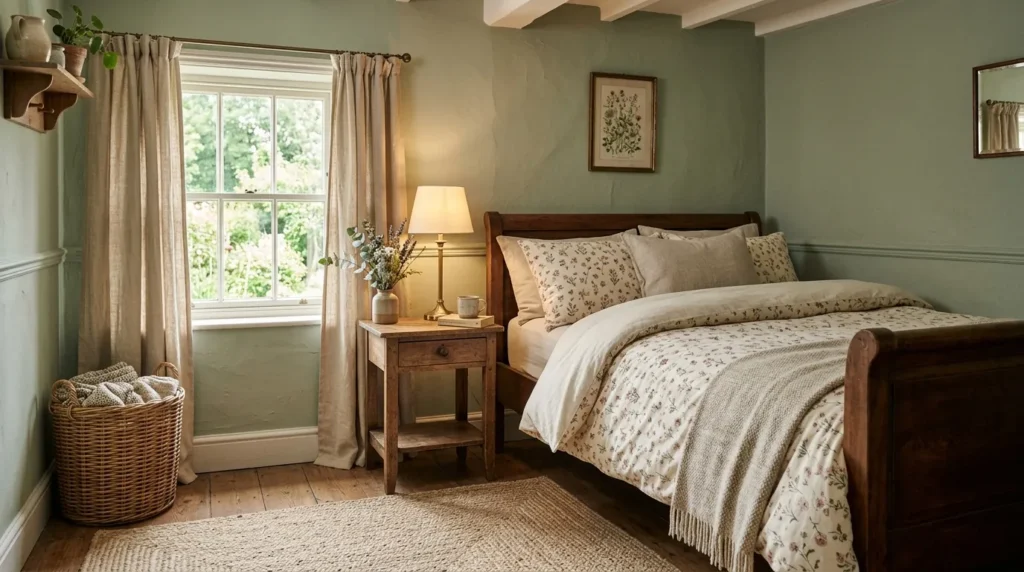
- Sage walls create a natural foundation for cozy cottage-inspired details.
- Floral fabrics can introduce charm without overwhelming the muted palette.
- Vintage wood furniture adds character and warmth.
- Soft lamps and layered textiles make the bedroom feel especially welcoming.
A sage cottage bedroom feels warm, relaxed, and full of gentle character. Start with muted green walls or bedding, then add natural wood furniture, soft floral textiles, woven baskets, and vintage-inspired accessories. Cream, dusty blue, warm beige, and muted blush can complement the green without competing with it. The goal is not to create a perfectly matched room but one that feels collected over time. This style works particularly well when you enjoy comfortable fabrics, traditional details, and furniture with visible age or character. The result is peaceful enough for rest but still full of personality.
Cottage style becomes more convincing when you mix patterns and textures carefully. A small floral pillow can sit beside a plain linen cushion, while a woven rug adds another layer beneath the bed. Choose one dominant pattern and keep the others quieter so the room remains restful. Warm bedside lamps are particularly effective because they soften the sage walls and make wood furniture feel richer after sunset. I’ve seen many bedrooms benefit from this approach because it allows existing furniture to become part of the design instead of requiring everything to be replaced. Small additions can create a completely different atmosphere.
13. Sage Minimalist Bedroom
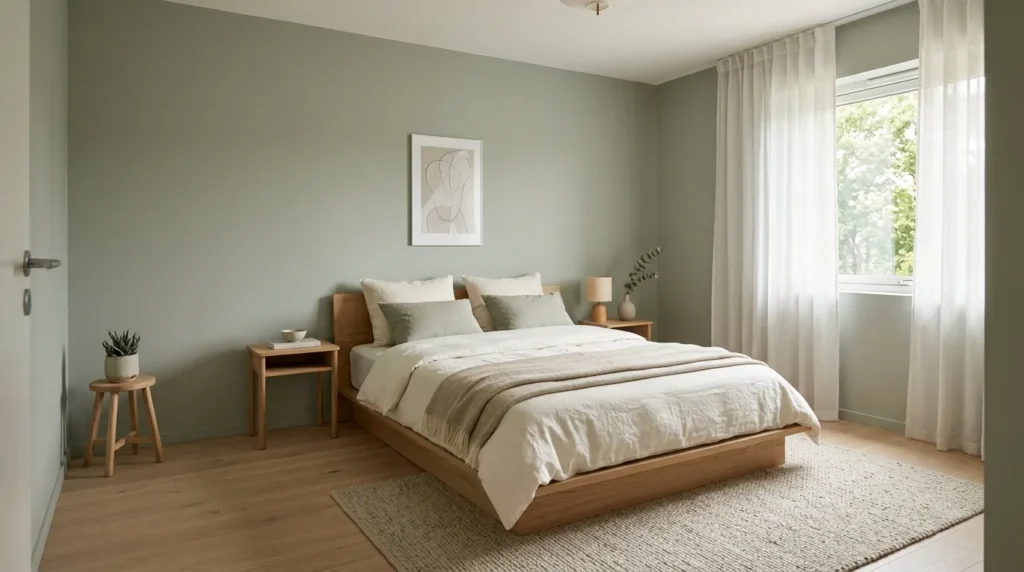
- Minimal furniture lets the calming green palette become the main feature.
- Keep surfaces clear to create a more peaceful visual environment.
- Choose simple bedding in cream, white, or warm beige.
- Natural wood adds enough warmth without creating clutter.
A minimalist sage bedroom proves that a calming color does not need lots of decoration to make an impact. Use muted green across the walls or behind the bed, then keep furniture simple with clean lines and natural materials. Cream bedding, a warm beige rug, and pale wood create enough contrast without distracting from the peaceful palette. Clear nightstands and uncluttered surfaces make the room feel visually lighter. This approach works especially well if you want your bedroom to feel restful at the end of a busy day, because there are fewer competing details demanding attention.
Minimalism does not mean the bedroom needs to feel empty or cold. Texture becomes important when you remove decorative clutter. Choose linen bedding, a wool rug, woven storage, or a softly textured throw to give the room warmth without adding visual noise. Keep artwork limited to one meaningful piece rather than filling every wall. I’ve noticed that warm lighting makes a minimalist room feel significantly more comfortable after dark. A simple bedside lamp and soft overhead fixture can create enough atmosphere without sacrificing the clean appearance that makes this design so relaxing.
14. Sage Green Gallery Wall
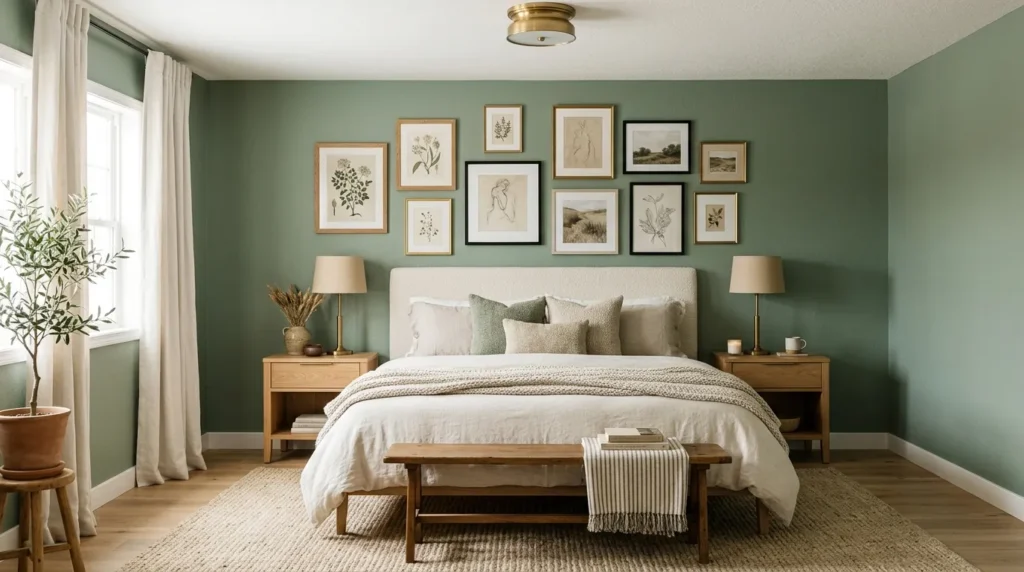
- A gallery wall adds personality while keeping the color palette cohesive.
- Botanical prints naturally complement the muted green backdrop.
- Mix artwork sizes to create a relaxed, collected appearance.
- Keep frames within a small range of finishes for visual consistency.
A gallery wall can bring personality to a sage green bedroom while keeping the overall atmosphere calm. Choose botanical prints, abstract artwork, line drawings, or neutral photography that share complementary colors rather than matching perfectly. Arrange several different sizes above the bed or along a side wall to create a collected appearance. Natural wood, cream, black, or thin brass frames can work beautifully against muted green. This idea allows you to introduce meaningful images and personal details without relying on bold colors. The result feels more individual and lived-in while preserving the peaceful character of the room.
Before hanging everything, lay the artwork on the floor and experiment with spacing and proportions. Leave enough breathing room between pieces so the wall does not become visually crowded. I’ve noticed that a mixture of larger and smaller prints usually feels more relaxed than using identical frames in a rigid grid. If the bedroom is small, choose fewer pieces and let the sage wall remain visible around them. Repeat one subtle color from the artwork in a cushion or throw for cohesion. That small connection can make the gallery feel intentionally designed rather than randomly assembled.
15. Sage Green Canopy Bed
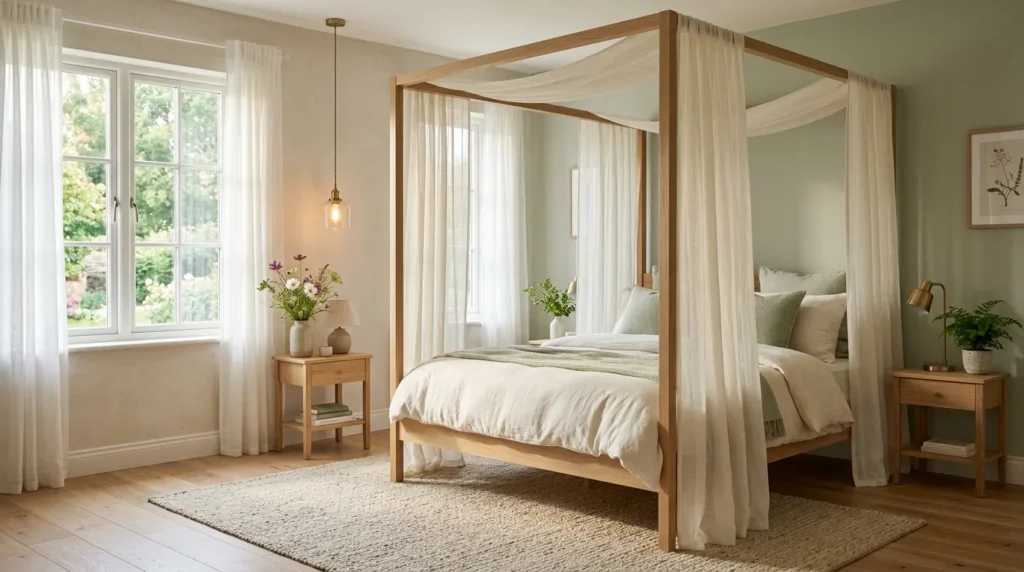
- A canopy bed adds softness and structure to a calming green palette.
- Light curtains create an intimate, cocoon-like sleeping area.
- Keep the fabric neutral so the room does not feel visually heavy.
- Natural wood or black metal frames can suit different decorating styles.
A canopy bed can turn a sage-toned bedroom into a cozy retreat with very little additional decoration. The vertical frame naturally defines the sleeping area, while soft curtains create a sense of privacy and comfort. Choose a light wood canopy for an organic look, or use slim black metal for a more modern contrast. Keep the curtains ivory, cream, or sheer white so they soften the structure without competing with the green palette. This arrangement works particularly well in larger bedrooms where the bed needs stronger visual presence and a clear focal point.
The fabric surrounding a canopy bed can dramatically change the mood of the room. Fully open curtains create an airy appearance, while loosely gathered panels make the bed feel more enclosed and intimate. Keep the bedding simple with cream linen, pale sage cushions, and a textured throw. Avoid too many patterns because the canopy itself already creates strong vertical lines. In my experience, warm pendant lights or small bedside lamps look especially beautiful through sheer fabric, producing a gentle glow in the evening. The result feels romantic and peaceful without becoming overly formal or theatrical.
16. Sage and Terracotta Accents
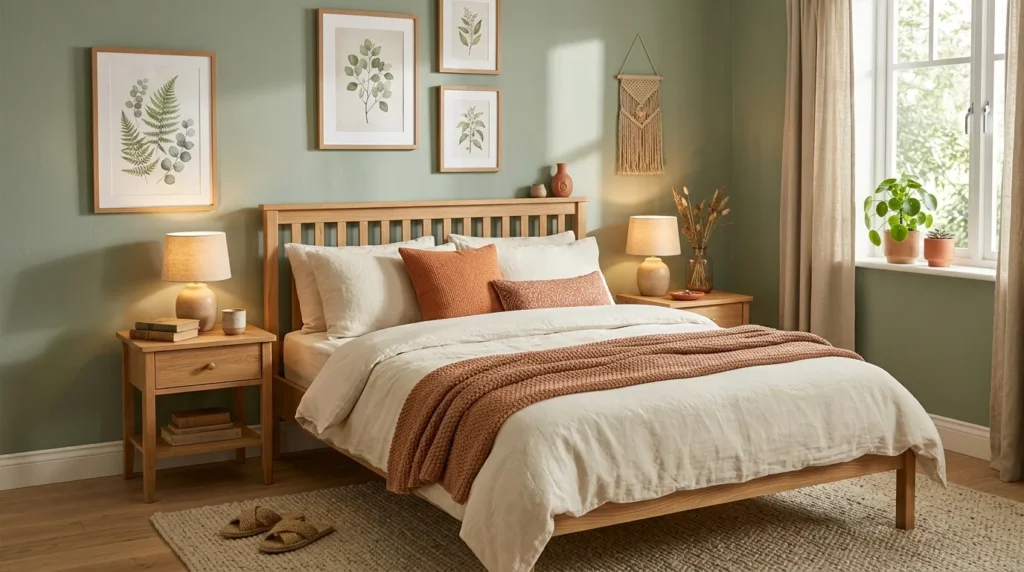
- Terracotta adds warm contrast to a muted green bedroom.
- Use the earthy shade through cushions, pottery, artwork, or a small bench.
- Keep sage as the dominant color for a calmer overall effect.
- Natural wood helps connect the two earthy tones.
Sage green and terracotta create a warm, earthy combination that feels both calming and full of character. Keep sage as the dominant color, then introduce terracotta through cushions, pottery, artwork, a throw, or a small upholstered bench. The rusty clay tone adds warmth and prevents the muted green from feeling too cool or predictable. Cream bedding and natural wood help bridge the two colors, creating a palette that feels connected to nature. This combination works especially well when you want a bedroom that feels relaxed but has more personality than a strictly neutral color scheme.
The amount of terracotta matters because the color can become visually strong if used too heavily. Start with one or two accents, then add more only if the room still feels balanced. Handmade ceramics are an easy way to introduce the shade without committing to large furniture pieces. Natural oak and woven textures complement both colors beautifully. I’ve noticed that this palette becomes particularly inviting under warm evening lighting because the terracotta picks up the amber glow while the sage remains soft and muted. It is an easy combination to adjust as your decorating style changes.
17. Sage Green Accent Chair
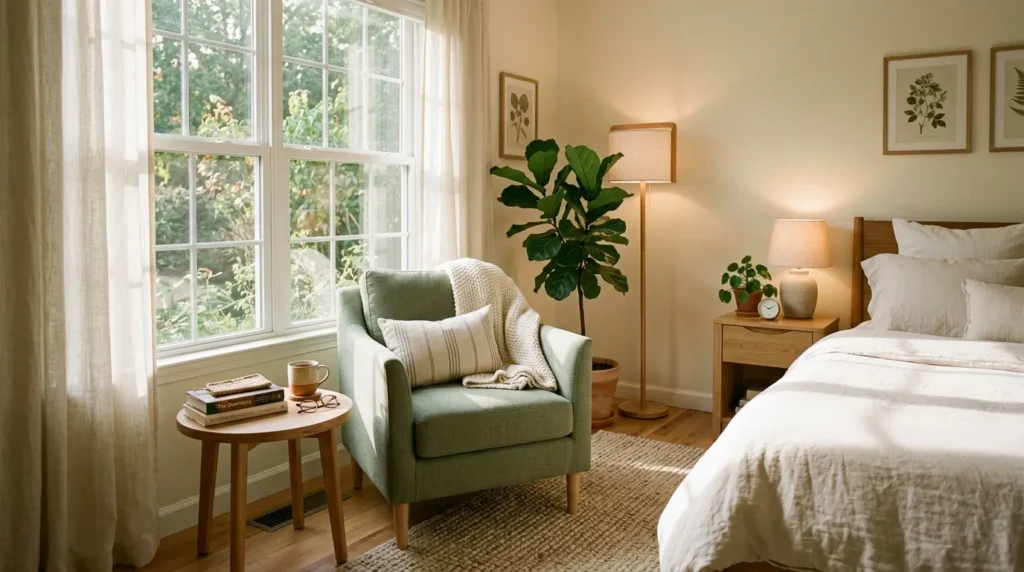
- A sage accent chair introduces color without changing the entire room.
- Place it beside a window for a peaceful reading corner.
- Pair the chair with a small wood table and soft floor lamp.
- Neutral walls allow the chair to become a subtle focal point.
A sage accent chair can create a peaceful little retreat inside the bedroom without requiring a major redesign. Place the chair near a window, beside a bookshelf, or in an unused corner, then add a small wooden side table for a book, cup, or lamp. Keep the surrounding walls and larger furniture neutral so the muted green upholstery becomes a gentle focal point. A woven rug underneath or a soft cream throw can make the area feel even more inviting. This idea is particularly useful when you have an awkward corner that currently feels empty or disconnected from the rest of the room.
Think about comfort as well as appearance when choosing the chair. A supportive shape and washable or durable fabric will make the corner more useful for everyday reading, getting dressed, or enjoying a quiet moment. Leave enough space around the chair so it does not look squeezed between furniture. I’ve noticed that placing a chair near natural light makes even a small bedroom feel more purposeful. Add a warm floor lamp for evenings and one small plant for texture. The finished corner becomes both decorative and functional, giving the bedroom another place to relax beyond the bed.
18. Sage Green Wainscoting
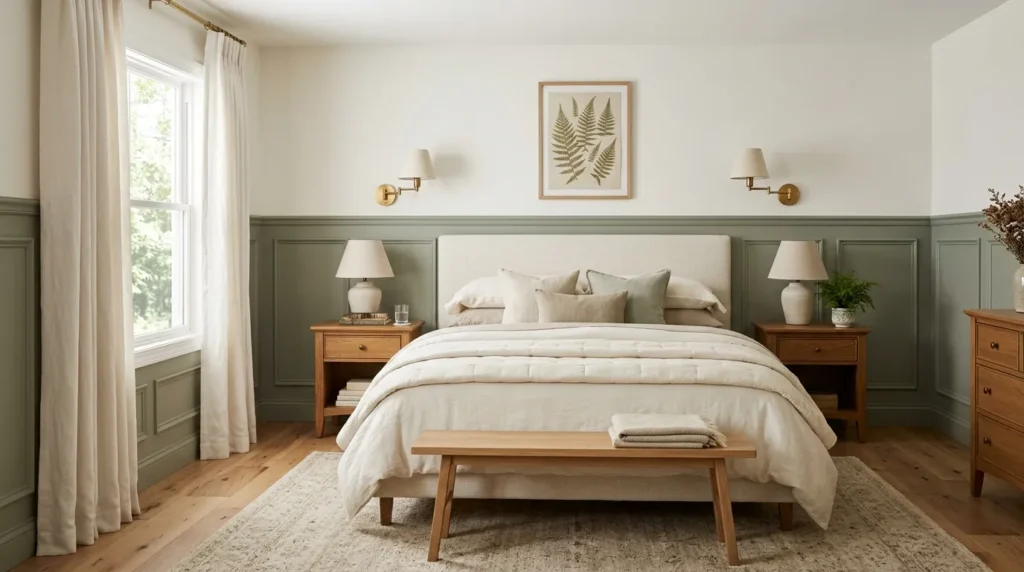
- Wainscoting adds traditional architectural detail while keeping the upper walls lighter.
- Paint the lower panels sage for a subtle color statement.
- Warm white above the molding keeps the room feeling open.
- This approach works well with classic, cottage, and transitional furniture.
Sage wainscoting offers a beautiful way to introduce color while keeping the bedroom light and visually balanced. Paint the lower portion of the walls in a muted green and leave the upper section warm white or cream. The horizontal division creates architectural structure while giving the room a subtle focal point. Pair the treatment with an upholstered bed, natural wood furniture, linen curtains, and simple artwork for a classic but relaxed look. This idea is particularly effective in bedrooms with traditional molding because the green emphasizes the existing architecture without requiring dramatic changes.
The height of the wainscoting can influence the overall appearance. A lower treatment feels more understated, while taller paneling creates a stronger architectural statement and can make the bedroom feel more distinctive. Keep the upper wall relatively uncluttered so the two-tone effect remains visible. Warm brass sconces or simple framed artwork can add character without competing with the molding. In my experience, muted sage works especially well on paneling because the architectural details remain visible without looking too bold. The result is a bedroom that feels polished, cozy, and thoughtfully finished rather than overly decorated.
19. Sage Green Wallpaper
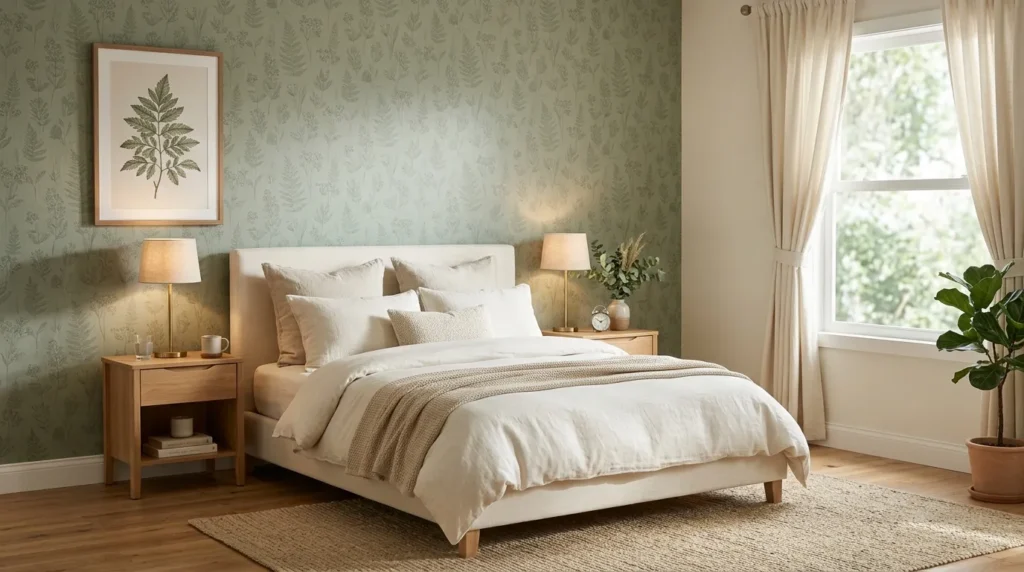
- Botanical wallpaper adds pattern while keeping the natural green theme consistent.
- Choose small-scale prints for a softer, less overwhelming effect.
- Use solid cream bedding to balance a detailed wall.
- Natural wood furniture complements leafy and organic patterns beautifully.
Sage botanical wallpaper can create an immersive bedroom backdrop without making the color feel overwhelming. Choose a muted pattern featuring leaves, delicate branches, or subtle florals, then keep the bedding and larger furniture relatively simple. Cream, ivory, and warm beige provide enough contrast to let the wallpaper remain visible without competing with it. Natural wood furniture adds warmth and reinforces the connection to nature. This approach works especially well behind the bed because the patterned wall naturally creates a focal point while the surrounding surfaces can remain quiet and uncluttered.
Wallpaper becomes easier to live with when the pattern scale matches the room. Smaller bedrooms often benefit from delicate prints with plenty of background space, while larger rooms can handle more substantial botanical designs. Before committing, test a sample against your flooring and bedding because natural and artificial light can change how the green appears. I’ve noticed that keeping accessories minimal helps patterned wallpaper look sophisticated rather than busy. If you love changing decor frequently, use the wallpaper on one feature wall instead of every surface. That gives you the visual impact without limiting future decorating choices.
20. Sage Green and Black
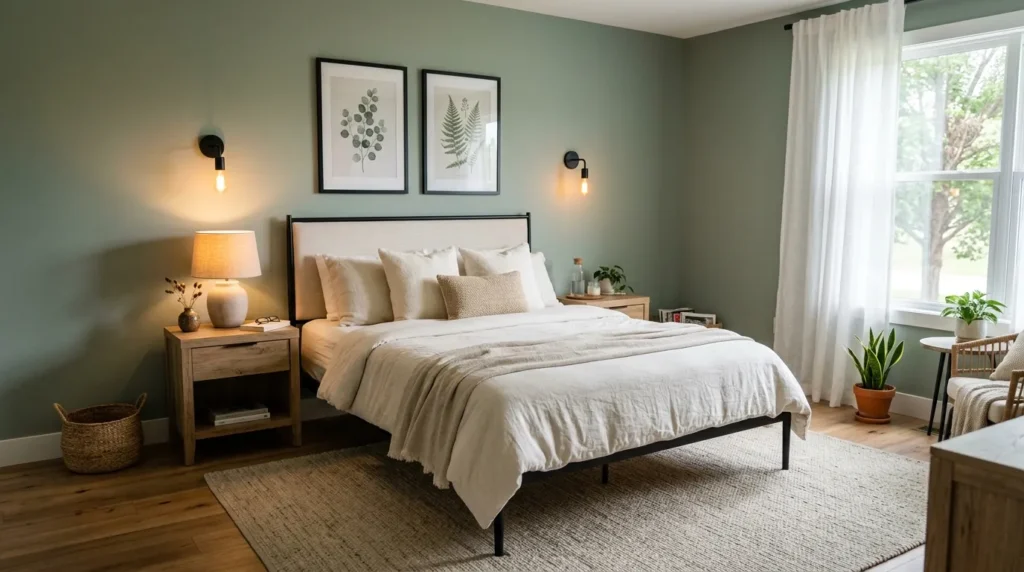
- Black accents add definition to an otherwise soft green palette.
- Use black through lighting, picture frames, hardware, or a slim bed frame.
- Keep sage and warm neutrals dominant for a balanced atmosphere.
- Natural wood prevents the contrast from feeling too stark.
Sage green and black create a striking combination when you want a calm bedroom with a little more definition. The muted green provides softness, while small black details give the room structure and contrast. Introduce black through a slim metal bed frame, picture frames, sconces, cabinet handles, or a simple floor lamp rather than using it across large surfaces. Keep the rest of the room warm with cream bedding, beige textiles, and natural wood. This balance prevents the darker accents from overpowering the gentle quality that makes muted green so appealing in a bedroom.
The secret is using black as an accent rather than allowing it to become the dominant color. A few repeated details can visually connect the room without making the palette feel harsh. For example, black sconces can echo a thin bed frame and one picture frame while the rest of the furniture remains wooden. I’ve noticed that warm lighting is particularly important with this combination because cool bulbs can make the green and black feel sharper. Soft lamps and natural daylight help preserve the relaxed atmosphere while still giving the bedroom enough contrast to feel modern and thoughtfully designed.
21. Layered Sage Retreat
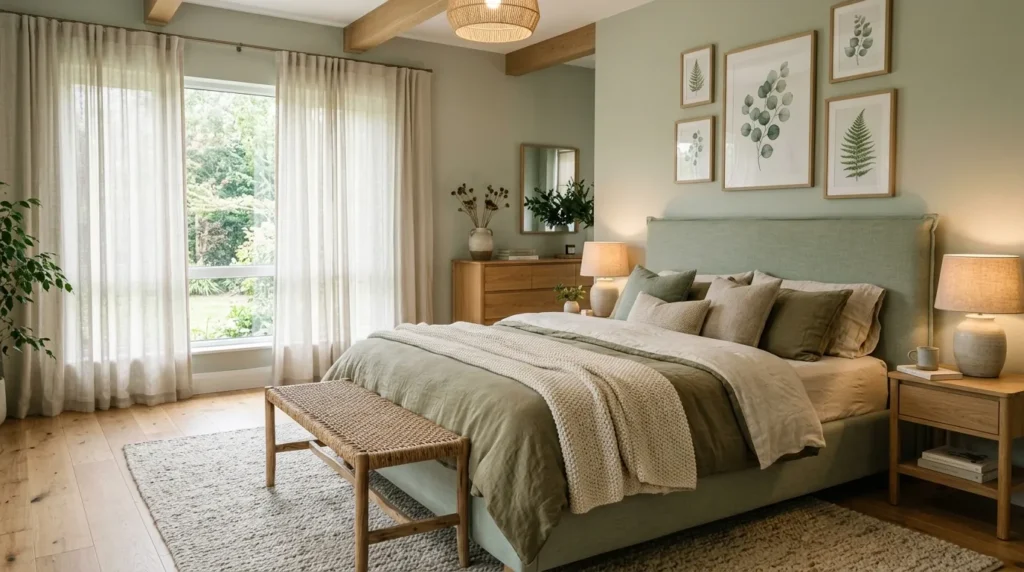
- Layer several muted green and neutral tones for a rich but peaceful finish.
- Combine linen, wool, wood, and woven textures to create depth.
- Keep the lighting warm and soft to enhance the relaxing atmosphere.
- Use a few personal accessories so the room feels lived-in rather than staged.
A layered sage retreat brings together the most calming elements of the palette in one comfortable, cohesive space. Combine muted green walls or bedding with cream linens, beige rugs, natural wood, woven accessories, and a few deeper green accents. Different textures make the room feel rich without requiring bold patterns or bright colors. Add soft lighting, simple artwork, and a few personal objects to keep the space connected to real everyday life. The goal is not perfection but balance: a bedroom that feels visually peaceful while still having enough warmth and personality to make you want to linger.
Layering works best when each element serves a purpose. Use linen for softness, wool for warmth, wood for structure, and woven materials for natural texture. Keep the color variations subtle so the bedroom remains restful rather than visually busy. A bedside lamp with a warm bulb can create a gentle glow at night, while sheer curtains allow daylight to soften the green during the morning. In my experience, this combination feels especially inviting because it changes throughout the day without needing constant styling. Small personal details, such as favorite books or meaningful artwork, make the retreat feel genuinely yours.
Conclusion
Creating a calming bedroom does not require a complete renovation or expensive furniture. The right shade of green, a few natural textures, soft lighting, and thoughtful accessories can completely change the atmosphere. A sage green bedroom gives you plenty of flexibility, whether you prefer subtle bedding, painted walls, botanical accents, or layered earthy tones. Choose one or two ideas that fit your existing space and start small. I’ve seen how simple changes can make a bedroom feel noticeably more peaceful and personal. Save this article on Pinterest, try your favorite ideas, and share it with someone looking for beautiful bedroom inspiration.