A beautiful fireplace can turn an ordinary living room into the coziest spot in your home.
Imagine warm stone, natural wood, soft throws, and comfortable seating gathered around a crackling fire.
A stone fireplace brings texture, character, and a timeless connection to nature, but choosing the right style can feel overwhelming. Should you use river rock, stacked stone, limestone, or a dramatic floor-to-ceiling design? This collection brings together 24 inspiring ideas for creating a living room that feels warm, rustic, comfortable, and visually inviting. From simple stone surrounds to statement hearths and cozy seating arrangements, you’ll find practical ways to make the fireplace the natural focal point of your space. In my experience, combining just a few natural materials can completely change how a room feels.
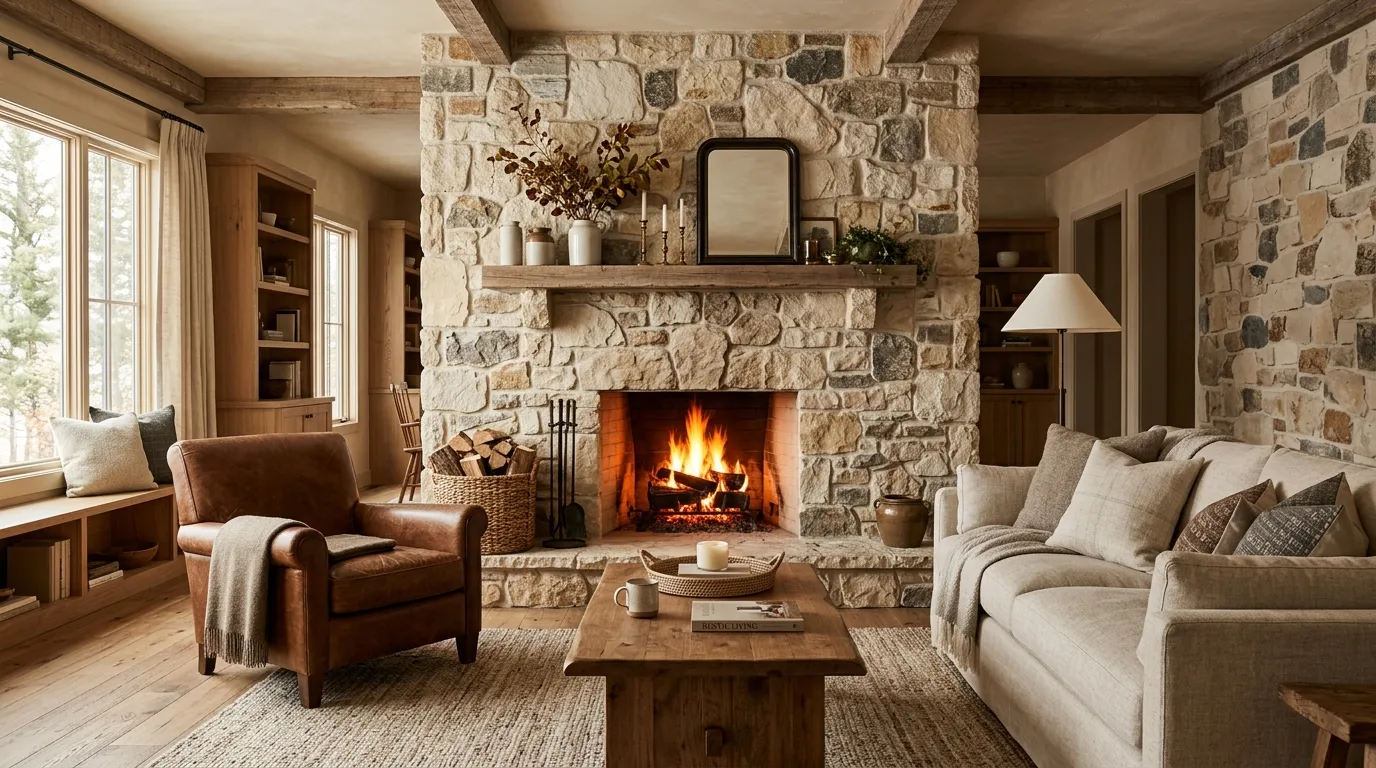
1. Full Stone Surround
About the Idea
- Floor-to-ceiling stone creates an instant architectural focal point.
- Natural variations in stone color make the fireplace feel authentic.
- Reclaimed wood adds warmth against the rugged surface.
- Keep surrounding furniture soft and neutral to balance the heavy texture.
A full stone surround gives a living room an immediate sense of warmth, permanence, and rustic character. Extending the stone from the hearth toward the ceiling makes the fireplace feel like an architectural feature rather than simply another piece of furniture. Choose stones with natural variation instead of perfectly uniform pieces if you want a more authentic appearance. In my experience, this approach works especially well in rooms with exposed beams, hardwood floors, or large windows because the rough stone balances those natural elements beautifully. The fireplace becomes the visual anchor while the rest of the room can remain comfortably understated.
The surrounding materials should complement the stone rather than compete with it. A reclaimed wood mantel, linen sofa, woven rug, and simple ceramic accessories can soften the rugged surface without taking attention away from the fireplace. Keep the color palette grounded in warm beige, brown, cream, and muted gray tones. If the room is small, lighter stone can help maintain an open feeling, while darker stone creates a more dramatic atmosphere. Add comfortable seating within easy view of the fire so the feature remains both visually impressive and genuinely useful for everyday relaxation.
2. River Rock Fireplace
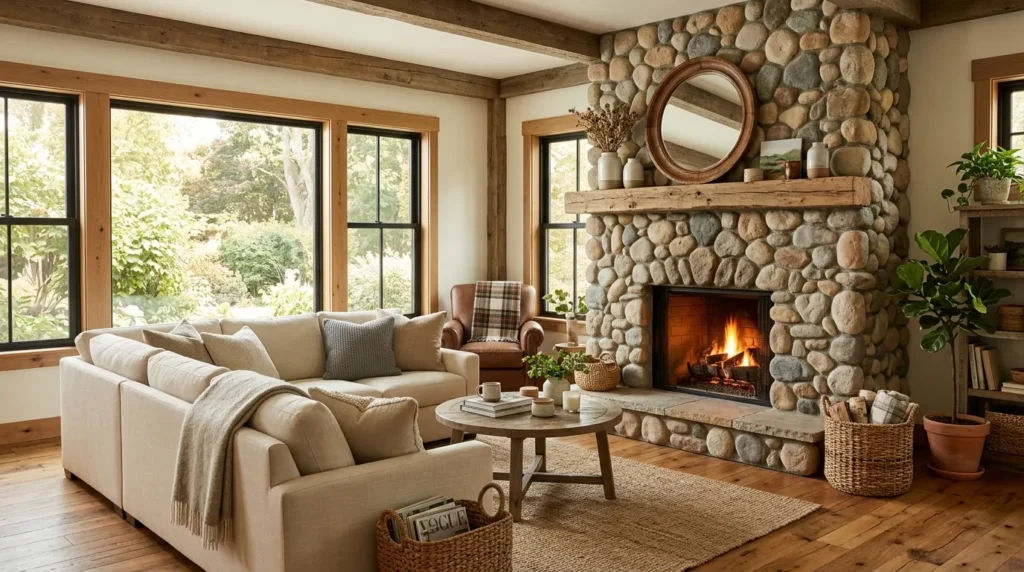
About the Idea
- Rounded river rocks create a softer, more organic fireplace texture.
- Mixed stone colors add natural visual interest.
- A substantial wood mantel balances the irregular stone shapes.
- Keep upholstery simple to let the fireplace remain the focal point.
River rock creates a softer and more organic look than sharply cut stone, making it especially appealing for relaxed rustic interiors. Each rounded stone has its own shape, color, and texture, so the finished surround feels naturally collected rather than manufactured. Browns, grays, creams, and muted earth tones work beautifully together and make the fireplace easy to coordinate with neutral furniture. I’ve noticed that river rock looks particularly inviting when paired with oversized seating, woven textiles, and warm wood because those materials reinforce the casual connection to nature.
The irregular surface also gives the room plenty of texture without requiring many decorative accessories. Choose a sturdy wood mantel with a relatively simple profile so the natural stones remain visually dominant. A large mirror or understated artwork above the mantel can add height without making the arrangement feel busy. Keep baskets, throws, and cushions nearby for practical comfort. If the fireplace has a deep hearth, use it as an additional architectural feature rather than covering it with decorations. The result is a relaxed gathering space that feels warm, established, and connected to the outdoors.
3. Whitewashed Stone
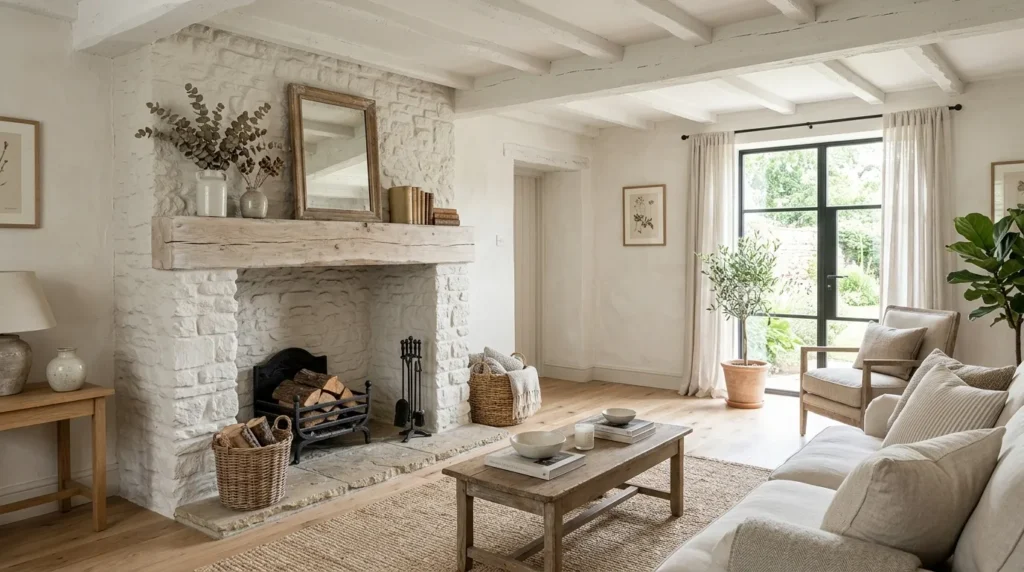
About the Idea
- Whitewashing lightens heavy stone while preserving its natural texture.
- Cream and beige furniture reinforce the airy rustic atmosphere.
- Pale wood adds warmth without making the room visually dark.
- Use matte finishes to maintain an authentic, relaxed appearance.
Whitewashed stone offers a beautiful way to keep the rustic texture of a fireplace while creating a brighter, more relaxed living room. Instead of covering the natural shapes and joints completely, a light finish allows portions of the original stone to remain visible. This creates subtle variation rather than a perfectly uniform white surface. Pair the surround with pale wood, cream upholstery, woven materials, and natural flooring for a soft countryside-inspired palette. In my experience, this approach works particularly well in rooms where a traditional dark stone fireplace feels visually too heavy.
The lighter finish can also make a smaller living room feel more spacious while preserving the architectural importance of the fireplace. Avoid adding too many bright white accessories because the room can quickly lose its warmth. Cream, oatmeal, beige, and light taupe provide softer contrast and complement the stone naturally. Add a chunky woven throw, a simple wood basket, or a few understated ceramic pieces to reinforce the rustic character. The result is a fireplace that still feels substantial and authentic but creates a lighter backdrop for comfortable everyday living.
4. Reclaimed Wood Mantel
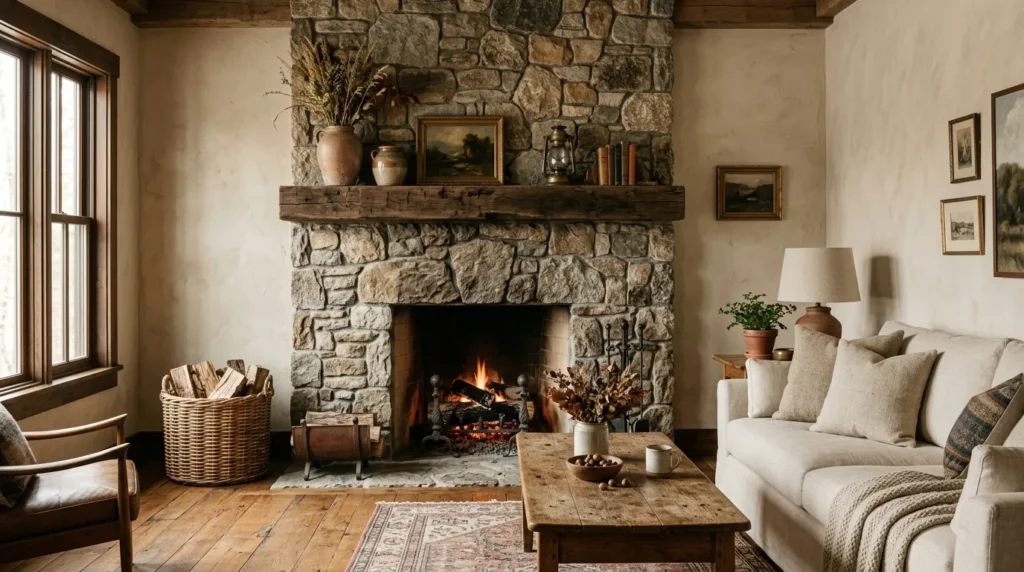
About the Idea
- Reclaimed wood adds warmth and history to a rugged stone surround.
- A thick mantel creates a strong horizontal visual line.
- Natural imperfections make the fireplace feel authentic.
- Keep mantel styling simple so the wood remains noticeable.
A reclaimed wood mantel can instantly soften the rugged appearance of a stone fireplace while adding warmth and character to the room. Look for beams with visible grain, knots, natural color variation, and subtle imperfections rather than overly polished timber. The contrast between rough stone and aged wood creates the layered texture that makes rustic interiors feel inviting. A substantial mantel also provides a useful surface for a mirror, artwork, ceramics, or seasonal accents. In my experience, one strong natural material often makes a bigger visual impact than a mantel crowded with decorative objects.
Proportion is important when choosing or building a reclaimed wood mantel. A very thin board can disappear against a large stone surround, while a thick beam can provide the visual weight needed to balance the fireplace. Keep the styling restrained with a few pottery pieces, a small plant, or one framed print. Repeat the wood tone elsewhere through flooring, ceiling beams, baskets, or side tables so the mantel feels connected to the rest of the room. This creates a cohesive rustic setting where the fireplace feels original to the architecture rather than added as an afterthought.
5. Floor-to-Ceiling Stone
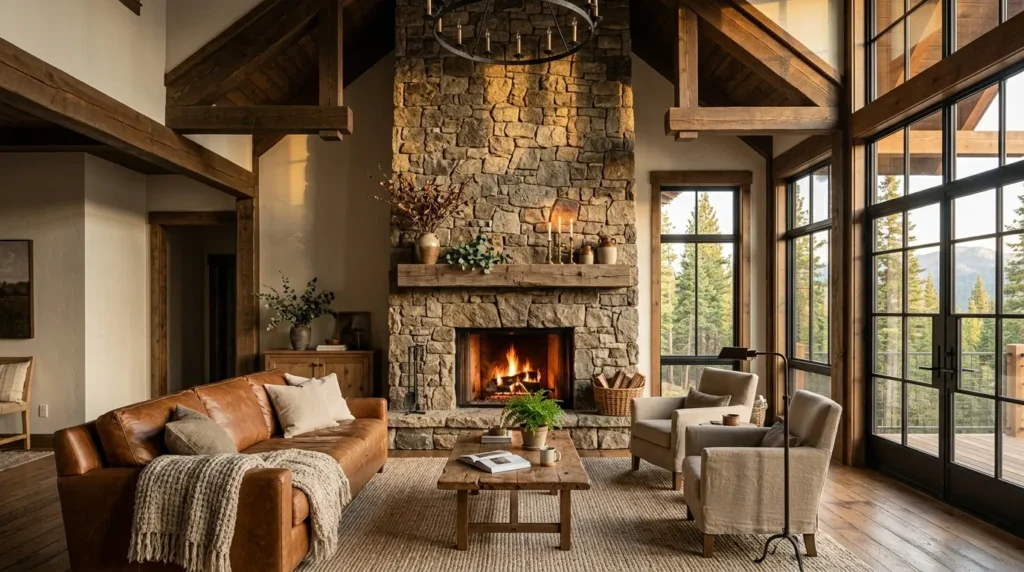
About the Idea
- Extending stone upward emphasizes ceiling height.
- This treatment works especially well with vaulted or high ceilings.
- Large-scale stone creates a powerful architectural focal point.
- Keep surrounding furniture lower and softer to balance the vertical structure.
A floor-to-ceiling stone fireplace can transform an ordinary living room into a dramatic architectural retreat. Extending the stone upward draws attention toward the ceiling and makes the fireplace feel connected to the structure of the home. This approach is especially striking in rooms with vaulted ceilings, exposed beams, or large windows. Use larger stones when possible so the expansive surface does not become visually chaotic. The natural variation adds depth while the overall scale gives the room a sense of permanence. A comfortable sofa and low furniture can then balance the strong vertical feature.
When working with such a large fireplace, the surrounding palette should remain relatively controlled. Warm wood flooring, leather seating, woven rugs, and neutral textiles can provide enough texture without competing with the stone. A simple mantel or no mantel at all can keep the vertical lines uninterrupted. If the room receives limited daylight, choose medium or lighter stone tones to prevent the fireplace from dominating too heavily. I’ve seen this style work particularly well in open-plan spaces because it creates a clear visual anchor and helps define the living area without requiring additional walls.
Also Read : 21 Sage Green Bedroom Ideas for a Calm Relaxing Retreat
6. Modern Rustic Blend
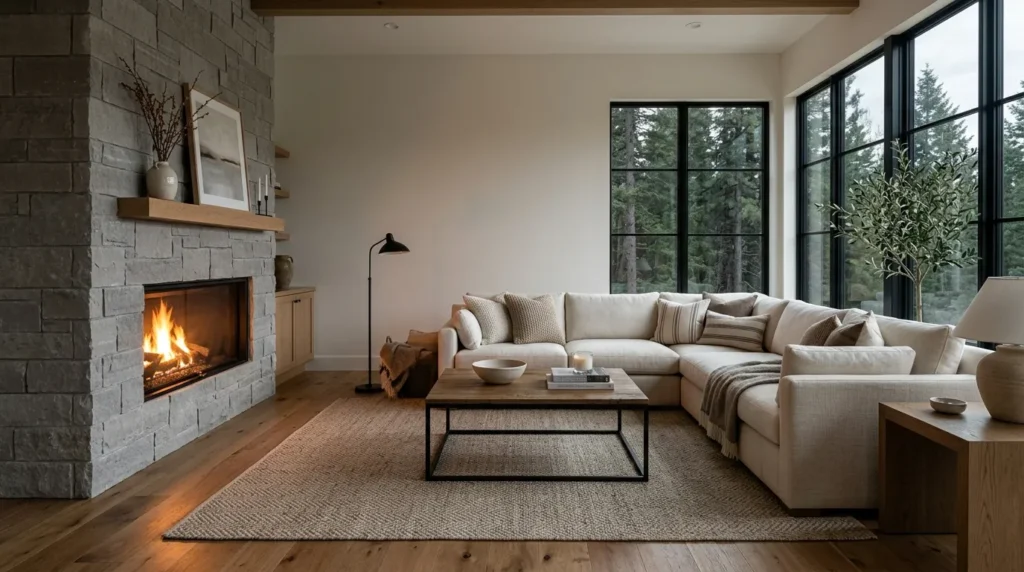
About the Idea
- Clean fireplace lines can modernize traditional rustic materials.
- Mix natural stone with streamlined furniture for balanced contrast.
- Black metal accents add contemporary definition.
- Keep decorative pieces minimal for a refined finish.
A modern rustic fireplace combines natural materials with cleaner shapes, creating a look that feels warm without appearing overly traditional. Instead of a heavily decorated surround, choose stone with a relatively controlled layout and pair it with a simple wood mantel. Streamlined sofas, black metal tables, and minimal artwork can provide contemporary contrast. The goal is to let rustic materials supply warmth while modern furniture keeps the room visually fresh. This combination works especially well when you want the character of a traditional fireplace but prefer a simpler, more current interior.
Balance is the key to making both styles work together. If the stone has a lot of natural variation, choose furniture with clean silhouettes and restrained colors. If the fireplace is relatively simple, introduce texture through a wool rug, linen cushions, or woven baskets. Avoid matching every piece because contrast is what gives the room its personality. A few black accents can visually connect lighting, furniture, and fireplace accessories. The finished space feels comfortable and grounded while still looking polished enough for a contemporary home.
7. Corner Stone Fireplace
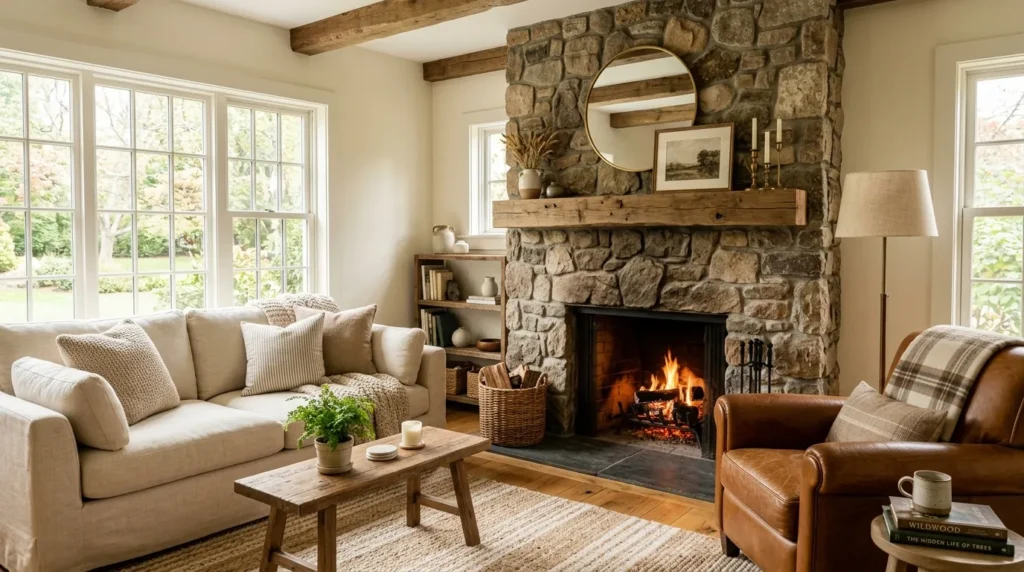
About the Idea
- A corner fireplace makes excellent use of an awkward or unused area.
- Angled placement can create a natural focal point for seating.
- Light-colored furniture balances the visual weight of the stone.
- Keep nearby pathways clear for comfortable movement.
A corner stone fireplace can turn an overlooked area into one of the most inviting parts of the living room. Instead of placing the fireplace along the center of a wall, positioning it in a corner creates a cozy architectural feature while leaving more uninterrupted wall space for furniture or artwork. This arrangement is especially useful in smaller rooms where every section of floor space matters. Place the main sofa at an angle toward the fireplace and add a chair nearby to create a comfortable conversation area. The result feels intimate without making the room feel crowded.
The surrounding layout should support both the fireplace and everyday movement through the room. Avoid pushing every piece of furniture directly against the walls because this can make the seating area feel disconnected. A medium-sized rug can visually gather the sofa and chairs into one zone while keeping the fireplace at the center of attention. Use warm wood, cream upholstery, and woven textures to soften the stone. In my experience, corner fireplaces work particularly well in rooms with unusual layouts because they give the furniture a clear orientation and make an awkward architectural feature feel intentional.
8. Black Stone Hearth
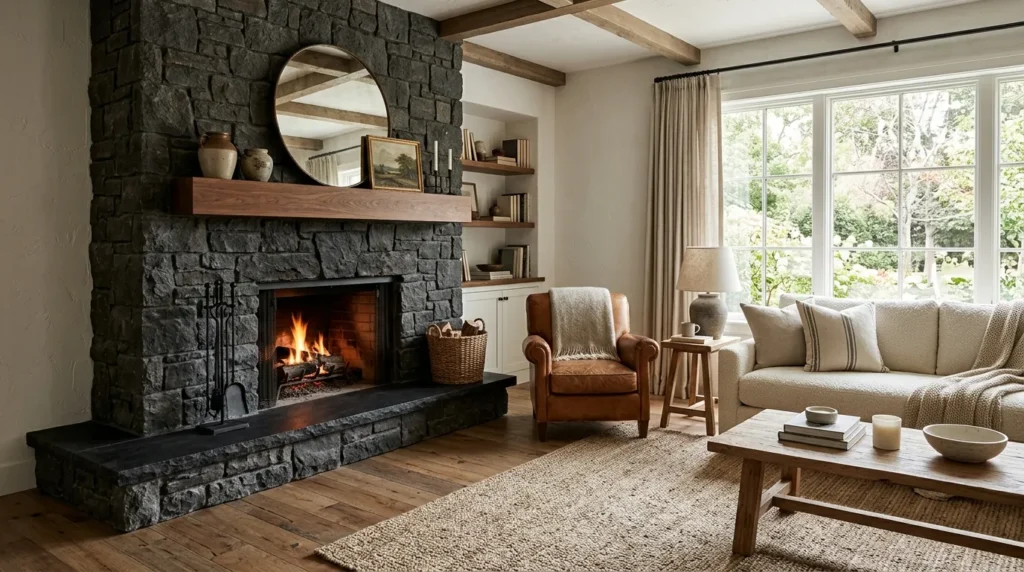
About the Idea
- Dark stone creates strong contrast against lighter furniture.
- A wide hearth gives the fireplace a substantial architectural presence.
- Warm wood helps prevent the darker palette from feeling cold.
- Use cream and beige textiles to soften the overall contrast.
A black or charcoal stone hearth can give a rustic living room a dramatic focal point while adding a modern edge. The dark surface naturally draws attention toward the fireplace, especially when surrounded by lighter walls and furniture. Choose stone with subtle variation rather than a completely flat black finish so the surface retains visual depth. A warm walnut mantel or natural wood flooring can balance the darker material beautifully. This combination is especially effective when you want the room to feel sophisticated while still maintaining the rugged character associated with natural stone.
The rest of the room should provide enough light contrast to keep the space welcoming. Cream upholstery, beige textiles, light rugs, and warm wood prevent the fireplace from becoming visually overwhelming. Keep the hearth relatively uncluttered so its shape remains visible. If you are using a wide hearth, consider placing a small basket or a few carefully selected logs nearby for texture. I’ve noticed that dark fireplace materials look particularly striking when paired with warm lighting because the subtle glow highlights the stone without flattening its natural variation.
9. Arched Stone Opening
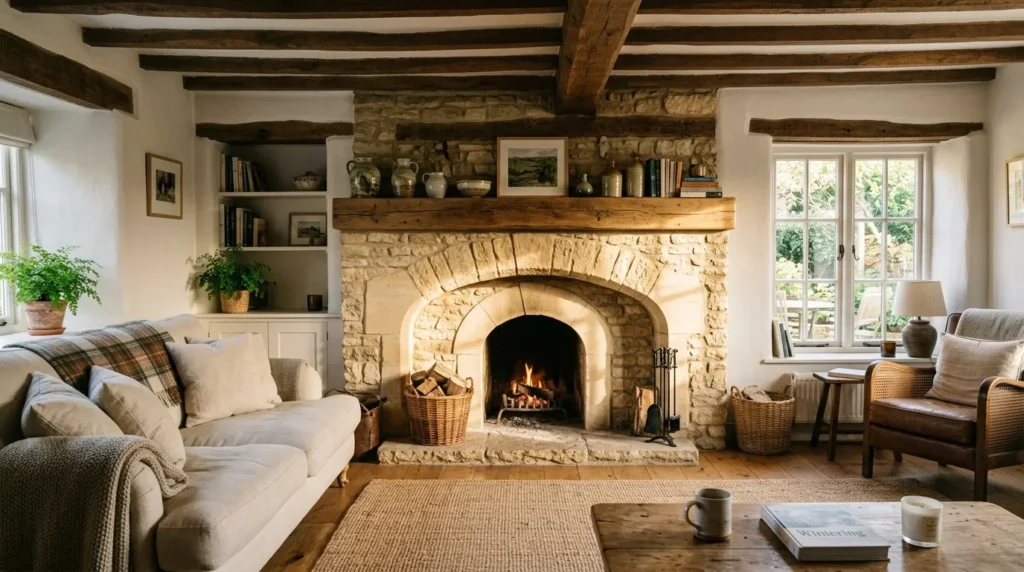
About the Idea
- An arched opening adds softer architectural lines to a rustic room.
- Natural limestone creates a warm, timeless appearance.
- Curved details contrast beautifully with straight furniture.
- Keep mantel accessories understated so the arch remains the focal point.
An arched stone opening adds architectural softness to a rustic fireplace while creating an instantly recognizable focal point. The curved shape contrasts with straight furniture, rectangular artwork, and horizontal shelving, giving the room more visual variety. Warm limestone or light fieldstone works particularly well because the natural color variation emphasizes the curve without making it feel overly formal. A reclaimed wood mantel can add another layer of texture above the opening. This design suits traditional cottages, farmhouse interiors, and newer homes that want to introduce a subtle old-world character.
Because the arch already provides a strong decorative element, the surrounding styling can remain simple. Use a neutral sofa, textured rug, natural wood table, and a few ceramic accessories to support the fireplace without competing with it. Avoid placing large rectangular artwork directly over the opening because it can interrupt the curved silhouette. Instead, let the stonework provide the visual interest. If the room has exposed beams or rounded architectural details elsewhere, repeat one or two of those shapes to create cohesion. The result feels warm, established, and thoughtfully connected to the architecture.
10. Stacked Stone Texture
About the Idea
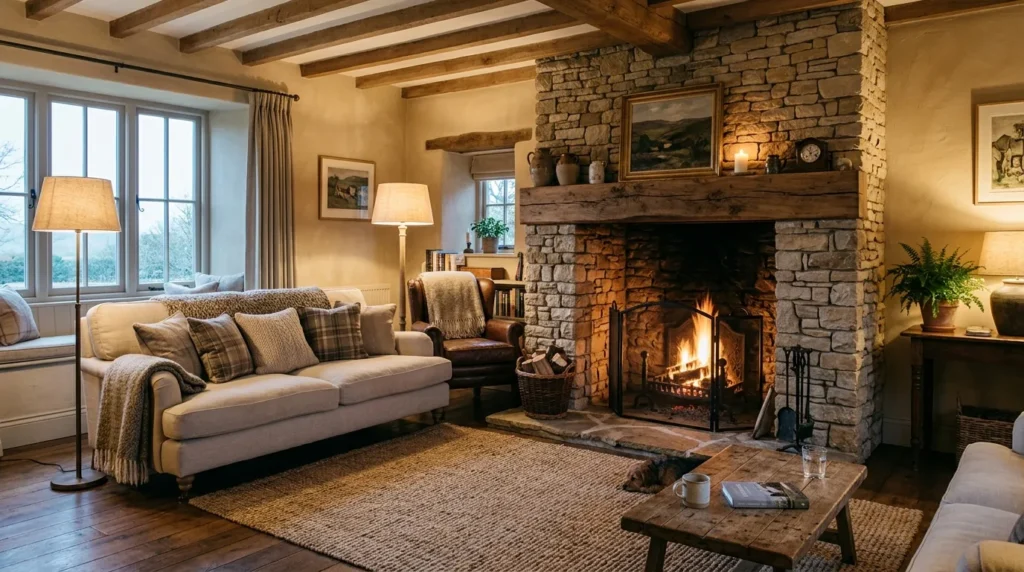
- Stacked stone creates strong texture without needing elaborate decoration.
- Mixed neutral tones make the fireplace easy to coordinate with furniture.
- A simple wood mantel adds warmth and contrast.
- Keep nearby accessories understated so the stone remains the main feature.
Stacked stone gives a fireplace a rich, dimensional appearance that immediately makes a living room feel more grounded. The individual pieces create horizontal and vertical variation, allowing light and shadow to move naturally across the surface. Warm beige, brown, gray, and cream stones work especially well with rustic furniture because they repeat the colors already found in wood, leather, and woven textiles. In my experience, this texture works best when the rest of the room stays relatively simple. The fireplace provides enough visual interest on its own, so excessive decoration can make the space feel unnecessarily busy.
The beauty of stacked stone is its versatility across different rustic styles. Pair it with a thick timber mantel for a traditional cabin feeling, or use a slimmer wood shelf for a cleaner modern-rustic look. Soft upholstery and textured rugs can balance the harder stone surface and make the seating area feel more comfortable. Consider using warm lighting near the fireplace to emphasize the natural depth of the stones after sunset. A few logs in a simple basket can add practical character without cluttering the hearth. The finished room feels substantial, welcoming, and naturally connected to its surroundings.
11. Limestone Fireplace
About the Idea
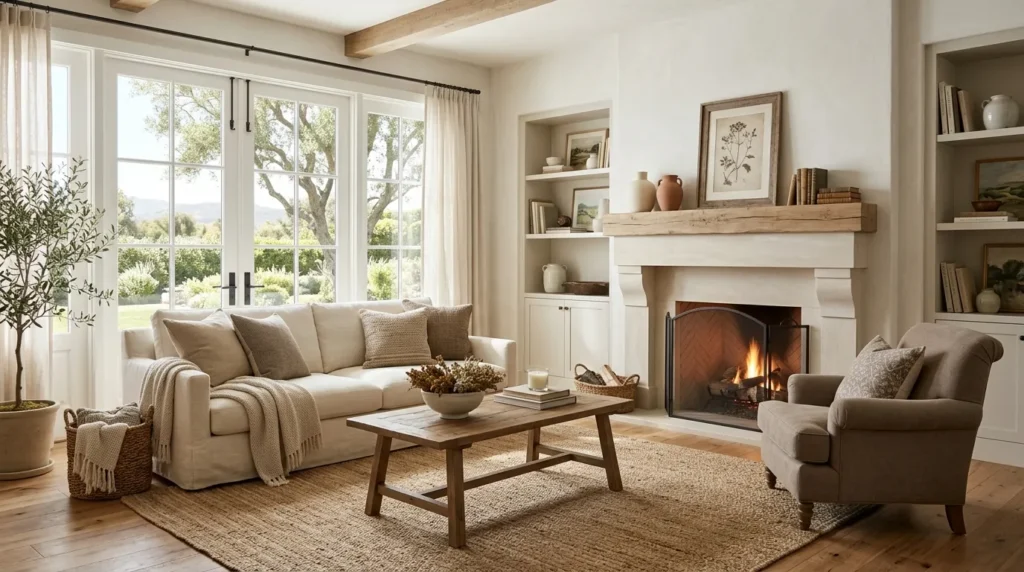
- Limestone creates a lighter, softer alternative to darker stone.
- Its neutral color works beautifully with cream and beige furniture.
- Natural wood adds warmth to the pale material.
- Subtle texture keeps the fireplace from appearing flat or overly polished.
Limestone creates a softer and brighter fireplace design while preserving the natural character of stone. Its pale cream, ivory, beige, and subtle gray tones work beautifully in living rooms that receive plenty of daylight. Unlike darker materials, limestone can help a substantial fireplace feel lighter and less visually dominant. Pair it with natural oak, linen upholstery, woven rugs, and understated ceramics for a relaxed rustic palette. I’ve noticed that pale stone is especially effective when a room needs warmth and texture but already has plenty of dark furniture or architectural details.
The finish you choose can significantly influence the overall character of the fireplace. A lightly textured limestone surface feels relaxed and traditional, while more precisely cut pieces can create a cleaner modern-rustic appearance. Keep the mantel simple and allow the natural color variations to remain visible. Warm beige curtains and soft cream cushions can connect the fireplace to the rest of the room without creating a perfectly matched look. If the space feels too pale, introduce darker accents through a leather chair, black lighting fixture, or walnut side table for gentle contrast and added depth.
12. Fireplace With Built-Ins
About the Idea
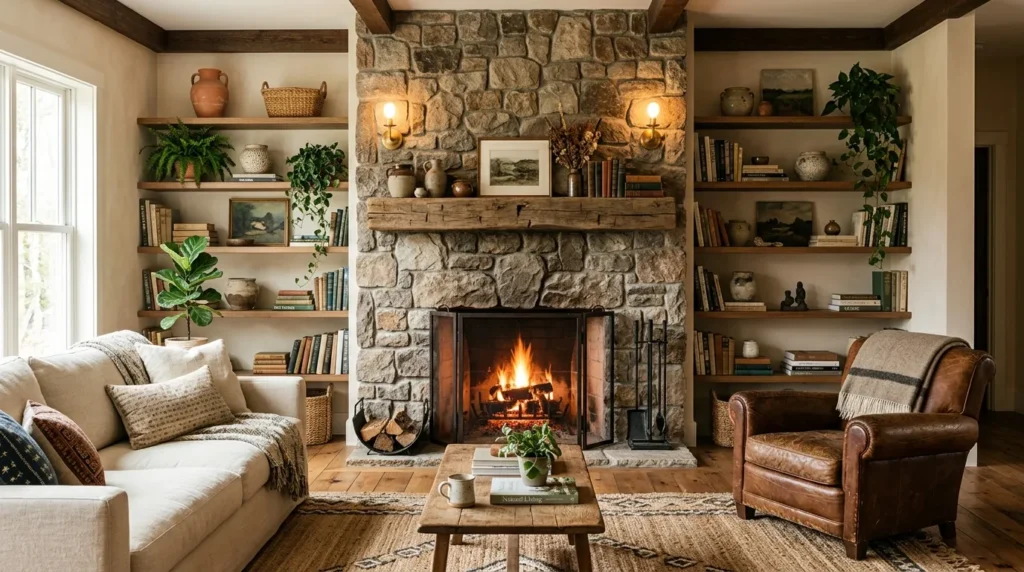
- Built-in shelves provide useful storage around the fireplace.
- Symmetrical cabinetry gives the wall a polished architectural appearance.
- Open shelving can display books and meaningful decorative pieces.
- Closed storage helps hide electronics, games, and everyday clutter.
Combining a stone fireplace with built-in shelving creates a practical feature wall that can organize the entire living room. The fireplace remains the central focal point while shelves or cabinets on either side provide storage for books, media equipment, baskets, and decorative objects. This arrangement works particularly well when the room lacks separate storage furniture because it uses vertical wall space efficiently. Natural wood cabinetry can reinforce the rustic character, while painted shelves in cream, taupe, or muted gray can create a lighter appearance. The result feels custom, balanced, and useful rather than purely decorative.
Styling the built-ins carefully helps maintain the warmth of the fireplace without creating visual clutter. Place larger baskets and heavier books on lower shelves, then use smaller ceramics, framed artwork, and plants higher up. Leave some sections open so the arrangement has breathing room. If the shelves include cabinets, use those areas for less attractive necessities such as cables, remote controls, and board games. I’ve seen this layout work especially well for families because it combines display space with hidden organization. A balanced fireplace wall can make the entire living room feel more intentional and easier to maintain.
13. Cozy Cabin Fireplace
About the Idea
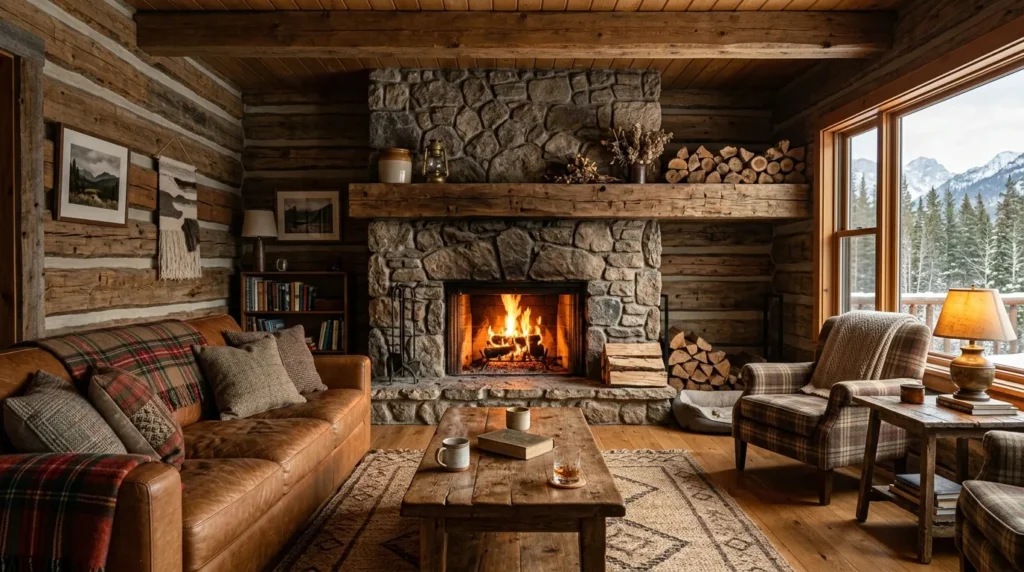
- Rough stone and timber create an authentic cabin atmosphere.
- Leather seating adds durability and warmth.
- Plaid textiles introduce classic rustic pattern without overwhelming the room.
- Use warm lighting to emphasize the natural materials after sunset.
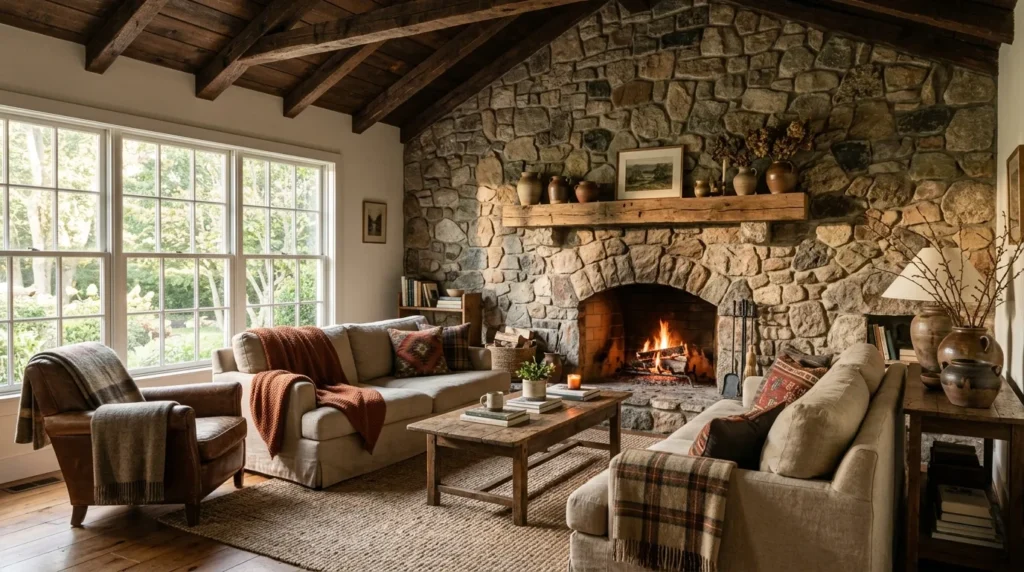
A cozy cabin fireplace should feel substantial, natural, and comfortable enough to gather around on a quiet evening. Rough fieldstone, reclaimed timber, leather furniture, and woven textiles create the layered texture that gives cabin interiors their familiar warmth. Choose stones with irregular shapes and natural color variation for a more authentic appearance. A thick wood mantel can reinforce the handcrafted feeling while providing a simple place for pottery, artwork, or seasonal accents. In my experience, cabin-inspired rooms look best when the materials feel slightly imperfect rather than overly coordinated or polished.
Comfort is just as important as appearance in this style. Choose deep seating, soft throws, textured cushions, and a durable rug that encourages people to settle in near the fire. Plaid or subtle geometric patterns can add visual interest without turning the room into a theme. Keep the color palette grounded in brown, cream, charcoal, muted red, and forest green. Warm lamps and firelight will make these deeper tones feel especially inviting at night. The finished space should look like somewhere you could spend hours reading, talking, relaxing, or enjoying a quiet weekend indoors.
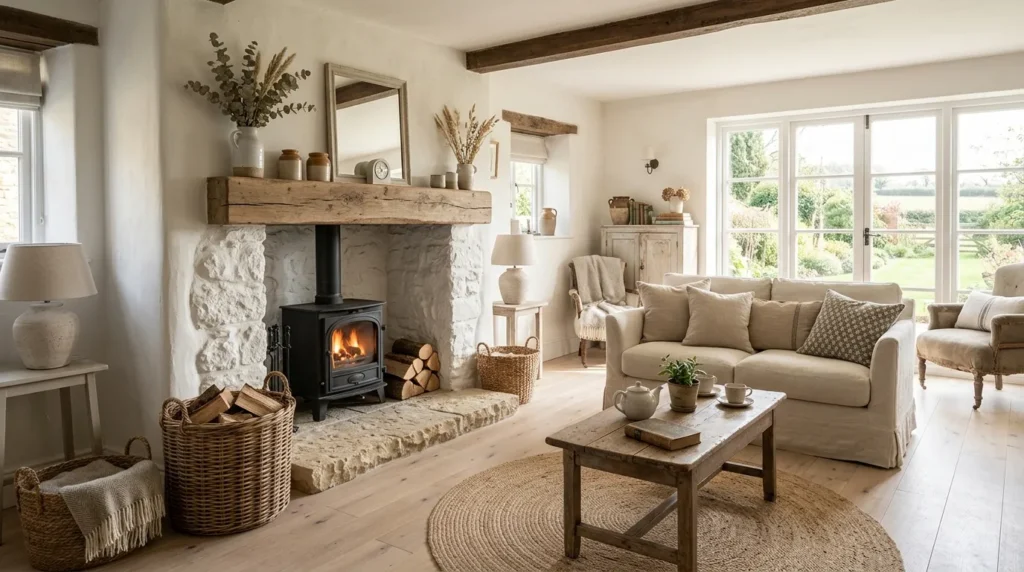
14. Farmhouse Stone Hearth
About the Idea
- Light stone keeps a farmhouse fireplace feeling bright and welcoming.
- Reclaimed wood adds character without making the room feel heavy.
- Linen and cotton textiles soften the hard fireplace surface.
- Simple ceramics reinforce the relaxed farmhouse aesthetic.
A farmhouse stone hearth combines rustic texture with a lighter, more relaxed decorating approach. Pale fieldstone, limestone, or whitewashed stone can create a welcoming focal point without making the room feel visually heavy. Pair the fireplace with a reclaimed oak mantel, slipcovered seating, woven baskets, and simple ceramics for an easygoing atmosphere. This style works particularly well when you want the room to feel comfortable and lived-in rather than formal. The natural imperfections in the stone and wood help create the sense of age and character often associated with traditional farmhouse interiors.
Keep the surrounding decor simple so the fireplace remains connected to the relaxed feeling of the room. Neutral linen cushions, cotton throws, and a jute rug can add softness without introducing too many colors. Use open baskets for blankets or firewood to combine storage with texture. A few vintage-inspired pieces can add personality, but avoid filling the mantel with small objects. I’ve noticed that farmhouse rooms feel most inviting when there is plenty of breathing space between decorative elements. The finished hearth becomes a practical gathering point that feels warm, timeless, and easy to live with.
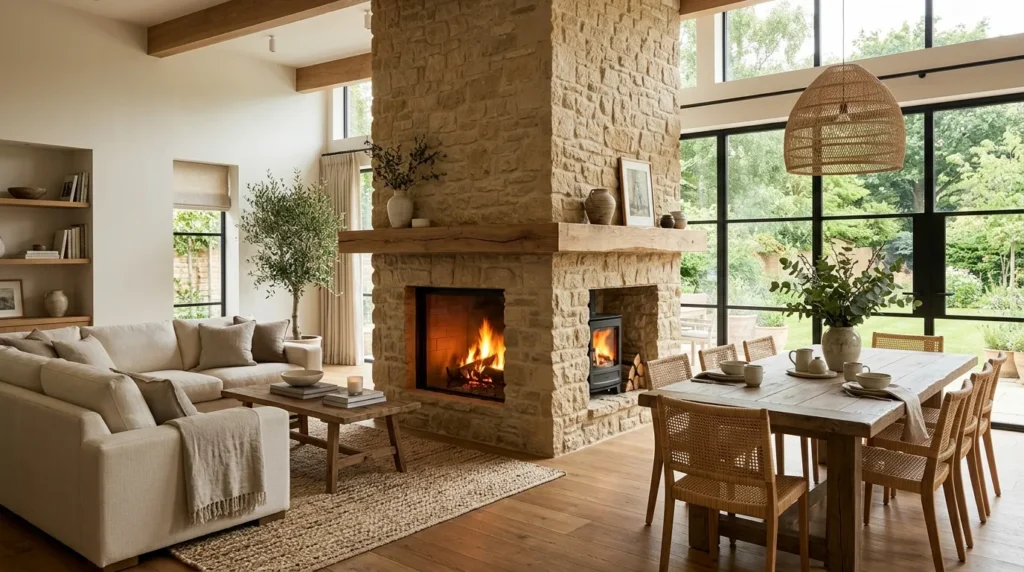
15. Double-Sided Fireplace
About the Idea
- A double-sided fireplace can visually connect two living areas.
- It provides warmth and architectural definition without a full wall.
- Matching materials on both sides create a cohesive appearance.
- Keep furniture positioned to enjoy the fireplace from multiple directions.
A double-sided stone fireplace can serve as both a source of warmth and a natural architectural divider in an open-plan home. Instead of closing off the living room and dining area with a solid wall, the fireplace creates separation while allowing light and movement to continue around it. Natural stone gives the structure enough visual weight to anchor both spaces. This design is especially effective when the same material appears on both sides, creating a consistent focal point from different angles. It can make a large open room feel more organized without sacrificing its spacious character.
Furniture placement becomes especially important with a two-sided fireplace. Arrange seating so people in both zones can comfortably see the fire without blocking walkways. A sectional can define the lounge side, while an oak dining table can establish the adjacent eating area. Keep the color palette consistent across both spaces with warm wood, cream upholstery, and neutral textiles. If the fireplace is the main architectural divider, avoid adding too many competing partitions. The result is a connected layout that feels cozy and functional while giving an open-plan room a stronger sense of structure.
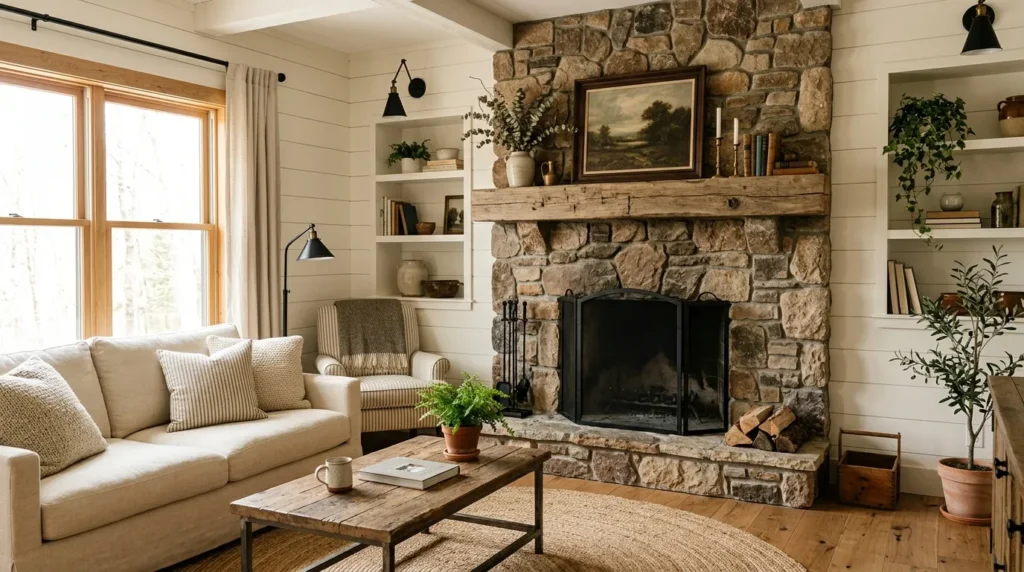
16. Stone and Shiplap
About the Idea
- Shiplap creates a lighter backdrop around a substantial stone fireplace.
- The contrast between smooth boards and rough stone adds visual depth.
- Warm white paint keeps the room bright and inviting.
- Reclaimed wood helps connect the two contrasting materials.
Stone and shiplap create a balanced combination of rough and refined textures that works beautifully in rustic living rooms. The irregular surface of natural stone contrasts with the clean horizontal lines of shiplap, giving the fireplace wall more visual dimension. Warm white shiplap can also brighten a room when the stone has darker brown or gray tones. Pair the combination with a reclaimed wood mantel, linen upholstery, and woven accessories for a comfortable farmhouse-inspired setting. In my experience, this pairing works particularly well when you want rustic character without making the entire room feel heavy.
The key is choosing materials that complement rather than compete with each other. Keep the shiplap relatively simple and use a matte finish so it does not appear overly polished. A natural wood mantel can bridge the two surfaces and create a warmer transition. Add darker accents through a coffee table, lighting, or fireplace tools for definition. Keep the seating area soft with cream, beige, or taupe textiles. The result is a fireplace wall that feels textured and welcoming while maintaining enough light and simplicity for a comfortable everyday living room.
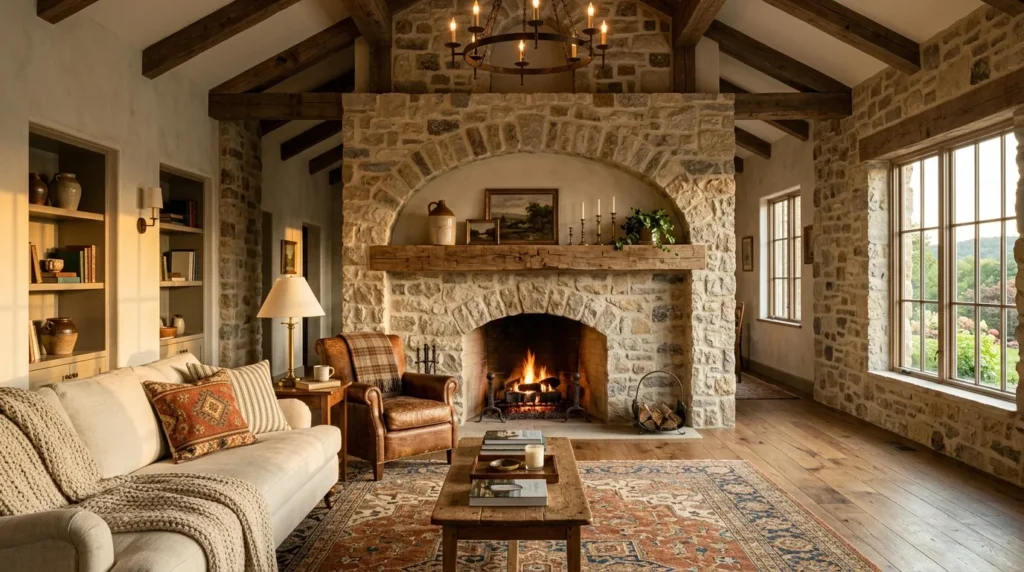
17. Rustic Stone Arch
About the Idea
- A broad stone arch gives the fireplace a strong traditional character.
- Curved architecture creates a softer focal point than straight surrounds.
- Mixed stone colors add depth without additional decoration.
- Timber beams can visually connect the fireplace with the ceiling.
A broad rustic stone arch gives a fireplace a timeless architectural quality while making the entire living room feel more established. The curved opening naturally draws attention toward the fire and creates a softer transition between the fireplace and surrounding walls. Fieldstone in mixed beige, gray, and brown shades adds authentic variation, while a reclaimed timber mantel introduces warmth above the opening. This design works particularly well in cottages, country homes, and rooms with exposed beams. The natural materials create enough character that the rest of the room can remain simple and comfortable.
Use furniture with softer shapes to complement the curved fireplace rather than repeating too many hard rectangular forms. A rounded coffee table, curved armchair, or generously upholstered sofa can create subtle visual harmony. Keep the mantel styling restrained with one large ceramic piece, a simple mirror, or a few natural branches. If the stone already contains several colors, choose textiles from the same earthy family rather than introducing bright accents. I’ve noticed that architectural fireplace designs look most impressive when given enough surrounding space. Let the arch breathe so its craftsmanship remains the main attraction.
18. Stone Fireplace Nook
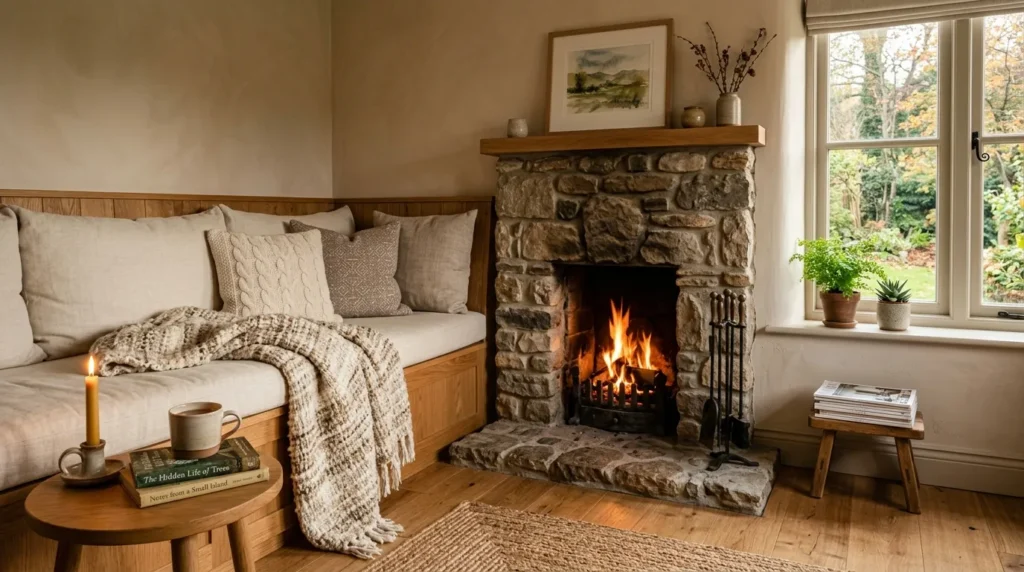
About the Idea
- A fireplace nook creates an intimate place for reading or relaxing.
- Built-in seating can make efficient use of a small architectural area.
- Soft cushions balance the hard stone surface.
- A compact side table keeps essentials nearby without crowding the space.
A stone fireplace nook can turn a small section of the living room into a cozy retreat with a clear purpose. Instead of arranging a large seating group around the entire room, create a smaller zone where one or two people can read, relax, or enjoy the fire. A built-in wooden bench can make excellent use of a shallow alcove while providing flexible seating. Add thick cushions, a soft throw, and a compact side table to make the area comfortable. The stone backdrop supplies natural texture, allowing the nook to feel special without requiring many decorative pieces.
Think about scale carefully when designing a fireplace nook. Oversized furniture can quickly overwhelm a small area, so choose seating that leaves enough space for movement and comfortable access to the fire. A round side table can soften the arrangement while providing a useful surface for books or drinks. Keep the palette warm with cream, tan, brown, and natural wood tones. A small woven basket can hold extra blankets while adding texture. The finished nook feels personal and inviting, giving the living room a dedicated spot for quiet moments while making excellent use of otherwise overlooked space.
19. Mixed Stone Colors
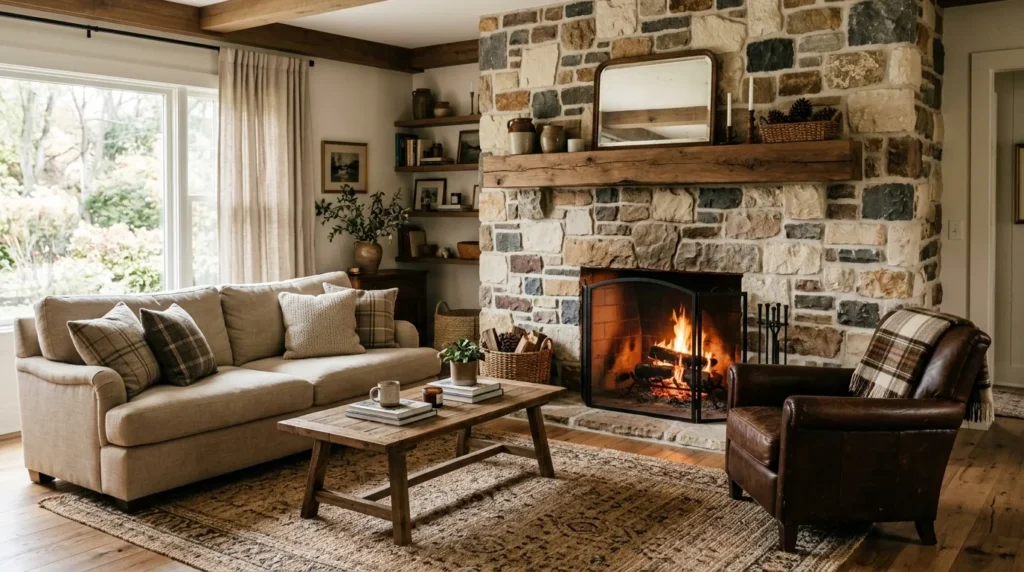
About the Idea
- Mixed stone colors create natural variation and visual depth.
- Earthy shades make it easier to coordinate surrounding furniture.
- A consistent mantel finish helps unify different stone tones.
- Neutral upholstery keeps the fireplace from feeling visually overwhelming.
Mixed stone colors can make a fireplace feel more natural because the surface contains subtle variations instead of one repetitive shade. Combining cream, taupe, gray, brown, and muted charcoal creates depth while keeping the palette connected to the outdoors. This approach works especially well when you want a rustic appearance that feels authentic rather than overly coordinated. Choose a dominant color family and let the other tones appear naturally throughout the surround. In my experience, this makes decorating easier because furniture, rugs, and accessories can pick up individual colors from the stone.
The surrounding room should echo the fireplace without trying to match every stone exactly. A walnut mantel can connect darker tones, while cream or beige seating can repeat the lighter shades. Use textured fabrics such as linen, wool, and woven cotton to soften the hard surface. Avoid introducing several unrelated accent colors because the stone already provides plenty of visual variation. A simple palette allows the natural material to remain the focal point. The finished room feels layered and collected, with enough color variation to stay interesting while remaining calm and comfortable for everyday living.
20. Minimal Stone Surround
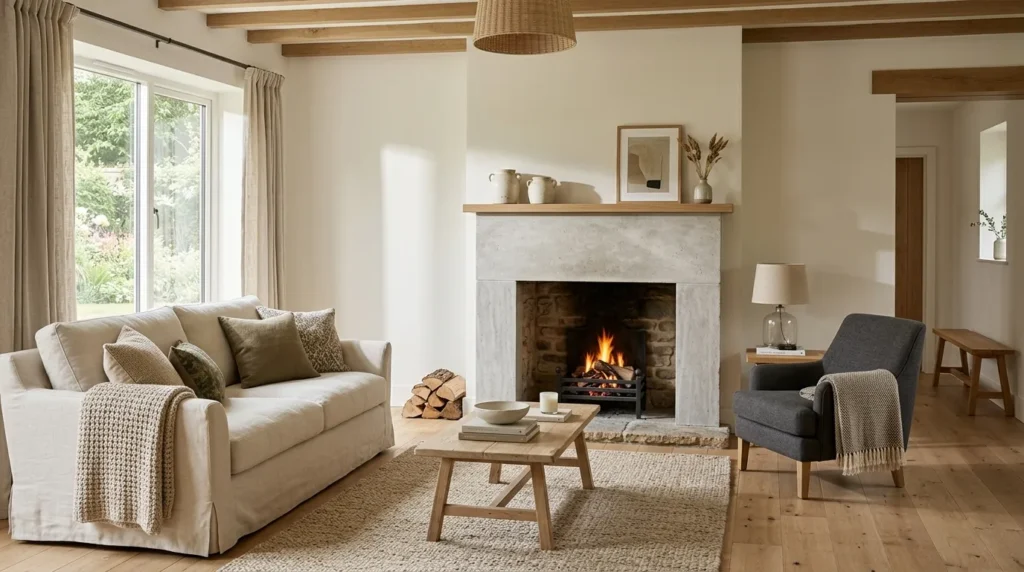
About the Idea
- A simple surround keeps the fireplace visually calm and modern.
- Pale stone works well with neutral furniture and light flooring.
- Minimal mantel styling allows the material to remain the focal point.
- Clean lines create a bridge between rustic and contemporary design.
A minimal stone surround proves that rustic materials do not need elaborate shapes or heavy decoration to make an impact. Choose a simple arrangement of pale gray, beige, or warm limestone and pair it with a slim wood mantel. The clean outline allows the natural texture to remain visible without making the fireplace feel oversized. This style is particularly useful when the living room already contains several architectural features or when you prefer a quieter interior. The stone provides warmth and character while the restrained design keeps the overall space feeling fresh.
Keep the surrounding furniture equally simple to maintain the visual balance. A cream sofa, charcoal chair, natural wood coffee table, and textured neutral rug can create enough contrast without competing with the fireplace. Avoid placing numerous small objects on the mantel because they can quickly make a minimal arrangement feel cluttered. Instead, choose one substantial ceramic vase, framed artwork, or mirror. I’ve noticed that minimal fireplace designs often look best when there is plenty of empty space around them. That breathing room emphasizes the stone and gives the entire living room a more sophisticated appearance.
21. Rustic Fireplace With TV
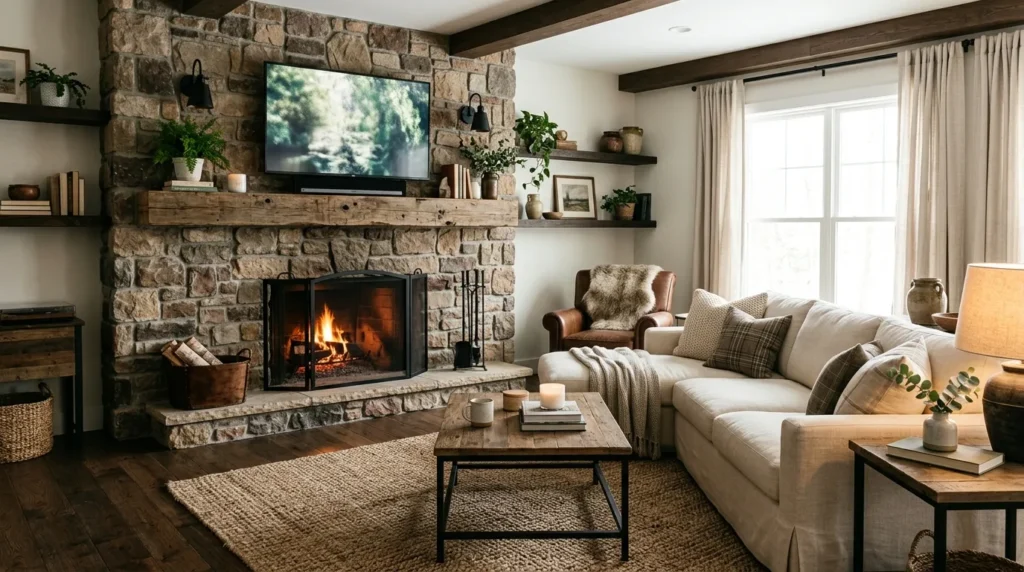
About the Idea
- Mounting the television above the fireplace saves wall space.
- A substantial stone surround can visually balance the screen.
- Keep cables concealed for a cleaner appearance.
- Use a simple mantel to avoid competing with the television.
Combining a television with a stone fireplace can create an efficient focal wall when both features need to share limited space. Mounting the screen above the fireplace keeps the layout streamlined and leaves more room for seating, storage, or artwork elsewhere. A substantial stone surround helps balance the dark rectangular shape of the television, while a wood mantel can provide a warmer transition between the two elements. Before choosing this arrangement, check viewing height, fireplace heat clearance, and manufacturer requirements to make sure the setup is appropriate for your equipment and fireplace.
The visual goal is to make the television feel integrated rather than like an object simply attached above the fire. Keep the mantel relatively simple and hide cables through appropriate wall channels or a professional cable-management solution. Arrange seating so the screen can be viewed comfortably without forcing people to look too high for long periods. Warm wood, cream upholstery, and woven textures can soften the technology. In my experience, repeating black accents around the room helps the television blend naturally into the design. The result is a practical entertainment wall that still preserves the rustic warmth of the fireplace.
22. Oversized Stone Hearth
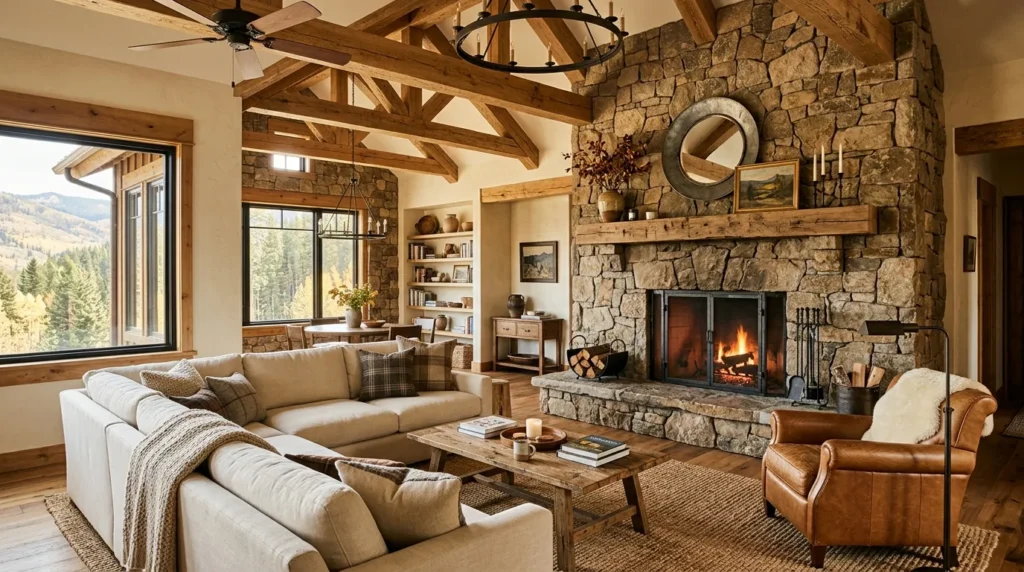
About the Idea
- A broad hearth gives the fireplace a substantial architectural presence.
- Oversized proportions work especially well in large living rooms.
- Natural wood helps soften the scale of the stone.
- Keep surrounding furniture comfortably spaced to maintain visual balance.
An oversized stone hearth can make a large living room feel grounded by giving the space one strong architectural focal point. A broad hearth extends the visual footprint of the fireplace and creates a substantial base beneath a large stone surround. This approach works particularly well in rooms with high ceilings, open floor plans, or generous seating areas where a smaller fireplace might look lost. Choose natural stone with visible variation and pair it with a substantial timber mantel. The scale should feel intentional, matching the size of the room rather than simply occupying as much wall space as possible.
Furniture placement becomes especially important when working with a large hearth. Keep the main sofa far enough away for comfortable movement while still creating a clear relationship with the fireplace. A large rug can visually connect the seating pieces and prevent the room from feeling scattered. Use lower-profile tables and chairs so the fireplace remains dominant without making the room feel crowded. I’ve noticed that oversized architectural features look most balanced when the surrounding furniture has generous proportions too. The finished space feels impressive yet comfortable, giving the room a natural gathering point for family and guests.
23. Natural Stone and Timber
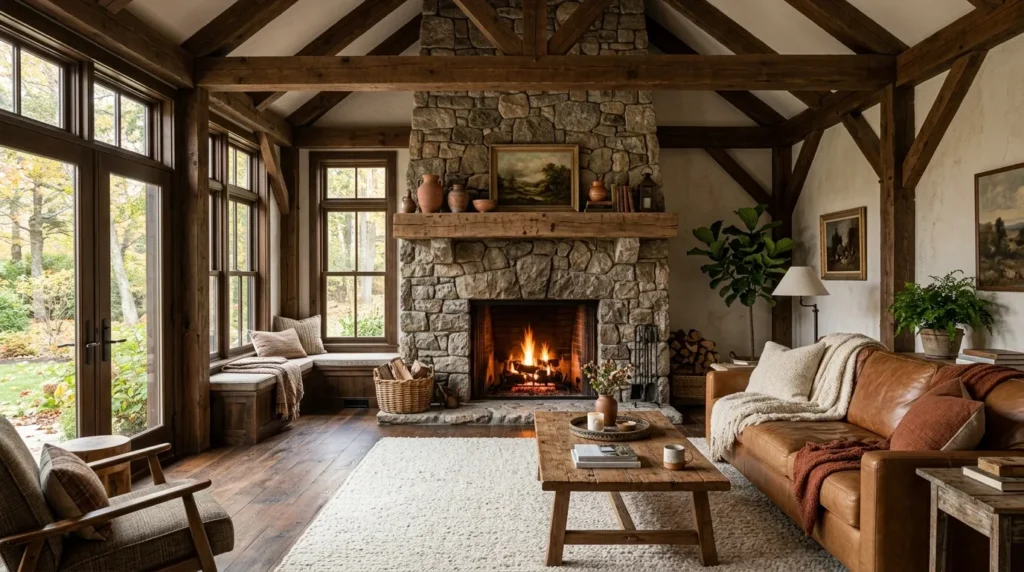
About the Idea
- Stone and timber create a classic combination of natural materials.
- Exposed beams can visually connect the fireplace with the ceiling.
- Leather and wool add softness to the rugged architecture.
- Repeat wood tones throughout the room for a cohesive appearance.
Natural stone and timber create one of the most timeless combinations for a rustic living room because both materials bring texture, warmth, and a connection to nature. A rugged stone surround becomes even more striking when paired with exposed wooden beams, a reclaimed mantel, or substantial wood flooring. The contrast between cool stone and warm timber keeps the room visually interesting without introducing bright colors. Choose materials with visible grain and natural variation so the finished space feels authentic. This pairing can work in both traditional cabins and newer homes inspired by rustic architecture.
The key is repeating the materials thoughtfully throughout the room. If the fireplace has a dark timber mantel, echo that tone through a coffee table, ceiling beam, or side table rather than matching every piece exactly. Soft wool rugs, linen cushions, and leather seating can balance the harder surfaces while maintaining the earthy palette. Keep decorative objects simple and natural, such as ceramic pottery, woven baskets, or branches. In my experience, this combination becomes more convincing when the materials are allowed to show their natural imperfections. Those subtle details give the room warmth, depth, and a sense of permanence.
24. Fireplace With Cozy Seating
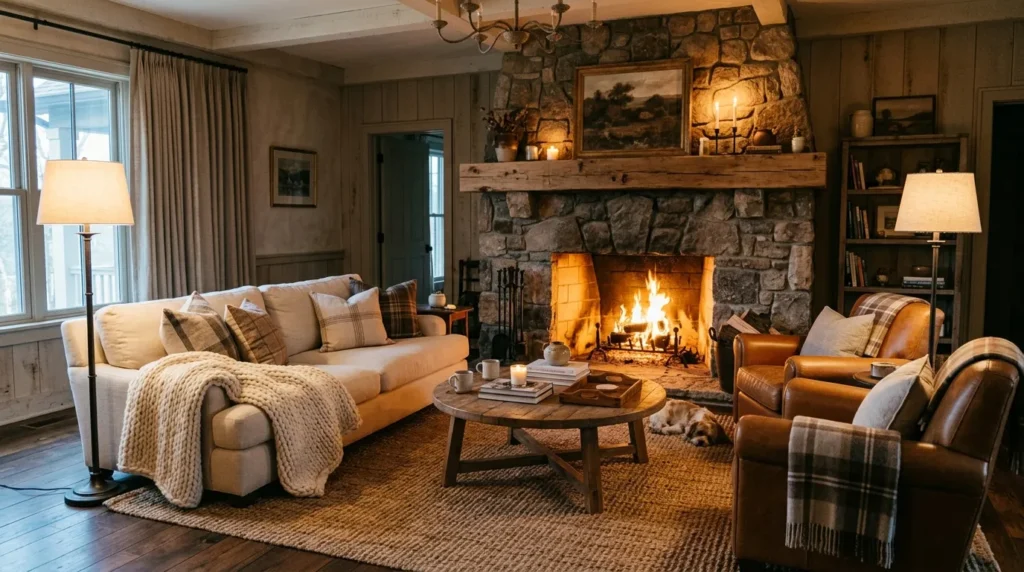
About the Idea
- Comfortable seating turns the fireplace into a true gathering point.
- Arrange chairs and sofas toward the fire instead of simply facing the television.
- Layer throws and cushions for softness and warmth.
- Use a large rug to visually connect the entire seating arrangement.
The best fireplace design is one that encourages people to gather around it, and comfortable seating can make that happen naturally. Arrange a deep sofa and one or two armchairs so they face the fire while still allowing easy conversation between people. A large rug can connect the seating group and create a defined zone within an open room. Choose upholstery in cream, beige, caramel, or warm gray to complement the natural stone. Soft cushions and throws add comfort without taking attention away from the fireplace, making the room feel welcoming rather than overly styled.
Think about how the room will actually be used before finalizing the arrangement. Leave enough space behind chairs for people to walk through, and keep a small table within easy reach for drinks, books, or snacks. A floor lamp beside an armchair can create a practical reading spot while adding warm evening light. I’ve seen how small seating changes can completely transform the way a fireplace room functions. When furniture faces the fire and encourages conversation, the fireplace becomes more than a decorative feature—it becomes the natural heart of the living room.
Conclusion
The right fireplace can completely change the atmosphere of a living room, making it feel warmer, more welcoming, and connected to natural materials. Whether you prefer rugged river rock, pale limestone, reclaimed timber, or a dramatic full-height design, there are plenty of ways to create a space that feels personal and inviting. A stone fireplace works beautifully with cozy seating, layered textiles, natural wood, and soft lighting. Save this article on Pinterest so you can revisit your favorite ideas when planning your space, and share it with someone who loves rustic interiors. Start with one idea and let your cozy room take shape.