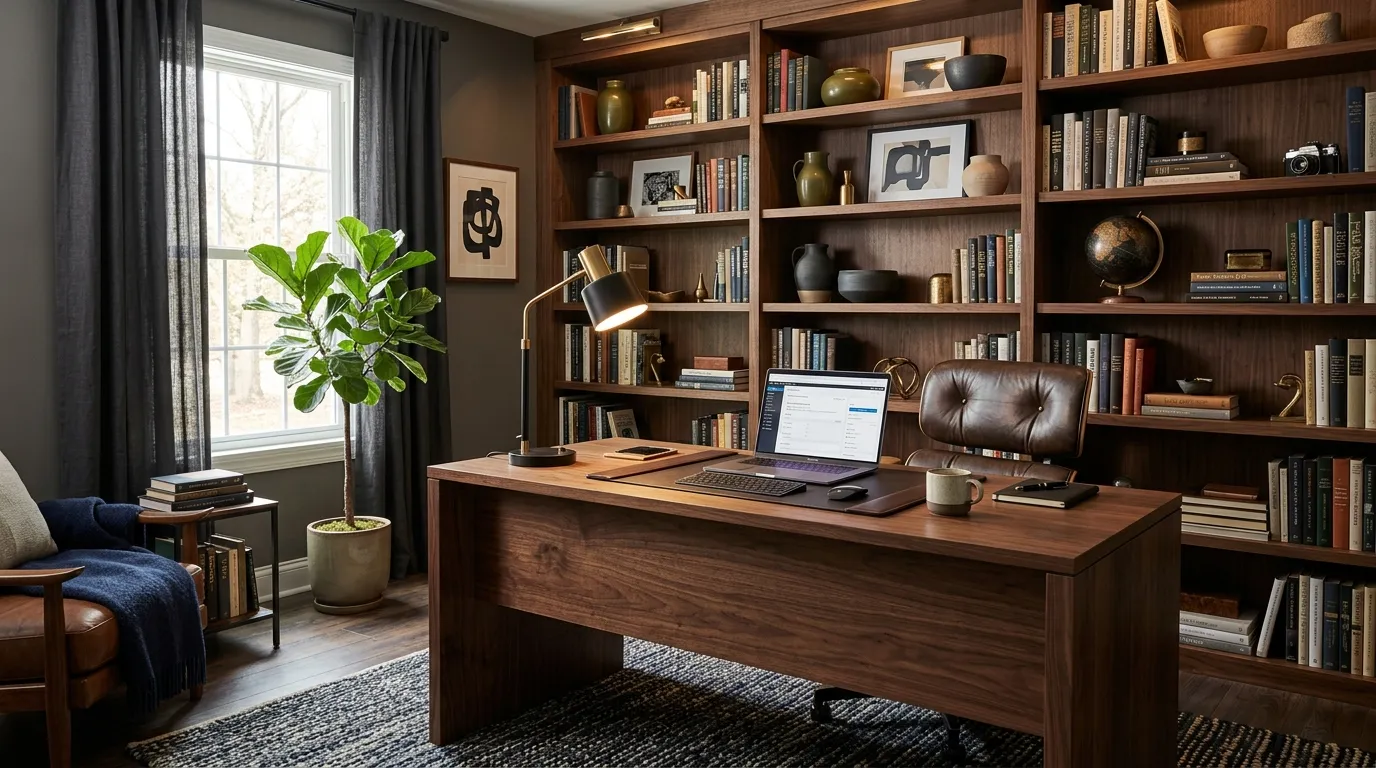
Your workspace should feel like a place you actually want to spend time in. ✨
The right masculine home office can turn a plain corner into a stylish, focused, and comfortable retreat.
Whether you are working from home, managing a business, studying, or simply need a better place to organize your day, thoughtful design choices can make a huge difference. From rich wood desks and leather seating to moody walls, smart storage, layered lighting, and cozy reading corners, these ideas show how small details can completely change the feel of a room.
The biggest challenge is often knowing where to start. In my experience, you do not need to redesign everything at once. Choosing one strong focal point, improving lighting, or clearing visual clutter can immediately make a workspace feel more intentional. As you explore these ideas, you’ll find practical inspiration for creating a room that looks polished while still feeling comfortable and personal.
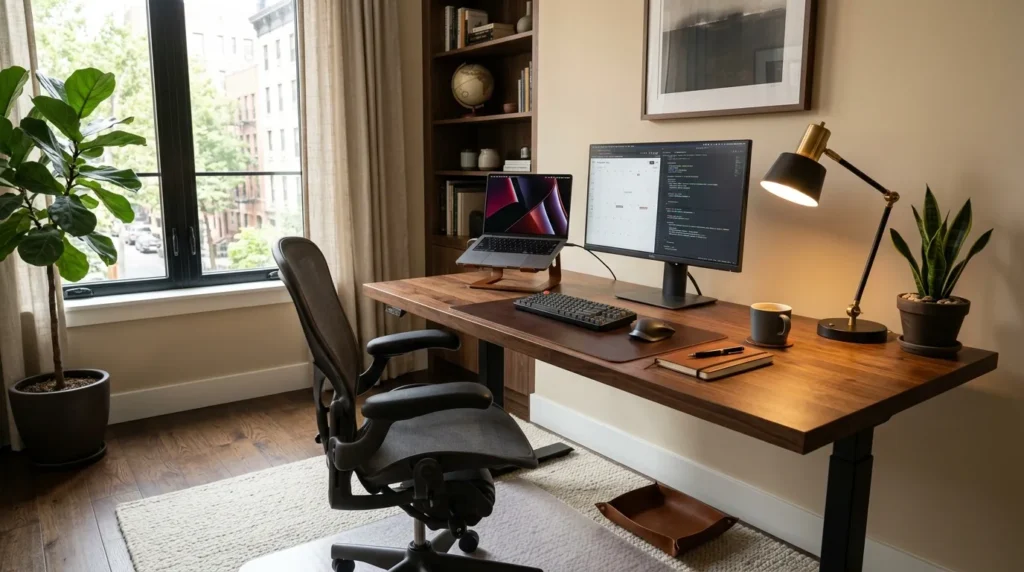
1. Dark Wood Desk
About the Idea
- A walnut desk instantly adds warmth, structure, and visual weight.
- Dark wood pairs beautifully with black, cream, gray, and leather accents.
- Choose a desk with drawers to keep everyday clutter hidden.
- A simple desktop creates a cleaner background for video calls and photos.
A dark wood desk can instantly make a workspace feel more polished and intentional. The rich walnut or espresso finish brings warmth to a room while creating the strong visual foundation many masculine home office designs need. Pair it with a black or charcoal chair, simple metal accessories, and a neutral wall for a balanced look. In my experience, choosing one substantial piece of furniture often makes a bigger difference than filling the room with decorations. The desk becomes the focal point, while everything around it feels coordinated, practical, and easy to maintain.
The beauty of a deep wood surface is that it works with both modern and traditional interiors without looking dated. It also hides small marks and everyday imperfections better than very pale finishes, which is helpful for a frequently used workspace. Add a warm desk lamp, a leather organizer, and one small plant to soften the heavier tones without losing the masculine character. Keep the desktop relatively open so the natural grain remains visible. The result is a workspace that feels professional enough for focused work but comfortable enough for long afternoons, planning sessions, or creative projects.
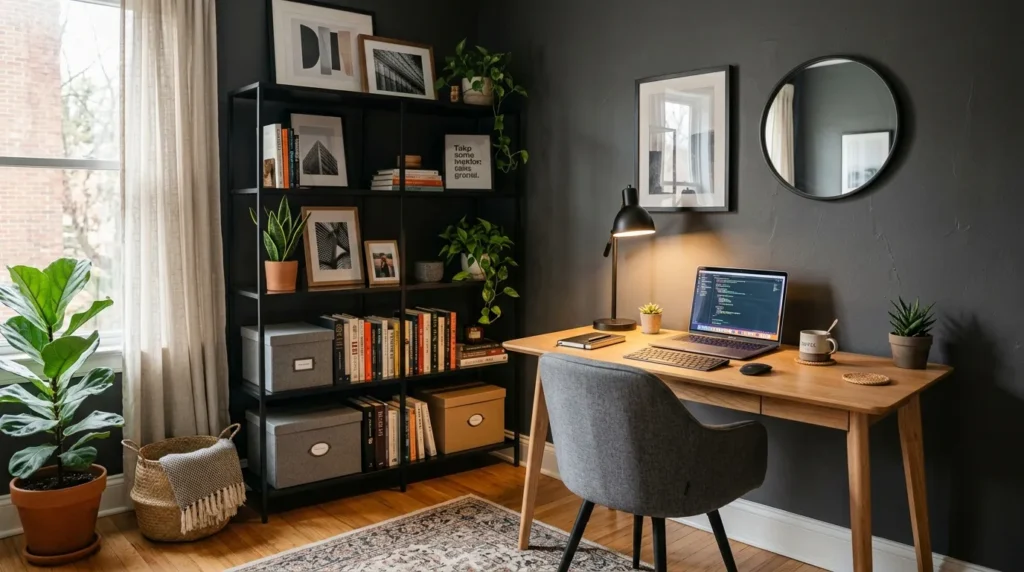
2. Black Metal Shelving
About the Idea
- Open shelving adds height and useful storage without making the room feel crowded.
- Black metal creates a crisp contrast against wood and neutral walls.
- Mix books, baskets, framed artwork, and a few decorative objects.
- Leave some shelves partially empty to maintain visual breathing room.
Black metal shelving gives a workspace an architectural edge while making everyday storage much easier. The slim frame keeps the room visually open, yet the dark finish adds contrast and definition around lighter walls and furniture. Use the shelves for books, document boxes, framed prints, and a few carefully chosen accessories rather than filling every level. I’ve noticed that partially styled shelving looks more expensive because the eye has places to rest. When paired with a wood desk, this combination creates a practical workspace that feels organized, modern, and thoughtfully designed rather than overly decorated.
This setup works especially well when floor space is limited because vertical storage uses the wall instead of spreading furniture across the room. Place the shelving beside or slightly behind the desk so frequently used items remain within easy reach. Keep heavier objects on lower shelves and lighter decorative pieces higher up for a visually stable arrangement. Neutral storage boxes can conceal cables, paperwork, and miscellaneous supplies. A small plant or ceramic object can introduce texture without overwhelming the industrial feel. The finished space feels structured and functional, while still offering plenty of personality for Pinterest-worthy inspiration.
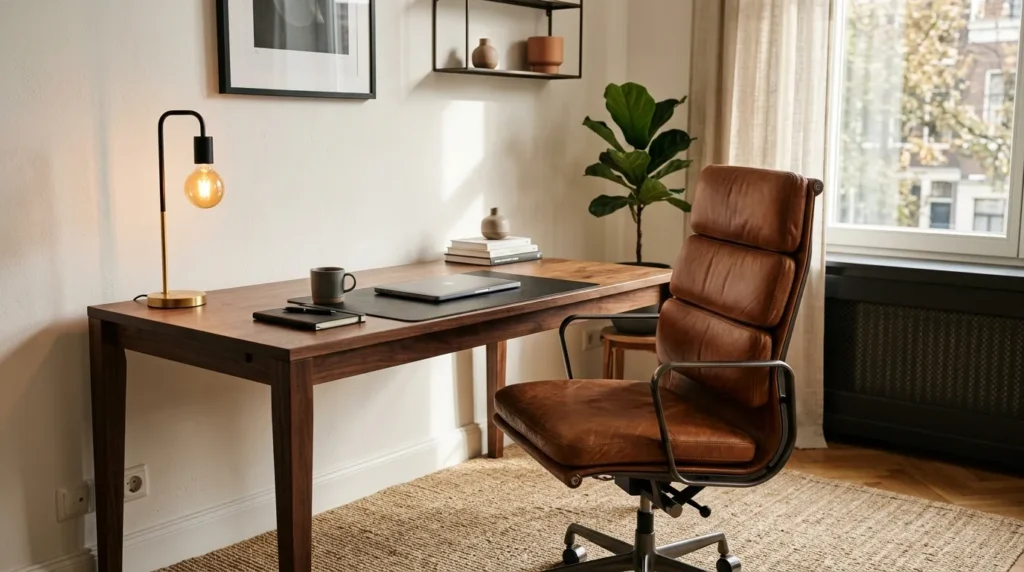
3. Leather Office Chair
About the Idea
- Cognac leather adds warmth against dark furniture and cooler neutral colors.
- Choose an ergonomic shape if the chair will be used for several hours daily.
- Black leather creates a sleeker, more contemporary appearance.
- Keep surrounding accessories simple so the chair remains a visual feature.
A leather office chair can turn an ordinary desk setup into a space that feels considerably more refined. Cognac, tan, and deep brown leather introduce warmth and texture while complementing wood, black metal, and neutral walls. Comfort should still come first, especially if you spend several hours working at the desk. Look for adjustable height, supportive back design, and comfortable cushioning rather than choosing a chair based only on appearance. A well-designed seat gives the room character while supporting better daily use. That combination of comfort and visual weight is what makes this upgrade especially effective.
The right chair can also help visually anchor the entire workstation without requiring additional decoration. Place it directly beneath the desk when the room is not being used to keep the layout tidy, then pull it forward when working. If the surrounding palette is dark, a caramel leather finish can create useful contrast; if the room is already warm, black leather may provide stronger definition. I’ve seen this work well in compact rooms where furniture choices need to serve both practical and decorative purposes. One quality chair can make the workspace feel finished without adding unnecessary clutter.
4. Charcoal Accent Wall
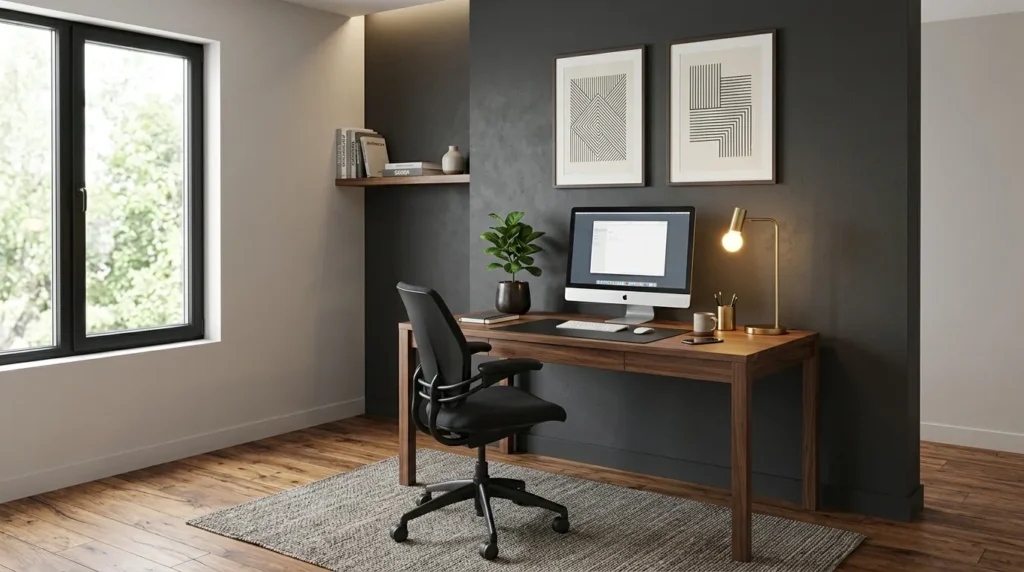
About the Idea
- A charcoal wall creates an instant focal point without requiring expensive furniture.
- Pair dark walls with warm wood to prevent the room from feeling cold.
- Use lighter artwork or accessories to create contrast.
- Matte paint works especially well for a sophisticated, low-glare finish.
A charcoal accent wall can give a workspace instant depth and character without changing the entire room. The dark backdrop makes a wooden desk, artwork, lighting, and accessories stand out more clearly, creating a layered appearance that feels intentional. Choose a warm charcoal rather than a blue-gray if you want the room to feel inviting. In my experience, painting just one wall is often enough to create a dramatic change while keeping the rest of the space bright. This approach works particularly well when the furniture already has dark or natural wood finishes.
Dark walls can also make a larger room feel more grounded by visually defining the work zone. Keep the remaining walls lighter and introduce warm materials such as walnut, leather, woven baskets, or natural wood flooring. A desk lamp with a warm bulb will soften the darker backdrop during evening hours. If the room receives limited daylight, avoid using very deep black paint and choose a softer charcoal instead. The finished space feels focused and sophisticated without becoming gloomy. It creates an excellent backdrop for video calls, framed prints, and carefully styled desktop accessories.
5. Floating Wood Desk
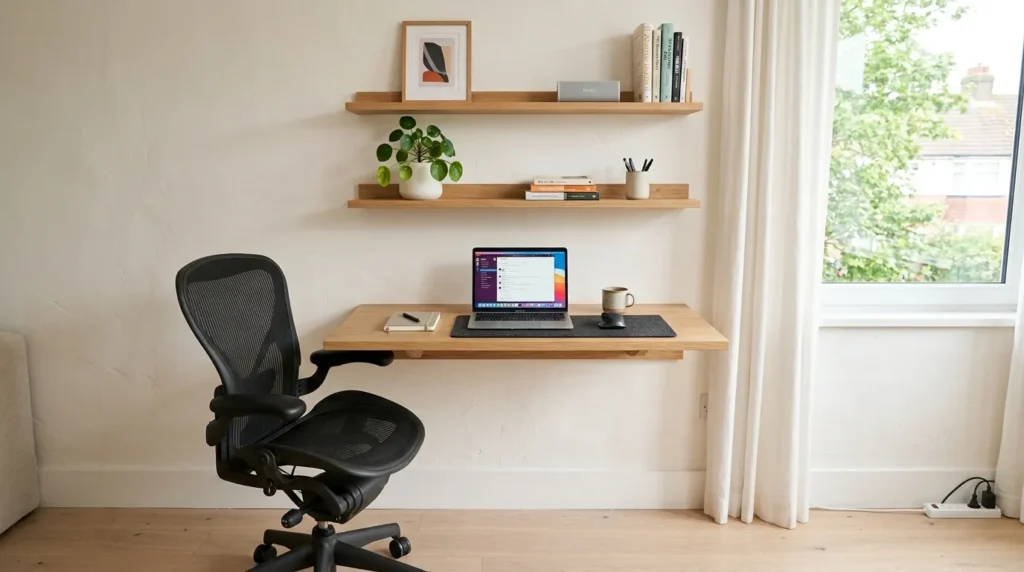
About the Idea
- A wall-mounted desk keeps the floor visually open.
- Natural oak or walnut adds warmth without overwhelming a small room.
- Concealed brackets create a clean, streamlined appearance.
- Add one or two shelves above the desk for vertical storage.
A floating wood desk is a smart solution when you want a streamlined workspace without sacrificing style. Because the desk attaches directly to the wall, the floor underneath remains visible, making a compact room appear more spacious and uncluttered. Choose natural oak for a lighter appearance or walnut for a richer, more substantial feel. I’ve noticed this setup works especially well in bedrooms, apartments, and narrow rooms where a traditional desk can feel bulky. The clean silhouette also creates a polished background, making the entire workspace look more deliberate with fewer furniture pieces.
Functionality becomes even better when the wall above the desk is used strategically. Install a slim shelf for books, a small lamp, or everyday supplies while keeping the main work surface clear. Cable clips or an under-desk cable tray can hide charging wires and maintain the clean appearance. Make sure the wall mounting system is appropriate for the desk weight and wall construction before installation. Add a comfortable black chair and a small plant for contrast. The result is an efficient workstation that feels modern, masculine, and surprisingly spacious even when the room itself is small.
Also Read : 22 Spring Chalkboard Ideas for a Fresh Seasonal Display
6. Warm Layered Lighting
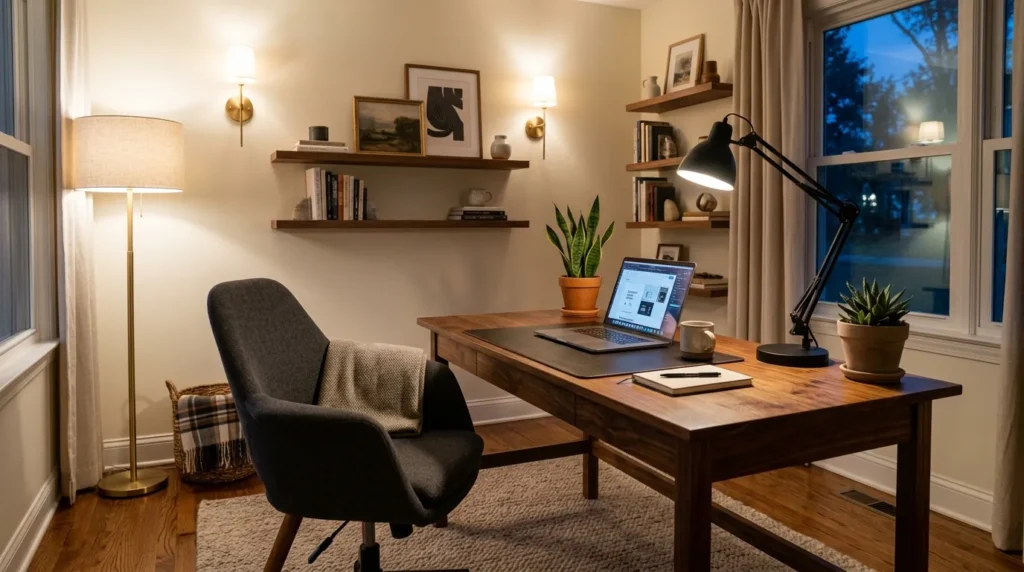
About the Idea
- Layered lighting prevents a desk from feeling flat or harsh.
- Combine overhead, task, and ambient light for different working situations.
- Warm bulbs create a comfortable atmosphere during evenings.
- Position task lighting to reduce shadows across the main work surface.
Good lighting can completely change how a workspace looks and feels, especially after sunset. Instead of relying on one ceiling fixture, combine a desk lamp, ambient floor lamp, and existing overhead light to create different levels of illumination. This makes the room more flexible throughout the day while highlighting furniture and decorative details. A warm white bulb can bring out the richness of wood and leather without making the space feel overly yellow. That layered approach is particularly useful when you want a workspace to feel professional during working hours but relaxed later.
Task lighting should illuminate the desk evenly without shining directly into your eyes or creating strong shadows across notebooks and keyboards. Place a lamp on the opposite side of your writing hand when possible, especially if you frequently take handwritten notes. Add a floor lamp near a reading chair or a soft wall light behind the desk for additional depth. I’ve seen simple lighting changes make an otherwise plain room feel considerably more finished. The key is using several modest light sources rather than depending on one extremely bright fixture.
7. Minimalist Desk Setup
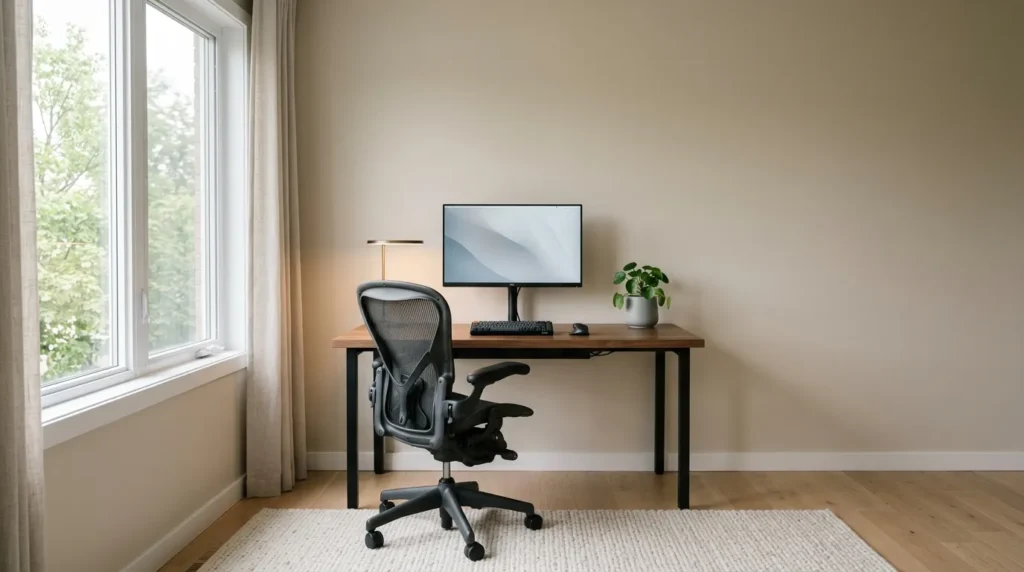
About the Idea
- A simplified desktop makes the entire room feel calmer and more organized.
- Keep only frequently used items within arm’s reach.
- Use matching accessories to create visual consistency.
- Hide chargers, cables, and paperwork whenever possible.
A minimalist desk setup creates an immediate sense of order by removing everything that does not need to stay in view. Start with the essentials: your computer, keyboard, notebook, lamp, and one or two useful accessories. This approach allows the furniture and materials to become part of the design instead of competing with piles of objects. In my experience, clearing the desktop regularly makes it easier to focus because there are fewer visual distractions. Even a small workstation can look sophisticated when every visible item has a purpose and the surrounding surfaces remain uncluttered.
Minimalism does not mean the room needs to feel empty or cold. Introduce warmth through natural wood, a textured rug, leather details, or one small plant. Use drawers, baskets, and cable organizers to keep less attractive necessities out of sight. A monitor stand can also create extra space underneath for notebooks or accessories. Choose a consistent color palette so the visible elements feel connected. The result is a workspace that looks clean in photographs and works efficiently in everyday life. It is especially useful for anyone who wants a polished environment without spending heavily on decoration.
8. Industrial Desk Corner
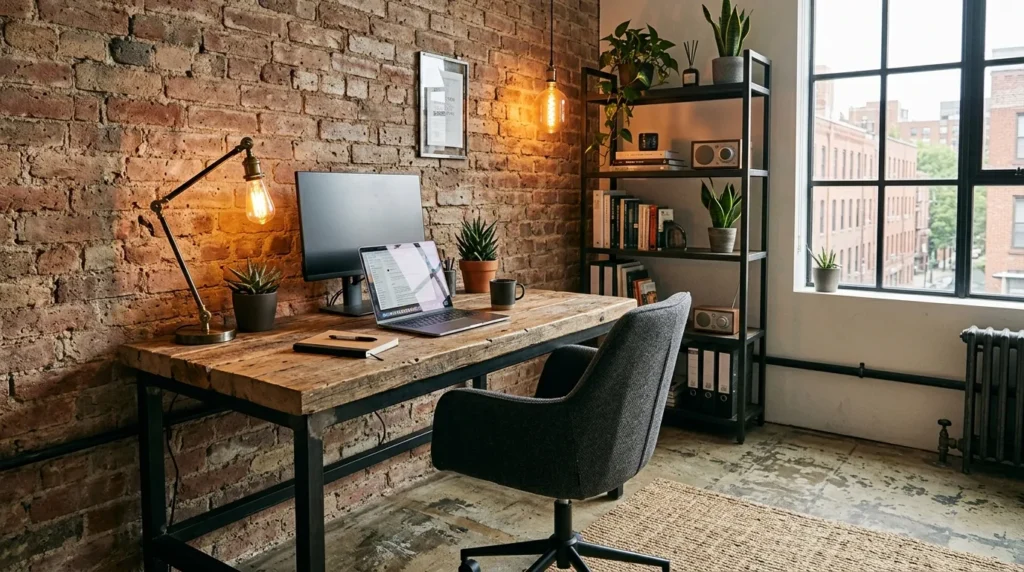
About the Idea
- Combining wood and metal creates strong visual contrast.
- Exposed brick or concrete textures add architectural character.
- Vintage-inspired lighting can soften industrial materials.
- Keep decorative pieces limited so the materials remain the focus.
An industrial desk corner brings together rugged materials and clean functionality in a way that feels naturally masculine. Reclaimed wood, black steel, brick, and concrete-inspired finishes create texture without needing many decorative objects. The secret is balancing hard surfaces with warmer materials so the room does not become visually harsh. A wooden desktop can soften a metal frame, while a leather chair adds another layer of comfort. This combination works particularly well in loft-style rooms, but similar details can be recreated in a standard bedroom or spare room with affordable finishes.
You can create the look without renovating the entire space. Choose a black metal desk frame, add a thick wood desktop, and introduce one industrial-style lamp. If exposed brick is not available, textured wallpaper or a brick-effect panel can create a similar visual impression. Keep the surrounding palette neutral with charcoal, brown, cream, and muted gray. I’ve noticed that repeating one material two or three times makes the design feel more cohesive. For example, black metal shelving, a black lamp, and black chair legs can visually connect separate pieces throughout the room.
9. Built-In Bookcase
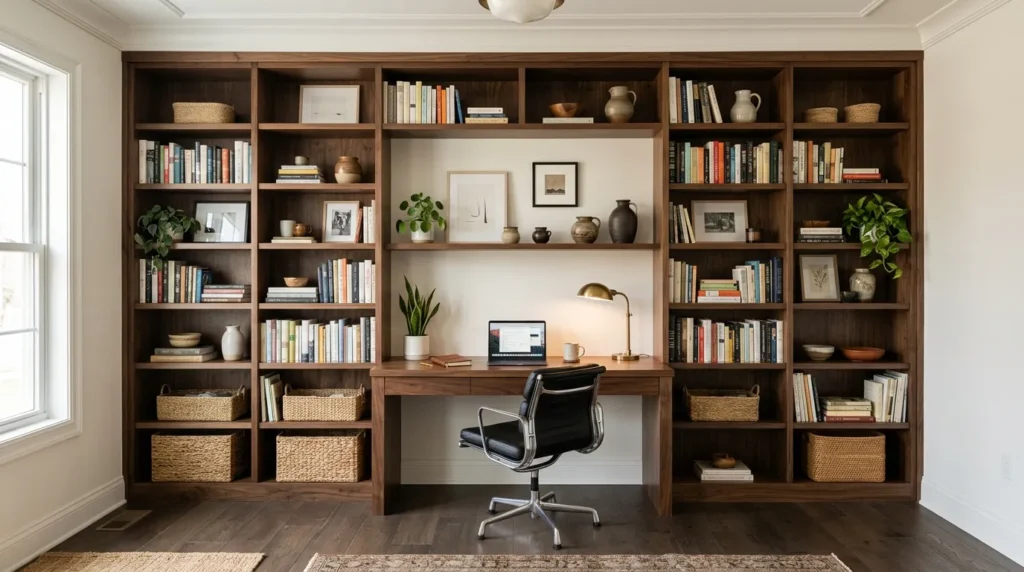
About the Idea
- Floor-to-ceiling shelving makes use of otherwise wasted wall space.
- Built-ins create a finished, architectural appearance.
- Mix practical storage with carefully selected decorative objects.
- Leave sections open to prevent the shelving from looking visually heavy.
A built-in bookcase can make a workspace feel custom-designed while providing generous storage for books, files, and display pieces. Floor-to-ceiling shelving also draws the eye upward, giving the room a stronger sense of height and proportion. Use a consistent material or paint color so the bookcase feels connected to the architecture. A central desk can become the visual anchor, while surrounding shelves provide balance on both sides. This arrangement is especially useful for people who need substantial storage but still want the room to feel organized rather than dominated by freestanding cabinets.
Styling the shelves carefully is just as important as installing them. Arrange books horizontally and vertically, then add framed artwork, baskets, small sculptures, and a few plants to break up repetitive rows. Avoid filling every compartment because open areas help create visual breathing room. Keep heavier objects lower and lighter pieces toward the top. If you prefer a darker palette, deep gray or rich walnut can create a dramatic effect; lighter shelving keeps a small room brighter. The finished arrangement combines useful storage with a refined backdrop that photographs beautifully from multiple angles.
10. Leather Desk Accessories
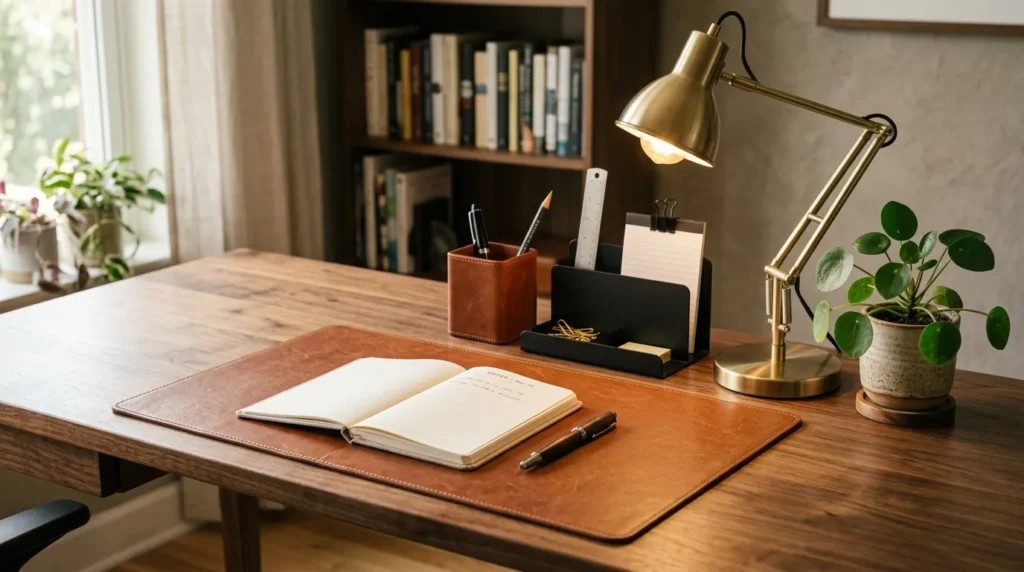
About the Idea
- Leather accessories add warmth without requiring major furniture changes.
- A desk mat can visually define the main working area.
- Matching leather pieces create a cohesive, intentional appearance.
- Choose practical accessories that will actually be used every day.
Leather desk accessories are one of the easiest ways to give a workspace a more refined appearance without replacing large furniture pieces. A leather desk mat, pen holder, cable organizer, or notebook cover introduces texture and warmth across an otherwise hard surface. Cognac and dark brown shades work especially well with walnut desks, while black leather creates a sharper modern look. The key is choosing a few coordinated pieces instead of covering the entire desk. In my experience, small material upgrades can make an inexpensive workstation feel significantly more considered and visually complete.
Think about accessories as functional design elements rather than decorations. A desk mat protects the surface while creating a defined working zone, while a matching tray can hold keys, charging cables, or small stationery items. Choose matte finishes if you prefer a quieter look, or subtle stitching if you want additional detail. Keep the rest of the desktop simple so the leather remains noticeable. Pair these pieces with black metal, natural wood, and warm lighting for a balanced palette. The result feels professional, tactile, and comfortable without becoming overly formal or decorative.
11. Neutral Color Palette
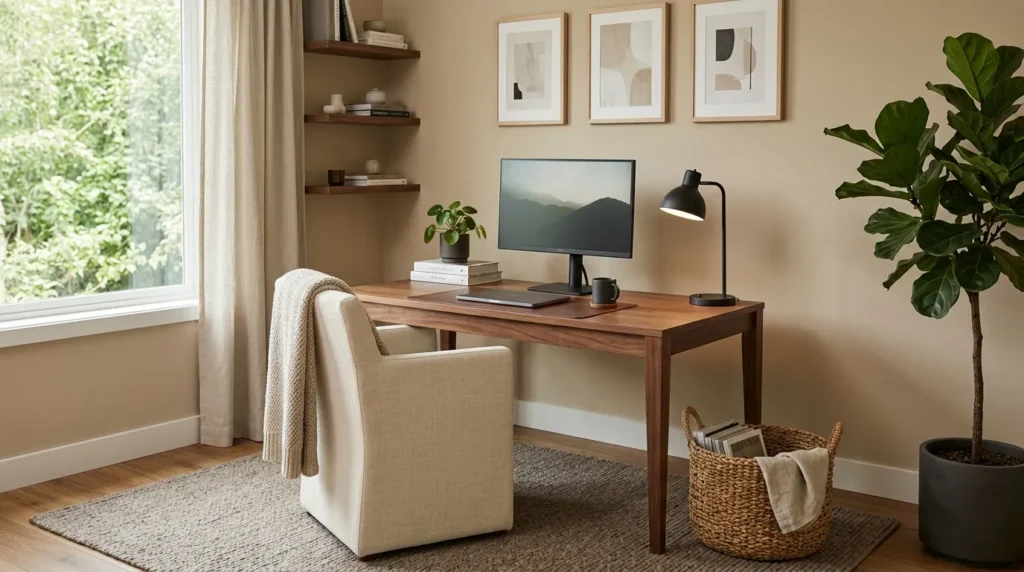
About the Idea
- Beige, cream, taupe, charcoal, and brown create a timeless foundation.
- Layer different textures to keep neutral colors from feeling flat.
- Use darker accents to add definition and visual structure.
- Neutral walls make artwork and furniture easier to update later.
A neutral color palette gives a workspace a timeless foundation that is easy to personalize over time. Instead of relying on several bold colors, build the room around beige, cream, taupe, brown, charcoal, and soft black. These shades create a calm background while allowing furniture materials and textures to stand out. Natural wood can provide warmth, while darker accessories add contrast. This approach is particularly useful if you want your workspace to look polished without following a highly specific trend. A neutral base also makes future changes easier because new artwork or accessories can be introduced without repainting.
The room becomes more interesting when neutral shades are layered rather than matched perfectly. Try a warm beige wall with a cream rug, walnut furniture, charcoal accessories, and a textured woven basket. Different materials give the same color family more depth and prevent the space from looking flat. A small plant can introduce a natural element without disrupting the palette. I’ve noticed that neutral rooms often photograph better when there is clear contrast between light and dark surfaces. That balance creates definition while maintaining the calm, uncluttered atmosphere many people want from a productive workspace.
12. Statement Wall Art
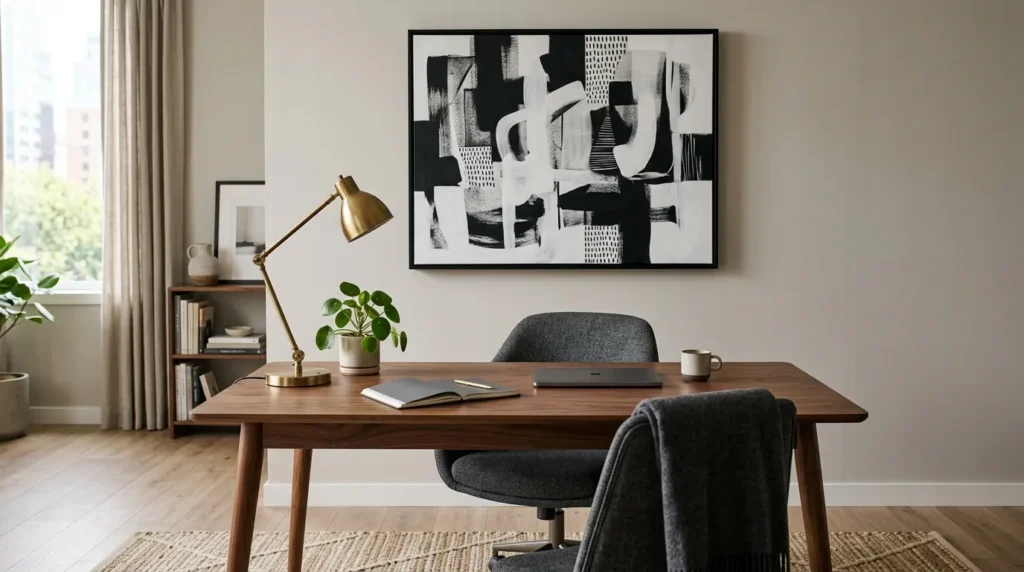
About the Idea
- One oversized artwork can create more impact than several small frames.
- Black-and-white prints complement almost any neutral workspace palette.
- Choose artwork that reflects personal interests or visual taste.
- Keep the surrounding wall relatively open so the main piece stands out.
Statement wall art can transform a plain workspace wall into a strong visual focal point without adding more furniture. One oversized abstract print, architectural photograph, vintage map, or monochrome artwork can give the room personality while maintaining a clean appearance. Choose a frame that connects with existing materials, such as matte black with metal furniture or walnut with a wooden desk. The artwork should feel intentional rather than simply filling an empty wall. A large piece also works beautifully behind a desk because it creates an attractive background for video calls and workspace photos.
Scale matters more than quantity when choosing statement artwork. A piece that is too small can disappear above a large desk, while one that is appropriately sized can make the entire arrangement feel balanced. Leave enough empty wall around the frame so it remains visually distinct. If you prefer several pieces, create a controlled gallery arrangement using similar frame colors and spacing. In my experience, personal artwork creates a stronger connection to a room than generic decoration. Whether it reflects travel, architecture, photography, or a favorite subject, the right piece can make the workspace feel genuinely yours.
13. Modern Wall Panels
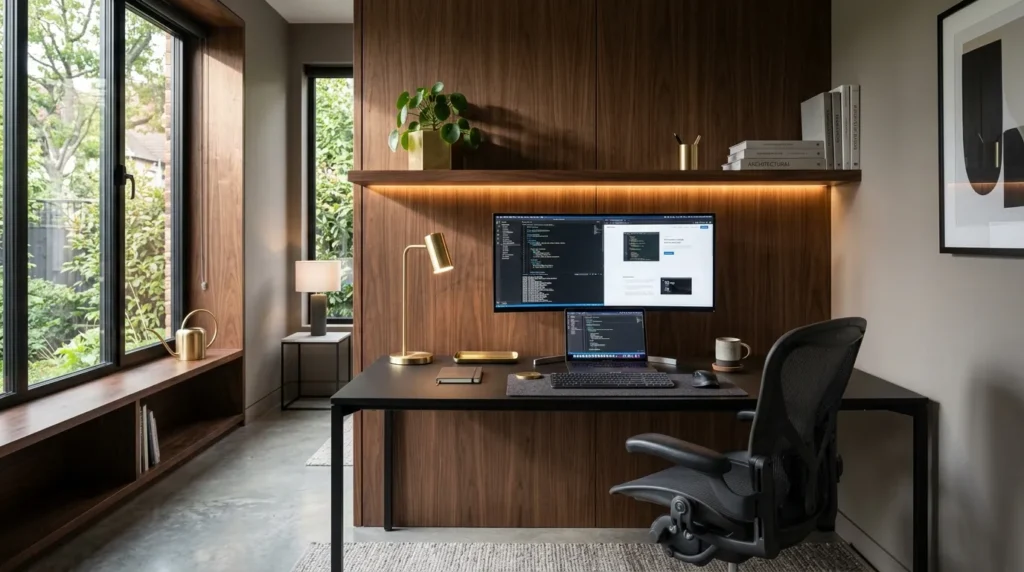
About the Idea
- Wall panels add architectural depth without filling the room with furniture.
- Vertical panels can make the ceiling appear taller.
- Walnut tones bring warmth to darker contemporary spaces.
- Keep furniture streamlined so the wall treatment remains the focal point.
Modern wall panels can give a workspace the appearance of a custom interior with relatively little decorative effort. Vertical wood slats, fluted panels, or smooth walnut boards create depth behind the desk while adding warmth to an otherwise minimal room. The texture becomes a visual feature without competing with artwork or accessories. For a sophisticated look, combine medium or dark wood with charcoal, black, and warm gray tones. If you are working with a small room, using panels on only one wall can create definition without making the entire space feel enclosed.
The direction and spacing of the panels can also influence how the room feels. Vertical lines naturally draw attention upward, while horizontal arrangements can make a wall appear wider. Add subtle lighting along the edges or behind selected sections to emphasize the texture after dark. Keep the desk simple so the wall remains visually prominent. I’ve seen this approach work especially well in modern workspaces where there is little room for extra decoration. Instead of adding shelves, frames, and accessories, the wall itself provides enough detail to make the room feel finished.
14. Moody Green Walls
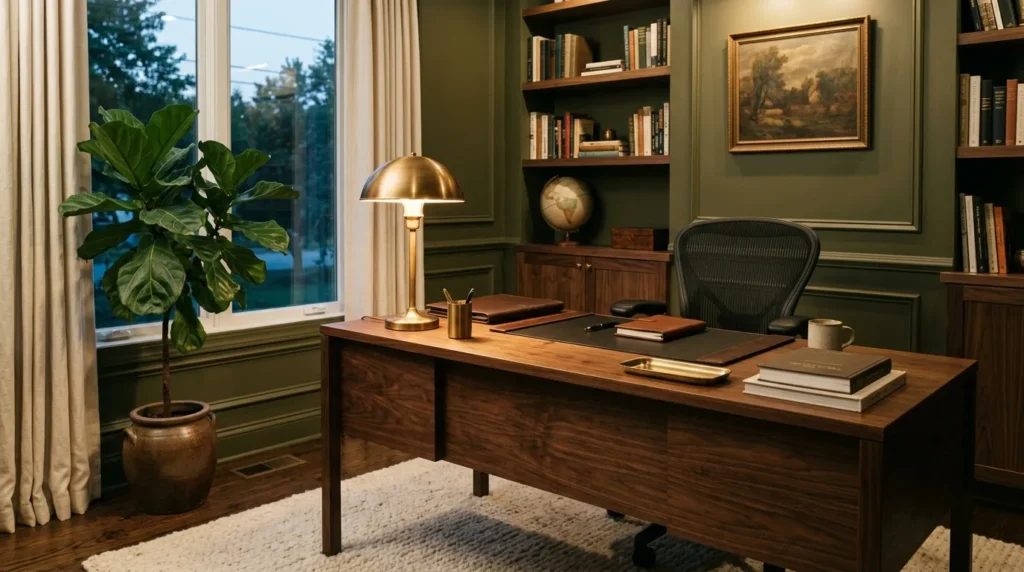
About the Idea
- Deep olive green creates a rich alternative to charcoal or black walls.
- Earthy green works beautifully with walnut, leather, brass, and cream.
- Use lighter textiles to balance the darker wall color.
- Matte paint creates a softer, more sophisticated finish.
Deep green walls can create a sophisticated backdrop while bringing an earthy quality into the workspace. Shades such as olive, forest, moss, and muted sage pair naturally with walnut wood, leather, black metal, and brass. Unlike a pure black wall, green introduces subtle color while maintaining a grounded appearance. This makes it a strong choice when you want a darker room that still feels connected to nature. Use the shade on one feature wall if you are unsure about committing to the entire room, especially when natural daylight is limited.
Balance the deeper wall color with lighter furniture or textiles so the space does not become visually heavy. A cream rug, tan leather chair, or light wood accessory can create useful contrast while maintaining the earthy palette. Indoor plants can reinforce the natural feeling, but even one small plant is enough. Warm lighting becomes particularly important in the evening because it brings out the richness of the green paint. That combination creates a comfortable environment for reading, planning, and focused work while giving the room a distinctive appearance.
15. Compact Corner Workspace
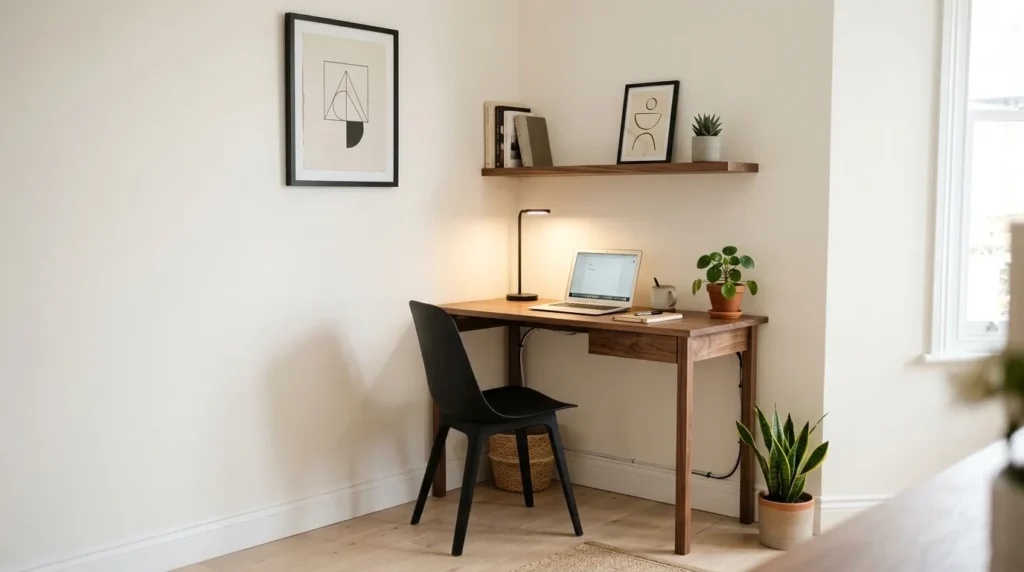
About the Idea
- A small corner can become a productive workstation with the right proportions.
- Choose a narrow desk that leaves comfortable walking space around it.
- Floating shelves provide storage without using valuable floor area.
- Light walls can help a compact workspace feel more open.
A compact corner workspace proves that you do not need a dedicated room to create an effective office. An unused corner can accommodate a slim desk, comfortable chair, small lamp, and vertical storage while keeping the rest of the room available for other activities. Measure the area carefully before buying furniture, paying attention to door swings and walking paths. A desk that fits perfectly will feel much more intentional than one that overwhelms the corner. This is especially useful for apartments, bedrooms, guest rooms, or shared spaces where every square foot needs to work harder.
Use the walls to increase storage without making the floor area feel crowded. One or two floating shelves can hold books, small baskets, and decorative pieces while keeping the desktop clear. Choose furniture with clean lines and avoid oversized accessories that make the corner appear cramped. A small rug can visually define the workstation if the room has an open layout. In my experience, consistent colors make compact work areas feel larger because fewer visual breaks are competing for attention. Keep the palette simple, add good lighting, and let the proportions do the work.
16. Floating Wall Storage
About the Idea
- Floating shelves keep useful items accessible without adding bulky furniture.
- Dark wood creates contrast against lighter walls.
- Use matching baskets to hide smaller office supplies.
- Leave open areas between objects for a cleaner appearance.
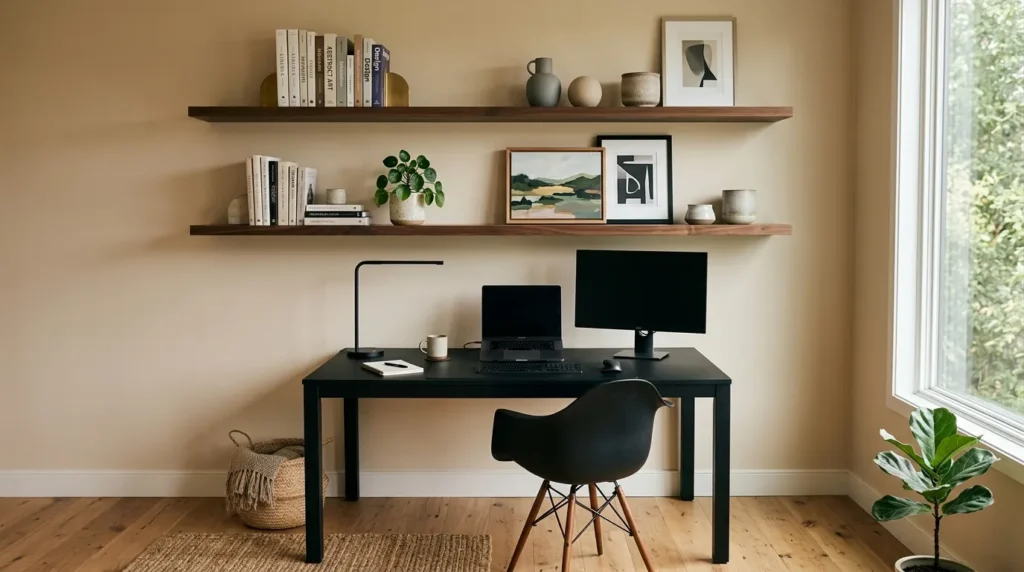
Floating wall storage makes a workspace feel organized while preserving valuable floor space. A few carefully positioned shelves can hold books, notebooks, small storage boxes, and decorative objects without making the room feel crowded. Dark walnut or black shelving works particularly well against warm white, beige, or light gray walls because the contrast creates a defined visual zone around the desk. Instead of covering the entire wall, install shelves only where storage is genuinely needed. This keeps the arrangement practical while giving the workspace a clean, architectural appearance that photographs beautifully.
The way you arrange the shelves can make a major difference to the overall look. Place heavier books and storage baskets on lower levels, then use smaller objects or artwork higher up to create visual balance. Avoid lining every shelf from end to end because negative space helps the arrangement breathe. If you have many small supplies, use matching boxes to keep visual clutter hidden. I’ve noticed that repeating one finish, such as walnut or matte black, helps separate shelves look like part of one cohesive design rather than unrelated storage pieces.
17. Executive Desk Layout
About the Idea
- A substantial desk creates a strong focal point in a larger room.
- Center the desk to establish symmetry and visual balance.
- Keep accessories refined and functional rather than excessive.
- Use a supportive high-back chair for long working sessions.
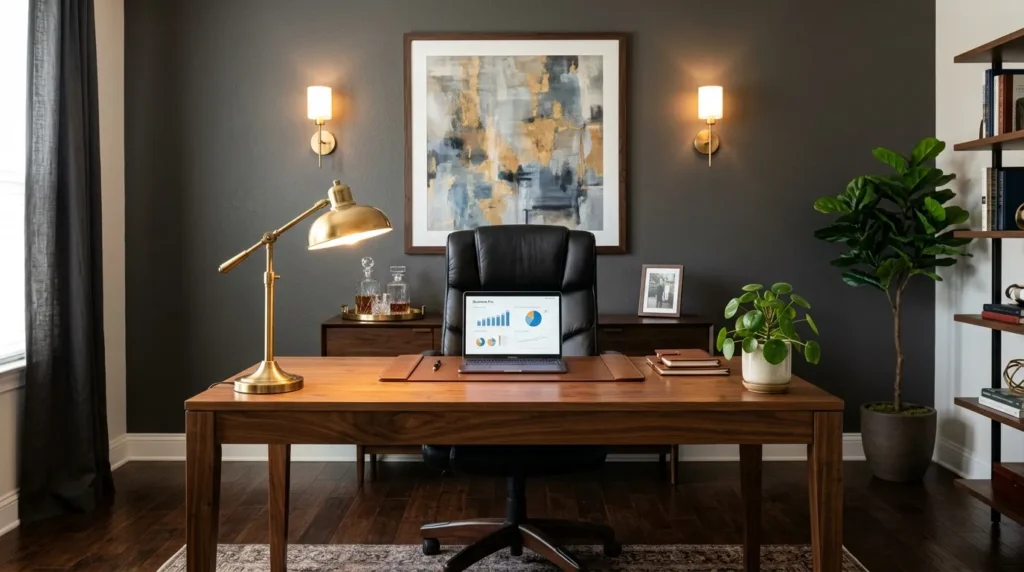
An executive desk layout creates a stronger sense of presence by giving the desk enough space to become the main feature of the room. A substantial walnut or dark wood desk works particularly well when centered against an accent wall, large artwork, or built-in shelving. Leave enough space behind the chair for comfortable movement and position storage within easy reach. The goal is not to make the room feel formal for the sake of appearance, but to create a balanced setup where furniture proportions match the available space. Larger rooms benefit most from this confident arrangement.
Symmetry can make an executive workspace look instantly more polished. Center the desk beneath artwork or between two shelving units, then repeat similar visual weight on both sides. A high-back leather chair reinforces the professional appearance, while a desk lamp, tray, and minimal stationery provide useful finishing touches. Avoid overcrowding the desktop because a large surface can quickly become visually messy. Warm wood, black accents, and soft lighting create a sophisticated palette without making the room feel overly corporate. The finished layout feels substantial, comfortable, and intentionally designed for focused daily work.
18. Vintage Office Details
About the Idea
- Vintage pieces add personality and history to a modern workspace.
- Antique wood pairs naturally with leather and aged brass.
- Mix old and new furniture for a practical but character-rich result.
- Choose a few meaningful pieces instead of filling the room with antiques.
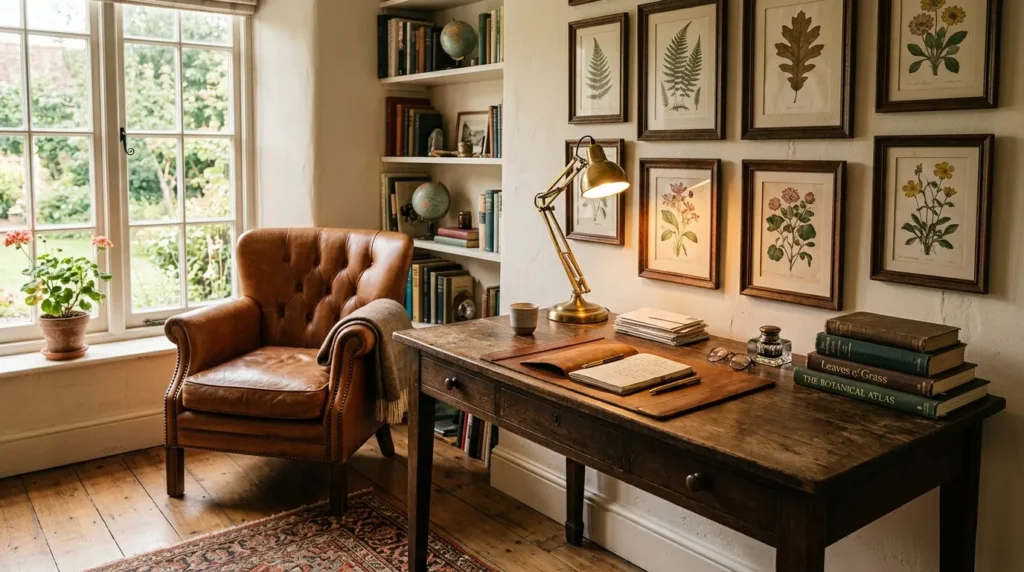
Vintage office details can give a workspace personality that new furniture sometimes struggles to create. A traditional wooden desk, aged brass lamp, leather chair, old-style framed print, or stack of hardcover books can introduce warmth and character without making the room feel outdated. The most successful approach is usually a mix of old and new. Pair a vintage-looking desk with a modern ergonomic chair or contemporary computer setup so the space remains comfortable for everyday use. These contrasting elements create a room that feels collected over time rather than purchased as one matching set.
Small details are often enough to establish the vintage influence. Look for materials with natural variation, such as worn leather, aged brass, dark timber, woven textiles, and textured paper. Keep the color palette controlled with brown, cream, charcoal, and muted green tones. I’ve noticed that one genuinely interesting vintage piece often has more visual impact than several decorative replicas. Display meaningful books, artwork, or objects where they can be appreciated without interfering with your workflow. The result is a workspace with warmth, individuality, and a timeless quality that feels inviting rather than overly themed.
19. Blackout Window Treatments
About the Idea
- Blackout curtains give you better control over glare during screen-heavy work.
- Floor-length panels can make windows appear taller and more substantial.
- Charcoal, taupe, or deep brown fabrics complement darker furniture beautifully.
- Choose textured fabric to soften the harder surfaces in the room.
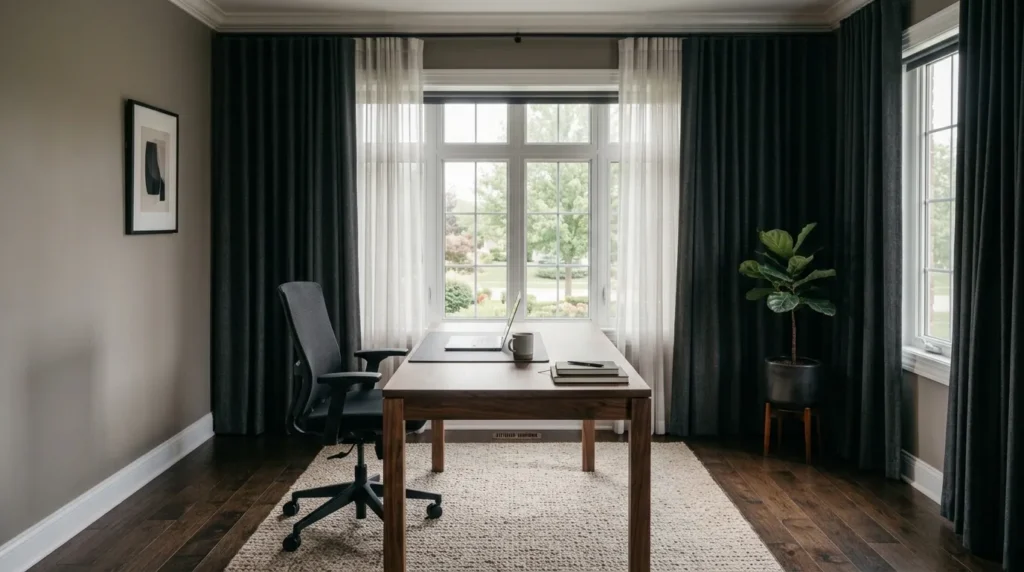
Blackout window treatments can improve both the appearance and functionality of a workspace, especially when natural sunlight creates glare across a monitor. Floor-length curtains in charcoal, espresso, taupe, or deep gray add softness while giving the window a more finished appearance. Choose a fabric with some texture so the room does not feel too stark against wood, metal, and glass surfaces. The curtains can remain partially open during the day for natural light and closed when you need better screen visibility. This simple addition can make a workspace feel more comfortable and deliberately designed.
Consider installing the curtain rod several inches above the window frame and extending it beyond both sides. This allows the fabric to frame the window without blocking as much natural light when open. If complete darkness is not necessary, choose lined curtains rather than extremely heavy panels. A neutral color will also work with future furniture changes. In my experience, window treatments are often overlooked when styling a workspace, even though they occupy a large visual area. The right curtains can soften the room, reduce distractions, and make the entire setup feel more finished.
20. Textured Area Rug
About the Idea
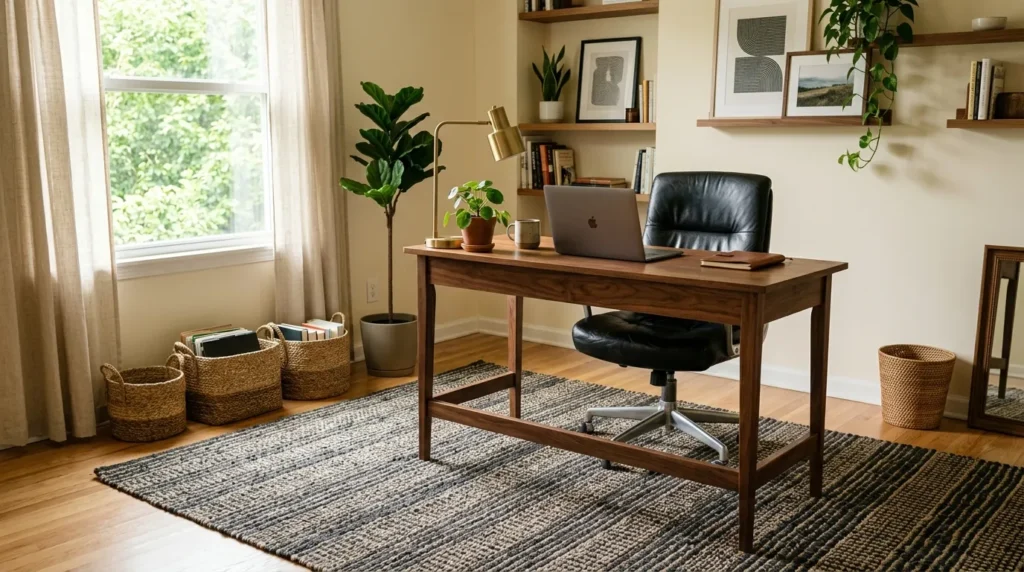
- A textured rug visually defines the work zone in an open room.
- Neutral patterns add interest without overwhelming furniture.
- Wool, woven, or low-pile textures bring softness beneath the desk.
- Choose a size large enough to extend beyond the chair when pulled back.
A textured area rug can instantly make a workspace feel warmer and more connected to the rest of the room. Hard flooring often looks clean but can make a desk area feel visually unfinished, especially in larger rooms. A neutral rug in charcoal, beige, taupe, or muted brown adds softness while creating a defined zone around the desk and chair. Choose a low-pile or flat-weave style if the chair needs to move easily. The right texture also helps balance harder materials such as metal legs, glass surfaces, and electronics.
Size is one of the most important considerations when choosing a rug for a workstation. Ideally, the rug should extend beyond the desk and remain underneath the chair even when you pull it backward. This creates a cohesive visual area instead of making the rug look like a small mat placed randomly under the furniture. Simple geometric patterns can add interest while remaining versatile. I’ve noticed that textured rugs are particularly useful in rooms with lots of dark furniture because they introduce another layer without requiring additional decoration. The result feels more comfortable, balanced, and complete.
21. Hidden Cable Management
About the Idea
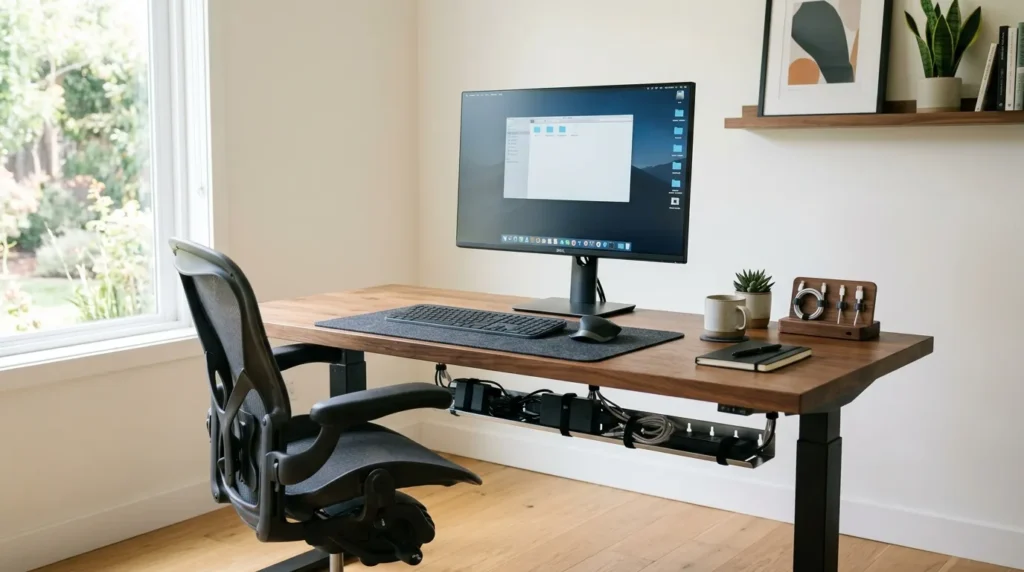
- Hidden cables immediately make a workspace look cleaner.
- Use an under-desk tray to collect power cords and adapters.
- Cable sleeves can group multiple wires into one neat line.
- Label chargers before organizing them so future maintenance stays simple.
Hidden cable management is one of those small improvements that can make a surprisingly large visual difference. Even an expensive desk can look messy when power cords, chargers, and monitor cables are scattered across the floor. Start by grouping cables according to where they need to go, then use an under-desk tray or mounted power strip to keep connections off the floor. Cable sleeves can combine several wires into a single clean line. This approach keeps the workstation visually calm while also making it easier to clean underneath the desk and troubleshoot equipment later.
Good cable organization should make everyday use easier, not create another complicated system to maintain. Leave enough slack for moving your monitor, keyboard, or laptop without pulling connections tight. Label chargers if several devices use similar cables, and keep frequently disconnected items accessible. A simple black cable sleeve usually blends naturally with dark furniture and equipment. I’ve noticed that once cables are properly organized, the desk often needs fewer decorative accessories because the clean lines create their own visual impact. The workspace feels more professional, intentional, and much easier to keep tidy.
22. Dual Monitor Setup
About the Idea
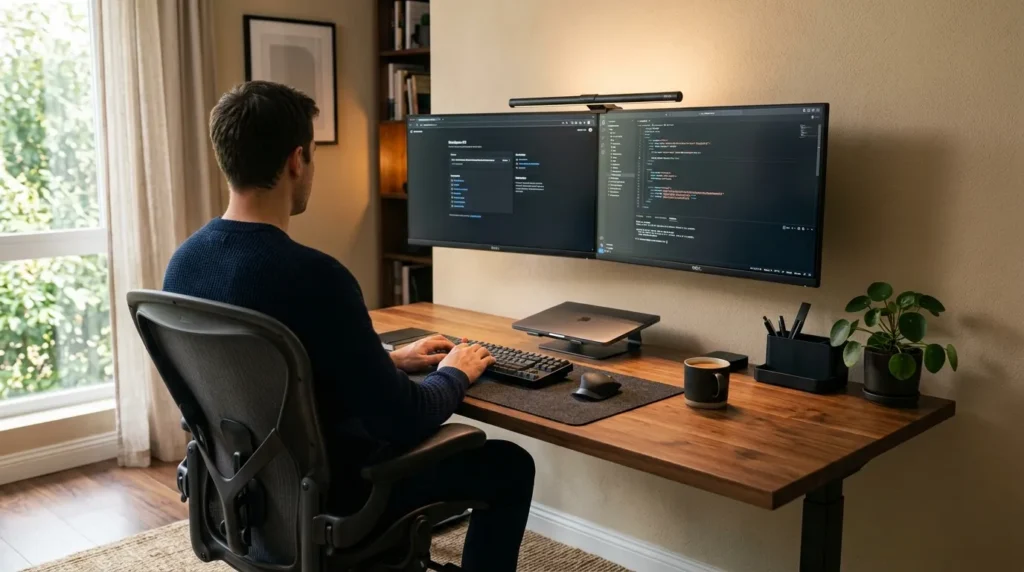
- A dual-screen arrangement creates more room for multitasking.
- Monitor arms free up valuable desk space.
- Keep both screens at a comfortable viewing height.
- Matching dark finishes help the technology blend into the overall design.
A large monitor setup can make a workspace feel more capable while keeping everyday tasks organized. One wide display or two carefully positioned monitors provide useful room for research, documents, communication, and creative work without constantly switching between windows. Mounting the screens on adjustable arms can free valuable desk space and create a cleaner appearance. Choose a simple black or dark gray display so the technology blends with the surrounding furniture. In my experience, a well-positioned monitor setup can make a compact desk feel significantly more functional without adding extra furniture.
Ergonomics should guide the arrangement as much as appearance. Position the main screen directly in front of your chair, with the top of the display around eye level, then angle additional screens slightly inward. Keep the keyboard and mouse close enough that your shoulders can remain relaxed while working. Use a monitor arm if the original stand takes up too much desktop space. Hide excess cables behind the desk and keep only essential devices visible. The finished arrangement looks streamlined, reduces visual clutter, and creates a more efficient workstation for long periods of focused computer use.
23. Statement Desk Lamp
About the Idea
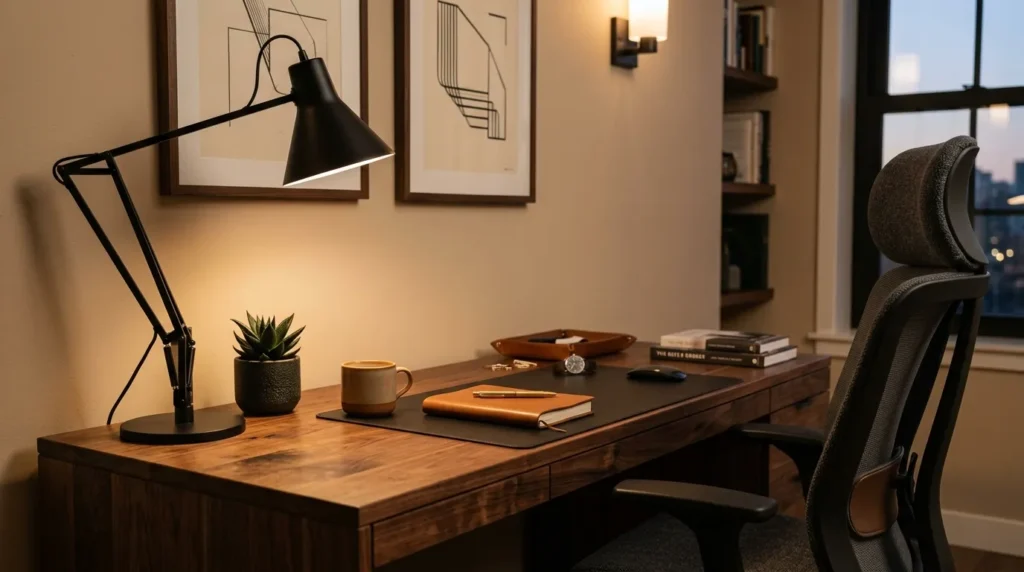
- A distinctive lamp can become a functional focal point.
- Black, brass, and brushed metal finishes complement darker furniture.
- Adjustable lighting makes the desk more practical throughout the day.
- Choose a lamp proportionate to the size of the desk.
A statement desk lamp can become both a practical light source and a memorable design detail. Look for a sculptural black, brass, or brushed metal fixture with a shape that complements the desk rather than competing with it. Place it where the light falls evenly across your work surface without creating screen glare. A substantial lamp can add height and visual interest to an otherwise simple desk. I’ve noticed that choosing one distinctive lighting piece often creates more character than adding several small decorations, especially when the rest of the workspace follows a restrained palette.
Consider the lamp’s size, shade direction, and finish before making a purchase. A wide shade can work beautifully on a large desk, while a slim adjustable arm is better for a compact workstation. Warm white lighting creates a softer atmosphere in the evening, while adjustable brightness makes the fixture more useful throughout the day. Coordinate the lamp with other metal details, such as shelving brackets, drawer handles, or picture frames. The result is a practical focal point that improves task lighting while adding another layer of texture and sophistication to the overall workspace.
Conclusion
A great workspace does not have to be complicated or expensive. The best masculine home office designs combine practical furniture, thoughtful lighting, comfortable textures, and personal details to create a space that feels both productive and inviting. Start with one idea that fits your room, then build from there. I’ve seen how small changes like better lighting, organized storage, or a simple accent wall can completely transform a space. Save this article on Pinterest so you can return to your favorite ideas later, and share it with someone planning a workspace makeover. Your ideal office may be closer than you think.