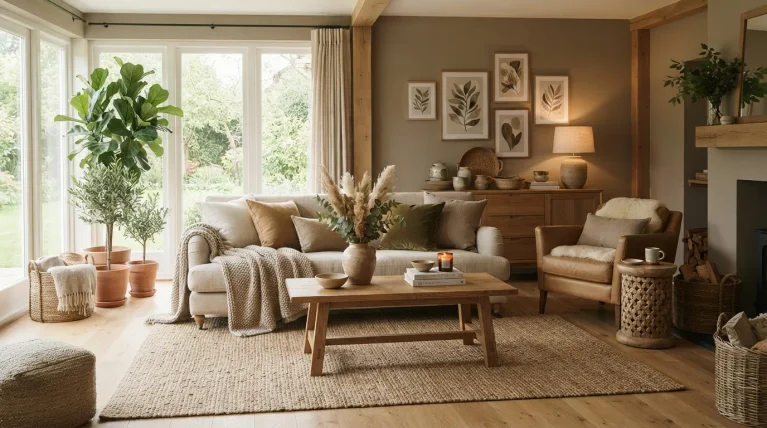
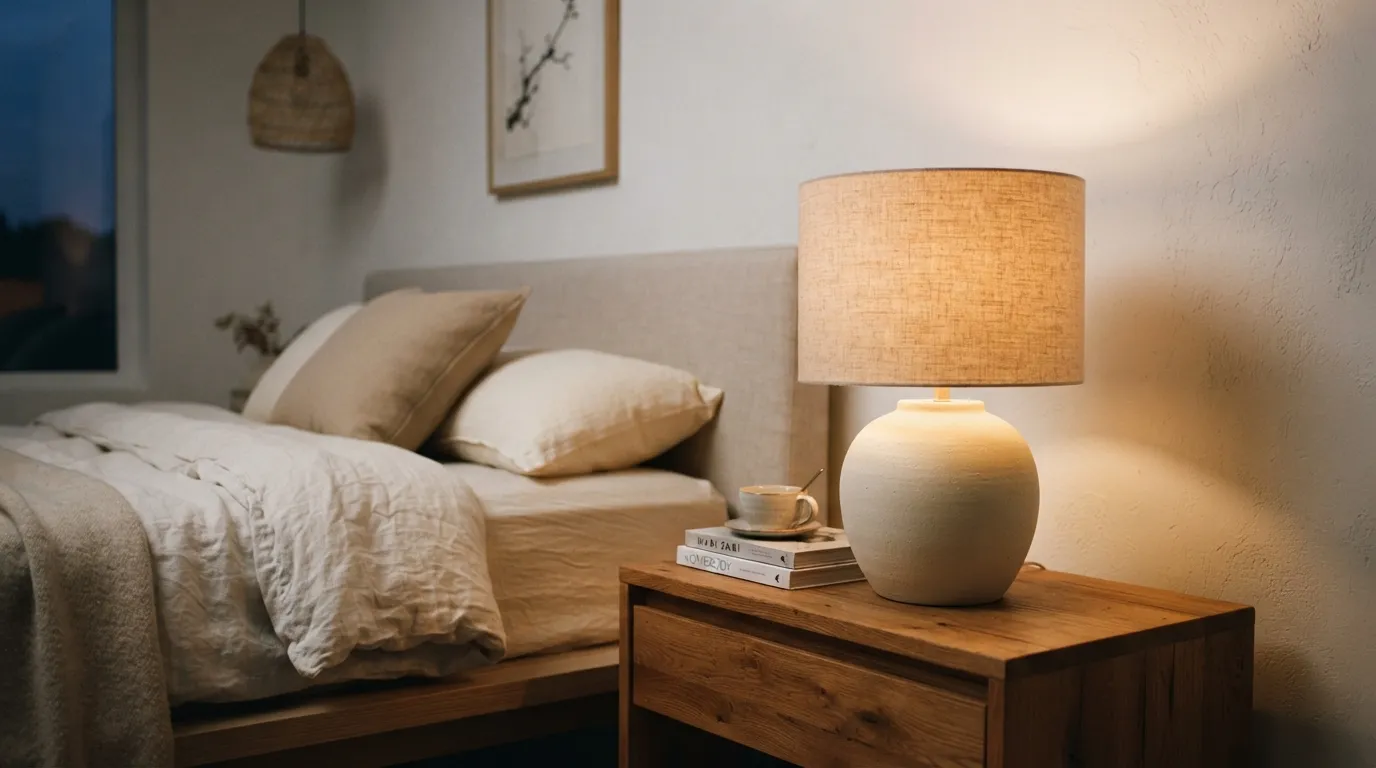
What if your bedroom could feel like a quiet exhale at the end of every day? That’s the promise behind minimalist Japandi bedroom design, a style built on natural materials, soft light, and just enough décor to feel calm instead of empty. This approach blends Japanese simplicity with Scandinavian warmth, creating rooms that feel grounded rather than cold or bare. If your bedroom currently feels cluttered, mismatched, or simply uninspiring, these ideas offer a clear, achievable path toward something calmer.
In my experience, the biggest shift doesn’t come from one dramatic change, but from a series of small, intentional choices, low furniture, warm lighting, natural textures, layered together thoughtfully. I’ve noticed that people often assume minimalism means an empty room, when really it means a considered one. This list walks through 24 practical ideas, from a simple wood nightstand to a well-placed pendant light, each one easy to bring into an existing bedroom without a full renovation or an overwhelming budget.
1. Low Platform Bed
- Creates a grounded, low-to-the-floor look that feels calm instead of cramped
- Removes visual bulk compared to a tall upholstered frame
- Pairs naturally with tatami-style or light wood flooring
- Makes smaller rooms feel more open and less closed in
- Simple to style since it needs very little extra decor
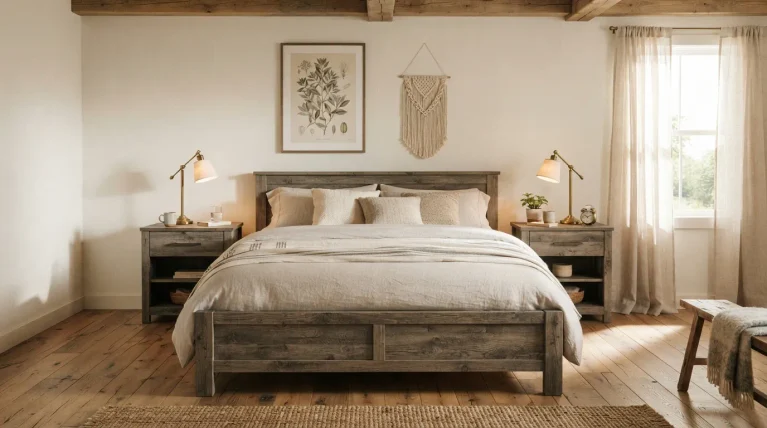
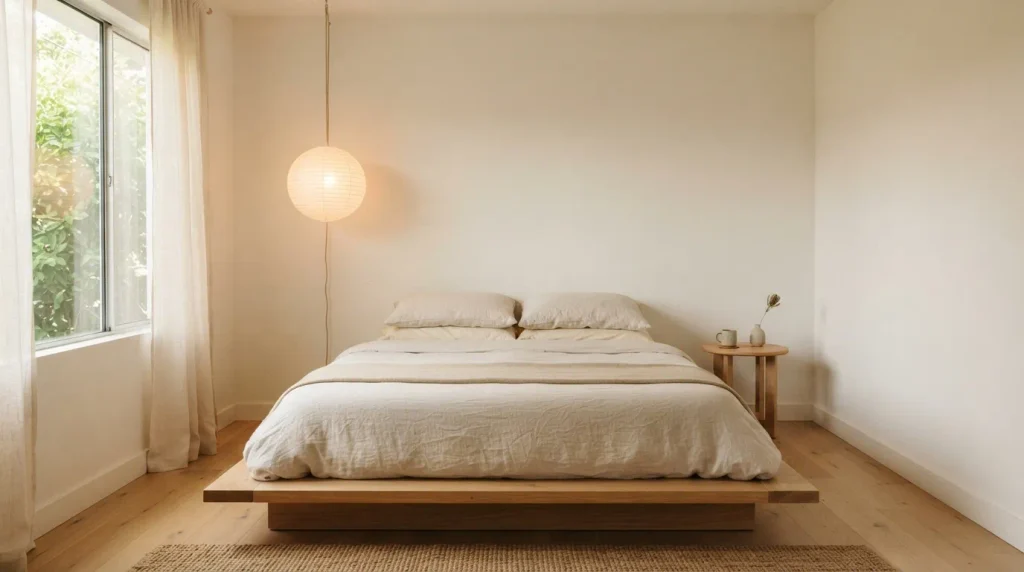
A low platform bed instantly sets the tone for a Japandi bedroom, and it’s usually the first thing people notice when they walk in. Instead of a tall frame that dominates the room, the bed sits close to the floor, which makes the whole space feel more open and grounded. In my experience, this single change does more to create that calm, minimalist feeling than almost any other piece of furniture. It also pairs effortlessly with natural materials like light wood or woven textures, since there’s no bulky headboard competing for attention. For a genuinely restful bedroom, this is usually the right place to start.
Beyond the visual effect, a low platform bed also encourages a more intentional approach to everything placed around it. Because the frame itself is so simple, there’s less temptation to overdecorate the space with unnecessary pieces. I’ve noticed that rooms built around a low bed naturally stay tidier too, since clutter becomes far more noticeable against such an uncluttered base. This makes it easier to keep the whole room feeling calm and considered rather than busy. It’s a foundational choice that shapes nearly every other decision that follows in a minimalist Japandi bedroom design.
Also Read : 21 Earthy Minimalist Bedroom Ideas for a Calm Natural Retreat
2. Natural Wood Nightstand
- Adds warmth without introducing extra color or pattern
- Keeps surfaces clear with simple, functional storage
- Matches the natural tone of a wood bed frame easily
- Small footprint works well in compact bedrooms
- Encourages a clutter-free nightstand routine
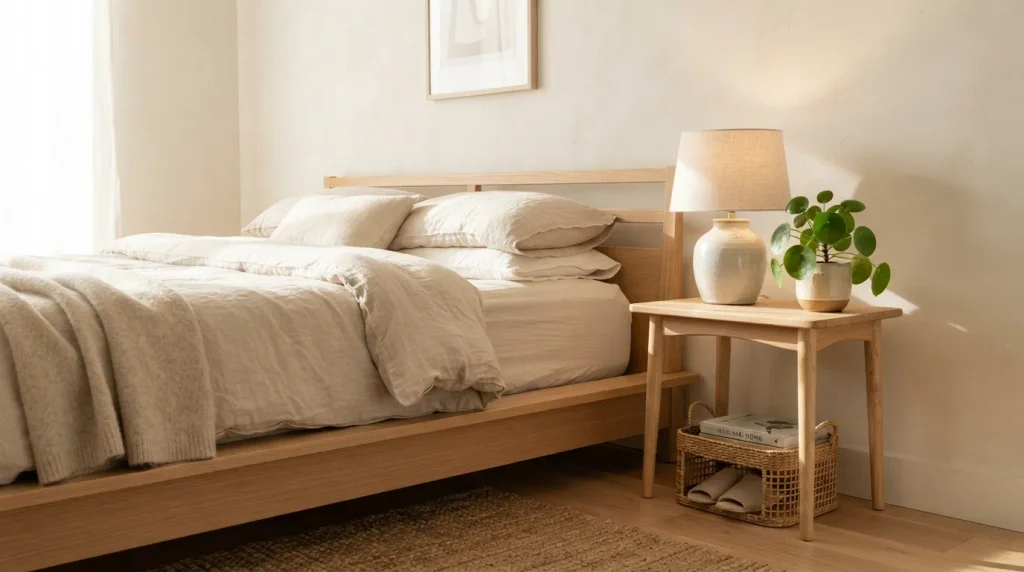
A cluttered nightstand can undo the calm feeling of an otherwise well-styled bedroom, which is exactly why a simple wood nightstand matters so much here. Its light, natural tone echoes the same warmth found in a wood bed frame, keeping the whole room visually connected without needing to match every single piece exactly. I’ve tried heavier, darker nightstands in this kind of room before, and they almost always feel out of place next to lighter Japandi tones. A smaller, simpler design also makes it easier to keep the surface clear, since there’s less room to pile things up out of habit.
What makes this piece work so well is how little it asks for in return. A single lamp, maybe a small plant, and there’s rarely a need for anything more. I’ve seen this work particularly well in bedrooms where people struggle to keep surfaces tidy, since a smaller nightstand naturally limits what can accumulate there. That built-in restraint is part of what makes Japandi design so approachable, even for people who don’t consider themselves naturally minimalist or especially tidy by habit.
Also Read : 22 Year Round Mantle Decor Ideas for Every Season
3. Neutral Linen Bedding
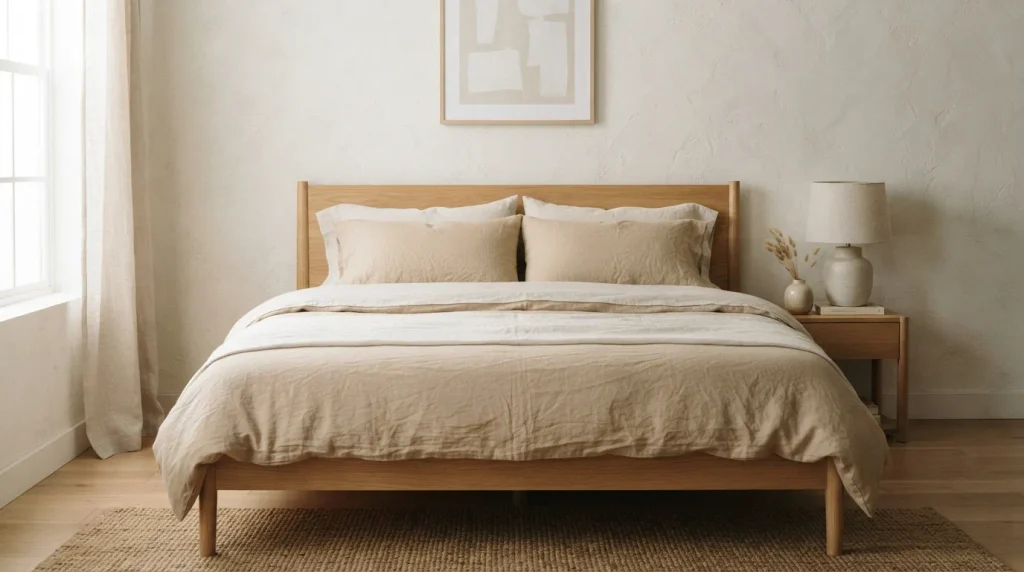
- Softens the room without adding busy patterns or bold color
- Linen texture adds visual interest even in a neutral palette
- Easy to keep looking fresh with simple, breathable fabric
- Works well across seasons without needing to be swapped often
- Creates a calm base the rest of the room can build on
Patterned bedding is one of the easiest things to overdo in a bedroom, and neutral linen is the simplest way to avoid that mistake entirely. Its soft, textured weave adds visual interest on its own, without needing stripes, prints, or contrasting colors to feel finished. In my experience, this kind of bedding photographs beautifully precisely because it lets light and shadow do the work, something a busy pattern can never quite achieve. It also tends to soften slightly with each wash, which only adds to the relaxed, lived-in feeling that Japandi bedrooms are known for.
Because the palette stays so neutral, linen bedding also gives the rest of the room more flexibility. A single throw pillow or a small plant nearby can add just enough contrast without ever feeling like too much. I’ve seen this work well in bedrooms of nearly any size, since a neutral base never competes with existing furniture or wall color. That quiet flexibility is exactly why linen bedding remains one of the most reliable starting points for anyone building a calm, minimalist Japandi bedroom design from scratch.
Also Read : 21 Bedroom Lighting Ideas for a Cozy Stylish Space
4. Woven Paper Lantern
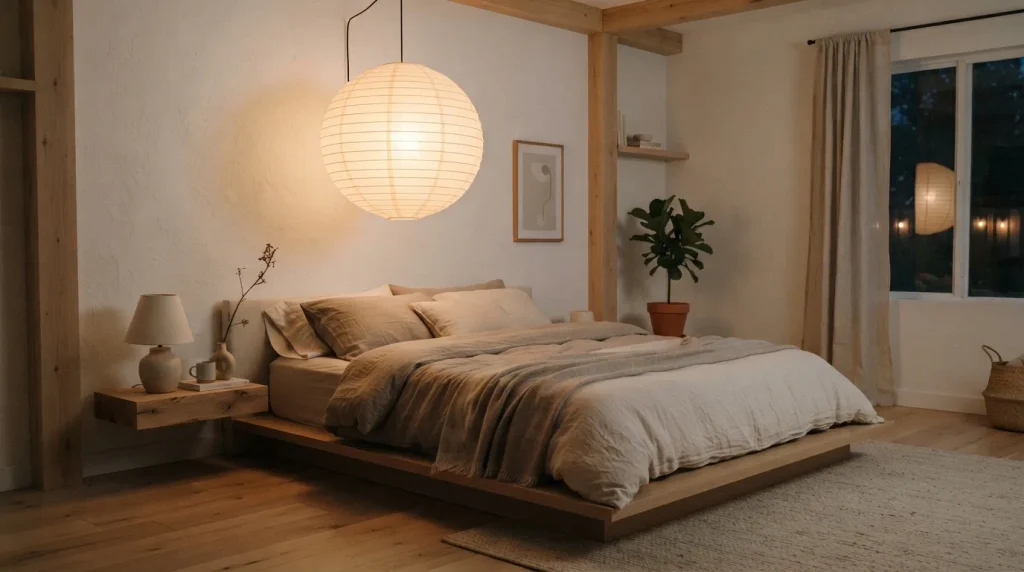
- Adds soft, diffused light instead of harsh overhead glare
- Brings a handcrafted, natural material into the ceiling space
- Works well as the main light source in a small bedroom
- Simple shape keeps the room feeling uncluttered
- Casts a gentle glow that suits evening winding-down routines
Overhead lighting in most bedrooms is far too harsh for the calm mood a Japandi space is trying to create, and a woven paper lantern solves that problem beautifully. Its soft, diffused glow spreads light evenly across the room without the sharp shadows a standard fixture tends to produce. In my experience, this one change makes evenings feel noticeably calmer, since the lighting itself stops feeling clinical or overly bright. It also adds a subtle handcrafted texture overhead, which balances out all the smooth, simple surfaces found elsewhere in a minimalist bedroom.
Because the lantern’s shape is so simple, it never competes with the rest of the room’s quiet styling. I’ve seen this work particularly well in bedrooms where the ceiling would otherwise stay completely bare, since it adds just enough visual interest without becoming a focal point on its own. The soft light it produces also suits reading or winding down before sleep far better than typical overhead lighting. That combination of function and calm aesthetic is exactly what makes it such a natural fit for Japandi-style rooms.
Also Read : 25 Jewel Tone Bedroom Ideas for a Rich Luxurious Look
5. Tatami Floor Mat
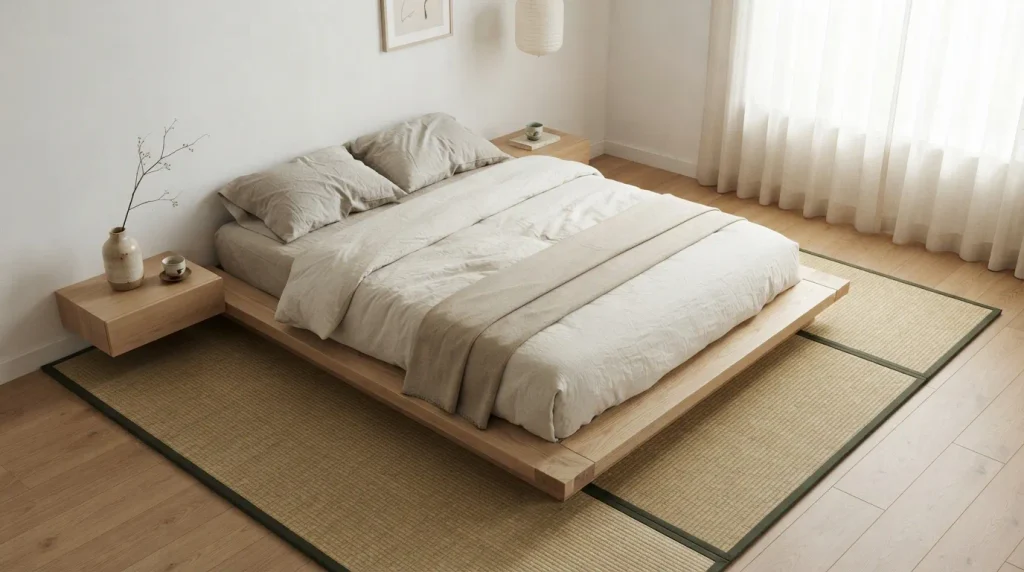
- Adds natural texture underfoot without a bold pattern
- Grounds the room in a way that ties to Japanese design roots
- Softer and warmer than bare wood or tile flooring
- Works especially well layered under a low platform bed
- Easy to clean and maintain compared to plush carpeting
Flooring rarely gets much attention in bedroom styling, but a tatami-style mat does more for a Japandi room than most people expect. Its natural woven texture adds warmth underfoot while staying true to the understated, grounded aesthetic this design style is known for. I’ve tried plush area rugs in similar rooms before, and they almost always feel slightly out of place next to such a pared-back color palette. A tatami mat avoids that mismatch entirely, since its texture and tone blend naturally with wood furniture and neutral bedding already in the room.
Placed beneath a low platform bed, a tatami mat also reinforces the room’s overall sense of groundedness, keeping everything visually connected close to the floor. I’ve seen this work especially well in bedrooms without much natural texture elsewhere, since the woven surface adds just enough visual interest without needing a rug in a bold color or pattern. It’s also considerably easier to keep clean than thick carpet, which matters in a design style that values simplicity in both looks and daily upkeep.
Also Read : 22 Emerald Green Bedroom Ideas for a Rich Elegant Space
6. Sliding Shoji Screen
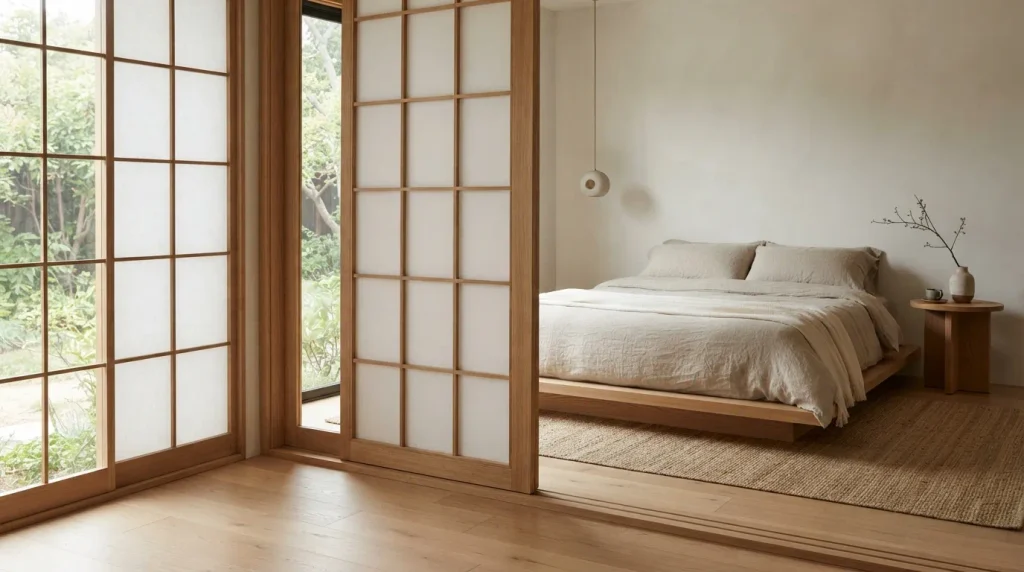
- Filters natural light into a soft, even glow
- Adds privacy without blocking the room off completely
- Works well as a room divider in open layouts
- Reinforces the natural wood and paper material palette
- Creates a quiet focal point near windows or closets
A shoji screen brings one of the most recognizable elements of Japanese design directly into a bedroom, and it does far more than just look beautiful. Its translucent panels filter natural light into something soft and even, avoiding the harsh contrast that direct sunlight or heavy curtains often create. That’s why many designers recommend it specifically for west or south-facing windows, where afternoon light can otherwise feel overwhelming. Beyond the window, it also works well as a lightweight room divider, offering privacy without fully closing off a space the way a solid wall would.
I’ve seen this work particularly well in studio layouts or larger bedrooms that double as a workspace, where a shoji screen can separate a sleeping area from a desk or reading nook. Its wood frame and paper panels tie directly into the natural material palette found throughout a Japandi bedroom design, reinforcing the same calm, understated mood. Because it slides rather than swings open, it also takes up far less space than a traditional door, which matters in smaller rooms.
Also Read : 25 Modern Mens Bedroom Ideas for a Stylish Cozy Retreat
7. Floating Wood Shelves
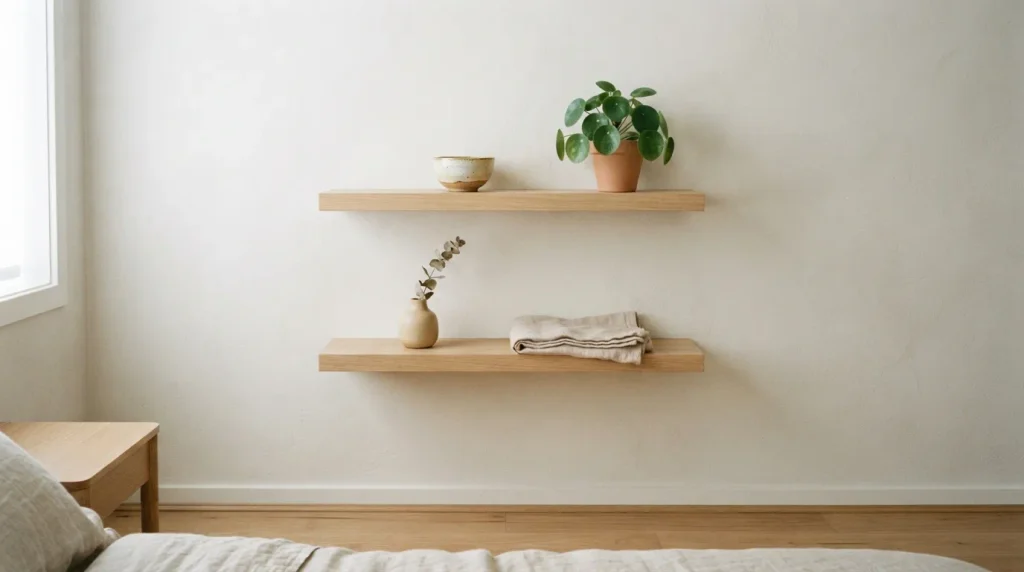
- Adds storage without the visual bulk of a full shelving unit
- Keeps display items limited to just a few meaningful pieces
- Wood tone ties naturally into other furniture in the room
- Works well above a nightstand or in an empty corner
- Encourages a curated, uncluttered approach to decor
Floating shelves solve a common problem in minimalist bedrooms, offering a place to display a few meaningful objects without the bulk of a full bookshelf or cabinet. Because they mount directly to the wall, they keep the floor completely clear, which matters in a design style built around open, breathing space. In my experience, the trick is resisting the urge to fill them completely. A single plant, one ceramic piece, and a small stack of books is usually enough to feel intentional without tipping into clutter. That restraint is really what makes floating shelves work so well here.
Their light wood tone also matters more than people expect, since it needs to match or complement the bed frame and nightstand already in the room. I’ve seen this work particularly well when shelves are mounted at slightly uneven heights, adding subtle visual interest without breaking the room’s overall sense of calm. Keeping the number of displayed objects low, generally no more than two or three per shelf, is what separates a styled Japandi shelf from one that simply looks like extra storage.
8. Muted Earth Tone Palette
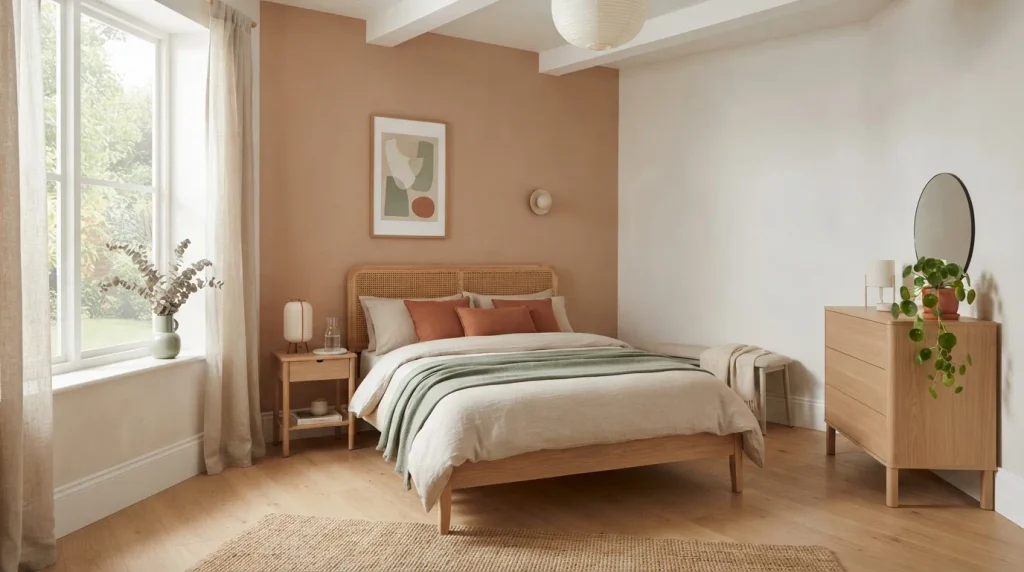
- Adds gentle color without breaking the room’s calm mood
- Terracotta and sage work especially well with light wood tones
- Keeps color limited to two or three shades at most
- Prevents the room from feeling flat or overly white
- Easy to introduce through pillows, throws, or small decor
An all-white bedroom can start to feel a little cold after a while, and a muted earth tone palette fixes that without disrupting the room’s overall calm. Soft terracotta, sage green, or warm beige, used sparingly through pillows or a throw blanket, adds just enough color to feel intentional rather than sterile. In my experience, limiting the palette to two or three shades total is what keeps a Japandi bedroom design feeling cohesive, since too many competing colors quickly undo the sense of quiet the style depends on. Even a small dose of color makes a noticeable difference here.
I’ve noticed that people often hesitate to add any color at all, worried it will clash with such a neutral base, but muted, earthy tones almost never do. They pair naturally with light wood and woven textures already common in these rooms, since the tones themselves come from the same natural world. That’s why many designers recommend choosing colors inspired by clay, stone, or plants rather than anything bright or saturated, keeping the room’s calm, grounded feeling fully intact.
9. Built-In Wood Headboard
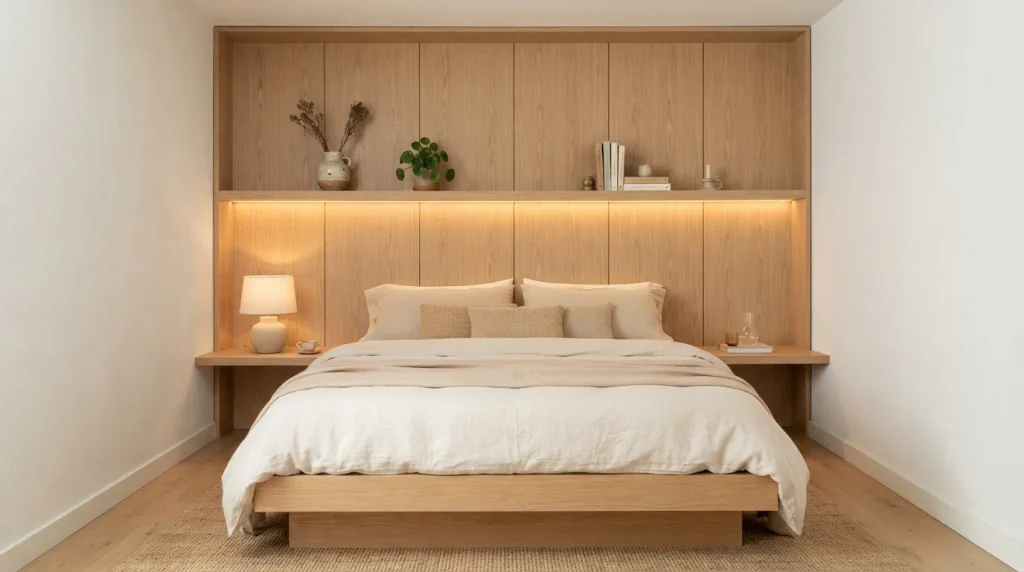
- Combines headboard, shelving, and lighting into one clean feature
- Removes the need for a separate nightstand lamp
- Creates a strong focal point without added clutter
- Works well in bedrooms wanting a slightly more custom look
- Wood tone ties the whole wall into one cohesive feature
A built-in wood headboard wall is a bigger project than most ideas on this list, but it solves several problems at once in a single, cohesive feature. Combining a headboard with integrated shelving and soft ambient lighting removes the need for a separate lamp or nightstand entirely, keeping the whole setup clean and considered. I’ve tried simpler, freestanding headboards in similar rooms before, and while they work fine, a built-in version tends to feel more custom and more intentional, especially in bedrooms designed from the ground up rather than furnished piece by piece over time.
I’ve seen this work particularly well in newer builds or full renovations, where the wall itself can be planned around the bed rather than adjusted afterward. The integrated lighting alone makes a noticeable difference, casting a soft glow that eliminates the need for harsh overhead light in the evening. While this idea requires more planning and investment than most others here, it creates one of the strongest, most photogenic focal points possible in a minimalist Japandi bedroom design.
10. Linen Curtain Panels
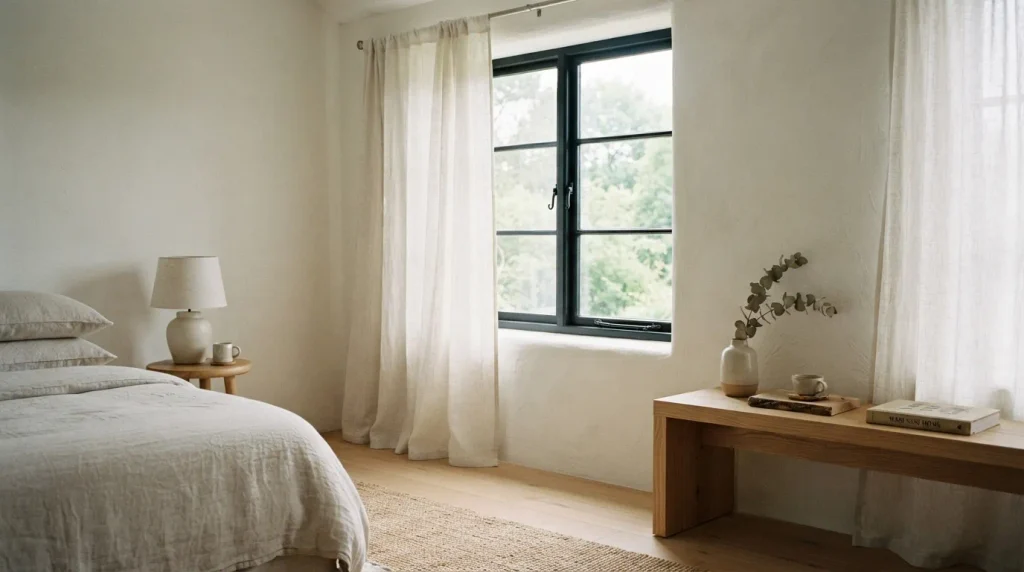
- Filters daylight into a soft, even glow instead of harsh sun
- Adds gentle texture near windows without introducing pattern
- Lightweight fabric keeps the room feeling airy, not heavy
- Works well layered with a shoji screen for added privacy
- Simple to maintain and pairs with almost any wall color
Windows dressed in heavy curtains can make a minimalist bedroom feel closed in, which is exactly why lightweight linen panels tend to work so much better here. Their soft, slightly textured weave diffuses daylight gently, avoiding the sharp glare that bare windows often let in during the afternoon. In my experience, this small detail matters more than people expect, since harsh light can undercut the calm mood a Japandi bedroom is built around. Linen also has a naturally relaxed drape, which suits the understated, unfussy feeling this design style depends on throughout every part of the room.
I’ve noticed that off-white or warm beige linen works best here, rather than pure white, since it echoes the same soft neutral tones found in the bedding and walls nearby. Layered with a shoji screen for evening privacy, linen panels give the room flexibility without ever feeling overdressed. Because the fabric is so lightweight, it also requires very little upkeep, which fits naturally into a design philosophy that values simplicity in both appearance and daily maintenance.
11. Low Wood Bench
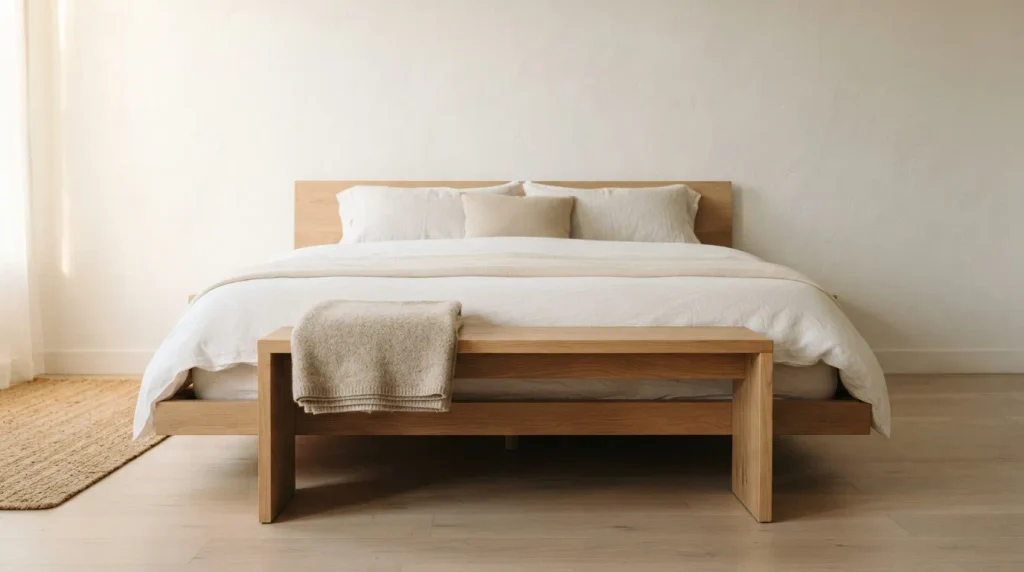
- Adds practical seating without needing a full bench cushion
- Keeps the end-of-bed area functional, not just decorative
- Useful surface for folding clothes or placing a bag
- Low height matches the bed frame’s grounded proportions
- Simple design that never overwhelms the room visually
The end of the bed is often left completely empty in bedroom layouts, and a low wood bench is a simple way to make that space useful again. It offers a spot to sit while getting dressed, or a place to set a bag or folded clothes without adding real clutter to the room. In my experience, this piece works best when it’s kept simple, a plain wood bench without cushioning or added embellishment fits the Japandi aesthetic far better than an upholstered version would. Its low height also matches the platform bed’s grounded proportions, keeping the room’s overall scale consistent.
I’ve seen this work particularly well in bedrooms that lack a dresser or chair elsewhere, since the bench quietly picks up some of that everyday function. A single folded throw blanket draped across it is usually enough styling on its own, without needing extra pillows or decorative objects. That kind of restraint is what keeps a low wood bench feeling purposeful rather than like just another piece of furniture added for the sake of it.
12. Ceramic Table Lamp
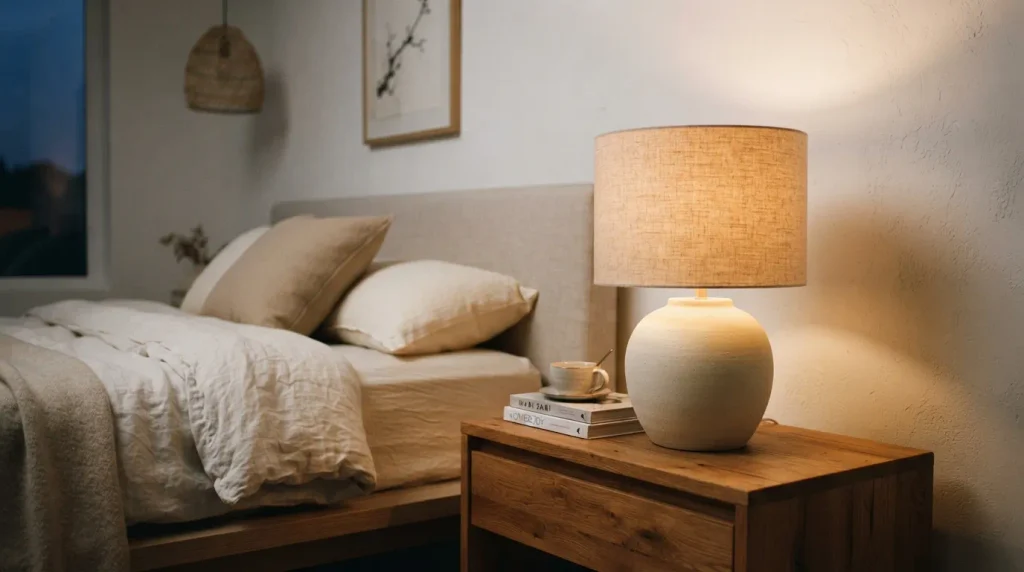
- Adds warm, soft lighting for reading or winding down
- Ceramic base ties into the room’s natural material palette
- Simple shape avoids competing with other decor nearby
- Works well as the sole light source on a nightstand
- Easy to find in neutral tones that match any color scheme
A ceramic table lamp might seem like a small detail, but it plays a real role in setting the evening mood of a Japandi bedroom. Its soft, warm glow works far better for reading or winding down than a bright overhead light, and the round ceramic base adds a subtle handmade quality that fits naturally with the room’s other natural materials. I’ve tried metal or glass lamps in similar spaces before, and they rarely feel as at home next to wood furniture and linen bedding as a simple ceramic option does, which is a detail worth paying attention to.
I’ve noticed that a linen or fabric shade makes a noticeable difference too, softening the light even further compared to an exposed bulb or a hard plastic shade. Placed on a nightstand beside a low platform bed, this kind of lamp becomes part of the nightly routine, not just a decorative object. That everyday function, paired with its calm, understated look, is exactly why a simple ceramic lamp remains a small but meaningful choice in minimalist Japandi bedroom design.
13. Woven Storage Basket
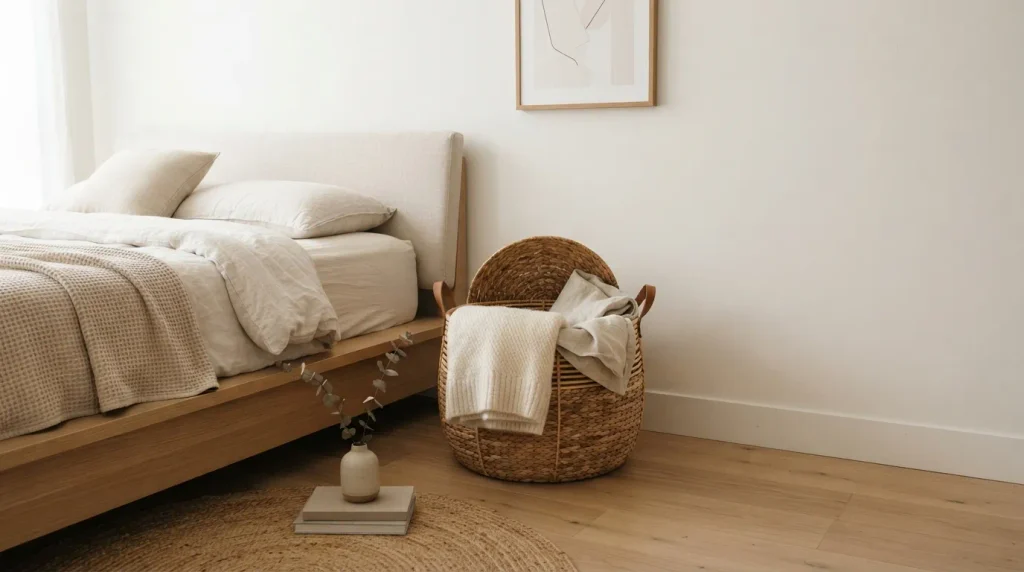
- Hides everyday items without resorting to plastic bins
- Adds natural texture to a corner that might otherwise stay bare
- Keeps extra blankets or linens accessible but out of sight
- Lightweight and easy to move as storage needs change
- Blends storage function into the room’s overall calm aesthetic
Clutter is one of the fastest ways to undo the calm feeling a Japandi bedroom depends on, and a woven storage basket offers a simple, low-effort fix. Tucked into a corner, it holds extra blankets or off-season items without introducing the kind of plastic bins that clash with natural wood and linen textures elsewhere in the room. In my experience, having just one dedicated basket like this makes it far easier to keep surfaces clear, since there’s always an obvious place for loose items to go instead of piling up on a chair or the floor.
I’ve seen this work particularly well in smaller bedrooms, where closet space is limited and every bit of visible storage needs to earn its place visually as well as functionally. Because the basket is woven rather than solid, it also adds a subtle texture that echoes other natural materials already used throughout the room, like a tatami mat or wood shelving. That quiet consistency is part of what keeps a Japandi bedroom feeling intentional, even in the corners that don’t get much daily attention.
14. Frosted Glass Pendant
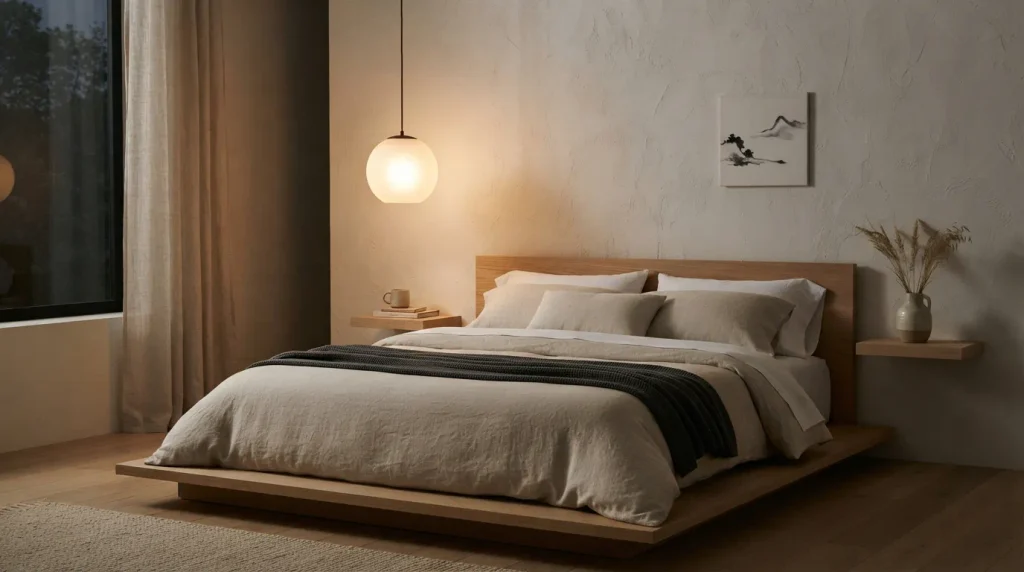
- Softens overhead lighting without losing brightness entirely
- Simple globe shape keeps the ceiling from feeling busy
- Diffuses light evenly instead of casting harsh direct glare
- Works well as a single, minimal ceiling fixture
- Pairs naturally with wood tones and neutral wall colors
Overhead lighting is easy to get wrong in a minimalist bedroom, and a frosted glass pendant strikes a balance that a bare bulb or an ornate fixture usually can’t. Its soft, diffused glow fills the room evenly, avoiding the harsh shadows a direct light source tends to create in the evening. In my experience, this kind of fixture works especially well as the sole overhead light in the room, since its simple globe shape never competes with the wood furniture or neutral textiles found throughout a Japandi bedroom design. It’s understated, but the difference it makes is easy to notice.
I’ve noticed that frosted glass in particular tends to photograph better than clear glass fixtures, since it hides the bulb itself and keeps the light looking soft rather than sharp in photos. Hung above a low platform bed, it becomes a quiet ceiling focal point without demanding much attention on its own. That balance of function and restraint is exactly what makes a fixture like this feel right at home in a calm, pared-back bedroom setting.
15. Bonsai or Small Potted Plant
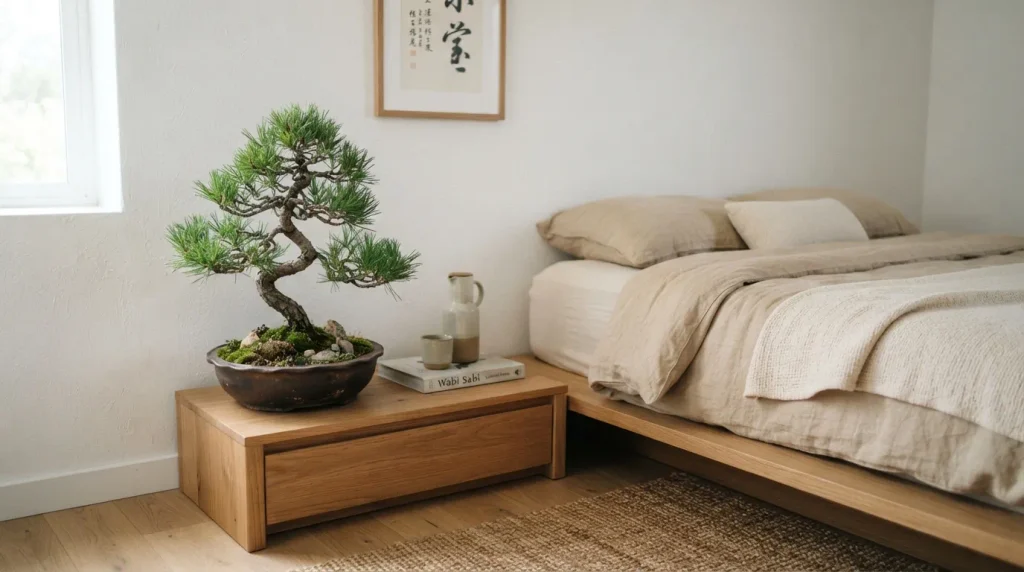
- Adds a living element without overwhelming the room’s simplicity
- Small scale fits naturally on a nightstand or shelf
- Ties directly into the natural, grounded feel of Japandi design
- Requires minimal space compared to larger houseplants
- Brings a subtle touch of green into a neutral palette
A room built entirely from wood, linen, and neutral tones can start to feel a little static without something living in the mix, and a small bonsai or potted plant fixes that without disrupting the space’s simplicity. Its compact scale means it fits easily on a nightstand or narrow shelf, unlike a larger houseplant that might demand its own floor space. In my experience, even one small plant like this makes a noticeable difference in how alive a minimalist room feels, without requiring any real redesign or additional furniture to accommodate it.
I’ve seen this work especially well paired with a ceramic lamp or small bowl nearby, since the greenery softens what could otherwise feel like a slightly sterile, all-neutral surface. Choosing a shallow ceramic pot rather than a plastic one keeps the material palette consistent with the rest of the room. That attention to small details, right down to the pot itself, is often what separates a bedroom that merely looks minimalist from one that feels genuinely calm, considered, and grounded in natural materials.
16. Wood Slat Accent Wall
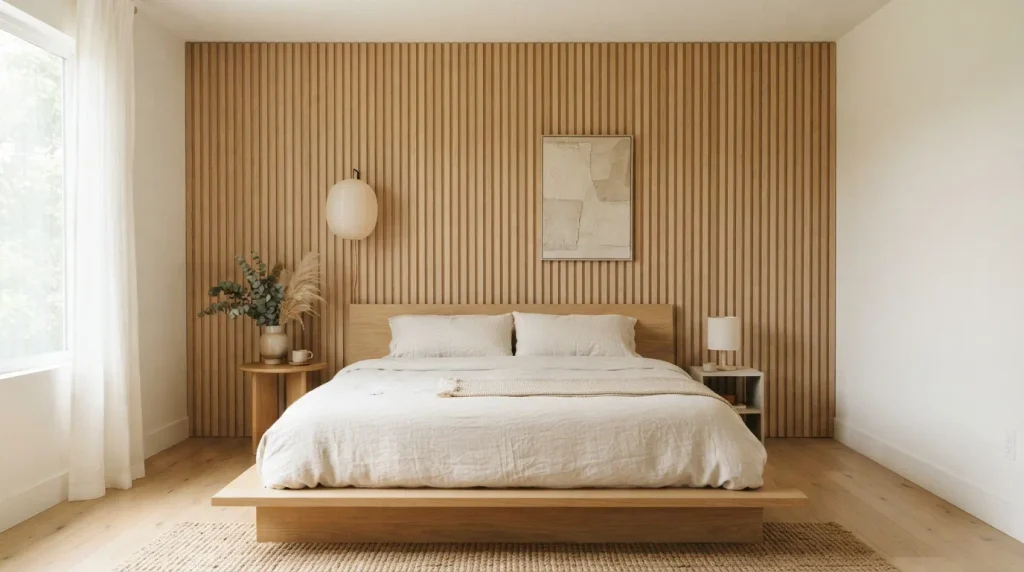
- Adds texture and warmth to an otherwise flat wall
- Creates a natural focal point behind the bed
- Works well without needing additional wall art or decor
- Wood tone ties directly into furniture already in the room
- Subtle enough to stay calm rather than becoming overpowering
A plain wall behind the bed can leave a minimalist bedroom feeling slightly unfinished, and a wood slat accent wall solves that without introducing any extra clutter. The vertical lines add quiet texture and warmth, giving the eye something to rest on without needing framed art or a gallery wall to fill the space. In my experience, this is one of the more transformative upgrades on this list, since it changes the entire feel of the room while still staying true to Japandi design’s preference for restraint over decoration.
I’ve seen this work particularly well when the slats match or closely complement the tone of the bed frame and nightstands nearby, keeping the whole room visually connected. Because the texture itself does the visual work, there’s rarely a need to add anything else to that wall, which keeps the space feeling calm rather than busy. That’s why many designers recommend treating an accent wall like this as the room’s main statement, letting everything else stay deliberately simple and understated by comparison.
17. Minimalist Wood Dresser
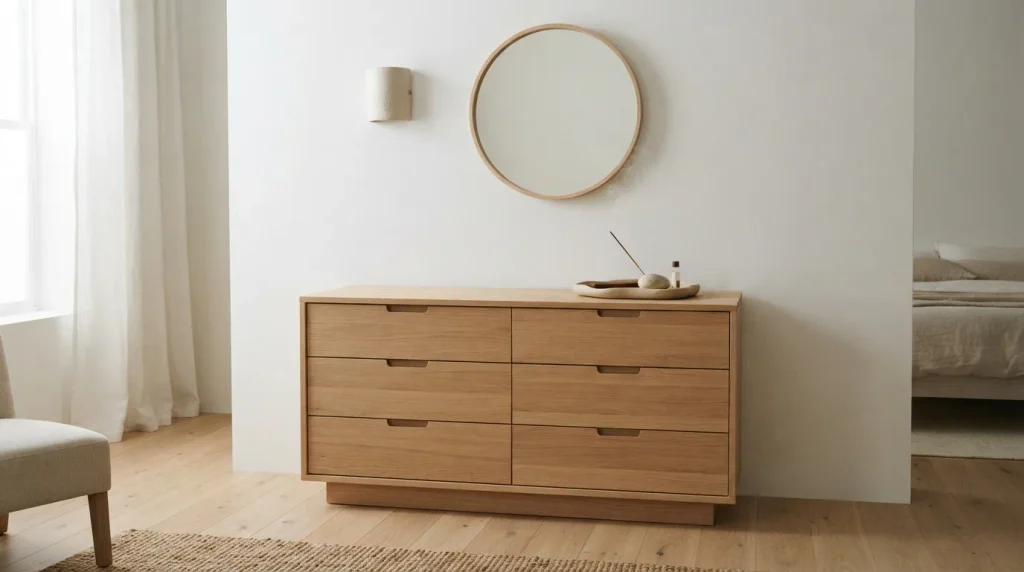
- Provides storage without ornate hardware or bulky detailing
- Clean lines keep the room feeling open and uncluttered
- Wood tone matches the bed frame for a cohesive look
- Flat surface on top works well for simple styled objects
- Low profile keeps the room’s proportions feeling balanced
Storage furniture can easily become the busiest piece in a room, but a minimalist wood dresser avoids that by sticking to clean lines and almost no visible hardware. Its simple form blends into the room rather than standing out, which matters in a design style where every piece is meant to feel calm and considered rather than decorative for its own sake. I’ve tried more ornate dressers in similar rooms before, and they almost always disrupt the quiet mood a Japandi bedroom depends on, even when the wood tone itself is a reasonably close match.
I’ve noticed that keeping the top surface nearly empty, maybe just a small tray or a single object, makes the biggest difference in how the piece reads visually. A dresser covered in loose items instantly feels cluttered, no matter how simple its design is underneath. That’s why many designers recommend treating flat surfaces like this as display space rather than storage overflow, which keeps the whole room feeling considered rather than merely tidy on the surface.
18. Soft Wool Throw Blanket
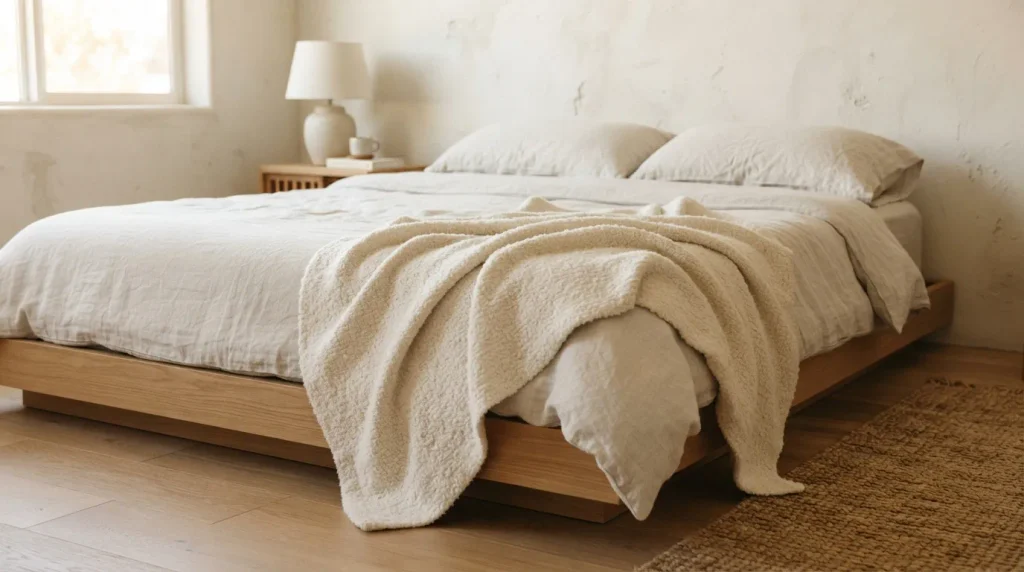
- Adds texture and warmth without introducing bold color
- Easy to swap seasonally for a subtle style refresh
- Softens the bed’s simple, clean lines just enough
- Works well draped loosely rather than folded flat
- Inexpensive way to add coziness to a minimalist setup
A minimalist bedroom can occasionally feel a little too pared back, and a soft wool throw blanket is a simple way to add coziness without disrupting the room’s calm palette. Draped loosely over the foot of the bed, it introduces texture that linen bedding alone doesn’t quite provide, especially during cooler months when a little extra warmth is genuinely useful. In my experience, an ivory or oatmeal-toned throw works best here, since anything too bold in color tends to pull focus away from the room’s otherwise quiet, neutral base.
I’ve seen this work particularly well when the throw is draped naturally rather than folded into a perfectly neat square, since a slightly relaxed placement suits the understated, lived-in feeling Japandi bedrooms are known for. It’s also one of the easiest pieces to swap seasonally, offering a subtle refresh without touching anything else in the room. That flexibility, paired with genuine everyday function, makes it a small but worthwhile addition to a minimalist Japandi bedroom design.
19. Recessed Wall Niche
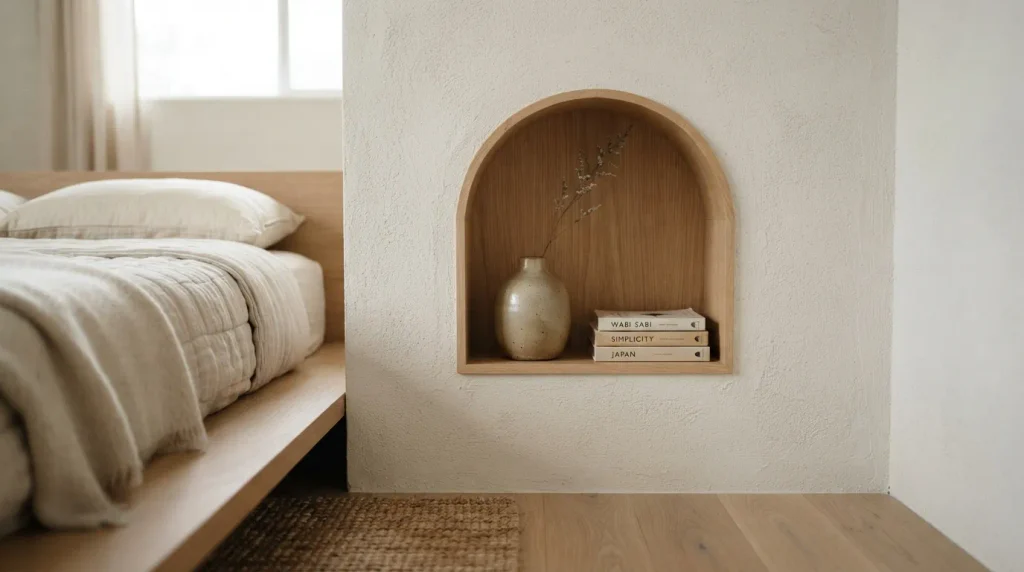
- Adds built-in display space without extra furniture
- Keeps decorative objects contained to one intentional spot
- Creates subtle architectural interest in an otherwise flat wall
- Works well beside a bed in place of a nightstand shelf
- Encourages a curated, limited approach to displayed items
A recessed wall niche is a bigger structural change than most ideas on this list, but it solves the display problem in a way freestanding shelves never quite manage. Built directly into the wall, it creates a defined spot for a vase, a small stack of books, or a single meaningful object, without adding any visual bulk to the room. In my experience, this kind of built-in detail tends to photograph beautifully, since the recessed shadow line alone adds depth and interest to a wall that would otherwise stay completely flat and undecorated.
I’ve seen this work particularly well in newer builds or full renovations, where the niche can be planned into the wall from the start rather than added afterward. Because the space is limited by design, it naturally discourages overfilling it with too many objects, which keeps the styling feeling deliberate rather than cluttered. That built-in restraint is very much in line with the broader philosophy behind Japandi design, where architecture and decor work together instead of decor simply being layered on top.
20. Neutral Woven Area Rug
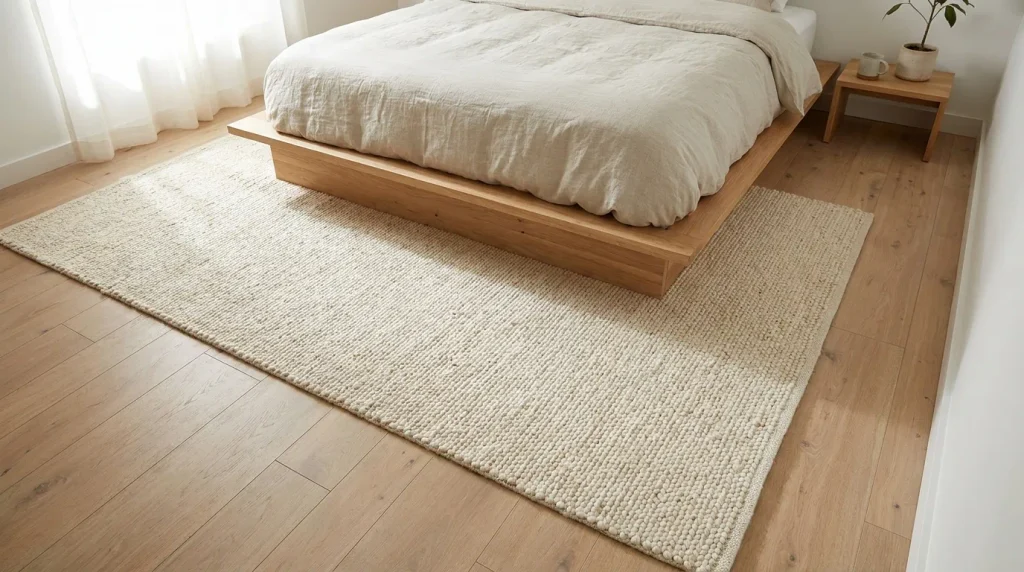
- Softens the floor without introducing bold pattern or color
- Adds texture underfoot in a way plain flooring can’t
- Works well layered partially under a low bed frame
- Ties the room’s natural material palette together at floor level
- Easy to vacuum and maintain compared to plush carpeting
Bare wood flooring can feel a little cold, especially first thing in the morning, and a neutral woven area rug solves that without competing with the room’s otherwise quiet color palette. Its subtle texture adds warmth underfoot, while the muted tone keeps it from becoming a focal point the way a patterned or brightly colored rug might. In my experience, choosing a rug in a similar tone to the flooring itself, rather than a strong contrast, keeps the whole room feeling seamless and calm rather than segmented into separate zones by color.
I’ve noticed that positioning the rug so it extends just beyond the edges of the bed, rather than centering it exactly beneath the frame, tends to look more natural and considered. This detail is easy to overlook, but it makes a real difference in how intentional the styling feels overall. Because the weave itself provides the visual interest, there’s no need for pattern here, keeping the floor consistent with the same restrained, natural material approach used throughout the rest of a Japandi bedroom design.
21. Matte Black Accents
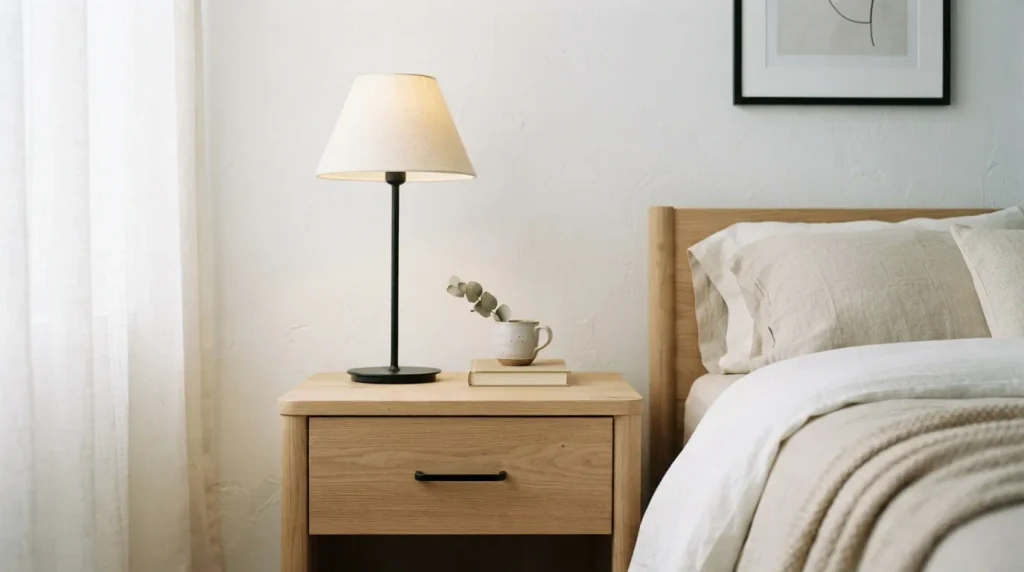
- Adds subtle contrast without disrupting the room’s soft palette
- Works well in small doses like hardware or lamp bases
- Grounds an otherwise very light and neutral color scheme
- Prevents the room from feeling flat or one-note
- Easy to introduce through small, inexpensive accessories
An entirely light and neutral bedroom can occasionally feel like it’s missing an anchor, and small matte black accents provide exactly that kind of quiet grounding. Used sparingly, on a drawer pull, a lamp base, or a slim picture frame, black adds just enough contrast to keep the room from feeling flat, without ever overwhelming the soft, natural palette established elsewhere. In my experience, restraint is everything here. A little matte black goes a long way, and adding too much can quickly tip a calm Japandi bedroom into a much colder, more modern-industrial look than intended.
I’ve seen this work particularly well when the black accents are limited to hardware and small functional objects, rather than larger furniture pieces. That keeps the contrast feeling intentional rather than heavy-handed. Matte finishes specifically matter too, since anything glossy or reflective tends to clash with the soft, textured materials found throughout the rest of the room. Used correctly, this small detail adds definition and visual interest without ever compromising the room’s overall sense of calm.
22. Wabi-Sabi Ceramic Decor
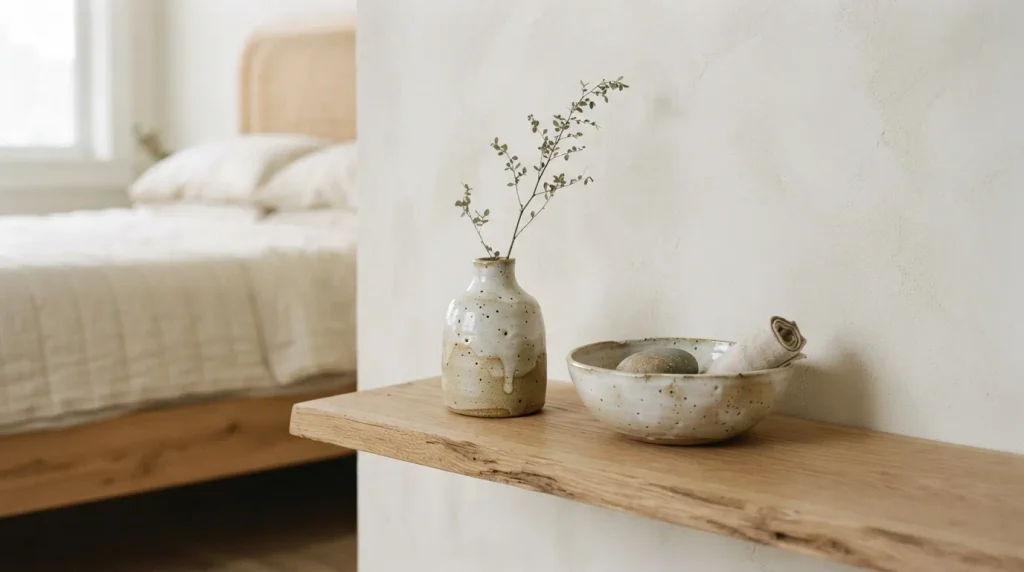
- Adds character through imperfect, handmade textures
- Avoids the overly polished look of mass-produced decor
- Works well as small accents on a shelf or nightstand
- Reflects the wabi-sabi philosophy of natural imperfection
- Easy to source in small, affordable pieces
Perfectly matched, glossy decor can sometimes work against the calm feeling a Japandi bedroom is trying to create, which is where wabi-sabi ceramic pieces come in. A slightly uneven vase or a bowl with visible glaze variations brings a sense of authenticity that mass-produced decor rarely achieves, reflecting a design philosophy that values natural imperfection over flawless symmetry. In my experience, even one or two of these pieces, placed on a shelf or nightstand, add a quiet character to the room that’s hard to replicate with anything store-bought and uniform in appearance.
I’ve seen this work especially well when paired with other natural materials already in the room, like a wood shelf or a woven basket, since the imperfect texture echoes that same handmade quality. That’s why many designers recommend seeking out small, independently made ceramics rather than perfectly uniform sets, since the slight variation between pieces is exactly what gives a room its warmth. This detail is subtle, but it’s often what makes a Japandi bedroom feel genuinely considered rather than simply styled from a catalog.
23. Layered Neutral Cushions
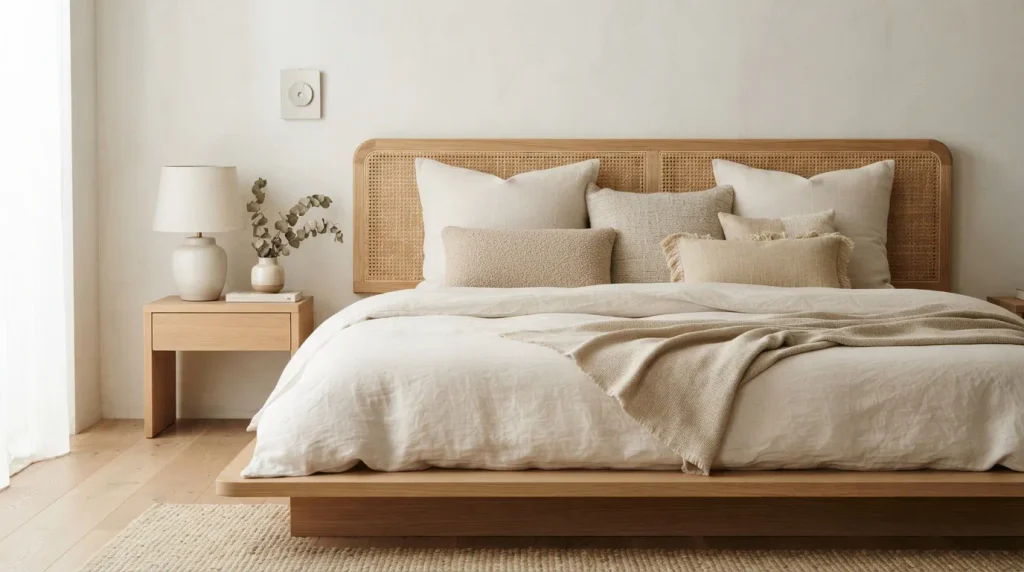
- Adds texture and comfort without introducing bold pattern
- Mixing textures like linen and cotton keeps things interesting
- Works well in small numbers, two or three is usually enough
- Ties naturally into the room’s existing neutral palette
- Simple way to make the bed feel more finished
A bed without any cushions can feel slightly bare, but overloading it with too many pillows works against the restrained look a Japandi bedroom depends on. The solution is layering just two or three cushions in varying neutral textures, like a smooth linen cover next to a slightly nubby cotton one, which adds visual interest without needing color or pattern to do it. In my experience, texture alone is often enough to make a bed feel complete, especially in a room where the rest of the palette stays so consistently soft and muted throughout.
I’ve noticed that keeping the cushion count low is just as important as choosing the right textures, since even a well-chosen set can start to feel cluttered if there are too many stacked together. That’s why many designers recommend odd numbers, like three rather than four, since it tends to look more relaxed and less rigidly arranged. This small detail is easy to adjust seasonally too, offering a subtle refresh without touching anything else in the room’s design.
24. Warm Dimmable Lighting
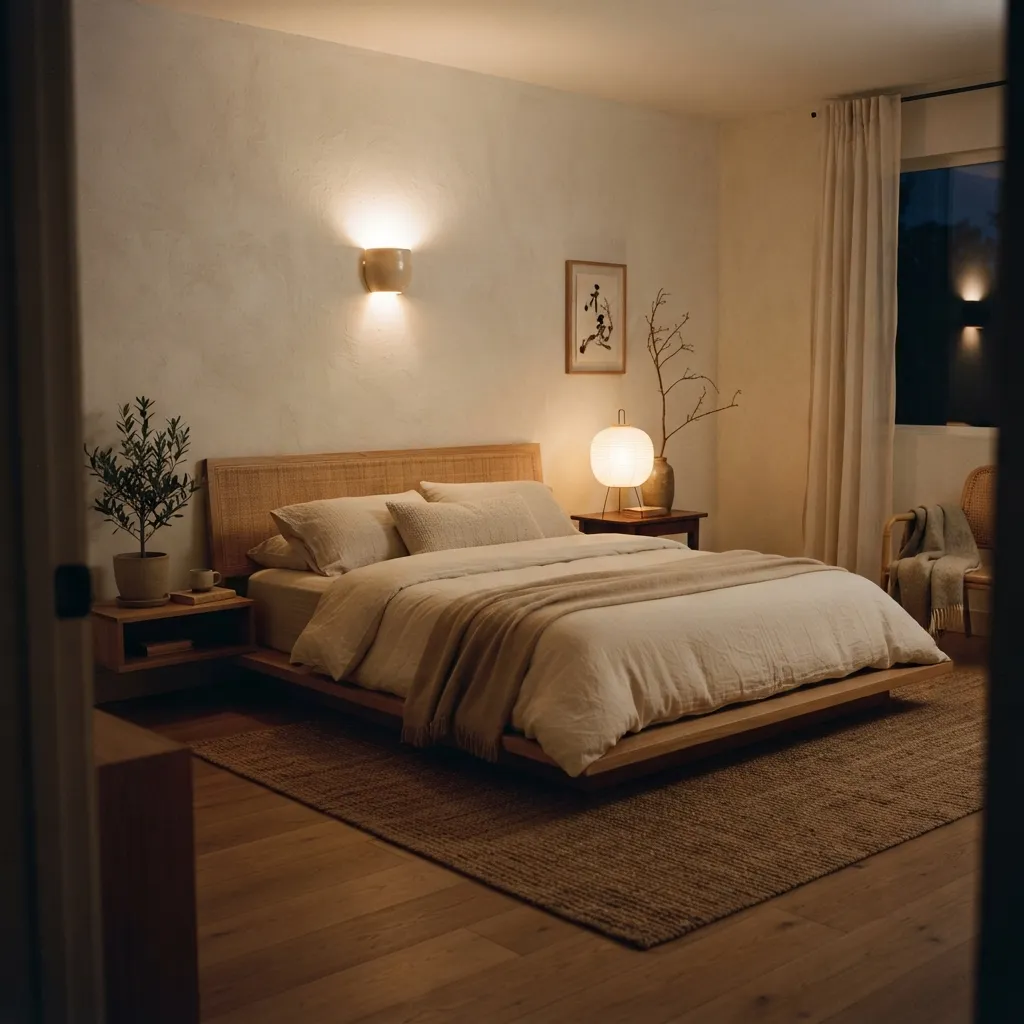
- Adjusts easily between bright daytime light and soft evening glow
- Avoids the harsh, flat look of standard overhead lighting
- Works well paired with a pendant, lamp, or wall sconce
- Creates a calmer transition into evening wind-down routines
- Small upgrade that noticeably changes the room’s overall mood
Lighting is often the last thing people think to upgrade, but warm dimmable lighting might be the single most impactful change on this entire list. Being able to shift from bright, functional light during the day to a soft, golden glow in the evening changes the entire feel of a minimalist Japandi bedroom without touching a single piece of furniture. In my experience, this upgrade is especially noticeable in rooms that previously relied on one harsh overhead fixture, since the contrast between flat white light and warm dimmed light is far more dramatic than most people expect going in.
I’ve seen this work particularly well when paired with a simple pendant or ceramic lamp already in the room, since dimming doesn’t require replacing any existing fixtures, just adding a compatible switch or smart bulb. That ease of installation makes it one of the more accessible upgrades here, despite the outsized difference it makes. As a finishing touch, warm dimmable lighting ties every other detail in the room together, softening the whole space into the calm retreat a Japandi bedroom is meant to be.
Conclusion:
A calmer bedroom doesn’t require starting over. It comes down to a handful of thoughtful choices, natural materials, soft lighting, uncluttered surfaces, that quietly transform a room into a genuine retreat. I’ve seen how small changes like these can completely shift the feel of a space, often faster than people expect. If even a few of these minimalist Japandi bedroom design ideas resonated with you, that’s a great place to begin. Save this post for later, try one idea this week, and pass it along to anyone else searching for a calmer, more grounded bedroom of their own.